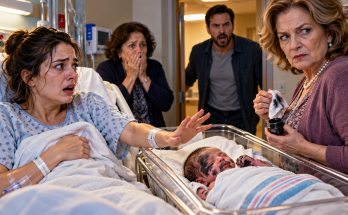
I stared at Ryan across my kitchen table while the refrigerator hummed behind him and Hope slept six feet away. My body was still sore from giving birth. I had slept perhaps four hours in the previous two days. Whatever patience I normally kept for my twin brother had been used up somewhere between his disappearance from the hospital and his unanswered phone.
“What have you been lying about?”
Ryan sat down slowly.
I remained standing.
“I lost my job.”
The answer was so different from what I had expected that for a moment I thought I had misunderstood him.
“What?”
“Four months ago.”
I waited.
He looked down at his hands.
“The company eliminated my department. There were cuts, and I was one of them.”
I pulled out the chair opposite him but didn’t sit.
“Four months?”
“Yes.”
“Melissa doesn’t know?”
“No.”
The anger that had been burning cleanly inside me suddenly changed shape.
“What does she think you’ve been doing every morning?”
Ryan’s silence answered before his mouth did.
I sat.
“No.”
“Ivy—”
“You’ve been leaving the house.”
“Yes.”
“Dressed for work.”
He nodded.
“Carrying your laptop.”
“Yes.”
“Where did you go?”
“Different places.”
“What does that mean?”
“Coffee shops. The library sometimes. My car.”
I stared at him.
He rubbed his palms together. “I applied for jobs. I had interviews. I thought I’d replace the position before she ever had to know.”
“And every evening?”
“I went home at about the same time.”
For several seconds, all I could hear was Hope breathing from the bassinet.
I pictured Melissa preparing for a baby while her husband staged a workday. I pictured Ryan sitting in parking lots with a laptop on his knees, waiting for enough hours to pass before returning home.
“That’s why you were always checking your phone.”
“Mostly applications. Recruiters. Bills.”
“And the ultrasound?”
“I had an interview scheduled for that afternoon. They canceled while we were sitting there.”
I closed my eyes.
Each small thing I had noticed now had an explanation, and none of those explanations made me feel better.
“The nursery,” I said.
Ryan’s face tightened.
“What about it?”
“Melissa told me you two had saved for everything.”
He looked away.
“How much of that was true?”
“Some.”
“Ryan.”
“The original savings are almost gone.”
I felt cold.
“Gone where?”
“Mortgage. Insurance. Utilities. Regular expenses. I tried to keep everything normal.”
“How?”
“Credit cards.”
I sat back.
“How much?”
His lips parted, but he hesitated.
That hesitation told me enough.
“The nursery is on credit cards, isn’t it?”
“Part of it.”
“The crib?”
“Yes.”
“The chair?”
“Yes.”
“The stroller Melissa spent two months choosing?”
He rubbed his forehead. “Yes.”
I wanted to shout, but Gabriel was in his room and Hope was asleep.
So my voice became quieter.
That was worse.
“You watched your wife prepare for a child while your finances were collapsing, and every day you decided she wasn’t entitled to know.”
“I thought I could fix it.”
“You thought you could hide it.”
“There’s a difference.”
“Not after four months.”
He flinched.
Good.
“You want to know what I was thinking?” he asked. “Every interview, I thought, this one will do it. I’ll get an offer, I’ll come home, and nothing will have to change. Melissa has been through six years of hell. She finally had something good coming. I couldn’t be the person who ruined it.”
“So you lied.”
“I tried to protect her.”
“No.”
He looked up.
“You protected the version of yourself you wanted her to see.”
Ryan stared at me.
I leaned closer. “Melissa survived infertility. She survived losing a pregnancy. She sat beside your newborn daughter while doctors examined her spine. But you decided losing your salary was the truth she couldn’t handle?”
His eyes filled.
“You don’t understand.”
“Then explain it.”
He pushed back from the table and stood. For a few moments he paced the narrow space between the counter and the window.
“I was supposed to have this handled.”
“According to whom?”
“According to me.”
“That’s not an answer.”
“It is to me.”
He stopped and turned.
“Do you remember Dad when his business almost failed?”
I did.
We had been teenagers. Our father had treated financial trouble like a private illness. For months, nobody had known how frightened he was.
“He still told Mom.”
“Eventually.”
“And?”
“They fought for weeks.”
“They also stayed together.”
Ryan shook his head. “You didn’t hear everything.”
“Neither did you.”
He looked toward the bassinet again.
Hope shifted, one small hand emerging from the blanket.
“I kept thinking I had one responsibility,” he said. “Get Melissa and the baby to the other side of all this without another disaster.”
“You’re not a bridge, Ryan.”
“I know that now.”
“Do you?”
His face hardened for the first time. “You think I don’t know what I did?”
“I don’t know what you know because you haven’t explained the worst part.”
He went still.
I pointed toward Hope.
“You lost your job four months ago. That does not explain why you put your daughter back in my arms.”
Ryan sat again.
His eyes stayed on Hope.
“The final ultrasound scared me.”
“I know.”
“I saw the technician stop.”
“So did I.”
“She said nothing was confirmed, but after we got home I started reading.”
Of course he had.
Ryan researched fear the same way some people researched vacations—thoroughly, compulsively, until every possibility became vivid.
“I found spinal conditions. Surgeries. Therapy. Specialists. Long-term care. Every page led to another page.”
“And you told no one.”
“I told myself the doctors would be wrong.”
I waited.
“When she was born and I saw her back, I knew there really was something there.”
“You didn’t know what it meant.”
“No.”
“You didn’t know the severity.”
“No.”
“You didn’t know whether she would need one appointment or twenty surgeries.”
“No.”
“But you left.”
Ryan covered his mouth with one hand.
When he spoke again, his voice came out muffled.
“I heard money.”
I stared at him.
“What?”
“I looked at that mark, and before I thought anything else, I thought about the bills.”
The admission seemed to disgust him as soon as it left his mouth.
He bent forward, elbows on his knees.
“I had already maxed one card. The savings were almost gone. I had another payment due. I kept imagining specialists and surgery and equipment and therapy. I was standing there holding her, and all I could think was that I had no job and no way to pay for what she might need.”
My stomach turned.
“So when you said you couldn’t take her home—”
“I panicked.”
“That word is doing a lot of work for you.”
“I know.”
“No, I don’t think you do.”
“Ivy—”
“You didn’t say, ‘I’m terrified.’ You didn’t ask for help. You didn’t tell Melissa the truth. You made it sound as if there was something about Hope that made her unacceptable.”
His face crumpled.
“I know.”
“Melissa thinks you rejected your daughter because she might have a disability.”
“I know.”
“She thinks six years of wanting a child ended the moment that child wasn’t exactly what you expected.”
“I know.”
“And you have allowed her to believe that for three days.”
Ryan began crying.
Not dramatically. His head lowered and his shoulders shook once before he pressed his fingers into his eyes.
“I was ashamed.”
I said nothing.
He forced himself to continue.
“When I walked out, I thought I’d go downstairs, calm down, and come back. Then I got to the parking garage and sat in the car. I kept thinking Melissa would ask how we were going to pay for everything, and then I’d have to tell her about the job.”
“So?”
“So then she’d know the nursery was debt. She’d know I’d been lying every morning. She’d know I had failed before Hope was even born.”
I felt something inside me go from anger to something sadder.
“You didn’t fail because you were laid off.”
Ryan laughed once, bitterly. “That’s easy to say.”
“It’s easy because it’s true.”
“I was supposed to provide for them.”
“You were supposed to be honest with them.”
He looked at me.
“That was the part you failed.”
The words hurt him.
I let them.
There are moments when protecting someone from pain is simply another form of lying.
Hope made a soft noise in the bassinet.
Both of us turned.
Her face tightened. Her mouth opened, but instead of crying she settled again.
Ryan stared at her longer this time.
“I love her.”
“Then stop using that sentence as a substitute for behavior.”
He wiped his face.
“I don’t expect you to forgive me.”
“This isn’t mainly about me.”
“I know.”
“No, listen to me. You hurt me. You took something I carried for nine months because I trusted you, and the first time it became frightening, you handed it back like the agreement had expired.”
His eyes shut.
“But Melissa is the one you have been betraying every morning for four months.”
“I know.”
“She deserves the whole truth.”
His eyes opened.
Fear returned immediately.
“I can’t tell her tonight.”
I almost laughed.
“Why?”
“She’s barely holding together.”
“Because of you.”
“She’ll leave me.”
“Maybe.”
His face tightened as if I had struck him.
I leaned back in the chair.
“You don’t get to decide whether Melissa stays married to you by controlling what information she has. That isn’t protecting your marriage. That’s trapping her inside a version of it that only you know is false.”
Ryan stared at the floor.
“What if she hates me?”
“She might.”
“What if she never trusts me again?”
“She might not.”
“What if she takes Hope and tells me to get out?”
“That is her decision to make.”
He looked toward his daughter.
I followed his gaze.
“You lost the right to choose everyone’s reaction when you chose the lie.”
Ryan sat silently for a long time.
Outside, a car passed over the wet street. The tires made a soft rushing sound. Somewhere down the hall Gabriel opened his bedroom door, then apparently thought better of entering the kitchen because it closed again.
Finally Ryan whispered, “What do I say?”
“The truth.”
“All of it?”
I stared at him until he gave a miserable nod.
“Yes,” he said. “All of it.”
“The job.”
“Yes.”
“The debt.”
“Yes.”
“The fake workdays.”
He swallowed. “Yes.”
“And why you walked out of that hospital.”
His eyes went wet again.
“Yes.”
I stood and reached for my keys.
Ryan looked up. “What are you doing?”
“We’re going to Melissa.”
His face changed.
“Now?”
“Yes. Now.”
“Ivy, give me one night.”
“You’ve had four months.”
He pushed both hands through his hair. “I need to think.”
“You’ve been thinking. That’s how we got here.”
Hope began to cry.
Ryan’s head turned toward the bassinet instinctively.
For a moment neither of us moved.
Then he took one step toward her.
He stopped before reaching the bassinet, as though he no longer believed he had the right to go farther.
I lifted Hope into my arms.
Her cry softened against my shoulder.
“You want to be her father?” I asked.
Ryan nodded.
“Then fatherhood starts with what you do when you’re ashamed, not what you do when everyone is proud of you.”
He looked at Hope.
Then at me.
His face was frightened, exhausted, and finally stripped of every excuse.
“All right,” he said.
I picked up the diaper bag.
Ryan reached for his coat.
Neither of us spoke as we walked toward the door.
For three days, my brother had been running from his wife, his daughter, and the truth.
That night, I was going to make certain all three were waiting for him in the same room.
Click here to continue reading: PART 5: Melissa Opened the Door Expecting an Apology, but the Truth Ryan Brought Inside Was Bigger Than the Hospital Betrayal
The Daughter I Carried for My Brother Arrived Crying, and One Glance at Her Back Made Him Step Away
Part 4 of 12