Nobody believed Marcus immediately.
That was the problem.
We all believed him a little.
Martha had spent decades defending Richard. She had concealed the truth about Edward Vanguard’s incapacitation. She had humiliated Elena at David’s funeral. She had threatened me with custody. She knew about Halcyon, Helen Mercer, Jonathan Vale, and my father.
And now she had vanished.
But belief was not evidence.
Detective Ortiz made that distinction repeatedly while officers traced Marcus’s call.
“He could be protecting Richard.”
Arthur paced beside Room Four.
“He could also be telling the truth.”
“He could be doing both.”
I stood near the motel window, one hand pressed against my back. The baby had been kicking for the last hour, an insistent flutter beneath my ribs.
“Where did Marcus call from?”
Ortiz checked her phone.
“Burner device routed through a tower west of Fairmont.”
“Near Richard’s property?”
“Near a lot of things.”
Arthur turned.
“What about Martha’s phone?”
“Off.”
“Vehicle?”
“Found three blocks from the collision.”
“Blood?”
“No.”
I looked toward the evidence boxes being carried from Room Four.
“David had a timeline.”
Ortiz followed my gaze.
“What?”
“His files. He documented everything. If Martha or Richard saw him before the crash, there may be something.”
The forensic technician reopened David’s drive.
We searched by date.
Nine days earlier.
The day David died.
A folder appeared.
SEPT 17.
Inside were receipts, screenshots, photographs, and notes.
David had apparently begun tracking his movements because he expected someone to challenge his account later.
7:10 a.m. — home.
8:02 a.m. — office.
10:14 a.m. — meeting with Nolan.
11:37 a.m. — call from Elena.
12:10 p.m. — lunch meeting with Arthur.
Arthur stared.
“I forgot.”
“What?”
“He asked me about Dad’s old trust.”
“Did he mention Halcyon?”
“No. He asked whether Richard ever altered trust documents after Grandpa’s stroke.”
“What did you say?”
“That I didn’t know.”
Arthur’s face tightened.
“He already suspected.”
The timeline continued.
2:42 p.m. — David entered a downtown parking garage.
Photographs showed Marcus’s Tahoe.
3:05 p.m. — Martha called.
Duration: eleven minutes.
3:41 p.m. — Richard called.
Duration: forty-seven seconds.
5:18 p.m. — David left Vanguard headquarters.
5:32 p.m. — security camera image showed him entering a coffee shop.
5:49 p.m. — text message to me.
Running late. Don’t wait for dinner.
I remembered receiving it.
I had replied with a picture of the nursery paint samples.
Blue-gray or pale green?
David had responded:
Green. Definitely green.
That had been our last ordinary conversation.
The timeline continued.
6:12 p.m. — phone location near River Avenue.
6:26 p.m. — unidentified number called David.
Duration: two minutes.
6:40 p.m. — dash camera automatically activated.
The technician opened a video.
David was driving.
His face appeared faintly in the reflection of the windshield.
Traffic lights passed over him.
He looked tense.
At 6:44, his phone connected through the car speakers.
A woman’s voice filled the motel room.
Martha.
Arthur and I looked at each other.
David answered, “What?”
Martha said, “Where are you?”
“Driving.”
“You need to stop this.”
“Not happening.”
“Your father knows about the files.”
David’s jaw tightened.
“How?”
“I don’t know.”
“You told him.”
“No.”
“Mom.”
“I didn’t.”
“Then who?”
“I said I don’t know.”
David turned onto a darker road.
Martha continued.
“Come to the house. We can solve this.”
“Your version of solving things is pretending they never happened.”
“David, please.”
He went quiet.
Martha’s voice broke.
“Your father is not thinking clearly.”
David laughed bitterly.
“When has he ever?”
“Please don’t make him desperate.”
“What does that mean?”
Silence.
“Mom?”
“I’m asking you to come here.”
“No.”
“David.”
“I’m going home to Sarah.”
The call ended.
Six minutes later, the video showed headlights approaching quickly from behind.
A black SUV.
It remained close.
Too close.
My hands began shaking.
“Pause.”
The technician froze the frame.
The plate was unreadable.
But the vehicle shape matched Marcus’s Tahoe.
Ortiz said, “Continue.”
The SUV followed David through two turns.
Then another car appeared ahead.
A dark sedan.
David slowed.
The sedan slowed.
The SUV closed in behind him.
He was boxed.
David muttered, “Come on.”
At 7:03, the sedan accelerated away.
The SUV remained.
Then David’s brake lights flashed.
Once.
Twice.
The car jerked.
His voice changed.
“No.”
He pumped the pedal.
“No, no.”
The road curved.
The SUV fell back.
David pulled the handbrake.
Tires screamed.
The video shook violently.
Then the image rolled.
I covered my mouth.
The technician stopped playback.
Arthur turned away.
Ortiz’s face remained controlled, but even she had gone pale.
“Did the camera record after impact?”
“Forty seconds.”
“Play it.”
The screen showed darkness, shattered glass, and headlights at an angle.
David groaned.
Alive.
My knees weakened.
He had survived the initial crash.
Then footsteps approached.
Someone opened the passenger door.
A figure leaned inside.
We could not see the face.
Only a hand.
A black glove.
David whispered, “You.”
The person said nothing.
Then the camera shut off.
I stared at the blank screen.
“He was alive.”
Nobody answered.
“He was alive.”
Arthur put a hand on my shoulder.
I stepped away.
“Don’t.”
I needed something solid.
Anger gave me that.
“Who was there?”
The technician replayed the final seconds.
A reflection appeared briefly in a shard of broken glass.
Dark coat.
Gray hair?
Not enough.
Ortiz asked for enhancement.
The technician enlarged the frame.
Pixels distorted.
Still, a shape became visible near the windshield.
A face.
Not enough to identify.
But the person was not as tall as Marcus.
Not as broad.
Arthur whispered, “Martha?”
My stomach dropped.
Ortiz said, “We cannot identify anyone from this.”
Arthur pointed.
“That looks like her.”
“It looks like a human face in broken glass.”
I forced myself to breathe.
Marcus had said Martha was dangerous.
Martha had called David nineteen minutes before the crash.
She had begged him to go to Richard’s house.
Then someone boxed him between two cars.
And after the crash, someone approached.
Ortiz searched the remaining files.
A GPS export showed another device detected through David’s car Bluetooth system for thirteen seconds after impact.
Device name:
MV-PHONE.
Martha Vanguard.
Arthur sat down.
“No.”
My heart hammered.
“Her phone connected to David’s car.”
Ortiz held up a hand.
“It proves a device named MV-PHONE was nearby.”
“It was hers.”
“Probably.”
“Then she was there.”
“Probably.”
Arthur whispered, “She watched him die.”
The sentence hit like a physical blow.
I thought of Martha standing at the funeral receiving condolences.
Her pearls.
Her perfectly arranged grief.
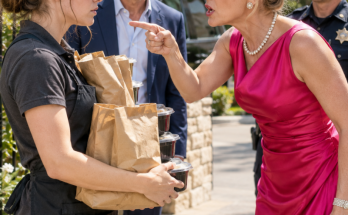
Her finger pointing at Ethan.
Her words:
You embarrassed me today.
Not sorrow.
Control.
My phone vibrated.
Unknown number.
I looked at Ortiz before answering.
She nodded and began recording.
“Hello?”
Breathing.
Then Martha.
“Sarah.”
Arthur stood.
“Where are you?”
Martha sounded frightened.
“Is Arthur with you?”
“Yes.”
“Put me on speaker.”
I did.
Arthur’s voice turned cold.
“Did you kill David?”
Martha inhaled sharply.
“No.”
“Your phone was at the crash.”
Silence.
“Martha.”
“I found him.”
The room went still.
“You found him.”
“I followed him.”
“Why?”
“To stop him from going home.”
My stomach tightened.
“Why?”
“Because Richard had people watching your house.”
“Marcus?”
“No.”
“Who?”
“I didn’t know then.”
Arthur leaned toward the phone.
“You were at the crash.”
“Yes.”
“When?”
“Seconds after it happened.”
“Did you approach the car?”
“Yes.”
My skin turned cold.
“David saw you.”
“He did.”
“And you left him?”
Martha began crying.
Not loudly.
Almost soundlessly.
“I tried to get him out.”
“Did you call 911?”
“No.”
Arthur slammed his palm against the table.
“Why?”
“Because someone else arrived.”
“Who?”
Martha whispered, “Richard.”
Everyone froze.
“He was in the sedan.”
Ortiz moved closer to the phone.
“Martha, where are you?”
She ignored the question.
“Richard got out and told me David was already dead.”
“But he wasn’t,” I said.
“I know.”
The words barely came.
“David was conscious. He was bleeding. He looked at me and told me to call you.”
My eyes burned.
“What did you do?”
“I reached for my phone.”
Arthur whispered, “And?”
“Richard took it.”
Exactly as he had when Edward suffered his stroke.
The pattern repeated.
Different victim.
Same control.
Martha continued.
“He said if I called anyone before he fixed the situation, he would destroy you.”
“Me?”
“He said he would make sure David’s death looked like your fault somehow. Drugs. Insurance. Financial pressure. He had people who would say anything.”
“And you believed him.”
“Yes.”
“You always believe him.”
Her crying stopped.
“I believed what I had watched him do for thirty years.”
Ortiz said, “What happened next?”
“Richard told me to leave.”
“And David?”
“He was still alive.”
My chest ached so hard I could barely breathe.
“What did Richard do?”
“I don’t know.”
“You left?”
“I left.”
I hated her then.
Cleanly.
Without complication.
“You left my husband bleeding in a wreck with the man he thought was trying to kill him.”
“Yes.”
The honesty was worse than denial.
Arthur asked, “Then why did Marcus say you were dangerous?”
Martha went silent.
Finally:
“Because Marcus doesn’t know everything.”
“What doesn’t he know?”
“Who ordered David followed.”
“Richard.”
“No.”
Arthur stared at me.
“Who?”
Martha whispered, “I did.”
My stomach dropped.
She continued before we could speak.
“I asked Marcus to follow David because I thought Richard was watching him. I wanted to know where David was going before Richard did.”
“So Marcus worked for you?”
“Sometimes.”
“Then why did he meet Daniel?”
“I told him to.”
“Why?”
“To scare Daniel away from Elena.”
Elena had believed Marcus was part of her danger.
Maybe he was.
Maybe everyone in this family had crossed lines so often that motive no longer mattered to the people harmed.
Ortiz asked, “Where are you now?”
“I can’t say.”
“You need protection.”
“No. You need to find Richard.”
“Help us.”
“I am.”
Martha’s voice became urgent.
“Sarah, listen. There’s a second archive.”
“What?”
“David only found part of Halcyon.”
Arthur leaned closer.
“Where?”
“Richard keeps the original ledgers somewhere he believes no one would search.”
“Where?”
A noise sounded on Martha’s end.
She inhaled sharply.
“Someone’s here.”
“Martha?”
The line crackled.
“Martha!”
She whispered one sentence.
“Ask Arthur where Richard buried Mother.”
Then the call ended.
Arthur stared at the phone.
I turned toward him.
“Where did he bury your mother?”
His face had gone white.
“At Saint Catherine’s.”
“That’s public.”
“No.”
His voice sounded distant.
“That isn’t what she meant.”
Arthur looked toward the rain-darkened road outside Pine Rest.
“Our mother isn’t buried at Saint Catherine’s.”
Ortiz frowned.
“What?”
Arthur swallowed.
“She was cremated.”
“Then what did Martha mean?”
He looked at me.
“When we were children, Richard called one place Mother because Dad said it was the only property she ever truly loved.”
My pulse accelerated.
“Where?”
“A farmhouse north of Millstone.”
“Who owns it now?”
Arthur’s answer came quietly.
“Richard.”
Ortiz began issuing orders.
Then Arthur’s phone rang.
Nolan.
Arthur answered.
“Nolan?”
A stranger spoke.
Male.
Calm.
“Arthur Vanguard?”
Everyone froze.
Arthur’s face tightened.
“Yes.”
“You should tell Sarah something.”
“Who is this?”
The man continued.
“The trust has three successors.”
“We know.”
“You found the amendments.”
Arthur looked at me.
The man laughed softly.
“But David added a fourth.”
My stomach tightened.
“Who?”
Silence.
Then:
“The child you’re all trying so hard to protect.”
Arthur stared at the phone.
“My grandchild?”
“No.”
A pause.
“Elena’s son.”
Ethan.
The line disconnected.
Click here to continue reading: PART 7: David Named Ethan as the Final Successor, Revealing Why Richard Needed the Boy and Why Elena Had Been Controlled for Years
At My Husband’s Funeral, His Mother Chose a Seven-Year-Old Boy to Humiliate Me Before Everyone We Knew
Part 6 of 18