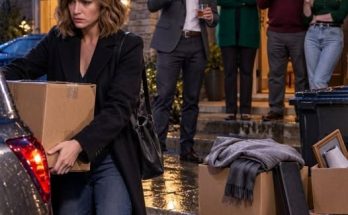
By the time Daniel Reeves told us Thomas Vance was headed toward Blue Heron land, three county vehicles were already moving west.
Dara wanted to follow them.
Richard told her no.
She argued.
Patricia told her no more firmly.
She argued with Patricia too.
I finally took the keys from Dara’s hand.
“You are not turning this into another decision you make before anybody can stop you.”
Her face flashed with anger.
Then she looked away.
“Fine.”
That single word carried more restraint than I had heard from her in weeks.
We remained at Richard’s office while Daniel coordinated with deputies by phone. Walter had already been warned. Samuel Vance had been asked to stay away from the property. Martin Kessler, through his attorney, had agreed to speak with investigators but had not yet surrendered documents.
For nearly an hour, nothing happened.
Those sixty minutes felt longer than the entire argument over Whitestone.
I paced the conference room until Patricia told me I was wearing a path into Richard’s carpet.
Dara sat by the window with both hands around a cup of water she never drank.
Finally Daniel returned.
“They found Thomas’s truck.”
Dara stood.
“Where?”
“Inside Blue Heron property. About a mile beyond the gate.”
“Did they find him?”
“Not yet.”
My pulse climbed.
Daniel continued.
“The truck was empty. Several file boxes were inside.”
“What kind of files?”
“We don’t know.”
“Were the laptops there?”
“One was.”
“And Thomas?”
“No.”
Dara whispered, “He’s in the woods.”
“Possibly.”
I pictured the old home site Walter had described, the ridge, Hollis Branch, autumn leaves covering narrow tracks.
“Is he armed?”
Daniel hesitated.
“We have reason to believe he may have access to firearms.”
Dara closed her eyes.
Patricia said, “Then nobody in this room is going anywhere near that property.”
No one argued.
At 4:18, Daniel received another call.
His expression changed halfway through it.
“Where?”
He listened.
“Is he conscious?”
Another pause.
“We’ll stay here.”
He ended the call.
“They found him.”
My stomach tightened.
“Alive?”
“Yes.”
Thomas had been discovered beside the ruins of an old springhouse near Hollis Branch.
He had fallen down a steep embankment.
His right leg appeared broken.
There was no weapon on him.
But beside the springhouse, deputies found something else.
Burned papers.
Not old ashes.
Fresh.
Dara stared.
“He was destroying documents.”
“Looks that way.”
“What kind?”
“Investigators will determine that.”
The words did nothing to reduce the dread.
Later that evening, after Thomas had been taken to the hospital under guard, deputies removed the remaining boxes from his truck and photographed the burn site.
By nine, Daniel returned with news.
Some pages had survived.
The damp ground near the springhouse had prevented the lower layers from burning completely.
Among those fragments were copies of Blue Heron company agreements.
Emails.
Old title research.
And a list of Whitmore descendants.
My name was on it.
So was Dara’s.
Dad’s.
Uncle Ben’s.
Walter’s.
Several cousins.
Beside each name someone had added short notes.
Occupation.
Approximate finances.
Location.
Family relationships.
I felt physically ill.
“What did it say next to mine?”
Daniel did not answer immediately.
“Evelyn—”
“I want to know.”
He looked at Patricia.
She nodded.
“Independent. No children. Recent property purchase. Limited family contact. Likely resistant.”
The words were cold, efficient, and strangely accurate.
“What about Dara?”
Daniel looked down.
“Primary emotional target. Strong attachment to grandfather narrative. Family organizer. Responds aggressively to exclusion or perceived disloyalty.”
Dara’s face emptied.
“They studied me.”
“Yes.”
“How?”
“Public sources. Social media. Conversations. Family information.”
She turned toward me.
“They knew what I’d do.”
“No,” I said. “They guessed.”
“And they were right.”
“That doesn’t make you a puppet.”
“It makes me predictable.”
I had no useful answer.
Daniel continued.
“There were also notes about the reunion.”
My chest tightened.
“What kind of notes?”
A surviving page appeared to outline what Thomas called the first-contact sequence.
Get Dara talking.
Let Ben introduce old land story naturally.
Martin enters after emotional framing.
Avoid legal detail initially.
Confirm younger sister owns separate tract.
Encourage possibility of ancestral reconnection.
Do not identify Blue Heron ownership.
The precision frightened me more than any threat.
They had choreographed the conversation.
Even Uncle Ben’s role had been anticipated.
“Did they plan to exclude me?” I asked.
Daniel shook his head.
“We have not found evidence they caused that.”
Dara flinched.
That part remained hers.
Not manipulated.
Not planted.
Hers.
“But,” Daniel continued, “once Martin learned you weren’t attending, the notes suggest they saw it as an advantage.”
Dara stared at the floor.
“What did they write?”
Daniel hesitated.
“Absence reduces contradiction risk.”
I closed my eyes.
That was what my exclusion became to them.
Not a family wound.
Operational convenience.
Dara whispered, “I handed them that.”
“Yes,” I said before I could soften it.
She nodded.
“I know.”
The investigation moved quickly after Thomas was found.
His surviving laptop contained encrypted folders investigators were attempting to access. The second laptop remained missing.
The burned papers suggested he feared specific records more than arrest.
That raised an obvious question.
What had he been willing to destroy?
Martin began cooperating the next morning.
His lawyer negotiated the terms of the interview, but some information reached Patricia and Richard because it directly involved our civil interests.
Martin admitted the reunion contact had been planned.
He admitted Thomas had created the travel account that directed Dara toward the lodge.
He admitted he knew where the true Whitmore tract was before meeting any of us.
He admitted the connection between my cabin and the ancestral land was weak from the beginning.
But on one point, he insisted Thomas had lied to him too.
“The affidavit?” Dara asked when Richard briefed us.
“Yes.”
“What about it?”
“Martin says he did not create the false notary seal.”
Dara looked stunned.
“He gave me the document.”
“He admits preparing an early draft.”
“Then what changed?”
“According to him, he emailed the draft to Thomas for review. Thomas returned the final version and told him notarization had been arranged.”
“That sounds convenient.”
“It may be.”
Richard continued.
“Martin says he told you the document had already been authenticated because Thomas told him it had.”
Dara stood beside the conference table, pale with anger.
“So Martin lied because Thomas lied.”
“That is his version.”
“What does that make me?”
No one answered.
She laughed bitterly.
“The idiot at the end of the chain.”
Richard’s expression softened.
“It makes you responsible for signing something you should not have signed. It does not automatically make you responsible for how other people altered it.”
That distinction seemed to matter to her.
Not enough to comfort.
Enough to breathe.
I asked, “Why my cabin?”
Richard looked toward Patricia.
She answered.
“To increase pressure.”
“On Dara?”
“On multiple people.”
“How?”
“Thomas apparently believed conflict over your property would do three things. First, make Dara financially and emotionally invested. Second, create urgency around resolving the ancestral claim. Third, push Walter to sell the actual tract before family litigation became public.”
I stared at her.
“They wanted Walter embarrassed.”
“Yes.”
Walter had hidden his ownership because he feared family demands.
If Dara publicly claimed the wrong property while investigators or lawyers uncovered the real tract, Walter’s secret would surface.
He might sell rather than endure the conflict.
It was ugly.
And clever.
“Did Thomas expect Dara to win my cabin?”
“No,” Patricia said. “He expected the claim to fail.”
Dara turned sharply.
“What?”
“That was the point.”
She looked almost offended by the idea.
Patricia continued.
“If the claim against Whitestone succeeded, there would be no reason to buy the western tract. They needed you to believe strongly enough to fight, then discover you had targeted the wrong land.”
The room went silent.
Dara sat down.
“So I was supposed to lose.”
“Yes.”
“And then they’d say the real land was available.”
“Likely at a premium.”
Her face twisted.
“I paid eighteen thousand dollars to be prepared for a failure they designed.”
Richard nodded.
“I’m afraid that is what the evidence suggests.”
I expected her to explode.
Instead she began to cry.
Quietly.
No raised voice.
No anger.
Just tears falling onto hands that remained folded in her lap.
I had seen Dara cry at funerals.
At Dad’s surgery years ago.
Once when her dog died.
I had never seen her cry because certainty itself had betrayed her.
I sat beside her.
Not touching.
Just closer.
After a while she said, “I thought I was smarter than you.”
The confession surprised me.
She wiped her face.
“Not about everything. About family. I thought I understood people better.”
I stared at the conference table.
“You understand people.”
“No. I manage them.”
The difference sat between us.
She gave a weak laugh.
“That sounds awful.”
“It sounds accurate.”
She nodded.
“I thought if I stayed on top of everything, nobody could surprise me.”
“People always surprise you.”
“You did.”
“How?”
“You built a whole life I didn’t know about.”
The cabin.
The work.
The choices I had stopped explaining.
“I hated that,” she said.
“I know.”
“I told myself it meant you didn’t care.”
“And what did it mean?”
“That you wanted something I couldn’t organize.”
For once, she had named it exactly.
Before we could say more, Daniel called.
Thomas was awake.
He had refused to answer questions.
But deputies had finished cataloguing the box from his truck.
Inside was a file marked WHITMORE EXIT STRATEGY.
Daniel would not release the full contents yet.
But one document could be described.
It was a proposed purchase contract.
Blue Heron Timber Holdings as seller.
A newly created entity as buyer.
Price: $1.9 million.
Dara stared.
“That land is not worth that.”
“No,” Richard said. “Current estimates place it closer to seven hundred thousand.”
“Who was the buyer?”
Daniel looked at us.
The entity had been created two weeks after the reunion.
Its name was Whitmore Heritage Preservation Group, LLC.
The registered organizer was Martin Kessler.
But a draft operating agreement listed intended members.
Dara Whitmore.
Several relatives.
And one additional name.
Mine.
I stood so quickly my chair struck the wall.
“I never agreed to anything.”
“We know.”
“Why am I on it?”
Daniel’s face was grim.
“Because the plan apparently assumed that after the fight over your cabin, reconciliation would make the western tract easier to sell to both sisters together.”
Dara stared at me.
The manipulation had not ended with division.
They had planned the reunion after the fracture too.
Break us apart.
Show us the wrong land.
Let the claim collapse.
Reveal the true property.
Then sell us a fantasy of repairing the family by buying it together.
For nearly two million dollars.
The most disturbing part was how close it came to sounding like something our family might have believed.
Click here to continue reading: PART 10: Walter Revealed the Document Uncle Paul Died Trying to Find, and It Changed What Our Grandfather Had Really Been Chasing
My Sister Left One Name Off the Reunion List, and I Finally Stopped Pretending It Was an Accident
Part 9 of 18