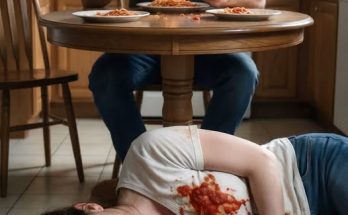
The trial began nine months after Friday dinner.
By then, our old house belonged to a bank.
Oakhaven Builds no longer existed.
Thomas Reed had pleaded guilty to charges connected to Mark’s death and agreed to testify.
Eric Cole faced fraud and obstruction charges.
Paul Danner pleaded guilty to corruption, evidence concealment, and conspiracy-related offenses after turning over years of records.
Grace Holt cooperated under a negotiated agreement.
Chloe pleaded guilty to attempted-murder conspiracy, fraud, identity crimes, and obstruction.
None of those outcomes felt like victory.
They felt like accounting.
For years, David had hidden consequences inside other people.
Now each one was being named.
The prosecution tried the current attempted murders together with financial charges, while evidence of Mark’s killing entered through related conspiracy counts and motive arguments permitted by the court.
I attended every day Leo was not required to be there.
He chose school whenever possible.
That decision made me proud.
Not because he was avoiding reality.
Because he refused to let David turn the trial into the center of his life.
The courthouse filled quickly.
Reporters sat in the back.
Local contractors I recognized occupied rows near the door.
People who had once shaken David’s hand now avoided my eyes.
David entered in a dark suit.
No handcuffs visible.
Hair trimmed.
Face thinner.
For one terrible instant, he looked like the husband I had known.
That was one of the hardest truths of the entire case.
People do not always look like what they have done.
He saw me.
His expression changed slightly.
Then his eyes moved toward the empty chair beside me.
Leo was not there.
David looked disappointed.
I felt no satisfaction.
Assistant District Attorney Hale opened simply.
He did not call David a monster.
He did not need to.
He told the jury that the case was about control.
Control of money.
Control of records.
Control of witnesses.
Control of family.
And when control failed, elimination.
Then he began building the timeline.
Mark’s ledger.
Harbor Point.
Anchor.
The hidden accounts.
The confrontation.
Mark’s death.
Adrian Holt’s blackmail.
Martin’s silence.
Danner’s corruption.
Grace’s payments.
Chloe’s financial work.
The forged loans.
My consultation with a divorce attorney.
The insurance policies.
Leo’s hidden accounts.
Friday dinner.
Piece by piece.
No single fact carried the case.
Together they became inescapable.
Tom Reed testified on the fifth day.
He looked smaller than he had in the hospital.
His shoulder remained stiff.
He walked with a cane because nerve damage from the shooting had affected his balance.
Hale asked what happened to Mark.
Tom told the jury.
No euphemisms.
He and David restrained him.
David struck him.
They forced medication into him.
They put him behind the wheel.
David pushed the car.
My mother left the courtroom halfway through.
I stayed.
When Hale asked why Tom helped, he answered, “Because I was a coward.”
That was the first answer from any of them I believed completely.
David’s attorney tried to portray Tom as a liar trading testimony for leniency.
That was true too.
People could be guilty and useful.
Selfish and truthful.
The defense asked why the jury should believe a confessed accomplice.
Tom looked toward David.
Then said:
“You shouldn’t believe me because I’m good. You should believe the recording.”
The courtroom went silent.
Mark’s audio was played.
I had heard it too many times.
The jury had not.
One woman covered her mouth when David’s voice said:
You’re going to take your allergy medicine, Mark.
David did not look at the jurors.
He looked at me.
I looked back.
For eleven years, he had depended on my ignorance.
That was gone.
Grace testified by secure video.
She described Harbor Point, Adrian, Mark’s warnings, and the years of Aster payments.
She admitted blackmail.
Admitted silence.
Admitted attending Mark’s funeral while knowing David had threatened him.
The defense attacked her credibility.
She accepted almost every accusation.
“Yes, I took money.”
“Yes, I lied.”
“Yes, I protected myself.”
Then the defense lawyer asked:
“Mrs. Holt, isn’t it true that you are blaming Mr. Vance now because doing so benefits you?”
Grace answered:
“It benefits me less than continuing to stay quiet would have.”
That landed.
Paul Danner testified under agreement.
He described Martin’s letter.
David’s payments.
Police information.
Evidence warnings.
He admitted telling David about my lawyer visit.
That was the moment the plan accelerated.
I had not been preparing divorce papers.
But David believed I was.
The prosecution showed messages.
D: She’s making moves.
P: Could be nothing.
D: She doesn’t do nothing.
Two days later, David asked Chloe to increase my life-insurance coverage.
A week after that, he added coverage connected to Leo.
The defense argued the policies were ordinary financial planning.
Then Hale displayed the Phase Two documents recovered at the quarry.
The argument weakened.
Chloe testified last among the accomplices.
She looked different without careful makeup or office clothes.
Her hair was tied back.
Gray showed near the roots.
She did not look at me until Hale asked about Friday.
“Did you know Sarah Vance would be drugged?”
“Yes.”
“Did you help obtain the drug?”
“Yes.”
“Did you know the dosage could be fatal?”
“Yes.”
“Did you know Leo Vance was also being dosed?”
“Before dinner, yes.”
My stomach clenched despite already knowing.
“Did you object?”
“Yes.”
“Did you withdraw from the plan?”
“No.”
“Why?”
“Money. Fear. Cowardice.”
Three words.
At least she named them.
“Did you place the emergency call?”
“Indirectly.”
She explained the remote speaker.
The false cry for help.
Mrs. Alvarez calling 911.
Hale asked why.
Chloe looked toward Leo’s empty seat.
“Because David told me both were down.”
“And?”
“He said he would wait ten minutes.”
“What did you understand that to mean?”
“That if they were still alive, he would suffocate them.”
“Why intervene?”
“Leo.”
“Why Leo specifically?”
“Because I kept telling myself Sarah was part of a business problem.”
My hands tightened.
“And Leo?”
“He made that lie impossible.”
That was the clearest explanation of Chloe I ever heard.
She had created categories that allowed her to participate.
Business.
Money.
Adult choices.
Then a child collapsed at dinner.
The moral fiction failed.
The prosecution asked if her emergency intervention erased her involvement.
“No.”
“Did you later attempt to leverage evidence for immunity?”
“Yes.”
“Did you take Leo during the hotel evacuation?”
“I grabbed him.”
“For what purpose?”
“To force Sarah to meet me.”
“Did you intend to kill him?”
“No.”
The defense objected to the question.
The judge sustained.
None of it made Chloe innocent.
But truth did not require flattening anyone into a single thing.
That became one of the lessons I hated most.
Martin’s letter was admitted near the end.
A forensic examiner confirmed the paper, ink sequence, fingerprints, and dates.
David’s defense called it hearsay in spirit even where the court had permitted specific portions under legal exceptions.
Hale used it carefully.
Not as proof of every crime.
As proof that Martin feared David, had preserved information, and had entrusted Danner with the letter years before the current case.
Then came the food.
My plastic bag.
The ridiculous, sauce-stained evidence I had shoved under my blouse while pretending to collapse.
A toxicologist described the concentration.
The dose.
The danger.
The difference between my portion and Leo’s.
Leo’s contained more.
I closed my eyes.
I had known.
Hearing it quantified was worse.
“Would these amounts be consistent with accidental cross-contamination?” Hale asked.
“No.”
“Could they result from normal prescribed use?”
“No.”
“What could they cause?”
“Profound sedation, respiratory failure, coma, death.”
The plastic bag sat inside another evidence bag.
Wrinkled.
Ordinary.
That small act had survived all David’s cleaning.
The prosecution then played the recovered audio from our kitchen.
David’s call.
The recording came from a smart-home device log Chloe helped investigators locate after pleading.
His voice filled the courtroom.
Both of them ate.
They’re down.
I separated the portions.
Soon they’ll both be gone.
There are sounds that permanently divide your life into before and after.
That was one.
David finally testified in his own defense.
His lawyers had advised against it.
I learned later.
He insisted.
Of course he did.
Control again.
He said the company was collapsing.
He admitted financial crimes.
Admitted forged signatures.
Admitted hiding money.
But he denied intending to kill us.
He claimed Chloe designed the poisoning to implicate him.
He claimed Tom exaggerated Mark’s death to save himself.
He claimed Martin had been senile near the end.
He claimed Danner was corrupt.
That part was true.
He claimed Grace was a blackmailer.
Also true.
He built his defense out of everyone else’s guilt.
It almost sounded persuasive if you ignored the evidence.
Then Hale cross-examined him.
“Did you prepare Sarah’s plate?”
“Yes.”
“Leo’s?”
“Yes.”
“Did you eat?”
“No.”
“Why?”
“I wasn’t hungry.”
“Did you call Chloe after they collapsed?”
“Yes.”
“Why?”
“She handled company matters.”
“While your wife and child were unconscious?”
“I panicked.”
“Did you call emergency services?”
“I thought someone already had.”
“How?”
“I heard sirens.”
“Before or after telling Chloe they would both soon be gone?”
David paused.
The jury noticed.
Hale continued.
“Did you check your son’s pulse?”
“Yes.”
“Did you call for help then?”
“No.”
“Did you wash dishes?”
“I don’t remember.”
“You remembered enough to say you were not hungry, but not whether you washed the plates while your son was unconscious?”
David’s jaw tightened.
“I was in shock.”
Hale displayed the insurance documents.
Then the forged loans.
Then the exposure list.
Mark — resolved.
Adrian — resolved.
Sarah — growing risk.
Leo — dependent variable.
“Your words?”
David looked at the screen.
“Yes.”
“What does resolved mean?”
“Handled.”
“Mark was dead.”
“Yes.”
“Adrian was dead.”
“Yes.”
“Coincidence?”
“Yes.”
“What does dependent variable mean?”
“Leo’s finances depended on mine.”
Hale showed Phase Two.
The alternative beneficiary structure.
The passport paperwork.
The hidden accounts in Leo’s identity.
David’s explanation became increasingly complicated.
That mattered.
Truth usually became clearer under detail.
His story became fog.
Then Hale asked one question.
“Mr. Vance, when Sarah Vance lost consciousness on the kitchen floor, what did you believe she knew?”
David looked toward me.
For the first time during testimony, he seemed genuinely tired.
“Too much.”
The courtroom became perfectly still.
His attorney stood.
“Objection—”
Hale did not move.
The judge addressed David.
“You may clarify if you misunderstood.”
David swallowed.
“I meant she knew too much about the finances.”
But it was done.
Too much.
That had always been the reason.
The jury deliberated for two days.
Leo came for the verdict.
He sat beside me.
My mother on his other side.
Emma behind us.
When David entered, Leo looked at him directly.
No fear.
No affection.
Just recognition.
The clerk read the verdicts.
Guilty.
Attempted murder of Sarah Vance.
Guilty.
Attempted murder of Leo Vance.
Guilty.
Conspiracy.
Guilty.
Fraud.
Identity theft.
Forgery.
Obstruction.
Additional counts connected to Mark’s death remained part of a separate proceeding, but Tom’s plea and David’s recorded statements had already changed Mark’s official death classification.
No longer accident.
Homicide.
That mattered almost as much as the verdict.
My mother began crying.
Leo did not.
He squeezed my hand.
David remained still.
Sentencing came weeks later.
The judge spoke for nearly forty minutes.
She described planning.
Betrayal.
Abuse of financial systems.
Use of family trust.
The deliberate targeting of a child.
She imposed a sentence that meant David would likely spend the rest of his life in prison.
I expected closure.
Instead, I felt exhaustion.
Afterward, while deputies prepared to move him, David asked through his attorney for one minute with Leo.
I said no.
Leo said yes.
We argued quietly in the hallway.
“You don’t owe him anything.”
“I know.”
“You don’t have to hear whatever excuse he has.”
“I know.”
“Then why?”
Leo looked at me.
“Because I have one question.”
I understood immediately.
The same question he asked in Emma’s bathroom.
Did he ever love us?
I wanted to protect him from the answer.
But some questions belong to the person asking them.
The meeting happened in a secure interview room.
A guard remained inside.
I sat beside Leo.
David entered in restraints.
He looked older than he had nine months earlier.
Prison clothing.
Gray at his temples.
No audience.
No jury.
No story left to sell.
He sat across from us.
“Leo.”
My son did not answer.
David looked at me.
“Sarah.”
I remained silent.
He turned back.
“I never wanted—”
Leo interrupted.
“Did you love me?”
David stopped.
The question was too simple for him.
He looked toward the table.
“Of course.”
Leo’s face did not change.
“Then why did you poison me?”
David inhaled.
“I was under pressure.”
“That isn’t an answer.”
“You don’t understand how bad things were.”
“That isn’t an answer either.”
David’s jaw tightened.
For a second I saw the old irritation.
The need to control the conversation.
Leo saw it too.
“You keep explaining yourself instead of answering.”
David looked at him.
“I loved you.”
“More than yourself?”
Silence.
There it was.
The only question that mattered.
David did not answer.
Leo nodded once.
“Okay.”
He stood.
David leaned forward.
“Leo.”
My son stopped.
“You were never supposed to be part of this.”
That sentence had been repeated by nearly everyone.
Chloe.
Tom.
Now David.
Leo looked at him.
“But I was.”
David opened his mouth.
Leo continued.
“You don’t get to decide what counts after you do it.”
Then he walked out.
I followed.
I did not look back.
Months later, our lives became quieter.
Not normal.
That word no longer interested me.
We rented a small house near Leo’s school.
No grand kitchen.
No garage full of tools.
No hidden drawers.
My mother visited too often.
Emma complained about parking.
Leo returned to soccer.
He still checked food labels more than before.
For several months he refused to eat anything he had not watched being prepared.
We did not force him.
Trust rebuilt slowly.
So did appetite.
Mark’s death certificate was amended.
Cause of death:
Homicide.
My mother placed a copy in the drawer where she kept his photographs.
Not because she wanted the word.
Because she wanted the lie removed.
Martin’s letter remained evidence for ongoing cases.
Eventually I received a certified copy.
I read it once more.
Then put it away.
I did not forgive him.
But I understood him better.
Understanding was not absolution.
That distinction became important.
Grace completed her cooperation agreement and paid restitution tied to documented blackmail proceeds.
Danner lost his badge permanently.
Tom remained imprisoned.
Eric accepted a plea.
Chloe received a long sentence, reduced because her emergency intervention, evidence, and testimony had directly saved lives and supported prosecution.
She had asked whether calling for help mattered.
It did.
So did everything else.
People wanted stories like ours to end with clean categories.
Hero.
Villain.
Victim.
Accomplice.
Coward.
Witness.
But real people crossed categories every day.
Mark had courage.
Martin had regret and cowardice.
Chloe helped create danger and then interrupted it.
Tom enabled murder and later confessed.
I missed warning signs and still saved evidence.
Leo was a child and still became the clearest thinker in the room.
David alone seemed to believe complexity excused responsibility.
It did not.
One Friday evening almost a year after the poisoning, Leo and I cooked dinner together.
Chicken.
Potatoes.
Rosemary.
I had avoided the meal for months.
Then Leo suggested it.
“Are you sure?”
“No.”
He smiled slightly.
“But I’m hungry.”
We cooked side by side.
He seasoned the potatoes.
I handled the chicken.
We joked about his terrible knife skills.
At the table, he looked at my plate.
Then his.
For a second, the old kitchen existed between us.
Blue ceramic.
Metallic taste.
A fork falling.
David watching.
I reached for my water.
Leo picked up his fork.
“You okay?”
“Yes.”
He studied me.
“You’re lying.”
“A little.”
“Me too.”
We sat with that.
No pretending.
No protecting each other from what was already known.
Then he took a bite.
Chewed.
Swallowed.
I did the same.
Nothing happened.
The room remained quiet.
Ordinary.
That ordinary moment felt larger than any courtroom verdict.
After dinner, Leo carried both plates to the sink.
I watched him rinse them.
He glanced over his shoulder.
“What?”
“Nothing.”
“That’s creepy.”
I laughed.
“Sorry.”
He shook his head and went back to the dishes.
Outside, evening settled over the street.
A dog barked.
Someone started a lawn mower.
A car door slammed.
For once, none of those sounds meant danger.
I thought about Friday dinner.
About collapsing deliberately because staying conscious required pretending not to be.
About the plastic bag against my ribs.
About David’s boots circling me.
About the sirens Chloe indirectly summoned.
About Mark’s notebook crossing eleven years to reach us.
About every person who had chosen silence because truth seemed too expensive.
The truth was expensive.
It cost marriages.
Businesses.
Reputations.
Freedom.
Families.
But silence had cost more.
Mark paid for it with his life.
Leo nearly did too.
So when people later asked what saved us, they expected one answer.
My instincts.
The hidden food sample.
Leo’s recording.
Chloe’s emergency call.
Mark’s ledger.
Police work.
All of those mattered.
But none alone was enough.
What saved us, finally, was that the secrets stopped belonging to one person at a time.
Everyone knew a piece.
At last, those pieces were placed together.
David had survived for years inside the gaps.
Once the gaps closed, so did every escape route he had built.
Leo finished drying the final plate.
“Mom?”
“Yes?”
“You’re doing that thing again.”
“What thing?”
“Staring at nothing.”
“I’m thinking.”
“Dangerous.”
He smiled.
I threw a dish towel at him.
He caught it.
And laughed.
A real laugh.
Unforced.
Young.
The sound filled the kitchen.
I let myself hear it without imagining how close I had come to losing it.
Then I turned off the light.
We walked out together.
Alive.
Not because someone had spared us.
Because the plan failed.
Because the evidence survived.
Because people finally spoke.
And because on the night my husband expected me to die quietly on the floor, I had listened instead.
The End
Read more original stories on Feel Every Story.
Three Minutes Into Friday Dinner, My Son Dropped His Fork and My Husband Did Something No Father Should Do
Part 15 of 15