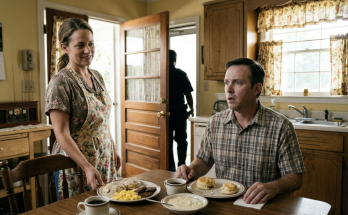
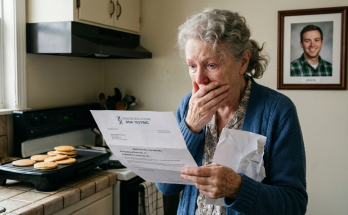
For several seconds, nobody moved.
“All of you?” I asked.
James rubbed a hand across the back of his neck.
My mother spoke before he could answer.
“It made more sense for us to stay together while we sort this out.”
“Sort what out?”
“James’s situation.”
“You keep saying that as though repetition counts as an explanation.”
My father walked toward the bar again, but this time he did not pour another drink.
That told me more than anything else had.
My father drank when he felt in control.
When control slipped, he became precise.
“We need liquidity,” he said.
“How much?”
“We’ll get to that.”
“No. We’ll get to it now.”
My mother shook her head.
“Money is all you care about.”
“You entered my home because you need money.”
“We entered your home because we need our daughter.”
“You didn’t need your daughter for three years.”
Her face tightened.
“That is unfair.”
“So was finding you in my bedroom.”
James exhaled loudly.
“Can we stop doing the family-therapy thing?”
I looked at him.
“Fine. Tell me exactly what happened.”
He paced once between the sofa and the windows.
“I put money into a deal.”
“What deal?”
“Crypto.”
Of course.
Not because cryptocurrency itself explained anything, but because James had always been drawn to markets he believed rewarded confidence faster than experience.
“What did you buy?”
“It wasn’t just buying.”
“Then what?”
“There was leverage.”
“How much?”
He said nothing.
My father answered for him.
“Too much.”
I folded my arms.
“Whose money?”
James stared through the window.
“Some of mine.”
“And the rest?”
“A lender.”
“What kind of lender?”
“A private one.”
That phrase made the back of my neck tighten.
Private lender could mean anything from a legitimate specialty finance company to a man whose paperwork existed mainly to document how thoroughly he owned you.
“Name.”
James glanced toward Dad.
“Apex Global Holdings.”
I had heard the name.
Not directly, but in the marina world people heard things. Boat owners, contractors, developers, hospitality operators—businesses with irregular cash flow attracted lenders who could move quickly when banks would not.
Quick money rarely came cheaply.
“How much did you borrow originally?”
James hesitated.
“Eighty.”
“Eighty thousand?”
“Yes.”
“And what do you owe now?”
“It’s complicated.”
“Numbers aren’t complicated.”
“Vanessa,” my mother warned.
I ignored her.
“How much?”
My father stepped in.
“One hundred forty-eight thousand dollars.”
I thought I had misunderstood him.
“What?”
“One hundred forty-eight.”
“You borrowed eighty.”
James’s jaw tightened.
“There were fees.”
“Sixty-eight thousand dollars in fees?”
“Interest too.”
“How long ago did you borrow?”
“Seven months.”
I stared at him.
Seven months.
Nearly seventy thousand dollars of additional liability in seven months meant one of two things.
Either James had signed something catastrophic, or he was still hiding part of the story.
Possibly both.
“What was the investment supposed to do?”
He turned away.
“It doesn’t matter now.”
“It matters if you’re asking me for one hundred forty-eight thousand dollars.”
“We’re not asking you to invest.”
My father’s choice of words made me look at him.
“No?”
“We’re asking you to solve a temporary family emergency.”
I almost admired the transformation.
James’s debt had become a family emergency.
My money would become the solution.
Somehow the only individual responsibility involved was mine.
“What happens if he doesn’t pay?”
Nobody answered immediately.
Then my mother said, “They’ve been threatening him.”
My annoyance disappeared.
“Threatening how?”
She looked toward James.
He took out his phone.
For the first time, the arrogance left him entirely.
He unlocked the screen, opened a folder, and handed the phone to me.
There were photographs.
James leaving his apartment building.
James at a gas station.
James sitting inside his car at a traffic light.
Another image showed the entrance to my parents’ neighborhood.
No message appeared over the photographs.
None was needed.
I felt my stomach tighten.
“How long have they been sending these?”
“A week.”
“Did you go to the police?”
James laughed bitterly.
“And tell them what? That somebody took my picture?”
“Yes.”
“They’ll do nothing.”
“Have you spoken to an attorney?”
“No.”
“Why not?”
“Because Dad said we could fix it.”
I slowly handed back the phone.
My father watched me carefully.
There was confidence returning to his face now.
He had shown me the frightening part.
He expected fear to carry me the rest of the way.
I did feel fear.
Not enough to surrender my judgment.
“Where did the eighty thousand go?”
James’s expression closed again.
“The market moved.”
“That isn’t an answer.”
“It went bad.”
“How bad?”
“All of it.”
My mother sat down.
“The important thing is that James is safe.”
“The important thing is understanding whether paying this ends it.”
My father nodded impatiently.
“It ends it.”
“How do you know?”
“They gave him a payoff figure.”
“Written?”
“Yes.”
“I want to see it.”
James pulled a folded document from a backpack beside the sofa and handed it over.
At the top was the name Apex Global Holdings.
Below it, a demand for $148,000.
I read the first page slowly.
There were default provisions, collection fees, a repayment deadline, and language aggressive enough to be intentional without explicitly threatening anything illegal.
I turned the page.
“Why are Mom and Dad moving out?”
My mother glanced at my father.
That glance answered before anyone spoke.
“Are they coming after the house?”
“No,” Dad said.
“Then why did you move?”
“We thought it was safer.”
“For whom?”
“All of us.”
I lowered the paper.
“You abandoned your house because James owes a private lender money, and you came here because you thought a yacht would be safer.”
“It has security.”
“It is also publicly listed in charter directories.”
“You can take us somewhere.”
There it was.
The other half of the plan.
They did not only expect my money.
They expected The Sovereign to become transportation, lodging, protection, and whatever else their crisis demanded.
“You want me to leave Miami.”
“Temporarily.”
“I have contracts.”
“Reschedule them.”
“I have crew.”
“They can come.”
“I have clients arriving.”
“They can wait.”
Every answer came from my father without hesitation.
My business existed, in his mind, only until James’s needs became more important.
“I’m not moving this vessel to hide you from a creditor.”
My mother stood again.
“You would rather leave your brother exposed?”
“I would rather contact an attorney and law enforcement.”
“We don’t have time for that.”
“You found time to pack four suitcases.”
My father’s face darkened.
“Enough.”
“No. Not enough.”
I held up the demand letter.
“You appeared without warning, lied your way onto my yacht, intimidated a nineteen-year-old employee, moved into my bedroom, expected me to cancel business, transport you somewhere, and apparently produce almost a hundred and fifty thousand dollars. I am still waiting for somebody to explain why any of you thought this would work.”
My father stared at me.
Then something in his expression softened.
Not kindness.
Strategy.
“Because you can afford it.”
I gave a short laugh.
“You have no idea what I can afford.”
“Look around.”
“I do. Every day.”
“You own this.”
“My company owns it.”
“Same difference.”
“No, actually. It is an enormous difference.”
“You’re hiding behind paperwork.”
“I’m explaining reality.”
He waved toward the windows, the polished cabinetry, the recessed lighting.
“This is reality. You are sitting on millions.”
“I am sitting on an operating asset with financing, payroll, maintenance, fuel, insurance, taxes, docking costs, and contracts attached to it.”
“You always have an excuse.”
I stared at him.
An excuse.
The months I had spent worrying over cash flow.
The repair invoice that once kept me awake three nights in a row.
The year I delayed replacing my car because The Sovereign needed navigation upgrades.
All of it vanished under the word excuse because my father saw only the finished surface.
“I cannot move one hundred forty-eight thousand dollars out of my business overnight,” I said. “Even if I wanted to.”
“You could.”
“I won’t jeopardize payroll.”
“Then rebuild the account afterward.”
My mother said it as though I could simply grow the money back.
I looked at her.
“That account pays people.”
“James could be hurt.”
“And that makes everyone else’s obligations disappear?”
“Your employees will survive being paid late.”
The cold certainty in her voice stunned me.
People she had never met were apparently acceptable casualties.
My father stepped closer.
“We are not asking you to give away money.”
“What are you asking?”
He paused.
Then he said something so calmly that, for a moment, I missed how extraordinary it was.
“Think of it as repayment.”
I frowned.
“Repayment for what?”
“For us.”
My mother’s eyes shifted toward him.
James became very still.
I felt the room change.
“What does that mean?”
My father drew himself up slightly, as though he had been waiting for an opportunity to present an argument he considered airtight.
“After college, you came home.”
“For one month.”
“You lived under our roof.”
“I was waiting for my first crew contract.”
“We fed you.”
“Yes.”
“We supported you.”
“I paid for my own phone, transportation, clothes, and everything else.”
“You had a bedroom.”
“The bedroom I grew up in.”
“That room cost money.”
I stared at him.
He continued.
“Food cost money. Utilities cost money. School cost money. Raising children costs money.”
My mouth went dry.
Surely he could not be saying what it sounded like he was saying.
“You’re charging me for being your daughter?”
“Don’t twist it.”
“What am I twisting?”
“We invested in you.”
The same word again.
Invested.
As if I had been a financial instrument they purchased eighteen years earlier and now wished to redeem.
“We calculated what we’ve done for you,” he said. “What you received. What you were given. Adjusted properly, considering inflation and the years involved, what you owe this family is close enough to what James needs.”
My mother looked uncomfortable now, but she did not contradict him.
James avoided my eyes.
I heard the generators beneath the floor.
A steady mechanical vibration.
Reliable.
Real.
I found myself remembering grocery bags on the kitchen counter when I was ten. School shoes. Birthday cakes. Doctor visits. Christmas presents.
Had my father looked at those things and seen future debt?
Had every ordinary act of parenting been recorded somewhere inside his head as credit extended to me?
“You ran the numbers,” I said.
“Yes.”
The pride in his answer was almost unbearable.
“And you came up with one hundred forty-eight thousand dollars.”
“Approximately.”
“How convenient.”
“It’s fair.”
“No. It matches James’s debt.”
“It is what your family needs.”
The last fragile part of me that had been trying to treat this as a financial emergency finally stopped pretending.
This was not about helping James.
Not fundamentally.
It was about ownership.
My father believed that because he had raised me, some portion of everything I became belonged permanently to him.
My mother believed my stability existed to absorb James’s mistakes.
James believed rescue was simply what happened after he failed.
And all three had boarded The Sovereign expecting that old system to continue.
I looked again at the demand letter in my hand.
Apex Global Holdings.
One hundred forty-eight thousand dollars.
Private lender.
Seven months.
Threatening photographs.
Numbers had always calmed me because numbers could be tested.
Documents could be read.
Contracts could be challenged.
Claims could be traced.
My family wanted emotion to move faster than thought.
That was why they had brought the photographs.
That was why they had arrived together.
That was why my father kept using words like family, repayment, and obligation instead of showing me facts.
For the first time since boarding, I knew what I needed.
Time.
Not much.
Just enough to find out what James actually owed, who held the debt, what leverage they truly possessed, and whether my parents had accidentally brought me the very document I could use against them.
I let my shoulders drop.
My father noticed.
He thought I was surrendering.
“I need to check the company accounts,” I said quietly.
My mother studied me.
“What does that mean?”
“It means I can’t move that much money from my phone without creating problems.”
James finally looked hopeful.
My father gave a small nod, as though sanity had returned to the room.
“How long?”
“I need access to my banking records and compliance files.”
“You can do that here.”
“No. Not all of it.”
My mother’s suspicion returned immediately.
“You are not calling the police.”
“If I involve police without understanding Apex’s position, James could panic and do something stupid.”
James flinched at that.
I continued before anyone could challenge me.
“I need two hours.”
My father looked at my mother.
Then at me.
“You’ll come back?”
I almost smiled.
He still believed the danger was that I might abandon them.
He had not yet considered that I might return with a plan of my own.
“I’ll come back,” I said.
I folded the demand notice and slipped it into my bag.
My father reached toward it.
“I need that.”
“So do I.”
He hesitated, then lowered his hand.
I turned toward the exit.
Behind me, my mother called my name.
I stopped but did not turn around.
“Remember,” she said, “whatever happened before, James is your brother.”
I looked over my shoulder.
“And I’m your daughter.”
Nobody answered.
That silence followed me all the way down the gangway.
By the time my shoes touched the dock, I had already decided who I was calling.
My mother’s older sister had spent more than thirty years destroying bad arguments in courtrooms.
Aunt Morgan had also been the only person in my family who never told me I owed James anything.
I took out my phone.
Then I called her.
Click here to continue reading: PART 5: My Aunt Read the Debt Letter Once, Then Asked the Question My Family Had Been Carefully Avoiding All Afternoon
I Came Back to My Yacht and Found My Father Wearing My Robe Like He Had Already Replaced Me
Part 4 of 15