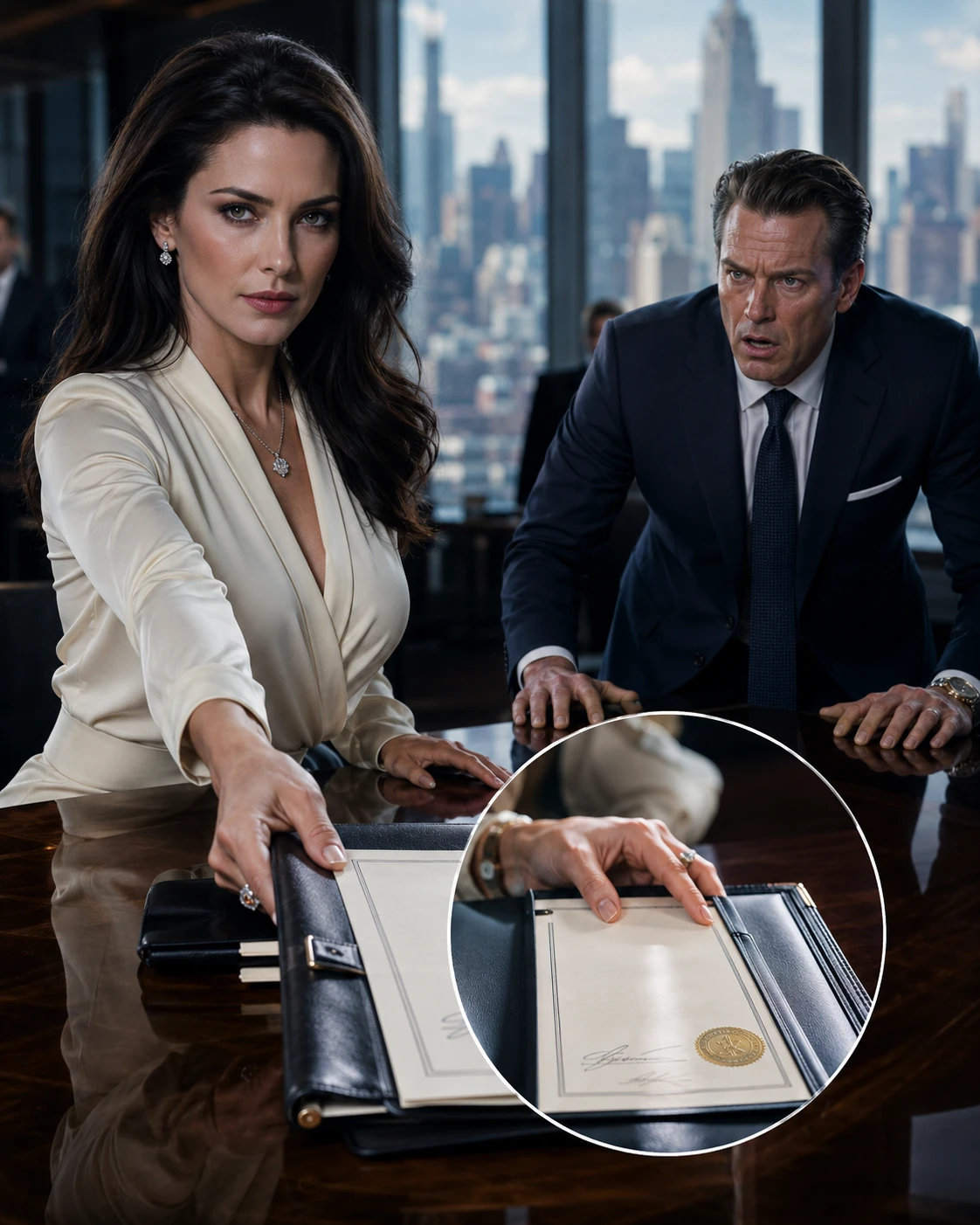
His mistress asked me to teach her how to host my husband’s investors.
She sent the message at 7:14 on a Thursday morning, while I was standing barefoot in my marble kitchen, watching rain slide down the windows of our penthouse above Park Avenue.
“You know what they like,” she wrote, as if she were asking for a recipe. “And he needs me to make a good impression.”
For one long second, I stared at the words until they blurred.
Then I looked up at the reflection in the glass: thirty-eight years old, silk robe, wedding ring cold against the stem of my coffee cup, face calm enough to be mistaken for forgiveness.
I had been publicly humiliated three nights earlier at the Whitmore Foundation Gala, when my husband, Nathaniel Sterling, stood under a chandelier the size of a small moon and thanked “the woman who has changed everything” in his life.
Not his wife.
Not me.
He lifted a glass toward Lila Monroe, a twenty-six-year-old former event assistant with champagne-colored hair, a dress too expensive for her salary, and my mother’s sapphire earrings hanging from her ears.
The room had gone quiet in that beautiful, vicious way rich people have mastered. No gasps. No open shock. Just a thousand tiny adjustments: eyes sliding toward me, mouths tightening, phones lowering just enough to capture my face.
Nathaniel smiled like a king who believed the kingdom belonged to him.
Lila blushed like a girl who thought shame was something other women wore.
And I stood there in black satin, holding a glass of untouched champagne, while every investor, donor, and board member in Manhattan pretended not to watch my heart break.
What none of them knew was that my heartbreak had ended months before.
By the time Lila asked me for etiquette, grief had already gone cold.
So I replied.
I sent her the seating chart.
I sent her the menu.
I sent her the wine notes, the dietary restrictions, the proper pronunciation of every guest’s last name, and the exact order in which the investors preferred to be greeted.
Then I copied one email to the board’s ethics committee.
By the time dinner started, every investor knew why she had been invited.
Chapter 1: The Woman at the End of the Table
For twelve years, I was the invisible architecture behind Nathaniel Sterling’s public life.
People saw the tuxedo, the confident smile, the magazine covers, the interviews in which he said things like discipline is love with a calendar and money only respects certainty. They saw the penthouse, the Hamptons house, the black cars waiting in the rain, the private tables at restaurants where no one ever asked for a reservation.
They did not see me at two in the morning, editing his speeches because he overused the word legacy.
They did not see me memorizing the names of investors’ children, their allergies, their charities, their divorces, their favorite bourbon, their quiet resentments.
They did not see me sit across from anxious widows and retired NFL players and Silicon Valley founders who wanted to know whether Nathaniel Sterling could be trusted with their money.
They did not see me make them believe he could.
Sterling Vale Capital had been smaller when I married Nathaniel. Ambitious, yes. Handsome in the way men are handsome when they have more hunger than accomplishments. He had a sharp jaw, a sharper mind, and absolutely no softness unless he needed something.
Back then, I mistook strategy for strength.
My father warned me.
“Men like Nathaniel don’t love women, Evelyn,” he told me the week before the wedding, standing in the library of our old brownstone in Beacon Hill. “They love reflections of themselves. Make sure you don’t become a mirror.”
I laughed because I was twenty-six and stupid enough to think intelligence protected me from heartbreak.
I told my father he was old-fashioned.
He smiled sadly and kissed my forehead.
Six months later, he died of an aneurysm in his office, leaving behind an antique watch, a handwritten letter, and a family trust I did not understand until much later.
Nathaniel understood it immediately.
He never asked for the money directly. That would have been too crude. He simply admired my father’s discipline, praised the structure of old money, and told me how much it meant to him that I believed in his dream. By our second anniversary, the Graves family connections had opened doors Sterling Vale could never have reached alone.
Not because I begged.
Because I knew how to host.
In America, money enters the room loud.
Real power sits quietly and knows where everyone is seated.
I placed a Texas energy heir beside a climate-tech founder and made them both feel brilliant. I kept a Florida real estate developer away from a New York pension trustee because they had sued each other in 2009. I remembered that James Whitmore hated fennel, that Arthur Bellamy only drank Grüner Veltliner, that Grace Chen carried her own tea bags and judged people who touched her elbow.
Nathaniel called it “wife magic.”
I called it labor.
By our tenth year, Sterling Vale had grown into a billion-dollar private equity firm with offices in Manhattan, Dallas, and Los Angeles. Nathaniel became the kind of man young associates imitated badly. His suits were handmade. His hair silvered attractively at the temples. His arrogance matured into something people called vision because it had made them money.
And I became Mrs. Sterling.
Elegant.
Composed.
Useful.
The first time I saw Lila Monroe, she was holding a clipboard outside the ballroom of the Whitmore Foundation’s winter benefit, wearing a black headset and the expression of someone who had been told beauty was a career plan.
She was pretty in the way social media rewards: wide eyes, soft mouth, luminous skin, hair that looked expensive even before she could afford expensive. She moved quickly, smiled often, and watched Nathaniel with the hungry attentiveness of a girl studying a door she wanted opened.
He noticed.
Of course he noticed.
Men like Nathaniel always notice admiration because they mistake it for oxygen.
At first, I almost pitied her. I had been young once. I knew how dangerous it was to confuse a powerful man’s attention with destiny.
Then one evening, at a small investor dinner in our penthouse, I walked past Nathaniel’s study and heard him laugh.
Not his public laugh.
The private one.
Low. Warm. Unarmed.
I stopped.
Through the narrow gap in the door, I saw Lila sitting on the edge of his desk, wearing a white dress and my husband’s watch on her wrist. Not literally his watch, I realized after a second. His hand was wrapped around her wrist, his thumb moving over her pulse like he owned the rhythm of her blood.
He said, “Evelyn would never understand this.”
Lila whispered, “Then don’t tell her.”
I went upstairs, removed my earrings, washed my face, and slept in the guest room.
The next morning, Nathaniel brought me coffee as if nothing had happened.
That was the first mercy he gave me.
Not the coffee.
The clarity.
I did not confront him. Confrontation is theater, and I had no interest in giving him a stage before I owned the lighting.
Instead, I began collecting.
Not emotionally. Legally.
A husband’s betrayal hurts.
A CEO’s misconduct leaves documents.
His mistake was believing I only knew flowers, seating charts, and which fork belonged beside the fish course. He forgot I had a master’s degree in economics from Columbia. He forgot I had negotiated half the investor relationships he now claimed as personal genius. He forgot that old money women are raised to smile at dinner and read contracts before dessert.
For six months, I watched.
I watched Lila’s title change from event consultant to strategic hospitality director, a position invented after midnight and approved by Nathaniel without a proper board review.
I watched Sterling Vale pay her company, Monroe House, four times the industry standard for “brand experience advisory.”
I watched corporate funds cover hotel suites at the Lowell, flights to Miami, jewelry from Madison Avenue, and a “client development retreat” in Napa where no clients had attended.
I watched Nathaniel route payments through vendors with names like Aster Bloom Consulting and Vale Hospitality Partners, shell entities so lazily disguised they might as well have worn wigs.
And I watched Lila learn to wear my life.
She began copying my lipstick shade. My restaurants. My phrases.
She once told a donor, “A dinner table is just a negotiation with candles,” and smiled as if she had invented the line.
I had said it to Nathaniel seven years earlier before a fund launch dinner that saved his company.
Still, I waited.
Because rage is a bad attorney.
Patience keeps receipts.
The public humiliation came on a Tuesday in April at the Whitmore Foundation Gala. The theme was “American Renewal,” which meant billionaires in black tie congratulating one another for donating a fraction of what their accountants had already hidden.
I arrived alone because Nathaniel had said he was coming directly from the office. I wore a black satin Schiaparelli gown, my hair pinned low, my grandmother’s diamond bracelet on my wrist. The diamonds were old and not overly bright. They had the confidence of things that did not need to sparkle to be valuable.
People kissed the air near my cheeks and asked about Nantucket, Aspen, the new MoMA wing, the market, anything but the fact that my husband had stopped appearing beside me in photographs.
Then Lila walked in.
She wore ivory.
Not bridal exactly, but close enough to be cruel.
Her earrings caught the chandelier light first.
My mother’s sapphires.
For a moment, the ballroom tilted.
Those earrings had not been in my jewelry safe for three months. I had noticed their absence, of course. I had asked Nathaniel once, casually, whether he had taken anything to be appraised for insurance purposes. He kissed my temple and told me I worried too much.
Now they hung from Lila Monroe’s ears while she rested her hand on my husband’s arm.
Nathaniel saw me see them.
He did not look ashamed.
That was when something final closed inside me.
The award ceremony began at nine. Nathaniel received a leadership honor for his “commitment to ethical capital,” a phrase so beautiful in its hypocrisy that I almost laughed.
He stood at the podium, one hand in his pocket, polished and relaxed. He thanked the foundation. He thanked the investors. He thanked his team.
Then he looked at Lila.
“And most of all,” he said, “I want to thank the woman who has brought warmth, vision, and grace into the next chapter of my life.”
The ballroom inhaled without making a sound.
Lila placed one hand over her heart.
I stood near Table Six, between a widowed philanthropist and a pension fund director from Chicago, and felt every eye in the room approach me like a knife.
Nathaniel lifted his glass.
“To Lila.”
The applause started slowly, then grew because wealthy people are cowards in groups. They clap when they do not know where else to put their hands.
I did not cry.
That would have been too generous.
I simply raised my champagne glass toward them both and smiled.
Not brightly.
Not kindly.
Just enough.
It made Nathaniel’s smile falter.
By midnight, video clips of the toast had already begun moving through private group chats. By morning, Page Six ran a blind item about “a Manhattan money king making his replacement wife official while the original watched from the room.”
Replacement wife.
I read that phrase in bed at 5:32 a.m., while Nathaniel slept in the primary bedroom across the hall for the first time in three weeks.
My phone buzzed all day with messages disguised as concern.
Are you okay?
I can’t believe he did that.
You looked so graceful.
Graceful is what people call a woman when they are relieved she did not scream.
At 7:14 the next morning, Lila’s message appeared.
“Hi Evelyn. I know this may be awkward, but Nate said you’re the only person who really understands how to make his investors feel comfortable. He has an intimate dinner tomorrow for the Core Circle. You know what they like, and he needs me to make a good impression. Could you send seating, menu, notes? I want everything to be perfect.”
For a minute, I listened to the rain.
Then I typed back:
“Of course. Presentation matters.”
I opened my laptop.
I pulled up the seating chart for the Core Circle dinner at Maison Aurelia, the private club on East 63rd where the carpets were handwoven, the martinis were silent, and no one under forty belonged unless they were being paid, purchased, or judged.
The Core Circle was not just investors. It was the inner spine of Sterling Vale: board members, limited partners, legal counsel, and three people Nathaniel always pretended were friends but treated like weather systems because they could ruin him.
I adjusted the seating.
Not visibly enough to alert him.
Carefully enough to matter.
Grace Chen, chair of the ethics committee, would sit directly beside Lila.
Arthur Bellamy, who controlled two pension allocations and despised reputational risk, would sit across from Nathaniel.
Margo Whitmore, whose foundation had been used as a social laundering machine for half his introductions, would sit near the head.
Wyatt Hale would sit at the far end.
Nathaniel did not know Wyatt had been invited.
Wyatt was a forensic attorney, a former federal prosecutor, and the only man my father ever told me to trust. He had been my father’s protégé before becoming my quietest friend. For years, he had existed at the edge of my life like a locked door I never opened.
I attached the menu.
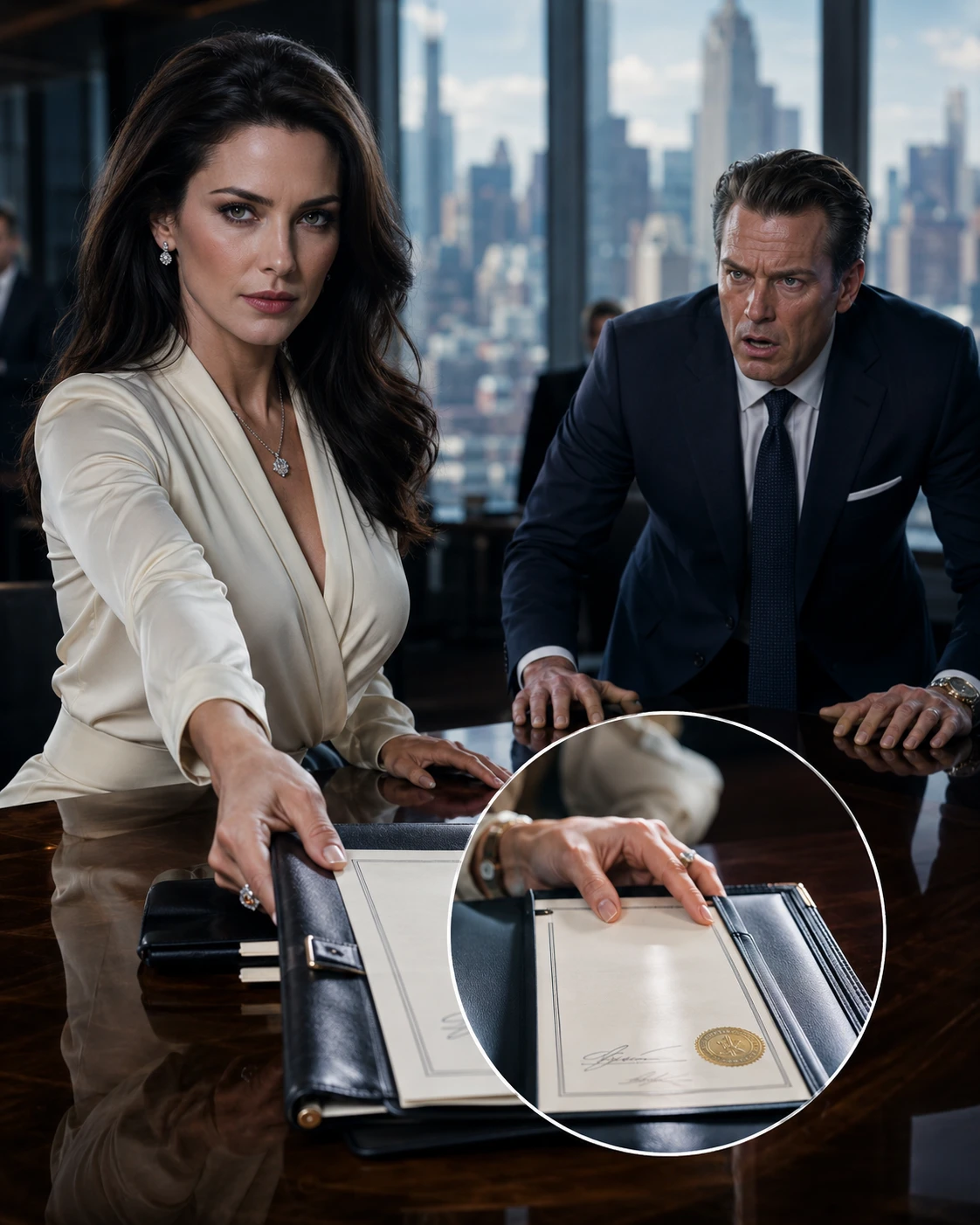
Maine scallops, dry-aged ribeye, truffle risotto for Grace, Dover sole for Arthur, pear tart with no cinnamon because Margo hated cinnamon but never told hosts; she simply remembered who forgot.
Then I attached a separate file.
Subject line: Concerning Related-Party Transactions, Undisclosed Relationship, and Misuse of Corporate Funds.
Recipients: Grace Chen, Ethics Committee Chair. Daniel Price, General Counsel. Board Ethics Committee. Wyatt Hale, external counsel.
CC: Lila Monroe.
The email was brief.
“Dear Committee,
In light of tomorrow evening’s Core Circle dinner, I believe the board should be aware that Ms. Lila Monroe, now positioned to host investors on behalf of Sterling Vale Capital, is not merely an outside hospitality consultant. She has been engaged in an undisclosed personal relationship with CEO Nathaniel Sterling while receiving substantial payments through entities connected to corporate vendor accounts.
Attached are invoices, travel records, expense approvals, communications, jewelry receipts, shell vendor registrations, and a timeline relevant to potential breaches of fiduciary duty, corporate governance standards, investor disclosure obligations, and misuse of marital and company assets.
As Ms. Monroe has requested guidance on investor preferences for tomorrow’s dinner, I am also providing context that may affect investor confidence and board oversight.
Regards,
Evelyn Graves Sterling.”
I pressed send.
Then I poured my coffee down the sink because my hands were finally shaking.
Chapter 2: The Etiquette of Ruin
Nathaniel called seventeen minutes later.
I watched his name light up my phone and let it ring until silence returned.
He called again.
Then Lila.
Then Daniel Price, Sterling Vale’s general counsel, whose voice memo contained one strangled sentence: “Evelyn, please call me before this becomes unnecessarily formal.”
Unnecessarily formal.
That was another phrase men use when a woman stops being convenient.
I did not call.
I dressed instead.
Black trousers. Ivory blouse. Camel coat. No wedding ring.
I walked six blocks to the offices of Hale & Mercer, where Wyatt Hale kept a corner office overlooking Bryant Park and never displayed photographs because, as he once told me, “sentiment is discoverable.”
Wyatt was fifty-one, though he looked younger in the disciplined way of men who slept little, drank less, and never allowed regret to soften them in public. His hair had gone steel-gray at the temples. His eyes were a quiet, dangerous blue. He wore navy suits so precise they seemed less tailored than engineered.
When I entered, he stood.
“Evelyn.”
He said my name as if it were something he had kept safe.
I hated how much that steadied me.
“You received the email,” I said.
“I did.”
“And?”
“And Nathaniel is calling everyone he knows to find out whether you’re bluffing.”
“I’m not.”
“No,” Wyatt said, picking up a folder from his desk. “You are not.”
He placed the folder in front of me. Inside were printed copies of bank transfers, vendor registrations, flight manifests, hotel invoices, text logs, jewelry insurance documents, and a photograph of Lila wearing my mother’s earrings at the gala.
“You collected well,” he said.
“I hosted well for twelve years. Documentation is just hospitality without flowers.”
The corner of his mouth moved. Almost a smile.
“Daniel Price is already trying to frame this as a domestic dispute.”
“Of course he is.”
“Grace Chen will not accept that. Arthur Bellamy won’t either. Not with pension money exposed to governance failure.”
“Good.”
Wyatt studied me for a moment.
“How far do you want to go?”
I looked out at the city. Manhattan after rain looked scrubbed and expensive, like it had learned nothing from being dirty.
“I want him removed as CEO.”
“That can happen.”
“I want every investor to know he used corporate funds to build a throne for his mistress.”
“That will be harder to contain than he thinks.”
“I want Lila to understand the difference between wearing sapphires and inheriting them.”
Wyatt’s gaze sharpened.
“And your marriage?”
I laughed once, quietly.
“My marriage ended the moment he thanked her in a ballroom full of people who knew my mother’s earrings were on her body.”
Wyatt closed the folder.
“Then we proceed.”
There are two kinds of revenge.
The cheap kind wants noise.
The expensive kind wants signatures.
By noon, the ethics committee had scheduled an emergency executive session for five o’clock, two hours before the dinner. Nathaniel tried to cancel the dinner, but Arthur Bellamy refused.
According to Wyatt, Arthur had said, “I already changed my flight. I’m eating somewhere.”
That was Arthur’s style. Brutal, understated, impossible to intimidate.
At 2:00 p.m., Lila texted again.
“Nate is furious. Why would you do this to me?”
I stared at the sentence.
To me.
Not to him. Not to us. Not even to yourself.
To me.
I wrote back, “Because you asked me what investors like.”
Her reply arrived instantly.
“I asked for help, not humiliation.”
I waited ten full minutes before answering.
“They often look similar when someone has been lying.”
Then I blocked her.
At 3:30, Nathaniel appeared at the penthouse.
I knew because our housekeeper, Mrs. Alvarez, sent me a photo of his shoes in the foyer with a message: He is storming.
Mrs. Alvarez had worked for my family before my marriage. She adored me and despised Nathaniel with the serene confidence of Catholic women who believe God is patient but not blind.
I was upstairs in my dressing room when Nathaniel came in without knocking.
His face was pale with rage.
“Do you have any idea what you’ve done?”
I fastened a pearl earring and met his eyes in the mirror.
“Yes.”
“You copied Lila.”
“She was part of the context.”
“She is twenty-six.”
“She is old enough to invoice.”
His jaw tightened.
“You want to embarrass me? Fine. You’re hurt. I understand.”
“You do not understand hurt, Nathaniel. You understand inconvenience.”
He stepped closer. I could smell his cologne, the one I used to buy in Paris because he said American department stores made everything smell desperate.
“You think the board will care about an affair? Half those men have mistresses.”
“Half those men disclose conflicts when corporate money touches them.”
His eyes flickered.
There it was.
Fear.
Small, but pure.
“You have no idea what you’re doing,” he said.
I turned from the mirror.
“I know exactly what I’m doing. That is why you’re afraid.”
For the first time in our marriage, Nathaniel had no immediate answer. He looked around my dressing room as if searching for the wife he had trained to manage weather quietly.
That wife was gone.
In her place stood a woman who had spent six months becoming evidence.
“You’ll destroy Sterling Vale,” he said.
“No. You risked Sterling Vale. I am giving it a chance to survive you.”
His laugh was ugly.
“You think they’ll choose you? You’re a hostess, Evelyn. A tasteful one, sure. But a hostess.”
I walked to the center island and opened the velvet-lined drawer where my mother’s jewelry should have been. The empty indentation for the sapphire earrings looked like a wound.
“Do you know the difference between a hostess and a strategist?” I asked.
He said nothing.
“A hostess makes powerful men comfortable. A strategist learns exactly what they fear.”
His expression changed then, not dramatically, but enough.
He was remembering every dinner.
Every whispered conversation.
Every investor who hugged me before wiring money to him.
Every moment he had mistaken my silence for absence.
I picked up my clutch.
“Enjoy dinner.”
“You’re not coming.”
It was not a question.
I smiled.
“I designed the table, Nathaniel. Of course I’m coming.”
Maison Aurelia had no sign outside. Only a brass doorbell, a doorman named Henry, and the kind of discretion people confuse with virtue.
At 7:02 p.m., I arrived in a deep green velvet dress and my grandmother’s diamonds. Not the brightest jewels. The oldest ones.
The private dining room had been prepared exactly as I requested. Low candles. White roses. No lilies, because Grace was allergic. Place cards written by hand in dark ink. Silver polished until it reflected the flames like small, disciplined suns.
Lila was already there.
She wore pale gold and too much confidence.
The sapphires were not on her ears.
Good.
Someone had warned her.
Nathaniel stood beside the fireplace, glass in hand, looking elegant enough to be forgiven by people who did not know better. His smile did not move when he saw me.
“Evelyn,” he said.
“Nathaniel.”
Lila’s eyes darted between us. She held a leather folder, probably filled with the notes I had sent her before I sent the other file.
“You look beautiful,” she said.
It was the kind of compliment women give each other when knives are not allowed in the room.
“So do you,” I replied. “Very polished.”
Her cheeks colored.
Guests began arriving.
Grace Chen first, in a black suit with a jade pin and the expression of a woman who had already read every attachment twice. She kissed my cheek.
“Evelyn,” she murmured. “Thank you for the thorough context.”
“My pleasure.”
Arthur Bellamy entered next, broad-shouldered, silver-haired, smelling faintly of tobacco and cold air. He looked at Nathaniel, then at Lila, then at me.
“Interesting seating arrangement,” he said.
“I thought it would encourage transparency.”
Arthur smiled for the first time in the twelve years I had known him.
Margo Whitmore arrived in red satin, with her fifth husband and a stare sharp enough to slice fruit. She took both my hands.
“Darling,” she said loudly, “I wondered when you would stop being kind.”
Nathaniel heard.
Everyone heard.
Wyatt entered last.
That was deliberate.
He wore charcoal, no tie, and carried no visible folder. Men like Wyatt did not need props to look dangerous. He greeted the board members with professional warmth and Nathaniel with the courtesy one gives a defendant before discovery.
Lila leaned toward Nathaniel.
“Why is he here?” she whispered.
Nathaniel did not answer.
Dinner began with champagne none of us drank quickly.
Lila tried.
I will give her that.
She greeted Grace correctly. She asked Arthur about Montana without mentioning hunting, because I had told her never to mention hunting. She complimented Margo’s foundation work and did not say philanthropy, because Margo believed the word had become vulgar.
She was not stupid.
That almost made it worse.
She had learned the surface.
She had no idea the surface was only there to hide the trapdoor.
When the scallops arrived, Grace folded her hands.
“Ms. Monroe,” she said. “Before we discuss tomorrow’s investor briefing, I’d like to clarify your role with Sterling Vale.”
Lila smiled carefully.
“Of course. I help with executive hospitality, brand experience, relationship building—”
“Were you retained through Monroe House LLC?”
“Yes.”
“And through Aster Bloom Consulting?”
Lila froze for half a second.
Nathaniel set down his fork.
“Grace, this isn’t the place.”
Arthur looked around the candlelit room.
“Seems like the exact place.”
Grace continued.
“Ms. Monroe?”
“I’m not sure about the accounting structure,” Lila said. “Nate handled—Mr. Sterling handled the business side.”
Wyatt’s voice entered calmly from the end of the table.
“We have documents showing beneficial ownership connections between Monroe House, Aster Bloom Consulting, and Vale Hospitality Partners. Payments from Sterling Vale vendor accounts were approved by Mr. Sterling and routed to expenses that appear personal in nature.”
Nathaniel laughed softly.
“Wyatt, you are not counsel for Sterling Vale.”
“No,” Wyatt said. “I am counsel for Evelyn Graves Sterling and, as of five forty-two this evening, special outside counsel engaged by the independent members of the board for preliminary review.”
Silence.
The candles flickered.
Lila looked at Nathaniel as if he had promised her the floor would hold.
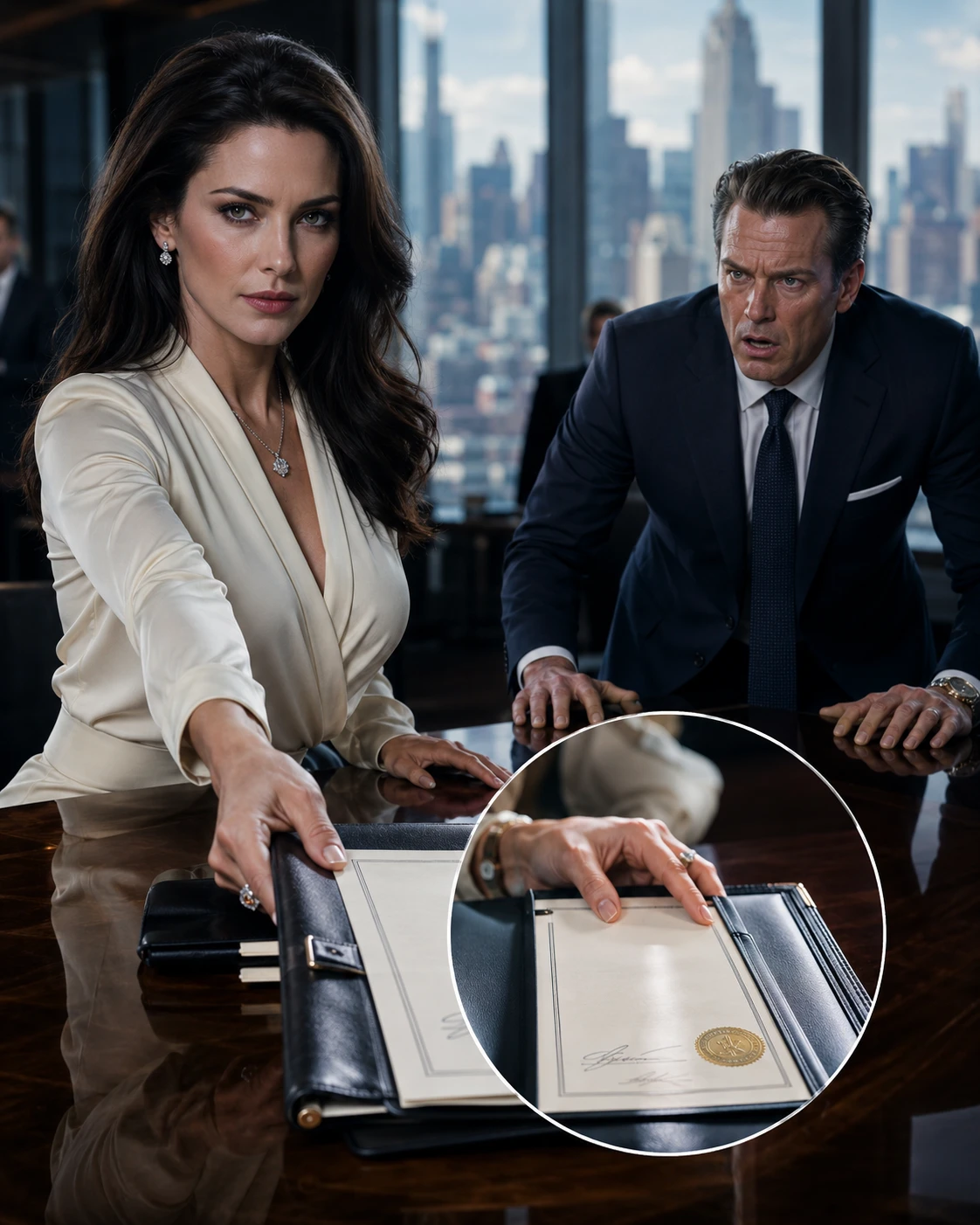
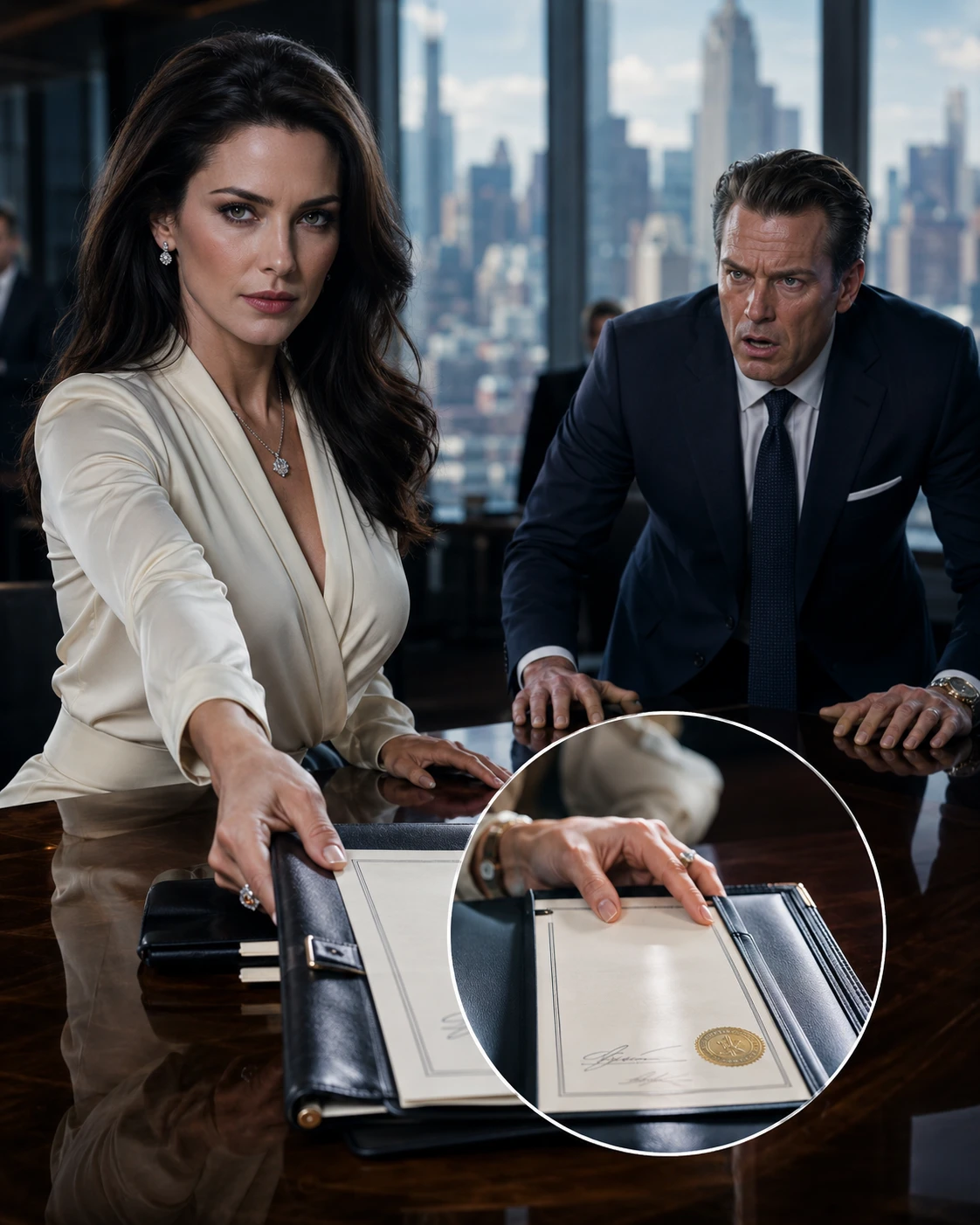
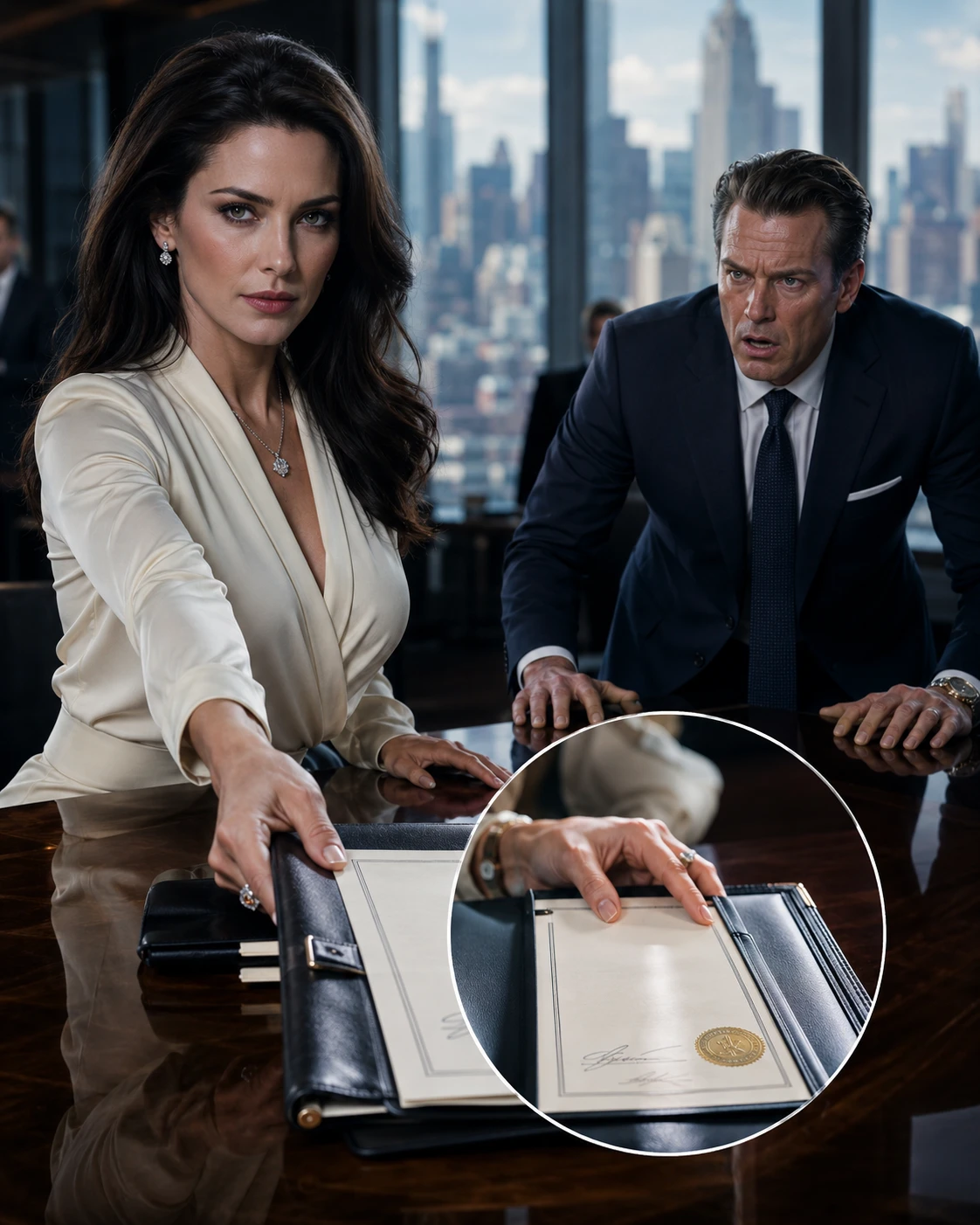
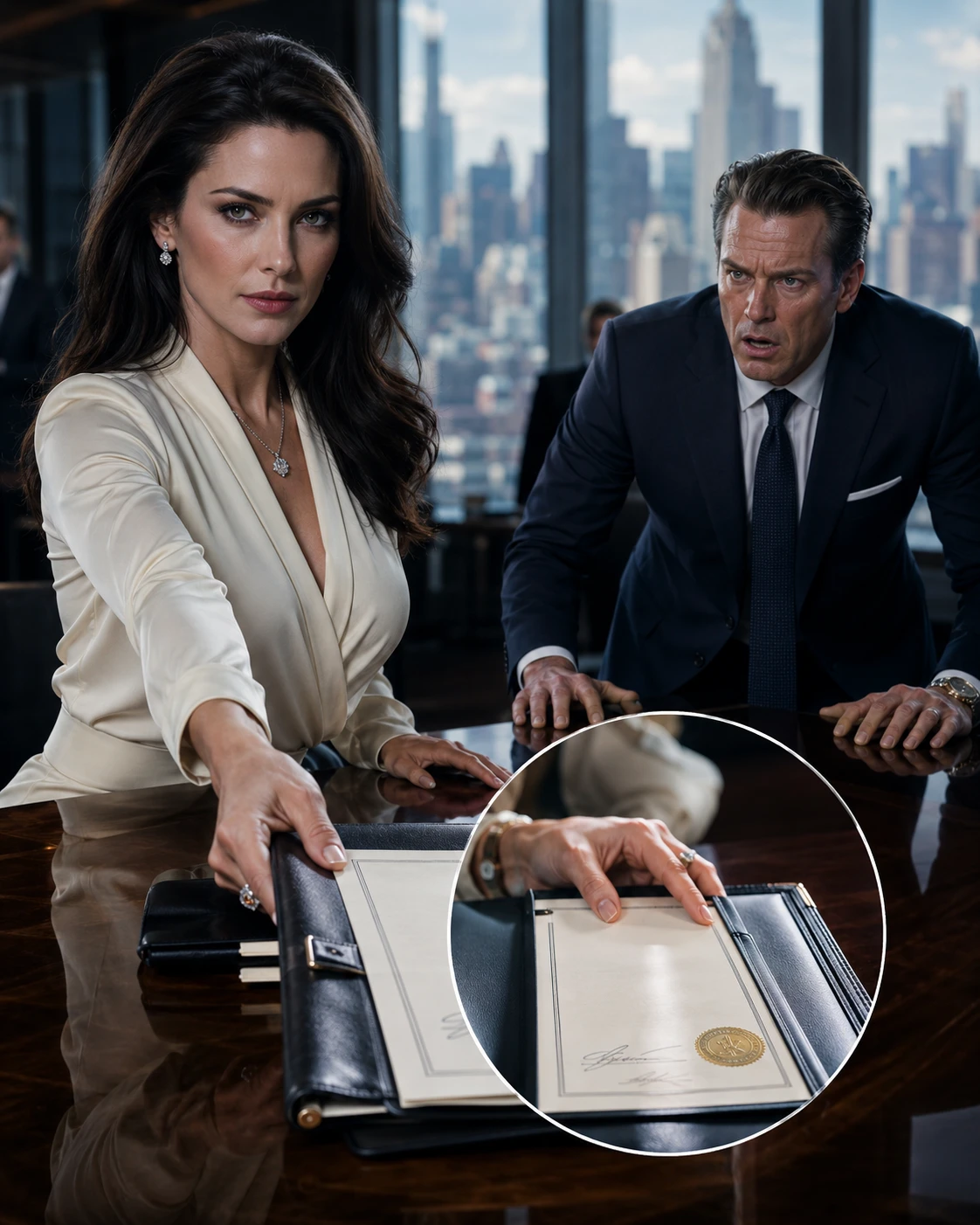
Grace opened a small black folder beside her plate.
“Mr. Sterling, the committee voted unanimously to authorize temporary review of all related transactions. We will be recommending that you step back from investment committee decisions until the review concludes.”
Nathaniel’s face hardened.
“You have no authority to remove me from my own firm.”
Margo sipped water.
“Oh, Nathaniel. That sentence has ruined so many men.”
He turned to her.
“My own firm.”
Arthur leaned back.
“Sterling Vale is not your toy. You manage capital on behalf of people who expect judgment.”
“And you’ve all made a great deal of money from my judgment.”
“Yes,” Arthur said. “That’s why we’re annoyed you began spending it like a teenager with a mistress and a corporate AmEx.”
A sound escaped Lila. Tiny. Humiliated.
For one moment, I felt something almost like pity.
Then I remembered my mother’s sapphires.
Grace looked at Lila again.
“Ms. Monroe, were you aware that the jewelry you wore at the Whitmore Gala belonged to Mrs. Sterling’s family estate?”
Lila’s mouth opened.
Nathaniel said, “Enough.”
“Were you aware?” Grace repeated.
“I thought they were a gift,” Lila whispered.
“From whom?”
Lila looked at me.
There it was: not remorse, but the panic of a woman realizing she had been dressed in stolen history.
“Nate,” she said.
I did not look away.
“I did not give them to him,” I said. “He had no authority to give them to you.”
Nathaniel’s voice dropped.
“This is becoming absurd.”
“No,” Wyatt said. “It is becoming clear.”
Daniel Price, the general counsel, finally spoke. He had been sweating through the soup course.
“We should pause this discussion pending formal review.”
Grace nodded.
“Agreed. But before we pause, I would like the room to understand that Ms. Monroe was not invited tonight as a guest of the board. She was invited by Mr. Sterling as part of a planned investor presentation concerning the future of Sterling Vale’s hospitality and relationship strategy. That changes the nature of her presence here.”
Arthur looked at Lila.
“You weren’t the girlfriend tonight, Ms. Monroe. You were a vendor seeking influence.”
That sentence killed her fantasy more cleanly than any insult could have.
She had imagined herself chosen.
The room recognized her as procurement.
Nathaniel’s hand tightened around his glass.
I watched him understand that this was not a scandal.
It was a governance event.
Scandals can be survived with charm.
Governance events require resignations.
The entrée arrived untouched.
That was the thing about elegant revenge: the food is always excellent and nobody can swallow.
Chapter 3: The House That Was Never His
Nathaniel did not explode at the dinner table.
He was too practiced for that.
He became colder. Quieter. More dangerous.
He smiled when Grace ended the formal conversation. He discussed market conditions with Arthur. He asked Margo about her grandson’s acceptance to Stanford. He even thanked Lila for helping coordinate the evening, though the words landed like coins dropped into a grave.
To anyone watching without context, he appeared composed.
To me, he looked like a man calculating who to punish first.
After dessert, he touched my elbow near the hallway.
“We’re leaving,” he said.
“No.”
His fingers tightened.
I looked down at his hand, then back at him.
He released me.
Wyatt appeared beside us as if summoned by the shift in air.
“Everything all right?”
Nathaniel smiled.
“My wife and I are speaking privately.”
“Your wife said no.”
The words were simple.
They changed the room around us.
For years, Nathaniel had controlled conversations by assuming ownership: my wife, my home, my firm, my table. Wyatt did not raise his voice. He did not threaten. He merely removed the assumption and left Nathaniel standing with nothing but his own behavior.
Nathaniel leaned closer to Wyatt.
“You have wanted her for years.”
Wyatt’s face did not move.
“And you have underestimated her for longer.”
My heart betrayed me then, just slightly.
Not with romance.
With relief.
There are men who desire women by wanting to possess them. Then there are men who desire them by recognizing they already belong to themselves.
I walked past Nathaniel without another word.
Outside, the rain had stopped. The city shone black and silver. My driver opened the door, but I did not get in.
I needed air.
Wyatt stepped onto the sidewalk beside me.
“You should not go home tonight.”
“I know.”
“He will try to destroy documents.”
“He already has.”
Wyatt glanced at me.
I smiled faintly.
“He deletes when frightened. But he keeps passwords in a leather notebook because he thinks digital systems are for assistants.”
Wyatt almost laughed.
“Where is the notebook?”
“Behind the Churchill biography he’s never read.”
“Mrs. Alvarez?”
“Already photographed it.”
This time, Wyatt did laugh, quietly and with genuine admiration.
“She is terrifying.”
“She raised me after my mother died. Terrifying is the minimum.”
A black SUV pulled up. Wyatt opened the door.
“I booked you a suite at the Carlyle under a client account.”
“Wyatt.”
“It’s practical, not romantic.”
“Those are not mutually exclusive.”
For the first time all night, something human crossed his face.
Careful.
Restrained.
Gone before it could ask anything of me.
I got into the car.
At the Carlyle, the suite smelled of fresh flowers and old money. I removed my heels, stood by the window, and looked down at Madison Avenue while my phone vibrated across the desk.
Nathaniel.
Nathaniel.
Nathaniel.
Then a text:
You think you won tonight. You have no idea what I can take from you.
I typed back:
You cannot take what was never yours.
Then I sent one more message.
To Mrs. Alvarez: Begin.
By morning, the locks at the penthouse had been changed on the private storage rooms. Not the doors Nathaniel used. Only the rooms containing family art, jewelry, original documents, and trust files. Mrs. Alvarez supervised the locksmith with coffee in one hand and a rosary in the other.
Nathaniel sent three lawyers.
Wyatt sent four.
At 9:00 a.m., Sterling Vale announced that Nathaniel Sterling would “voluntarily step back from certain executive functions pending an independent review.”
Voluntarily.
Another beautiful lie.
By 10:30, financial journalists began calling.
By noon, Lila’s Instagram disappeared.
By 2:00 p.m., Page Six had updated its blind item with the phrase “corporate funds allegedly used to support a very glamorous side arrangement.”
I did not speak to the press.
Silence is only dignified when it has teeth.
The following week unfolded like a controlled demolition.
First came the audit.
Then the investor calls.
Then the board interviews.
Daniel Price tried to resign quietly. Grace refused to accept until he handed over his internal communications. He had warned Nathaniel twice about “optics” but never escalated the issue because Nathaniel promised to “regularize vendor arrangements after the fund close.”
Regularize.
Men will build a cathedral out of euphemisms and call it compliance.
The audit found $3.8 million in questionable expenditures connected to Lila or entities linked to her. Not all illegal. Some merely grotesque. Suites, travel, consulting fees, jewelry, an apartment deposit in Tribeca, and a payment to a Beverly Hills image consultant whose invoice included the phrase “executive companion presentation.”
Even I paused at that one.
Executive companion presentation.
I sent the invoice to Mrs. Alvarez.
She replied: Trash with letterhead.
The board loved her after that.
Nathaniel fought back with the only weapon he had left: reputation.
He leaked stories implying I was unstable, jealous, vindictive. He told friends I had known about Lila and tolerated it until money became involved. He suggested I was bitter because we had no children, as if my empty nursery had been a character flaw instead of the result of four miscarriages he attended with the emotional presence of a business traveler waiting for Wi-Fi.
That leak was his cruelest mistake.
For years, I had protected that pain. Not because I was ashamed, but because grief deserves privacy. Nathaniel handed it to strangers like a canapé.
The morning the story appeared, I sat in Wyatt’s office and read the line twice.
“Sources close to Mr. Sterling suggest the marriage had long been strained by Mrs. Sterling’s emotional volatility following fertility struggles.”
Emotional volatility.
Fertility struggles.
My hands went still.
Wyatt read my face and said nothing.
That was one of his gifts. He never rushed a woman toward composure just because her pain made the room uncomfortable.
After a while, I said, “Release the clinic letters.”
His eyes lifted.
“Evelyn.”
“Not the medical details. The attendance records. The dates. His travel conflicts. The signed acknowledgment that he refused counseling after the third loss.”
“You don’t owe the public your wounds.”
“No,” I said. “But I owe him nothing.”
Wyatt leaned back.
“This will hurt.”
“It already hurt. This will document it.”
The response did not come from me directly. Wyatt’s office issued a statement so spare it cut cleanly.
“Mrs. Sterling will not dignify attacks on her private grief. Records confirm that Mr. Sterling was absent for multiple medically significant events while engaging in undisclosed personal and financial conduct now under board review. She requests privacy and accountability.”
That was all.
No tears.
No interview.
No white sofa confession.
The internet did the rest.
Women found the clip from the gala. They slowed down the moment Nathaniel toasted Lila and zoomed in on my face. They noticed the sapphires. They noticed how Lila touched them like they were trophies. They noticed Nathaniel never looked at me except to see whether I had broken.
I became, briefly and against my will, a symbol.
The wife in black.
The woman who smiled at the toast.
The queen who sent receipts.
TikTok made edits with dark piano music. Facebook pages posted headlines like: “His Mistress Asked for Hosting Tips. His Wife Sent Her to the Ethics Committee.”
I hated most of it.
I understood all of it.
Betrayed women recognized the fantasy: not revenge by screaming in a parking lot, not keying a car, not throwing clothes from a balcony, but answering humiliation with structure, proof, and a dinner reservation.
Lila broke first.
She called from an unknown number eleven days after the dinner.
I was at the Carlyle, drinking tea that had gone cold.
“Evelyn,” she said, voice thin.
I almost hung up.
Then I decided I wanted to hear what a collapsing fantasy sounded like.
“Yes.”
“I didn’t know everything.”
“No. You only knew enough.”
A pause.
“He told me you were separated emotionally.”
I closed my eyes.
“What a convenient country, emotional separation. Men discover it whenever they need a passport.”
“He said the marriage was for appearances.”
“Most marriages are, at some point. The difference is whether the spouses know.”
Lila inhaled shakily.
“I loved him.”
That surprised me.
Not because it was noble.
Because it was pathetic in the old sense: full of suffering.
“No,” I said gently. “You loved the version of yourself standing next to him.”
She cried then, quietly.
I felt no triumph. Only fatigue.
“He said you were cold,” she whispered.
“I became cold to survive the heat he created.”
“He’s blaming me now.”
“Of course he is.”
“He said I manipulated him. That I wanted money. That I pushed for the consulting contracts.”
“Did you?”
She did not answer.
There are silences that confess better than words.
Finally, she said, “What happens to me?”
“That depends on what you sign, what you return, and whether you continue lying.”
“I don’t have the earrings.”
My eyes opened.
“What?”
“I gave them back to Nate after the gala. He said they were too recognizable. I swear.”
The room seemed to narrow.
“Are you certain?”
“Yes.”
I stood slowly.
“Lila, listen carefully. If that is true, you need your own attorney. Not Nathaniel’s. Yours.”
“Why?”
Because my mother’s sapphires were not just jewelry.
They were part of the Graves family trust inventory.
They were appraised, photographed, insured, and restricted. They could not be transferred, gifted, pledged, sold, borrowed against, or removed from trust custody without written authorization from the trustee.
Me.
If Nathaniel still had them, he had stolen trust property.
If he had used them as collateral, he had committed something worse.
“Because,” I said, “you may be holding the thread that unravels more than his affair.”
After we hung up, I called Wyatt.
He arrived twenty minutes later, coat still wet from rain that had begun again without my noticing.
I told him what Lila said.
His expression went sharp.
“The sapphires weren’t just personal property?”
“No. Trust property. Part of the Graves Collection.”
“Insured value?”
“Eight hundred and seventy thousand at the last appraisal. Historical value higher. My mother wore them at my parents’ wedding.”
“Who knew the trust restrictions?”
“Nathaniel. He signed acknowledgment when we married.”
Wyatt’s silence was not empty. It was calculation.
“Evelyn,” he said slowly, “we need to discuss the Graves Trust.”
I looked at him.
“What about it?”
He removed a document from his briefcase and placed it on the table.
“Your father’s trust was not just designed to protect heirlooms.”
I stared at the top page.
Graves Heritage Holdings LLC.
My father’s name. My signature from years ago. A structure I had treated as family administration, something handled by accountants while I played the role my marriage required.
Wyatt tapped one line.
“The trust holds several assets Nathaniel may not fully understand.”
“I know about the Boston properties.”
“Not just Boston.”
He turned the page.
My breath caught.
Minority interest, Sterling Vale Management Company.
I looked up slowly.
“That can’t be right.”
“It is.”
“How?”
“Your father made an early investment in Nathaniel’s first fund through an entity that later converted into a management company stake. Nathaniel needed credibility. Your father supplied it, but he structured the investment through your trust. After your father died, the shares remained under Graves Heritage. You were the beneficial owner.”
I sat down.
All the years Nathaniel had called it his firm.
All the years he told me I was a hostess.
All the years he acted as though I had been allowed inside his life by grace of his ambition.
My father had quietly placed me in the foundation.
“What percentage?” I asked.
“Eleven percent voting interest in the management company. Not enough to control ordinary matters alone. Enough to trigger certain protective rights.”
“What protective rights?”
Wyatt’s eyes met mine.
“Removal rights in the event of fraud, gross misconduct, or reputational harm threatening investor capital.”
The city outside blurred.
My father’s voice returned from twelve years ago.
Make sure you don’t become a mirror.
He had known.
Not about Lila. Not about this exact betrayal.
But he had known Nathaniel’s hunger.
He had built a hidden room beneath my life and left me the key.
Chapter 4: The Sapphires Beneath the Floor
Nathaniel discovered the trust issue two days later.
I knew because he stopped threatening me and started pleading.
It began with flowers.
White roses, my favorite before he ruined them by giving Lila the same arrangement. I left them outside the hotel suite until housekeeping removed them.
Then came a handwritten note.
Evie,
We have both made mistakes. Let’s not let outsiders dismantle what we built. I was wrong to hurt you. Lila meant nothing. The firm is our legacy. Come home and let me fix this privately.
N.
Evie.
He had not called me that in five years.
I sent the note to Wyatt.
He replied: Keep original. Do not respond.
Then Nathaniel came in person.
Not to the Carlyle. He knew better. He waited outside a private luncheon at the Metropolitan Club, where I had met with Margo Whitmore and Grace Chen.
He stood beside the stone steps in a dark overcoat, hair perfect, face drawn.
For a dangerous second, I saw the man I had married.
Not as he was, perhaps.
As I had invented him.
“Evelyn,” he said.
Grace paused beside me.
“I can call security.”
“No need,” I said. “Mr. Sterling was just leaving.”
Grace squeezed my hand once and went to her car.
Nathaniel watched her go.
“You’ve turned everyone against me.”
“You did that. I provided dates.”
His face twisted.
“Do you know what the board is doing? They’re treating me like a criminal.”
“Were you hoping for a parade?”
He stepped closer, lowering his voice.
“I can survive the affair. I can survive the expenses. But if you push removal under the trust provisions, you’ll trigger a chain reaction. Investors will redeem. Lenders will panic. People will lose jobs.”
There it was.
The hostage speech.
Men who risk other people’s futures always discover compassion when consequences arrive.
“You should have thought of that before using company money to impress a woman who needed me to explain the wine list.”
His eyes hardened.
“Do not make me your enemy.”
I looked at him then, really looked.
This man had slept beside me while hiding invoices in false vendor files. He had held my hand at charity dinners after missing appointments where doctors spoke in soft voices about loss. He had given another woman my mother’s earrings and expected me to absorb the injury like fabric absorbs perfume.
“You became my enemy the night you made my humiliation part of your performance,” I said. “I am simply responding in the language you understand.”
“Money?”
“Ownership.”
For the first time, Nathaniel flinched.
I left him there on the sidewalk, surrounded by doormen, traffic, and the faint smell of expensive rain.
That evening, Wyatt and I met in the reading room of his townhouse in Brooklyn Heights. He had bought the house after leaving the U.S. Attorney’s Office, a severe brownstone with tall windows, dark bookshelves, and no visible indulgence except a Steinway he claimed not to play.
I did not believe him.
Documents covered the table between us.
The Graves Trust.
Sterling Vale governance provisions.
Insurance schedules.
Vendor payments.
Emails.
A map of Nathaniel’s lies.
At midnight, Wyatt poured two glasses of Scotch and handed me one.
“To your father,” he said.
I lifted the glass.
“To the man who trusted contracts more than husbands.”
Wyatt’s smile was brief.
“He cared for you.”
“I thought he didn’t trust my judgment.”
“He trusted your heart. He distrusted Nathaniel’s appetite.”
I turned the glass in my hands.
“Why didn’t you tell me about the voting interest?”
“Your father instructed that you be informed when you requested a full trust review, filed for divorce, or faced a direct threat to your financial autonomy.”
I laughed softly, though nothing was funny.
“He built me an emergency exit and waited for me to notice the fire.”
“He believed you would.”
Silence settled.
Outside, the street was quiet. Inside, lamplight turned the room gold.
Wyatt removed his glasses and rubbed the bridge of his nose. For the first time in days, he looked tired.
“You should sleep,” I said.
“So should you.”
“I don’t sleep much lately.”
“I know.”
The words were too intimate.
I looked at him.
“How?”
He did not pretend to misunderstand.
“Because you answer emails at 3:00 a.m. and rewrite statements at 4:15. Because you drink tea and forget it. Because every time someone mentions the gala, your left hand moves toward your ring finger even though the ring is gone.”
I glanced down.
My hand was still.
Bare.
“Observation is not affection,” I said.
“No,” Wyatt replied. “But affection makes observation difficult to stop.”
The room changed.
Not dramatically. No thunder. No music.
Just the quiet recognition of something that had been standing in the corner for years, patient and impeccably dressed.
“Wyatt.”
“I know.”
“You are my attorney.”
“I am aware.”
“My life is on fire.”
“I am also aware.”
“And yet you said that.”
“I did.”
He stood, putting distance between us because he was decent and because decency is more seductive than flattery when you have spent years married to appetite.
“I won’t touch your life while it’s vulnerable,” he said. “I won’t confuse rescue with love. But I will not lie to you and call this only professional.”
My throat tightened.
“Has it always been there?”
His eyes held mine.
“No. Not always. But long enough that I learned to live quietly with it.”
I looked away first.
Not because I was ashamed.
Because tenderness frightened me more than war.
War had rules.
Tenderness required faith.
The next morning, Lila’s attorney contacted Wyatt.
She wanted cooperation.
In exchange for limited protection and no civil claim from me regarding certain returned items, she would provide communications, receipts, and testimony confirming Nathaniel’s direction over the vendor structures.
I agreed to hear her.
We met at a conference room in Midtown, neutral territory with gray walls and bottled water nobody opened.
Lila arrived in a navy sweater and no makeup. Without the lashes, diamonds, and performance, she looked even younger. Not innocent. Just young.
Her attorney sat beside her, a woman with red glasses and the exhausted expression of someone who had spent forty-eight hours explaining consequences to a client who thought consequences were for other people.
Lila placed a small velvet pouch on the table.
My mother’s sapphires.
For a second, the room disappeared.
I reached for them slowly.
They were heavier than I remembered.
Cold.
Real.
“I thought you said Nathaniel took them back,” I said.
“He did.” Lila swallowed. “Then he gave them to me again two nights ago. He said if things got ugly, I should hold onto them. That you’d never report them missing if I had them because it would make your family look messy.”
Wyatt went still.
I stared at the earrings.
Nathaniel had tried to turn stolen heirlooms into leverage.
“What else?” Wyatt asked.
Lila’s hands trembled as she opened her phone.
“He asked me to delete messages. He said legal would protect him, but only if I said the consulting companies were my idea.”
She handed over printed copies.
Texts.
Voice notes transcribed.
An email from Nathaniel’s personal account instructing her to route invoices through Aster Bloom “to avoid unnecessary board attention.”
A message from two weeks before the gala:
Wear the sapphires. Evelyn needs to understand optics.
Optics.
My grief found a new shape.
Not heartbreak.
Not rage.
Understanding.
The public humiliation had not been careless. It had been designed.
Nathaniel had wanted me to see.
He had wanted me small.
He had wanted the room to learn that I could be replaced with a younger woman wearing my family jewels.
He did not merely betray me.
He staged my demotion.
Lila was crying now.
“I’m sorry,” she whispered. “I know it doesn’t matter, but I am.”
I looked at her.
Sorry is often selfish. A little raft people build after they help sink a ship.
But in that moment, her fear was real. Her shame was real. And for the first time, she was not performing womanhood as competition.
She was simply a girl who had believed a cruel man when he told her cruelty was love.
“It matters,” I said. “It does not erase anything.”
She nodded.
“I know.”
I put the sapphires back in the pouch.
Then Lila said the sentence that changed everything.
“There’s a safe.”
Wyatt leaned forward.
“What safe?”
“At the Tribeca apartment. The one he leased for me through Vale Hospitality. He used it sometimes. He kept documents there, cash, two phones. He said no one would search a mistress’s apartment because wives always blame the mistress, not the files.”
For the first time since the gala, I smiled with genuine warmth.
“He was wrong about many things.”
The safe was found under a panel beneath the closet floor.
By then, Lila had signed cooperation papers, the apartment had been secured, and Wyatt had obtained the proper legal authority through board counsel. Nobody broke in. Nobody dramatized. We did it the expensive way: lawfully, slowly, and with witnesses.
Inside were three phones, $120,000 in cash, signed side letters, personal notes on investor weaknesses, and a flash drive labeled Napa Photos.
There were no photos.
There were spreadsheets.
One contained unauthorized projections shared selectively with favored investors.
Another tracked payments to political consultants, private investigators, and reputation firms.
The third was named EGS.
My initials.
Inside were notes about me.
Not emotional notes.
Asset notes.
Penthouse title: marital but traceable improvements.
Nantucket house: Graves family contribution; pressure settlement.
Trust restrictions: need Evelyn signature.
Sapphires: leverage.
Clinic records: emotional instability narrative if needed.
I read the list once.
Then again.
There are moments in a woman’s life when pain becomes so complete it turns strangely clean.
Nathaniel had not simply fallen in love with someone else. He had maintained a contingency plan for dismantling me.
Wyatt stood across the room while I read.
He did not come close.
He understood that pity would insult me.
I looked up.
“Use all of it.”
His jaw tightened.
“Evelyn, some of this is brutal.”
“So was he.”
“This will end him.”
“No,” I said. “This will describe him.”
Chapter 5: The Dinner Where the Crown Changed Hands
The final board meeting took place on a Friday in May, three weeks after Lila’s message and twenty-four days after the gala.
By then, Nathaniel had lost the room.
Not the public room. He was still fighting there. Crisis consultants polished statements. Friendly columnists wrote about “cancel culture coming for capitalism’s most effective men.” Anonymous sources claimed he was the victim of a coordinated smear campaign led by an embittered spouse and opportunistic board members.
But private power had already moved.
Investors do not care about sin.
They care about exposure.
And Nathaniel had become exposure in a handmade suit.
The meeting was held at Sterling Vale’s Manhattan office, forty-two floors above Sixth Avenue. I had not been there in nearly a year. The lobby still displayed the enormous abstract painting I chose after Nathaniel wanted something “masculine and aggressive” and I told him money was already masculine and aggressive enough.
The receptionist looked at me as if she wanted to applaud but had signed an NDA.
I wore winter white.
Not because I was innocent.
Because everyone expected me to wear black.
Wyatt walked beside me, carrying the board binder. Grace greeted us at the conference room door. Arthur was already inside, speaking quietly with Margo. Daniel Price sat near the wall, diminished and damp-looking. Lila was not present; her statement had been recorded.
Nathaniel stood at the windows.
He turned when I entered.
For one sharp second, the old electricity flashed between us.
Not love.
History.
Twelve years is a country. Even when you burn it down, you remember the roads.
He looked thinner. His suit fit perfectly, but defeat had begun to alter his posture. Men like Nathaniel imagine power lives in the face. It lives in the shoulders. His had started to fold.
“Evelyn,” he said softly.
I took my seat.
“Mr. Sterling.”
The meeting began at 10:00 a.m.
Grace spoke first, summarizing the ethics review. Related-party transactions. Undisclosed personal relationship. Misuse of corporate funds. Failure to disclose conflicts. Potential misrepresentation to investors. Retaliatory reputation campaign. Misappropriation of trust property. Attempted witness influence.
Each phrase landed with the soft, devastating weight of formal language.
Nathaniel’s attorneys objected carefully.
Wyatt responded more carefully.
The safe contents were introduced.
The EGS file was presented.
When Grace read the line “emotional instability narrative if needed,” Margo made a sound of disgust so sharp it cracked through the legal rhythm of the room.
Nathaniel did not look at me.
Good.
I did not want his remorse.
I wanted the vote.
At noon, the independent board members took a short break. Nathaniel approached me near the coffee service.
“Did you love watching this?” he asked.
I turned.
“No.”
“Don’t lie.”
“I didn’t love watching it. I loved surviving it.”
His eyes searched my face.
“You really want me gone.”
“I want the firm protected.”
“The firm,” he repeated bitterly. “You sound like them now.”
“No, Nathaniel. They sound like me. You just never listened.”
He laughed under his breath.
“What did Wyatt promise you? A new life? A clean ending?”
I looked across the room. Wyatt was speaking to Grace, his posture calm, his focus entirely on the matter at hand. He had not touched me since this began except once, briefly, to help me out of a car when photographers gathered too close.
“He promised me nothing,” I said. “That is why I trust him.”
Nathaniel’s mouth tightened.
“I gave you everything.”
“You gave me rooms to decorate and silence to maintain.”
“I made you Mrs. Sterling.”
I felt no anger then.
Only wonder at the poverty of his imagination.
“I was Evelyn Graves before you found investors to impress.”
The board reconvened at 12:30.
Grace distributed the final recommendation.
Nathaniel Sterling would be removed as CEO of Sterling Vale Capital for cause, pending any regulatory findings. His voting rights under certain management provisions would be suspended. The firm would appoint an interim executive committee. Investor communications would be issued immediately. Civil claims would be reserved. Potential criminal referrals would be evaluated by outside counsel.
Then came the trust provision.
Wyatt stood.
“Under Section 9.4 of the Graves Heritage Holdings protective agreement, my client holds the right to trigger removal procedures in the event of documented executive misconduct that threatens firm stability or investor capital. Mrs. Sterling has executed that right.”
Nathaniel looked at me sharply.
“You signed?”
“Yes.”
“You don’t even understand what you’re doing.”
The room went very quiet.
I opened the leather folder in front of me.
For twelve years, Nathaniel had mistaken my restraint for ignorance. For twelve years, he had given speeches I rewrote, courted investors I softened, and entered rooms I designed. He had built a throne on a foundation and never once looked down to see whose name was carved into the stone.
I removed a document and slid copies across the table.
“I understand that my father’s trust holds eleven percent voting interest in Sterling Vale Management Company. I understand that those shares include protective rights triggered by gross misconduct. I understand that your own signature appears on the original acknowledgment. I understand that you attempted to use my mother’s trust-restricted earrings as personal leverage. I understand that you routed corporate funds through shell vendors to support an undisclosed relationship with a woman you then placed before investors. I understand that you maintained a file outlining how to discredit me using medical grief you had no right to weaponize.”
My voice did not rise.
That made it stronger.
“And I understand one more thing.”
Nathaniel’s face had gone gray.
“The Core Circle dinner was never your investor dinner. Not really.”
Arthur’s brows lifted slightly.
Even Wyatt looked at me then.
Because this was the part I had not told anyone.
Not yet.
I reached into the folder and removed the last document.
A purchase agreement.
Signed five days before the gala.
Through a company named Blackthorn Harbor LLC, an entity held under the Graves Trust, I had acquired the distressed debt secured against Sterling Vale’s headquarters lease and two affiliated operating lines. Quietly. Legally. From a regional bank in Connecticut that wanted out after a credit review flagged concentration risk.
My accountants had brought it to me as an opportunity months earlier.
At the time, I had not understood the poetry.
Now I did.
“I also understand,” I said, “that Sterling Vale’s headquarters, operating liquidity, and short-term debt covenants now answer, indirectly, to an entity I control.”
Nathaniel stared.
The room froze.
Margo whispered, “Oh, darling.”
Arthur began to smile.
Wyatt’s expression did not change, but his eyes did. Pride, sharp and bright.
Nathaniel gripped the edge of the table.
“That’s impossible.”
“No,” I said. “It was merely quiet.”
Grace picked up the agreement, scanned the summary page, and looked at me with something like awe.
“You own the debt position?”
“Blackthorn Harbor does.”
“And Blackthorn Harbor is held by Graves Heritage?”
“Yes.”
Arthur laughed once.
Not cruelly.
Delightedly.
“Jesus Christ, Nathaniel. She bought the floor under your feet.”
That line eventually leaked.
People would repeat it for months.
They would make captions, edits, memes, commentary. They would call it savage, iconic, cinematic. They would miss the deeper truth.
I had not bought the floor to crush him.
I bought it because my father raised me to recognize undervalued assets.
Nathaniel just happened to be standing on one.
His attorney requested a recess. Grace denied it. The vote proceeded.
Unanimous.
Nathaniel Sterling was removed.
For cause.
He sat very still when it happened.
Then, finally, he looked at me.
Not with love. Not even hate.
With recognition.
It was the first honest thing he had given me in years.
After the meeting, he followed me into the empty corridor.
No lawyers. No board. No Lila. No cameras.
Just us, framed by glass walls and the city that had once believed he was untouchable.
“You planned all of this,” he said.
“No.”
“Don’t insult me.”
“I planned for survival. You supplied the occasion.”
His eyes shone, though whether from rage or grief I could not tell.
“Was any of it real?”
The question surprised me.
Perhaps it surprised him too.
“Our marriage?” I asked.
He nodded once.
I thought of the early years. Of cheap Thai food in a tiny apartment before the money came. Of Nathaniel asleep at his desk, tie loosened, while I covered him with a blanket. Of the first miscarriage, when he held me for almost an hour before his phone rang and he let go. Of the way I used to believe ambition could be warmed by love if I stood close enough.
“Yes,” I said. “Some of it was real.”
His face broke slightly.
“And now?”
“Now it’s evidence.”
I walked away before either of us could pretend that sadness changed anything.
Outside the building, reporters waited.
Cameras turned.
Questions flew.
“Mrs. Sterling, did you trigger your husband’s removal?”
“Are you filing for divorce?”
“Did Ms. Monroe cooperate?”
“Is Sterling Vale under investigation?”
“Are you taking control of the firm?”
I stopped at the curb.
Wyatt stood beside the car, one hand on the open door.
I had planned to say nothing.
Silence had served me well.
But then I saw a young woman across the street holding up her phone. She was filming with wide eyes, not like a journalist. Like someone who needed the ending to mean something.
Maybe she had been cheated on.
Maybe she had been underestimated.
Maybe she had been told to be graceful while someone else wore her pain as jewelry.
So I turned toward the cameras.
“Mrs. Sterling!” someone shouted. “What do you say to people calling this revenge?”
I looked directly into the nearest lens.
“Revenge is emotional,” I said. “Accountability is documented.”
Then I got into the car.
That clip went viral before we reached the bridge.
Conclusion: What Elegance Leaves Behind
The divorce took nine months.
Not because I wanted it to.
Because Nathaniel fought every comma like a man who could not believe the sentence had already ended.
He lost the penthouse.
I sold it.
Not because I needed the money, but because some rooms remember too much. A young couple bought it with tech money and terrible taste. They replaced the marble kitchen, painted the library navy, and asked whether the chandelier was original. I told the broker to say yes even though Nathaniel had chosen it from a catalog in Milan and called it “heritage.”
I kept the Nantucket house.
I kept my mother’s sapphires.
I kept my name.
Evelyn Graves.
Not because Sterling had no value. It did. On old invitations, social pages, legal filings, whispered gossip. But Graves was the name that held me when Sterling became a performance.
Sterling Vale survived.
That surprised the public more than Nathaniel’s disgrace. People expect firms built around charismatic men to crumble when those men fall. They forget charisma is often just a spotlight pointed away from the workers.
Grace became interim chair. Arthur stabilized investors. Margo brought in two new independent directors who terrified everyone and improved everything. I did not become CEO. I had no desire to inherit Nathaniel’s chair simply because he had been dragged out of it.
Instead, I took a seat on the board.
Quietly.
Legally.
Permanently.
I created a governance office for family capital and women-led wealth structures, because I had learned how many wives, daughters, widows, and sisters sat near power without being taught where the keys were hidden. They came to me in private dining rooms, hotel lounges, museum cafés, and once in the back pew of a church after a funeral.
They brought prenups, trust documents, partnership agreements, cap tables, passwords sealed in envelopes, and questions they were embarrassed to ask.
I told them what my father had tried to tell me.
Love is not a financial plan.
Trust is not a governance structure.
Elegance is not silence.
As for Lila Monroe, she disappeared for a while.
Then, about a year later, I received a letter. Not an email. A real letter on thick cream paper, the handwriting careful and uneven.
Evelyn,
I am not asking for forgiveness. I used to think forgiveness was something other people gave you so you could stop feeling bad. I understand now that it belongs to the person who was hurt, not the person who did the hurting.
I returned to Ohio. I am working for my aunt’s catering company. It is not glamorous. It is honest. I think about that dinner often. Not because it ruined me. Because it showed me what I was trying to become, and how empty it was.
You once told me presentation matters. I think context matters more.
I am sorry.
Lila
I read the letter twice.
Then I placed it in a drawer.
I did not answer.
Sometimes mercy is simply choosing not to reopen the wound.
Nathaniel was indicted the following spring on charges connected not to the affair itself, but to investor misrepresentations discovered through the audit that followed it. People kept trying to make the story about sex because sex is easier to understand than fiduciary duty. But, in the end, he was not destroyed by desire.
He was destroyed by entitlement.
He believed money made him immune.
He believed charm made him clean.
He believed a wife who knew how to arrange flowers could not also understand leverage.
He believed a mistress wearing stolen sapphires looked like victory.
He believed wrong.
Wyatt and I did not become a headline.
There were no paparazzi shots outside restaurants. No sudden engagement. No dramatic kiss on courthouse steps for strangers to loop over sad music.
For a long time, he remained exactly what he promised to be: steady. Careful. Present without demanding gratitude.
He sent books with no notes because he knew I disliked being told what to feel. He brought soup when I had the flu and left it with Mrs. Alvarez because I was asleep. He came to Nantucket in September to discuss trust restructuring and stayed through dinner because fog grounded the flights. We ate lobster rolls on the porch in sweaters, and for the first time in years, I laughed without checking whether the sound pleased anyone.
One evening, almost two years after Lila’s message, Wyatt stood beside me on the beach while the sky turned the color of apricots and old gold.
“I should tell you something,” he said.
“That sounds ominous.”
“It isn’t.”
I looked at him.
He was watching the water, hands in his coat pockets, silver hair moving slightly in the wind.
“I am in love with you,” he said. “Not with what happened to you. Not with your survival. Not with the woman the internet invented. You. The difficult, exacting, occasionally merciless woman who reorganizes other people’s sentences while pretending not to care.”
I smiled despite myself.
“That is a very lawyerly declaration.”
“I revised it three times.”
“Only three?”
“Five.”
The wind moved between us.
My heart did not leap. It did something better.
It settled.
I had once thought love should feel like being chosen loudly in a crowded room. Like a toast, a spotlight, a hand at your waist while people watched. I knew better now.
Love was not performance.
Love was not possession.
Love was the person who stood beside you after the cameras left and did not ask your wounds to entertain him.
I took Wyatt’s hand.
Not because I needed saving.
Because I was free enough to choose warmth.
Years later, people still sent me the clip from the gala, the dinner story, the board meeting quote, the headline about the mistress asking for hosting tips. They loved the sharpness of it. The elegance. The revenge.
They always asked whether I had planned the final line in advance.
I had not.
The line came because Lila had asked me for etiquette, and Nathaniel had taught me the value of context.
So when a podcast host eventually asked, “What did you really give her that night?” I smiled, touched my mother’s sapphires, and told the truth.
She asked for etiquette. I gave the board context.