The first time my mother told me she had sold my inherited house, I laughed because my mind refused to accept what she had said. I was standing in the document-restoration studio where I worked, holding white cotton gloves in one hand and my phone in the other. “The house is gone,” she repeated calmly. “Your brother needed the money more than you needed an old building.” For a moment, the room seemed to tilt beneath my feet. Then she explained that the proceeds would cover Brandon’s overdue vacation expenses and help him recover from another failed business idea. She told me I should be grateful the property had attracted a buyer at all. I laughed once more, but this time it was because my mother had no idea what my grandmother had placed inside her estate plan.
My name is Alyssa Parker, I was 31, and the pale-blue house in Savannah had belonged to my grandmother, Evelyn Whitaker, for nearly fifty years. She taught me to preserve old letters, press flowers between book pages, and recognize the difference between something expensive and something irreplaceable. After she passed, I inherited the house and began saving to repair its roof, reinforce the porch, and create a small community archive in her name. Similar historic homes on the street were selling for around $420,000, yet my mother claimed she had accepted only $188,000 because the buyer promised a quick closing. My brother Brandon owed nearly $36,000 after his online sneaker business collapsed, but he had still booked a luxury trip to Cabo and upgraded the hotel package before paying the balance. My mother had temporary permission to arrange maintenance while the estate was being settled, but she had no ownership rights and no authority to sell. When I asked who had signed the documents, she replied, “I did, and you need to stop behaving like a lawyer.”
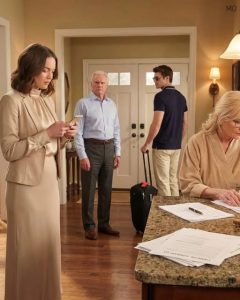
I drove to my parents’ house and found Brandon sitting at the kitchen island beside a new luggage set while my father stared silently at the television. My mother pushed a folder toward me containing the purchase agreement, seller affidavit, and what appeared to be a power of attorney bearing Grandma’s signature. One detail stopped me immediately: the document was dated April 2, more than two weeks after my grandmother had passed. I restored historic handwriting for a living, and the hesitant strokes, incorrect letter shapes, and uneven pressure looked nothing like the strong signature I had examined on hundreds of her notes. I photographed every page while Brandon joked that I would eventually calm down, then drove directly to the house and found a red “under contract” notice taped to the window. Inside Grandma’s writing desk, I discovered an envelope addressed to me containing a trust certificate, a handwritten warning, and the card of attorney Daniel Mercer. Before I could call him, my phone rang, and Daniel said, “Your mother did not sell the house, Alyssa—but someone has tried to use a false document to take it from you.”
Daniel explained that Grandma had placed the property in a living trust, naming me as its sole beneficiary and limiting my mother’s role to basic upkeep during the estate transition. My attorney immediately contacted the title company, froze the escrow account, recorded a notice of dispute, and demanded preservation of every message, signature, and financial record connected to the attempted transfer. He also reviewed the homeowners insurance, confirmed there was no mortgage against the house, and documented the restoration money I had saved as a protected investment rather than an available family fund. At the emergency court hearing, my mother’s lawyer called the situation a misunderstanding, but Daniel presented the trust, Brandon’s resort confirmation, the below-market contract, and the power of attorney dated after Grandma’s passing. The judge blocked the sale, prohibited my family from entering or borrowing against the property, and ordered a complete accounting of any money already promised or spent. The questionable signature was referred for independent review, while the buyer withdrew and pursued reimbursement after learning the title had never been legally transferred. Brandon’s vacation was canceled, my mother was ordered to contribute toward my legal costs, and the house remained exactly where Grandma intended it to remain—with me.
I moved into the house while the repairs began, changed the locks, and spent my evenings cleaning shelves that still smelled faintly of cedar and lemon oil. My mother sent long messages about forgiveness without ever plainly admitting what she had done, while Brandon complained that I had ruined the trip he believed the house would finance. I stopped answering, not out of revenge, but because their emergencies were no longer mine to solve. On Grandma’s birthday, I opened the downstairs room as the Evelyn Whitaker Community Archive, displaying neighborhood photographs, letters, church programs, and family records that local residents wanted preserved. Only a dozen people came that first afternoon, but the rooms felt full again. Above the writing desk, I framed Grandma’s warning beside a photograph of us together when I was six. My inheritance was never simply an old Savannah house; it was proof that someone in my family had seen me clearly enough to protect my future before I understood that I would need protecting.