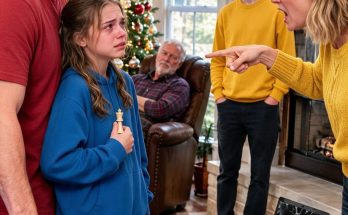
I had spent years wondering whether my mother knew.
I knew she saw the gifts.
I knew she enjoyed the houses.
I knew she understood that Fallon wasn't earning enough to support the life she displayed.
But I had always wanted to believe she didn't know how much I was carrying.
It was easier that way.
If Mom didn't know, then her silence wasn't a choice.
She was simply unaware.
I held on to that explanation long after the evidence suggested otherwise.
Two months after my dinner with Fallon, Mom contacted me.
She wanted me to visit.
I hesitated.
We had spoken very little since the foreclosure.
She had left Tamson's office without saying goodbye.
She hadn't defended me when Dad called me a burden.
And when she cried during our meeting, she had seemed more upset about the family's financial trouble than about what had been done to me.
Still, she was my mother.
I wanted to know how she was living.
I agreed to visit.
The address she gave me belonged to a small rental apartment.
When I arrived, I stood outside the door for a moment.
I remembered our old family house.
The long driveway.
The expensive furniture.
The rooms decorated to impress visitors.
I remembered Mom arranging fresh flowers before guests arrived.
She cared about appearances.
She cared about what people thought of our family.
And for years, I had paid for many of the things she wanted people to admire.
I knocked.
She opened the door almost immediately.
“Mava.”
“Hi, Mom.”
She stepped aside.
“Come in.”
I entered.
The apartment was quiet.
There was a small dining table.
Two chairs.
A few family photographs.
No imported furniture.
No expensive decorations.
No enormous arrangements of flowers.
The difference was impossible to ignore.
I didn't know whether to feel sad or relieved.
Mom closed the door.
“Would you like tea?”
“Yes, please.”
She went into the kitchen.
I stood in the living room.
The apartment was clean.
Everything had been arranged carefully.
But there was little extra space.
I looked at the family photographs.
I recognized some of them.
One showed us years earlier, before Fallon's company and before the financial arrangements became part of every family conversation.
We were smiling.
I remembered that day.
I remembered believing the adults knew what they were doing.
I looked away.
Mom returned with two cups.
“Sit down, sweetheart.”
I sat at the table.
She placed the tea in front of me.
I noticed her wrist.
The diamond bracelet I had given her wasn't there.
I didn't ask about it.
For years, I had noticed every expensive thing she wore because I remembered paying for so many of them.
Now I wanted to learn how to look at my mother without silently calculating the cost of her belongings.
She sat across from me.
For a while, we talked about ordinary things.
My work.
The weather.
How she had been adjusting to the apartment.
I answered carefully.
I didn't want to sound as though I had come to inspect her.
But I also didn't want to pretend nothing had happened.
Mom stirred her tea.
Then she put down the spoon.
“I need to tell you something.”
I looked up.
She folded her hands.
“I owe you an apology.”
I hadn't expected her to begin that way.
I stayed quiet.
She looked down at the table.
“I knew you were covering more expenses than you should have been.”
I felt something tighten in my chest.
There it was.
The answer I had spent years avoiding.
She continued.
“I knew your father kept asking for money.”
I looked at her.
“How much did you know?”
She hesitated.
“I didn't know every amount.”
I waited.
“But I knew you were paying toward the houses and other family expenses.”
I nodded slowly.
That was already more than she had ever admitted.
She reached for her cup.
Her hands shook slightly.
“I knew Fallon was letting people believe she'd paid for things she hadn't.”
I looked at her.
“The lake house?”
She lowered her eyes.
“Yes.”
I felt the old pain return.
The view of the water.
The furniture.
Fallon's photographs.
The compliments she accepted.
Mom had been there.
She had heard people praise Fallon.
She had known who actually paid.
And she had said nothing.
“Why didn't you correct her?”
Mom pressed her lips together.
“I didn't want to start arguments.”
I stared at her.
I had heard that explanation before.
At Thanksgiving.
When Dad humiliated me.
When Fallon made jokes about my work.
Whenever the truth threatened the family's comfortable appearance.
Nobody wanted an argument.
So I became the person expected to accept whatever happened.
“Mom, you weren't avoiding an argument.”
She looked up.
“You were allowing everyone to keep treating me as though I contributed nothing.”
Her eyes filled.
“I know.”
I waited.
For once, she didn't tell me I was overreacting.
She didn't remind me that Dad had been stressed.
She didn't ask me to think about how difficult things had become for everyone.
She simply sat there.
I found that harder than I expected.
I had prepared myself for another argument.
I hadn't prepared myself for her agreement.
“You watched me carry the payments,” I said.
She nodded.
“Yes.”
“You knew Dad was borrowing money.”
“Yes.”
“You knew Fallon was accepting credit for property I owned.”
Tears ran down her cheeks.
“Yes.”
I looked at the tea.
The cup was warm between my hands.
I remembered the Thanksgiving dining room.
The silk dress.
The handbag.
The diamond bracelet.
Mom had been wearing things I had purchased while watching Dad call me a leech.
I looked back at her.
“Then why didn't you say anything?”
She began crying harder.
I waited.
I didn't rush to comfort her.
I had done that too many times.
Whenever Mom became upset, I stopped asking questions.
I softened my words.
I found a way to make everything easier.
This time, I needed the answer more than I needed the conversation to feel pleasant.
Mom wiped her face.
“Because I was scared.”
I frowned.
“Of what?”
She looked around the apartment.
“Of losing the life your father said we would have.”
I said nothing.
She continued.
“He kept telling me things would improve.”
I looked at her.
“He promised the next investment would help. He said the money problems were temporary.”
I recognized every word.
Dad had said the same things to me.
A payment would arrive.
A project would succeed.
An investment would make everything right.
We only needed to be patient.
Only needed to provide a little more time.
A little more money.
Another chance.
Mom looked down.
“I wanted to believe him.”
I thought about Fallon saying almost the same thing.
She wanted to believe Dad because the lie gave her the lifestyle she wanted.
Mom wanted to believe him because the lie allowed her to keep the life she already enjoyed.
And I had wanted to believe him because I thought helping would make him proud of me.
We had all wanted something.
But I was the one who kept paying.
“Did you ever think about what would happen to me?” I asked.
She started crying again.
“I did.”
I waited.
“Not enough.”
That answer hurt.
Because it was probably true.
She hadn't been completely unaware.
She hadn't been helpless.
She had made a choice.
She had allowed me to carry obligations while she enjoyed the security they provided.
It was easier than confronting Dad.
Easier than admitting the house was too expensive.
Easier than asking Fallon to stop pretending.
And easier than telling me I had already given enough.
I looked around the apartment.
The small table.
The two chairs.
The family pictures.
All the things Mom now had without the appearance of wealth surrounding them.
“Did you lose the life you were afraid to lose?”
She looked at the room.
Then she lowered her head.
“Yes.”
I didn't feel satisfaction.
I had imagined asking that question so many times.
I thought hearing her answer might make something inside me settle.
Instead, I felt sad.
Because the expensive house had been lost.
The beautiful possessions were gone.
And the years I spent trying to preserve them couldn't be returned to me.
Mom wiped her face.
“I know I should have spoken.”
I nodded.
“You should have.”
“I should have told your father to stop.”
“Yes.”
“And I should have told Fallon to give you credit for what you did.”
I looked down.
That last sentence affected me more than I wanted to admit.
For years, I hadn't asked for public praise.
I didn't need a speech.
I didn't need photographs.
I didn't need my father to announce how much money I earned.
I had only wanted the people I loved to acknowledge the truth when someone tried to make me feel worthless.
Mom looked at me.
“You were always helping us.”
I took a slow breath.
“I know.”
She looked surprised.
I continued.
“I finally know that without needing Dad to confirm it.”
Her eyes filled again.
I had never said anything like that to her before.
For most of my life, I had spoken as though my accomplishments needed permission to count.
If Dad didn't praise them, I assumed they weren't enough.
If Fallon mocked my ordinary lifestyle, I wondered whether I was missing something.
If Mom asked for another payment, I treated saying yes as proof that I was a good daughter.
Now I was beginning to understand that none of those things determined my worth.
Mom reached across the table.
Her hand stopped beside mine.
“I don't expect you to forget what happened.”
I looked at her.
“I can't.”
“I know.”
She swallowed.
“I just want you to understand that I'm sorry.”
I studied her face.
She looked tired.
Older.
Not because the apartment was small.
Because the life she had spent years trying to protect had finally become impossible to maintain.
For a moment, I saw her as someone other than my mother.
A woman who had believed her husband's promises.
A woman who had accepted things she knew were wrong.
A woman who had been afraid of losing comfort and status.
That didn't excuse her.
But it helped me understand why she had remained silent.
I placed my hand over hers.
She began crying quietly.
I didn't tell her everything was forgiven.
I wasn't ready.
But I didn't pull away.
We sat together for a while.
The tea cooled.
Outside, cars passed.
Someone walked along the sidewalk beneath the window.
Ordinary sounds.
Ordinary life.
Mom eventually wiped her cheeks.
“Would you like more tea?”
I looked at my cup.
“Yes.”
She stood and went to the kitchen.
I watched her.
For years, I had believed that repairing our relationship would require a dramatic moment.
An enormous apology.
A speech.
A promise that nothing bad would happen again.
Now I was sitting at a small table in a rented apartment while my mother made another cup of tea.
It felt much less impressive.
But more honest.
She returned.
We talked a little longer.
I asked how she was adjusting to living with less.
She said it had been difficult.
She was learning to plan expenses.
Learning to accept that some things were no longer possible.
I listened.
I didn't offer money.
That was important.
I could visit her.
I could hear about her worries.
I could care whether she was comfortable.
But I didn't have to turn every concern into a financial problem I was expected to solve.
Mom seemed to understand.
She didn't ask me for anything.
When I stood to leave, she walked me to the door.
“Mava?”
I turned.
“Yes?”
“Thank you for coming.”
I nodded.
“I'm glad we talked.”
She hesitated.
“Do you think you'll visit again?”
I thought about it.
The answer wasn't simple.
I still carried anger.
I still remembered her silence at Thanksgiving.
And I still needed time to understand what our relationship could become without money holding it together.
But I wanted to try.
“Yes,” I said. “I think I will.”
She smiled faintly.
I left the apartment and walked toward my car.
I didn't feel that everything had been fixed.
I didn't feel completely healed.
But Mom had finally admitted that she knew.
She had acknowledged her silence.
And for once, she hadn't asked me to pay for the comfort of pretending otherwise.
I looked back at the building before getting into my car.
For years, my parents had lived in a house that looked successful from the outside.
Now Mom lived in a small apartment where there was very little to impress anyone.
Yet that afternoon, sitting at her plain dining table, I had heard more truth than I ever heard in the family home.
I drove away thinking about how much effort we had spent protecting appearances.
And how little had been required to begin repairing something real.
Just an admission.
An apology.
And enough honesty to let the other person decide what happened next.
Click here to continue reading: PART 11: One Year After Thanksgiving, I Returned to the Lake House and Received the Final Records That Let Me Put the Money Behind Me
My Father Asked Why I Had Never Accomplished Anything, but Thirty People at His Thanksgiving Table Had No Idea What I Paid For
Part 10 of 12