PART 2 — THE ELEVEN PEOPLE GARLAND NEVER EXPECTED TO MEET
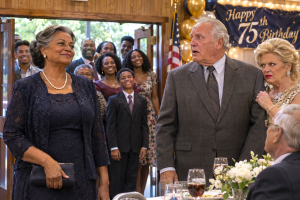
The man in the gray suit walked toward me first.
“Happy birthday, Garland,” he said politely.
Garland stared at the yellow roses in his hand.
“Thank you,” he answered slowly. “And you are?”
The man smiled.
“My name is Samuel. Samuel Bennett. And this is my mother.”
He turned toward me.
“Mom, you want me to put these on the gift table?”
I nodded.
“Go ahead, baby.”
The room went quiet.
Not completely quiet. Somebody dropped a fork near the buffet, and the country music kept playing through the speakers.
But every conversation around Garland’s birthday cake stopped.
Bonnie looked at Samuel, then at me.
“Your mother?” she repeated.
“Yes, ma’am,” Samuel answered.
Garland’s eyes moved toward the people still standing near the entrance.
I could see him counting.
I’d counted them myself a thousand times, at Christmas dinners, graduation ceremonies, hospital waiting rooms, and Sunday suppers.
Samuel was the oldest.
He was fifty now, a school principal in Jackson, and he still stood straight as a fence post whenever he was nervous.
When I first met him, he was eight years old and had spent three nights sleeping in a county office because nobody could find a home willing to take him.
I took him home on a Thursday.
By Saturday, he was calling me Mama.
Behind him stood my daughter Lorraine, the woman with silver in her hair.
Her little granddaughter, Emma, was holding her hand.
Lorraine had come to me at thirteen, angry at the world and convinced every grown-up eventually left.
She tested that theory for nearly two years.
I never left.
Now she was a nurse who had spent twenty-six years caring for other people’s mothers.
Then came Marcus, broad-shouldered and smiling, followed by his wife Denise.
Marcus had arrived at my house with one suitcase and a broken wrist.
He’d been eleven.
He was forty-eight now, owned a construction company, and had personally replaced my roof without allowing me to pay him a nickel.
Behind them came my daughter Patricia, my son Raymond, and the others.
Some were my children.
Some were the people my children had married.
And one little girl had insisted on wearing her pink cardigan because she said she wanted to look pretty for Grandma Della’s important party.
Eleven people walked in behind me.
Eleven people who had rearranged their lives to stand beside an old woman at a birthday party for a man none of them had ever met.
Bonnie finally found her voice.
“Well, isn’t this something.”
She laughed, but there wasn’t much happiness in it.
“Della, I didn’t realize you were bringing an entire church congregation.”
Samuel looked at me.
I gave him a little shake of my head.
He understood.
My children knew I could fight my own battles.
Garland stepped away from the cake.
“These are your children?”
“Some of them,” I said.
He stared.
“But you couldn’t—”
He stopped himself.
Forty-two years too late.
I smiled.
“Couldn’t what, Garland?”
His face turned red.
Bonnie glanced toward her three sons, who were watching with increasing interest.
“Now, Della,” she said, “there’s no need to make this uncomfortable.”
I looked at her.
“Sweetheart, I wasn’t the one who wrote that sentence on the invitation.”
A woman near the punch bowl covered her mouth.
Somebody else coughed into a napkin.
Bonnie’s smile disappeared.
Garland looked confused.
“What sentence?”
I reached into my handbag.
I’d kept the invitation folded in its original envelope.
I handed it to him.
He opened it.
His eyes found the writing at the bottom.
Come see what a real family looks like.
He read it twice.
Then he looked at Bonnie.
“Did you write this?”
Bonnie lifted one shoulder.
“It was only a little joke.”
Nobody laughed.
Samuel returned from the gift table and stood beside me.
“Sir,” he said to Garland, “my mother has told us a little about you.”
I felt my stomach tighten.
“Samuel,” I warned.
He gave me that patient smile he’d worn since he was twelve.
“Don’t worry, Mama. I promised I’d behave.”
Then he faced Garland.
“You said you wanted a real family.”
Garland swallowed.
Samuel continued.
“Well, you should know something about the woman you left behind.”
I reached for his arm.
“Baby, you don’t have to.”
“Yes, ma’am,” he said softly. “I do.”
The room had grown so silent that I could hear the air conditioner rattling above the kitchen door.
Samuel looked at Garland.
“When I was eight years old, nobody wanted me. My father was gone. My mother couldn’t care for me. I was angry, scared, and convinced I didn’t matter.”
His voice shook just a little.
“Then Della Bennett came to pick me up in a school bus.”
I closed my eyes.
I remembered that afternoon.
The rain.
The little boy sitting on the curb with his belongings in a grocery sack.
And the way he wouldn’t look at me when I asked if he liked fried chicken.
Samuel kept talking.
“She didn’t have much money. She drove a bus, worked extra shifts, and sometimes ate crackers for supper so I could have decent shoes.”
He paused.
“But she never once made me feel like I wasn’t her real son.”
Lorraine stepped forward.
“She did the same for me.”
Marcus nodded.
“And me.”
Patricia wiped her eyes.
“And me.”
Garland looked at the faces surrounding me.
“How many?” he whispered.
I answered quietly.
“Eight children came through my home, Garland. Some stayed for a season. Some stayed forever. Every one of them still calls me Mama.”
His mouth opened.
No words came.
“Six of them are represented here today,” I continued. “The others couldn’t travel. And these are some of the grandchildren and family they brought into my life.”
Little Emma tugged at my dress.
“Grandma?”
I bent down.
“Yes, sugar?”
She looked up at Garland.
“Is that the man who said you didn’t have a family?”
I nearly laughed.
Children have a way of finding the one question every adult is avoiding.
Garland stared at her.
“Well,” he said weakly, “that was a long time ago.”
Emma considered that.
Then she slipped her little hand into mine.
“You were wrong.”
Nobody moved.
Then an older woman near the back whispered, “Amen.”
Bonnie turned toward the buffet.
“Well, I think we ought to get back to the celebration.”
But Garland wasn’t listening.
He was looking at Samuel.
“You said your last name is Bennett?”
“Yes, sir.”
“And hers?”
“Bennett.”
Garland frowned.
“But Della’s name was Hatchett.”
I smiled.
“Not after you left.”
Samuel touched my shoulder.
“Mom, there’s something I need to tell you.”
I looked up.
His expression had changed.
The smile was gone.
“Not now, baby.”
“Actually,” he said, “I think now might be the right time.”
Lorraine turned sharply toward him.
“Samuel.”
He reached into the inside pocket of his suit jacket.
And pulled out a worn yellow envelope.
I recognized it immediately.
My heart stopped.
I hadn’t seen that envelope in more than thirty years.
“Where did you get that?” I whispered.
Samuel looked at Garland.
“Three weeks ago, while helping Mama organize her old records, I found something she never told us about.”
I shook my head.
“Samuel, please.”
But he was already opening it.
Garland took one step closer.
“What is it?”
Samuel unfolded a document so old the corners had started to curl.
“It’s a letter,” he said. “Written in 1985.”
Garland’s face changed.
Because he recognized the handwriting.
And when Samuel read the first sentence aloud, the birthday boy grabbed the edge of the table to keep himself standing.
“Dear Della, there’s something about the children I never told you…”
I looked at Garland.
For the first time in forty-two years, he looked more frightened than I felt.
And I knew the birthday party was about to become something none of us had expected.
PART 3 — THE LETTER THAT EXPOSED A FORTY-TWO-YEAR LIE
Garland gripped the edge of the birthday table so tightly that his knuckles turned white.
“Where did you get that letter?” he demanded.
Samuel stood beside me, holding the yellowed paper carefully between his fingers.
“I found it among my mother’s old documents.”
“That letter doesn’t concern you.”
Samuel’s expression hardened.
“Anything that hurt my mother concerns me.”
I could feel eleven pairs of eyes turning toward me.
My children had seen me angry.
They had seen me exhausted.
They had seen me standing beside hospital beds, fighting insurance companies, and stretching twenty dollars until payday.
But they had never seen me afraid of a piece of paper.
And that afternoon, I was terrified.
“Samuel,” I whispered, “put it away.”
He looked at me with genuine confusion.
“Mama, why?”
Because some secrets don’t disappear when you bury them.
They grow roots.
And sometimes those roots reach straight into the lives of people you love.
Garland glanced toward Bonnie.
She was standing beside the cake, her red lipstick pressed into a thin line.
“Read it,” she said suddenly.
I turned toward her.
“What?”
“If there’s some mysterious letter, let’s hear it. We’re all family here, aren’t we?”
Something about the way she said family made my stomach twist.
Samuel unfolded the paper completely.
“Dear Della,” he began, “there’s something about the children I never told you.”
Garland moved forward.
“Stop.”
Samuel continued.
“When I left you, I told you it was because you couldn’t give me a family. That wasn’t the whole truth.”
A chair scraped against the floor.
One of Garland’s sons, the tallest of the three, stood up.
“Dad?”
Garland didn’t answer.
Samuel read the next lines.
“Before we separated, I went to another doctor. I had tests done that you knew nothing about. The doctor told me that I was unlikely to father children.”
The room went completely silent.
I stared at the paper.
Those words still hurt, even after all those years.
Samuel stopped reading.
He looked at Garland.
“You blamed her for something you knew might have been your responsibility?”
Garland’s lips trembled.
“It wasn’t that simple.”
“Then explain it,” Marcus said.
Garland looked around helplessly.
I remembered the day that letter arrived.
It was the summer of 1985.
I was sitting at my kitchen table, trying to figure out how to pay for Samuel’s school clothes.
The envelope had come without a return address.
I recognized Garland’s handwriting before I opened it.
I read the whole thing twice.
Then I folded it and placed it in the box where I kept Samuel’s first drawings.
Not because I’d forgiven Garland.
But because by then, I had finally learned that his opinion of me didn’t determine my worth.
Bonnie stepped toward her husband.
“Garland, tell them this is ridiculous.”
He wouldn’t look at her.
“Garland!”
He finally raised his head.
“I wrote the letter.”
Bonnie’s face drained.
His oldest son, a man named Curtis, pushed his chair away from the table.
“Wait a minute. You told us your first wife couldn’t have children.”
Garland nodded weakly.
“That’s what I believed at first.”
“But you found out something different?”
“I did.”
Curtis stared at him.
“And you never told her?”
“I tried.”
I laughed.
It wasn’t a pleasant sound.
“After you’d already married somebody else, Garland. After you’d told half of Indianola I was defective.”
He lowered his eyes.
“Della, I was ashamed.”
“Funny thing about shame,” I said. “You gave me yours to carry while you went off and built yourself a new life.”
Lorraine slipped her arm around my shoulders.
I hadn’t realized I was shaking.
Bonnie suddenly spoke.
“This is ancient history. We have three sons together. Obviously, whatever that doctor said was wrong.”
Garland looked toward his sons.
For one brief moment, something terrible passed across his face.
I saw it.
And so did Samuel.
“There’s another page,” Samuel said.
Garland closed his eyes.
“Please don’t.”
Bonnie turned sharply.
“Another page?”
Samuel reached inside the envelope.
He unfolded the second sheet.
The paper was thinner, almost transparent with age.
I remembered every word.
And I remembered why I’d never shown it to anyone.
Samuel began reading.
“I also need you to know that Bonnie was expecting a child when I married her. I knew that child wasn’t mine.”
Curtis stumbled backward.
“What?”
Bonnie’s hand flew to her throat.
“That’s a lie!”
Garland shook his head.
“No, Bonnie.”
His voice was barely audible.
“Not all of it.”
Curtis stared at his father.
“What are you saying?”
Garland looked at him with tears filling his eyes.
“I’m saying that when I married your mother, she was already pregnant with you.”
Curtis stood motionless.
Then he turned toward Bonnie.
“Mom?”
Bonnie opened her mouth.
Nothing came out.
Finally, she whispered, “Garland, don’t you dare.”
But Garland had already started crying.
“I knew, Curtis. I knew before you were born.”
Curtis’s face twisted.
“And you let me believe—”
“That I was your father?” Garland interrupted.
He took a shaky breath.
“I am your father. I’ve been your father every day of your life. That part is real.”
I saw Samuel lower the letter.
He understood something the others hadn’t yet.
Blood wasn’t what made a parent.
Love was.
Responsibility was.
Showing up was.
Garland had spent forty-two years claiming he wanted a real family.
And standing in that birthday hall, surrounded by people who suddenly questioned everything, he was discovering what those words actually meant.
But Bonnie wasn’t finished.
She pointed at me.
“You planned this! You came here to destroy my family!”
I looked at her for a long moment.
“No, Bonnie. I came because you invited me.”
“You brought all these people to humiliate us!”
“I brought my family,” I answered. “Just like you asked.”
Garland stepped between us.
“Enough.”
His voice was stronger now.
“Bonnie, that’s enough.”
She stared at him.
“You are not going to take her side in front of our children!”
“Our children,” Curtis repeated quietly.
He looked toward his two younger brothers.
Then back at Garland.
“Dad, what about us? What about Michael and Thomas?”
Garland’s shoulders sagged.
“You’re all my sons.”
“That’s not what I asked.”
Michael stood up beside Curtis.
“Dad, are we biologically yours?”
Garland didn’t answer.
Thomas, the youngest, put down his drink.
“Dad?”
The silence stretched.
Then Garland said something I never expected.
“I don’t know.”
Bonnie grabbed the back of a chair.
“What did you just say?”
Garland looked directly at her.
“I said I don’t know.”
Michael stepped backward.
Thomas stared at the floor.
Curtis looked like somebody had struck him.
And suddenly, what had started as an invitation meant to embarrass me had become a room full of broken hearts.
I didn’t feel victorious.
I felt sick.
Because I’d spent forty-two years learning how to heal from one man’s cruelty.
And now I was watching three sons discover that the truth about their family was much more complicated than they’d ever imagined.
Samuel carefully folded the letter.
“Mama,” he whispered, “I didn’t know it would go this far.”
I squeezed his hand.
“Neither did I, baby.”
I turned toward the door.
“Come on, everybody. We’re leaving.”
But before I could take another step, Garland called my name.
“Della.”
I stopped.
He was standing beside the ruined birthday cake, tears running down his cheeks.
“There’s one more thing.”
I looked back.
“What more could there possibly be?”
Garland reached into his coat pocket.
His hands were trembling.
He pulled out a small photograph.
Old.
Faded.
With a handwritten date across the bottom.
1984.
He held it toward me.
“I should have told you this forty-two years ago.”
I took the photograph.
And the moment I looked at it, my breath caught.
Because the little boy standing beside Garland in that picture was someone I recognized.
Someone whose face I had washed.
Whose scraped knees I had bandaged.
Whose nightmares I had comforted.
Someone who had been standing beside me that entire afternoon.
I slowly raised my eyes toward Samuel.
And for the first time in my life, I wondered whether the little boy I’d welcomed into my home had come to me by accident at all.
PART 4 — THE BOY IN THE PHOTOGRAPH WAS MY SON
I stared at the photograph until the faces began to blur.
The little boy couldn’t have been more than seven or eight.
He was standing outside a white clapboard house, wearing a striped shirt and holding a red toy truck.
Beside him stood Garland.
And Garland’s hand was resting on the boy’s shoulder.
I knew that face.
I had loved that face for forty-one years.
“Samuel?” I whispered.
My son stepped closer.
“What is it, Mama?”
I turned the photograph toward him.
He looked down.
The color drained from his face.
“Where did you get that?”
Garland swallowed.
“I’ve had it since 1984.”
Samuel took the photograph carefully.
For several seconds, he said nothing.
Then he pointed to the red truck.
“I remember that.”
My knees nearly gave way.
Lorraine caught my elbow.
“Mom, sit down.”
But I couldn’t.
I kept looking at Garland.
“You knew Samuel?”
Garland’s eyes filled with tears.
“Yes.”
“Before he came to live with me?”
“Yes.”
The answer struck harder than any insult Garland had ever thrown at me.
I had spent decades believing Samuel came into my life through a county social worker who called one rainy afternoon.
And now my ex-husband was standing in front of me, telling me he knew the little boy before I ever held his hand.
“Explain yourself,” I said.
Garland looked around the room.
Bonnie stood near the birthday cake, her arms folded tightly across her chest.
Curtis, Michael, and Thomas watched their father without speaking.
My children gathered closer.
Garland took a long breath.
“Samuel’s mother was my cousin, Evelyn.”
Samuel’s head snapped up.
“Evelyn Carter?”
Garland nodded.
“Yes.”
Samuel’s voice trembled.
“My mother’s name was Evelyn Carter.”
“I know.”
“How?”
Garland lowered his eyes.
“Because I used to visit her. And sometimes I looked after you when she wasn’t well.”
Samuel studied the photograph again.
Then something seemed to click.
“The red truck,” he whispered. “You gave it to me.”
Garland nodded.
“I did.”
Samuel stared at him.
“I remember a man who brought me that truck. He told me he’d come back before Christmas.”
Garland closed his eyes.
Samuel’s voice grew louder.
“You never came back.”
The words echoed through the hall.
I reached for Samuel’s hand.
But he stepped forward.
“Do you know what happened after that?”
Garland didn’t answer.
“I waited. Every time a pickup truck came down the road, I ran to the window.”
Samuel’s jaw tightened.
“Then Mama got sick. The county took me away. And I spent weeks wondering why nobody wanted me.”
Garland pressed a hand against his mouth.
“I’m sorry.”
Samuel shook his head.
“No. You don’t get to say that and make it disappear.”
For a moment, I thought my son might walk out.
Instead, he turned toward me.
“Mama, did you know?”
The question nearly broke my heart.
“Never,” I whispered. “I swear to you, baby. I never knew.”
He looked into my eyes.
Then he nodded.
“I believe you.”
Those three words meant more to me than Garland’s apologies ever could.
But I still had questions.
“Why didn’t you tell me?” I demanded.
Garland wiped his face.
“Because I was ashamed.”
“Of what?”
“Of what happened to Evelyn. Of the promises I made. And of the fact that I knew Samuel needed somebody, but I didn’t have the courage to take responsibility.”
I stared at him.
“You knew that child needed a home?”
“Yes.”
“And you did nothing?”
He shook his head.
“I contacted the county. I told them about you.”
The room seemed to tilt.
“What?”
Garland looked at me.
“I knew you were driving the school bus. I knew you’d always wanted children. I told the social worker you might be willing to help.”
I thought about the spring afternoon when that telephone call changed my life.
A woman from the county.
A little boy with a coat two sizes too big.
A grocery sack full of everything he owned.
And a question.
Miss Bennett, do you have room for a child who needs somewhere safe?
I had said yes before she finished asking.
“You sent Samuel to me?”
Garland nodded.
“I gave them your name.”
I stood perfectly still.
For forty-one years, I’d thought Samuel found me through some extraordinary stroke of grace.
Now I knew Garland had played a part.
And I didn’t know whether to thank him or slap him.
Perhaps both.
“Why?” I asked.
Garland looked toward Samuel.
“Because I knew Della would love him.”
My throat tightened.
“Then why didn’t you tell me?”
“Because I knew you wouldn’t want anything from me.”
I shook my head.
“You don’t get to make that decision for me, Garland.”
“I know.”
“No, I don’t think you do.”
I stepped closer.
“You left me believing I was worthless because I couldn’t give birth. Then you knew a little boy needed a mother, and instead of telling me the truth, you arranged for him to come into my life without ever telling either of us why.”
Garland lowered his head.
“I thought I was doing something good.”
“You did one good thing,” I said. “But you wrapped it in another forty years of silence.”
Nobody spoke.
Then Samuel stepped between us.
“Mama.”
I looked up.
His eyes were wet.
“Can I say something?”
“Of course, baby.”
He turned toward Garland.
“I spent most of my childhood wondering why people kept leaving me.”
Garland nodded painfully.
“But this woman never did.”
Samuel wrapped his arm around me.
“She stayed when I failed classes. She stayed when I got suspended for fighting. She stayed when I was sixteen and told her I didn’t need anybody.”
I started crying.
Samuel continued.
“She sat outside my bedroom door that night and told me, ‘You don’t have to need me today, baby. I’ll still be here tomorrow.’”
He looked at Garland.
“That’s what a real family looks like.”
Somebody near the back began clapping.
Then another person.
Within seconds, half the room was applauding.
I wished they wouldn’t.
Because I wasn’t a hero.
I was just a woman who loved her children.
But Garland stood there crying, and for the first time, he didn’t try to defend himself.
Bonnie, however, had other ideas.
“This is ridiculous!” she shouted.
Everyone turned.
“We’re supposed to be celebrating my husband’s birthday, and instead we’re listening to a bunch of strangers talk about ancient history!”
Marcus took a step forward.
“Ma’am, I’d be careful about calling us strangers.”
Bonnie glared at him.
“Why? Because you’re all pretending she’s your mother?”
The room went silent again.
I felt Samuel’s arm tighten around my shoulders.
But before any of my children could answer, Curtis stepped forward.
“Mom, stop.”
Bonnie turned sharply.
“Curtis, don’t you start.”
He looked at her.
“I’ve spent my whole life hearing how Dad’s first wife couldn’t give him a family.”
His voice was steady, but his eyes were filled with hurt.
“You made her sound like somebody who failed at being a woman.”
Bonnie looked away.
Curtis continued.
“And now I find out Dad might not even be my biological father, while this woman raised children who had nowhere else to go.”
He shook his head.
“Maybe we owe her an apology.”
Bonnie’s face hardened.
“We owe her nothing.”
That’s when Garland spoke.
“Yes, Bonnie. We do.”
She stared at him.
“Garland, I swear—”
“No more.”
He removed his glasses.
“For forty-two years, I let Della carry the blame for our marriage ending. I let people believe things about her that weren’t true.”
He looked at me.
“And I never once had the courage to correct them.”
I wiped my cheeks.
It was the apology I’d once dreamed of hearing.
But standing there with my grown children around me, I realized something.
I didn’t need it anymore.
“Thank you for saying that,” I told him.
Garland nodded.
Then he reached into his pocket again.
And pulled out another envelope.
This one was white.
New.
Sealed.
“Della, there’s something else.”
Ernestine, who had finally come inside after noticing the crowd gathering near the doors, spoke from behind me.
“Lord, Garland. How many envelopes you got in that coat?”
A few people laughed.
I almost did too.
Garland didn’t smile.
“This came to me last month.”
He looked toward Bonnie.
“And she doesn’t know about it.”
Bonnie’s expression changed immediately.
“What is that?”
Garland hesitated.
Then handed it to me.
The return address belonged to a medical office in Memphis.
Inside was a letter and a copy of an old laboratory report.
I unfolded the first page.
My eyes moved down the words.
And suddenly, I couldn’t breathe.
Because the letter wasn’t about Samuel.
It wasn’t about Bonnie.
It was about me.
A physician had reviewed the old records from the clinic where Garland and I had been examined more than forty years earlier.
And according to the letter, those records revealed that the doctors had never established that I was unable to have children.
The report I’d been told proved my infertility didn’t belong to me at all.
I looked up at Garland.
“Whose report was it?”
He couldn’t meet my eyes.
“Mine.”
I stared at him.
“Garland…”
He started crying again.
“I knew about the mistake after we separated.”
The room disappeared around me.
Forty-two years.
Forty-two years of believing my body had failed.
Forty-two years of hearing the words You can’t give me a real family.
And all along, the medical evidence I’d been blamed for hadn’t even been mine.
My hands began trembling so badly that Samuel took the papers before they fell.
I looked straight at Garland.
“You knew?”
He nodded.
“Yes.”
“And you let me believe it?”
His silence was the answer.
I stepped backward.
Lorraine caught me.
And then, from somewhere near the birthday table, Bonnie said something that made everyone turn.
“Garland, you promised me that report would never come out.”
I slowly raised my head.
Because suddenly, the question wasn’t just why Garland had lied.
It was why Bonnie had known about the lie all along.
PART 5 — THE WOMAN WHO KNEW THE TRUTH FOR FORTY-TWO YEARS
“Garland, you promised me that report would never come out.”
Bonnie’s words hung in the air like smoke.
Nobody moved.
Not Curtis.
Not Michael.
Not Thomas.
Not even the little girl who had been swinging her feet beneath the birthday table.
I looked at Bonnie.
Then at Garland.
And something inside me, something I’d kept buried since 1984, began to rise.
“You knew?” I whispered.
Bonnie’s face turned pale.
“I didn’t mean—”
“You knew I wasn’t the one the doctors were talking about?”
She looked toward Garland.
He said nothing.
“Answer me, Bonnie.”
Her lips trembled.
“That was a long time ago.”
I laughed once.
A small, broken sound.
“Forty-two years is a long time to let a woman believe she’s defective.”
Bonnie straightened her shoulders.
“Nobody called you defective.”
I felt my chest tighten.
“Your husband did.”
The room went quiet.
I stepped closer.
“He stood in our kitchen with a duffel bag and told me I couldn’t give him a real family. I spent an entire winter wondering what was wrong with me.”
Bonnie looked away.
“And you knew?”
Garland finally spoke.
“Della, please.”
I turned toward him.
“No. You don’t get to ask me to be quiet anymore.”
He lowered his eyes.
I looked back at Bonnie.
“Tell me when you found out.”
She hesitated.
Then Curtis spoke.
“Mom, answer her.”
Bonnie looked at her oldest son.
For a moment, I saw something like fear in her eyes.
“Before Garland and I got married,” she admitted.
My knees weakened.
Samuel reached for my arm, but I stayed standing.
“Before?” I repeated.
Bonnie nodded.
I stared at Garland.
“You knew before you married her?”
He closed his eyes.
“Yes.”
The truth hit me harder than I’d expected.
All those years, I’d imagined Garland leaving because he genuinely believed I couldn’t give him children.
I’d hated what he’d said.
I’d hated the way he walked away.
But somewhere in the back of my mind, I’d believed he was a foolish man chasing a dream.
Now I understood.
He hadn’t simply misunderstood.
He had known enough to question the story he’d told about me.
And he’d chosen to let it stand.
“Why?” I asked.
Garland wiped his forehead.
“Because I was ashamed.”
I shook my head.
“Shame doesn’t explain forty-two years of silence.”
Bonnie suddenly stepped forward.
“Fine. You want the truth?”
Curtis turned.
“Mom.”
“No, Curtis. Everybody wants the truth, so let’s tell it.”
She pointed toward me.
“Garland was miserable in that marriage.”
My stomach dropped.
“He wanted children. You two fought about it constantly. And when I met him, he wanted a fresh start.”
I felt Lorraine tense beside me.
Bonnie continued.
“I was pregnant with Curtis. Garland knew. He said he could give me and my baby a home, and we could give him the family he’d always wanted.”
Curtis looked stunned.
“So you both knew I wasn’t his biological son?”
Bonnie’s eyes filled.
“Yes.”
“And you never told me?”
“We were protecting you.”
Curtis shook his head.
“No. You were protecting yourselves.”
Garland sat down heavily.
For the first time since we’d arrived, he looked every one of his seventy-five years.
Bonnie turned back toward me.
“I didn’t know how much that old medical report mattered to you.”
I stared at her.
“You wrote ‘Come see what a real family looks like’ on my invitation.”
Her mouth opened.
Then closed.
“You knew exactly how much it mattered.”
The words landed harder than shouting ever could.
Bonnie looked down.
And for once, she had nothing to say.
Samuel stepped forward.
“I think we’ve heard enough.”
He placed his hand gently on my shoulder.
“Mama, let’s go.”
I nodded.
I was ready to leave.
I wanted my little kitchen.
My Band-Aid-colored telephone.
My tomato patch.
I wanted to sit at my table and drink coffee until my hands stopped shaking.
But just as we turned toward the door, Thomas spoke.
“Mrs. Bennett?”
I stopped.
He was standing beside his brothers, looking younger than a grown man ought to look.
“Can I ask you something?”
“Of course, honey.”
He swallowed.
“Do you hate our father?”
The question surprised me.
I looked toward Garland.
Forty-two years ago, I would have answered yes.
Thirty years ago, perhaps.
Even twenty.
But now?
I looked around at my children.
Samuel, who had grown into a kind and patient man.
Lorraine, who had turned her own childhood pain into a career caring for others.
Marcus, who always called before a storm to ask whether my roof was holding.
Patricia, who brought me soup when I caught a cold.
Raymond, who still insisted on calling me every Sunday afternoon.
All the people who had filled my home with arguments, laughter, Christmas mornings, muddy shoes, and more love than I’d ever thought possible.
“No, Thomas,” I answered.
“I don’t hate your father.”
Garland raised his head.
I continued.
“I hated what he did. I hated what he made me believe about myself. But I stopped hating him a long time ago.”
Thomas nodded slowly.
“How?”
I thought about that.
Then I smiled sadly.
“Because I got too busy loving people who loved me back.”
Lorraine began crying.
Marcus looked at the ceiling.
And Samuel squeezed my hand.
Thomas walked toward me.
“Would you mind if I gave you a hug?”
I opened my arms.
“Come here, sweetheart.”
He hugged me tightly.
And something about that embrace made me remember the frightened children who had come through my front door.
Children who needed somebody to tell them they were worth loving.
When Thomas stepped away, his eyes were red.
“Thank you,” he whispered.
I patted his cheek.
“You take care of yourself.”
Then we headed for the door.
But Ernestine caught up to me before I reached the hallway.
“Della.”
I turned.
My sister looked unusually serious.
And Ernestine is rarely serious unless somebody has died or burned the cornbread.
“There’s something you need to know.”
I sighed.
“Lord, Ernestine, I don’t think I can survive another secret today.”
She glanced toward Samuel.
Then lowered her voice.
“That photograph Garland showed you?”
“What about it?”
“I’ve seen another one.”
I frowned.
“Another photograph of Samuel?”
She nodded.
“Years ago. In a box Mama kept.”
My heart began beating faster.
“What box?”
“The one with Daddy’s old papers. I found it when we cleaned out the house after Mama passed.”
I stared at her.
“Why didn’t you tell me?”
“Because I didn’t understand what I was looking at.”
Samuel stepped closer.
“Aunt Ernestine, what was in the photograph?”
She looked directly at him.
“You were standing beside Garland.”
Samuel nodded.
“That’s the picture we just saw.”
“No, baby.”
Ernestine shook her head.
“In the photograph I saw, you were much younger. Maybe three years old.”
My stomach tightened.
“And there was somebody else standing beside you.”
“Who?” I asked.
Ernestine hesitated.
Then she said the name.
“Evelyn.”
Samuel went completely still.
His birth mother.
Garland’s cousin.
The woman I’d heard about only through fragments of Samuel’s earliest memories.
“Why would Mama have a photograph of Evelyn and Samuel?” I whispered.
Ernestine looked frightened now.
“That’s what I’ve been wondering.”
She reached into her purse and pulled out her phone.
“I asked my granddaughter to send me a picture of it when you told me about Garland’s old photograph.”
She opened the message.
Then handed me the screen.
I looked down.
The photograph showed a younger Garland standing outside a small white house.
Beside him was Evelyn, holding a toddler Samuel.
But it wasn’t the photograph that made my blood turn cold.
It was what somebody had written across the back.
Ernestine had photographed both sides.
I enlarged the second image.
The handwriting belonged to my mother.
I recognized every loop and curve.
And beneath the date, in fading blue ink, were seven words.
Della must never know who sent him.
I stared at the screen.
Samuel looked over my shoulder.
“What does that mean?”
I couldn’t answer.
Because my mother had known Samuel’s birth family.
My ex-husband had known Samuel’s birth family.
And apparently, decisions about the little boy who became my son had been made long before that rainy afternoon when the county called.
I slowly turned toward Garland.
He was watching us from across the room.
His face told me he already knew what we had discovered.
“Garland,” I called.
He stood.
I held up Ernestine’s phone.
“Why did my mother have this photograph?”
He didn’t answer.
“Why did she write that I must never know who sent Samuel?”
Garland’s face went white.
Bonnie covered her mouth.
And then Ernestine whispered something that made my heart nearly stop.
“Della, there’s one more thing.”
I turned toward her.
“What?”
She looked at Samuel.
Then back at me.
“Mama didn’t just know Evelyn.”
Her voice broke.
“She was the one who introduced Evelyn to Garland.”
The room fell silent.
I looked at my son.
Then at my ex-husband.
And suddenly, I realized the secrets surrounding Samuel hadn’t begun when he was eight years old.
They had begun years earlier.
Back when Garland and I were still married.
Back when I was still praying every night for a child.
And I was beginning to wonder whether the people closest to me had known something about my future that I had never been allowed to know.
PART 6 — THE SECRET MY MOTHER TOOK TO HER GRAVE
I stared at Ernestine, waiting for her to explain.
“Mama introduced Evelyn to Garland?” I repeated.
My sister nodded.
“Yes, Della.”
“But why?”
Ernestine looked toward Garland.
“Because Evelyn needed help. And Mama thought Garland could provide it.”
I felt Samuel standing beside me.
His breathing had changed.
“Help with what?” he asked.
Ernestine swallowed.
“Your mother was struggling, sweetheart. Even before you were born.”
Garland slowly approached us.
“Ernestine, please. Let me explain.”
My sister turned sharply.
“You’ve had forty-two years to explain things, Garland. Don’t start telling us when to speak now.”
For once, Garland didn’t argue.
I looked at my sister.
“Tell me everything.”
Ernestine pulled out a chair.
“Della, sit down.”
“No.”
“Please.”
Something in her voice frightened me.
I sat.
Samuel knelt beside my chair, his hand resting over mine.
Ernestine took a long breath.
“Back in 1983, Evelyn came to Mama asking for help. She was Garland’s cousin, but they hadn’t been close growing up.”
I frowned.
“1983?”
“Yes.”
I remembered that year.
I was twenty-two.
Garland and I had been married four years.
I was still visiting doctors, swallowing pills, and praying for a baby every night.
Ernestine continued.
“Evelyn was expecting a child, and the baby’s father had disappeared. She had no money and nowhere safe to stay.”
“Samuel,” I whispered.
My son nodded slowly.
“That was me.”
Garland wiped his forehead.
“Your mother asked me to help Evelyn find a place to live.”
I looked at him.
“And you did?”
“Yes. I helped her rent a small house outside Greenville.”
Ernestine nodded.
“Mama knew about it. She took groceries over there sometimes.”
I stared at my sister.
“Why didn’t anybody tell me?”
Ernestine’s eyes filled.
“Because Mama knew how badly you wanted a baby. She was afraid seeing Evelyn pregnant would hurt you.”
I shook my head.
“That doesn’t make sense.”
“No,” Ernestine whispered. “It doesn’t.”
Samuel stood up.
“There’s something wrong with the dates.”
Everyone turned toward him.
He looked at Garland.
“You said my mother was pregnant in 1983?”
Garland nodded.
“Yes.”
Samuel frowned.
“But I was born in 1976.”
The silence that followed was unbearable.
Garland looked confused.
Ernestine covered her mouth.
And I felt something cold move through my chest.
Samuel reached into his wallet and pulled out his driver’s license.
“I turned fifty this year.”
Garland sat down.
For several seconds, nobody spoke.
Then Ernestine whispered, “Mama told me Evelyn was expecting a baby.”
Samuel stared at her.
“But she couldn’t have been expecting me.”
I turned toward Garland.
“Who was the baby, Garland?”
His face had gone gray.
He looked at Bonnie.
Bonnie shook her head.
“Don’t.”
I stood.
“Who was the baby?”
Garland closed his eyes.
“Evelyn had a daughter.”
Samuel stepped backward.
“A sister?”
Garland nodded.
“A little girl.”
Samuel’s voice broke.
“Where is she?”
Garland didn’t answer.
Bonnie grabbed her purse.
“This has gone far enough.”
Curtis blocked her path.
“Mom, sit down.”
“Move.”
“No.”
She stared at him.
Curtis’s eyes filled with tears.
“Whatever happened back then, you know something about it. And I’m tired of being the only person in this room who doesn’t know his own family history.”
Bonnie slowly lowered her purse.
I looked at Garland.
“Tell Samuel about his sister.”
He swallowed.
“Evelyn named her Grace.”
Samuel whispered the name.
“Grace.”
Garland nodded.
“She was born in March 1984.”
I did the arithmetic.
March 1984.
Just months before Garland left me.
Suddenly, memories began returning.
Garland staying out late.
Telephone calls that ended when I entered the room.
My mother visiting our house and speaking quietly with him in the kitchen.
All the things I’d dismissed because I trusted the people I loved.
“Was Grace your child?” I asked.
Garland looked horrified.
“No, Della. Evelyn was my cousin. I wasn’t her father.”
“Then why all the secrecy?”
Garland looked down.
“Because I made a promise.”
“To whom?”
“Your mother.”
My heart pounded.
“What promise?”
He looked directly at me.
“That I’d keep Grace’s existence a secret until Evelyn was ready to tell Samuel about her.”
Samuel’s voice shook.
“But Mama died before she told me.”
Garland nodded.
“I know.”
“And nobody thought I deserved to know I had a sister?”
“I was afraid.”
Samuel laughed bitterly.
“Everybody in this family seems to have spent forty years being afraid.”
I couldn’t disagree.
I looked at Ernestine.
“Did you know about Grace?”
My sister shook her head.
“Not until Mama was dying.”
I stared at her.
“What?”
Ernestine reached into her handbag.
And this time, she pulled out something smaller than an envelope.
A folded piece of paper.
Worn thin at the creases.
“Mama gave me this three days before she passed.”
My throat tightened.
Our mother had been gone nineteen years.
Nineteen years of birthdays without her.
Nineteen years of wishing I could ask her one more question.
Ernestine held out the paper.
“She told me to give it to you when the truth finally came out.”
I couldn’t move.
Samuel gently took it from her.
“Mama?”
I nodded.
He placed it in my hands.
I unfolded it.
The handwriting was shaky.
But unmistakably hers.
My darling Della,
If you’re reading this, then somebody has finally told you about Evelyn and the children.
I owe you an apology.
I thought I was protecting you from more heartbreak, but I was wrong.
You wanted so badly to become a mother that I couldn’t bear to tell you another woman was struggling to raise two children.
When Samuel needed somewhere safe, I asked Garland to recommend you to the county. I knew you would say yes.
What I never told you was that Evelyn had asked for you by name.
I stopped reading.
My hands shook.
Samuel leaned closer.
“Keep going, Mama.”
I swallowed.
Evelyn knew about you long before you met Samuel.
She knew you were kind. She knew you drove the school bus. And she knew you had room in your heart for a child who needed love.
She told me once, “If anything happens to me, I want Della to raise Samuel. She’ll love him the way I wish I could.”
Tears spilled onto the paper.
I pressed my fingers against my mouth.
All those years, I had imagined Samuel’s mother as a shadow.
A woman who disappeared from his life.
Someone I couldn’t understand.
But she’d known about me.
She’d chosen me.
I looked at Samuel.
He was crying.
“She wanted me to be with you?”
I nodded.
“Yes, baby.”
He covered his face.
I reached up and held him.
For a moment, we were back in my little kitchen.
He was eight years old again.
And I was telling him he could stay as long as he needed.
But there was more.
I carefully unfolded the last section of the letter.
There is something else you must know about Grace.
My breathing stopped.
She did not die with Evelyn.
I looked up.
“Die?”
Samuel pulled away.
“What?”
I continued reading.
After Evelyn became seriously ill, Grace was placed with another family.
I wanted to tell you, but the arrangements were complicated, and by the time I understood what had happened, the child was gone.
I have spent years trying to find her.
I never succeeded.
But I kept one thing that might help.
In the bottom drawer of my old sewing cabinet, beneath the blue fabric, there is a small wooden box.
Inside is a photograph, a birth record, and the name of the family who took Grace.
Forgive me, my daughter.
I was trying to spare you pain, and I ended up leaving you with questions.
Love, Mama.
I sat perfectly still.
Samuel looked at Ernestine.
“Where’s the sewing cabinet?”
Ernestine swallowed.
“At my house.”
“Do you still have it?”
She nodded.
“Yes.”
Samuel’s eyes widened.
“Then we can find her.”
For the first time that afternoon, hope broke through his grief.
“My sister could still be alive.”
I squeezed his hand.
“She could, baby.”
Garland looked at us.
“Della, I didn’t know your mother kept those records.”
I turned toward him.
“You’ve kept enough secrets, Garland.”
He lowered his head.
Bonnie stood beside the birthday table, staring at the floor.
Curtis looked at his brothers.
And for a strange moment, I saw what that room had become.
A celebration that had begun with seventy-five gold balloons was now filled with people trying to understand the lives they’d been given.
Samuel helped me stand.
“Mama, can we go find that box?”
I nodded.
“Yes.”
We started toward the door.
But Bonnie suddenly spoke.
“You won’t find Grace in that box.”
Samuel stopped.
I turned around.
“What did you say?”
Bonnie looked at Garland.
He stared at her.
“Bonnie?”
She ignored him.
“I said you won’t find Grace there.”
Samuel stepped forward.
“How do you know?”
Bonnie’s hands trembled.
For the first time all afternoon, she looked genuinely frightened.
“Because I know what happened to that little girl.”
My heart began pounding.
“Then tell us.”
Bonnie shook her head.
“I can’t.”
Curtis approached her.
“Mom, please.”
She looked at her oldest son.
And suddenly, tears began running down her face.
“Because if I tell you,” she whispered, “you may never forgive me.”
Samuel’s voice rose.
“Where is my sister?”
Bonnie closed her eyes.
Then she said something that made every person in the room turn toward the entrance.
“She’s here.”
I felt the floor shift beneath me.
“What?”
Bonnie pointed toward the hallway.
“Grace came to this birthday party.”
Samuel stared at the door.
“And none of you recognized her.”
Just then, a woman standing near the entrance slowly stepped forward.
She was in her early forties, wearing a simple green dress.
Her hands were trembling.
And when she looked at Samuel, tears filled her eyes.
“Hello,” she whispered.
“My name is Grace.”
Samuel took one unsteady step toward her.
But before he could speak, she looked directly at Bonnie.
And asked the question that silenced the entire room.
“Are you finally going to tell them why you made me promise never to call you Mother?”
PART 7 — THE DAUGHTER BONNIE HID FROM EVERYONE
“Are you finally going to tell them why you made me promise never to call you Mother?”
The woman in the green dress stood perfectly still.
Her eyes were fixed on Bonnie.
And for the first time since I’d walked into that birthday party, Bonnie looked like she had forgotten how to breathe.
Curtis turned toward his mother.
“Mom?”
Bonnie shook her head.
“Grace, please. Not here.”
Grace let out a bitter little laugh.
“Not here? I’ve been waiting thirty-eight years for you to tell me where I belong.”
Samuel slowly stepped toward her.
“You’re Evelyn’s daughter?”
Grace nodded, tears filling her eyes.
“Yes.”
“Then you’re my sister.”
Her lips trembled.
“I’ve wanted to meet you since I was fourteen.”
Samuel covered his mouth.
I could see the little boy he used to be beneath the grown man’s face.
The boy who had asked me every Christmas whether he had any brothers or sisters somewhere.
And every year, I’d told him the same thing.
“I don’t know, sweetheart. But if you do, I hope someday we find them.”
Now, standing in the middle of Garland Hatchett’s seventy-fifth birthday party, my son was looking into the eyes of the sister he’d spent his whole life wondering about.
He held out his hands.
“Can I hug you?”
Grace began crying.
She nodded.
And Samuel pulled her into his arms.
Nobody spoke.
They held each other for so long that I started crying too.
When they finally separated, Grace touched his cheek.
“You look like Mama.”
Samuel gave a shaky smile.
“I don’t remember much about her.”
“Neither do I,” Grace whispered. “But I have pictures.”
I pressed a hand against my heart.
Then Grace turned toward Bonnie.
“Tell them.”
Bonnie looked at Garland.
“Please help me.”
Garland stared at her.
“Bonnie, what have you done?”
She lowered her eyes.
Grace took a deep breath.
“I was four years old when the family taking care of me brought me to meet Bonnie.”
Curtis frowned.
“Why?”
“Because she’d agreed to become my guardian.”
Bonnie closed her eyes.
Grace continued.
“She told everyone I was a distant relative. She said I could live with her until a permanent home was found.”
I looked at Bonnie.
“You took Grace in?”
She nodded reluctantly.
“For a while.”
Grace’s voice hardened.
“Eleven months.”
She looked around the room.
“I lived in their house for eleven months. I remember Curtis playing with his little toy cars. I remember Garland bringing home ice cream on Fridays.”
Curtis stared at her.
“Wait.”
He stepped closer.
“Was your nickname Gracie?”
She nodded.
His face changed.
“Oh, my God.”
Michael looked between them.
“What?”
Curtis swallowed.
“I remember her.”
Bonnie shook her head.
“Curtis, you were little.”
“I remember a girl who slept in the room beside mine.”
Grace smiled sadly.
“That was me.”
Curtis stared at his mother.
“You told me she went to live with her grandmother.”
Bonnie said nothing.
Grace wiped her cheeks.
“One morning, Bonnie packed my clothes into a suitcase and told me I was going somewhere better.”
My stomach tightened.
“Where did she send you?”
“To a family in Memphis.”
Samuel stepped closer.
“Did they adopt you?”
Grace nodded.
“They were good people. They loved me.”
She paused.
“But for years I wondered why the woman who promised to keep me suddenly sent me away.”
Bonnie finally spoke.
“I couldn’t manage four children!”
Grace turned toward her.
“Then why did you tell me you were my mother?”
The room went silent.
I stared at Bonnie.
“What?”
Grace reached into her handbag and pulled out a folded piece of paper.
“Because when I was little, she told me Evelyn was gone and that I could call her Mama.”
Bonnie began crying.
“I was trying to comfort you.”
Grace nodded slowly.
“Maybe you were.”
Then her voice broke.
“But when you sent me away, you made me promise never to call you Mother again. You said it would confuse your boys.”
Curtis backed toward a chair.
“Mom, is that true?”
Bonnie covered her face.
“Yes.”
I felt something inside me ache.
Not for Bonnie.
For a four-year-old girl who had learned that love could disappear without warning.
I’d seen that kind of hurt before.
In Samuel.
In Lorraine.
In children who arrived at my house carrying their belongings in plastic bags.
I stepped toward Grace.
“Sweetheart, who told you Samuel would be here today?”
She looked at me.
“Garland.”
I turned sharply.
Garland’s eyes were wet.
“I found her six months ago.”
Bonnie stared at him.
“You contacted her?”
He nodded.
“Yes.”
“Without telling me?”
Garland looked at her.
“You’d spent years refusing to talk about what happened. I wanted to know whether she was all right.”
Grace took a slow breath.
“He called me in May. At first, I didn’t believe him.”
She looked toward Samuel.
“Then he told me about my brother.”
Samuel wiped his eyes.
“And you came here to find me?”
Grace nodded.
“He said you might come with Della.”
I turned toward Garland.
“You knew Samuel would be here?”
“I hoped he would.”
My voice shook.
“So this birthday invitation wasn’t just about humiliating me?”
Garland looked toward Bonnie.
“No, Della. I asked Bonnie to invite you because I wanted a chance to tell you what I knew.”
Bonnie’s face hardened.
“And I was supposed to smile while you brought your first wife into our home?”
Garland sighed.
“We’re in a rented hall, Bonnie.”
Despite everything, Ernestine snorted.
I nearly laughed.
But Garland wasn’t finished.
“I didn’t know you’d write that cruel sentence on the card.”
He looked at me.
“And I didn’t know you would bring your children.”
I folded my arms.
“Well, I suppose we all had a few surprises.”
Grace turned toward me.
“Mrs. Bennett?”
“Call me Della, honey.”
She smiled through her tears.
“Samuel told me something about you when we talked on the telephone last night.”
I looked at my son.
“You two spoke?”
Samuel nodded.
“She called me after Garland gave her my number. I wanted to tell you, Mama, but Grace asked me to wait until we could all meet.”
Grace squeezed her brother’s hand.
“He told me you were the reason he survived his childhood.”
My eyes filled.
“He was the reason I survived mine,” I whispered.
Grace stepped closer.
“I used to imagine what life would have been like if somebody had kept us together.”
Samuel lowered his head.
I reached for her hand.
“Sweetheart, I can’t give you those years back.”
She nodded.
“But if you want to come to Sunday supper, there’s always room at my table.”
Grace stared at me.
“You don’t even know me.”
I smiled.
“Neither did I know Samuel when I brought him home.”
Her face crumpled.
And suddenly, she was hugging me.
I held her tightly.
Over her shoulder, I saw Bonnie watching us.
Her expression was impossible to read.
Then I heard Curtis speak.
“Mom, I need to ask you something.”
Bonnie looked at him.
“What now?”
He pointed toward Grace.
“Did you send her away because you couldn’t care for her?”
Bonnie nodded quickly.
“Yes.”
Curtis shook his head.
“Then why did Dad tell me last month that you were the one who insisted she leave?”
Garland looked up sharply.
“Curtis.”
But Curtis continued.
“He said Grace was getting too attached to you. That she was calling you Mama, and you couldn’t stand it.”
Bonnie began trembling.
“That’s not fair.”
“Then tell me what happened.”
She looked around the room.
Nobody moved.
Finally, she sat down.
Her shoulders collapsed.
“I was afraid.”
Grace’s voice was quiet.
“Of what?”
Bonnie looked at her.
“That Garland would love you more than he loved me.”
The confession was so unexpected that even Ernestine stopped moving.
Bonnie covered her face.
“You were Evelyn’s daughter. Garland had promised Evelyn he’d look after you. Every time I saw him carrying you or comforting you, I remembered the life he had before me.”
I stared at her.
“You were jealous of a little girl?”
Bonnie began sobbing.
“I know how terrible it sounds.”
Grace stepped backward.
For a moment, I thought she might fall.
Samuel caught her arm.
Bonnie looked at her through tears.
“I convinced myself that sending you away was best for everyone.”
Grace’s voice trembled.
“It wasn’t best for me.”
“I know.”
“No,” Grace whispered. “I don’t think you do.”
She wiped her eyes.
“I spent years wondering what I’d done wrong. I thought maybe I was too loud. Too needy. Too difficult to love.”
I felt my heart breaking.
Grace looked at Bonnie.
“I was four years old.”
Bonnie lowered her head.
Nobody spoke for a long moment.
Then I stepped forward.
“Grace, listen to me.”
She turned.
“You were a little girl. Nothing you did made you unworthy of love.”
Tears ran down her cheeks.
I took both her hands.
“Sometimes grown people make selfish decisions, and children carry the wounds. But those wounds were never your fault.”
Grace began crying again.
I pulled her into my arms.
And I held her the way I wished somebody had held her all those years ago.
Across the room, Garland sat staring at his untouched birthday cake.
The gold candles had burned down.
The balloons were drooping.
And the celebration he’d imagined was gone.
But something more important was happening.
A brother had found his sister.
Three sons were beginning to question the lies they’d grown up hearing.
And an old woman who had once been told she could never have a real family was standing surrounded by people who proved otherwise.
I thought that would be the end of it.
I truly did.
Then Marcus approached me.
“Mama, there’s somebody outside asking for you.”
I frowned.
“Who?”
He hesitated.
“An older gentleman. Says he drove all the way from Greenville.”
Ernestine looked puzzled.
“Who would come from Greenville?”
Marcus glanced toward Garland.
Then lowered his voice.
“He says he used to work at the medical clinic where you and Garland were tested.”
My heart began pounding.
Garland stood so quickly his chair fell backward.
“What did you say?”
Marcus repeated the man’s name.
“Dr. Henry Whitcomb.”
Garland’s face turned white.
Bonnie grabbed the edge of the table.
And then Garland whispered something that made my blood run cold.
“That man was supposed to be dead.”
I stared at him.
“What?”
Garland looked toward the entrance.
His voice shook.
“If Henry Whitcomb is here, Della, then there’s something about those medical records you still don’t know.”
Before I could ask another question, an elderly man appeared in the doorway.
He walked slowly with a cane.
In his hand was a thick brown envelope.
He looked directly at me.
“Mrs. Bennett?”
I nodded.
He removed his hat.
“My name is Henry Whitcomb. I worked at the clinic in 1984.”
He glanced toward Garland.
Then back at me.
“I’ve carried something for forty-two years that should have belonged to you.”
The room went silent.
He held out the envelope.
And said the words I never thought I’d hear.
“Mrs. Bennett, your medical records were deliberately changed. And I can tell you who ordered it.”
PART 8 — THE DOCTOR WHO CARRIED A FORTY-TWO-YEAR SECRET
“Mrs. Bennett, your medical records were deliberately changed. And I can tell you who ordered it.”
The old doctor’s words seemed to freeze every person in that birthday hall.
I looked at Garland.
His face had turned the color of wet newspaper.
Bonnie stood beside him, gripping her handbag so tightly that her fingers trembled.
Dr. Henry Whitcomb stepped farther into the room.
His silver hair was neatly combed, his brown jacket looked at least twenty years old, and his cane tapped against the floor with every step.
“May I sit down?” he asked.
Samuel immediately pulled out a chair.
“Of course, sir.”
The doctor lowered himself carefully.
Then he placed the thick brown envelope on the table.
I stared at it.
Forty-two years.
Forty-two years of believing something was wrong with me.
Forty-two years of remembering Garland’s voice in our kitchen.
You can’t give me a real family.
Now a stranger was sitting in front of me, holding papers that might explain why my whole life had changed.
“Who changed my records?” I asked.
Dr. Whitcomb looked at Garland.
Then Bonnie.
“I want you to understand something first, Mrs. Bennett. I was a young physician working under the clinic director. I knew something improper had happened, but I was afraid of losing my position.”
Samuel’s expression hardened.
“You knew my mother was being lied to?”
The doctor nodded.
“Yes.”
“And you waited forty-two years?”
Dr. Whitcomb lowered his head.
“That’s a question I’ve asked myself every day.”
I put a hand on Samuel’s arm.
“Let him speak, baby.”
The doctor opened the envelope.
Inside were several yellowed documents and a letter written on old clinic stationery.
“Your original examinations in 1984 did not establish infertility,” he explained. “There were additional tests recommended, but you were never given that information.”
I felt my throat tighten.
“And Garland?”
The doctor hesitated.
“His results raised serious questions about his fertility. The clinic recommended further evaluation.”
Garland looked down.
Dr. Whitcomb continued.
“Someone requested that the conclusions be presented differently. Your report was altered to suggest that you were the cause of the couple’s difficulties.”
I stared at him.
“Who requested it?”
The doctor looked toward Bonnie.
She shook her head.
“No.”
He reached for a document.
“There’s a written instruction in this file. It was signed by the clinic director after a meeting with two people.”
Bonnie began backing away.
Curtis noticed.
“Mom?”
She didn’t answer.
Dr. Whitcomb unfolded the paper.
“The two people were Garland Hatchett and Bonnie Mercer.”
I heard Lorraine gasp.
Marcus muttered something I couldn’t repeat in church.
And Samuel stood so suddenly that his chair scraped across the floor.
Garland covered his face.
Bonnie shouted, “That’s not the whole story!”
The doctor looked at her.
“Then perhaps you would like to explain the rest.”
I stared at my former husband.
“Garland?”
His shoulders trembled.
“Della, I never wanted things to go this far.”
I felt something inside me become very still.
“Did you ask that doctor to lie to me?”
Garland slowly nodded.
“Yes.”
The word was barely audible.
But I heard it.
Every person in that room heard it.
I stepped backward.
Not because I was surprised.
Somewhere deep inside, I’d already known.
But hearing him admit it made the betrayal real in a way forty-two years of wondering never had.
“Why?” I asked.
Garland began crying.
“Because Bonnie was pregnant. Because I was scared. Because I didn’t know how to tell you I’d been seeing another woman.”
The room went silent.
I looked at Bonnie.
Then back at him.
“You were having an affair while we were married?”
He nodded.
I closed my eyes.
Suddenly, so many memories made sense.
The late nights.
The unexplained errands.
The telephone calls that ended whenever I walked into the room.
The way Garland stopped holding my hand long before he packed his suitcase.
“You couldn’t just tell me the truth?” I whispered.
Garland wiped his face.
“I was a coward.”
I nodded.
“Yes. You were.”
Bonnie stepped forward.
“Garland, you promised we would never discuss this.”
He looked at her.
“And look what keeping our promises has done.”
Curtis turned toward his mother.
“You helped him make his wife believe she couldn’t have children so he could leave her?”
Bonnie’s eyes filled with tears.
“I was young.”
Curtis shook his head.
“That isn’t an answer.”
“I was afraid he’d go back to her!”
I stared at Bonnie.
She continued, her voice cracking.
“He still talked about Della. Even after he moved in with me, he would mention her cooking, her kindness, the way she made everybody feel welcome.”
Garland stared at her.
Bonnie was crying openly now.
“I thought if she knew the truth, she’d convince him to come home.”
I felt an unexpected wave of sadness.
Not sympathy.
Sadness.
Because this woman had spent forty-two years protecting a marriage built on fear, while I had spent those same years building a family out of love.
“Bonnie,” I said quietly, “I wouldn’t have taken him back.”
She stared at me.
“I loved Garland once. But even at twenty-three, I deserved better than a man who blamed me for his own choices.”
Bonnie lowered her head.
Dr. Whitcomb cleared his throat.
“Mrs. Bennett, there’s another reason I came today.”
I looked at him.
He pushed a second envelope across the table.
“This is a letter from the clinic director. He wrote it shortly before he died.”
I hesitated.
“I don’t know if I can hear another secret.”
The doctor nodded.
“I understand.”
Samuel reached for the envelope.
“Mama, we can take it home.”
I looked at my son.
Then at the people gathered behind him.
My daughters.
My sons.
My grandchildren.
My sister.
Grace, standing beside the brother she’d finally found.
Every person in that room had been affected by secrets nobody wanted to face.
“No,” I said.
“Read it.”
Samuel opened the envelope.
Inside was a single sheet of paper.
He began.
“To Mrs. Della Bennett,
I owe you an apology that no amount of time can make sufficient.
In 1984, I permitted the alteration of medical conclusions concerning your fertility. I allowed personal pressure and financial influence to interfere with my professional responsibility.
Your husband was informed of the truth. You were not.
But there is something else you deserve to know.
Shortly before your separation, you contacted our clinic about a missed menstrual cycle. A pregnancy test was performed, but the result was never communicated to you directly.”
I stopped breathing.
Samuel lowered the letter.
“Mama?”
My ears were ringing.
I remembered that spring.
I remembered feeling tired.
I remembered being sick in the mornings.
And I remembered calling the clinic after my cycle was late.
They told me the test had been negative.
I never questioned it.
“Keep reading,” I whispered.
Samuel looked at me.
“Are you sure?”
I nodded.
His voice shook as he continued.
“Your original laboratory record indicated a positive pregnancy test. A subsequent report stated that you had experienced an early pregnancy loss. I cannot establish from the surviving records whether you were ever informed of either finding.
I am deeply sorry that this information was withheld from you.”
The paper slipped from Samuel’s hands.
I stared at the floor.
For a moment, nobody spoke.
Then I heard myself whisper.
“I was pregnant?”
Dr. Whitcomb nodded slowly.
“The records indicate that you were.”
My legs gave way.
Samuel caught me before I fell.
He guided me into a chair.
Lorraine knelt beside me.
“Mama, breathe.”
But I couldn’t seem to get enough air.
Because for forty-two years, I had believed I had never carried a child.
And now I was learning that once, for a brief moment, I had.
I pressed my hand against my stomach.
A place that had held so much grief.
A place I’d spent years blaming.
And I began to cry.
Not the quiet tears I’d shed during Garland’s confession.
These were the tears of a twenty-three-year-old woman who had never been allowed to know her own story.
Samuel knelt in front of me.
“Mama.”
I looked at him.
He took my hands.
“You listen to me.”
I shook my head.
“Baby, I lost a child and didn’t even know.”
His eyes filled.
“I know.”
“I never got to say goodbye.”
Samuel pressed his forehead against mine.
“Then you can say goodbye now.”
I began sobbing.
He held me.
And one by one, my children gathered around.
Lorraine wrapped her arms around my shoulders.
Marcus stood behind me, his big hand resting gently on my back.
Patricia cried into her husband’s shirt.
Grace reached for Samuel’s hand.
For a few minutes, the entire birthday hall disappeared.
There was only my family.
Holding me together.
When I finally lifted my head, Garland was standing a few feet away.
His face was wet.
“Della,” he whispered.
I looked at him.
“Did you know?”
He couldn’t answer.
“Did you know I was pregnant?”
He nodded.
I stared at him.
“And you didn’t tell me?”
His voice broke.
“I was told the pregnancy had ended. I thought telling you would only hurt you more.”
I shook my head.
“No, Garland. You were afraid it would make leaving harder.”
He began crying harder.
I stood slowly.
For the first time that afternoon, my legs felt steady.
“You took away my right to know my own body. You took away my chance to grieve. And then you made me believe I was a woman who couldn’t have children.”
Garland lowered his head.
“I know.”
“No,” I said softly. “You know now because somebody finally made you look at what you did.”
He reached toward me.
I stepped back.
“Don’t.”
His hand fell.
I took a deep breath.
Then I turned toward Dr. Whitcomb.
“Thank you for bringing these papers.”
He nodded.
“I’m sorry it took so long.”
“So am I.”
I looked toward the door.
“I think it’s time to go home.”
Samuel nodded.
“Yes, Mama.”
But before we could leave, Thomas stepped forward.
“Mrs. Bennett?”
I turned.
He looked as though he’d been struggling with something for a long time.
“There’s something I need to tell you.”
I almost smiled.
“Lord, honey, I’m not sure I have room for another surprise.”
He gave a sad little laugh.
Then his expression became serious.
“I work at the county records office.”
Garland looked up.
“Thomas?”
His youngest son ignored him.
“Last month, Dad asked me to help find some old property documents. While I was searching, I came across a trust account opened in 1985.”
I frowned.
“What trust account?”
Thomas looked at Garland.
“It was created in your name, Mrs. Bennett.”
My stomach tightened.
“Mine?”
He nodded.
“But you weren’t listed as the person controlling it.”
Samuel stepped closer.
“Who was?”
Thomas hesitated.
Then looked directly at Garland.
“My father.”
Garland’s face changed.
“Thomas, that has nothing to do with today.”
But Thomas continued.
“The documents show regular deposits for nearly forty years. I couldn’t see every detail, but the last statement listed a balance of more than four hundred thousand dollars.”
The room erupted.
Bonnie grabbed Garland’s arm.
“What account?”
Curtis stared at his father.
“Dad, what is he talking about?”
I stood motionless.
Four hundred thousand dollars.
In my name.
Controlled by the man who’d left me penniless forty-two years earlier.
“Garland,” I whispered, “what money?”
He looked at me with an expression I couldn’t understand.
Regret.
Fear.
And something else.
Something that looked almost like relief.
“I was going to tell you,” he said.
“When?”
He swallowed.
“Today.”
I stared at him.
He reached into his jacket and pulled out a small key attached to a brass tag.
Then he placed it on the table.
“There’s a safe-deposit box in Greenville,” he said. “Everything is inside.”
I looked at the key.
“What is everything?”
Garland’s voice trembled.
“Proof of what I did. Money I set aside because I couldn’t bring myself to face you. And something your mother asked me to keep until I was ready to tell you the truth.”
I felt Ernestine go still beside me.
“Our mother?”
Garland nodded.
I stared at the little brass key.
Then at the man who had spent forty-two years making decisions about my life without my permission.
And I said something that seemed to surprise everyone.
“I don’t want your money, Garland.”
His face fell.
I continued.
“But I want every single document in that box.”
Samuel stepped beside me.
“And this time, Mama, you won’t have to face it alone.”
I took the key.
Then turned toward my family.
“Come on. We’re going home.”
We walked out together.
But as we reached the parking lot, I heard footsteps behind us.
It was Grace.
She hurried toward Samuel, holding a small photograph.
“I forgot to give you this,” she whispered.
Samuel looked down.
It showed two little children sitting on a porch.
A boy holding a red toy truck.
And a baby girl in a white blanket.
On the back, Evelyn had written:
Samuel and Grace. My two greatest blessings.
Samuel began crying again.
I put my arms around both of them.
And standing beneath the evening sky, I realized something I had never understood before.
The truth doesn’t always return what was stolen.
Sometimes it simply gives you the chance to stop carrying a lie.
But when we reached Ernestine’s car, my sister caught my arm.
“Della.”
I looked at her.
“What now?”
She glanced back toward the hall.
“There’s something Garland doesn’t know.”
My heart sank.
“Ernestine, please.”
She took a shaky breath.
“That safe-deposit box he’s talking about?”
I nodded.
“Mama left me a key to the same box.”
I stared at her.
“What?”
Ernestine reached beneath her blouse and pulled a thin chain from around her neck.
Hanging from it was a small brass key.
The number stamped on the tag matched the one Garland had given me.
I looked from one key to the other.
Then back at my sister.
“Why didn’t you tell me?”
Her eyes filled with tears.
“Because Mama made me promise I wouldn’t open it until Garland finally confessed.”
I looked toward the birthday hall.
Then down at the two matching keys.
And suddenly, I knew that whatever waited inside that box had been hidden by more than one person.
Ernestine squeezed my hand.
“Della, there’s one more thing Mama said before she died.”
“What?”
My sister’s voice dropped to a whisper.
“She said when you finally open that box, you’ll understand why she spent the rest of her life begging God to forgive her.”
PART 9 — THE BOX MY MOTHER NEVER WANTED ME TO OPEN
I stared at the little brass key hanging from Ernestine’s necklace.
For nineteen years, she’d carried it without telling me.
And now she was standing beside my car, telling me our mother had spent her final years praying for forgiveness.
“Ernestine,” I whispered, “what did Mama do?”
My sister’s eyes filled with tears.
“I don’t know everything, Della. I swear I don’t.”
“Then tell me what you do know.”
She looked toward the birthday hall.
Garland was still standing near the entrance, watching us.
“Not here,” she said. “Not with him listening.”
Samuel opened the passenger door.
“Come on, Mama. We’ll go home first.”
I shook my head.
“No.”
Everyone looked at me.
“I’ve spent forty-two years living with other people’s secrets. I’m not spending another night wondering what’s inside that box.”
Samuel studied my face.
Then nodded.
“All right. We’re going to Greenville.”
Ernestine looked worried.
“The bank won’t open until Monday.”
“Then we’ll be there Monday morning.”
I climbed into the car.
Behind us, my children began making arrangements.
Samuel said he’d stay the weekend.
Lorraine offered to cook.
Marcus said he’d drive us to Greenville.
Grace quietly asked whether she could come too.
I looked at her.
“Sweetheart, after everything you’ve heard today, you’re welcome wherever we’re going.”
She smiled through her tears.
And just like that, my family had grown again.
That Sunday, we gathered at my house.
Every chair was filled.
The kitchen smelled of fried chicken, collard greens, and cornbread.
Little Emma sat at the table coloring pictures while Samuel and Grace looked through old family photographs.
For the first time, I watched my son show his sister the childhood he had spent with me.
There were photographs of birthday cakes.
School graduations.
Christmas mornings.
A little boy holding a fishing pole beside my father.
Grace studied each picture carefully.
“I wish I’d been there,” she whispered.
Samuel put his arm around her.
“I wish you had too.”
I watched them from the kitchen doorway.
And my heart ached for the years they could never get back.
But I was grateful they had found each other.
Late that afternoon, Ernestine came into my bedroom.
She closed the door behind her.
“Della, we need to talk.”
I was folding a blanket.
“About Mama?”
She nodded.
I sat down.
Ernestine took a deep breath.
“Do you remember the summer of 1984? Right before Garland left?”
I looked at her.
“I remember more of that summer than I’d like.”
“Mama was acting strange.”
I frowned.
“Strange how?”
“She kept going to Greenville. Sometimes twice a week. Daddy asked where she was going, but she wouldn’t tell him.”
I thought back.
I remembered Mama bringing casseroles to my house.
I remembered her hugging me a little longer than usual.
And I remembered the way she cried when Garland packed his suitcase.
At the time, I thought she was crying because my marriage was ending.
Now I wasn’t so sure.
“Did she ever tell you why?”
Ernestine shook her head.
“Not until she got sick.”
I waited.
She looked down at her hands.
“One night, she said something I never understood.”
“What?”
Ernestine’s voice trembled.
“She said, ‘I thought I was saving Della’s marriage, but all I did was help destroy her life.’”
I felt cold.
“Saving my marriage?”
Ernestine nodded.
“That’s what she said.”
I stared at the wall.
My mother had loved me fiercely.
She’d taught me how to cook.
How to sew.
How to stand up straight when life tried to bend me.
But she’d also been a woman who believed a wife should do almost anything to keep her husband.
Had that belief led her to make a terrible decision?
I didn’t know.
And the thought frightened me.
Monday morning arrived with gray clouds and heavy air.
Marcus drove.
Samuel sat beside him.
Ernestine and I rode in the back.
Grace followed in her own car.
Nobody talked much.
By nine o’clock, we were standing inside a bank in Greenville.
The manager was a woman named Mrs. Caldwell.
She examined the two keys, then checked the old records.
Her expression became curious.
“Well,” she said, “this is unusual.”
My stomach tightened.
“What is?”
She looked at me.
“The original agreement lists three authorized parties.”
“Three?”
“Yes, ma’am. Garland Hatchett, your mother, Margaret Bennett, and a third person.”
Samuel leaned forward.
“Who’s the third?”
Mrs. Caldwell looked at the document.
“Della Bennett.”
I stared at her.
“Me?”
She nodded.
“Your signature appears on the agreement.”
I shook my head.
“That’s impossible. I never signed anything.”
Mrs. Caldwell hesitated.
Then turned the paper toward me.
At the bottom was a signature.
Della Bennett.
It looked like mine.
Almost.
But the final letter had a curl I never used.
“That’s not my handwriting,” I whispered.
Samuel leaned closer.
“Mama, are you sure?”
I nodded.
“Absolutely.”
The bank manager’s expression changed.
“In that case, Mrs. Bennett, we’ll need to document your concern. Access to the box may require a formal review.”
My heart sank.
“So we can’t open it?”
She studied the records again.
“Because two original keyholders are deceased or unavailable and there may be a disputed signature, I need to contact our legal department.”
I felt the familiar exhaustion of another door closing.
Then Ernestine reached into her purse.
“Would this help?”
She placed a sealed envelope on the desk.
The front bore my mother’s handwriting.
To the bank manager, upon presentation of both keys.
Mrs. Caldwell opened it carefully.
Inside was a notarized statement from 2006.
She read it twice.
Then excused herself.
We waited nearly an hour.
When she returned, she had another employee with her.
“The bank has reviewed the paperwork,” she explained. “We can arrange a supervised inventory of the box, with the documents preserved for further examination.”
Samuel squeezed my shoulder.
“That’s enough, Mama.”
I nodded.
Mrs. Caldwell led us into a private room.
A few minutes later, she returned carrying a long metal box.
My heart pounded.
She placed it on the table.
Then stepped aside.
“Mrs. Bennett, are you ready?”
I looked at Ernestine.
My sister was crying.
I looked at Samuel.
My son nodded.
“Whatever’s in there, Mama, we’re here.”
I took a breath.
“Open it.”
The lid lifted.
Inside were three bundles of letters, a small velvet pouch, several bank statements, and a blue folder tied with string.
On top lay a photograph.
I recognized the woman immediately.
My mother.
She was standing outside the old Greenville clinic.
Beside her was the clinic director.
And between them stood Bonnie.
I felt my stomach drop.
“Why was Mama with Bonnie?”
Ernestine covered her mouth.
“Oh, Lord.”
Samuel carefully lifted the photograph.
There was a date written on the back.
June 1984.
The same month Garland left me.
Beneath it, my mother had written:
I should have walked away.
I reached for the blue folder.
Inside was a letter addressed to me.
The paper smelled old.
My mother’s handwriting filled three pages.
I began reading.
My precious Della,
There are things I did that I can never undo.
When Garland told me he was leaving you, I begged him to reconsider. He told me Bonnie was pregnant and that the marriage was already over in his heart.
I was desperate.
I believed if he thought you could still give him a child, he might stay.
I stopped.
Tears blurred the words.
Samuel touched my shoulder.
“Take your time.”
I swallowed.
Then continued.
I went to the clinic to ask about your medical results. Instead, I learned that you had recently been pregnant and that the pregnancy appeared to have ended.
I begged the director to tell you himself.
He refused, saying Garland had already been informed.
Then Bonnie came into the office.
My hands began shaking.
She told me Garland would stay with her regardless of the truth. She said that if I tried to interfere, she would make sure you heard every cruel thing Garland had said about your marriage.
I was frightened of what that would do to you.
And I made the worst decision of my life.
I stopped again.
Ernestine was sobbing quietly.
Samuel read the next paragraph aloud.
“I agreed to keep silent about the clinic’s mistake and the pregnancy. In exchange, Garland promised to put money aside for your future and never publicly disgrace you.”
I stared at the page.
The room felt suddenly smaller.
My mother had known.
She’d known I had been pregnant.
She’d known the medical conclusions were wrong.
And she’d agreed not to tell me.
I pressed the letter against my chest.
“Oh, Mama.”
For a moment, I wasn’t sixty-five anymore.
I was a young woman sitting at a kitchen table, wishing her mother would tell her everything was going to be all right.
But my mother had hidden the very truth I needed.
Samuel knelt beside me.
“Mama, you don’t have to finish.”
I shook my head.
“Yes, I do.”
I unfolded the final page.
I told myself I was protecting you. But every year I watched you become stronger, kinder, and more devoted to your children, and I understood how wrong I’d been.
You never needed Garland’s money.
You never needed his approval.
You needed the truth.
The money in this account was meant as restitution, but I know now that money cannot repay what was taken from you.
I hope someday you can forgive me.
Love always, Mama.
I sat quietly for a long time.
Nobody rushed me.
Nobody told me not to cry.
Finally, I folded the letter.
“She was wrong,” I whispered.
Ernestine nodded.
“Yes.”
“But she loved me.”
My sister began crying harder.
“She did, Della.”
I looked at Samuel.
“Both things can be true, can’t they?”
He squeezed my hand.
“Yes, Mama. They can.”
I placed the letter carefully on the table.
Then I opened the velvet pouch.
Inside was a tiny silver bracelet.
So small it barely fit around two of my fingers.
There was a little heart charm attached.
And engraved on the heart was one word.
Hope.
My breath caught.
Beneath the bracelet was a folded note.
I recognized the clinic director’s handwriting from the other documents.
It read:
This bracelet was purchased by Margaret Bennett after she learned of Della’s pregnancy. She asked that it be kept with the records until she found the courage to tell her daughter.
I closed my eyes.
Mama had bought something for the baby she hoped I would have.
A baby neither of us ever got to hold.
I pressed the bracelet against my palm.
And finally, after forty-two years, I whispered the words I’d never known I needed to say.
“Goodbye, little one.”
Samuel wrapped his arms around me.
And I cried until I had no tears left.
When I finally looked up, Grace was standing near the table.
She reached into her handbag.
“Della, there’s something I think you should see.”
I wiped my face.
“What is it, honey?”
She placed a small photograph beside the bracelet.
It showed Evelyn holding baby Grace, with Samuel sitting close beside her.
Grace smiled sadly.
“My adoptive mother gave me this when I turned eighteen.”
I studied the picture.
Then I noticed something in the background.
A woman standing near the doorway.
Wearing a pale blue dress.
My breath stopped.
It was my mother.
“Grace,” I whispered, “where was this taken?”
“At Evelyn’s house.”
I turned the photograph over.
There was a date.
August 1984.
Two months after Garland left.
I looked at Ernestine.
“Mama visited Evelyn after my marriage ended?”
My sister stared at the picture.
“I didn’t know.”
Grace nodded.
“There’s something else.”
She pulled out another envelope.
“Evelyn left this with my adoptive parents. They gave it to me when I was old enough.”
Samuel stepped closer.
“What’s inside?”
Grace hesitated.
“A letter.”
She looked at me.
“And it mentions you.”
I felt my heart begin pounding again.
Grace unfolded the paper.
Then began reading.
“Dear Grace, if you ever meet Della Bennett, please tell her something for me.”
Her voice broke.
“Tell her I knew about the terrible things Garland had done. Tell her I wanted to help her, but I was frightened and alone.”
Grace stopped.
Then looked up at me.
“There’s more.”
I nodded.
“Read it, sweetheart.”
She swallowed.
“And tell Della that the day she welcomed Samuel into her home was not the first time our families had crossed paths.”
Samuel frowned.
“What does that mean?”
Grace continued.
“There is a truth about Samuel’s early childhood that Garland never told anyone. Your grandmother Margaret knew it, and I begged her to keep it secret until I could explain it myself.”
My hands went cold.
Samuel stepped closer.
“Grace, what truth?”
She stared at the next sentence.
Her face changed.
Then she looked at me with tears in her eyes.
“Della,” she whispered, “I think you need to sit down.”
I shook my head.
“Just tell me.”
Grace’s voice trembled.
“According to Evelyn’s letter, Samuel wasn’t originally supposed to come to you through the county.”
Samuel went still.
Grace looked at her brother.
“She had already signed papers asking Della to become your guardian years before you ever met her.”
I stared at the letter.
“What papers?”
Grace wiped her cheeks.
“The ones Evelyn said your mother kept hidden.”
Samuel slowly turned toward the blue folder.
And beneath the last bundle of bank statements, I noticed a second folder.
Smaller.
Brown.
With my name written across the front.
I reached for it.
But before I could open it, Samuel said something that made me freeze.
“Mama, look at the date.”
I looked down.
The document on top was dated September 1976.
Eight years before Garland left me.
Three years before our wedding.
And across the top, in faded black letters, were the words:
Proposed Guardianship — Samuel Carter.
I stared at Samuel.
Then at my mother’s handwriting on the folder.
And suddenly, the question wasn’t simply why she’d kept the truth from me.
It was how my mother had been planning for me to raise Samuel before I had even married Garland.
PART 10 — THE PROMISE MY MOTHER MADE BEFORE I WAS MARRIED
I stared at the date on the document.
September 1976.
Three years before my wedding.
Eight years before Garland left me.
And there, written across the top, were the words Proposed Guardianship — Samuel Carter.
“That can’t be right,” I whispered.
Samuel leaned over my shoulder.
“Mama, I was born in 1976.”
“I know, baby.”
“But you weren’t married to Garland yet.”
“I know that too.”
Ernestine sank into the chair beside me.
For the first time in my life, my sister had nothing to say.
I carefully opened the brown folder.
Inside were several handwritten letters, a photograph, and a form from a family services office.
My mother’s signature appeared at the bottom.
Beside it was another name.
Evelyn Carter.
I looked at Samuel.
Then at Grace.
“Your mother knew my mother long before Garland ever entered the picture.”
Grace nodded slowly.
“That’s what the letter says.”
Samuel frowned.
“But why would she want you to raise me before you even knew I existed?”
I unfolded the first letter.
The paper was so fragile that I was afraid it would tear.
It was written by Evelyn.
Dear Margaret,
I don’t know what the future holds for me or my baby. I am frightened, and I have nobody I can depend on.
You have been kinder to me than my own family.
If something should happen to me, please help make sure Samuel grows up somewhere safe.
You once told me about your daughter Della, how she has always loved children and dreamed of being a mother someday.
I know she’s still young. I know she has her own future ahead of her.
I’m not asking her to take my baby now.
I’m only asking that if I have nowhere else to turn, you remember my son.
I stopped reading.
My eyes filled with tears.
There it was.
Not a secret adoption.
Not some terrible plot arranged before I was married.
A frightened young mother trying to protect her baby.
And my own mother, promising to help.
Samuel slowly sat down.
“She was trying to make sure I had somewhere to go.”
I nodded.
“Yes, baby.”
He covered his face.
Grace put her hand on his shoulder.
For several minutes, neither of them spoke.
I reached for the second letter.
This one was written by my mother.
Dear Evelyn,
You have my promise that I will not forget Samuel.
But you must understand that Della is only fifteen years old. She’s still a child herself.
I cannot make decisions about her future.
If the day comes when Samuel needs a home, we will do everything we can to help him.
I stared at the handwriting.
Mama had been protecting Samuel long before I ever heard his name.
And when the time finally came, she’d remembered her promise.
But she’d also hidden the truth.
I closed the letter.
“Why didn’t she just tell me?”
Ernestine wiped her cheeks.
“Maybe she thought you’d feel obligated.”
I shook my head.
“Or maybe she was afraid I’d discover how much she already knew about Garland’s lies.”
My sister didn’t answer.
Samuel reached for my hand.
“Mama, whatever happened, you chose me.”
I looked at him.
He smiled through his tears.
“You could have said no when the county called.”
“Never,” I whispered.
“You didn’t even know me.”
“I knew you needed somebody.”
He squeezed my hand.
“And I needed you.”
I leaned forward and kissed his forehead.
Just as I had when he was eight years old.
Dr. Whitcomb had remained quietly near the doorway while we examined the documents.
Now he cleared his throat.
“Mrs. Bennett, there’s something else you should understand.”
I looked up.
“What?”
He gestured toward the bank statements.
“The money Garland deposited was not the only money intended for you.”
My stomach tightened.
“What do you mean?”
The doctor looked uncomfortable.
“Your mother also contributed to a separate account.”
Ernestine turned sharply.
“Mama?”
He nodded.
“She came to the clinic after learning about the altered records. She was deeply distressed. Later, she told me she’d begun setting aside money because she feared you might someday need legal assistance.”
I stared at him.
“Legal assistance?”
“To challenge what had been done.”
Samuel frowned.
“Then why didn’t she tell Mama?”
Dr. Whitcomb lowered his eyes.
“I cannot answer that.”
I looked toward the box.
There were still several envelopes at the bottom.
I reached for one.
It contained old savings statements.
Small deposits.
Twenty dollars.
Fifty dollars.
Occasionally a hundred.
All made by Margaret Bennett.
My mother.
The woman who clipped coupons and repaired old dresses instead of buying new ones.
The woman who pretended she didn’t need a new winter coat.
She had been saving money for me.
Not enough to make me wealthy.
But enough to tell me she’d spent years trying to prepare for the consequences of her silence.
I began crying again.
“Why couldn’t you just talk to me, Mama?”
Nobody answered.
Because the only person who truly knew was gone.
I placed the statements back in the envelope.
Then I found one last letter.
It was addressed to Garland.
Dated December 1985.
The handwriting belonged to my father.
My father had been a quiet man.
He worked hard.
Loved his family.
And rarely raised his voice.
I had never known him to write a letter longer than a birthday card.
But this one filled two pages.
I unfolded it.
Garland,
I know what happened at that clinic.
Margaret has finally told me everything.
You allowed my daughter to believe she was incapable of being a mother, even though you knew the medical information was unreliable.
You left her carrying shame that never belonged to her.
I will not interfere in her life by making decisions for her.
But I am telling you this.
If you ever use her pain to humiliate her again, I will personally make sure the truth becomes known.
My hands trembled.
Daddy had known.
At least by the end of 1985.
And he had been angry.
So angry that I could almost hear his voice in those words.
I continued reading.
There is one thing you should remember.
Della has more love in her heart than most people will ever understand.
Someday, somebody will need that love.
And when that day comes, she will build the family you were too foolish to recognize.
I stopped.
The tears came so suddenly I couldn’t see.
Samuel took the letter gently.
He read the final lines.
Then he whispered, “Grandpa knew.”
I nodded.
“He did.”
I remembered Daddy sitting on my porch after Garland left.
He’d bring tomatoes from his garden.
Sometimes we’d sit for hours without talking.
Once, I asked him whether he thought I’d ever be happy again.
He looked at me and said, “Baby girl, the best parts of your life haven’t happened yet.”
I’d thought he was just trying to comfort me.
Now I understood.
He’d believed it.
Even when I couldn’t.
Marcus came closer.
“Mama, there’s something important in these financial records.”
I wiped my eyes.
“What is it?”
He held up a bank statement.
“The trust Garland mentioned wasn’t just money sitting untouched. There were withdrawals.”
Samuel frowned.
“Withdrawals?”
Marcus nodded.
“Several large ones.”
Ernestine leaned forward.
“By whom?”
Marcus traced a line with his finger.
“According to these statements, the withdrawals were made in 1998, 2007, and 2016.”
I stared at him.
“How much?”
He swallowed.
“Almost two hundred thousand dollars altogether.”
My heart began pounding.
“Who took it?”
Marcus looked at the account documents.
Then slowly raised his eyes.
“The withdrawal forms bear Bonnie’s signature.”
The room went silent.
I stared at the statements.
“Bonnie?”
Marcus nodded.
“Yes, Mama.”
Samuel stood.
“She had access to an account opened for my mother?”
“It appears so.”
I looked at Dr. Whitcomb.
“Would that have been legal?”
He shook his head.
“That would depend on the account authorization and the circumstances. These statements alone don’t prove wrongdoing.”
Samuel nodded.
“Then we need somebody qualified to examine them.”
I sat back.
After everything we’d discovered, I was almost too exhausted to feel surprised.
But one thing was becoming painfully clear.
Bonnie had spent forty-two years trying to keep me out of Garland’s life.
Yet somehow, she had remained connected to mine.
Even through money I knew nothing about.
I looked at Marcus.
“Put those papers aside.”
He frowned.
“Mama?”
“We’re not accusing anybody until we know exactly what happened.”
Samuel nodded.
“That’s fair.”
I stood slowly.
“We’ve learned enough for one morning.”
Mrs. Caldwell arranged for copies of the records and an inventory of the box’s contents.
Samuel promised to help me find an attorney.
I thanked the bank manager.
Then gathered my mother’s letters.
But as we prepared to leave, Grace suddenly stopped beside the photograph of Evelyn.
“Della?”
I turned.
“What is it, sweetheart?”
She was holding a small envelope we hadn’t noticed.
It had slipped beneath the lining of the metal box.
On the front was my name.
And underneath, in Evelyn’s handwriting, were four words.
For Della, from Evelyn.
I reached for it.
Inside was a single photograph and a short note.
The photograph showed Evelyn sitting on a porch with baby Samuel in her arms.
My mother stood beside her.
And behind them was a young girl in a pale yellow dress.
Me.
I stared.
I couldn’t remember the day.
I couldn’t remember ever meeting Evelyn.
But there I was.
Fifteen years old.
Standing beside the woman whose son would one day call me Mama.
I turned the picture over.
The date read October 1976.
Beneath it, Evelyn had written:
The first time Della held Samuel.
My breath caught.
I turned toward my son.
“Samuel…”
He looked at the photograph.
Then at me.
For several seconds, neither of us moved.
I had held him as a baby.
Before my marriage.
Before Garland.
Before the years of heartbreak.
Long before that rainy afternoon when the county called.
Samuel’s eyes filled.
“Mama, you held me when I was little?”
I nodded through my tears.
“Apparently I did, baby.”
He smiled.
A beautiful, broken smile.
“Maybe we found each other twice.”
I laughed and cried at the same time.
“Maybe we did.”
I thought the photograph was the final surprise.
But then Grace unfolded Evelyn’s note.
She read the first sentence.
And her expression changed.
“Della, there’s something here about the day Samuel came to live with you.”
I looked up.
“What?”
Grace swallowed.
“Evelyn wrote that she had personally asked the county to contact you.”
Samuel frowned.
“We already knew that.”
Grace shook her head.
“No. Listen.”
She continued reading.
“I was told that Samuel would be placed with Della Bennett, as I requested. But before the arrangements were completed, somebody tried to have him sent elsewhere.”
I felt cold.
“Who?”
Grace looked at the bottom of the page.
Then whispered the name.
“Bonnie Hatchett.”
Samuel stared at her.
“What?”
Grace’s voice trembled.
“Bonnie told the social worker that Della was emotionally unstable after her divorce and should not be allowed to raise a child.”
My chest tightened.
The room seemed to disappear.
Bonnie hadn’t only helped Garland destroy my marriage.
She had allegedly tried to prevent me from becoming Samuel’s mother.
I reached for the table.
Samuel caught my arm.
“Mama?”
I shook my head.
“I’m all right.”
But I wasn’t.
Because something had just changed.
Until that moment, I had believed Bonnie’s cruelty came from jealousy.
From insecurity.
From the fear that Garland might someday return to me.
But now I wondered how far she’d been willing to go to keep me alone.
Grace looked at me.
“There’s one more sentence.”
I closed my eyes.
“Read it.”
Her voice was barely audible.
“The county rejected Bonnie’s objection after Margaret supplied evidence contradicting her claims. I kept copies of the correspondence because I feared Bonnie would try again.”
Samuel took the letter.
He read it carefully.
Then looked at me.
“Mama, we need to find those copies.”
I nodded.
“Yes.”
But before anybody could say another word, Marcus’s phone rang.
He glanced at the screen.
“It’s Curtis.”
Samuel frowned.
“Garland’s son?”
Marcus nodded.
“He asked for my number before we left the party.”
He answered.
“Hello?”
We watched his expression change.
“What happened?”
A pause.
“Is everybody all right?”
Another pause.
Then Marcus looked directly at me.
“Mama, you need to hear this.”
He put the call on speaker.
Curtis’s voice came through, strained and frightened.
“Mrs. Bennett?”
“Yes, Curtis?”
“I’m sorry to bother you. But something happened after you left the birthday party.”
My heart sank.
“What happened, honey?”
Curtis hesitated.
Then said, “My mother disappeared.”
I stared at the phone.
“What?”
“She left the hall before we finished cleaning up. Dad thought she’d gone home, but she never arrived.”
Samuel looked at Marcus.
Curtis continued.
“She left a note.”
I swallowed.
“What did it say?”
His voice broke.
“It said, ‘Tell Della I’m sorry. But if she opens that box, she’ll discover the one thing I can never explain.’”
I stared at the documents spread across the table.
Then Curtis said something that made every person in the room go silent.
“Mrs. Bennett, there’s something else.”
“What?”
“The police found my mother’s car outside the old Greenville clinic.”
I felt my heart stop.
Curtis took a shaky breath.
“And inside the car, they found a photograph of you holding a baby.”
I looked at Samuel.
He looked back at me.
Curtis continued.
“On the back, somebody had written, ‘Della deserves to know what really happened that night.’”
I gripped the edge of the table.
Because the photograph in my hand showed me holding Samuel in 1976.
But Curtis was describing another photograph.
Another baby.
And another secret.
One that nobody in that bank room had yet begun to understand
PART 11 — (END) THE BABY IN THE SECOND PHOTOGRAPH……….My ex-husband left me in 1984 because I couldn’t give him children. “I want a real family,” he said. Forty-two years later, he invited
For several seconds, nobody spoke.
Curtis was still on the telephone, waiting for me to answer.
I looked at Samuel.
Then at the photograph of him as a baby.
“Curtis,” I whispered, “are you certain the photograph was of me?”
“Yes, ma’am. Dad recognized you immediately.”
I pressed a hand against my chest.
“Where is Bonnie now?”
“We don’t know. The police are looking for her. Dad’s on his way to the clinic.”
Samuel shook his head.
“Mama, we’re not going over there.”
I looked at him.
“Baby, I need to know what’s happening.”
“And you will. But you don’t have to chase every secret Garland and Bonnie left behind.”
He was right.
Still, something about Curtis’s words frightened me.
Another photograph.
Another baby.
Another night I’d apparently forgotten.
I turned to Ernestine.
“Do you remember Mama ever taking me to that clinic after Garland left?”
My sister looked down.
Then she began crying.
And right then, I knew.
There was something she hadn’t told me.
“Ernestine.”
She shook her head.
“Della, I thought it was over.”
“What was over?”
She covered her mouth.
“The night you went to the hospital.”
My blood went cold.
“What hospital?”
Ernestine looked at Samuel.
Then at me.
“July 1984.”
I stared at her.
“That was the summer Garland left.”
She nodded.
“You became terribly sick one night. Mama took you to Greenville. You were bleeding, Della. You were frightened.”
Suddenly, a memory flashed through my mind.
Rain against a windshield.
My mother’s hand holding mine.
A nurse saying my name.
Then nothing.
“I remember the rain,” I whispered.
Ernestine nodded.
“You lost the pregnancy that night.”
I sat down heavily.
The words hurt, even after everything I’d learned.
“But why don’t I remember?”
“You remember being ill,” Ernestine said. “You just didn’t know what had happened. Mama told us the doctor said you were recovering from complications of your treatment.”
I stared at her.
“And you believed her?”
“I was only nineteen, Della. I believed what Mama told me.”
Samuel sat beside me.
“Mama, we need to get the medical records examined properly. Memories and old paperwork don’t always tell the whole story.”
I nodded.
But I could barely hear him.
Because suddenly, I remembered something else.
A tiny white blanket.
A nurse standing near my bed.
And a woman’s voice saying, “She mustn’t see the papers.”
I closed my eyes.
The memory was faint.
But it was there.
“That photograph,” I whispered.
Samuel looked at me.
“What about it?”
“I think somebody took it that night.”
Just then, Curtis called again.
He sounded breathless.
“Mrs. Bennett, Dad found Bonnie.”
I stood.
“Is she all right?”
“She’s alive. She’s sitting outside the clinic with an old suitcase. She says she won’t leave until she talks to you.”
Samuel looked at me.
“Mama, you don’t owe her another conversation.”
I took a deep breath.
“No, baby. I don’t.”
Then I reached for my purse.
“But there are questions I owe myself the chance to ask.”
An hour later, we reached the old clinic.
The building had been closed for years.
Its windows were dusty.
Weeds pushed through the cracks in the parking lot.
Bonnie sat on a concrete bench beneath the awning.
Garland stood several feet away.
Neither looked up until our car stopped.
Samuel helped me out.
Marcus stayed close.
And Ernestine held my arm.
Bonnie raised her head.
Her mascara had streaked down her cheeks.
For once, she didn’t look like the woman who had written that cruel sentence on my invitation.
She looked exhausted.
“Della,” she whispered.
I stopped in front of her.
“Show me the photograph.”
She reached into her handbag.
Then handed it to me.
My hands trembled.
There I was.
Twenty-three years old.
Lying in a hospital bed.
My hair was spread across the pillow.
My eyes were closed.
And in my arms was a tiny bundle wrapped in white.
I stared at it.
Then looked at Bonnie.
“Who is that?”
She began crying.
“A baby the nurse placed in your arms after your procedure.”
My voice broke.
“My baby?”
Bonnie looked away.
“I don’t know for certain.”
I felt my heart pounding.
“Then why did you bring me here?”
She opened the old suitcase.
Inside were several folders, a stack of letters, and a faded hospital discharge sheet.
“I found these among Garland’s papers years ago,” she whispered. “I kept them because I was afraid of what they’d reveal.”
I looked at Garland.
“Did you know about this photograph?”
He nodded.
“But I was told the pregnancy had ended before the hospital visit. I never understood why they took that picture.”
I turned back to Bonnie.
“Then what are you trying to tell me?”
She began shaking.
“That I might have done something even worse than I realized.”
Samuel stepped forward.
“What does that mean?”
Bonnie pulled out a second document.
“After I discovered the photograph, I asked someone who had worked at the clinic about it.”
“And?”
“She told me there had been a mistake with the hospital records.”
I felt my knees weaken.
“What mistake?”
Bonnie looked directly at me.
“The photograph was filed under the wrong patient’s name.”
I stared at her.
She continued.
“There were two women named Della treated that night. The nurse couldn’t remember which one was photographed.”
I looked down at the picture.
For a moment, the hope that had risen inside me turned into something painful and uncertain.
The woman in the bed looked like me.
But after forty-two years, a photograph and a name on a folder couldn’t prove everything.
“Why didn’t you tell me when you found it?” I asked.
Bonnie’s voice cracked.
“Because I was afraid you’d start asking questions about the altered records. And because I couldn’t bear another reminder of what Garland and I had done.”
I looked at her for a long time.
“You let me live with a lie to protect yourself.”
She nodded.
“Yes.”
No excuses.
No blaming her youth.
Just one terrible word.
Yes.
I looked down at the photograph again.
Then I handed it to Samuel.
“Keep this with the other records.”
He nodded.
I turned toward Bonnie.
“Whatever that picture means, I’m going to find out.”
She began crying harder.
“Della, I’m sorry.”
I took a step closer.
“Bonnie, an apology doesn’t give me forty-two years back.”
“I know.”
“It doesn’t undo what you said about me.”
“I know.”
“And it doesn’t erase what happened to Grace.”
Bonnie covered her face.
I waited until she looked up.
“But I hope, for your children’s sake, you finally learn to tell the truth without somebody forcing it out of you.”
Then I turned to leave.
Garland called after me.
“Della.”
I stopped.
He held a small envelope.
“There’s something I should have given you a long time ago.”
I almost laughed.
“Garland, if you pull one more envelope out of your pocket, I may lose my mind.”
He gave a sad smile.
“This one’s different.”
He held it toward me.
Inside was a photograph of our old house in Indianola.
On the back, in his handwriting, were the words:
The home I walked away from.
Beneath the photograph was a short note.
I spent forty-two years trying to prove I had built a real family. I never understood that you had built one too, without ever needing to prove anything.
I read it twice.
Then folded it carefully.
“Garland,” I said, “I don’t want the life we could have had.”
His eyes filled.
“I know.”
“I want the truth about the life I actually lived.”
He nodded.
And for the first time, I believed he understood.
But as Samuel opened the car door for me, Ernestine suddenly grabbed my arm.
“Della.”
I looked at her.
She was staring at the hospital discharge sheet Bonnie had handed us.
Her finger rested on a handwritten note at the bottom.
“What is it?”
Ernestine’s face had gone white.
She pointed to the name of the nurse who signed it.
I leaned closer.
And my heart stopped.
Because I recognized that name.
It belonged to the woman who had called me about Samuel in the spring of 1985.
The woman who brought him to my house.
The woman who told me she was from the county.
Her name was Ruth Ellison.
And suddenly, I understood why my mother had been so determined to keep certain papers hidden.
Ruth Ellison hadn’t just helped place Samuel in my home.
She had been there the night I lost my pregnancy.
And she might be the only living person who could tell me what really happened.
PART 12 — THE NURSE WHO FINALLY TOLD ME THE TRUTH
I hadn’t heard the name Ruth Ellison in nearly forty years.
But I remembered her voice.
Soft.
Patient.
A little raspy.
The kind of voice that made frightened people feel safe.
She had stood on my porch in 1985 beside a little boy with a grocery sack.
And she’d said, “Miss Bennett, I think you and this young man might be exactly what each other needs.”
I had believed her.
I still did.
But now I wondered how much she’d known.
Samuel drove me home that afternoon.
I barely spoke.
He didn’t push.
That was one of the things I loved most about him.
He understood that silence wasn’t always sadness.
Sometimes it was a person trying to make sense of a world that had changed too quickly.
The following morning, Lorraine came over with a notebook.
“We’re going to get organized, Mama.”
I looked at her.
“Organized?”
She nodded.
“We have photographs, letters, medical records, and bank documents. We need to separate what we know from what people are guessing.”
I smiled faintly.
“That’s my nurse talking.”
She kissed my forehead.
“That’s your daughter talking.”
Samuel had already found an attorney willing to review the bank records.
Marcus was helping organize the financial statements.
And Grace was contacting the state office responsible for historical adoption and guardianship records.
Everybody had something to do.
Except me.
I sat at my kitchen table, staring at the little silver bracelet engraved with the word Hope.
I wondered whether I would ever truly understand that summer.
Then the telephone rang.
My old landline.
The one the color of a Band-Aid.
Samuel answered.
“Hello?”
He listened.
Then his expression changed.
“One moment, please.”
He covered the receiver.
“Mama, there’s a woman asking for you.”
“Who?”
He swallowed.
“Ruth Ellison.”
My heart began pounding.
I took the phone.
“Hello?”
A familiar voice answered.
“Della Bennett?”
I gripped the receiver.
“Yes.”
There was a long pause.
Then the woman whispered, “Oh, sweetheart. I’ve been hoping you’d call.”
I closed my eyes.
“Ruth?”
“Yes, honey.”
I could barely speak.
“I need to ask you about July 1984.”
The silence on the other end lasted so long I thought the call had dropped.
Then Ruth sighed.
“I wondered when that day would come.”
I sat down.
“Do you remember what happened?”
“Some of it. I was working at the hospital then. I’ve kept copies of my own notes, and I can help you request the records that may still exist.”
“Can you come see me?”
Ruth hesitated.
“I’m eighty-nine years old, sweetheart. I don’t drive much anymore.”
Samuel leaned closer.
“Tell her we’ll come to her.”
I nodded.
“Ruth, my son can bring me.”
She gave a soft laugh.
“Samuel?”
“Yes.”
“Oh, Lord. Is that little boy all grown up?”
I looked at my son.
“He’s fifty years old and still eats the last biscuit without asking.”
Ruth laughed.
Then her voice grew serious.
“Bring him, Della. There are things both of you deserve to hear.”
That afternoon, we drove to a small house outside Greenville.
Ruth lived alone.
Her porch was lined with potted flowers, and a wind chime hung beside the front door.
When she opened it, I recognized her immediately.
Older.
Smaller.
But the same gentle eyes.
“Della,” she whispered.
She reached for me.
I hugged her.
And suddenly, I was twenty-four again, holding the hand of a frightened little boy on my front porch.
Ruth looked at Samuel.
Tears filled her eyes.
“Well, look at you.”
Samuel smiled.
“Hello, Miss Ruth.”
She touched his cheek.
“You turned out just fine.”
He laughed softly.
“Thanks to Mama.”
Ruth looked at me.
“Yes. Thanks to your mama.”
We sat in her living room.
She brought sweet tea.
Then she placed a wooden box on the coffee table.
“I’ve kept this for years,” she said.
Inside were old notebooks.
Photographs.
And a few letters.
She opened one notebook.
“July 1984.”
My heart began pounding.
Ruth looked at me.
“Della, you came to the hospital that night because you were bleeding heavily. The doctor believed you were experiencing an early pregnancy loss.”
I nodded slowly.
“Was I pregnant?”
“According to the record I saw, yes.”
Tears filled my eyes.
“And did I lose the baby?”
Ruth took my hand.
“The records indicated that the pregnancy had ended. I remember caring for you afterward.”
I closed my eyes.
There it was.
A truth I’d been denied for forty-two years.
A child I’d carried.
A loss I’d never been allowed to understand.
I looked at Ruth.
“Then why was there a photograph of me holding a baby?”
Ruth sighed.
“That’s part of what I came to understand later.”
She opened another notebook.
“The photograph wasn’t taken the night you were admitted.”
I stared at her.
“What?”
“It was attached to the wrong medical file during the clinic’s record transfer.”
Samuel leaned forward.
“Who was the woman in the photograph?”
Ruth carefully took the picture from him.
She studied it.
Then shook her head.
“I can’t identify her from this photograph. I remember that several patients’ records were misfiled during that period.”
I felt a strange mixture of disappointment and relief.
For a brief moment, I had feared there was a living child somewhere whose existence had been hidden from me.
But Ruth wasn’t going to tell me what I wanted to hear.
She was going to tell me what she could actually remember.
And somehow, that made me trust her.
“Did Garland know I’d lost the pregnancy?”
Ruth looked down.
“I wasn’t present when the physician spoke with him. But I remember him being at the hospital.”
I nodded.
“He admitted he knew.”
Ruth squeezed my hand.
“I’m sorry, Della.”
I wiped my cheeks.
“Why didn’t anybody tell me afterward?”
Her voice trembled.
“I wish I could answer that. When you left the hospital, the doctor was responsible for explaining your care and arranging follow-up. I believed you had been informed.”
I looked away.
Ruth continued.
“Years later, when I learned about the confusion surrounding your records, I realized things might have happened differently.”
Samuel looked at her.
“And you tried to help?”
She nodded.
“I wrote to the clinic director. I asked him to review the file. But by then, some of the original documents were difficult to locate.”
She opened the wooden box again.
“Your mother came to see me in 1985.”
I looked up.
“Mama?”
Ruth nodded.
“She was worried about you. She said you’d stopped believing you could be happy.”
I swallowed.
“That sounds like Mama.”
“She also told me about Evelyn Carter.”
Samuel sat forward.
“My birth mother?”
“Yes.”
Ruth smiled sadly.
“Evelyn had asked several people to help find a safe home for you. Your grandmother Margaret was among them.”
Samuel looked at me.
Then back at Ruth.
“Did you know Mama before you brought me to her?”
Ruth nodded.
“I knew her from the hospital. And I’d seen her with Margaret.”
I leaned forward.
“Did Mama ask you to place Samuel with me?”
Ruth shook her head.
“She recommended you. So did Evelyn. But the county made its own decision after assessing your home.”
I felt something loosen inside my chest.
The choice to welcome Samuel had been mine.
The decision to place him had not belonged to Garland.
Or Bonnie.
Or my mother.
It had been a process involving people who believed I could give a little boy a home.
Ruth turned toward Samuel.
“Your birth mother loved you, son.”
Samuel’s eyes filled.
“I know.”
“She was frightened and unwell, but she loved you.”
He nodded.
Ruth reached for another envelope.
“Evelyn asked me to keep something for you.”
Samuel stared at it.
“What is it?”
“A letter.”
She handed it to him.
His hands trembled.
He opened it carefully.
Then began reading.
My darling Samuel,
If this letter reaches you when you’re grown, I hope you have had a life filled with kindness.
I’m sorry I could not be the mother you needed for all the years you deserved.
I want you to know that you were never unwanted.
Samuel stopped reading.
Tears ran down his face.
He covered his mouth.
I reached for him.
He shook his head gently.
“I want to finish, Mama.”
He took a breath.
If you ever find Della Bennett, tell her thank you for me.
I met her once when you were a baby.
She held you so gently that I remember thinking, if my child ever needs another mother, I hope it’s someone like her.
My own tears began falling.
Samuel continued.
Never think you must choose between loving me and loving the woman who raised you.
There is room in a heart for more than one mother.
Love always, Evelyn.
When Samuel finished, he folded the letter carefully.
Then he put his head in my lap and cried.
I stroked his hair.
Just as I had when he was eight.
Ruth watched us with tears in her eyes.
“That’s what Evelyn wanted,” she whispered.
I looked up.
“What?”
“For Samuel to know he was loved.”
I kissed my son’s head.
“He knows.”
For a long time, we sat together.
No accusations.
No shouting.
No more birthday cake or cruel invitations.
Just people telling the truth.
When we finally stood to leave, Ruth took my hand.
“Della, there’s something I’d like to ask.”
“Anything, honey.”
She smiled.
“Do you still drive that school bus?”
I laughed.
“Not for fourteen years.”
“Good.”
I frowned.
“Good?”
She nodded.
“Because I think it’s time somebody took care of you for a change.”
I looked toward Samuel.
He smiled.
“We’ve been trying to tell her that for years.”
I laughed through my tears.
Then Ruth said something I would never forget.
“Della, you spent so much of your life wondering what you lacked. But every child who walked through your door saw what you had.”
I hugged her.
And for the first time in days, I felt something close to peace.
But when we reached home that evening, Marcus was waiting on the porch.
He stood as soon as our car pulled into the driveway.
“Mama, the attorney called.”
My heart sank.
“What now?”
Marcus held a folder.
“She finished her preliminary review of the trust documents.”
Samuel stepped closer.
“And?”
Marcus looked at me.
“The money was set aside for Mama, but several withdrawals appear to have been made without proper authorization.”
I stared at him.
“Bonnie?”
He nodded.
“Her name appears on the forms.”
I closed my eyes.
Marcus continued.
“The attorney says there may be grounds for a civil claim, but she needs more documentation.”
I took a deep breath.
“Then we’ll give her what we have.”
Samuel nodded.
“And we’ll let her handle the rest.”
I looked at my children.
All those years, I’d been the one standing between them and trouble.
Now they were standing beside me.
And I realized that love had come full circle.
But Marcus wasn’t finished.
“Mama, there’s one more thing.”
I almost laughed.
“Baby, I believe every person in Mississippi has one more thing to tell me.”
He smiled faintly.
Then handed me a photograph.
It showed the front of my old school bus.
The yellow paint had faded.
The windows were dusty.
And somebody had tied a blue ribbon around the side mirror.
I frowned.
“Where did you find this?”
Marcus looked at Samuel.
“We bought it.”
I stared at him.
“You bought my old bus?”
Samuel grinned.
“With some help.”
I looked from one son to the other.
“Why on earth would you do that?”
Marcus smiled.
“Because there’s something we want to give you.”
I shook my head.
“You boys have lost your minds.”
Samuel took my hand.
“Maybe.”
Then he said something that made my eyes fill with tears.
“Mama, you spent thirty-six years driving children safely home.”
He looked toward the driveway.
“And we think it’s time we gave something back to the woman who made home mean something.”
I stared at him.
“What are you planning?”
Samuel smiled.
“You’ll find out tomorrow.”
And for the first time in forty-two years, I had a surprise waiting for me that didn’t feel like another secret.
It felt like love.
PART 13 — THE DAY MY CHILDREN GAVE ME BACK MY NAME
The next morning, Samuel arrived at seven o’clock.
I was still wearing my house slippers.
He knocked on the kitchen door carrying two cups of coffee and a smile that told me he was up to something.
“Morning, Mama.”
I narrowed my eyes.
“What have you done?”
He laughed.
“Nothing illegal.”
“That’s not reassuring.”
He kissed my cheek.
“Get dressed. We’re going somewhere.”
I looked at the clock.
“Samuel Bennett, it is seven in the morning.”
“I know.”
“Decent people don’t surprise their mothers before breakfast.”
He placed a biscuit on the table.
“That’s why I brought this.”
I tried not to smile.
But I did.
By eight o’clock, I was wearing my navy dress and my mother’s pearls.
The same outfit I’d worn to Garland’s birthday party.
I stood in front of the mirror for a long moment.
A week earlier, I’d put that dress on because I was afraid of being humiliated.
Now I was wearing it because my children had asked me to.
And that difference mattered.
When I stepped outside, three cars were waiting.
Samuel stood beside his.
Lorraine waved from the passenger seat.
Marcus leaned against his truck.
Patricia and Raymond were already laughing about something.
Grace stood beside Ernestine.
And little Emma ran toward me carrying a yellow flower.
“For you, Grandma!”
I bent down.
“Thank you, sugar.”
She smiled.
“Today is your special day.”
I looked at Samuel.
“What special day?”
He opened the car door.
“Get in, Mama.”
We drove toward the old school bus depot.
The closer we got, the more familiar everything became.
The gravel road.
The little brick building.
The field where the buses used to line up every morning.
I had spent thirty-six years driving through that gate.
Through thunderstorms.
Summer heat.
Winter mornings so cold the steering wheel hurt my fingers.
I’d driven children whose parents worked nights.
Children who came to school hungry.
Children who cried quietly behind their backpacks.
And sometimes, children who needed somewhere safe to go after the final bell.
When Samuel stopped the car, I saw a crowd gathered outside.
My heart began pounding.
“What is this?”
He smiled.
“Your family.”
I looked through the windshield.
There were people standing beside the building.
Dozens of them.
Some were young.
Some were middle-aged.
Some had gray hair.
Then I recognized a woman near the front.
“Is that Theresa Collins?”
Samuel nodded.
I stared.
“She rode my bus when she was six!”
He laughed.
“She has three children of her own now.”
I saw another familiar face.
Then another.
Children I had driven to school.
Parents I’d helped.
Families who had once depended on a yellow bus arriving at the same time every morning.
I covered my mouth.
“Oh, Samuel.”
He took my hand.
“Come on, Mama.”
When I stepped out, the crowd began applauding.
I froze.
Lorraine put her arm around me.
“Keep walking.”
I shook my head.
“Baby, I don’t understand.”
Then I saw the bus.
My old bus.
Number 17.
Freshly painted yellow.
Its chrome polished.
The seats repaired.
And a big blue ribbon tied across the front.
Above the windshield were words painted in white.
Della’s Way Home.
I began crying.
Marcus stepped forward.
“We found it sitting in a storage lot outside Grenada.”
Samuel grinned.
“It took a little convincing to get the county to release it.”
Raymond laughed.
“And a whole lot of work to make it look decent.”
I stared at the bus.
My bus.
The same one I’d driven when Samuel was little.
The same one I’d parked beside the county office on the afternoon I first brought him home.
“Why?” I whispered.
Samuel took my hand.
“Because we want to turn it into something special.”
He pointed toward a banner beside the building.
THE DELLA BENNETT FAMILY RESOURCE PROJECT
I stared at the words.
My name.
In letters so large I could read them from across the parking lot.
Lorraine stepped forward.
“We’re starting a community program to help families caring for children who need stable homes.”
Patricia nodded.
“We’ll provide school supplies, meals, and support for caregivers.”
Marcus smiled.
“And this bus will travel to community events and deliver supplies when needed.”
I looked around.
“You’re doing all this?”
Samuel shook his head.
“We’re doing it together.”
I began crying harder.
He squeezed my hand.
“Mama, you taught us that family isn’t just about who you’re born to. It’s about who shows up.”
He looked toward the crowd.
“And we want to make sure more children have somebody who shows up.”
I couldn’t speak.
Samuel stepped toward a microphone.
The crowd grew quiet.
“My mother raised children who came from different families, different circumstances, and different kinds of pain.”
His voice shook.
“She never had much money. She never lived in a big house. And she never asked anybody to praise her.”
He looked at me.
“But every one of us knew that when we walked through her front door, we belonged.”
I covered my face.
Samuel continued.
“When I was eight years old, I thought nobody wanted me.”
He paused.
“Then a school bus driver took me home.”
The crowd grew silent.
“She gave me a bed. She gave me clean clothes. She gave me rules I didn’t like.”
People laughed.
“And she gave me something I had never truly understood before.”
His voice broke.
“A mother who stayed.”
I began sobbing.
Lorraine wrapped her arm around me.
Samuel wiped his eyes.
“Today, we’re naming this project after her because the world needs more people willing to open a door.”
The crowd began applauding.
I shook my head.
I didn’t know what to do with all that love.
Then Samuel called my name.
“Mama, come here.”
I walked toward him.
He handed me the microphone.
I stared at the crowd.
For a long moment, all I could see were faces.
Faces I remembered from school mornings.
Faces I’d seen through a bus mirror.
Faces that had grown older while I was busy living my life.
I cleared my throat.
“Well,” I began, “I didn’t prepare a speech.”
Everybody laughed.
I smiled.
“And apparently my children think an old woman can’t enjoy a quiet retirement.”
More laughter.
I looked at the bus.
Then at Samuel.
“I drove that bus for thirty-six years. Every morning, I picked up children and took them somewhere they needed to go.”
I paused.
“But there was one thing I learned.”
The crowd became quiet.
“Sometimes the most important thing you can give a child isn’t a ride to school.”
I looked at my children.
“It’s a reason to believe they’ll have somewhere to come home to.”
My voice broke.
“I used to think I failed because I couldn’t have children the way other women did.”
I wiped my cheeks.
“But life gave me children in ways I never expected.”
Samuel stepped closer.
“And those children gave me a life I wouldn’t trade for anything.”
The crowd applauded again.
I looked toward the front row.
Grace stood beside Ernestine, crying.
I smiled at her.
“And sometimes, family takes forty years to find its way back.”
Grace covered her mouth.
I took a deep breath.
“If this little project helps even one frightened child feel wanted, then every mile I drove was worth it.”
I handed Samuel the microphone.
He hugged me.
And the crowd stood applauding.
For the first time in forty-two years, I didn’t feel like a woman who had lost something.
I felt like a woman who had been given more than she could ever repay.
After the ceremony, people came forward to hug me.
Theresa Collins told me she had become a teacher because I once told her she was smart.
A man named Robert remembered the morning I bought him gloves because his hands were freezing.
A grandmother thanked me for driving her grandson home during a storm.
I remembered some of those moments.
Others had disappeared from my memory years ago.
But they had stayed with the people who lived them.
And I realized something.
You never really know how far a small kindness travels.
Near noon, Marcus approached me.
“Mama, somebody’s here to see you.”
I looked up.
And there stood Garland.
He was wearing a plain blue shirt.
No fancy jacket.
No birthday balloons.
No Bonnie.
Just an old man standing awkwardly beside the bus.
I felt Samuel stiffen beside me.
“It’s all right, baby,” I whispered.
Garland walked closer.
“Della.”
“Hello, Garland.”
He looked toward the banner.
Then at the crowd.
“I heard what your children were doing.”
I nodded.
“They surprised me.”
He gave a sad smile.
“They’ve done something wonderful.”
I looked at him.
“Yes. They have.”
For a moment, he said nothing.
Then he reached into his pocket.
This time, he didn’t pull out an envelope.
He held a folded check.
“Della, I want to contribute.”
I stared at it.
Garland swallowed.
“I know money can’t undo what I did. I know that.”
He looked at the bus.
“But I’d like to help the children this project will serve.”
I thought about refusing.
A week earlier, I would have.
But then I looked toward the families gathered near the resource tables.
Children choosing new backpacks.
Parents asking about food assistance.
Grandparents smiling as volunteers handed out school supplies.
This wasn’t about my pride.
It was about what could be done with the opportunity in front of me.
I looked at Garland.
“Any contribution goes directly to the project. No strings. No special recognition.”
He nodded immediately.
“Of course.”
“And it doesn’t buy forgiveness.”
His eyes filled.
“I understand.”
I took the check.
Then handed it to Samuel.
“Make sure everything goes through the project’s account.”
Samuel nodded.
“Yes, Mama.”
Garland looked at me.
“Thank you.”
I shook my head.
“Don’t thank me. Just do something decent with the years you have left.”
He lowered his eyes.
“I intend to.”
Then he walked away.
I watched him go.
And something inside me finally felt finished.
Not forgotten.
Not erased.
Finished.
But that evening, after everyone had gone home, Samuel came into my kitchen carrying a folder.
He looked unusually serious.
“Mama, I need to tell you something.”
I sighed.
“Please tell me it doesn’t involve another photograph.”
He smiled.
“No, ma’am.”
“Or another mysterious envelope.”
He laughed.
“No.”
I pointed toward the chair.
“Then sit down.”
Samuel sat.
“The attorney called again.”
My smile faded.
“About the trust?”
He nodded.
“She’s confirmed something important.”
I waited.
“The disputed withdrawals have been traced. Some of the money appears to have been transferred into accounts controlled by Bonnie.”
I closed my eyes.
Samuel continued.
“Garland has agreed to cooperate with the review. The attorney believes we can work toward recovering what belongs to you.”
I took a breath.
“How much?”
Samuel hesitated.
“Potentially a substantial amount. But she doesn’t want us making assumptions until the accounts are fully reconciled.”
I nodded.
“Good.”
He studied me.
“Mama, aren’t you angry?”
I looked out the kitchen window.
The sun was setting behind my tomato patch.
For forty-two years, I had worked hard.
Saved what I could.
Made do with what I had.
And raised children who became good people.
“Samuel,” I said, “I’m tired of giving Bonnie my anger.”
He nodded slowly.
“I just want the truth handled properly. If money belongs to me, we’ll recover it. If somebody broke the law, we’ll let the authorities decide what happens.”
He smiled.
“That’s fair.”
I reached for his hand.
“And whatever comes of it, I don’t want it poisoning this family.”
His eyes filled.
“It won’t.”
Then he took a deep breath.
“Mama, there’s something else.”
I narrowed my eyes.
“Samuel Bennett.”
He laughed.
“I promise this one’s good.”
I folded my arms.
“Go on.”
He opened the folder.
Inside was a photograph of the newly restored bus.
Beneath it was a letter from the county.
He placed it in front of me.
I began reading.
Then I stopped.
Because the county had approved something I never imagined.
A permanent community center.
A place where foster and kinship families could receive meals, clothing, school supplies, and help finding support.
And the land had already been donated.
I looked up.
“Who donated it?”
Samuel smiled.
He turned the page.
And pointed to a familiar name.
Ernestine Bennett.
I stared at him.
“My sister?”
He nodded.
“She donated part of the old family property.”
I covered my mouth.
Then Samuel leaned closer.
“And Mama, there’s one more thing about the building.”
I looked at him.
“What?”
His voice broke.
“We’re naming the main room after the little one you lost.”
I stared.
“The baby?”
He nodded.
“The Hope Room.”
I began crying.
Samuel squeezed my hand.
“We thought it should be a place where children and parents can find comfort.”
I looked down at the silver bracelet lying beside my Bible.
Hope.
A child I’d never held long enough to remember.
A loss I’d never known how to grieve.
And now that name would belong to a room where families could find help.
I covered my face.
Samuel wrapped his arms around me.
And for the first time, I understood that even the saddest chapter of a life could become part of something beautiful.
But the next morning, just as I was preparing breakfast, my landline rang.
I answered.
“Hello?”
A woman’s voice spoke.
“Mrs. Bennett? This is Attorney Caroline Price.”
My heart tightened.
“Yes, ma’am.”
“I’m calling because we’ve received a formal response regarding the trust.”
I sat down.
“What does it say?”
She paused.
“Mrs. Bennett, Bonnie Hatchett has agreed to return the disputed funds, subject to the final accounting.”
I closed my eyes.
“Well, that’s good.”
“Yes, ma’am. But she also included a personal letter addressed to you.”
I sighed.
“Another letter.”
The attorney hesitated.
“There’s something you should know before you read it.”
My stomach tightened.
“What?”
“Bonnie has asked to meet with you one final time.”
I looked toward the photograph of my family hanging above the kitchen table.
Then I asked the only question that mattered.
“Why?”
The attorney’s voice softened.
“Because she says there’s something she has never said to you without trying to hurt you.”
I closed my eyes.
And I knew that before this story could truly end, I would have to decide whether I was willing to listen.
PART 14 — FINAL PART: THE FAMILY HE SAID I COULD NEVER HAVE
I stood at my kitchen window for a long time after the attorney called.
Outside, the morning sun was climbing over my tomato plants.
A mockingbird sat on the fence.
Somewhere down the road, a truck rumbled past.
It was an ordinary Mississippi morning.
And after everything that had happened, ordinary felt like a blessing.
Samuel came into the kitchen carrying his coffee.
“Mama, you all right?”
I nodded.
“Bonnie wants to see me.”
He stopped.
“Why?”
“She says she has something she needs to say.”
Samuel placed his cup on the counter.
“You don’t have to go.”
I smiled.
“Everybody keeps telling me that.”
“Because it’s true.”
I looked at my son.
“Baby, I spent forty-two years letting other people’s decisions shape how I saw myself.”
He took my hand.
“I’m not doing that anymore.”
He nodded.
“Then what do you want?”
I thought about it.
Then I answered.
“I want to look that woman in the eyes one last time. And I want to walk away knowing I said everything I needed to say.”
Samuel squeezed my hand.
“Then I’ll drive you.”
Two days later, we met Bonnie at the attorney’s office.
Not at her home.
Not at Garland’s birthday hall.
Somewhere quiet and neutral.
A place where nobody could hide behind cake, balloons, or an audience.
Bonnie was already waiting when we arrived.
She looked older.
Her hair was pulled back.
There was no lipstick.
No glittering dress.
Just a woman sitting with her hands folded in her lap.
Garland wasn’t there.
Neither were her sons.
I had asked Samuel to wait outside.
This conversation belonged to Bonnie and me.
She stood when I entered.
“Della.”
“Bonnie.”
For a moment, we looked at each other.
Then she gestured toward the chair.
“Thank you for coming.”
I sat.
“Say what you need to say.”
Bonnie took a shaky breath.
“I’ve spent most of my marriage being afraid of you.”
I stared at her.
“Of me?”
She nodded.
“Yes.”
I almost laughed.
“Bonnie, you had the husband. You had the house. You had the children. What exactly were you afraid I’d take?”
Her eyes filled.
“That he’d realize he’d made a mistake.”
I sat quietly.
She continued.
“When Garland talked about you, it wasn’t always with anger. Sometimes he’d mention something you used to do. A meal you cooked. A joke you told. The way you remembered everybody’s birthday.”
She looked down.
“I hated hearing your name.”
I folded my hands.
“That wasn’t my doing.”
“I know.”
Bonnie wiped her cheeks.
“So I made you into someone smaller in my mind. A woman who couldn’t give him children. A woman who hadn’t been enough.”
Her voice broke.
“Because if I admitted you were kind and loving, then I’d have to face the possibility that he left a good woman for me.”
I looked at her.
She continued.
“And I didn’t want to live with that.”
For the first time, Bonnie wasn’t making excuses.
She was explaining something ugly about herself.
And I could tell it hurt.
She took a breath.
“When I wrote that sentence on your invitation, I wanted you to feel ashamed.”
I nodded.
“You succeeded for about thirty seconds.”
She looked up.
“What?”
“When I stood outside that hall, my knees went weak. For a moment, I felt twenty-three again.”
Tears filled her eyes.
I continued.
“But then my children started getting out of their cars.”
I smiled faintly.
“And I remembered who I was.”
Bonnie began crying.
“I’m sorry, Della.”
I waited.
She looked at me.
“I’m sorry for the medical records. For what I said about you. For the money. For Grace. For every time I chose protecting myself over doing the right thing.”
I nodded slowly.
“Those are serious things, Bonnie.”
“I know.”
“And saying you’re sorry doesn’t erase them.”
“I know that too.”
I studied her.
“Then what do you want from me?”
She swallowed.
“Nothing.”
I raised my eyebrows.
“Nothing?”
She shook her head.
“I don’t expect forgiveness. I don’t expect friendship. I just wanted to tell you the truth without blaming somebody else.”
I sat quietly.
Then I said something I’d been thinking about for days.
“Bonnie, I hope you become a better woman.”
Her lips trembled.
“I want to.”
“For Grace’s sake.”
She nodded.
“For your sons.”
Another nod.
“And for your own sake.”
She covered her face.
I stood.
“One more thing.”
She looked up.
“Yes?”
“Don’t ever tell another woman what makes her a real mother.”
Bonnie began crying harder.
I picked up my purse.
“Because you never know how much love she may have given that the world never bothered to count.”
Then I walked out.
Samuel was waiting in the hallway.
He stood immediately.
“Mama?”
I smiled.
“I’m ready to go home.”
He put his arm around me.
And that was that.
No shouting.
No dramatic revenge.
No need to make Bonnie suffer in front of a crowd.
I had spent too much of my life carrying pain that belonged to other people.
I wasn’t taking any more home.
Over the following months, the attorney continued working through the trust records.
Bonnie cooperated with the accounting, and a settlement was eventually reached.
A substantial portion of the disputed money was returned, although some questions about the oldest transactions could never be resolved.
Garland contributed separately to the family resource project.
He didn’t ask for his name on a plaque.
He didn’t ask for a photograph.
And he didn’t ask me to thank him.
That was the first genuinely decent thing he’d done without expecting something in return.
Curtis, Michael, and Thomas began spending more time together.
They were still sorting through what they’d learned about their parents.
There were painful conversations.
Questions that couldn’t be answered easily.
But I hoped they’d eventually understand something.
A father’s mistakes didn’t mean the years he’d spent raising them were imaginary.
Love could be real even when the truth had been hidden.
And they deserved the chance to decide what their relationships would look like from that point forward.
Grace became a regular visitor at my house.
At first, she seemed nervous.
She’d stand in the kitchen doorway asking whether I needed help.
I’d tell her to sit down and eat.
Eventually, she stopped asking permission.
One Sunday, she walked straight in, opened the refrigerator, and complained that I’d run out of sweet tea.
I nearly cried.
Because that was the day I knew she finally felt at home.
Samuel and Grace spent hours talking about Evelyn.
Sometimes they laughed.
Sometimes they cried.
Sometimes they sat together looking at photographs of a mother neither had been given enough years to know.
And I watched my son discover a part of himself he’d been missing.
The Hope Room opened that autumn.
It had pale yellow walls, comfortable chairs, a little bookshelf, and a place where children could sit quietly when the world felt too big.
Above the door hung a small wooden sign.
THE HOPE ROOM — EVERY CHILD DESERVES TO FEEL WANTED.
Inside, we placed a framed photograph of my mother’s silver bracelet.
Not the bracelet itself.
That stayed beside my Bible.
I wanted to remember that little life in my own way.
On opening day, a young woman came through the door holding a toddler.
She looked exhausted.
Her clothes were wrinkled.
Her eyes were red.
She asked whether we had diapers.
Lorraine immediately brought her a bag.
Then the woman looked at me.
“I’m sorry,” she whispered. “I hate asking for help.”
I took her hand.
“Sweetheart, there’s no shame in needing somebody.”
She began crying.
I pulled out a chair.
“Sit down. Have something to eat.”
She looked at me.
“Why are you being so nice?”
I smiled.
“Because once upon a time, somebody needed a little help. And it changed my whole life.”
That evening, Samuel drove me home.
The sun was setting.
The fields were golden.
And for the first time in years, I felt no need to look backward.
But three months after Garland’s birthday, something happened that brought the whole story full circle.
My landline rang on a Sunday afternoon.
Right on schedule.
I answered.
“Hello?”
A familiar voice said, “Della?”
It was Garland.
I hadn’t spoken to him since the resource project’s opening ceremony.
“Hello, Garland.”
He hesitated.
“I hope I’m not bothering you.”
“Depends what you want.”
He gave a little laugh.
Then his voice became serious.
“I wanted to tell you something.”
I sat down.
“All right.”
He took a breath.
“I went to see the project last week.”
I nodded.
“Samuel mentioned it.”
“I saw a little boy getting a winter coat.”
I smiled.
“We’ve given out quite a few.”
Garland continued.
“He couldn’t have been more than seven. His grandmother was with him. She kept thanking the volunteers.”
His voice broke.
“And I thought about all those years ago.”
I waited.
“When I told you I wanted a real family.”
I looked toward the photograph above my kitchen table.
My children.
My grandchildren.
Samuel and Grace standing side by side.
Ernestine smiling in the middle.
Garland spoke softly.
“I thought a family was something you proved by having children who looked like you.”
I closed my eyes.
“And now?” I asked.
His voice trembled.
“Now I think a family is something you prove by how you love the people who need you.”
I felt tears rising.
Garland continued.
“Della, I spent forty-two years believing I’d won something when I walked away from you.”
He paused.
“But when you came into that birthday party with eleven people behind you, I realized something.”
“What?”
His voice broke.
“You weren’t the one who lost.”
I sat quietly.
He continued.
“I did.”
For a long moment, neither of us spoke.
Then I answered.
“Garland, life isn’t a contest.”
“I know.”
“And my children aren’t prizes.”
“I know that too.”
I looked out the window.
The mockingbird was back on the fence.
“Maybe the saddest thing about all of this is that we spent too many years measuring our lives against what we thought they were supposed to be.”
Garland was silent.
Then he whispered, “I wish I’d understood that sooner.”
“So do I.”
He took a shaky breath.
“Della, do you think you could ever forgive me?”
I considered the question.
Forty-two years ago, I would have given anything to hear him ask.
Now I knew forgiveness wasn’t a door I had to open for him.
It was a burden I could choose to put down for myself.
“Garland,” I said, “I’ve stopped wishing your life had turned out badly.”
He began crying.
“I don’t want revenge. I don’t want your regrets to become my responsibility. I want you to live whatever years you have left with honesty.”
He whispered, “Thank you.”
I smiled faintly.
“And I want to enjoy the family I’ve been blessed with.”
He nodded.
“I understand.”
We said goodbye.
And when I put down the telephone, I knew something had finally ended.
Not my story.
Just the part where Garland Hatchett had the power to tell me what it meant.
That Christmas, twelve stockings hung across my mantel.
The same number I’d counted before his birthday party.
Only now, there were more names in the house than stockings.
I told my children we’d need a bigger mantel.
Marcus said he’d build one.
Lorraine said he’d better build a bigger dining table while he was at it.
Samuel laughed.
Grace brought a pecan pie.
And little Emma insisted on hanging the silver heart ornament we’d made in honor of Hope.
As we gathered around the table, Samuel stood with his glass of sweet tea.
“I’d like to say something.”
Everybody groaned.
“Oh, Lord,” Marcus said. “The principal’s making another speech.”
We laughed.
Samuel smiled.
“I’ll be brief.”
He looked at me.
“Mama, forty-one years ago, you opened your door to a little boy who thought he didn’t belong anywhere.”
My eyes filled.
“You gave me a home.”
He looked around the table.
“And over the years, you gave so many of us the same thing.”
Lorraine reached for Patricia’s hand.
Marcus put his arm around his wife.
Grace began crying.
Samuel raised his glass.
“To the woman who taught us that family isn’t defined by who arrives first.”
He looked directly at me.
“It’s defined by who stays.”
Everyone raised their glasses.
I tried to speak.
But no words came.
So I stood.
I looked around at the faces.
Some I had known since they were babies.
Some had entered my life as frightened children.
Some had married into our family.
Some had only recently found their way to my table.
Every one of them belonged.
I thought of that Tuesday afternoon when Garland’s invitation arrived with my light bill.
The gold card.
The birthday cake.
The cruel sentence written at the bottom.
Come see what a real family looks like.
I smiled through my tears.
Forty-two years ago, a man had walked out of my kitchen because he believed I couldn’t give him a real family.
He left me standing there, convinced my life was over.
But it wasn’t.
It was beginning.
I had survived the winter.
I had answered a telephone call.
I had opened my door to a frightened little boy.
And that one act of love had changed everything.
I looked at Samuel.
Then Lorraine.
Marcus.
Patricia.
Raymond.
Grace.
The grandchildren.
And all the people who had filled my house with laughter.
Then I raised my glass.
“I want to tell you all something.”
The room became quiet.
“For a long time, I thought the greatest tragedy of my life was that I couldn’t give Garland the children he wanted.”
I paused.
“But I was wrong.”
Samuel’s eyes filled.
“The greatest tragedy would have been believing him and never opening my heart again.”
I wiped my cheeks.
“I didn’t get the life I planned.”
I looked around the table.
“I got the life we built together.”
My voice broke.
“And I wouldn’t trade a single one of you for the world.”
Everybody began crying.
Even Marcus.
Though he’ll deny it until the day he dies.
Samuel came around the table and hugged me.
Then Lorraine.
Then Patricia.
Then everybody else.
And there we stood.
A family so big we could barely fit in one kitchen.
Laughing.
Crying.
Holding each other.
Later that night, after the dishes were washed and the children were asleep, I sat alone beside the Christmas tree.
The house was quiet.
The silver bracelet lay in its little velvet pouch beside my chair.
I opened it.
Touched the tiny heart.
And whispered, “You were loved too, sweetheart.”
Then I looked at the photographs on the mantel.
My mother.
My father.
My children.
My grandchildren.
And one new photograph taken at the Hope Room’s opening.
Beneath it was a little wooden sign Samuel had made.
It read:
LOVE MAKES A FAMILY. STAYING MAKES A HOME.
I smiled.
Then I picked up Garland’s birthday invitation.
I’d kept it all those months.
Not because I wanted to remember the hurt.
But because I wanted to remember the day I finally stopped believing it.
I turned the card over.
On the back, beneath those cruel words about a real family, I wrote a sentence of my own.
I came with twelve because love had already given me everything.
I slipped the invitation into a drawer.
Then turned off the Christmas lights.
As I walked toward my bedroom, I passed the twelve stockings hanging across the mantel.
And I thought of the young woman I’d been in 1984.
The one standing in her kitchen, crying as a pickup truck disappeared down the road.
If I could go back and hold her hand, I know exactly what I’d say.
“Sweetheart, he may be leaving.
But your life isn’t over.
One day, a little boy will come to your door carrying everything he owns in a grocery sack.
You’ll give him a bed.
He’ll give you a reason to smile again.
Then more children will come.
There will be hard days.
There will be broken plates, muddy shoes, school plays, late-night fevers, and Christmas mornings filled with laughter.
You’ll grow older.
Your hair will turn gray.
Your hands will ache.
And one day, the man who told you that you couldn’t have a real family will invite you to see his.
You’ll be afraid.
But you’ll go.
And when you walk through that door, eleven people will be coming in behind you.
Not because you gave birth to all of them.
Not because you had money.
Not because you were perfect.
But because you loved them when they needed someone.
And they never forgot.”
I would tell that young woman to wipe her tears.
To get up.
To keep living.
Because the love she thought she’d lost was nothing compared to the love she was about to find.
And above all, I would tell her this.
The man who walked away didn’t decide whether I was worthy of a family.
The children who walked through my door showed me I had always been worthy of love.
And forty-two years later, when somebody asked me to come see what a real family looked like, I didn’t need to argue.
I simply opened the door.
And let mine walk in.
THE END.