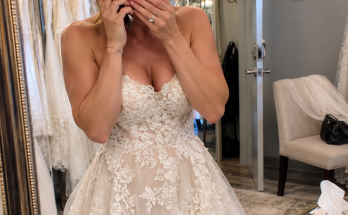
But as I sat in the second row, the velvet of my rented dress scratching against my knees, I watched my father. He wasn’t crying tears of joy as he gave his daughter away. He was sweating, his eyes darting hungrily as he shook hands with the groom’s family—the wealthy, politically connected Sterlings. I realized then, with a cold knot tightening in my stomach, that this wasn’t about Vanessa’s happiness. It was a calculated exhibition. My father’s real estate development firm had been quietly bleeding out for years, a victim of his own hubris and terrible investments. This wedding was his grand illusion, a desperate public relations stunt to project immense wealth and secure lucrative, life-saving contracts from his new in-laws. Vanessa, wrapped in fifty thousand dollars of custom Italian silk, was his perfect, glittering bait.
“Oh, sweetheart, that’s just wonderful,” my mother said, dabbing her mouth with a linen napkin. Her smile was a rigid, practiced thing that didn’t dare reach her eyes. She glanced at Caleb, taking in his off-the-rack suit and the calluses on his hands. Caleb was an architectural restorer—a man who worked with his hands to save beautiful, broken things. To my parents, manual labor, no matter how skilled, was a disease. “We will, of course, help you plan. We want both our daughters to feel equally loved and supported.”
I let myself believe the lie. For a few fleeting, foolish weeks, I surrendered to the illusion that I was finally enough, that I was worthy of the same parental adoration Vanessa received effortlessly. But the reality of their “help” quickly revealed itself as a weapon of mass suffocation.
They hijacked every vendor meeting, turning joyful planning into a battlefield of passive-aggression. When Caleb suggested a charming, rustic barn venue overlooking a lake, my father scoffed loudly enough to make the wedding planner flinch.
“We aren’t throwing a backyard barbecue, Emily,” Richard snapped, adjusting his Rolex. “Family reputation matters. What would the Sterlings think if they attended a wedding in a barn? We have standards to uphold.”
They forced us into high-end tastings we didn’t want, constantly reminding us of the “standard” Vanessa had set. My mother insisted on flying in a florist from New York, shooting down Caleb’s suggestion of local, sustainable blooms with a condescending pat on his arm.
“It’s okay, Caleb,” Eleanor cooed, her voice dripping with venomous sweetness. “We know you don’t quite understand how things operate in our circles. Don’t you worry your head about it. We’re handling everything.”
They weren’t planning a wedding for us. They were building a second showroom for themselves, carefully and methodically marginalizing the man I loved to ensure he knew his place: beneath them. The golden monogrammed napkins, the mandatory caviar bars, the endless guest list of their business associates—we were suffocating under the weight of their weaponized generosity.
I was ready to put my foot down. I spent an entire Sunday drafting a speech to tell them we were taking back control, willing to pay for a tiny backyard wedding ourselves. But before I could utter a single word of defiance, a courier arrived at my corporate office on a mundane Tuesday morning.
The receptionist paged me, her voice tight. “Emily? There’s a courier here. He says he requires your direct signature for a certified parcel.”
I walked to the front desk, my heart doing a strange, anxious flutter. The envelope was thick, heavy, and sealed with tamper-proof tape. The return address belonged to my father’s corporate accounting firm. I signed the electronic pad, a profound sense of impending doom washing over me as I carried the envelope back to my desk.
I didn’t know it yet, but the contents of that envelope were about to detonate my entire life.
I sat heavily in my ergonomic chair, the hum of the office fading into a white, buzzing noise in my ears. I sliced the heavy paper open with a metal letter opener and pulled out a meticulously stapled, five-page document.
It was not a contract. It was not a legal notice regarding a trust.
It was an invoice.
The bold, black letters at the top of the first page read: Reimbursement for Wedding Support, Consultation, and Advance Vendor Deposits.
Total due: $73,418.22.
My vision blurred. I blinked hard, a cold sweat breaking out across my neck as I scanned the itemized list. It was a masterclass in psychological cruelty, a ledger of conditional love. They hadn’t just billed me for the venue deposits and the imported florist’s consultation fees. They had billed me for their time, their presence, and their sheer condescension.
Line item 14: Fuel and mileage for Eleanor Hart to attend bridal boutique fitting (3 trips) – $145.00
Line item 27: Psychological distress and professional consultation regarding Emily’s choice of a low-income partner – $1,200.00
Line item 35: Wasted dinner expenses where initial offer of support was made – $450.00
Line item 42: Projected depreciation of family social standing due to venue downgrade – $15,000.00
At the very bottom, beneath the staggering, impossible total, my father had written a note in his sharp, slanted handwriting:
Emily, as you are not marrying into a family that provides a reciprocal business advantage to the Hart estate, we cannot absorb these sunk costs as we did for your sister. Payment is due in full within five business days to avoid family conflict. Failure to remit will result in immediate contact from our legal team to revoke all current trust assets, inheritance, and familial association.
A cold dread coiled in my gut, quickly followed by a blinding, white-hot rage. They were charging me for the privilege of being a disappointment. They were financially punishing Caleb for not being born into a trust fund. It wasn’t a gift; it was a shakedown.
I didn’t cry. The shock was too absolute, burning away any trace of sorrow and leaving behind only a hard, glittering clarity. It felt as if a fault line had cracked open right through my chest, severing the last fragile tethers I had to the people who raised me.
I took a picture of the final page and texted it to Caleb. He called me within thirty seconds.
“Tell me this is a sick prank,” his voice crackled through the phone, thick with anger and disbelief.
“It’s not,” I whispered, tracing the absurd line items with a trembling finger. “It’s an eviction notice from the family. They’re charging us seventy-three grand for ruining their aesthetic.”
“Em, we can fight this. Legally, they can’t force you to pay for things you didn’t sign for. I’m calling a lawyer—”
“No,” I cut him off, my voice suddenly steady, echoing with a terrifying calm. “If I fight, I’m still playing their game. I’m still tied to them in a courtroom. I’m still their daughter.”
“So what do we do?” Caleb asked, the fight draining from his voice, replaced by deep concern for me.
“We buy our way out.”
That afternoon, I logged into my financial portals. I liquidated my modest stock portfolio I had been building since college. I emptied my emergency savings. I cashed out a small CD my grandmother had left me. By 3:00 PM, I authorized a direct wire transfer for exactly $73,418.22 to my father’s corporate account.
In the memo line, I typed: Paid in Full. Do not ever contact me again.
By Friday, Caleb and I had systematically dismantled the extravagant circus my parents had built. We canceled every vendor, forfeited whatever deposits remained, and stood in a small, wood-paneled room at the county courthouse.
I didn’t wear silk. I wore a simple, beautiful blue dress I bought off the rack for eighty dollars. We had exactly eight close friends in attendance. Afterward, we didn’t have a caviar bar; we sat on the hardwood floor of our cramped apartment, eating pepperoni pizza from a cardboard box, laughing until our ribs ached and tears streamed down our faces.
It was the happiest day of my life, completely free of the suffocating weight of my parents’ conditional love. Nobody in that room was keeping a ledger of what their affection cost.
I changed my phone number the very next morning. I blocked their email addresses, deleted my social media, and instructed the receptionist at my office to turn away anyone matching my parents’ descriptions. For six months, silence became the greatest wedding gift I could have ever given myself.
I thought I had won. I thought I had severed the rotting limb and saved myself. But I was naive. I didn’t realize that the monster I had walked away from was already starving, and it had left a poison in my bloodstream long before I ever tried to run.
The profound peace of our new life lasted until the bitter chill of January, when Caleb and I decided it was time to stop throwing our money into a landlord’s pocket. We had aggressively saved up a modest down payment for a small townhouse on the edge of the city.
We sat in the glass-walled office of First Horizon Lending, holding hands across a polished mahogany desk, ready for our future to officially begin. The mortgage broker, a kind-faced woman named Sarah Jenkins, smiled warmly as she typed our information into her dual-monitor setup.
“Alright, everything looks great on the income side,” Sarah chirped, clicking her mouse. “Just going to pull the joint credit report now to lock in your rate. Give it a few seconds.”
We waited. The clock on the wall ticked.
Suddenly, Sarah’s brow furrowed. The warm, professional smile vanished, replaced by a look of deep, uncomfortable confusion. She clicked her mouse a few more times, scrolling rapidly. She took off her reading glasses, rubbed her eyes, and put them back on.
“Emily,” Sarah said slowly, her voice dropping an octave. “Are you… are you currently aware of the outstanding debt obligations on your personal credit profile?”
I blinked, squeezing Caleb’s hand. “Debt? I have a car loan with about four thousand left on it, and maybe a thousand on a travel credit card that I pay off every month. Caleb is completely debt-free.”
Sarah turned her monitor slowly toward us.
“According to the bureaus,” Sarah said, pointing a manicured finger at a glaring red column on the screen, “you have three maximum-limit signature credit cards, a massive personal line of credit, and a defaulted bridge loan. The total outstanding balance is just shy of one hundred and fifty thousand dollars. And Emily… none of these have been paid in over ninety days. Your credit score is in the low 400s.”
The air violently left my lungs. The sterile, air-conditioned office suddenly felt like a furnace. One hundred and fifty thousand dollars.
“That’s impossible,” Caleb said, his voice rising in panic. “She hasn’t opened any accounts. Look at the dates. When were these opened?”
Sarah highlighted a row of text. “They were all opened approximately nine months ago.”
Nine months ago. Right around the time Vanessa was securing her custom gown, her imported orchids, and her gravity-defying champagne tower. Right around the time my father was desperately trying to convince the Sterlings he was a titan of industry.
A sickening, horrifying realization washed over me, a tidal wave of betrayal so profound it made my ears ring. My parents hadn’t just financed Vanessa’s wedding to show off; they were entirely broke. They had exhausted their own credit lines, and to keep the illusion alive, they had stolen my Social Security Number. They had forged my signature to open fraudulent accounts, gambling everything on the Sterling business contracts, assuming they could quietly pay it all off once the money rolled in.
And when the money didn’t roll in fast enough, they had tried to extort seventy-three thousand dollars from me with that fake invoice, just to make the minimum payments and keep the ship from sinking a little longer. I had paid them with my life savings, and they had let my name burn anyway.
“They stole my identity,” I whispered, the words tasting like ash and battery acid.
Caleb’s jaw clenched so tight I thought I heard a tooth crack. He stood up, knocking his chair back. “Print this. Print everything. We’re going to the police right now.”
“No. Wait,” I said, grabbing his wrist. My mind was racing, hyper-focusing through the panic.
If I went to the police now, an amateur pointing fingers, my father’s expensive defense lawyers would bury me. They would claim I authorized it to help the family. They would tie me up in litigation for a decade. I couldn’t just accuse them; I needed to build a guillotine.
We thanked a bewildered Sarah, took the printed reports, and went straight to the office of Arthur Davis, a ruthless, high-stakes financial litigator Caleb knew through his restoration firm.
For the next two weeks, Caleb and I operated in total, paranoid secrecy. We didn’t sleep. We hired a forensic accountant. Mr. Davis subpoenaed the original loan applications from the banks. We matched the IP addresses used to open the online credit cards directly to the router in my father’s home office. We had handwriting experts analyze the forged signatures against my real ones.
I was quietly assembling a nuclear bomb, waiting for the perfect moment to press the detonator.
That moment arrived on a Thursday night. A torrential, freezing rain was lashing against the windows of our apartment. We were sitting on the living room floor, reviewing the final, damning dossier Mr. Davis had prepared, when a violent, frantic pounding rattled our front door.
It wasn’t a polite knock. It was the sound of sheer, unadulterated panic.
“Open up!” a voice shrieked from the hallway, muffled by the heavy wood, followed by the sound of fists hammering against the frame. “Emily, you selfish little witch, open the damn door!”
Caleb shot up, reaching for his phone to call 911. I held up a hand to stop him and moved silently to the door, pressing my eye against the peephole.
Standing under the flickering, yellow hallway light was Vanessa. Her designer trench coat was soaked through, her expensive mascara running in dark, jagged rivers down her pale cheeks. She was clutching a crumpled piece of paper like a lifeline.
But what made the blood freeze in my veins was the figure standing shivering behind her. It was my mother, Eleanor. She looked small, haggard, and absolutely terrified.
I took a deep breath, unlocking the deadbolt, but keeping the heavy steel security chain firmly in place.
The door cracked open three inches. The smell of damp wool and desperate panic flooded into my apartment.
“What do you want?” I asked, my voice devoid of any warmth, a flat line on a heart monitor.
Vanessa shoved the crumpled paper through the narrow gap, nearly hitting me in the face. It was a bank notice. A notice of default and impending asset seizure. But it wasn’t for our parents’ house. It was for hers.
“Look what you did!” Vanessa sobbed hysterically, her voice cracking as she clawed at the doorframe. “Marcus filed for divorce yesterday. He kicked me out, Emily! He found out everything. The sports cars were leased. My jewelry was rented. The Vanderbilts ran a forensic background check on Dad’s firm before signing the new development deal. They know he’s bankrupt. Marcus’s family is severing all ties. I have nothing!”
Vanessa was hyperventilating, the glittering, superficial facade of her life entirely dismantled in a matter of hours. She had been sold to a wealthy family under false pretenses, a Trojan horse made of rented gold, and the moment the paint chipped, she was thrown to the wolves.
“That sounds like a terrible tragedy,” I said flatly, looking at her ruined designer heels. “But none of it has anything to do with me.”
My mother stepped forward, pushing Vanessa gently aside. Her hands were shaking violently as she reached into her oversized, waterlogged leather purse.
“Emily, please,” Eleanor whimpered. The haughty, condescending matriarch was gone, replaced by a fragile, pathetic woman begging for her life. “Your father didn’t mean to let it get this far. He thought the Sterling contracts would cover everything within the quarter. He thought if both weddings looked equal, if we projected absolute dominance, no one would suspect we were struggling.”
“So you stole my identity,” I stated. It wasn’t a question. I wanted to hear her say it.
Eleanor flinched as if I had struck her. “It was just a temporary bridge loan! But then you disappeared. You changed your number. You didn’t help us make the minimums.”
“I paid your extortion invoice,” I spat back, the anger finally bleeding into my voice. “Seventy-three thousand dollars. I bought my freedom.”
“We used that to pay off the caterer and keep the house out of foreclosure for another month!” Vanessa screamed. “You owe us! You have to save the family!”
“We need you to do one more thing,” my mother cried, pulling a thick, perfectly dry legal document from a plastic sleeve in her bag. “The primary lender is giving us forty-eight hours before they refer the fraudulent accounts to federal authorities. Your father could go to federal prison, Emily. We need you to sign this. Right now.”
I peered through the crack, reading the bold text at the top of the page. It was an Affidavit of Retroactive Consent and Debt Assumption.
If I signed it, I would be legally acknowledging that I had authorized the credit accounts from the beginning. I would be willingly adopting the $150,000 debt as my own, clearing my father of all fraud charges, saving him from a prison sentence, and entirely ruining my financial future and my life with Caleb forever.
“Just sign it!” Vanessa wailed, hitting the door with the flat of her palm. “You already ruined my life by not being a team player! You didn’t marry anyone important. Your credit doesn’t matter! You owe us this!”
I looked at the gold pen shaking in my mother’s trembling hand. I looked at the dark streaks of makeup ruining my sister’s face.
They weren’t here out of love. They weren’t here to apologize. They were here because their favorite daughter’s fairy tale had bankrupted them, and they desperately needed their designated scapegoat to fall on the sword.
A chilling, absolute calm washed over me. The scared, desperate-for-approval daughter I used to be died right there in the hallway.
“Hold on a second,” I said softly.
I didn’t reach for the pen. Instead, I reached into the pocket of my jeans and pulled out my phone.
“Who are you calling?” Vanessa demanded, her eyes narrowing with sudden suspicion. “Don’t you dare call the cops, Emily! This is family business!”
I didn’t look at her. I tapped a contact on my screen, hit the speakerphone icon, and held the device near the gap in the door, ensuring the volume was turned all the way up. The phone rang twice before a deep, authoritative voice answered.
“Mr. Davis,” I said clearly, my eyes locked onto my mother’s pale face. “Are you on the line?”
“I am here, Emily,” the sharp, clinical voice of my attorney echoed into the damp hallway.
My mother froze. The gold pen slipped from her fingers, clattering loudly against the hardwood floor of the corridor.
“Mr. Davis,” I continued, my voice steady and completely devoid of mercy. “My mother, Eleanor Hart, is currently standing outside my door. She is attempting to physically coerce me into signing a retroactive consent form to assume the $150,000 in fraudulent debt opened using my Social Security Number. Can you please inform her of our current legal standing?”
“Certainly,” Arthur Davis replied. Even through the phone speaker, his tone was lethal. “Mrs. Hart, I strongly advise you to step away from my client’s residence immediately. As of 9:00 AM this morning, a comprehensive fraud dossier—including IP logs matching your husband’s office network, sworn statements from the banks, and a certified handwriting analysis of the forged signatures—was submitted to the local police department’s financial crimes unit, as well as the FBI field office.”
The silence in the hallway was so absolute it was deafening. The only sound was the distant, muffled rumble of thunder outside.
“Furthermore,” Mr. Davis continued seamlessly, “any attempt to force Emily to sign that document tonight constitutes witness tampering, extortion, and obstruction of justice. The authorities are currently securing a warrant for your husband’s arrest.”
Vanessa’s jaw dropped. She looked at our mother, absolute horror dawning in her widened eyes. “Mom… what is he talking about? FBI? The police?”
Eleanor didn’t answer. She couldn’t. She just stared at me, her mouth opening and closing soundlessly, like a fish pulled out of water. The reality of the situation crashed down upon her. The obedient, easily manipulated daughter was gone. The woman standing behind the chained door was an executioner who had just handed her husband to the federal authorities.
“You sent me a bill for your love,” I said, my voice dropping to a low, venomous whisper that cut through the silence like a scalpel. “You charged me for the privilege of being a prop in your pathetic, fake life. And when my money wasn’t enough, you tried to steal my future to pay for Vanessa’s champagne.”
“Emily, please, you’re destroying the family!” Eleanor finally wailed, her knees buckling as she slumped against the hallway wall, sliding down to the floor.
“No,” I replied, my hand gripping the cold metal of the door handle. “I’m just closing the account.”
I shut the door. The heavy, metallic clack of the deadbolt sliding into place echoed with a profound, beautiful sense of finality.
Outside, Vanessa began to scream—a high, piercing sound of absolute, unhinged defeat—while my mother sobbed hysterically, pounding her fists weakly against the bottom of the door.
Caleb walked out of the living room, having heard the entire exchange from the couch. He didn’t say a word. He just walked up behind me, wrapped his strong arms around my waist, and rested his chin on my shoulder. I leaned back into his solid warmth, my heart hammering against my ribs, but my soul feeling lighter than it had in twenty-eight years.
“It’s over,” he murmured into my hair.
“Yeah,” I breathed out, closing my eyes. “It really is.”
We stood there in the quiet safety of our home, holding each other in the dim light, listening as the frantic, pathetic weeping outside eventually retreated down the hall. Ten minutes later, the silence of the rainy night was shattered by the distant, undeniable, and rapidly approaching wail of police sirens cutting through the dark.
The fallout was swift, brutal, and entirely public.
My father was arrested at his country club the following morning, led out in handcuffs past the very people he had bankrupted himself to impress. The federal investigation revealed that my identity theft was just a desperate drop in a massive bucket; Richard Hart had been running a localized Ponzi scheme with his investors’ money for half a decade.
The Sterling family’s army of lawyers ensured he received absolutely no mercy in the press. The sprawling, ivy-covered estate where I grew up was seized by federal marshals and auctioned off by the banks within the year to pay back the defrauded investors.
Vanessa’s divorce was finalized in record time. Stripped of her marital assets, legally bound by a watertight prenuptial agreement, and completely cut off from our parents’ non-existent wealth, she was cast out. The last I heard through a mutual acquaintance, the golden child who once demanded imported orchids because “local flowers are for peasants” was living in a cramped studio apartment above a laundromat, working the morning shift at a corporate coffee chain, wearing a polyester apron that smelled permanently of burnt espresso.
As for Caleb and me, the legal battle to clear my name was arduous. The fraud alerts on my credit took eight agonizing months to untangle, but with Mr. Davis’s relentless pressure, my name was entirely expunged from the debt.
The very next day, we closed on our little townhouse.
It doesn’t have marble floors. We don’t have a string quartet in the living room, and we certainly don’t drink from crystal flutes. But every single inch of it is ours, built on honesty, hard work, and actual, unconditional love.
We celebrated our first wedding anniversary sitting on the rug of our new living room, surrounded by half-unpacked boxes. There was no champagne tower. We ate a grocery-store sheet cake off paper plates, laughing hysterically as our new rescue dog, a scruffy terrier named Barnaby, tried to steal the vanilla frosting.
It was perfect.
Later that evening, as Caleb was taking Barnaby for a walk, my phone buzzed on the kitchen counter. It was a text from an unknown, unsaved number, but I knew the desperate cadence of the words instantly.
Emily. It’s Mom. I’m using a prepaid phone. Your father’s sentencing hearing is next week. The lawyers say a character statement from you could reduce his time. Please, sweetheart. Family should forgive. We need you.
I stood in my kitchen, looking at the glowing screen for a long time. I waited for the anger, the guilt, or the sadness to rise up. But there was nothing. I just felt a cold, distant pity for a woman who still didn’t understand the price of things.
I opened my photo gallery. I found the picture I had taken earlier that day, a photo I had framed and kept in my home office as a reminder of my survival. It was a snapshot of the official federal court document finalizing my father’s fraud conviction, resting perfectly side-by-side with the original $73,418.22 invoice they had sent me.
Across both documents, I had pressed a heavy, red rubber stamp I bought from a cheap office supply store.
PAID IN FULL.
I attached the photo to the message thread. Below it, I typed a single, final line of text.
Family doesn’t invoice love, and the law doesn’t forgive theft.
I hit send. Then, I permanently blocked the number, turned off my phone, and went outside to join my husband in the rain.
If you want more stories like this, or if you’d like to share your thoughts about what you would have done in my situation, I’d love to hear from you. Your perspective helps these stories reach more people, so don’t be shy about commenting or sharing.