The cruelest thing my daughter ever said to me arrived at 4:47 on a rainy Thursday afternoon, while an old electric kettle screamed on my kitchen counter.
My phone lit up with Caroline’s name.
I opened the message.
“You’re choosing yourself over your own grandchildren, and that’s really the hill you want to die on. Fine.”
For several seconds, I just stood there.
The kettle clicked off behind me.
The house became silent.
I was sixty-eight years old, and after forty-one years of delivering mail through freezing rain, summer heat, snowstorms, and aching knees, I had apparently become selfish because I had said no once.
Caroline and her husband, Nathan, wanted me to keep their children over the holiday weekend while they took a three-day trip with friends.
I adored four-year-old Milo.
I adored eight-month-old Grace.
But my cataract surgery was scheduled for Tuesday, and my pre-op appointment was Saturday morning.
The clinic had given me strict instructions.
Rest.
No heavy lifting.
Avoid unnecessary strain.
And preferably, do not spend three sleepless nights carrying an infant while chasing a preschooler around a house.
I had explained everything calmly.
“Honey, ask Nathan’s mother. Or postpone the trip one week.”
Caroline hadn’t asked if I was scared about surgery.
She hadn’t asked who would drive me home.
Instead, she accused me of choosing myself over her children.
An hour later, my phone vibrated again.
For one ridiculous moment, I thought she had apologized.
It was Nathan.
No words.
Just a screenshot.
The $800 I had transferred for Milo’s preschool tuition had been returned.
That was when something inside me shifted.
This wasn’t simply anger.
It was punishment.
If I wouldn’t provide the help they wanted, they would reject the help I had already given.
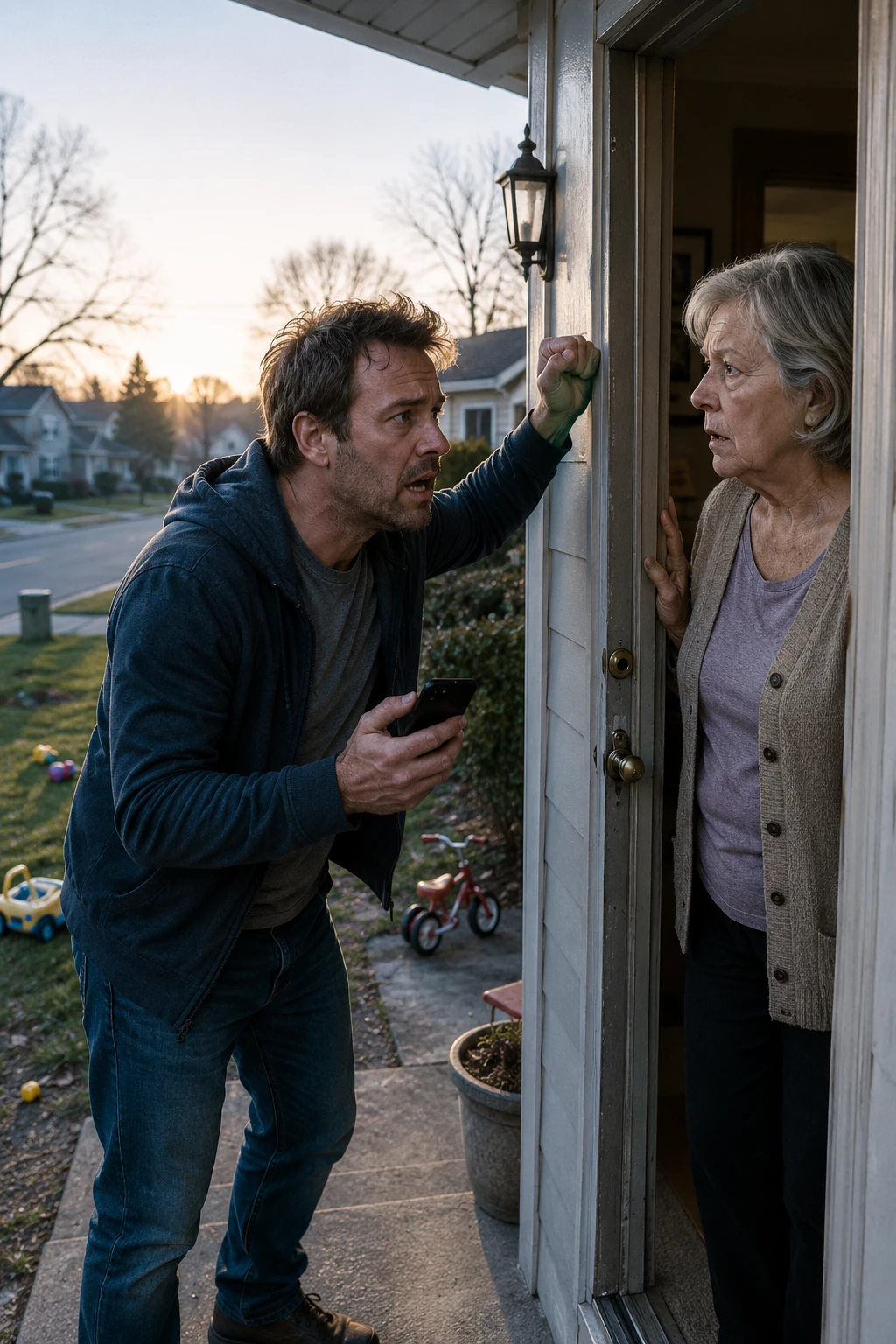
The next morning, against my better judgment, I drove to their house.
Both vehicles were there.
Milo’s little blue tricycle lay on its side in the rain-soaked grass.
I pressed the doorbell.
Inside, cartoons were playing.
I heard Milo talking.
Then Caroline whispered something.
He stopped.
They knew I was standing outside.
Nobody opened the door.
I waited until rain had darkened the cuffs of my cardigan, then returned to my car.
I drove to a grocery store and bought milk I didn’t need and frozen peas that were already in my freezer.
Then I sat in the parking lot for forty minutes because I couldn’t make myself drive home.
When I finally did, there was a brown envelope outside my front door.
Caroline’s handwriting was on it.
Inside was a typed letter.
That hurt more than yelling.
Anger can be impulsive.
But this had been organized into paragraphs.
They accused me of creating a “transactional relationship with money.”
They said they needed distance to develop “healthier patterns” within their family.
I frowned.
Caroline didn’t speak like that.
Neither did Nathan, really.
But both their signatures appeared at the bottom.
Caroline and Nathan.
Side by side.
I sat on the wooden bench my late husband, Edward, had built years earlier.
And suddenly I laughed.
Not because anything was funny.
Because apparently my body had run out of other ways to hurt.
Then I remembered the green folder.
It was on the highest shelf of the spare-bedroom closet, exactly where Edward had left it.
Written across the front in his neat handwriting were two letters:
C & N.
Caroline and Nathan.
Edward had created the folder thirteen years earlier after we cosigned Caroline’s first car loan and discovered she had allowed the payments to go into collections without telling us.
“We’re not keeping this to punish her, Margaret,” he had told me.
“We’re keeping it so we remember the facts when love begins rewriting our memories.”
I carried it to the kitchen.
Inside were thirteen years of financial rescues.
Home deposit.
Nathan’s truck repair.
Medical treatment.
Utility bills.
Groceries.
A funeral.
Preschool.
Cashier’s checks.
Transfers.
Emergency after emergency.
I began totaling everything on the back of an old grocery receipt.
When I finished, I stared at the number.
$73,420.
That didn’t include gas.
School pickups.
Birthday gifts.
Babysitting.
Midnight feedings.
Or countless bags of groceries I had quietly left at their door.
I had said yes for so long that they no longer saw my help as generosity.
They saw it as infrastructure.
Electricity.
Running water.
Something that was simply supposed to be there.
For one furious minute, I wanted to call Caroline and read every number aloud.
Instead, I closed the folder and called Edward’s longtime lawyer.
Harold Benson.
“Harold,” I said, surprised by how calm I sounded. “I need to discuss my will. And my power of attorney.”
He paused.
“Tuesday at two?”
“I’ll be there.”
Tuesday afternoon, I carried the green folder into Harold’s office.
He listened while I explained everything.
The rejected preschool money.
The letter.
The years of financial assistance.
Finally, he removed his glasses.
“Margaret, perhaps it’s time to create stronger protections.”
That sounded reasonable.
Then he said something that made me pause.
“You need to establish healthier patterns.”
I looked at him.
Those words.
Healthier patterns.
I had seen them before.
In Caroline’s letter.
But I told myself it was coincidence.
Harold began reviewing Edward’s documents.
Halfway through the folder, he stopped.
He lifted one page.
“Did you sign this?”
I leaned closer.
My name appeared at the bottom.
The signature looked remarkably like mine.
But something about the M was wrong.
“No.”
The document referenced a line of credit.
Harold’s face became serious.
“Get your full credit report immediately.”
I did.
The next morning, I sat at my kitchen table scrolling through pages of accounts.
Mortgage.
Credit card.
Department store account.
Then I saw something I didn’t recognize.
Account opened: eighteen months earlier.
Balance:
$19,400.
I stopped breathing.
I had never borrowed that money.
Then I saw the contact number attached to the application.
I knew it.
Nathan’s.
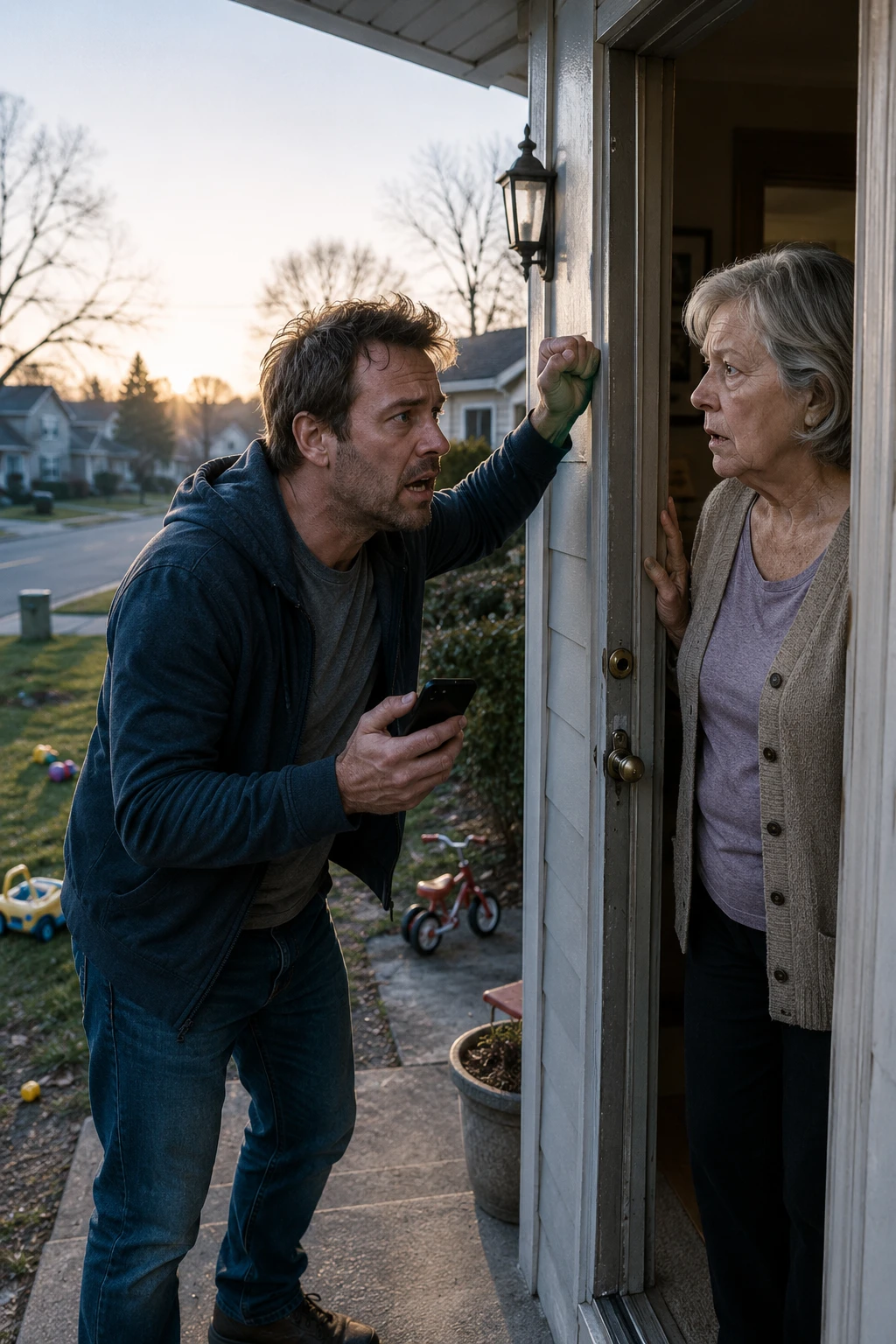
I was still staring at the screen when someone began pounding on my front door.
Hard.
Fast.
Desperate.
“Margaret!”
Nathan.
I opened the door.
He looked terrible.
His hair was uncombed. His face was pale.
“The bank called me.”
I folded my arms.
“About nineteen thousand four hundred dollars?”
His expression changed.
“You know?”
“Your phone number is on the account.”
“I didn’t open it.”
“Then why is your number there?”
“I don’t know!”
For the first time in thirteen years, I saw something in Nathan’s face I had never associated with him.
Fear.
Not fear of being caught.
Fear of not being believed.
He unlocked his phone.
“This is why I came.”
He showed me three messages from the bank.
Then another email.
The account was mine.
But correspondence had been routed through his number.
“I thought Caroline handled something with you,” he said. “She told me you had helped us consolidate some bills last year.”
My stomach tightened.
“What bills?”
Nathan stared at me.
“She said you knew.”
“I didn’t.”
He sat down hard on the porch step.
“Oh, God.”
I almost accused him.
Then he said something that stopped me.
“Margaret, I didn’t write that letter.”
“What?”
“The one Caroline sent you.”
“You signed it.”
“She brought it to me already printed. She said it came from a family counselor.”
“A counselor?”
He shook his head.
“I never met one.”
The room seemed to tilt slightly.
I went inside and brought out the letter.
Nathan read it again.
Then pointed to the phrase:
“transactional relationship with money.”
“I know where I’ve heard that.”
My heart began pounding.
“Where?”
“Harold.”
I stared at him.
Nathan swallowed.
“After Edward died, Caroline met Harold several times about inheritance questions. Once, I went with her. He said you and Caroline needed to stop having a transactional relationship with money.”
My skin turned cold.
That afternoon, I called Caroline.
She finally answered.
“What?”
“Did Harold Benson write your letter?”
Silence.
“Caroline?”
“He helped.”
My grip tightened around the phone.
“You told me Nathan wrote it.”
“I never said that.”
“Why were you discussing me with my lawyer?”
“He was Dad’s lawyer too!”
“And why were you discussing my money?”
Her voice sharpened.
“Because everything is always about what you give us and what you’ve done for us.”
“No, Caroline. Everything became about money when you punished me for having surgery.”
Silence again.
Then I asked the question.
“Did you give Harold my personal information?”
Her breathing changed.
“What information?”
“My Social Security number. Copies of my identification.”
“I gave him some estate paperwork after Dad died.”
My knees weakened.
“What paperwork?”
“Mom, I don’t remember.”
“Try.”
A long pause.
“Hospital documents. Dad’s files. Copies of your driver’s license. He said he needed them to verify estate records.”
I closed my eyes.
Harold had handled our legal affairs for twenty-three years.
He knew our banking history.
Our signatures.
Our family disputes.
Our Social Security numbers.
And now, somehow, a debt I never created pointed directly toward Nathan.
The perfect family scapegoat.
I did not call Harold.
Instead, I called the bank’s fraud department.
Then the police.
Then another attorney.
By evening, the $19,400 account was frozen.
The next morning, I went through Edward’s folder again.
This time slowly.
Receipt by receipt.
Statement by statement.
Near the back, I found something I had never noticed before.
A tiny brass key taped inside the cardboard spine.
Underneath, Edward had written:
MARGARET — BOX 417. FIRST NATIONAL.
My hands began shaking.
Edward and I had never shared a safe-deposit box.
At least, I didn’t think we had.
The bank confirmed otherwise.
Box 417 had been opened by Edward eleven months before he died.
My name had been added as beneficiary.
Inside was one envelope.
Nothing else.
On the front, Edward had written:
For Margaret, if Harold ever asks for control of your finances.
I nearly dropped it.
Inside were copies of bank statements, legal bills, and handwritten notes.
Edward had noticed strange charges before his death.
Small ones.
$1,900.
$2,400.
$3,100.
Always connected somehow to estate planning or “fiduciary services.”
At first, Edward thought they were mistakes.
Then he discovered a company called Benson Legacy Consulting LLC.
Its registered owner was Harold’s brother.
At the bottom of the envelope was a letter from Edward.
My eyes blurred before I had finished the first paragraph.
Margaret,
If you are reading this, I ran out of time.
He wrote that Harold had repeatedly pressured him to consolidate our accounts and allow Harold to serve as financial power of attorney.
Edward refused.
Then Harold began asking unusually detailed questions about Caroline’s debts.
Edward became suspicious.
He believed Harold had realized something dangerous:
Our family was already accustomed to unexplained financial emergencies.
If money disappeared, everyone would blame Caroline or Nathan.
Edward had begun collecting evidence.
Then his heart failed.
I sat in that private bank room with tears running down my face.
But Edward’s final paragraph hurt the most.
You will want to blame yourself for trusting people. Don’t. Trust is not foolishness. Betraying it is.
I pressed the letter against my chest.
Then I noticed something else in the envelope.
A flash drive.
The police examined it.
There were scanned documents.
Emails.
And one audio recording.
Edward’s voice came first.
Then Harold’s.
Harold was trying to convince him to sign a broad financial authorization.
Edward refused.
Harold laughed softly.
Then said:
“Families like yours make this easy, Ed. Everyone owes everyone money. Nobody knows where anything starts or ends.”
I felt physically sick.
But the recording continued.
Edward asked, “And if Margaret notices?”
Harold answered:
“She’ll think Caroline did it.”
That was enough.
Two days later, wearing dark glasses after my cataract procedure, I walked into Harold Benson’s office.
A detective waited in the building across the street.
I had been instructed not to provoke him.
Harold smiled when he saw me.
“How are the eyes?”
“Improving.”
He placed several papers on his desk.
“I prepared the new power-of-attorney documents.”
Of course he had.
“I thought you wanted my daughter removed from everything.”
“I do.”
“These papers will allow me to manage your accounts temporarily while we restructure the estate.”
I picked up the pen.
My hand was perfectly steady.
Then I looked at him.
“What about the $19,400?”
His smile disappeared.
“We can resolve it.”
“How?”
“I have people at the bank.”
I set the pen down.
“And Benson Legacy Consulting?”
His face became completely still.
For the first time, Harold looked old.
“Where did you hear that name?”
“Edward.”
Silence.
I watched his eyes move toward the door.
Then he said the sentence that destroyed him.
“Edward was supposed to leave that alone.”
The detective later told me that was the moment they knew he would talk.
And he did.
Not immediately.
But enough.
The investigation uncovered twenty-seven victims.
Most were elderly.
Most were widowed.
Most had families with financial problems.
Harold deliberately selected people whose missing money could easily be blamed on children, caregivers, or confused bookkeeping.
The $19,400 attached to my name had been transferred through two shell companies before reaching one controlled by Harold.
Nathan’s phone number had been placed on the application intentionally.
So had Caroline’s old mailing address.
Harold hadn’t simply stolen my identity.
He had constructed a story around the theft.
A story in which my daughter and son-in-law looked guilty before anyone asked a single question.
Caroline came to my house three weeks later.
She looked smaller somehow.
She sat at my kitchen table and cried.
“I didn’t steal from you.”
“I know.”
“But I gave him your documents.”
“Yes.”
“I believed him.”
“So did I.”
She looked up.
“Do you forgive me?”
I thought about that.
Then I shook my head gently.
“Not yet.”
Her face crumpled.
I reached across the table.
“Forgiveness and access are not the same thing, Caroline.”
She stared at me.
“I love you. I love Milo. I love Grace.”
I took the green folder from the counter.
“But love does not mean pretending things didn’t happen.”
I showed her the total.
$73,420.
She covered her mouth.
“I didn’t know.”
“That’s the problem.”
I had already changed my estate plan with a new attorney.
Caroline would not control my finances.
Neither would Nathan.
Money for Milo and Grace would go into protected trusts.
My home would remain mine for as long as I lived.
No one would borrow against it.
No one would use it as emergency collateral.
No one would treat my retirement like an extension of their checking account.
Caroline wiped her eyes.
Then she whispered, “Dad knew, didn’t he?”
I looked toward the wooden bench Edward had built.
“He knew I had trouble saying no.”
She gave a sad little smile.
“That sounds like Dad.”
“There’s one more thing.”
From the green folder, I pulled Edward’s original handwritten ledger.
At the bottom of the final page was a sentence I had never understood until that moment.
If Margaret ever totals this column, she is finally ready.
Caroline read it twice.
“Ready for what?”
I opened another envelope Edward had hidden behind the ledger.
Inside was a legal document.
My breath had disappeared the first time I saw it.
Now I watched Caroline read.
Edward had quietly purchased a life-insurance policy years earlier.
Not for Caroline.
Not even for me.
The beneficiary was a trust for Milo and any future grandchildren.
Its value:
$500,000.
Caroline stared at me.
“Half a million dollars?”
I nodded.
“But Dad never told us.”
“He didn’t want you planning your life around money that wasn’t yours yet.”
Her eyes filled again.
And then I finally understood the true purpose of Edward’s folder.
It had never been a record of what Caroline owed us.
It was a record of what we needed to stop giving her.
The money was never meant to punish her.
The boundaries were meant to save her.
And the final surprise?
After Harold’s arrest, investigators discovered that he had tried to access Edward’s insurance trust three separate times.
He had failed every time.
Because Edward had named an independent trustee Harold had never known about.
The trustee was a retired postal supervisor.
My old boss.
A woman named Ruth Delgado.
When I called Ruth, she laughed softly.
“Edward made me promise not to tell you unless someone came after the money.”
“Why you?”
“Because he said lawyers understand paperwork.”
She paused.
“But postal workers understand when something has been tampered with.”
For the first time in months, I laughed because something was actually funny.
A year later, Caroline had a job again.
She and Nathan were in counseling.
Not the kind that produced typed letters full of borrowed phrases.
Real counseling.
They stopped asking me for money.
Sometimes they even invited me over without needing anything.
And when Grace took her first steps across my living-room rug, Caroline looked at me and said:
“You know you can say no when you’re tired.”
I smiled.
“I know.”
That single word felt different now.
Not angry.
Not guilty.
Free.
On the anniversary of Edward’s death, I took his letter outside and sat on the bench he had built.
The late-afternoon sun made everything golden.
For forty years, I had believed love meant being the person everyone could depend on.
Edward had understood something I didn’t.
If people can only love you while you are useful to them, what they love is not you.
I looked at the house.
My house.
My savings.
My life.
Then I whispered the words I wished I had learned thirteen years earlier.
“No.”
And somewhere deep inside me, it finally sounded exactly like what Edward had always meant it to be.
Not rejection.
Protection.