“## PART 2
“They had attacked a federal investigator’s primary witness.”
The words formed in my head before Jessi ever said them aloud.
I kept my face still.
Years in uniform had taught me that panic was contagious, anger was expensive, and sometimes the most dangerous thing a man could do was reveal what he knew.
I pulled the hospital chair closer to Jessi’s bed.
“What recordings?”
Her eyes moved toward the closed door.
Not dramatically.
Just enough.
I understood.
I stood, crossed the room, and opened it.
A uniformed sheriff’s deputy sat twenty feet away at the nurses’ station pretending to scroll through his phone.
Deputy Marcus.
The same man who had collected me from the airport.
When he saw me, he nodded.
I nodded back.
Then I closed the door.
“He’s outside,” I whispered.
Jessi swallowed painfully.
“I know.”
Her voice was barely audible beneath the soft mechanical beeping surrounding us.
I bent close enough that my ear nearly touched her lips.
She whispered, “Flynn’s company bought three hundred acres outside Millstone.”
“I know about the development.”
“No. You know what they told everyone.”
Her fingers tightened around mine.
“Luxury housing. Shopping center. New highway access. That’s the public story.”
“What’s the real one?”
“The land wasn’t theirs to buy.”
I stared at her.
Jessi worked as a forensic accountant for a regional land management contractor. Her job sounded boring whenever she explained it at neighborhood cookouts—leases, title chains, municipal easements, grant restrictions.
It wasn’t boring anymore.
“Part of that property belongs to the federal government,” she said. “Another section was placed in a protected veterans’ trust in 1978. It can’t legally be sold for private development.”
“Then how did Flynn get it?”
“They forged the transfer documents.”
My jaw tightened.
“Who is ‘they’?”
“I don’t know all of them.”
That answer frightened me more than a name would have.
Jessi looked toward the door again.
“Flynn’s company is just the front. Someone changed records inside the county assessor’s office. Someone altered state filings. Federal grant maps disappeared.”
She took a shallow breath.
“I found duplicate ledgers.”
“What did you do?”
“I copied everything.”
Of course she had.
That was Jessi.
People mistook her kindness for softness.
They never understood that my wife had the stubbornness of reinforced concrete.
“Where are the copies?”
A faint smile appeared beneath the bruising.
“They searched my office.”
“I figured.”
“They searched our house too.”
That was news.
My stomach tightened.
“How do you know?”
“Flynn told me while they were…”
She stopped.
Her eyes changed.
The machines kept beeping.
I felt something cold move through me.
I wanted details.
I also never wanted to hear them.
I squeezed her hand.
“You don’t have to tell me.”
“Yes, I do.”
“Not tonight.”
Her eyes filled with tears.
“They put me in the back of a truck, Luca.”
My hand went numb around hers.
“There were three of them. Flynn and two men I didn’t recognize. They kept asking where the drive was. I wouldn’t tell them.”
I said nothing.
“They took me to the construction site. Flynn said accidents happened there all the time.”
A tear slipped toward her ear.
“He said nobody would question it if I fell.”
The room seemed to shrink.
“He pushed me down the first flight.”
I closed my eyes for one second.
Only one.
“When I was still conscious, he came downstairs.”
Her voice cracked.
“He asked me again.”
I could hear my heartbeat.
“When I didn’t answer, one of the other men…”
She looked toward her immobilized legs.
“…used a steel bar.”
I stared at the floor.
There are moments when rage is hot.
That wasn’t what I felt.
This was colder.
Structured.
Every part of me wanted to find Flynn Sterling.
Instead I asked, “Where’s the drive?”
Jessi looked directly at me.
“Your father’s grave.”
For the first time since landing, I almost laughed.
Not because anything was funny.
Because it was brilliant.
My father had been buried twelve years earlier at Harrington Veterans Cemetery.
A place Jessi knew I visited every year.
A place Flynn Sterling would never think mattered.
“What exactly did you hide?”
“USB drive. Blue casing. Waterproof bag.”
“Where?”
“Under the loose stone behind his headstone.”
A knock sounded.
We both froze.
The door opened.
Deputy Marcus stepped inside.
“Everything okay?”
I straightened slowly.
“My wife just woke up after major surgery. What do you think?”
Marcus looked past me toward Jessi.
For an instant, something flickered in his expression.
Guilt?
Fear?
Then it vanished.
“Sheriff wants someone here for her protection.”
“Protection from whom?”
His jaw moved.
“Just procedure.”
“Interesting procedure.”
Marcus stared at me for several seconds.
Then he lowered his voice.
“You should go home, Sergeant Vance.”
“I just got here.”
“Exactly.”
Something about the way he said it made me study him carefully.
He wasn’t threatening me.
He was warning me.
Before I could answer, a nurse approached from the hallway.
“Mr. Vance? We need to check your wife’s dressings.”
I kissed Jessi’s forehead.
“I’ll be back.”
She caught my sleeve.
“No police.”
“I know.”
“No one.”
“I know.”
I walked past Marcus without another word.
But I didn’t go home.
—
Harrington Veterans Cemetery was twenty-eight minutes from County Memorial.
I made it in nineteen.
Rain had started falling, thin and cold, turning the narrow cemetery road silver beneath the headlights of my rental car.
My father’s grave stood beneath an old oak near the eastern wall.
Corporal Vincent Vance.
United States Marine Corps.
Beloved Husband and Father.
I hadn’t been there in eleven months.
“Sorry, Dad,” I whispered.
Then I crouched behind the headstone.
The loose stone was exactly where Jessi said it would be.
I lifted it.
Nothing.
My breathing stopped.
I reached deeper into the wet earth.
Mud.
Roots.
No waterproof bag.
No drive.
For several seconds, I remained crouched there with rain dripping from my face.
Then headlights swept across the cemetery.
A vehicle was coming up the road.
I moved behind the oak.
A dark Ford pickup stopped thirty yards away.
The driver killed the engine.
One man got out.
Deputy Marcus.
He didn’t see me immediately.
He walked directly toward my father’s grave.
My hand curled into a fist.
Marcus reached the headstone.
Saw the disturbed stone.
And whispered, “Damn it.”
I stepped from behind the tree.
“Looking for something?”
He spun.
His hand went toward his weapon.
Mine didn’t.
That seemed to confuse him.
“Easy,” he said.
“You followed me.”
“No.”
“You arrived at my father’s grave in the middle of the night by coincidence?”
Marcus looked toward the cemetery road.
“We shouldn’t talk here.”
“That’s becoming a popular sentence today.”
“Luca.”
It was the first time he’d used my first name.
“Get in my truck.”
“No.”
“If Sterling’s men followed either of us, standing beside the grave isn’t exactly subtle.”
That got my attention.
“Sheriff Sterling’s men?”
Marcus stared at me.
“You think everyone wearing his badge is loyal to him?”
I didn’t answer.
He reached slowly into his coat.
I shifted my weight.
Marcus noticed.
“Relax.”
He pulled out a blue USB drive.
My entire body went still.
“You have five seconds to explain.”
“Your wife gave it to me.”
“No, she didn’t.”
“Not personally.”
“Four seconds.”
“She called my sister.”
“Three.”
“My sister is Nurse Ellen Marcus.”
The crying nurse.
The woman who had called me.
Marcus extended the drive.
“Jessi told Ellen someone inside the hospital might search her belongings. She gave her the location. Ellen called me because she didn’t know who else to trust.”
“Why you?”
“Because I’ve been collecting evidence on Arthur Sterling for eighteen months.”
Rain tapped against the brim of his hat.
I looked at the drive.
Then at him.
“If you’re lying—”
“I know.”
“No. You don’t.”
Marcus gave a humorless smile.
“I was in Afghanistan too, Sergeant.”
That surprised me.
“Army?”
“Third Infantry.”
“When?”
“2011 through 2013.”
The rain intensified.
He held the USB closer.
“Your wife uncovered the financial side. I’ve been documenting everything else.”
“Everything else?”
Marcus looked back toward the road.
“Get in the truck.”
This time I did.
—
The cab smelled like coffee and wet canvas.
Marcus didn’t start the engine.
He pulled a folder from beneath the passenger seat and placed it on my lap.
Photographs.
Dozens.
Flynn meeting county commissioners.
Flynn meeting judges.
Sheriff Sterling entering a warehouse near the state line.
Stacks of construction materials being unloaded at night.
Then photographs of men I didn’t recognize.
Expensive suits.
Government plates.
One picture stopped me.
A bald man exiting the Sterling County Club.
I knew him.
Not personally.
From television.
“State Senator William Rusk.”
Marcus nodded.
“Chairman of the transportation appropriations committee.”
“What does a senator have to do with stolen land?”
“Maybe nothing.”
“You don’t believe that.”
“No.”
He pulled out another document.
“A new interstate connector was approved last year. Quietly. It runs straight past Flynn’s development.”
I understood instantly.
“Property values.”
“Before the highway announcement, the land was worth maybe eighteen million.”
“And afterward?”
“Projected valuation?”
He looked at me.
“Two hundred and forty million.”
I whistled softly.
Marcus continued.
“Except I don’t think money is the whole thing.”
He handed me another photograph.
Aerial image.
Flynn’s construction site.
One section had been circled in red.
“What’s that?”
“Building C.”
“Looks like a warehouse.”
“That’s what the plans say.”
“And?”
“The foundation is thirty feet deeper than permitted.”
I looked at him.
“Why?”
“Nobody knows.”
“Have you been inside?”
“Couldn’t get close. Security there isn’t Flynn’s usual rent-a-cop crew.”
“What kind?”
“Former military.”
That made me look up.
“Professional?”
“Very.”
Marcus tapped the photograph.
“Two weeks ago, one of my informants got inside.”
“What did he find?”
“He never told me.”
“Why?”
Marcus stared through the windshield.
“They found him in the river the next morning.”
Silence filled the truck.
I looked again at the blue drive.
“What’s on this?”
“Your wife said enough to destroy Flynn.”
“Flynn isn’t the problem anymore.”
Marcus shook his head.
“No.”
He reached for the ignition.
“Sterling is a gatekeeper.”
“For who?”
“That’s what we need to find out.”
The truck engine turned over.
Then Marcus stopped.
His face changed.
“What?”
He stared into the rearview mirror.
“Someone’s coming.”
Headlights appeared at the cemetery entrance.
Then another set.
Two vehicles.
Marcus killed the engine again.
“Sheriff?”
“No.”
“How do you know?”
“Those aren’t department lights.”
Black SUVs entered the cemetery.
Slowly.
No rush.
No sirens.
Marcus reached under the seat and pulled out a pistol.
I stared at him.
“You said we shouldn’t stand by the grave.”
“I was right.”
The first SUV stopped behind us.
The second blocked the road ahead.
Four men emerged.
Dark jackets.
No uniforms.
One of them approached the driver’s side.
Marcus lowered his window three inches.
“Can I help you?”
The man smiled.
“Deputy Marcus.”
Marcus’s grip tightened on the pistol below the window line.
“Do we know each other?”
“No.”
The man’s eyes shifted toward me.
“But we know Sergeant Vance.”
I felt the USB drive inside my fist.
The stranger tapped the truck roof twice.
“Sheriff Sterling would like the two of you to come with us.”
Marcus almost laughed.
“You’re not deputies.”
“We didn’t say we were.”
“Then drive away.”
The man’s smile disappeared.
“Last chance.”
Marcus whispered without moving his lips.
“When I open this door, run toward the wall.”
“I’m not leaving you.”
“You’ve got the drive.”
“So do they, apparently.”
The man outside stepped back.
His right hand disappeared beneath his jacket.
Then everything changed.
A gunshot shattered the windshield.
Marcus ducked.
I hit the floor.
Another shot punched through the passenger door.
Marcus kicked open his side and fired twice.
Someone yelled.
I crawled across the bench seat and rolled out behind him.
We sprinted between rows of gravestones as bullets snapped through tree branches overhead.
“Wall!” Marcus shouted.
We ran.
A round struck a granite headstone beside me, spraying stone fragments across my cheek.
Marcus fired backward without stopping.
We reached the cemetery’s eastern wall.
Six feet of old brick.
I jumped, caught the top, pulled myself over, and dropped into darkness.
Marcus landed beside me.
“Move!”
We ran through wet woods.
Behind us, men were shouting.
No police commands.
No warnings.
They were trying to kill us.
That answered one question.
Whatever was on Jessi’s drive mattered.
A lot.
—
Twenty minutes later, we emerged beside an abandoned service road.
Marcus bent over, hands on his knees.
“You hit?”
“No.”
“You?”
He checked his left arm.
Blood.
“Graze.”
I tore a strip from the bottom of my shirt and wrapped it tightly.
Marcus looked at me.
“You always this calm?”
“No.”
“You look calm.”
“That’s different.”
He laughed once.
Then his expression changed.
“The drive.”
I opened my fist.
Still there.
Marcus exhaled.
“My sister has a cabin outside Red Creek. No one connects it to me.”
“We’re not going there.”
“Why?”
“Because if these people found us at the cemetery, they’ll find a property connected to your family.”
Marcus nodded slowly.
“Good point.”
I looked toward the road.
“I know somewhere.”
—
My father’s old mechanic, Earl Thompson, lived above a closed transmission shop twelve miles outside town.
He opened the back door wearing boxer shorts and holding a shotgun.
“Luca?”
“Hello, Earl.”
He lowered the gun.
“You look terrible.”
“Good to see you too.”
His eyes moved toward Marcus.
Then the bloody bandage.
“Trouble?”
“Yes.”
“Police trouble?”
Marcus raised his hand.
“I’m technically police.”
Earl considered that.
“Is that better?”
“No,” I said.
“Fair enough.”
He let us inside.
Earl’s office still had a desktop computer that looked old enough to vote.
But it worked.
Marcus disabled the internet connection before inserting Jessi’s drive.
A password box appeared.
“What’s the password?” he asked.
I stared at it.
Jessi would choose something only I knew.
Not our anniversary.
Too obvious.
Not my birthday.
Then I remembered something she always said whenever I deployed.
Come home stubborn.
I typed:
STUBBORN.
Access granted.
Marcus smiled.
“Good marriage?”
“The best.”
Folders appeared.
LAND RECORDS.
COUNTY PAYMENTS.
STERLING DEVELOPMENT.
PHOTOS.
AUDIO.
And one folder labeled:
IF I AM HURT.
Neither of us spoke.
I opened it.
One video file.
Jessi appeared on-screen.
She sat in our kitchen.
The timestamp was three days earlier.
“If you’re watching this, something probably happened to me.”
My throat tightened.
“I found proof that Flynn Sterling bribed county officials to falsify land deeds. I also found payments to Sheriff Arthur Sterling, Judge Kenneth Bale, County Supervisor Ray Hammond, and several shell companies.”
Marcus whispered, “Jesus.”
“But that isn’t the part I’m afraid of.”
On-screen, Jessi looked directly into the camera.
“Six months ago, Flynn Development received nineteen million dollars from a company called Harrow Strategic Logistics.”
Marcus went still.
I noticed.
“You know it?”
“Keep watching.”
Jessi continued.
“Harrow doesn’t appear to have employees, offices, or ordinary business operations. But I traced one of its government contracts.”
My heartbeat slowed.
“It contracts with the Department of Defense.”
The room suddenly felt colder.
“Specifically,” Jessi said, “classified logistics support.”
Marcus swore under his breath.
I stared at the screen.
Jessi held up a printed document.
“Three years ago, Harrow Strategic Logistics received authorization to construct secure storage facilities on federal property.”
Building C.
The deep foundation.
“This development isn’t primarily about homes,” Jessi continued. “Someone is using Flynn Sterling’s company to build something underground on stolen federal land.”
Earl, standing behind us, whispered, “What the hell?”
Then Jessi said the sentence that changed everything.
“I found a personnel list.”
She paused.
“Luca, your name is on it.”
I stopped breathing.
Marcus turned toward me.
On-screen, Jessi wiped tears from her cheeks.
“I don’t know what it means. The file is encrypted, and I couldn’t open everything. But there are forty-seven military names.”
I gripped the desk.
“Most are active duty.”
The screen flickered.
“One is yours.”
Marcus looked at me carefully.
“You know anything about Harrow?”
“No.”
“Any classified work?”
“Nothing connected to Virginia.”
Jessi continued.
“There’s something else. I think Flynn found out I discovered the list because—”
The video abruptly ended.
“What?”
I clicked the file again.
Same ending.
“Because what?” Marcus muttered.
I searched the drive.
More encrypted directories.
One folder opened without a password.
Inside was a spreadsheet.
Forty-seven names.
I scanned downward.
Pilots.
Engineers.
Infantry officers.
Signals specialists.
Intelligence personnel.
Then—
VANCE, LUCA D.
Status:
ACTIVE.
Beside my name was a six-digit number.
Marcus leaned closer.
“What’s that?”
“I don’t know.”
Then Earl spoke from behind us.
“Someone’s outside.”
We froze.
A vehicle door closed in the alley.
Marcus drew his pistol.
Earl picked up the shotgun.
I removed the USB drive.
Footsteps approached.
Slow.
One person.
A knock sounded.
Three times.
Earl raised the shotgun.
“Who is it?”
Silence.
Then a woman’s voice answered.
“Deputy Marcus?”
Marcus looked at me.
The woman continued.
“I’m not with Sterling.”
“Then identify yourself.”
“My name is Special Agent Naomi Reed.”
Marcus’s face tightened.
“Federal agency?”
“Open the door and I’ll show you.”
“No.”
A pause.
“Then you’re going to have a very difficult time explaining why Sergeant Vance entered the United States under federal surveillance and disappeared from our tracking system forty-seven minutes ago.”
I looked at Marcus.
He looked at me.
Earl mouthed, *Tracking system?*
Agent Reed spoke again.
“And Sergeant?”
“Yes?”
“Do not connect Jessi’s USB drive to the internet.”
My blood went cold.
Marcus looked at the disconnected cable.
“How does she know about the drive?”
I walked toward the door.
“Agent Reed. Hands where we can see them.”
I opened it.
A woman in a rain-soaked gray coat stood alone.
Mid-forties.
Dark hair.
No visible weapon.
She slowly produced credentials.
Department of Defense.
Office of Inspector General.
Marcus examined them.
“Could be fake.”
“They’re real.”
“How did you find us?”
“Your deputy vehicle has a government transponder.”
Marcus closed his eyes.
“Of course it does.”
Reed stepped inside.
Her gaze fell immediately on me.
“Sergeant Vance, you were never supposed to come home this week.”
“What does that mean?”
“It means your emergency leave authorization was intercepted six minutes after your commanding officer submitted it.”
“By whom?”
“We don’t know.”
“You’re DOD.”
“That should concern you.”
It did.
She looked toward the computer.
“Show me the file.”
“No.”
Her eyebrows rose.
Marcus almost smiled.
“I like him,” he said.
Reed ignored him.
“Sergeant, the men who attacked you tonight were not working for Sheriff Sterling.”
I stared at her.
“Who were they working for?”
“Harrow.”
“Why?”
“Because your wife found something she was never meant to see.”
“The personnel list.”
“Yes.”
I stepped closer.
“My name is on that list.”
“I know.”
“What does the number beside it mean?”
Reed didn’t answer.
That told me she knew.
“Agent.”
She exhaled.
“It’s a candidate designation.”
“For what?”
She looked at Marcus.
Then Earl.
Then me.
“Project Shepherd.”
The name meant nothing.
My expression must have shown it.
Reed continued.
“Eight years ago, a classified behavioral resilience program began tracking military personnel who demonstrated unusual performance under extreme operational stress.”
Marcus said, “Tracking how?”
“Medical data. Psychological evaluations. Deployment reports. Mission outcomes.”
“That’s illegal,” I said.
“Parts of it were authorized.”
“And the other parts?”
She didn’t answer.
I looked back at my name.
“What happens to candidates?”
“Originally? Nothing. The project was supposed to identify traits associated with battlefield decision-making.”
“Originally?”
Reed’s face hardened.
“Four years ago, the program disappeared into private contracting.”
“Harrow.”
“Yes.”
“Why build an underground facility here?”
“We don’t know.”
“Why is Flynn involved?”
“He probably doesn’t know what he’s really involved in.”
That surprised me.
“His father?”
“Same.”
Marcus shook his head.
“Arthur Sterling has been protecting that construction site.”
“Because he thinks he’s protecting a cash pipeline,” Reed replied. “Sterling believes this is bribery and political corruption.”
“And it’s worse?”
“Much.”
I thought of Jessi.
Broken in a hospital bed because she followed numbers nobody expected her to follow.
“Then we expose everything.”
Reed looked at me almost sadly.
“You can’t.”
“Watch me.”
“The files on that drive won’t survive authentication.”
“Why?”
“Because Harrow designed the record systems.”
Marcus understood before I did.
“They can alter originals.”
“They already have.”
Reed nodded toward the computer.
“By morning, every document Jessi copied can be made to look fabricated.”
“Then we get into Building C.”
Reed’s expression changed.
“No.”
“That’s where the evidence is.”
“You don’t understand.”
“Then explain.”
She moved closer.
“Building C became operational yesterday.”
My skin prickled.
“I thought it was under construction.”
“So did we.”
“What’s inside?”
Before she could answer, Marcus’s phone vibrated.
He glanced at the screen.
His face drained of color.
“My sister.”
He answered.
“Ellen?”
Nothing.
Then a man spoke loudly enough for all of us to hear.
“Deputy Marcus.”
Flynn Sterling.
Marcus’s eyes went murderous.
“Where is she?”
Flynn laughed.
“You military people are very predictable. Family, duty, honor. Push the right button and you all come running.”
“Where is my sister?”
“At County Memorial.”
I grabbed the phone.
“Flynn.”
Silence.
Then amusement.
“Luca.”
“You touched Jessi.”
“I did.”
Agent Reed gestured urgently for me to keep him talking.
Flynn continued.
“You should have gone home when my father told you.”
“You’re not smart enough for what you’re involved in.”
The laughter stopped.
“What did you say?”
“You heard me. You think this is about land.”
Silence.
That was confirmation.
Flynn didn’t know.
I continued.
“You’re a delivery boy, Flynn.”
“Careful.”
“For people who wouldn’t remember your name if your father didn’t wear a badge.”
His breathing changed.
Marcus stared at me.
I pressed harder.
“Who told you to hurt my wife?”
“I don’t take orders.”
“Then why are you afraid?”
“I’m not afraid of anyone.”
“Tell me who paid you.”
A pause.
Then Flynn said quietly, “You really don’t know, do you?”
Reed’s face tightened.
“Know what?”
“The woman standing beside you.”
Every eye in the room moved toward Agent Reed.
My grip tightened on the phone.
Flynn laughed again.
“She found you faster than I expected.”
Reed reached slowly inside her coat.
Marcus raised his pistol.
“Hands!”
She stopped.
Flynn whispered through the speaker.
“Ask Special Agent Naomi Reed what happened to the other forty-six soldiers.”
I looked at Reed.
Her face had gone completely still.
“What happened to them?”
She said nothing.
“Agent Reed.”
Marcus leveled his weapon at her chest.
“Answer him.”
Reed slowly raised both hands.
“Luca…”
“What happened to the other forty-six?”
Flynn’s voice came softly through the phone.
“Ask her how many are still alive.”
I looked at the spreadsheet.
Forty-seven names.
I scrolled down.
There was another column I hadn’t noticed before because it was narrow.
STATUS DATE.
Beside nearly every name was a date.
I recognized the pattern.
Death dates.
Training accident.
Helicopter failure.
Vehicle collision.
Suicide.
Drowning.
Combat casualty.
One after another.
Forty-six names.
Forty-six dead soldiers.
Only mine had no date.
My mouth went dry.
I stared at Naomi Reed.
She whispered, “Luca, there isn’t time.”
“For what?”
A red light began blinking on the computer.
Marcus turned.
“What is that?”
The screen changed.
Every folder disappeared.
A countdown replaced them.
00:59
00:58
00:57
Reed shouted, “Destroy the drive!”
Earl backed away.
“What?”
“NOW!”
I grabbed the USB.
Reed lunged toward me.
Marcus tackled her.
They crashed into the desk.
The countdown continued.
00:43.
“What’s happening?” I demanded.
Reed struggled beneath Marcus.
“The drive isn’t evidence!”
00:38.
“What is it?”
“It’s a key!”
The room went silent.
Even Marcus stopped fighting.
“A key to what?”
Reed looked directly at me.
“Building C.”
00:31.
“The encryption Jessi thought she cracked wasn’t protecting files.”
00:25.
“It was activating something.”
A low electronic tone came from the computer.
00:19.
Marcus pulled Reed upright.
“What did she activate?”
Reed looked terrified now.
Not worried.
Terrified.
00:13.
I had seen that look before.
On soldiers who knew an artillery round was already in the air.
“She activated Shepherd.”
00:09.
The lights went out.
Darkness swallowed the room.
Then every phone vibrated simultaneously.
Mine.
Marcus’s.
Earl’s.
Even Reed’s.
My screen illuminated my face.
One message.
Unknown sender.
**CANDIDATE 47 CONFIRMED.**
A second line appeared.
**RETURN HOME PROTOCOL INITIATED.**
Then came a photograph.
Taken less than ten seconds earlier.
My wife lying unconscious in her hospital bed.
Beside her stood Sheriff Arthur Sterling.
And behind him, smiling directly into the camera, was my commanding officer.
Colonel David Mercer.
The man who had approved my emergency leave.
Beneath the photograph were four words:
**COME FINISH YOUR EVALUATION.**
And for the first time since Jessi’s call, I understood something that frightened me more than Flynn Sterling, more than his father, and more than the forty-six dead names on that list.
I hadn’t rushed home because the enemy hurt my wife.
They had hurt my wife because they needed me to come home.
…If you want to know what happened next, please type “YES” and like for more.
”
“# PART 3 — **THE DEAD WOMAN AT THE DOOR**
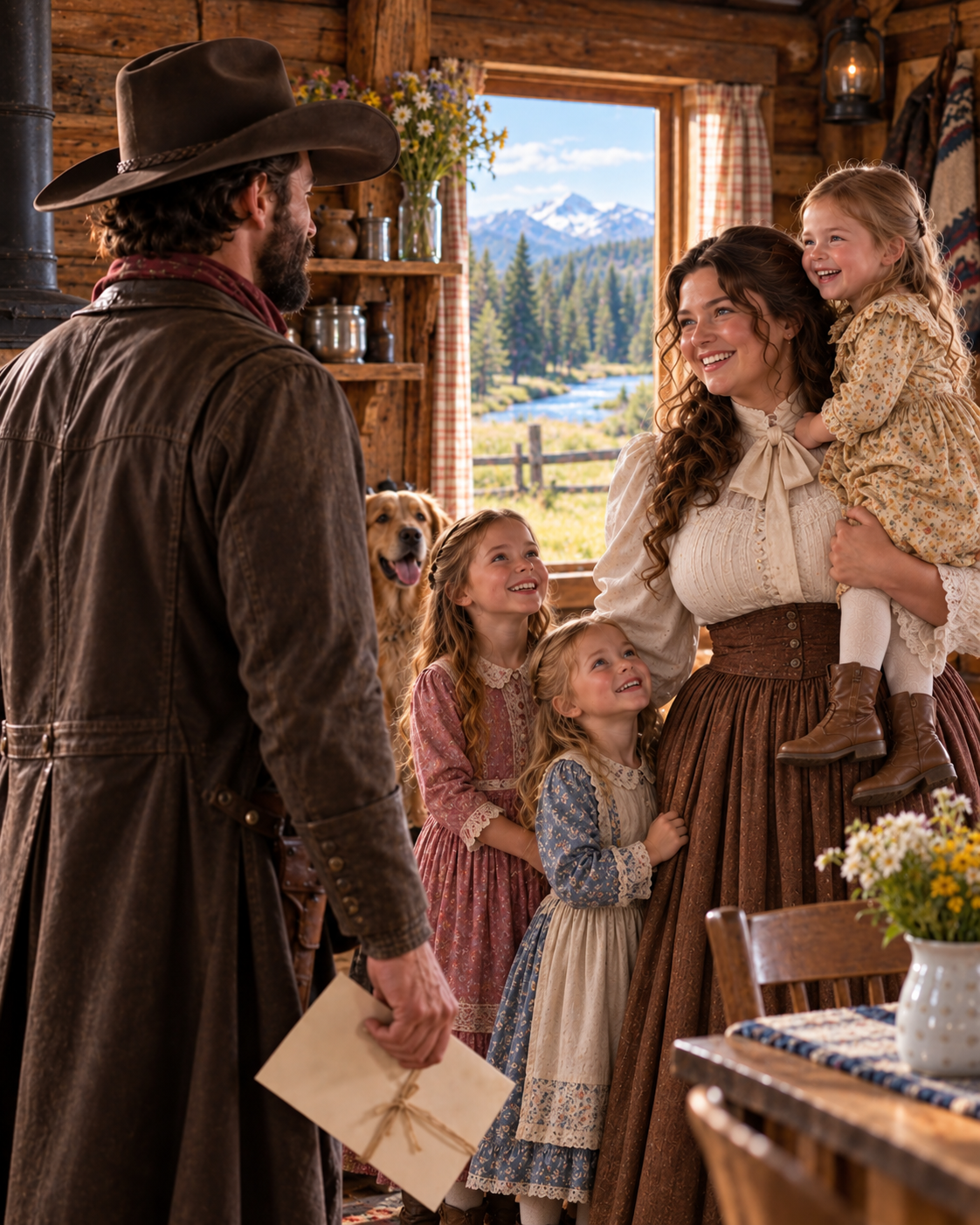
“# PART 3 — **THE DEAD WOMAN AT THE DOOR**
The knock came again.
Three slow strikes.
Not frightened.
Not hurried.
The knock of someone who had crossed a great distance and knew she would be admitted.
Wade stood in the kitchen with his mother’s letter shaking in his hand.
Behind him, Nora whispered, “Papa?”
Clara drew the child close.
Another knock.
Wade crossed the room.
Every instinct he possessed told him to reach for the rifle above the mantle, but something older than instinct stopped him.
Memory.
A woman with dark hair bending over a washbasin.
A hand brushing snow from his shoulders.
A voice telling him, *Never answer anger before you answer truth.*
His mother’s voice.
A voice he had buried fourteen years ago.
Wade opened the door.
The woman standing on the porch was older, thinner, and gray at the temples.
But he knew her.
He knew the sharp line of her cheek.
He knew the pale scar beneath her left eyebrow.
And he knew the eyes.
His eyes.
**Eleanor Blackwood was alive.**
For several seconds, neither spoke.
Then Wade said, “You’re dead.”
Eleanor looked at him with tears she refused to let fall.
“No, son.”
His face hardened.
“You let me think you were.”
“Yes.”
That single word struck harder than denial.
Wade stepped backward.
“You have ten seconds before I shut this door.”
Eleanor glanced toward Clara.
Then at Nora.
And something moved across her face.
Fear.
Not for herself.
For them.
“Silas Mercer is coming.”
Wade’s expression changed.
Silas Mercer.
The name belonged to a man Wade had spent twenty years trying not to remember.
His father’s business partner.
A cattle speculator.
A gambler.
A man who smiled while destroying people.
“He’s dead too,” Wade said.
“No.”
Eleanor entered before Wade could stop her.
“He has been using other men’s names for years.”
Clara shut the door quickly.
Wade turned on his mother.
“Start explaining.”
Eleanor took off her cloak.
Underneath she wore men’s riding trousers and a weathered jacket.
She looked nothing like the woman Wade remembered.
She looked like someone who had spent fourteen years running.
“Your father did not own Blackwood Ridge,” she said.
Wade laughed once.
A cold sound.
“Try again.”
“I owned it.”
Silence.
Eleanor continued.
“My father left it to me. Your father managed it. Silas Mercer wanted it. When your father refused to sell, Mercer arranged his death.”
Wade’s eyes narrowed.
“My father died in a logging accident.”
“No.”
The room seemed suddenly too small.
Eleanor looked at him.
“He was murdered.”
Nora gasped.
Clara covered the child’s ears too late.
Wade’s hands curled into fists.
“And then?”
“Then Mercer came for the deed.”
Eleanor’s voice dropped.
“I fled because if he believed I was dead, he would stop looking for me.”
“You left your son.”
The words were quieter than fury.
Much quieter.
Eleanor flinched.
“I left you alive.”
“That supposed to comfort me?”
“No.”
For the first time, Eleanor’s control cracked.
“I have regretted it every morning for fourteen years.”
Wade stared at her.
He wanted to hate her.
It would have been easier.
Then Clara asked the question Wade had forgotten.
“Why contact me?”
Eleanor turned.
“Because I knew Wade would never listen to me.”
Wade gave a bitter laugh.
“She’s right about that.”
Eleanor ignored him.
“I needed someone inside this house who could protect the girls.”
Clara went still.
“You arranged the marriage.”
Wade looked sharply between them.
“What?”
Clara looked just as shocked.
Eleanor nodded.
“The advertisement Wade answered was placed through a broker I trusted.”
Wade’s face darkened.
“You chose my wife?”
“I chose a woman I believed would survive you.”
Clara’s eyebrows lifted.
Despite everything, Nora almost smiled.
Wade did not.
Eleanor’s expression softened.
“I read Clara’s history. I knew what happened to her son. I knew she would recognize frightened children.”
Clara’s face lost color.
“You knew about Thomas?”
“Yes.”
“You had no right.”
“No.”
Eleanor accepted the accusation without defense.
“But I had no one else.”
Suddenly, a sound came from outside.
Hooves.
Many.
Wade’s head snapped toward the window.
The lamplight caught movement near the lower fence.
Riders.
Five.
Maybe six.
Clara whispered, “Mercer?”
Eleanor looked toward the dark.
“No.”
Wade reached for the rifle.
“Then who?”
Eleanor’s face became grave.
“Worse.”
A voice shouted from the yard.
“Federal marshal! Wade Blackwood, come outside with your hands visible!”
Wade froze.
Then another voice followed.
“You are under arrest for fraud, unlawful seizure of land, and the murder of Silas Mercer.”
Clara stared at Wade.
Eleanor went white.
And Wade whispered one sentence.
**“That means Mercer planned all of this before we ever knew he was alive.”**
—
# PART 4 — **THE ARREST THAT BROKE THE BLACKWOOD FAMILY**
The girls woke screaming when the marshals entered.
Wade surrendered without resistance.
That frightened Clara more than if he had fought.
He handed over the rifle.
Then he turned to Daisy, Nora, and June.
“Stay with Clara.”
June ran to him.
“No!”
A marshal reached for Wade’s arm.
June slapped the man’s hand.
“Don’t take my papa!”
Everyone stopped.
Wade looked down at his smallest daughter.
Months earlier, June would have hidden.
Now she planted herself between armed men and her father.
**Clara had not merely comforted the girls. She had taught them they were allowed to love without fear.**
Wade knelt.
“I’m coming back.”
June cried harder.
“You promise?”
Wade hesitated.
Clara saw it.
He did not make promises lightly.
Then he said, “Yes.”
He kissed June’s forehead.
Then Daisy’s.
Then Nora’s.
When he stood, his eyes met Clara’s.
Nothing romantic had ever passed clearly between them before.
Not like this.
No grand declaration.
No kiss.
Only one terrified truth moving silently between two people.
*Don’t leave me alone in this.*
Clara said, “I’ll find the truth.”
Wade answered, “I know.”
The marshals took him before sunrise.
By noon, Blackwood Crossing had turned hungry for scandal.
People who had once nodded respectfully at Wade now gathered outside the jail.
Some called him murderer.
Others called him thief.
Clara ignored them.
She entered the sheriff’s office carrying Eleanor’s letters.
The federal marshal, Jonas Reed, was younger than Clara expected.
He looked tired rather than cruel.
“That evidence should go to the territorial court,” he said.
“You arrested an innocent man.”
“I arrested a man with motive, opportunity, and false ownership documents.”
“The documents were planted.”
“Prove it.”
Clara leaned forward.
“I intend to.”
Reed studied her.
“You really are his mail-order bride?”
“Yes.”
“Folks say he was planning to divorce you.”
Clara’s mouth tightened.
“Folks say many things.”
“Was he?”
She looked through the bars.
Wade sat alone on a bench.
He heard the question.
Clara knew he did.
“Yes,” she said.
A small silence followed.
Then she added, “And he burned the papers.”
Wade looked up.
Marshal Reed’s eyebrows rose.
“Why?”
Clara smiled faintly.
“Because my husband has terrible timing.”
For the first time all morning, Wade almost laughed.
The investigation began with the deed.
Eleanor led Clara to an abandoned stone springhouse three miles north of the ranch.
Inside, beneath rotting floorboards, they found an iron tube.
It contained the original Blackwood Ridge deed.
Eleanor’s name was on it.
So was a second name.
Clara read it twice.
“Who is Samuel Bennett?”
Eleanor went still.
Clara looked up.
“That was my father’s name.”
Eleanor closed her eyes.
“Yes.”
Clara’s breath caught.
“My father knew you?”
“Knew me?”
Eleanor laughed bitterly.
“He saved my life.”
Clara stared.
“When Mercer first came for the ranch, Samuel hid me. He forged a death notice and arranged passage east.”
“Why didn’t he ever tell me?”
“Because Mercer threatened his family.”
Clara looked again at the document.
Then she saw the lower clause.
Ownership was divided.
Half to Eleanor Blackwood.
Half to Samuel Bennett and his direct heirs.
Her hands began to shake.
“No.”
Eleanor nodded.
“Yes.”
Clara’s voice became a whisper.
“Half of Blackwood Ridge belongs to me.”
“And always has.”
The revelation should have felt like fortune.
Instead it felt like betrayal.
Wade had accused her of trying to take his ranch.
And without knowing it, **she had already owned half of it.**
But there was worse.
The deed carried a seal.
A red wax mark.
Eleanor touched it.
“Mercer’s men will kill to destroy this.”
Clara looked toward the hills.
“How long do we have?”
Eleanor’s face hardened.
“Not long.”
That evening Clara returned to town.
She demanded to see Wade.
The sheriff allowed five minutes.
Wade came to the bars.
“You found something.”
“Yes.”
“Bad?”
“Complicated.”
“That usually means bad.”
Clara gripped the iron.
“My father owned half the ranch.”
Wade stared at her.
Then his face changed.
Not anger.
Shock.
She waited for accusation.
None came.
Instead Wade gave a tired laugh.
“So the rumors were true.”
“No.”
“They said you wanted my land.”
“I didn’t know.”
“I know.”
Clara blinked.
“You believe me?”
“Yes.”
That single answer broke something open in her.
Six months of guarded conversation.
Six months of measuring every word.
And now, from behind prison bars, he gave her the one thing he had denied her from the beginning.
Trust.
Wade reached through the bars.
Clara placed her hand in his.
“Get the girls away from the ranch,” he said.
“Why?”
“Because whoever framed me isn’t finished.”
Clara’s blood chilled.
Before she could answer, the sheriff entered.
“Mrs. Blackwood.”
His face was pale.
“There’s been a fire.”
Clara turned.
“Where?”
“The ridge.”
Her heart stopped.
“The house?”
The sheriff swallowed.
“No.”
“The schoolhouse.”
Clara’s voice vanished.
The girls had been there that afternoon.
Then came the sentence that destroyed the room.
**“We can’t find your daughters.”**
—
# PART 5 — **THE NIGHT THE TRIPLETS DISAPPEARED**
Clara did not remember leaving the jail.
She remembered running.
She remembered mud.
She remembered shouting the girls’ names until her throat tore.
The schoolhouse burned like a lantern against the snow-dark earth.
Parents crowded the yard.
Children cried.
Teachers counted names.
Again.
Again.
Again.
Daisy.
Nora.
June.
Missing.
Clara grabbed the teacher.
“When did you last see them?”
“Before the smoke.”
“Were they together?”
“Yes.”
“Did anyone come for them?”
The woman’s eyes filled with tears.
“A man said Wade had sent him.”
Clara’s stomach turned.
“What man?”
“He knew their names.”
Eleanor arrived on horseback.
One look at Clara’s face told her everything.
“Mercer.”
Clara nodded.
Then a little boy tugged her sleeve.
“Mrs. Blackwood?”
She knelt.
“What?”
“June dropped this.”
In his palm lay a small wooden horse.
Wade had carved it years ago.
There was something wrapped around its leg.
A strip of blue cloth.
Clara knew that cloth.
Eleanor’s letter ribbon.
They followed pieces of blue ribbon into the hills.
One tied to a branch.
Another beneath a stone.
Another beside a creek.
“Nora,” Clara whispered.
The child had understood.
She was leaving a trail.
Brave, quiet Nora.
They rode until moonrise.
Then they found an abandoned mining cabin.
Light glowed beneath the door.
Eleanor raised her rifle.
Clara stopped her.
“The girls are inside.”
They circled behind the cabin.
Clara looked through a cracked window.
Three girls sat tied near the stove.
And beside them stood Silas Mercer.
Alive.
Older.
Balding.
But unmistakable from the newspaper photographs.
Mercer poured himself whiskey.
“You know,” he said conversationally, “your father is much more troublesome than I expected.”
Daisy glared at him.
“My papa will kill you.”
Mercer smiled.
“Your papa is in jail.”
June began crying.
Nora whispered, “Clara will come.”
Mercer’s smile faded.
“Yes.”
He walked toward her.
“That woman has become inconvenient.”
Clara heard enough.
She stepped back.
“We need Reed.”
Eleanor shook her head.
“No time.”
Then Clara did something Eleanor did not expect.
She walked to the front door.
And knocked.
Mercer opened it.
His pistol was already raised.
Clara lifted both hands.
“Let them go.”
Mercer laughed.
“Samuel Bennett’s daughter.”
“You knew my father.”
“I killed your father.”
Clara stopped breathing.
Behind her, Eleanor made a broken sound.
Mercer smiled wider.
“He should have stayed out of Blackwood business.”
Clara’s grief came strangely.
Not as tears.
As clarity.
“You burned the school to take three children.”
“I needed leverage.”
“For the deed.”
“Yes.”
“I have it.”
Mercer’s eyes sharpened.
“Where?”
“Safe.”
He aimed at her chest.
“Then you’re going to tell me.”
Clara stepped inside.
“Let one girl go.”
“No.”
“Then you’ll never get it.”
Mercer studied her.
Finally he untied June.
“Take the youngest outside.”
June ran into Clara’s arms.
Clara kissed her fiercely and whispered into her ear.
“Run to Grandma.”
Mercer stiffened.
“Grandma?”
Too late.
Eleanor fired through the window.
The bullet struck Mercer’s pistol from his hand.
Chaos erupted.
Daisy kicked one man in the knee.
Nora threw herself beneath a table.
Clara pushed June outside.
Mercer lunged toward the stove.
A second weapon lay there.
Clara tackled him.
They hit the floor.
Mercer was stronger.
He rolled her over.
His hands closed around her throat.
“You Bennett women never learned when to stop.”
Then the cabin door exploded inward.
Wade Blackwood stood there.
Bloody.
Breathing hard.
Free.
Mercer’s face changed.
“That’s impossible.”
Wade hit him.
Once.
Mercer fell backward.
Wade hit him again.
And would have continued.
But Clara caught his arm.
“Wade.”
He stopped.
Not because Mercer deserved mercy.
Because Clara asked.
Behind Wade stood Marshal Reed.
“I released him after the sheriff found Mercer’s forged ledger.”
Reed pulled Mercer upright.
“You’re under arrest.”
Mercer laughed.
“You think this ends it?”
Wade grabbed his coat.
“What does that mean?”
Mercer looked directly at Clara.
Then at the girls.
And smiled.
**“Ask her who Thomas’s father really was.”**
Clara went white.
Wade saw it.
And in that instant, the victory turned to dread.
—
# PART 6 — **CLARA’S SECRET SON**
No one spoke until the children were safely home.
June slept beside Daisy.
Nora refused to close her eyes until Wade sat outside their door.
Clara stood in the kitchen.
Wade entered.
She knew the question before he asked.
“Was Mercer lying?”
Clara stared at the fire.
“No.”
Wade’s face became unreadable.
“Thomas wasn’t Elias’s son?”
“No.”
“Then whose?”
Clara looked at him.
“Your brother’s.”
Wade stopped.
He had only one brother.
Caleb.
Dead twelve years.
“What?”
Clara’s eyes filled.
“I knew Caleb before I knew Elias.”
Wade’s mind raced backward.
Caleb had left Montana young.
Gone east.
Returned once.
Then vanished during a winter crossing.
At least that was the story.
“He loved me,” Clara whispered.
Wade gripped the chair.
“Why didn’t he marry you?”
“He intended to.”
“What happened?”
“He disappeared.”
Wade’s face tightened.
“Mercer.”
Clara nodded.
“Your brother learned too much about the deed. He sent letters to my father. Mercer intercepted him.”
Wade’s voice became raw.
“Caleb had a son.”
“Yes.”
“My nephew.”
“Yes.”
“Thomas.”
Clara covered her mouth.
Wade turned away.
For years he had mourned Caleb as a reckless brother who disappeared chasing money.
Now the truth shifted beneath every memory.
“What happened to Thomas?” Wade asked.
Clara answered through tears.
“Elias married me after Caleb vanished. He knew Thomas wasn’t his. He hated him for it.”
Wade closed his eyes.
The fever.
The locked tack room.
A five-year-old boy dying because a cruel man wanted obedience.
Wade’s voice broke.
“Clara.”
She shook her head.
“I tried.”
“I know.”
“No, you don’t.”
She faced him.
“I broke a window with an axe. I ran three miles barefoot through snow. By the time I found help—”
Her voice failed.
Wade crossed the room.
For the first time since their marriage, he embraced her.
Clara resisted for one second.
Then collapsed against him.
She cried for Thomas.
For Caleb.
For her father.
For every year she had survived by refusing to feel all of it at once.
Wade held her.
His own eyes burned.
“I’m sorry.”
Clara pressed her forehead against his chest.
“For what?”
“For every time I made this house feel like his.”
That sentence undid her completely.
Later, Eleanor joined them.
She carried one final letter.
Caleb’s letter.
Never delivered.
Wade read it by lamplight.
His brother had written that he planned to return to Clara.
That he intended to marry her.
That he had discovered Mercer’s crimes.
And that if anything happened to him, Blackwood Ridge should protect Clara and their child.
Wade lowered the letter.
“So Thomas would have inherited.”
“Yes,” Eleanor said.
Clara whispered, “But he died.”
Eleanor looked at her strangely.
“What?”
Clara noticed.
“What aren’t you telling me?”
Eleanor sat down.
“Mercer said something during his interrogation.”
Wade stiffened.
“What?”
“He said Thomas never died.”
The room went silent.
Clara laughed once.
Not from humor.
From horror.
“I buried him.”
“You buried a closed coffin.”
Clara stared.
Eleanor continued.
“Mercer claims Elias sold the boy.”
Clara’s knees weakened.
“No.”
Wade caught her.
“No.”
“He claims the doctor who declared Thomas dead was paid.”
Clara’s breath came too fast.
“He was cold. They wouldn’t let me—”
Wade held her tighter.
“Clara.”
“He was alive?”
Eleanor’s voice softened.
“We don’t know.”
But hope can be crueler than grief.
Within three days, Marshal Reed traced the doctor.
Within a week, the doctor confessed.
Thomas Bennett had not died.
He had been drugged.
Taken east.
Sold into an informal labor placement under another name.
Clara did not sleep for two nights.
Wade barely left her side.
Then Reed returned with a telegram.
He entered the kitchen.
Removed his hat.
Clara stood.
“Tell me.”
Reed looked shaken.
“We found him.”
Clara’s hand flew to her mouth.
“Alive?”
“Yes.”
She nearly fell.
Wade caught her again.
“How old?”
“Eight.”
Clara sobbed.
Thomas would be eight.
Reed hesitated.
“There’s something else.”
Wade’s expression hardened.
“What?”
“The family who has him claims he’s their son.”
Clara stared.
“Then they’re lying.”
Reed looked at her.
“No.”
His voice lowered.
“They may truly believe it.”
And far away, on a train already moving west, **a boy with Caleb Blackwood’s eyes was staring out the window, unaware that the mother who had mourned him for three years was waiting at the end of the tracks.**
—
# PART 7 — **THE BOY WHO DIDN’T REMEMBER HIS MOTHER**
Thomas arrived in Blackwood Crossing on a gray morning.
Clara stood on the station platform.
Wade beside her.
The girls held hands.
Eleanor waited behind them.
When the train stopped, Clara forgot how to breathe.
A boy stepped down with Marshal Reed.
Thin.
Tall for eight.
Dark hair.
Gray-green eyes.
Caleb’s eyes.
Clara knew him instantly.
“Thomas.”
The boy stared.
She took one step forward.
He stepped backward.
Her heart broke.
“It’s me.”
He looked at Reed.
Then at Clara.
“My name is Henry.”
Clara’s lips trembled.
“No, sweetheart.”
The boy flinched at the word.
“My mama is in Ohio.”
Clara stopped.
The woman who had raised him had loved him.
That truth made everything harder.
Clara lowered herself to his height.
“I’m not here to take away what you remember.”
Thomas watched her suspiciously.
“I only want to tell you what happened before.”
For days he barely spoke to her.
He slept in the boys’ bunk room near the ranch hands.
He avoided being touched.
He called himself Henry.
Daisy tried first.
She gave him half her biscuit.
Nora showed him the secret hollow beneath the cottonwood.
June simply sat beside him without speaking.
Children have ways of negotiating trust adults ruin with questions.
By the end of the week, Thomas was laughing with them.
By the second week, he entered the kitchen without being asked.
By the third, he called Wade “Uncle” accidentally.
Then froze.
Wade pretended not to notice.
That night, Thomas came to Clara.
He carried the wooden horse June had dropped during the kidnapping.
“Did you know me when I was little?”
Clara’s eyes filled.
“Yes.”
“Did I like horses?”
“You were terrified of them.”
Thomas smiled faintly.
“Really?”
“You cried the first time you saw one sneeze.”
He laughed.
The sound was so familiar Clara had to grip the table.
Then Thomas asked, “Did you love me?”
Clara broke.
She knelt and held out her arms.
She did not touch him.
She waited.
Thomas stared.
Then stepped forward.
Clara held her son for the first time in three years.
**Not as a memory. Not as a grave. As a living child.**
Wade watched from the hallway and silently turned away to give them privacy.
Three months later, Silas Mercer went to trial.
His evidence exposed bribed officials, fraudulent deeds, murders, kidnappings, and land theft across three territories.
Eleanor testified.
So did Clara.
Wade did not.
He had something else to do.
On the final day of trial, he rode home early.
He found Clara hanging sheets.
“You busy?”
“Yes.”
“Good.”
She frowned.
“Why is that good?”
“Because I’m about to make you busier.”
He handed her a document.
Clara unfolded it.
It was a new deed.
Blackwood Ridge Ranch.
Ownership:
Clara Bennett Blackwood — fifty percent.
Wade Blackwood — fifty percent.
Below it was another paper.
A will.
All seven children—
Clara stopped.
“Seven?”
Wade looked suddenly uncomfortable.
“Read the bottom.”
She did.
Any future children of Wade and Clara Blackwood.
Clara stared at him.
His ears went slightly red.
It was the first time she had ever seen Wade Blackwood embarrassed.
“Future children?”
“I was being thorough.”
“Were you?”
“Yes.”
She stepped closer.
“Very thorough?”
He swallowed.
“Clara.”
She smiled.
Then he pulled another folded paper from his coat.
Her smile vanished.
For one horrible second she thought of divorce papers.
Wade saw the fear.
He immediately opened the paper.
“No.”
It was a marriage certificate.
Their original one.
He had taken it to the county office and corrected Clara’s legal name and property rights.
“I thought,” he said slowly, “if we’re going to stay married, maybe this time we ought to do it honestly.”
Clara’s eyes softened.
“Are you proposing to your wife?”
“I suppose.”
“That’s not very romantic.”
“I’m new at it.”
She laughed.
Then Wade did something nobody in Blackwood Crossing would ever have believed.
He went down on one knee.
Clara stopped laughing.
“I came down from the mountain planning to send you away,” he said.
“And you ruined everything.”
She smiled through tears.
“Good.”
“You made my daughters laugh.”
His voice thickened.
“You made my son come home.”
Thomas stood in the doorway.
Wade corrected himself.
“Our son.”
Clara covered her mouth.
“And you made me understand that a house can be quiet because people are afraid, or quiet because people feel safe.”
He looked up at her.
“I want the second kind.”
Clara whispered, “So do I.”
“Then stay.”
“I’m already here.”
“Stay because you want me.”
She knelt in front of him.
“I do.”
Wade kissed her.
Behind them, June shouted, “Finally!”
They broke apart.
All four children stood watching.
Daisy sighed.
Nora grinned.
Thomas looked horrified.
June clapped.
Clara laughed until she cried.
For once, Wade did too.
But the greatest surprise had not yet come.
—
# PART 8 — **THE LAST BLACKWOOD SECRET**
One year later, Blackwood Ridge was no longer quiet.
Not in the old way.
There was noise everywhere.
Children arguing.
Dogs barking.
Doors slamming.
June singing badly.
Nora reading aloud.
Daisy bossing everyone.
Thomas learning to ride.
And Wade?
Wade had changed.
Not completely.
He was still Wade Blackwood.
Still stern.
Still stubborn.
Still capable of making grown men reconsider their life choices with one look.
But now when June spilled milk, he handed her a cloth.
When Daisy asked for seconds, he passed the pot.
When Nora cried, he did not demand silence.
And when Thomas woke from nightmares about Ohio, Wade sat beside his bed until sunrise.
Eleanor stayed too.
At first in the guest room.
Then in a small cabin near the orchard.
Wade did not forgive her all at once.
Some wounds require more than truth.
But he began.
One evening, Clara stood on the porch watching sunset burn gold across the ridge.
Wade came up behind her.
He placed both hands over her waist.
She leaned back against him.
“Girls are fighting,” he said.
“Over what?”
“Who gets to name the calf.”
“Thomas?”
“Refusing to participate.”
“Smart boy.”
Wade kissed her temple.
Then Clara took his hand and placed it on her stomach.
He froze.
She looked up.
For several seconds, the mountain man who had faced guns, prison, murder accusations, and Silas Mercer could not speak.
“Clara?”
She smiled.
“Yes.”
His face transformed.
“You’re certain?”
“Yes.”
He picked her up.
Clara laughed.
“Put me down!”
“No.”
“Wade!”
The children came running.
June screamed, “What happened?”
Wade set Clara down.
Then stared at all four children.
His voice failed again.
Clara rescued him.
“You’re getting a brother or sister.”
Chaos.
Daisy demanded a girl.
Thomas demanded a boy.
Nora asked whether twins ran in families.
June announced she wanted three.
Wade nearly choked.
Clara laughed.
Nine months later, during the first snow of winter, Clara gave birth.
Wade refused to leave the room.
The midwife ordered him out twice.
Clara ordered him back.
Hours passed.
Then a baby cried.
Wade’s eyes filled.
“A girl,” the midwife said.
Clara laughed weakly.
Wade kissed her forehead.
Then the midwife frowned.
“Wait.”
Wade went pale.
Clara groaned.
Another hour.
Another cry.
“A boy.”
Wade sat down heavily.
Clara laughed harder.
The midwife frowned again.
Wade stared at her.
“No.”
The midwife looked at him.
“Oh yes.”
A third cry filled the room.
Clara began laughing so hard she wept.
Wade Blackwood, father of triplet girls, now stared at **a second set of triplets.**
Two girls.
One boy.
When June heard, she ran through the house screaming:
“I TOLD YOU THREE!”
Years later, people in Blackwood Crossing still told the story.
Not the true story.
Stories change when towns tell them.
They said Wade Blackwood once came down from the mountains with divorce papers.
They said his mail-order bride bewitched him.
They said his dead mother returned.
They said a murderer tried to steal his land.
They said a child came back from the grave.
Some of it was true.
Some was not.
But the truth mattered less than what remained.
Blackwood Ridge grew.
Not into an empire.
Into a family.
Thomas became a doctor.
He said no child in his care would ever be denied medicine because an adult confused suffering with discipline.
Nora became a teacher.
Daisy eventually managed the ranch better than Wade ever had.
June became a lawyer.
When asked why, she said, “Because Papa nearly got arrested by stupid paperwork.”
Wade pretended to be offended.
Eleanor lived long enough to hold every grandchild.
And Clara?
Clara never stopped keeping bread on the table.
Years after everything had passed, Wade found the old iron stove where he had burned the divorce papers.
He stood beside Clara.
“Ever wonder what would’ve happened if I’d handed you those papers?”
Clara considered it.
“Yes.”
“And?”
“I’d have signed them.”
Wade looked horrified.
She smiled.
“Then I would’ve sued you for my half of the ranch.”
He stared.
Clara burst out laughing.
Wade pulled her into his arms.
“You’re an evil woman.”
“You married me twice.”
“That was my mistake.”
“Twice.”
He kissed her.
Across the yard came children’s laughter.
Then grandchildren.
Then June shouting that someone had let the goats into the kitchen.
Wade closed his eyes.
Once, noise had frightened him.
Once, unpredictability had felt like danger.
Once, he had believed a family survived because one man controlled every corner of the house.
He had been wrong.
A family survived because people chose one another.
Again.
And again.
And again.
Clara rested her head against his shoulder.
“Happy?” she asked.
Wade looked at the house.
At the open door.
At flour on the floor.
At boots scattered where he would once have demanded they be lined neatly.
At the family he had nearly thrown away.
Then he looked at Clara.
His mail-order bride.
His equal.
His greatest disruption.
And the woman who had somehow turned Blackwood Ridge from a place people obeyed into a place they belonged.
Wade smiled.
“Yes.”
Inside, something crashed.
A child shouted.
A goat bleated.
Clara raised an eyebrow.
Wade sighed.
“Mostly.”
She laughed.
And as snow began falling over Blackwood Ridge, Wade Blackwood walked into the loudest house in Montana—
**and finally understood that this was what peace sounded like.**
**THE END**
”