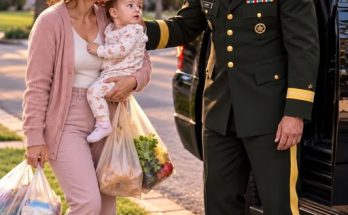
The grilled cheese photograph stayed on my screen long after Lily stopped texting.
I knew better than to turn one sandwich into proof that everything had been repaired.
Still, I slept differently that night.
Not well.
But differently.
For months, every overnight connected to Mark’s house had carried an invisible alarm inside me. Even before I knew why Lily dreaded transitions, some part of me had begun bracing for Sundays. The stiff shoulders. The vague stomachaches. The small questions about food that had once seemed random.
Now she was there by choice.
The pantry was unlocked.
Dana was gone.
And when Lily said she was hungry, Mark had made her food.
At 7:02 the next morning, my phone buzzed.
I was awake before the second vibration.
Morning, Mom.
Then:
I slept all night.
A minute later:
Dad burned pancakes.
I laughed into my pillow.
I typed:
Some things never change.
She sent a photograph of three misshapen pancakes, one much darker than the others.
Mark’s hand was visible at the edge of the frame holding a spatula.
Lily had added:
He says this one is “caramelized.”
I replied:
That is divorced-dad propaganda.
Her laughing emoji came back immediately.
I set the phone down and stared at the ceiling.
Normal.
The word felt fragile.
I did not want to touch it too hard.
At ten-thirty, Mark brought her home.
He stayed near the car rather than walking her to the door.
That had become our pattern.
Less intimacy.
Less opportunity for conflict.
Lily carried the stuffed red panda from the zoo under one arm and her overnight bag over the other shoulder.
“How was it?” I asked.
“Fine.”
She smiled.
“Actually fine?”
She considered.
“Mostly.”
That one word tightened something inside me.
“What happened?”
“Nothing bad.”
Mark was still beside his car.
I looked at him.
He looked away.
Lily noticed.
“Don’t do that.”
“Do what?”
“The parent face.”
“What parent face?”
“The one where both of you know something and then pretend I’m not standing here.”
Mark rubbed the back of his neck.
“She found something.”
My stomach tightened.
“What?”
Lily opened her overnight bag.
From inside she pulled a laminated sheet.
My chest went cold before I read a single word.
The layout told me enough.
Columns.
Boxes.
Days.
Meals.
It was one of the old food schedules.
Not the notebook.
Not the accountability chart I had already seen.
A laminated kitchen sheet.
Across the top, in thick black print, were the words:
LILY — WEEKEND ROUTINE.
Breakfast.
Lunch.
Dinner.
Approved snacks.
Water goals.
Exercise.
No second portions without discussion.
My hand went numb.
“Where did you find this?”
“In a drawer.”
“What drawer?”
Lily looked at Mark.
He answered.
“The kitchen junk drawer.”
I stared at him.
“You told everyone the materials were removed.”
“I thought they were.”
“You thought?”
“I emptied the pantry. I threw away the charts on the fridge. I went through the basement.”
“And somehow this stayed?”
“Yes.”
My anger rose so quickly that I had to stop speaking.
Lily looked between us.
“Mom.”
I closed my eyes.
“Sorry.”
Mark stepped forward.
“She found it this morning looking for tape.”
“What happened?”
“I saw her face.”
His voice had changed.
Quiet.
Ashamed.
“I took it from her and threw it away.”
Lily interrupted.
“No.”
Mark stopped.
She looked at me.
“I told him not to.”
“Why?”
“Because I wanted to bring it here.”
I looked at the laminated sheet.
“Why?”
She shrugged, but her face was tight.
“I wanted you to see it.”
I understood.
Proof.
After months of being told she exaggerated, misunderstood, complained, manipulated, resisted structure, some part of Lily still wanted physical evidence.
Something that could not be argued with.
I softened my voice.
“You don’t need to prove it to me.”
“I know.”
“Do you?”
She did not answer.
Mark stared at the pavement.
I looked at him.
“What did you say when she found it?”
He answered without defensiveness.
“That I was sorry.”
“Anything else?”
“I told her I should have checked every place.”
Lily added, “He asked if I wanted to go home right away.”
I looked at her.
“Did you?”
“No.”
That surprised me.
She saw it.
“I wanted breakfast.”
For some reason, that nearly undid me.
Not because she had stayed.
Because hunger had not driven her out.
She had seen the old rule.
She had been frightened.
Then she had still eaten.
“What did you do with the sheet?”
“I put it in my bag.”
Mark said, “I told her that was okay.”
I turned the laminated page over.
On the back, handwritten in black marker, were initials.
M.C.
Mark Carter.
Then below them:
Reviewed.
My eyes moved to him.
“Did you sign this?”
He looked sick.
“Yes.”
“When?”
“I don’t remember exactly.”
“You reviewed it?”
“I must have.”
“Must have?”
He flinched.
Lily’s shoulders tightened.
I stopped.
Not here.
Not with her between us.
I handed the sheet back to Lily.
“What do you want to do with this?”
She stared at it.
“Give it to Rachel?”
“We can.”
“Will court care?”
“Maybe.”
Mark exhaled.
“Give it to Rachel.”
I looked at him.
He continued.
“I’m not going to pretend it isn’t mine.”
That mattered.
It did not erase the document.
But it mattered.
Lily went inside.
Mark stayed.
For a few seconds, neither of us spoke.
Finally I said, “How could you sign that?”
He rubbed both hands over his face.
“I don’t remember signing that exact sheet.”
“That is not better.”
“I know.”
“No, Mark. You keep saying you don’t remember individual moments like that somehow changes what they were.”
“I know.”
“Do you?”
He looked at me.
“I signed things Dana printed because she told me we needed consistency.”
“And you didn’t read them?”
“Sometimes I did.”
“Then which answer is worse?”
He looked down.
I heard my own voice getting louder.
I stopped.
This was not about humiliating him in the driveway.
I lowered my voice.
“Take it to therapy.”
He nodded.
“I will.”
“And tell Dr. Hart.”
“I will.”
I studied his face.
“You realize this can affect overnight recommendations.”
“Yes.”
“And you’re still saying to submit it.”
“Yes.”
That answer cooled some of my anger.
Not all.
Enough.
Later that afternoon, I photographed the sheet and sent it to Rachel.
She called immediately.
“This is new.”
“Yes.”
“Where was it?”
I told her.
“Mark admits the initials are his?”
“Yes.”
“Did he object to you sending it?”
“No.”
Rachel went quiet.
“That helps him in one way.”
I knew what she meant.
“He’s not hiding now.”
“Correct.”
“It also hurts him.”
“Correct.”
I sat at the kitchen table.
“What happens to the review hearing?”
“We submit it.”
“Could this stop overnights?”
“Possibly.”
“Should it?”
Rachel paused.
“That is not only a legal question.”
I hated when she was right.
“What does Dr. Hart think?”
“We’ll find out.”
Lily came into the kitchen carrying a bowl of cereal.
She had heard the last sentence.
“Is the paper going to mess everything up?”
I put the phone down.
“It might change how people think about the next step.”
Her face hardened.
“That means yes.”
“No.”
“You always say might when you mean something bad could happen.”
“Something bad could happen.”
She set the bowl on the counter.
“I knew I shouldn’t have brought it.”
“No.”
“Yes.”
“No.”
She glared at me.
“I had a good night. Then I found one stupid paper and now Dad won’t get overnights.”
“We don’t know that.”
“I should’ve left it there.”
I stood.
“Lily.”
“What?”
“You do not protect adults by hiding evidence.”
Her eyes flashed.
“It wasn’t evidence to me.”
I stopped.
“What was it?”
She looked down.
“A piece of paper.”
I softened.
“Okay.”
“It scared me for like five minutes.”
“Okay.”
“Then Dad made breakfast.”
I nodded.
“He asked me what I wanted. I said pancakes. He made them.”
Her voice broke.
“So why does one old paper get to be bigger than what happened now?”
That question was harder than any legal argument.
I pulled out a chair.
“Sit.”
She didn’t.
“Please.”
She sat.
I leaned forward.
“The paper doesn’t get to decide everything.”
“Then why send it?”
“Because adults deciding what happens next need the whole picture.”
“But the whole picture includes the pancakes.”
“Yes.”
“And the sandwich.”
“Yes.”
“And Dad asking if I wanted two.”
“Yes.”
“And him letting me call you.”
“Yes.”
She wiped one eye angrily.
“Then tell them that too.”
“I will.”
That evening I emailed Dr. Hart myself.
I attached the photograph.
Then I wrote a paragraph about the overnight.
Not glowing.
Not defensive.
Just facts.
Lily asked for food at 8:17 p.m.
Mark responded without restriction.
Breakfast was offered the next morning.
Lily discovered the old laminated schedule.
Mark apologized, offered to end the visit, and accepted her decision to remain.
I ended with:
I believe both events matter.
Dr. Hart replied the next morning.
They do.
Her evaluation session with Mark was moved up.
Lily had therapy that afternoon.
When she came out, Naomi asked me to stay for the last five minutes.
Lily sat sideways in the chair, knees pulled up.
Naomi said, “Lily wants to talk about what the sheet meant.”
I looked at her.
Lily sighed.
“I already told you.”
“Tell me again.”
She picked at the cuff of her sweatshirt.
“When I saw it, I got scared.”
“Of what?”
“That Dad hadn’t changed.”
I nodded.
“Then?”
“I looked at him.”
“What did you see?”
She thought.
“He looked scared too.”
“Scared of you?”
“No.”
“Of the paper?”
“Kind of.”
Naomi asked, “What happened next?”
“He said he was sorry it was still there.”
“And did that feel different from the past?”
Lily nodded.
“How?”
“He didn’t explain why the chart was okay.”
That sentence settled into the room.
Naomi looked at me.
I understood.
The change was not that Mark had erased every trace of the past.
The change was that he no longer defended it.
Naomi asked, “Does finding the sheet make you want to stop seeing him?”
“No.”
“Does it make you want to slow down?”
Lily thought.
“Maybe.”
“That’s allowed.”
“What does slow down mean?”
“Maybe another daytime visit before another overnight.”
Lily frowned.
“I don’t want court making that choice because of me.”
Naomi said, “You expressing a preference is not the same as controlling the outcome.”
Lily sighed.
“Everyone says things like that.”
“Because everyone keeps needing you to stop carrying adult responsibility.”
That made Lily quiet.
The next weekend returned to daytime only.
Mark did not complain.
That mattered too.
He took Lily to a bookstore and lunch.
She came home with three novels and a cinnamon roll the size of her head.
“Dad said not to tell Ms. Chen.”
I froze.
Then Lily burst out laughing.
“He was joking.”
My heart restarted.
“Not funny.”
“It was a little funny.”
“Barely.”
But I laughed too.
At the review hearing, the laminated schedule came up immediately.
Mark acknowledged signing it.
His attorney did not contest authenticity.
Dr. Hart had submitted a supplemental note.
The judge read it in silence.
Then she looked at Mark.
“Mr. Carter, why should the court believe conditions are different now when documentation shows you formally endorsed the old structure?”
Mark’s attorney started to rise.
Mark touched his arm.
“May I answer?”
The judge allowed it.
Mark stood.
“Because I stopped believing my daughter had to prove she was hurt before I listened.”
My throat tightened.
The judge watched him.
He continued.
“I signed things I should have questioned. I agreed to things I should have stopped. I can’t undo that.”
His voice shook once.
“I’m not asking the court to believe I’m different because I say I am. I’m asking for the chance to keep showing it.”
The judge asked, “And if Lily does not want an overnight?”
“Then she doesn’t do one.”
No hesitation.
The judge leaned back.
That answer mattered.
The court kept primary residence with me.
Day visits remained unsupervised.
Overnights could resume gradually when Dr. Hart and Naomi agreed Lily was ready.
No automatic schedule.
No forced timeline.
Afterward, Mark did not look pleased.
He looked relieved.
Outside court, he stopped near me.
“Is she okay?”
“She’s at school.”
“I mean with the decision.”
“I’ll tell her.”
He nodded.
Then he said, “I’m glad they didn’t force the overnight.”
I studied him.
“You wanted more time.”
“I do.”
“Then why are you glad?”
“Because if they forced it, she’d think saying no didn’t matter.”
For a second, I saw the father he might still become.
Not the one who had existed before.
Not the one I remembered from our marriage.
Something more difficult.
A father who had learned too late that love without courage could still fail a child.
That evening, I told Lily.
“You control whether you’re ready for another overnight.”
Her whole body relaxed.
“Really?”
“Yes.”
“Dad knows?”
“Yes.”
“Was he mad?”
“No.”
She thought about that.
Then she picked up her phone.
“What are you doing?”
“Texting him.”
I did not ask what she wrote.
A minute later, her phone chimed.
She read the message and smiled.
“What?”
She turned the screen toward me.
Lily had written:
I’m not ready this weekend.
Mark had replied:
Okay. Want lunch Saturday?
No guilt.
No argument.
No mention of what he deserved.
Just lunch.
Lily typed back:
Yes.
Then, after a second:
And cinnamon rolls.
His reply:
Negotiable.
She laughed.
The sound carried through the kitchen.
I looked at the unlocked pantry behind her.
The old laminated schedule sat sealed inside an evidence envelope on Rachel’s desk now.
The house was moving forward without pretending the paper had never existed.
That, I was beginning to understand, was what repair actually looked like.
Not forgetting.
Not erasing.
Remembering without obeying it anymore.
Click here to continue reading: PART 14: Dana’s Final Attempt to Defend Herself Forced Lily to Hear the One Explanation She Had Never Asked For
One Question Over a Cooling Pizza Told Me My Daughter Had Learned to Be Afraid of Hunger
Part 13 of 17