I thought I already knew what was inside Samuel's cedar box.
I was wrong.
The afternoon after I spoke with Leonard, I returned to the dining table and opened the records again.
This time, I was not trying to calculate the total.
I already knew that number.
$171,640.
It had been written on a sheet of paper beside my telephone for several days.
I had looked at it so often that the figures were beginning to lose their meaning.
I needed to understand what those payments actually represented.
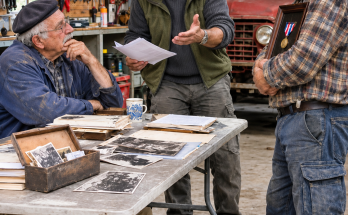
Samuel had organized his papers in a way that made sense to him.
Dates came first.
Then amounts.
Then short explanations, usually written in his narrow handwriting.
He did not write long descriptions.
He believed a clear record should be easy to understand years later.
That habit had occasionally irritated me.
When Celeste called with another emergency, I wanted to help her and move on.
Samuel wanted to write down what had happened.
I used to ask why he was bothering.
He would remind me that remembering a payment did not mean regretting it.
Now I sat alone with those records and understood why he had been so particular.
I arranged the pages by year.
The largest payments were concentrated in the early part of Celeste and Derek's marriage.
They had been married thirteen years.
In those first eight years, Samuel and I had stepped in repeatedly.
Sometimes months passed without a request.
Everything seemed settled.
Then the telephone rang, and another problem appeared.
A medical expense.
A vehicle that needed repairing.
A period when work became uncertain.
A bill connected to their property.
I could remember the conversations behind many of the entries.
Celeste had often sounded frightened.
Derek had usually been quiet when I was present.
And I had almost always told Samuel that we should help.
I could still hear myself saying it.
"They have the children to think about."
Sometimes there had been no children yet.
I found other reasons then.
They were newly married.
They were trying to build a life.
They needed a chance.
There was always a reason.
I had not invented those circumstances.
Many of their difficulties had been real.
But I had rarely asked whether our help was solving the problem or simply delaying it.
Samuel had written the same kind of note beside several entries.
Celeste expected to repay us the following month.
I traced one line with my finger.
Then another.
No repayment was recorded beside either of them.
I turned the pages.
There were more.
The handwriting was so familiar that I could picture Samuel sitting at this very table, wearing his reading glasses and carefully entering another amount.
He had never shown me anger when he did it.
He had simply kept the records.
I wondered whether he had seen something that I refused to see.
I found an entry concerning Celeste and Derek's first home.
$32,000.
I remembered that day.
Celeste had called because they were close to completing their purchase.
The bank required additional money before the closing could proceed.
She was crying.
She was frightened they would lose the house.
Samuel and I had discussed it.
We wanted our daughter to have a stable place to live.
We wanted her to be safe.
And we knew how much the purchase meant to her.
So we transferred the money.
I remembered the relief in her voice.
I remembered telling Samuel that we had done the right thing.
What I did not remember was the note he had written beside the transfer.
He had described it as temporary assistance.
Then he had added that the ownership and repayment details still needed to be confirmed.
I read those words again.
Ownership.
Repayment.
That was not how I remembered the arrangement.
In my mind, we had given Celeste and Derek the money because they needed it.
Samuel's record suggested that something more formal had been discussed.
I searched through the papers.
There was a photocopy of the transfer.
There were other records relating to that period.
But no complete agreement appeared among the pages I had first examined.
I checked the dates.
I checked another folder.
Then I returned to the cedar box.
It was an ordinary wooden box.
Samuel had kept it for years.
The lid was smooth from being opened and closed so often.
I had dusted it many times since he died without wanting to look inside.
That afternoon, I emptied it completely.
At the bottom was a small envelope.
It had slipped behind another folder.
Samuel had written a note on the front instructing whoever found it to keep the contents with the original property closing papers.
My hands became unsteady.
I opened it.
Inside were three things.
A copy of the bank transfer.
A handwritten note.
And a letter from the attorney who had worked on Celeste and Derek's purchase.
The letter was thirteen years old.
I sat down before reading it.
At first, the legal language was difficult for me to follow.
I had never been comfortable making assumptions about documents I did not fully understand.
So I read it slowly.
Then I read it a second time.
The letter referred to the $32,000 as a family loan.
Not an unconditional gift.
There was also a reference to a signed acknowledgment from Celeste and Derek.
I turned to the relevant page.
Both names appeared.
I stared at the signatures.
For years, I had thought of that money as something Samuel and I had given away.
But the documents showed that there had been an understanding about repayment.
Samuel had remembered.
He had kept the evidence.
And I had forgotten that anyone had treated the payment as a loan.
I felt ashamed.
Not because I had helped my daughter.
Not even because the amount was large.
I was ashamed because I had allowed myself to believe that careful financial decisions were somehow less loving than careless ones.
Samuel had never believed that.
He had wanted to protect our daughter.
But he had also wanted to protect us.
I placed the papers in a separate folder.
Then I called Leonard.
"I found an old agreement."
He asked me to explain.
I told him about the down payment, the attorney's letter, and the signed acknowledgment.
Leonard asked me to send copies for review.
I did.
He did not promise that the money could be recovered.
He did not tell me to confront Celeste.
He simply said the records needed to be examined alongside the original closing documents.
I appreciated his caution.
I had spent enough time reacting emotionally.
I needed facts.
That evening, Naomi helped me put the papers in order.
She looked at the acknowledgment.
"Did you know they signed this?"
"I must have known at the time."
"Do you remember discussing repayment?"
I shook my head.
"Not clearly."
She placed the page back on the table.
"Then let Leonard work it out."
I nodded.
I knew she was right.
Still, the document bothered me.
I wondered whether Celeste remembered signing it.
I wondered whether Derek remembered promising to repay us.
And I wondered what Samuel had thought when the months passed without the money coming back.
I had always assumed that financial help disappeared into the past once it had been given.
Samuel had known that the past could return.
The following Monday, Naomi drove me to Leonard's office.
My recovery was progressing, but I still moved carefully.
I could walk farther than I had immediately after surgery.
For longer distances, I used a cane.
I disliked the cane.
It made me feel older than I was ready to feel.
Naomi never argued with me about that.
She simply put it beside my chair before we left.
At the office, Leonard greeted us near the entrance.
He had already reviewed the documents.
Several folders were arranged on his desk.
I sat opposite him.
Naomi took the chair beside me.
Leonard began with the original house purchase.
He explained that the acknowledgment appeared legally meaningful, although he still needed to verify the full records and current circumstances.
The $32,000 had been documented as a repayable loan.
He had not found evidence showing that it had been repaid.
There were also other recorded loans.
Those amounted to $6,600.
Together, the unpaid amounts appeared to be $38,600.
I stared at the figure.
I had been so focused on the full $171,640 that I had almost forgotten some of the assistance had been classified differently.
Leonard was careful.
He explained that further verification was needed before anyone could decide exactly what remained legally recoverable.
I understood.
But one fact was already clear.
Samuel had not treated every payment as a gift.
My daughter and her husband had signed documents acknowledging that at least some of the money was meant to come back.
I looked down at my hands.
Leonard waited.
Finally, I spoke.
"I don't want to hurt them."
He nodded.
"I understand."
"I don't need to make them suffer because I have records."
"No one is asking you to do that."
I looked at the folder.
"But I want the truth."
Leonard leaned back.
"Then we should make sure we understand every document before you decide what to do."
I nodded.
That was what Samuel would have wanted.
I could almost hear him asking whether I had checked the original paperwork.
I managed a small smile.
Then Leonard reached for another folder.
His expression changed.
"There is something else you need to know."
I looked up.
He explained that Celeste had contacted his office.
About ten days earlier.
I sat still.
"Celeste called you?"
"Yes."
I looked toward Naomi.
She seemed as surprised as I was.
I turned back to Leonard.
"What did she want?"
He explained that she had asked about my estate planning.
She wanted to know whether any documents had been changed.
I did not understand.
Celeste knew I had been ill.
She knew I had undergone surgery.
But she had not been asking me how I was recovering.
She had not asked Naomi whether I needed anything.
She had not tried to repair the damage caused by keeping the children away.
Instead, she had contacted my attorney.
And she wanted information about what would happen to my property when I died.
I felt sick.
"What did you tell her?"
Leonard assured me that he had not disclosed my private legal information.
I knew he would not.
Still, I needed to hear him say it.
He continued.
Celeste had expressed concern that my medical condition might be affecting my ability to make financial decisions.
She had suggested that the stress of surgery could influence my judgment.
I stared at him.
My judgment.
I had needed surgery because my back was damaged.
I had needed help walking.
I had needed assistance with meals and groceries.
But I had understood my finances perfectly well.
I understood the difference between a gift and a loan.
I understood that I owned my property.
And I understood that Celeste had no right to make decisions on my behalf simply because I was recovering from an operation.
I looked at Naomi.
She was shaking her head.
I turned back to Leonard.
"Did Celeste ask about anything specific?"
He paused.
Then he confirmed that she had asked about the lake house.
I felt my stomach tighten.
The lake house was worth approximately $2.4 million.
Samuel and I had worked for years to build the life that property represented.
It was not simply an expensive house.
It had been our refuge.
It was where Celeste had spent her childhood summers.
It was where Theo had learned to hold a fishing rod.
It was where Samuel had laughed more freely than anywhere else.
After his death, I had sometimes gone there just to sit quietly and remember him.
Celeste knew how much it meant to me.
She also knew how valuable it had become.
For years, she had spoken as though the house would naturally become hers someday.
I had never encouraged her to treat that expectation as a promise.
Samuel and I wanted the property to remain in the family.
That was true.
But we had never said that Celeste could claim it whenever she wanted.
I looked at Leonard.
"She thinks she's going to inherit the lake house."
He agreed that her questions suggested that expectation.
I sat silently for a moment.
Then I looked at the old documents spread across his desk.
I thought about the $32,000 loan.
The additional $6,600.
The years of help.
The returned $1,200.
The certified letter.
And my six-year-old grandson sitting in school wondering whether I loved him.
I had been treating all of those things as separate problems.
Perhaps they were not separate.
Perhaps Celeste had come to believe that everything Samuel and I owned was simply waiting to become hers.
I felt a deep sadness.
I had never wanted my daughter to see me as an obstacle between herself and an inheritance.
But that was beginning to be how I felt.
Leonard asked whether I wanted to proceed with reviewing my estate documents.
"Yes."
He explained that we could examine options for protecting the property and providing for Theo and Wren.
I wanted the children to benefit from the life Samuel and I had built.
I wanted their futures to be secure.
But I did not want anyone else to control that property in their names.
Not Celeste.
Not Derek.
Not anyone who might treat the house as an easy answer to a financial problem.
Leonard discussed the possibility of using a properly established trust.
He explained that independent administration could help protect the children's interests.
I listened carefully.
For the first time, I was thinking about inheritance as something I had the right to design.
Not something I owed my daughter in whatever form she preferred.
When the appointment ended, Naomi helped me stand.
Leonard gathered the papers.
I thanked him.
Then I looked at Samuel's old acknowledgment one more time.
Thirteen years earlier, my husband had insisted that help should be documented.
He had done it quietly.
Without arguing.
Without making Celeste feel publicly embarrassed.
I wondered how different things might have been if I had continued that habit after he died.
Outside, Naomi opened the car door.
I sat carefully and placed my cane beside my legs.
For several minutes, we drove without speaking.
Then I looked toward her.
"I never wanted money to come between me and Celeste."
Naomi kept her eyes on the road.
"I know."
"I thought helping her would make her life easier."
"Sometimes it probably did."
I watched the buildings pass.
"But it didn't make her feel secure."
Naomi said nothing.
I continued.
"She still seems frightened that I'm going to stop giving."
Naomi glanced at me.
"Maybe because she's never had to believe you would."
I looked down at my hands.
I was beginning to understand that what frightened Celeste most might not be my illness.
It might not even be the possibility of losing an inheritance.
It might simply be discovering that I could make a decision she did not like.
I had lived sixty-seven years.
I had buried my husband.
I had raised my daughter.
I had helped her build a family.
And now I was sitting in a car, learning how to say that my own life still belonged to me.
When we reached home, I asked Naomi to leave the cedar box on the dining table.
I was not ready to put it away.
There were still papers I wanted to examine.
And there were decisions I wanted to make while I had the strength and clarity to make them myself.
That evening, I wrote one sentence in a notebook beside Samuel's records.
My daughter could expect my love.
She could not expect ownership of everything I had.
I read the sentence twice.
Then I closed the notebook.
It was the first boundary I had written down without feeling the need to apologize.
Click here to continue reading: PART 3: Derek’s Mother Sent Me A Letter About A Financial Problem, And Suddenly My Daughter’s Anger Over Babysitting Began To Make Sense
I Thought My Daughter Was Angry Because I Could Not Watch Her Children, Until a Call From School Showed Me Something Worse
Part 2 of 15