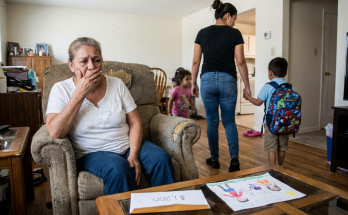
The visit with Theo and Wren changed the atmosphere in my house.
Not immediately.
Not completely.
But enough that I noticed the difference.
For months, the rooms had felt too quiet.
Samuel had been gone nearly two years.
Then the disagreement with Celeste had taken the children out of my daily life.
There had been days when I could hear nothing but the refrigerator and the clock.
After Saturday, I could remember Theo's laughter without feeling only pain.
I could picture Wren standing beside the table with her stuffed rabbit.
I could see the plate of dinosaur pancakes.
And I knew the children had heard me say that I loved them.
That mattered.
But the visit also showed me how much still needed repairing.
Theo had asked twice whether I was angry with him.
Once in his drawing.
Then again at my door.
His fear had not disappeared simply because Celeste agreed to bring him.
He needed time.
He needed consistent reassurance.
And he needed the adults around him to stop making him responsible for their disagreements.
I thought about that often.
Celeste and I began speaking more regularly.
At first, our conversations were short.
We discussed the children.
We talked about my recovery.
Sometimes she asked whether I had been walking more.
I appreciated those questions.
A few months earlier, she had seemed angry that my medical condition interfered with her plans.
Now she was beginning to acknowledge that I had undergone major surgery.
It was a small change.
But it mattered.
I did not pretend that every conversation was easy.
Sometimes we spoke comfortably for several minutes.
Then a difficult subject appeared.
The debt.
Derek.
The financial application.
Or the money Samuel and I had provided over the years.
When those subjects came up, Celeste sometimes became defensive.
I could hear the old frustration in her voice.
She would begin explaining how frightened they had been.
She would remind me that Derek had expected the investment to succeed.
She would talk about the pressure they had been under.
I listened.
But I no longer allowed those explanations to replace responsibility.
I could understand fear.
I could understand financial pressure.
I could understand the humiliation of realizing a household had debts it could not manage.
But I could not accept that those circumstances gave anyone permission to use my signature.
That distinction remained important.
One afternoon, Celeste called after another appointment with the financial counselor.
She sounded exhausted.
I asked how things were going.
She said the debts were more complicated than she had realized.
There were balances that needed to be reviewed.
Payments that had been delayed.
Expenses that could no longer continue.
I listened.
She told me that reducing their household spending was difficult.
I believed her.
For years, they had lived with the assumption that financial shortages could be managed by borrowing or receiving help.
Now they were being asked to examine everything.
I could hear how uncomfortable that was.
A few months earlier, I might have tried to make the discomfort disappear.
I would have offered money for one bill.
Then another.
I would have told myself that helping with something small was harmless.
But I had seen how easily small arrangements became permanent.
The $186 home-insurance payment had continued for almost eighteen months.
The $340 vehicle-insurance contribution had continued without another proper discussion.
The $125 subscription arrangement had lasted far beyond the temporary period Celeste originally described.
I had canceled those payments after reviewing the terms.
I did not intend to quietly restart them.
So I listened to her concerns without offering to pay.
It was harder than I expected.
Silence sometimes felt cruel.
I had to remind myself that listening was not the same as refusing to care.
I could be present without taking over.
Celeste eventually asked how I was feeling.
I told her my back was improving.
I could walk farther.
I still became tired.
Some movements remained uncomfortable.
She listened.
Then she apologized for expecting me to care for the children before surgery.
I sat quietly.
I had wanted that acknowledgment for a long time.
I thanked her.
But I did not tell her it no longer mattered.
It mattered very much.
Her request had come when I was frightened and physically unable to manage.
Her reaction had made me feel guilty for following medical advice.
And the consequences had reached Theo.
I needed her to understand all of that.
I explained that my refusal had never been about not wanting the children.
It had been about my inability to care for them safely.
She said she understood.
I hoped she did.
But I had learned not to measure change by one conversation.
Change had to appear again.
And again.
Especially when circumstances became difficult.
The weeks passed.
We continued arranging contact with Theo and Wren.
I did not want the children involved in discussions about money.
I did not ask them what Celeste said at home.
I did not use their visits to gather information about Derek.
I wanted Grandma's house to remain a place where they could simply be children.
Theo continued asking about fishing.
Wren remained attached to her rabbit.
Sometimes I watched them and thought about how little they understood of the difficulties around them.
That was how it should be.
They did not need details about a failed investment.
They did not need to hear about the disputed application.
They did not need to know that their mother and father were working through serious debts.
They needed stability.
They needed affection.
They needed adults who did not ask them to take sides.
I tried to provide that whenever they were with me.
My relationship with Celeste remained more complicated.
There were days when she seemed genuinely ashamed of what happened.
She would speak quietly.
She would acknowledge that she had made terrible decisions.
She would ask about my recovery without bringing up her own problems.
On those days, I could almost imagine our old closeness returning.
Then something difficult would happen.
A financial conversation.
A reminder of the legal review.
An expense she had not expected.
And I would hear the defensiveness return.
She sometimes spoke as though the investigation itself were an additional hardship being imposed on them.
I understood why she felt that way.
But I reminded her that the investigation existed because documents had been submitted without my consent.
It had not begun because I wanted to punish her.
I had not created the disputed signature.
I had not prepared the application.
I had not represented my property as available security.
Those actions needed examination whether or not the consequences were uncomfortable.
Celeste did not always respond well.
Sometimes she became quiet.
Sometimes she ended the conversation quickly.
I let her.
I had stopped believing that every difficult conversation needed to end with immediate agreement.
There were things we would need time to understand.
There were apologies I could accept without being ready to trust.
There were memories I could cherish without pretending the betrayal had not happened.
I had never thought about forgiveness that way before.
In the past, when Celeste apologized, I usually tried to make her feel better immediately.
I would tell her it was all right.
I would say I understood.
I would promise we could forget the disagreement.
Then we would continue as before.
I thought that was what a loving mother should do.
Now I saw the problem.
We had been moving past conflicts without changing what caused them.
I forgave quickly.
Celeste felt relieved.
Then the same expectations returned.
Another request.
Another emergency.
Another assumption that I would make things work.
I had not helped either of us by pretending those patterns were harmless.
One afternoon, Celeste came to speak with me.
We sat in the living room.
Naomi was nearby, but she gave us privacy.
The conversation was calmer than our first meeting.
Celeste looked around the room.
Her eyes moved toward Samuel's photograph.
Then she looked at me.
"I've been thinking about how much you and Dad helped us."
I waited.
She said she had always assumed I would be available whenever something went wrong.
I nodded.
That was not a surprise.
I had known it for years.
But hearing her acknowledge it mattered.
She continued.
She had become so accustomed to my assistance that she rarely considered what it cost me.
Not only financially.
In time.
In energy.
In worry.
She looked down at her hands.
"I thought you'd always fix things."
I felt my throat tighten.
I looked toward Samuel's cedar box.
That little box held years of evidence showing how often we had tried.
I had been proud of helping.
I had loved being needed.
But I had also allowed Celeste to believe that my resources had no limits.
I took a breath.
"I'll always be your mother."
She looked up.
"But I can't be the answer to every problem."
She nodded slowly.
I wanted to believe she understood.
I also knew that understanding a sentence and changing a habit were different things.
I did not tell her that all was forgiven.
I did not say the financial records no longer mattered.
I did not offer to pay another bill.
Instead, I let the conversation remain where it was.
Honest.
Uncomfortable.
Necessary.
After she left, I sat with Samuel's records.
I thought about the way he used to review our finances.
He would spread papers across the table.
He would check figures.
He would ask whether we had enough set aside for our own needs.
I sometimes found it tedious.
I wanted to talk about family rather than money.
But Samuel understood that responsible planning was part of caring for family.
He wanted us to help Celeste.
He also wanted us to remain secure.
After he died, I had allowed those two goals to become separated.
I treated giving as love.
I treated protecting myself as something selfish.
Now I understood they could belong together.
I could provide for Theo and Wren without giving their parents unrestricted access to my property.
I could care about Celeste without paying Derek's private debts.
I could leave something meaningful to my family while making sure my own future was protected.
That last point became increasingly important as my recovery continued.
Surgery had reminded me that I could not assume I would remain physically independent forever.
I was improving.
But I had needed help.
I had needed transportation.
I had needed someone to prepare meals and carry groceries.
Those needs had been temporary, but they showed me how vulnerable I could become.
I needed money for my own care.
I needed reliable arrangements.
I needed to know that if my health changed again, my finances would not already have been drained by someone else's emergencies.
I discussed those concerns with Leonard.
He continued reviewing my estate plan.
The lake house remained central to those discussions.
I wanted it preserved for Theo and Wren if that could be done responsibly.
I wanted independent administration.
I wanted clear restrictions against using the property to secure Celeste and Derek's debts.
And I wanted arrangements that would not leave the children dependent on their parents' financial decisions.
Leonard explained that the final structure would require careful legal and tax review.
I agreed.
There was no reason to rush.
The property was safe according to the title records checked.
The disputed application had not resulted in a completed loan.
I had time to make proper decisions.
For once, I intended to use that time.
One evening, after another appointment, I returned home feeling tired but satisfied.
Naomi helped me put away my things.
Then I sat at the dining table.
I opened the cedar box.
Inside were Samuel's old papers.
Beside it was Theo's drawing.
The two objects had become connected in my mind.
One reminded me of the importance of keeping records.
The other reminded me why I wanted to protect what Samuel and I had built.
I looked at the little blue house.
Theo had drawn himself beside Samuel.
He had not drawn Derek's debts.
He had not drawn the bank.
He had not drawn the financial application.
He had drawn the family memories that mattered to him.
I wanted those memories to remain possible.
But I no longer believed that preserving them required me to surrender control.
That was the difference.
I had spent years hoping Celeste would become more responsible while I continued solving her problems.
Now I was allowing her to face the responsibilities she had accepted.
I still worried.
I still loved her.
I still wanted her to have a good life.
But I had stopped making my own security depend on whether she was pleased with me.
That evening, I closed the cedar box.
I placed my hand on the lid.
I thought about Samuel's careful handwriting.
Then I looked toward the empty chair.
For the first time, I understood that forgiving my daughter did not mean returning to the arrangement that had hurt us both.
It meant leaving room for something different.
Something built on honesty.
Something that required changed behavior.
And something that allowed me to remain her mother without giving up the right to protect myself.
Click here to continue reading: PART 12: Six Months After Surgery, I Signed New Estate Papers And Finally Put The Lake House Beyond The Reach Of My Daughter’s Debts
I Thought My Daughter Was Angry Because I Could Not Watch Her Children, Until a Call From School Showed Me Something Worse
Part 11 of 15