I stood outside the old brick house longer than I expected.
The driveway looked larger without Greg's car.
The garage door was closed.
The front windows reflected the afternoon sky.
Everything appeared ordinary.
If a stranger had walked past, they would never have guessed how much pain had been hidden behind those walls.
I took out my keys.
The familiar key still worked.
I opened the door.
Then I stepped inside.
The silence surprised me.
For years, I had wanted that house to become quiet again.
Now that it was empty, the silence felt different.
Not peaceful.
Not yet.
Just empty.
I stood in the entrance and looked toward the living room.
The furniture had been removed.
There were marks on the carpet where heavier pieces had stood.
A faint outline remained on one wall where a picture had hung.
I remembered choosing that picture with my husband.
We had argued gently about where to place it.
He wanted it near the window.
I preferred the wall beside the fireplace.
We laughed about it for years.
I walked farther inside.
My footsteps sounded louder than I remembered.
Without furniture, every small noise seemed to echo.
I entered the kitchen.
The counters were bare.
The refrigerator was empty.
The cupboards stood open.
I remembered standing in that kitchen on Christmas mornings.
Sarah would run downstairs before either of us was ready.
My husband would tell her to slow down.
She never listened.
Then we would make breakfast while wrapping paper covered the living room floor.
I smiled at the memory.
I had loved those mornings.
I had loved being Sarah's mother.
I had loved the ordinary work of raising a family.
For a moment, I wondered whether selling the house meant letting those memories go.
Then I realized something.
The memories were already with me.
I had carried them into the cottage.
I had carried them into the hotel.
I had carried them into every difficult conversation with my daughter.
They didn't depend on these walls.
I continued through the house.
The laundry room was quiet.
The washing machine was gone.
I stood in the doorway and remembered the small bedroom nearby.
For three years, I had slept there.
I had convinced myself it was comfortable enough.
I had told myself I didn't need much space.
I had even apologized when Sarah complained about the noise from the laundry.
Now the room looked strangely small.
I walked inside.
There was no bed.
No dresser.
No basket of folded clothes.
Just an empty room.
I stood where my bed had been.
I remembered waking at night and trying not to disturb anyone.
I remembered my knees hurting when I walked to the bathroom.
I remembered hearing Greg watching television in the larger bedroom.
I had lived that way because I thought keeping my daughter happy was more important than being comfortable.
Looking at the empty room, I felt embarrassed.
Not because I had been kind.
Because I had allowed kindness to become a reason to ignore myself.
I walked down the hall.
The master bedroom was empty too.
I stood in the doorway.
My husband and I had slept there for years.
It had been our room.
After he died, I kept his side of the closet untouched for a while.
I wasn't ready to remove his clothes.
Eventually, I donated most of them.
I kept a few things that mattered.
Then Sarah and Greg moved in.
I surrendered the room.
At the time, I told myself they needed it more.
Standing there now, I understood how much I had given away without asking whether I wanted to.
But I didn't feel the urge to move back.
That surprised me.
I had fought so hard to establish my rights.
Now that the rooms were empty, I didn't want them anymore.
My life had already moved elsewhere.
I went downstairs again.
Then I stopped near a doorway.
There were old pencil marks on the wall.
Sarah's height measurements.
My husband had started making them when she was little.
Every year, we would have her stand against the wall.
He would place a book on her head.
I would tell her to stand straight.
Then he would draw a mark.
Some of the lines were faded.
Others were dark.
I could still recognize the uneven handwriting beside them.
I touched one mark.
I remembered Sarah insisting she had grown more than she actually had.
My husband pretended to believe her.
Then he measured again.
She complained.
We laughed.
I stood there with my hand on the wall.
And I cried.
Not loudly.
Not for very long.
Just enough to let the sadness out.
I had been trying so hard to remain strong that I almost forgot I was allowed to grieve.
I was losing the house where my husband had spent so much of his life.
I was leaving behind rooms that had held my daughter's childhood.
That hurt.
Even though selling was my choice.
Even though I knew it was the right choice for me.
I wiped my face.
Then I stepped back.
I looked around one last time.
The house had once been full of love.
Later, it became a place where I felt unwanted.
Both things were true.
I didn't have to deny one memory to accept the other.
I walked to the front door.
I checked that everything was secure.
Then I locked it.
The real estate agent was waiting.
I handed over the keys.
The metal felt cold against my fingers.
For a moment, I wanted to hold on.
Then I let go.
I had decided to sell.
Not because I hated Sarah.
Not because I wanted to punish Greg.
Because keeping the property would mean keeping another source of conflict in my life.
I didn't want to spend my remaining years wondering whether Greg would find another reason to claim it.
I didn't want Sarah waiting for the day she could make decisions about it.
I wanted to be free to decide what happened to the money and property I had spent my life building.
The agent took the keys.
I thanked her.
Then I walked to my car.
I didn't look back immediately.
I sat behind the steering wheel and rested my hands in my lap.
For a moment, I remembered the night my husband and I made our final mortgage payment.
He had looked so pleased.
He said he felt lighter.
I understood that feeling now.
Not because I was free of a mortgage.
Because I was finally free to make decisions without expecting an argument.
I drove back to the cottage.
When I arrived, I went straight to the mantel.
I looked at our wedding photograph.
Then I looked at the graduation picture Sarah had brought.
I had taken those memories with me.
That was what mattered.
The sale took several months to complete.
There were documents to review.
Conversations with the agent.
Questions for Thomas.
I was careful.
I didn't rush simply because I wanted the property gone.
Thomas helped me understand the legal details.
My financial adviser helped me think about what to do with the proceeds.
I wanted to make decisions that would last.
I had already purchased the cottage.
But I still needed to protect my retirement.
I wasn't going to turn the sale proceeds into another source of money for people who believed they were entitled to it.
That was important.
I knew Sarah and Greg had financial problems.
I knew they could use money.
I also knew that giving away my security wouldn't solve the habits that had created their difficulties.
When the sale was completed, I felt a quiet sense of relief.
The old house belonged to someone else.
I no longer had to think about property taxes there.
I no longer had to worry about repairs.
I no longer had to wonder whether Greg would return and insist the garage belonged to him.
I could focus on the cottage.
I used the proceeds to strengthen my retirement savings and settle the costs connected with my new home.
I wanted enough money to live comfortably without depending on Sarah.
I wanted to pay my own bills.
I wanted to visit the coast.
I wanted to take classes.
I wanted to enjoy my garden.
Those desires weren't extravagant.
But they deserved a place in my financial plan.
I also decided to establish a charitable fund in my husband's memory.
That decision meant a great deal to me.
He had always believed that people should help when they could.
He wasn't a man who made speeches about generosity.
He simply noticed when somebody needed assistance.
I wanted part of what we had built together to continue helping others.
Thomas helped me understand how to arrange it properly.
I also asked him to review my will.
I had been thinking about that since the phone call when he told me Sarah believed the house had been promised to her.
I didn't want uncertainty.
I didn't want anyone pressuring me to sign papers.
I didn't want Greg or Sarah deciding what I should do with my estate.
So I made the decisions myself.
With independent advice.
I arranged for Sarah to receive something after my death.
She was still my daughter.
I loved her.
But I wasn't leaving everything simply because she expected it.
The remainder would support a local organization that helped older people experiencing financial abuse or housing insecurity.
I thought about the people who had no house of their own.
People whose families controlled their money.
People who were frightened to refuse demands.
I understood some of that fear now.
I had been fortunate.
I had owned my property.
I had access to professional advice.
I had enough resources to create another home.
Not everyone did.
I wanted the money to help people who needed support.
Thomas told me he thought the arrangement reflected what I wanted.
I agreed.
For the first time, my estate plan felt like my decision.
Not an obligation.
Not a promise somebody else had invented.
Mine.
Six months after my sixtieth birthday, I invited friends to the cottage.
It wasn't a birthday celebration.
I simply wanted to mark the changes in my life.
The garden was blooming.
The roses had grown fuller.
The maple tree was beginning to turn gold.
I had spent more time outside than I had in years.
There were days when I worked until my hands were covered in soil.
Then I sat on the porch with tea and looked at what I had done.
I didn't need the garden to be perfect.
I enjoyed caring for it.
I invited several old friends for lunch.
Sarah came too.
She brought flowers and a homemade pie.
Greg didn't come.
I didn't ask about his absence.
I knew he remained angry about the house.
I also knew that arguing with him wouldn't change anything.
Sarah had been making an effort.
She called more often.
She asked how I was doing.
She sometimes mentioned things she thought would look nice in the garden.
We still had difficult conversations.
But I could see small changes.
That afternoon, we ate together beneath the maple tree.
Someone told a story about a holiday we had taken years earlier.
We laughed.
I listened to my friends talking.
I watched Sarah smile.
It felt good to have people at my table who weren't waiting for me to solve a problem.
After lunch, Sarah walked toward the rose bushes.
I followed her.
She looked at the flowers for a while.
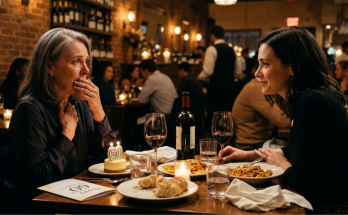
Then she asked whether I ever wished the restaurant dinner hadn't happened.
I thought about it.
"I wish we had understood each other sooner," I said.
She nodded.
"Do you wish you'd stayed in the old house?"
I looked toward the cottage.
The porch.
The blue shutters.
The garden I had chosen.
"No."
She studied my face.
"Not even sometimes?"
"I miss parts of the old house," I said. "I miss the memories."
She looked down.
"But I don't miss living the way I was living."
Sarah nodded slowly.
For a moment, she said nothing.
Then she admitted she had once believed I would forgive them and eventually return.
I wasn't surprised.
She had probably assumed the separation was temporary.
Perhaps she believed that once the anger faded, I would go back to paying bills and letting them make the decisions.
I looked at her.
"I can forgive you without agreeing to live that way again."
She wiped her hands together.
"I think I'm beginning to understand."
I reached for her hand.
"I hope so."
We stood beside the roses.
The afternoon sunlight fell across the garden.
I could hear my friends talking near the table.
For the first time in a long while, I didn't feel trapped between loving my daughter and protecting myself.
I could do both.
I could hold her hand.
I could enjoy her company.
And later, when the visit ended, she could return to her own home while I stayed in mine.
That evening, everyone left.
I carried the cups inside.
I put away the remaining pie.
Then I sat on the porch with tea.
My phone buzzed.
It was Sarah.
She thanked me for the afternoon.
Then she told me she loved me.
I read the message twice.
I wrote back that I loved her too.
I always had.
I set the phone down.
The sky was beginning to darken.
I looked at the roses.
At the little bench beneath the maple tree.
At the house I had bought for myself.
I was sixty years old.
I had money set aside for retirement.
I had a garden.
I had friends.
And I still had a daughter.
Our relationship was different now.
It had to be.
I no longer believed that being useful was the same as being loved.
I no longer believed that every request deserved a yes.
I had spent years making myself uncomfortable so other people wouldn't have to be.
I wasn't doing that anymore.
For a while, I thought the hardest part of the story was behind us.
I hoped Sarah understood what had changed.
I hoped she and Greg would learn to manage their own lives.
And I hoped the peace I had found would last.
But a few months later, Sarah called with another problem.
This time, the problem wasn't about who owned a house.
It was about whether I would let someone move into mine.
Click here to continue reading: PART 8: My Daughter Asked to Move Into My Cottage After Greg Lost Another Job, and Saying No Became the Most Important Help I Could Give Her
I Turned Sixty Expecting a Quiet Birthday Dinner, but My Daughter Had Already Decided I No Longer Belonged in My Own House
Part 7 of 15