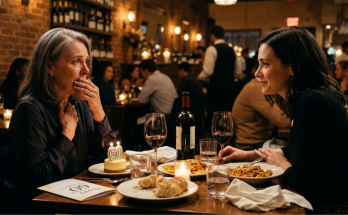
I used to think that seeing my daughter happy meant making sure she never had to struggle.
I believed that for most of my life.
When Sarah was young, I tried to solve every problem before it became too large.
If she was frightened, I comforted her.
If she was disappointed, I found something to make her smile.
If she needed help, I gave it.
That seemed natural.
She was my child.
But children grow up.
And somewhere along the way, I had forgotten that helping an adult daughter meant allowing her to make decisions I couldn't make for her.
It took three difficult years in my old house for me to understand that.
It took another two years for Sarah to begin understanding it herself.
About a year after she told me she and Greg were separating, I noticed how different our conversations had become.
She no longer opened every phone call by explaining what had gone wrong.
Sometimes she called because something pleasant had happened.
Sometimes she wanted to tell me about her day.
Sometimes she simply wanted to hear my voice.
The first time she called without asking for advice, I remember feeling almost suspicious.
I had been sitting in my kitchen, preparing a cup of tea.
My phone rang.
Sarah.
I answered.
"Hello, sweetheart."
"Hi, Mom. How are the roses?"
I looked toward the garden.
"They're doing well."
"Did the ones near the fence bloom?"
"Yes. They're beautiful."
She sounded pleased.
We talked for several minutes about flowers.
Then she mentioned her work.
She told me about an ordinary day at the office.
Nothing dramatic.
No crisis.
No unpaid bill.
I waited for the difficult part of the conversation.
It never came.
Eventually, Sarah said she needed to go.
"I just wanted to say hello."
I smiled.
"I'm glad you called."
"Love you, Mom."
"I love you too."
After we hung up, I stood at the counter holding my cup.
I realized how long it had been since a conversation with Sarah had felt so simple.
For years, I had associated her phone calls with problems.
An unexpected expense.
Something Greg wanted.
A bill they couldn't afford.
A disagreement that somehow required me to apologize.
Now she had called to ask about roses.
I looked out the window.
The garden wasn't especially large.
But it had become the place where I noticed changes most clearly.
A new flower.
A branch growing in the wrong direction.
A rose bush recovering after I trimmed it.
The changes were small.
They happened slowly.
I was beginning to think relationships worked much the same way.
Sarah had moved into a smaller apartment.
It wasn't the kind of home she and Greg had once imagined for themselves.
There was less space.
Fewer conveniences.
And nobody else paying the expenses.
But it was hers.
She had chosen it because she could afford it.
That mattered.
She had also found a better job.
I was pleased for her.
Not because a higher salary would make her more important.
Because she was finally building a life that didn't depend on my retirement savings.
She had started attending financial counseling sessions.
At first, she had been embarrassed to tell me.
I remembered the way she looked down when she mentioned it.
"Mom, I probably should have done this years ago."
I nodded.
"Maybe. But you're doing it now."
She gave me a small smile.
"I have a lot to learn."
"So did I."
She looked surprised.
I laughed softly.
"Nobody knows everything about money, sweetheart."
That was true.
My husband and I had been careful, but we had made mistakes too.
We had worried about bills.
We had postponed purchases.
We had spent evenings discussing whether we could afford repairs.
The difference was that we had tried to take responsibility for the decisions we made.
Sarah was beginning to do the same.
She told me the counseling sessions helped her understand her expenses.
She was learning to plan for bills before they arrived.
She was paying attention to credit card interest.
She was thinking about savings.
Ordinary things.
Things I had once tried to explain while she and Greg were living with me.
Back then, she rarely wanted to hear them.
She wanted the immediate problem solved.
Now she was beginning to understand why the problems kept returning.
I was proud of that.
But I was careful.
I didn't offer to manage her accounts.
I didn't ask to see every statement.
I didn't tell her how to spend every dollar.
I had learned that taking control of her responsibilities wouldn't make her independent.
It would simply create another kind of dependence.
So when she asked a question, I answered.
When she wanted advice, I offered it.
And when she made a decision herself, I allowed her to live with it.
That last part was harder than I expected.
I had spent decades being her mother.
I knew how to help with practical things.
I knew how to comfort her.
But standing aside while she learned something difficult required a different kind of patience.
Sometimes I had to stop myself from offering money.
Not because I wanted her to suffer.
Because I knew how easily one emergency payment could become the beginning of another arrangement.
I still had the financial plan I had made after speaking with my adviser.
My pension covered my ordinary expenses.
My savings were protected.
The proceeds from selling the old house had strengthened my retirement.
The cottage was secure.
I wanted to keep it that way.
For the first time, I wasn't planning my future around how much Sarah and Greg might need.
I was planning around what I could reasonably afford.
That felt different.
And sometimes it still made me uncomfortable.
I remembered sitting in my old bedroom beside the laundry closet.
I had worried about spending money on a new washing machine.
I had canceled a visit to my sister because I was paying Sarah's car insurance.
I had delayed things I wanted without even discussing them.
Now I could buy groceries for myself.
I could visit friends.
I could plan a trip.
I could replace something when it stopped working.
And I didn't have to explain why.
I was sixty-two by the time I began fully appreciating that freedom.
Sometimes I wondered why it had taken so long.
Then I remembered that I hadn't learned to put myself last overnight.
I had spent years doing it.
I had been proud of how much I could give.
I had confused being needed with being loved.
And when Sarah and Greg began expecting everything, I was already accustomed to saying yes.
Changing that habit had been painful.
But I was glad I had done it.
Greg had moved to another city.
Sarah told me after his plans were settled.
I didn't ask many questions.
I knew their separation had been difficult.
I knew he continued blaming me for the loss of the old house.
I also knew I couldn't change his opinion.
He had refused to apologize.
He had claimed money from the property sale.
He had treated my decision to protect myself as though it were an attack on him.
Thomas had handled the legal matter.
The claim had been resolved.
I didn't owe Greg anything.
I wanted that chapter of my life to remain closed.
Occasionally, Sarah mentioned him.
Usually, it was something practical.
Sometimes she sounded sad.
Sometimes frustrated.
I listened without encouraging her to turn every conversation into a complaint about him.
Their marriage belonged to them.
Their separation did too.
I could support my daughter emotionally without deciding what she should believe about her husband.
That wasn't always easy.
There were moments when I wanted to remind her of everything Greg had done.
I wanted to tell her how frightened I had been when he threatened me in the parking lot.
I wanted to describe how angry I felt when he claimed money for the garage gym.
I wanted to ask how she had allowed him to treat me that way.
But I usually stopped myself.
We had discussed those things.
She had apologized.
She was making changes.
Repeating every painful memory wouldn't necessarily help either of us.
I didn't need to forget.
I also didn't need to keep reopening the wound.
One afternoon, Sarah came to the cottage to help me with the garden.
She arrived wearing comfortable clothes.
She had tied her hair back.
When I opened the door, she smiled.
"Ready to work?"
I laughed.
"That depends on how much work you have in mind."
She looked toward the rose bushes.
"Let's start with those."
I handed her a pair of gardening gloves.
We went outside.
The weather was pleasant.
The soil was soft enough to work.
We began planting flowers near the fence.
For a while, we spoke about ordinary things.
Her apartment.
My garden.
A book I had finished.
A painting class I was still hoping to take.
Then Sarah asked whether I remembered the Italian restaurant where we had celebrated my sixtieth birthday.
I looked at her.
"Of course."
She smiled sadly.
"I suppose neither of us will ever forget that evening."
"No. I don't think we will."
She pressed a little soil around a plant.
Then she sat back.
"Do you remember what you told me outside?"
I thought about the parking lot.
The cool air.
Greg standing behind her.
My car door open.
I remembered telling Sarah I wasn't leaving her.
I was leaving the house.
"Yes," I said.
She nodded.
"I didn't understand it then."
I looked at her.
"What did you think I meant?"
She wiped soil from her glove.
"I thought you were trying to make me feel better while you punished us."
I felt a small ache.
I hadn't wanted to punish anyone.
I had wanted somewhere safe to live.
I had wanted my property respected.
I had wanted my daughter to recognize that I was a person.
But Sarah had been frightened of losing the house.
She had seen my boundaries as rejection.
I waited.
She continued.
"I thought if you really loved me, you would change your mind."
I nodded slowly.
"I know."
She looked embarrassed.
"I didn't think about what staying would cost you."
I looked toward the cottage.
The blue shutters were bright in the afternoon sun.
The porch was quiet.
The maple tree cast shade across the garden.
I remembered the first day I moved in.
The cardboard box on the counter.
The wedding photograph.
The wooden clock.
The lemon cake that tasted too strongly of zest.
Everything had felt new.
Everything had felt uncertain.
But I had known I couldn't return to the old arrangement.
Sarah placed another flower in the soil.
"Now I think you were giving me a chance to change."
I looked at her.
She continued.
"You stopped doing everything for me, but you didn't stop being my mother."
I felt my throat tighten.
That was exactly what I had hoped she would understand.
I hadn't known how to explain it at the restaurant.
I had tried later.
Sometimes she listened.
Sometimes Greg's anger made her doubt me.
Sometimes her own fear pushed her back toward old habits.
But now she was saying it without being prompted.
I reached over and brushed a little dirt from her sleeve.
"I wanted you to have a life you could manage yourself."
She nodded.
"I know."
"And I wanted one too."
She smiled.
"I know that now."
We returned to planting.
The conversation became easier again.
She asked where I wanted the next flower.
I showed her.
She followed my directions without trying to redesign the garden.
I noticed that small thing too.
Once, Sarah would have told me which plants looked better together.
She might have suggested moving the bench.
She might have asked why I had chosen certain flowers.
Now she asked what I wanted.
I appreciated it.
We worked quietly for a while.
Then Sarah looked toward the living room window.
From the garden, we could see part of the mantel.
My husband's wedding photograph stood there.
She had noticed it.
"Mom?"
"Yes?"
"Do you think Dad would be happy with us?"
I stopped.
The question caught me off guard.
I looked toward the house.
For a moment, I imagined my husband sitting on the porch.
I imagined him watching Sarah plant flowers.
I imagined him laughing because we had both managed to get soil on our clothes.
He had loved our daughter.
He had wanted her to be happy.
He had also wanted me to enjoy my retirement.
I knew that.
We had discussed our plans many times.
The coast.
The garden.
Quiet mornings.
A life without the constant pressure of working.
He hadn't lived long enough to enjoy all of it with me.
But I felt certain he would have wanted me to continue.
I looked at Sarah.
"Yes," I said.
"I think he'd be pleased."
Her eyes filled.
"Really?"
I nodded.
"He'd be glad you're taking care of yourself."
She looked down.
"And you?"
I smiled.
"He'd be glad I'm doing that too."
Sarah wiped her eyes.
Then she returned to the flowers.
I let her have the quiet moment.
There was no need to say more.
That afternoon, we finished planting together.
We washed our hands.
Then we sat on the porch with lemonade.
Sarah told me about her work.
I told her about Margaret.
We discussed the trip to the coast.
She asked whether I would go again.
"I'd like to."
"You should."
I smiled.
"That's the plan."
She nodded.
"I want you to enjoy yourself, Mom."
Those words meant more than she probably realized.
For three years, I had felt as though my enjoyment was an inconvenience.
A trip cost money.
A new appliance wasn't necessary.
A comfortable bedroom disrupted Greg's routine.
Now my daughter was encouraging me to do something simply because I wanted it.
I looked at her.
"Thank you."
She seemed surprised.
"For what?"
"For saying that."
She smiled.
"Well, I mean it."
I believed her.
Not because everything was perfect.
Because I had watched her make changes over time.
She had found a place she could afford.
She had improved her employment situation.
She was learning to manage her money.
She no longer expected to live in my home.
And increasingly, she called because she wanted a relationship with me.
Not because she needed access to what I owned.
That mattered.
Later, Sarah left.
I watched her drive away.
Then I returned to the garden.
The flowers we had planted looked small beside the established roses.
They would need time.
Water.
Care.
Patience.
I thought about my relationship with Sarah.
It was much the same.
We couldn't return to the exact relationship we had before my sixtieth birthday.
Too much had happened.
But we could build something healthier.
Something based on choice rather than obligation.
I walked toward the porch.
My silver bracelet caught the sunlight.
I turned it gently on my wrist.
Sarah had given it to me on my sixty-first birthday.
I remembered reading her letter.
I remembered crying with her.
I remembered realizing that she had finally begun to understand what I needed.
Now another birthday was approaching.
My sixty-second.
I didn't know what we would do.
I didn't need anything expensive.
I didn't need a grand celebration.
I wanted a pleasant evening with my daughter.
I wanted us to sit together without discussing bills or property.
I wanted to laugh.
Perhaps that sounded simple.
But after everything we had been through, simple was exactly what I wanted.
Click here to continue reading: PART 14: On My Sixty-Second Birthday, Sarah Invited Me Back to an Italian Restaurant, and Another White Envelope Brought Back Everything We Had Survived
I Turned Sixty Expecting a Quiet Birthday Dinner, but My Daughter Had Already Decided I No Longer Belonged in My Own House
Part 13 of 15