PART 2
The first line of the message read:
Ryan is not unemployed. He has been receiving monthly payments from an account under Linda’s maiden name for three years.
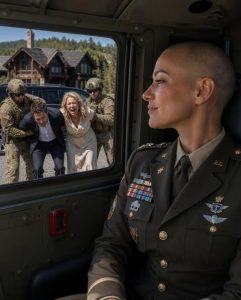
I stood in the quiet hallway, my garment bag hanging over one arm, my scalp still tender beneath the cool morning air.
For a moment, the house seemed to shrink around me.
The framed wedding photo on the wall. The keys on the entry table. Ryan’s jacket thrown over the chair he never pushed back in. Linda’s floral purse sitting open beside a stack of bills she had always insisted were “too confusing” for her to understand.
All of it suddenly looked staged.
I read the message again.
Then the second line appeared.
I need you to call me before you leave. There is a lien attached to the house, and your signature may have been forged.
My fingers tightened around the phone.
Forged.
That word landed harder than anything Linda had done with the clippers.
A cut scalp healed. Hair grew back.
A forged signature meant planning. It meant documents. It meant someone had sat down, looked at my name, and decided they had the right to wear it like a stolen uniform.
From the bedroom, Ryan snored.
I walked into the kitchen, closed the door behind me, and called my attorney.
Margaret Sinclair answered on the first ring. She was a former military prosecutor turned family law attorney, with a voice so calm it made chaos feel embarrassed to be in the room.
“Colonel Harris,” she said, “are you somewhere private?”
“I’m in the kitchen.”
“Is Ryan awake?”
“No.”
“Good. I’m going to be direct. During our preliminary asset review, my office found a home equity line of credit opened against your marital residence eighteen months ago.”
My eyes moved to the granite countertop I had paid for. “How much?”
“One hundred and eighty-seven thousand dollars.”
The room tilted, but I did not.
“That’s impossible,” I said. “I never signed anything.”
“I know. The signature does not match yours. Not even close. But the lender has a notarized document, and the notary stamp belongs to someone connected to Ryan’s dealership.”
I stared at the stainless-steel refrigerator, remembering every time Ryan had called me cold. Unavailable. Obsessed with work.
“Where did the money go?”
“That is the part I wanted you to hear before you left the house.” Margaret paused. “Most of it was transferred into a business account registered to Ryan and Linda.”
A slow, dry laugh almost escaped me. “A business?”
“Freedom Patriot Auto Imports LLC.”
I closed my eyes.
Ryan had always talked about owning a dealership one day. Not working the floor. Not selling used trucks to men who wanted to feel richer than they were. Owning the whole building. Sitting behind glass. Giving orders.
I had thought it was harmless bragging.
“Is there more?” I asked.
“Yes,” Margaret said. “The business account has been making regular payments to Ryan. The source account sending Linda money is linked to the same entity. In plain terms, it appears your husband and mother-in-law borrowed against a house you paid for, used forged authorization, paid themselves from it, and let you cover the household expenses while telling you he had no money.”
The kitchen clock ticked once.
Then again.
I felt nothing.
That frightened me more than rage would have.
Margaret continued, “Do not confront him without witnesses. Do not reveal what you know. Take photographs of your injuries. Save every message. Leave the house. Today.”
“I’m already dressed.”
“For command?”
“Yes.”
There was a small silence.
Then Margaret said, softer, “Congratulations, Colonel.”
I looked toward the hallway mirror. A bald woman in Army dress blues stared back at me. Her scalp was nicked, red in places, but her spine was straight.
“Thank you.”
“One more thing,” she said. “Ryan filed a petition yesterday.”
I went still. “What petition?”
“A request for emergency spousal support.”
For the first time that morning, my breathing changed.
“He what?”
“He claims you are financially abusive. That you control all marital resources. That you are unstable due to military stress. He also states you threatened to abandon him and his elderly mother.”
I looked down at my hand. It was perfectly steady.
“Yesterday,” I said.
“Yes.”
“Before Linda shaved my head.”
“Yes.”
The house became very quiet.
This had not been an argument that went too far.
It had been the opening move.
Linda cutting my hair had not been an emotional outburst. It had been meant to break me before the paperwork arrived. To make me resign. To make me look unstable. To make me walk into court humiliated, exhausted, and ashamed.
But they had made one mistake.
They had mistaken silence for surrender.
“Send everything to my secure personal email,” I said.
“I already have. And Colonel?”
“Yes?”
“Your husband attached photographs to his petition. Images of alcohol bottles on your nightstand. Pills spilled near your sink. A broken mirror.”
My mouth went cold.
“I don’t drink at home,” I said.
“I know.”
“I don’t take pills.”
“I know.”
“And the mirror?”
“I assume staged.”
My eyes moved toward the upstairs hallway. Suddenly I remembered Linda entering my room over the last week under the excuse of putting away laundry. Ryan offering me wine twice despite knowing I rarely drank. The odd smell in my bathroom two nights ago.
They hadn’t just planned to take my money.
They had planned to take my credibility.
“Leave now,” Margaret said. “Whatever you do, do not let them provoke you.”
I ended the call and stood in the kitchen until my breathing matched the clock.
Then I moved.
Quietly. Efficiently.
I photographed the bedroom. The hair on the pillow. The clippers on the nightstand. The blood on the sheets. The small cuts along my scalp. Linda’s purse beside the utility bills. Ryan’s petition confirmation left half-hidden inside the printer tray because, apparently, criminals could forge signatures but not clear print history.
I uploaded everything to three separate locations.
Then I wrote a note.
Not an emotional one. Not a goodbye.
A statement.
Ryan,
Effective immediately, I have moved out of the residence. All communication will go through counsel. Do not contact my command, my colleagues, or my office. Do not enter any account, vehicle, workplace, or facility associated with me.
A protective order request is being prepared.
Colonel Mara Harris
I placed it on the kitchen table, not because I owed him an explanation, but because I wanted him to see the rank.
Then I picked up my garment bag and walked out of the house I had paid for.
The morning air hit my scalp like cold water.
I did not look back.
By 0700, I was at Fort Belvoir.
By 0730, I had changed into my uniform.
By 0745, I stood in my new office as the commander of a strategic intelligence unit whose mission touched places most people only saw as shadows on a map.
The room fell silent when I entered.
Not because of my rank.
Because of my head.
A colonel’s uniform carried expectation. Precision. Authority. Control.
A shaved, wounded scalp told a different story.
For one brief second, I saw questions flash across the faces of my senior staff.
Then Command Sergeant Major Doyle stepped forward. He was sixty, built like a locked door, and had survived enough bad ideas from officers to distrust most of them on sight.
His eyes flicked once to my scalp.
Only once.
Then he snapped to attention.
“Ma’am,” he said. “Welcome to command.”
The others followed.
That small act nearly broke me.
Not because it was dramatic.
Because it was disciplined.
No pity. No whispers. No hunger for gossip.
Just acknowledgment.
I took my place at the head of the conference table.
“Good morning,” I said. “We have work to do.”
And we did.
For the next six hours, I briefed operations, personnel risk, budget constraints, internal security posture, and three ongoing matters that required judgment sharper than steel. I asked questions no one expected me to ask. I found gaps people hoped I would miss. I reassigned one project, halted another, and ordered a review of access protocols before lunch.
By noon, no one was looking at my scalp.
They were looking at my notes.
At 1300, my aide knocked once and entered.
“Ma’am, there is a Mr. Ryan Harris at the visitor control center asking for you.”
The room went silent again.
I did not look up from the document in front of me.
“Is he cleared?”
“No, ma’am.”
“Does he have an appointment?”
“No, ma’am.”
“Then he does not enter.”
My aide hesitated. “He says it’s a family emergency.”
I finally looked up. “Inform security that all personal contact from Mr. Harris is to be documented and denied. If he refuses to leave, base police may handle it.”
“Yes, ma’am.”
Command Sergeant Major Doyle watched me from the end of the table, expression unreadable.
Five minutes later, my phone vibrated.
Ryan.
Then again.
Ryan.
Then Linda.
Then Ryan.
Then a text.
You embarrassed me at the gate.
Another.
You can’t just cut us off.
Another.
Mom’s card got declined at the pharmacy. What the hell did you do?
I turned the phone face down.
A strange peace settled over me.
Not happiness.
Something cleaner.
For years, I had mistaken endurance for loyalty. I had swallowed insults because deployment had taught me the value of choosing which battles mattered. I had let Ryan complain, let Linda criticize, let them treat my career like a hobby that accidentally paid all their bills.
I had believed patience was strength.
Sometimes it was.
Sometimes patience was just a locked door you held shut from the inside.
At 1700, after my final briefing, I returned to my temporary quarters on base. Margaret had already filed for a protective order, divorce, and emergency financial relief. She had also referred the forged loan documents to the lender’s fraud department and the county prosecutor.
Attached to her email was one more file.
The notary record.
The name on it made me sit down.
Not because I knew her.
Because I had seen her signature before.
Emily Vaughn.
Ryan’s ex-fiancée.
The woman he had told me was unstable. Obsessed. Bitter. The woman he claimed had tried to ruin his life before I met him.
She was the notary.
For nearly ten minutes, I stared at that name.
Then I searched my memory.
Ryan had mentioned Emily only twice in twelve years. Both times with disgust. Linda had called her “that desperate little liar.” They claimed she had invented stories about money, about Ryan, about Linda controlling everything.
I had believed them.
Or rather, I had not cared enough to disbelieve them.
Now her name sat on the document tied to the theft of my house.
But something about it bothered me.
A forged signature was sloppy. The loan was reckless. The hidden business was arrogant.
But putting an ex-fiancée’s name on the notarization?
That was too obvious.
I called Margaret.
“I need to know whether Emily Vaughn actually notarized that document,” I said.
“We’re already checking.”
“Find her.”
Margaret exhaled. “Mara, be careful.”
“I’m not going near her. I want facts.”
“I’ll have an investigator contact her.”
After we hung up, I sat alone in the temporary room with beige walls and military furniture designed to discourage attachment.
My scalp ached.
My body wanted sleep.
My mind refused.
At 2100, a message arrived from an unknown number.
For a long moment, I simply watched it glow.
Then I opened it.
Colonel Harris, my name is Emily Vaughn. I think Ryan used my notary stamp. I did not sign anything for him. If you are still married to him, you are in danger.
I read it once.
Twice.
Then a second message arrived.
Linda tried this with me before. But with you, they had more to gain.
My pulse slowed.
Not sped up.
Slowed.
That was how I knew the battlefield had changed.
I replied with only five words.
Send everything to my attorney.
Three dots appeared.
Disappeared.
Appeared again.
Then Emily sent a photograph.
It was old, grainy, probably taken from a phone years earlier.
Ryan stood in a kitchen I did not recognize, younger by at least a decade, smiling with one arm around Emily. Linda stood beside them, holding champagne.
On the counter in front of them was a stack of paperwork.
Emily’s next message came in pieces.
I was supposed to sell my condo after we married.
They wanted the proceeds moved into a “family investment account.”
When I refused, Ryan said I was mentally unstable.
Linda cut up my work clothes.
Then they told everyone I had a breakdown.
I stared at the screen, feeling the invisible architecture of my marriage rearrange itself.
This was not simply betrayal.
It was a pattern.
Ryan had not become this man because I was busy, promoted, deployed, independent, successful.
He had always been this man.
My independence had only delayed the trap.
At 2200, Margaret called.
“I spoke to Emily,” she said. “She is terrified.”
“Do you believe her?”
“Yes.”
“Why?”
“Because she has documents. Old police reports. Emails. Photos. A civil complaint she never filed because Linda threatened to accuse her of elder abuse.”
I stood and crossed to the window.
Outside, the base lights burned in clean rows. Order imposed on darkness.
“What does this mean for my case?”
“It means Ryan and Linda have a history. It means motive. It means potential criminal exposure beyond the forged loan. And Mara—there’s more.”
Of course there was.
“Tell me.”
“Emily says Ryan has a storage unit.”
I waited.
“She believes he keeps records there. Copies of documents, old IDs, financial papers. She says Linda calls it their insurance.”
A chill moved through me that had nothing to do with the room temperature.
“Where?”
“Alexandria. Unit 614.”
“How does Emily know?”
“She paid for it once when Ryan claimed his card was compromised. Years ago.”
“Is it still active?”
“My investigator checked. Yes.”
“Under whose name?”
Margaret paused.
Then she said, “Yours.”
I did not speak.
The silence stretched.
Finally, I said, “I never rented a storage unit.”
“I know.”
I looked at my reflection in the dark window.
A bald woman in a plain Army T-shirt looked back.
No medals. No insignia. No polished shoes.
Just a soldier standing in the aftermath of a domestic ambush, finally seeing the map.
“They used my identity,” I said.
“It appears so.”
“And if that unit contains what Emily thinks it contains?”
“Then Ryan and Linda may have built files not just on you, but on others.”
Others.
The word opened something wide and cold.
Emily. Me. Maybe women before her. Maybe creditors. Maybe false accounts. Maybe documents waiting to be used whenever someone stepped out of line.
“They’ll clear it out,” I said.
“Not if they don’t know we know.”
“They know I found something. Ryan isn’t stupid enough to sit still.”
“No,” Margaret said. “But he is angry enough to make mistakes.”
As if summoned by her words, my phone buzzed again.
Ryan.
This time, a voicemail.
I played it on speaker without answering.
His voice filled the room, low and furious.
“Mara, stop playing commander and pick up the phone. You think you can hide behind a uniform? You think those people at your base care about you? They’ll throw you away the second they find out what you’re really like. Mom has pictures. I have documents. You want a war? Fine. But remember who knows what’s in your name.”
The voicemail ended.
Margaret had gone silent.
Then she said, “Send me that immediately.”
“I will.”
“Mara, listen to me carefully. Do not go to that storage unit.”
“I wasn’t planning to.”
“Good.”
I was planning something better.
The next morning, the protective order was granted temporarily. Ryan was barred from contacting me directly. Linda, too. The judge reviewed the photographs of my scalp and the financial documentation Margaret submitted and scheduled an emergency hearing.
By noon, the lender’s fraud department had opened a formal investigation.
By 1500, county law enforcement had received enough documentation to become interested in the storage unit.
By 1800, Ryan had violated the protective order seven times.
Not because he was brave.
Because he could not tolerate losing access.
Control, I had learned, was an addiction disguised as authority.
The hearing happened three days later.
Ryan arrived in a navy suit I had bought him for a military banquet. Linda wore pearls and a pale blue dress, her silver hair styled softly around her face. She looked like someone’s churchgoing mother. Someone’s grieving widow. Someone who baked pies for fundraisers and whispered poison after dessert.
I arrived in uniform.
Not for theater.
For truth.
This was who I was.
Ryan’s attorney tried to paint me as cold. Distant. Militarized. A woman more comfortable issuing orders than nurturing a marriage.
Margaret let him speak.
Then she presented the photographs.
The courtroom changed when they appeared on the screen.
My pillow covered in hair.
Blood along the sheet.
The clippers.
My scalp.
Linda’s mouth tightened.
Ryan looked down.
Then Margaret played his voicemail.
You want a war? Fine. But remember who knows what’s in your name.
The judge’s face hardened.
Ryan’s attorney asked for a recess.
He did not get one.
By the end of the hearing, the protective order remained in place. Ryan was ordered out of the house. All disputed financial activity was frozen pending investigation. Neither Ryan nor Linda was allowed to destroy, move, conceal, or alter documents connected to marital assets, business accounts, loans, or storage property.
Linda stood when the judge finished.
“This is outrageous,” she snapped. “That woman is manipulating everyone.”
The judge looked over his glasses.
“Mrs. Harris, sit down.”
Linda sat.
But she looked at me as though I had done something unforgivable.
Not by accusing her.
By surviving in public.
Outside the courthouse, Margaret and I walked toward the parking lot beneath a sky the color of dull steel.
“You handled that well,” she said.
“I didn’t handle anything. I stood there.”
“Sometimes standing there is the hard part.”
Before I could answer, her phone rang.
She listened.
Her expression changed.
“What is it?” I asked.
She ended the call slowly.
“Police executed a warrant on the storage unit.”
“And?”
“They found documents.”
My stomach tightened. “Mine?”
“Yes. Yours. Emily’s. At least two other women. Copies of IDs, financial statements, medical records, old employment forms.”
The air seemed to thin.
“And Ryan?”
“They also found blank prescription pads, notary stamps, and a laptop.”
“That sounds good for us.”
“It is.”
“But?”
Margaret looked at me carefully.
“They found a sealed envelope with your name on it.”
I frowned. “What was inside?”
“A copy of a life insurance policy.”
I stopped walking.
The courthouse noise faded behind me.
Margaret’s voice became quieter.
“It was taken out on you eight months ago.”
“I don’t have a private life insurance policy.”
“This one lists Ryan as the primary beneficiary.”
“How much?”
She hesitated.
“Two million dollars.”
For several seconds, I heard only the wind.
Eight months ago, Ryan had become more attentive for a while. He made tea in the evenings. Encouraged me to sleep more. Told me I looked tired. Said he worried about stress. Said maybe the Army was killing me slowly.
Linda had started talking about women who “worked themselves into the grave.”
I remembered the bitter taste of tea.
The sudden headaches.
The nights I slept too deeply.
The morning I woke up and could not remember turning off my alarm.
No.
I did not say it aloud.
I would not give the thought shape until evidence did.
Margaret touched my arm gently.
“Mara.”
I looked at her.
“They also found a note,” she said.
“What note?”
“It was handwritten. Not signed. But it describes a plan.”
My mouth went dry.
“What kind of plan?”
Margaret did not answer right away.
Behind her, across the courthouse parking lot, a black truck idled by the curb.
Ryan’s truck.
But Ryan was not inside.
Linda sat behind the wheel.
She was staring directly at me.
And she was smiling.
Margaret turned to follow my gaze.
The truck pulled away slowly, merging into traffic as though nothing in the world had changed.
My phone buzzed.
Unknown number.
A single image appeared.
It was a photograph of me asleep in my own bed, taken from above.
My shaved hair still intact.
The timestamp was from the night before Linda cut it.
Then came one line of text.
You found the storage unit. Now find the first wife.
I stared at the words until they blurred.
First wife.
Ryan had never been married before.
At least, that was what he had told me.
And somewhere beneath the courthouse steps, beneath the ruined marriage, the stolen money, the forged signatures, the clippers, the insurance policy, and Linda’s smile, a darker truth shifted awake.
…If you want to know what happened next, please type “YES” and like for more.
**The message on my phone should have been impossible.**
You found the storage unit. Now find the first wife.
I stood outside the courthouse with Margaret beside me, the wind pulling at the hem of my uniform jacket, my scalp still raw beneath the morning light. Cars moved through traffic. People laughed on the sidewalk. Somewhere nearby, a man argued about parking.
But my world had narrowed to six words.
**First wife.**
Ryan had told me there had been no one before me. Not really. A few girlfriends. One “crazy” ex-fiancée named Emily. No marriage. No divorce. No children. No secrets large enough to cast a shadow.
But Linda’s smile from the truck still hung in my mind.
It was not the smile of a woman exposed.
It was the smile of a woman who knew the exposure had only begun.
Margaret read the message twice. Her face went still in that dangerous way lawyers get when the truth becomes worse than the paperwork.
“Do you recognize the number?” she asked.
“No.”
“Do not respond.”
“I wasn’t going to.”
“Good.”
I looked down at the photograph again. Me asleep. Hair still long. Vulnerable. Unaware.
Someone had stood above my bed and taken it.
A cold, clean fury moved through me.
Not panic.
Not fear.
**Fury with discipline.**
“What do we know about Ryan before Emily?” I asked.
Margaret tucked her phone away. “Not enough.”
“Then start there.”
That evening, I sat alone in my temporary quarters while rain tapped the window. Margaret’s investigator, a retired federal agent named Paul Reyes, called me at 2100.
His voice was quiet.
“Colonel Harris, I found something.”
I sat straighter. “Tell me.”
“Ryan Harris legally changed his middle name twelve years ago.”
My pulse slowed. “From what?”
“Ryan Daniel Whitmore.”
Whitmore.
The name meant nothing to me.
“Why would he change it?”
“That’s what bothered me,” Reyes said. “So I searched marriage records under Ryan Whitmore.”
The rain seemed to grow louder.
“And?”
“There is one record in West Virginia. Ryan Daniel Whitmore married a woman named Claire Benton seventeen years ago.”
My throat tightened.
“And the divorce?”
“There is no divorce record.”
The room became very still.
“Is Claire alive?” I asked.
Reyes hesitated just long enough to answer.
“She disappeared fourteen years ago.”
For the first time since Linda shaved my head, something colder than anger moved through me.
Disappeared.
Not divorced. Not estranged. Not relocated.
Disappeared.
“Was Ryan investigated?”
“Briefly,” Reyes said. “Claire’s family reported her missing. Ryan claimed she left after a fight, emptied their savings, and ran away. Linda backed him up. Police found a note.”
“A note,” I repeated.
“Yes. Supposedly written by Claire.”
I closed my eyes.
Forged signatures. Staged photos. False documents. Notary stamps.
Of course there had been a note.
“Where is Claire’s family now?”
“Her younger sister, Hannah Benton, lives in Richmond. I can contact her through counsel.”
“No,” I said. “Margaret can. Everything through counsel.”
“Understood.”
After the call ended, I sat in silence.
I had once believed my marriage was failing because Ryan resented my career. Now I understood the truth.
**Ryan had never wanted a wife. He wanted an asset.**
A woman with income. A woman with credibility. A woman whose name could open doors, secure loans, create sympathy, and eventually become more valuable dead than alive.
And Linda?
Linda had not protected her son.
She had trained him.
The next morning, Margaret arranged a video call with Hannah Benton.
When Hannah appeared on the screen, I saw grief that had aged but not softened. She had Claire’s eyes, according to the old wedding photo Margaret sent me beforehand—large, dark, and watchful.
“You’re Mara,” Hannah said.
“Yes.”
She stared at my shaved head, then looked away with visible effort. “He did something to you.”
“Yes.”
“His mother?”
“Yes.”
Hannah’s mouth twisted. “She always liked scissors.”
The words struck me harder than they should have.
“What happened to Claire?” I asked.
Hannah folded her hands. They trembled.
“My sister married Ryan when she was twenty-four. She was a nurse. Smart, funny, stubborn. She had savings. A small house from our grandmother. Ryan moved in fast. Linda followed.” Her voice hardened. “Within a year, Claire stopped calling. When she did call, she sounded tired. Afraid to speak.”
I listened without interrupting.
“Then one night she called me crying. She said she had found papers in Ryan’s desk. Insurance forms. Loan documents. A passport application she never filled out. She said Linda told her, ‘Women who embarrass this family disappear from it.’”
My fingers curled against my palm.
“Did Claire report it?”
“She planned to.” Hannah swallowed. “She packed a bag. She was supposed to come to me the next morning.”
“But she didn’t.”
“No.” Hannah’s eyes filled, but her voice stayed steady. “Ryan said she left him. Linda said Claire was unstable. The police believed the note because Claire had been anxious. But I knew my sister. She would never leave without her cat.”
That tiny detail pierced the room.
Her cat.
Not money. Not clothes. Not jewelry.
A living creature she loved.
“Where was Ryan living then?” Margaret asked.
“A rental house outside Martinsburg,” Hannah said. “Linda sold it six months after Claire disappeared.”
“Was the property searched?”
“Not properly. Ryan said Claire left voluntarily. No blood. No body. No crime.”
A silence fell.
Then Hannah leaned closer to the camera.
“Mrs. Harris,” she said, and then corrected herself, “Colonel Harris. If you are still alive, it means something went wrong with their plan.”
I stared at her.
Something in my chest locked into place.
“You’re right,” I said.
And for the first time, Hannah smiled.
Not happily.
Fiercely.
“Then let’s make sure it keeps going wrong.”
## PART 4 — **THE HOUSE WITH THE SEALED BASEMENT**
The rental house in Martinsburg had changed owners twice in fourteen years.
It was now painted yellow, with white shutters and a porch swing. A family lived there with two bicycles in the yard and a basketball hoop in the driveway. Nothing about it looked haunted.
But houses do not confess from the outside.
They keep quiet.
Paul Reyes contacted the current owners through law enforcement channels after Margaret forwarded everything: the forged documents, the insurance policy, Emily’s statement, Hannah’s testimony, Ryan’s threatening voicemail, and the suspicious life insurance policy on me.
At first, the county sheriff was cautious.
Then the storage unit laptop changed everything.
The laptop contained scanned IDs, bank forms, draft letters, and folders labeled by women’s names.
Mine.
Emily’s.
Claire’s.
Two others: Natalie Rhodes and Bethany Kline.
One folder was different.
It was named **CLOSEOUT**.
Inside were templates.
Fake goodbye notes.
Mental health narratives.
Medication lists.
Life insurance schedules.
Suggested timelines.
And one scanned handwritten page titled: **Claire Final Statement.**
It matched the note police found fourteen years earlier.
But beneath the scanned version, in the metadata, was something Ryan had not expected anyone to see.
**Created by: Linda Harris.**
The warrant came quickly after that.
I was not allowed at the search, and Margaret made sure I did not try. Instead, I sat in my office long after everyone else had gone home, pretending to review personnel files while my mind walked through a yellow house in West Virginia.
At 1840, Margaret called.
I answered before the first ring finished.
“They found something,” she said.
My chest tightened. “Claire?”
“No. Not yet.” Her voice was careful. “They found a sealed section behind the basement wall. Inside were boxes.”
“What kind of boxes?”
“Documents. Jewelry. Women’s clothing. Old phones.”
I closed my eyes.
Trophies.
Ryan and Linda had kept trophies.
“Was there anything belonging to Claire?”
“Yes,” Margaret said. “Her nursing ID. Her wedding ring. A cat collar.”
For a moment, I could not speak.
That poor woman.
That poor sister.
That little cat waiting by a door that never opened.
Margaret continued, “There was also a camcorder.”
“A camcorder?”
“Yes. The tape is damaged, but technicians are working on it.”
A knock sounded at my office door.
Command Sergeant Major Doyle stood outside, his expression unreadable.
“Come in,” I called.
He entered, saw my face, and closed the door behind him.
Margaret said, “I’ll call when I know more.”
I ended the call.
Doyle waited.
For a long time, neither of us spoke.
Then he said, “Ma’am, permission to speak freely?”
“Granted.”
“Whatever this is, it’s following you here.”
“I know.”
“Then you need more than a lawyer.”
I looked up.
His face did not carry pity. It carried recognition. The kind soldiers develop when they have seen a roadside that looks too quiet.
“I have legal support,” I said.
“You have legal support for court. I’m talking about survival.”
The word landed softly.
Survival.
Doyle placed a folder on my desk.
“Your husband tried to contact three members of this command today. Said he was worried about your mental health. Said you had become unstable and paranoid. Said he was afraid you might mishandle classified information.”
My blood went cold.
“He did what?”
“None of them engaged. All reported it immediately.”
Of course they did.
Ryan had realized the courtroom strategy had failed, so now he was attacking the one thing he believed mattered most to me.
My command.
My credibility.
My uniform.
Doyle’s jaw tightened. “Ma’am, I don’t know what kind of man he is at home. But I know what kind of man calls a unit to destroy a commander instead of calling her attorney.”
I touched the folder.
“What is this?”
“Written statements. Times, numbers, screenshots. Clean chain.”
A breath I did not know I was holding left me.
“Thank you, Sergeant Major.”
He nodded once. “Also, respectfully, stop sitting alone after dark.”
A faint, unexpected smile touched my mouth.
“That an order?”
“No, ma’am. Professional irritation.”
For the first time in days, I almost laughed.
Then my phone buzzed again.
Margaret.
I answered.
Her voice was different now.
Not calm.
Shaken.
“Mara, the tape was partially recovered.”
I stood.
“What was on it?”
A long silence.
Then she said, “Claire.”
The office seemed to disappear.
“She recorded herself?” I asked.
“Yes. She hid the camera. The footage shows her in the basement. She’s alive. She says Ryan and Linda locked her in after she confronted them about the insurance policy.”
My hand pressed against the desk.
“Does she say what happened next?”
“The tape cuts out before the end. But she names them. Both of them.”
My eyes burned.
Claire had not vanished quietly.
**She had left a voice behind.**
And after fourteen years, it had finally been heard.
But Margaret was not finished.
“There’s something else.”
I waited.
“The footage shows Claire saying Linda had done this before. She said Linda’s first daughter-in-law was not the first victim either.”
I stared at the phone.
“Daughter-in-law?”
“Mara,” Margaret said, “Ryan may have had an older brother.”
The world shifted again.
“Had?”
“We’re checking.”
At my desk, Doyle went very still.
I lowered myself into the chair.
Linda had built her entire identity around Ryan, her precious son, her only child, the man she claimed deserved a wife who obeyed.
But if there had been another son…
If Ryan had learned from Linda…
Then perhaps Ryan was not the origin.
Perhaps he was the inheritance.
## PART 5 — **LINDA’S FAVORITE SON**
His name was Matthew Whitmore.
He was older than Ryan by nine years.
The records were buried under remarriages, name changes, sealed juvenile files, and one house fire that destroyed enough documents to be convenient. But by the end of the week, Reyes had assembled the outline.
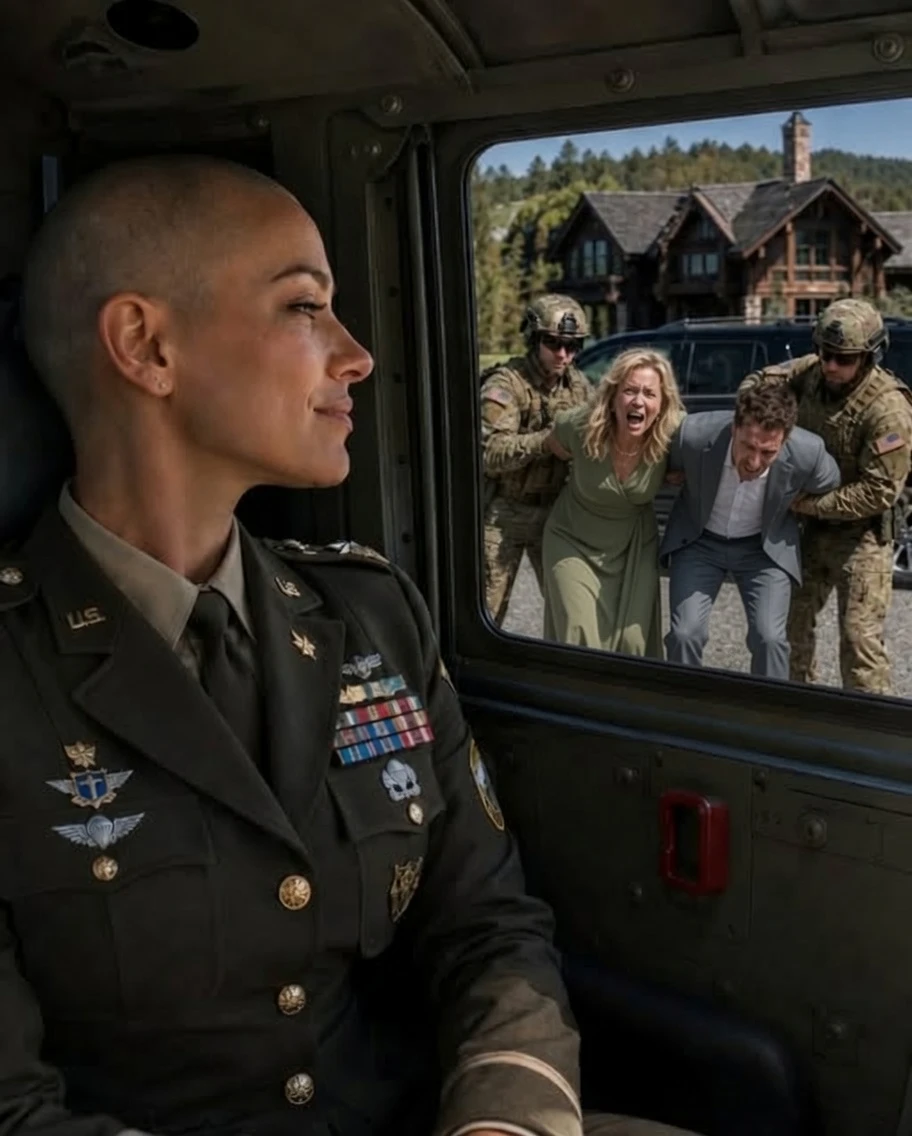
Matthew was Linda’s first son from her first marriage.
He married young.
His wife, Serena, died in an accidental fall down a staircase.
Six months later, Matthew died in a single-car crash.
Linda collected on two insurance policies.
Ryan, then seventeen, changed his last name shortly afterward.
By the time I finished reading the report, my office lights had gone dim from inactivity.
I sat motionless.
**Linda had not just enabled Ryan. She had perfected him.**
Serena.
Claire.
Emily, who escaped.
Me, who was supposed to break.
Natalie and Bethany, whose files suggested they had been targeted but not fully trapped.
A family business, hidden beneath Sunday smiles and medical complaints and soft blue dresses.
Margaret called it a “pattern of coercive financial abuse, fraud, and possible homicide.”
Hannah called it what it was.
“A hunting method.”
The criminal case moved faster than the divorce now. Investigators reopened Claire’s disappearance, Serena’s death, and Matthew’s crash. Ryan’s dealership connections were searched. The notary whose stamp appeared on my forged loan documents confessed almost immediately: Ryan had paid him cash to authenticate signatures he never witnessed.
But Linda vanished.
Not dramatically.
Not with a suitcase at midnight.
She simply disappeared between one court filing and the next.
One day she was staying at a motel under her own name.
The next, the room was empty.
Ryan claimed he did not know where she was.
No one believed him.
The protective order kept him away from me, but his rage traveled through other people. Anonymous emails. False complaints. Whispered accusations. Someone sent my command an envelope containing staged photos of alcohol bottles beside my bed.
The sender forgot one thing.
**Military investigators understand metadata.**
The photos had been taken in my own bedroom the week before Linda shaved my head. The same bedroom Ryan claimed I had destroyed during a breakdown.
The same bedroom where I had never placed those bottles.
Ryan was arrested two days later on charges related to fraud, forgery, protective order violations, and witness intimidation. More would come.
I expected satisfaction when I heard.
Instead, I felt tired.
That kind of tired that reaches beneath the bones.
The arrest did not bring back Claire. It did not erase Emily’s fear. It did not restore Hannah’s lost years. It did not unshave my head or undo the sick knowledge that someone had photographed me sleeping in my own bed.
Justice, I learned, was not a thunderclap.
Sometimes it was paperwork with teeth.
Three weeks later, Hannah came to see me.
We met at a quiet café near Richmond. She was smaller in person, with a green coat and tired eyes. She brought a shoebox.
“I thought you should have this,” she said.
Inside were photos of Claire.
Claire laughing at a beach. Claire holding a gray cat. Claire in scrubs, making a ridiculous face at the camera. Claire before Ryan. Before Linda. Before fear.
“She was real,” Hannah said.
I looked up.
“I know.”
“No.” Hannah’s voice cracked. “I mean… after someone disappears, people turn them into a case. A victim. A mystery. But she was my sister. She hated mushrooms. She sang badly in the car. She always burned toast.”
I touched one photograph gently.
“She mattered.”
Hannah nodded, and tears finally spilled down her cheeks.
Then she slid one more item across the table.
A small envelope.
“What’s this?”
“Claire mailed it to me the week before she disappeared. I was out of town. My old landlord put it in storage with some things and I didn’t find it until last night.”
I opened it carefully.
Inside was a key.
No note.
Just a brass key taped to an index card with one word written in Claire’s handwriting.
**LUCY.**
Hannah whispered, “Lucy was her cat.”
The key led to a veterinary clinic deposit box.
That took another warrant.
Inside, investigators found a flash drive wrapped in plastic.
Claire had known she was in danger.
She had hidden more than the camcorder.
The flash drive contained audio recordings.
Linda’s voice was unmistakable.
Sweet. Controlled. Deadly.
“You think love protects you, Claire? Love is just the leash women put around men before smarter women take hold of it.”
Ryan’s voice followed.
“You said she would sign.”
Linda answered, “Then make her. Or do you want to end up useless like Matthew?”
There it was.
The crack in the family myth.
Matthew had not been a beloved lost son.
He had been a warning.
A failed tool.
A son who had perhaps tried to stop his mother and paid for it.
The recordings detonated the case.
By dawn, Linda’s photograph was circulating across state lines. By noon, federal authorities had become involved due to financial fraud spanning multiple jurisdictions.
And at 1600, I received one final unknown text.
No photo this time.
Just words.
Your house has a basement too.
My blood turned to ice.
My house.
The one Ryan had been ordered to vacate.
The one I had not returned to since the morning I walked out bald and bleeding.
I called Margaret.
Then law enforcement.
Then Doyle.
But as I waited, staring at my phone, I knew the message had not come from Linda.
It came from someone inside my house.
## PART 6 — **THE WOMAN IN MY WALLS**
Police reached the house before I did.
Margaret forbade me from going, and for once I obeyed without argument. Command Sergeant Major Doyle sat across from me in a conference room while I watched the minutes crawl across my phone screen.
At 1742, Margaret called.
“They found someone,” she said.
My hand tightened around the phone.
“Linda?”
“No.”
“Ryan?”
“No.”
“Then who?”
Margaret’s voice softened. “Bethany Kline.”
The name from the storage unit folder.
One of the women I had thought had merely been targeted.
“Alive?” I asked.
“Yes. Barely.”
The room went silent.
Bethany had been found in a concealed room behind shelves in the basement, dehydrated, drugged, and terrified. She had disappeared eight months earlier after dating Ryan briefly during one of the “separations” he had invented while I was deployed.
He told Bethany he was divorced.
He told me he was lonely.
He told Linda everything.
Bethany had tried to leave after finding my name on financial documents. Linda allegedly convinced her to come to the house to “explain the truth woman to woman.”
Then Bethany vanished.
And I had slept above her.
The thought almost broke me.
Not because I was guilty.
Because she had been so close.
A living woman hidden beneath my feet while Ryan complained about dinner and Linda criticized my uniform.
**Monsters do not always live in abandoned places. Sometimes they drink coffee in your kitchen.**
Bethany survived.
That became the first miracle.
The second came when she woke in the hospital and spoke one name.
“Claire.”
Not Ryan.
Not Linda.
Claire.
Margaret called me after the interview.
“Bethany says Claire left marks.”
“What kind of marks?”
“Scratches. Carvings. In the concealed room. Dates. Initials. A warning.”
My eyes closed.
Claire had been held there too.
Not in Martinsburg only.
In my house.
The house Ryan and I bought four years ago.
The basement renovation he insisted on handling himself.
The shelves he built.
The locked utility area he said was dangerous because of wiring.
I had paid for the materials.
He had built a prison.
That night, I did not sleep.
Not from fear.
From grief.
I thought of Bethany hearing footsteps above her. My footsteps. Maybe my voice. Maybe the sound of me leaving for work, unaware. I thought of Claire carving warnings into darkness. I thought of Emily escaping just before the door closed. I thought of Serena at the top of a staircase with Linda smiling below.
By morning, Linda was captured at a bus station in Ohio.
She was wearing a brown wig, sunglasses, and carrying twenty-eight thousand dollars in cash.
In her purse were three IDs.
One was hers.
One was Bethany’s.
One was mine.
When officers asked her where she was going, Linda reportedly smiled and said, “To visit family.”
There was no family waiting.
Only another name on another document.
The trial would take time. Trials always do. Investigations would widen, charges would stack, lawyers would fight, and truth would be dragged into daylight one exhibit at a time.
But before any of that, I had to enter my house again.
I went with Margaret, Doyle, two investigators, and Hannah.
The house smelled stale.
The kitchen table still held the note I had left Ryan, now sealed in an evidence bag.
Colonel Mara Harris.
My rank looked different there.
Less like a signature.
More like a witness.
We went to the basement.
The shelves had been removed. Behind them was a narrow opening covered by reinforced paneling. Inside, the concealed room was smaller than a walk-in closet. Scratches covered one wall.
Dates.
Lines.
Initials.
C.B.
B.K.
And beneath them, carved deep enough to remain:
**IF YOU GET OUT, BURN THEIR KINGDOM DOWN.**
Hannah made a sound I will never forget.
Not a sob.
Not a scream.
A breaking.
She touched Claire’s initials with shaking fingers and whispered, “You were here.”
I stood behind her, unable to move.
Claire had been in my house before it was mine.
Her suffering had been built into the walls I decorated, cleaned, paid for, and called home.
Then Doyle called from the far corner.
“Ma’am.”
Behind a loose panel, investigators found a small metal tin.
Inside was a locket, a torn photograph, and a folded note sealed in plastic.
The photograph showed Claire with her gray cat.
The note was addressed to whoever found it.
Hannah read it aloud, voice trembling.
“My name is Claire Benton Whitmore. If you find this, please tell Hannah I fought. Please tell her I did not leave. Please tell the next woman that none of this was her fault.”
The basement blurred.
Margaret stepped beside me.
The next woman.
Me.
Emily.
Bethany.
All of us.
Hannah folded the note to her chest and wept.
I did not cry then.
I would later.
Alone.
But in that basement, I stood straight because someone had to.
Then my phone rang.
It was the hospital.
Bethany wanted to see me.
## PART 7 — **THE TESTIMONY THAT BROKE THEM**
Bethany Kline looked like a woman made of glass when I entered her hospital room.
Her wrists were bruised. Her lips cracked. Her eyes too large for her face.
But when she saw me, she pushed herself upright.
“You’re Mara,” she whispered.
“Yes.”
“I heard you walking sometimes.”
My throat closed.
“I didn’t know,” I said.
“I know.” Her voice was thin but certain. “Claire said you wouldn’t know.”
The room seemed to tilt.
I stepped closer.
“You heard Claire?”
Bethany nodded slowly. “Not heard. Read. She carved things. Wrote things on bits of insulation, under the vent, behind the pipe. She told whoever came next not to hate the woman upstairs. She said the woman upstairs was another target.”
I covered my mouth.
Claire, trapped in darkness, had still protected a stranger.
Me.
Bethany reached for my hand.
I gave it.
Her fingers were cold.
“Linda hated your uniform,” she said. “She used to come down and talk about it. Said Ryan was losing control. Said you were worth more gone than divorced.”
My stomach turned.
“Did Ryan come down?”
Bethany looked away.
“Yes.”
That one word held too much.
I did not make her say more.
She squeezed my hand weakly.
“They were going to make it look like you hurt yourself,” she whispered. “After the hearing. Linda said bald would make you look unstable. Ryan said your command would believe it if they had enough pictures.”
The shaved head.
The staged alcohol.
The forged loan.
The insurance policy.
The hidden woman beneath my house.
It was all one operation.
And they had nearly completed it.
“What stopped them?” I asked.
Bethany’s eyes filled.
“You did.”
“No.”
“Yes,” she insisted. “You cut off the money. You left. You didn’t drink the tea anymore. Ryan panicked. Linda panicked. They argued. They forgot to dose my water for two days. I got strong enough to move the vent cover. That’s how I got the text out.”
I stared at her.
“You sent the message.”
Bethany nodded.
“You told me to find the first wife.”
“Claire told me where to look. She knew there had to be records.”
In that hospital room, I finally cried.
Not loudly.
Not dramatically.
Just enough for the grief to leave fingerprints.
Bethany survived to testify.
Emily testified.
Hannah testified for Claire.
I testified too.
The courtroom was packed when the major trial began months later. Ryan looked thinner in custody, his arrogance sharpened into resentment. Linda looked exactly the same: neat hair, soft cardigan, wounded expression.
But the jury saw the photographs.
They heard Ryan’s voicemail.
They saw the forged documents, the insurance policy, the storage unit, the basement carvings, the hidden room, the camcorder, the audio recordings, Claire’s note, Bethany’s medical report, Emily’s old police records, Hannah’s grief, and Linda’s metadata attached to a dead woman’s fake goodbye letter.
Ryan tried to blame Linda.
Linda tried to blame Ryan.
That was when the case cracked wide open.
On the fourth day, prosecutors played a jail call between them.
Ryan’s voice shook with rage.
“You said Mara would break.”
Linda answered, cold as winter glass, “She should have. You chose badly.”
“You chose her!”
“I chose her money. You were supposed to handle the woman.”
A murmur moved through the courtroom.
Ryan buried his face in his hands.
Linda did not move.
The prosecutor paused the recording, then looked at the jury.
No speech was needed.
**They had convicted themselves with their own mouths.**
The verdict came after nine hours.
Ryan was found guilty on the major counts tied to fraud, kidnapping, conspiracy, witness intimidation, and attempted harm connected to me and Bethany. Linda was found guilty on everything the prosecutors could make stick, including conspiracy, kidnapping, fraud, and charges connected to Claire’s disappearance.
Serena’s case remained under investigation, but no one in that courtroom doubted anymore.
When the judge read the sentence, Ryan looked at me for the first time.
Not with love.
Not remorse.
With accusation.
As though my survival had inconvenienced him.
Linda looked at me too.
But her expression was different.
For one second, the mask slipped.
I saw hatred.
Then fear.
Because she finally understood something she should have known from the beginning.
**I had never been the obedient wife in her story.**
I was the witness she failed to erase.
After sentencing, Hannah hugged me outside the courthouse. Bethany stood beside us, still fragile but alive. Emily came too, wearing red lipstick like a declaration of war.
“We should take a picture,” Emily said suddenly.
Hannah laughed through tears. “At a courthouse?”
“Especially at a courthouse.”
So we did.
Four women standing together in the sunlight.
One grieving.
One healing.
One escaped.
One bald by violence, then by choice.
The photo went viral after a reporter captured the story: the colonel whose shaved head exposed a family crime ring.
People called me brave.
I knew better.
Claire was brave in a basement.
Bethany was brave behind a vent.
Emily was brave when no one believed her.
Hannah was brave for refusing to bury hope.
I had simply opened my eyes in time.
But the story was not over.
Two weeks after sentencing, Margaret called me into her office.
On her desk was a sealed envelope.
“What is it?” I asked.
“It came from Claire’s safe deposit box.”
“I thought the flash drive was all they found.”
“So did we.”
Margaret slid the envelope toward me.
My name was written on it.
Not Mara Harris.
Not Colonel Harris.
**To the next woman who survives.**
Inside was a letter.
And a key.
## PART 8 — **THE LIFE THEY COULD NOT STEAL**
The key opened a second box in a small bank two towns away from where Claire had once worked as a nurse.
No one knew how she had managed it.
No one knew when.
But Claire, facing a darkness most people could not imagine, had built one final trap for the people who trapped her.
Inside the box were documents about Matthew.
Linda’s first son.
There were letters written in Matthew’s hand. Receipts. A police report he never filed. A recording device. And one photograph that made even Margaret sit down.
It showed Serena, Matthew’s wife, alive after her supposed fatal fall.
She was bruised, frightened, wrapped in a blanket, standing beside Matthew near a bus station.
On the back, Matthew had written:
**I got her out. Mom thinks she is dead. If anything happens to me, find Serena Vale.**
Serena had not died.
Linda had staged it.
Matthew had helped his wife disappear to save her.
Then Matthew died in a “car accident.”
For years, Linda had collected insurance money for a woman who was still alive and a son who had likely paid for defying her.
The case exploded beyond anything prosecutors expected.
Serena Vale was found in Oregon under a new name. She had lived quietly for years, believing Matthew died because he helped her escape. She came forward with testimony that completed the circle.
Linda had been the architect from the beginning.
Ryan had not invented the cruelty.
He had inherited it, practiced it, and personalized it.
But Matthew had broken the pattern once.
Claire had broken it from the grave.
Bethany had broken it from the basement.
Emily had broken it by saving every receipt, every email, every bruise the world once dismissed.
And I broke it by refusing to bow my head after they shaved it.
The second trial ended Linda’s last hope.
More charges. More years. More truth.
When Serena testified, Linda finally lost her composure.
“You ungrateful little snake,” she hissed.
Serena looked at her calmly.
“No,” she said. “I’m the woman your son loved enough to save.”
The courtroom went silent.
For the first time, Linda had no answer.
Months passed.
My divorce was finalized on a rainy Tuesday.
Ryan received nothing from me.
Not the house.
Not support.
Not sympathy.
The forged loan was reversed after the fraud findings. The business accounts were seized. The house, once evidence, was eventually returned to my legal control.
I sold it.
Not because I was afraid of it.
Because some places do not need new paint.
They need release.
Part of the proceeds went to a foundation Hannah created in Claire’s name for survivors of coercive control and financial abuse. Bethany helped design the emergency fund. Emily ran outreach. Serena, from Oregon, donated quietly every month.
The foundation was called **The Next Woman Fund.**
Claire’s words became its promise.
Please tell the next woman that none of this was her fault.
As for me, my hair grew back slowly.
At first, soft and uneven.
Then darker.
Then strong.
But I kept it short.
Not because Linda took it.
Because I chose it.
On the first anniversary of the morning I walked into command bald and bleeding, my unit held a formal ceremony. Not for my personal life. Not for headlines. For operational excellence.
We had completed one of the most successful years in the unit’s recent history.
At the reception, Doyle approached me with two cups of bad coffee.
“Ma’am,” he said, handing me one.
“Sergeant Major.”
He studied my hair.
“Looks sharp.”
“Careful. That almost sounded like a compliment.”
“Professional observation.”
I smiled.
Across the room, junior soldiers laughed. Officers argued over logistics. Someone had brought a cake with the unit insignia slightly crooked in the frosting.
Life had not become simple.
But it had become mine.
Later that evening, I drove to Richmond to meet Hannah, Bethany, Emily, and Serena. We gathered in Hannah’s backyard beneath strings of warm lights. There was food, music, and a framed photo of Claire on the table.
Not a memorial.
A place at the gathering.
Bethany raised a glass of lemonade.
“To Claire,” she said.
“To Claire,” we echoed.
Hannah wiped her eyes. “And to the next woman.”
Emily lifted her glass higher. “May she believe herself sooner.”
Serena smiled softly. “May someone believe her.”
They all looked at me.
I shook my head. “Don’t make me give a speech.”
“You’re literally a commander,” Emily said.
“Exactly. I give enough speeches.”
They laughed.
And that sound—women laughing after everything meant to silence them—felt like the happiest ending I could have imagined.
But the true surprise came after dinner.
Hannah handed me a small wrapped box.
“What is this?”
“Open it.”
Inside was Claire’s locket.
I froze.
“No,” I said softly. “This belongs to you.”
Hannah shook her head. “Claire wrote that it should go to the next woman who survives. That was you.”
My hands trembled as I opened it.
Inside was a tiny photo of Claire and her cat, Lucy.
Behind the photo was a folded scrap of paper.
One sentence.
**A woman who survives is not the end of the story. She is the beginning of the next one.**
I pressed the locket to my palm.
For so long, I had measured victory in promotions, missions completed, threats neutralized, objectives secured.
But that night, victory looked different.
It looked like Hannah laughing through tears.
Bethany eating a second slice of cake because she was alive to taste it.
Emily dancing barefoot in the grass.
Serena standing under the lights after decades of hiding.
Claire’s picture watching over all of us.
And me, no longer someone’s wife to command, no longer someone’s asset to exploit, no longer someone’s sleeping target beneath a blade.
Just Mara.
A soldier.
A survivor.
A woman whose life had been stolen in pieces and returned in fire.
Near midnight, my phone buzzed.
For one instant, old fear touched me.
Then I saw the message.
It was from Margaret.
Final confirmation came through. Ryan’s appeal was denied.
I read it once.
Then I turned the phone off.
No announcement.
No toast.
No dramatic declaration.
I simply looked up at the stars and breathed.
The war they started in my bedroom had ended somewhere they never expected.
Not in revenge.
Not in ruin.
But in freedom.
Years later, when people asked me about the night Linda shaved my head, they expected anger. They expected me to say it was the worst night of my life.
It wasn’t.
The worst nights belonged to women who did not get out soon enough.
That night was the night I woke up.
And once I woke up, so did the truth.
**They thought they were cutting away my power.**
**They were only removing the last thing that softened how dangerous I looked when I finally stood up.**
the end