My mother destroyed our family without realizing she had forgotten to hang up the phone.
“She’s nothing but a burden,” she said casually.
Then she laughed.
“A mistake we held onto for too long.”
I stood barefoot in my Atlanta kitchen, gripping my phone so tightly that my fingers went numb.
For several seconds, I couldn’t breathe.
My mother, Diane, had set her phone on the counter while looking for my father’s medical calendar. She thought our call had ended.
It hadn’t.
I could hear cabinets opening.
My father, Robert, murmured something.
Then Mom sighed.
“She calls constantly. Appointments, bills, insurance. God, Robert, sometimes I wish Ava would just disappear.”
Dad gave a tired chuckle.
“She means well.”
“She’s forty years old. At some point, she should build her own life instead of making herself part of ours.”
I stared at the stack of invoices on my dining table.
Their invoices.
Their HOA payment.
Their homeowner’s insurance shortage.
Their new water heater.
My father’s cardiology bill.
The upgraded airline seats for the European vacation they were leaving for that weekend.
For six years, I had sent them approximately $1,850 every month.
Sometimes more.
When Hurricane Ian damaged part of the roof, I paid $14,700.
When Dad needed dental surgery, I paid.
When Mom said their old furniture embarrassed her when friends visited, I replaced it.
When they wanted to “finally see Europe before they got too old,” I paid nearly half their airfare.
And the beautiful Sarasota townhome they proudly called their retirement home?
I had purchased it.
Entirely.
My mother continued talking.
“You know what our mistake was?”
Dad said nothing.
“Depending on her. Now she thinks that gives her some claim over us.”
Something inside me became very quiet.
Not broken.
Quiet.
The kind of quiet that comes after years of making excuses for people and suddenly running out of excuses.
I ended the call.
Then I opened my laptop.
Three days later, my parents were drinking wine in Barcelona.
Mom posted a photograph beneath towering cathedral ceilings.
AT LAST, IT’S OUR TIME TO ENJOY LIFE.
I stared at the caption for perhaps ten seconds.
Then I called my estate attorney.
Celeste answered on the second ring.
“Ava?”
“I want to sell the Sarasota property.”
A pause.
“That’s sudden.”
“Can I legally do it?”
“You own it.”
“Technically?”
“And actually.”
The townhome was owned through a small LLC controlled by my living trust. My parents had lived there under a family-use occupancy agreement written years earlier.
That agreement had expired eight months ago.
Celeste asked several questions.
“Are they on the deed?”
“No.”
“Did they contribute to the purchase?”
“No.”
“Mortgage?”
“No mortgage.”
“Taxes?”
“I pay them.”
“Insurance?”
“Me.”
“HOA?”
“Me.”
Celeste exhaled.
“Then legally, Ava, it’s your property.”
I looked at the spreadsheet I had spent the previous night building.
Six years of payments.
Roofing.
Utilities.
Medical bills.
Furniture.
Repairs.
Travel.
Insurance.
Emergency transfers.
$133,418.62.
My parents had always said they hated keeping receipts.
I loved them.
Documents remember what people conveniently forget.
“Do it properly,” Celeste warned. “No dramatic confrontation. No threats. Everything documented.”
“I don’t want revenge.”
“What do you want?”
I looked around my quiet apartment.
“Distance.”
The buyer appeared faster than expected.
A retired physician from Chicago wanted a Florida property for cash.
No financing contingency.
Minimal inspection requests.
Fast closing.
Meanwhile, my parents moved from Barcelona to Paris.
Mom posted photographs of champagne, pastries, river cruises, and expensive dinners.
One caption said:
FORTY YEARS OF HARD WORK. FAMILY ALWAYS CAME FIRST.
I almost admired the irony.
In our family, “family first” had always meant Ava comes last.
While they toured Paris, movers entered the townhome.
Their clothing, photographs, personal documents, keepsakes, and private possessions went into a climate-controlled storage unit outside Tampa.
I prepaid thirty days.
Everything belonging to me was removed.
The sectional.
Television.
Espresso machine.
Dining table.
Patio furniture.
Golf cart.
Some items were sold.
Others donated.
I kept nothing.
I wasn’t collecting trophies. I was cutting ropes.
Closing occurred on Thursday afternoon.
At 3:18 p.m., the transaction completed.
The Sarasota townhome sold for $680,000.
At 3:23 p.m., Mom posted a photograph from Paris.
She and Dad were smiling beneath the Eiffel Tower.
Her caption read:
COMING HOME SOON. NOTHING LIKE YOUR OWN BED.
I turned off my phone.
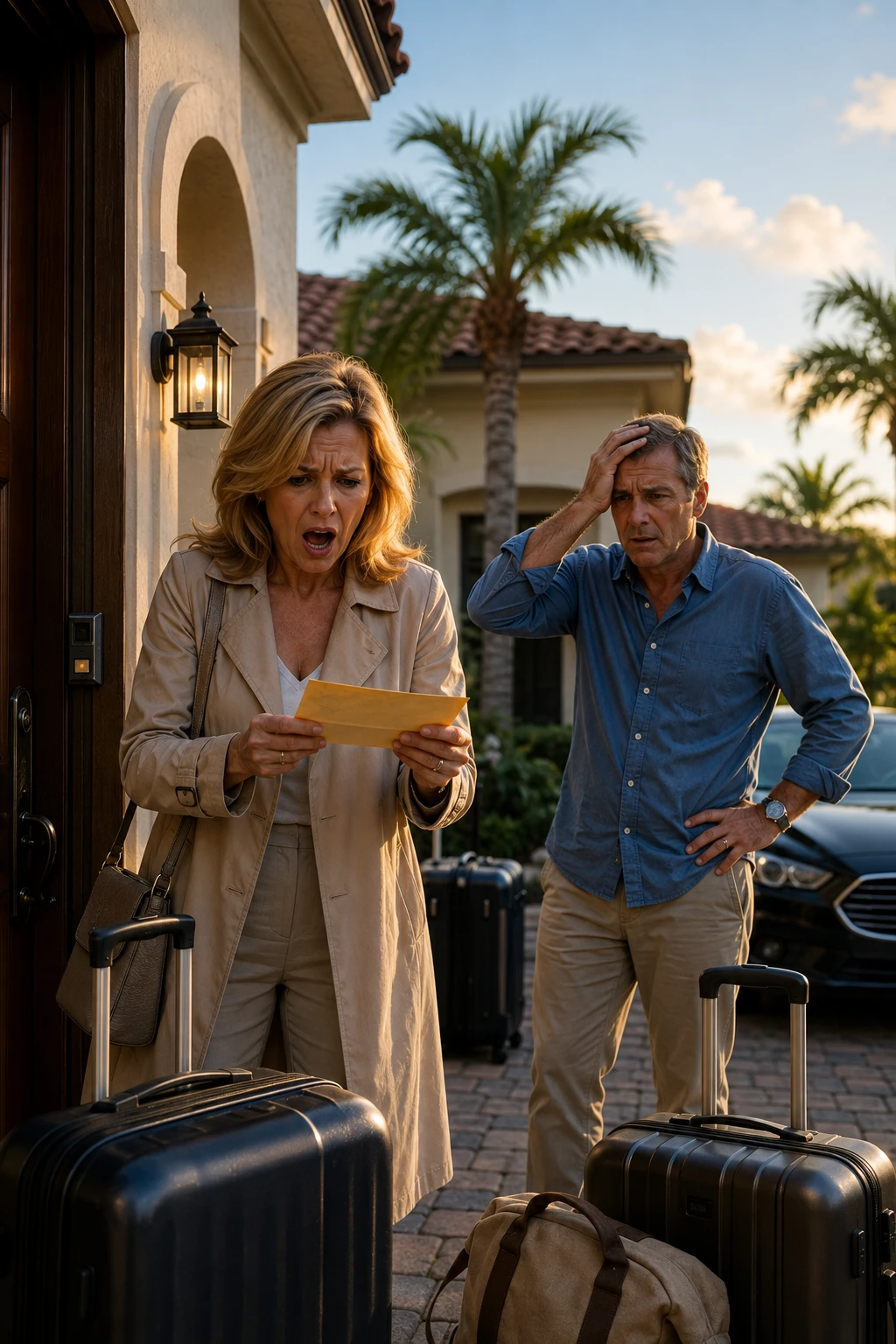
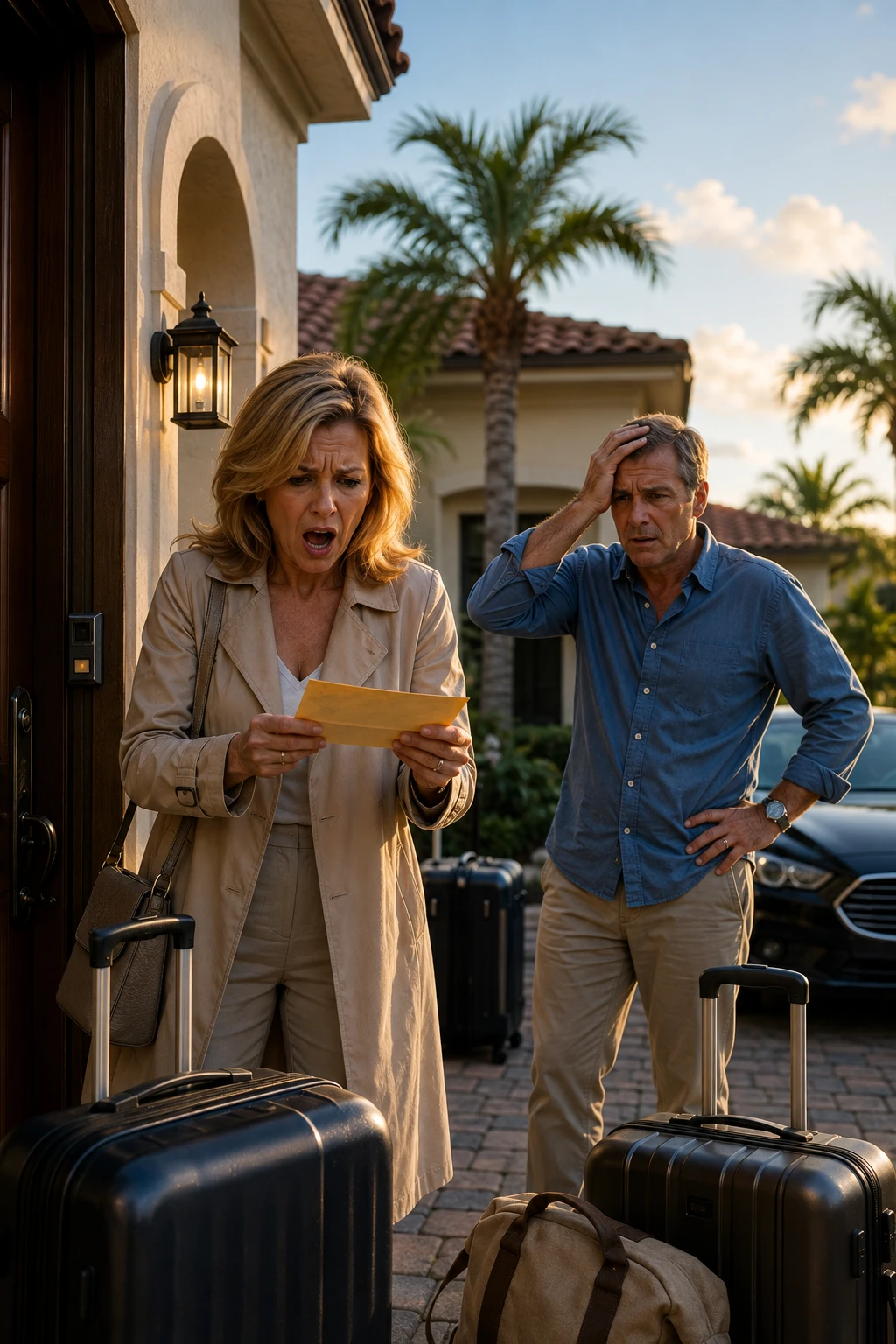
They arrived home Sunday evening.
At 8:47 p.m., Mom called.
“Ava, what have you done?”
Her voice was shrill.
Behind her, I heard luggage wheels scraping across pavement.
My father punched numbers into the garage keypad.
Beep.
Nothing.
“We just flew eleven hours,” Mom snapped. “The key isn’t working.”
I sat beside the window of my Atlanta loft with cold tea in my hand.
“I know.”
“What do you mean, you know?”
Dad entered the code again.
Beep.
Locked.
“Fix this.”
“I can’t fix a door that no longer belongs to you.”
Silence.
Then Dad took the phone.
“Kiddo.”
His voice softened immediately.
That was his talent.
Mom attacked.
Dad wrapped pressure in affection.
“Your mother’s exhausted. Let’s not do anything emotional.”
I nearly smiled.
They had spent my entire childhood teaching me that their emotions were emergencies and mine were inconveniences.
“This isn’t emotional,” I said. “It’s contractual.”
Dad stopped talking.
Mom grabbed the phone again.
“This is our house.”
“No. It was the house I financed.”
“You bought it for us!”
“I allowed you to live there.”
“Same thing!”
“No.”
The word came out so calmly that it frightened even me.
“No, Mom. It isn’t.”
A locksmith arrived.
Mom had apparently called one before calling me.
I listened as she explained that there had been “some horrible security malfunction.”
The locksmith asked for identification.
She provided it proudly.
Then he asked for proof of ownership.
“This address is on my driver’s license.”
“That confirms residence, ma’am. Not ownership.”
Dad lowered his voice.
Mom became quiet.
After checking public records, the locksmith said he could not open the property.
“There’s been a transfer of ownership.”
Mom’s voice changed.
“A what?”
“A property transfer.”
She called the HOA.
Again came the professional explanation.
Ownership changed.
Approved residents updated.
Previous occupants removed.
They would need to contact the current owner.
Mom whispered:
“Previous occupants?”
For the first time, she sounded old.
Dad took the phone.
“Ava.”
No “kiddo” now.
“Tell me you did not sell this house.”
I looked at my computer screen.
Closing confirmation.
Payment ledger.
Expired occupancy agreement.
Six years of receipts.
“You called me a burden.”
Behind him, Mom shouted:
“I GAVE YOU YOUR LIFE!”
My throat tightened.
Then I answered:
“And I gave you your way of life.”
Silence.
Across the phone, I heard a neighbor’s door open.
Mom immediately lowered her voice.
That told me everything.
She wasn’t ashamed of what she had said about me.
She was ashamed someone might witness the consequences.
Then she noticed the envelope.
I had left it securely beside the doorbell.
Inside were storage details, utility information, documentation from Celeste, and one yellow note.
Dad saw it first.
“Don’t read that outside.”
Mom ignored him.
She unfolded the paper.
Her breathing stopped.
I knew exactly what it said.
SURPRISE. THIS IS WHAT A BURDEN IS CAPABLE OF.
“Ava!”
She screamed my name so loudly I pulled the phone away from my ear.
“You humiliated us!”
“You did that yourself.”
“We have nowhere to sleep!”
“You spent three weeks in European hotels.”
Dad interrupted.
“Ava, please.”
That word surprised me.
My father almost never said please.
“Our belongings?”
“Storage outside Tampa. Thirty days prepaid.”
“And after that?”
“Your responsibility.”
Mom shouted:
“You can’t abandon your parents!”
And there it was.
Not “I’m sorry.”
Not “We were wrong.”
Not “Please forgive us.”
Just another accusation.
Another obligation.
Another invisible invoice.
Dad suddenly became strangely quiet.
Then he said:
“Ava, there’s something about that house you don’t know.”
I frowned.
“What?”
Mom hissed, “Robert.”
“Enough, Diane.”
His voice sounded completely different.
Not frightened.
Not angry.
Resolved.
“There’s something we should have told her years ago.”
Mom’s face must have changed because Dad immediately said:
“She deserves to know.”
“Know what?”
Dad inhaled.
“Ava… the house was never supposed to be yours.”
I laughed once.
“Interesting, considering I paid for it.”
“No. Listen.”
I almost hung up.
Then he said something that stopped me.
“The money you used to buy it wasn’t yours.”
I sat perfectly still.
“What are you talking about?”
Mom began speaking quickly.
“Robert is confused. He’s tired.”
“I’m not confused.”
Dad sounded almost angry with her.
“Ava, remember the inheritance from your grandmother?”
Of course I remembered.
My mother’s mother, Eleanor, had died when I was twenty-nine.
She had left me what everyone described as a “small investment account.”
Years later, that account helped me establish the trust that purchased the Sarasota property.
“What about it?”
Dad hesitated.
“It wasn’t a small inheritance.”
A cold sensation moved through my chest.
“How much was it?”
Mom snapped:
“This is ridiculous.”
“How much?”
Dad answered.
“Originally?”
“Yes.”
“Just over $1.9 million.”
I stopped breathing.
“That’s impossible.”
“It isn’t.”
My inheritance paperwork had shown less than $400,000.
Some invested.
Some transferred.
Some eventually used toward the townhome and other assets.
“Where did the rest go?”
Dad said nothing.
Mom whispered:
“Robert, stop.”
And suddenly I understood.
Not everything.
But enough.
“Mom.”
She stayed silent.
“Where did my money go?”
Her voice hardened.
“You were young.”
I nearly laughed.
“I was twenty-nine.”
“You weren’t financially mature.”
“So you took it?”
“We managed it.”
“How much?”
No answer.
“How much did you take?”
Dad finally said:
“About $1.2 million.”
My vision blurred.
For years, I had believed I was supporting my aging parents because they had sacrificed for me.
Instead—
They had been living partly on money they had stolen from me years earlier.
And I had been sending them more.
I called Celeste immediately.
Within forty-eight hours, she had investigators reviewing old trust documents, bank records, probate files, transfers, and signatures.
Then she called me.
Her first words were:
“Ava, sit down.”
I already was.
“What did you find?”
“It’s worse.”
My parents hadn’t merely redirected inheritance money.
There were falsified transfer authorizations.
Forged signatures.
Accounts opened using my information.
A private investment account I had never known existed had been liquidated.
Part of the money purchased luxury vehicles.
Part paid debts.
Part funded failed business ventures.
And approximately $310,000 had disappeared into an account belonging to someone named Michael Reeves.
“Who is Michael Reeves?” I asked.
Celeste went silent.
“That’s what we’re trying to determine.”
I searched the name myself.
Nothing meaningful.
Then Dad called.
I almost ignored him.
Something made me answer.
He sounded exhausted.
“We’re at a hotel.”
“Congratulations.”
“Ava, I need to tell you something before your mother does.”
My stomach tightened.
“Who is Michael Reeves?”
Silence.
Then Dad whispered:
“So you found him.”
“Who is he?”
Dad began crying.
I had heard my father cry exactly twice.
When his brother died.
And when their dog was euthanized.
“Ava,” he said, “Michael Reeves was your father.”
The room seemed to tilt.
“You’re my father.”
“No.”
The word landed harder than everything else.
He explained slowly.
My mother had been married before him.
Briefly.
Secretly, as far as most relatives knew.
Michael Reeves was wealthy, much older than Mom, and according to Dad, controlling.
Mom left him while pregnant.
Michael signed away parental rights after a private agreement involving Eleanor—my grandmother.
Robert met Mom when I was eighteen months old.
He adopted me.
Raised me.
And I never knew.
“Why was money transferred to Michael?”
Dad’s voice cracked.
“Because he came back.”
Years later, after Grandma died, Michael learned I had inherited money.
He threatened to reveal everything.
Mom panicked.
She began paying him.
Hundreds of thousands.
I felt sick.
“So Mom stole my inheritance to pay my biological father not to tell me he existed?”
“Yes.”
“Why?”
Dad hesitated.
“Because Michael said if you learned the truth, you would ask why your grandmother hated him.”
“Why did she?”
Another silence.
Then:
“Because she knew what he had done.”
The next morning, Celeste found something extraordinary.
A sealed statement connected to my grandmother’s estate.
It had never been delivered to me.
The executor listed on the document?
My mother.
Inside was a handwritten letter from Grandma Eleanor.
I read it alone.
Ava, if you are reading this, then the truth has finally reached you.
My hands trembled.
The letter explained that Michael Reeves had not abandoned me.
My mother had lied.
Michael had spent years trying to obtain contact.
Eleanor stopped him.
Not because he was dangerous.
Because Diane had convinced everyone he was.
Then, years later, Eleanor discovered the truth.
Michael had not threatened my mother for money.
My mother had contacted him.
She offered him money to remain silent.
Why?
Because of the final secret.
The secret that made everything before it feel small.
Attached to Eleanor’s letter was a DNA report.
Not mine.
My mother’s.
Michael Reeves was not my biological father.
Robert was not my biological father either.
According to Eleanor:
Diane had stolen me.
I read the sentence ten times.
Then twenty.
The story was almost impossible to comprehend.
When my mother was twenty-six, she worked briefly at a private maternity clinic in Georgia.
A young unmarried woman delivered a baby girl there.
That woman suffered complications after delivery.
The infant disappeared during administrative chaos.
The official story was that the baby had been transferred.
Records vanished.
The mother was told her daughter died.
Weeks later, Diane left Georgia.
Months later, she appeared in Florida with an infant daughter.
Me.
Grandma Eleanor discovered the truth years afterward.
She confronted Mom.
Mom claimed the biological mother was unstable and insisted she had “saved” me.
Grandma began secretly gathering evidence.
Then she died before she could expose everything.
That was why she left me such a large inheritance.
Not simply because I was her granddaughter.
Because she believed her daughter had stolen my entire life.
Michael Reeves?
He had helped Eleanor investigate.
The $310,000 sent to him wasn’t blackmail money.
It was hush money after he threatened to give me Eleanor’s evidence.
I called Dad.
Robert answered immediately.
“Did you know?”
He didn’t ask what I meant.
“Yes.”
My heart broke differently that time.
“When?”
“After we married.”
“And you said nothing?”
“I loved you.”
“No. You loved keeping things comfortable.”
“Ava—”
“You let me believe you were my father.”
“I was your father!”
“No.”
My voice shook.
“You were the man who knew I had been stolen and decided silence was easier.”
He began sobbing.
I ended the call.
My mother disappeared.
Her phone was disconnected.
The hotel said she had checked out alone.
For six days, nobody knew where she was.
Then Celeste called.
“Ava, police found Diane.”
My stomach dropped.
“Where?”
“Savannah.”
“Why Savannah?”
Celeste paused.
“She went to see someone.”
My biological mother.
Her name was Claire Bennett.
She was sixty-three.
Alive.
And for nearly forty years, she had believed her newborn daughter died in a hospital transfer.
Until my mother appeared at her door.
I met Claire three weeks later.
She had my eyes.
That was the first thing I noticed.
Not similar.
Mine.
Same shape.
Same unusual gray-green color.
She stared at me across a quiet room and covered her mouth.
Then she whispered:
“I knew.”
I started crying.
“You knew what?”
“That they lied.”
She reached toward me but stopped before touching my hand.
“I never believed you died.”
We sat there for hours.
She had searched.
Written letters.
Hired investigators.
Filed requests.
But records had been altered, destroyed, or sealed.
She eventually accepted that she might die without knowing.
Then Diane arrived at her house.
Not to apologize.
To bargain.
My mother offered Claire money.
My money.
Again.
In exchange for silence.
Claire refused.
Then she recorded the entire conversation.
That recording became the final piece prosecutors needed.
Six months later, my mother pleaded guilty to charges connected to identity fraud, theft, falsified documents, and the long-ago abduction investigation reopened by new evidence.
Robert cooperated with authorities.
He avoided prison but lost nearly everything.
I recovered only part of the stolen inheritance.
But strangely, the money stopped mattering.
The Sarasota sale had been the beginning of my escape.
Not the victory.
The real victory came one afternoon in Savannah when Claire handed me a faded hospital bracelet she had kept for almost forty years.
The name printed on it wasn’t Ava.
It said:
BABY GIRL BENNETT.
I stared at it.
“Did you name me?”
Claire smiled through tears.
“Yes.”
“What was my name?”
Her fingers closed around mine.
“Emma.”
For forty years, I had been Ava.
A daughter.
A burden.
A mistake.
A bank account.
A secret.
But before any of those things, I had been Emma Claire Bennett, a newborn baby whose mother never stopped searching.
A year later, I legally kept Ava as my middle name.
Not because Diane gave it to me.
Because I survived it.
My legal name became:
Emma Ava Bennett.
The day the paperwork arrived, Claire asked if I regretted selling the Sarasota house.
I thought about the locked door.
The luggage.
My mother screaming beneath the porch light.
The yellow note.
For months, I had believed the most powerful sentence I ever wrote was:
THIS IS WHAT A BURDEN IS CAPABLE OF.
I was wrong.
I looked at Claire and smiled.
“No.”
“Why not?”
Because selling that house hadn’t made me homeless.
It had finally led me home.
And somewhere in a storage facility outside Tampa, buried inside boxes my parents once believed contained their precious family history, investigators later discovered one final envelope.
It was addressed in my grandmother Eleanor’s handwriting.
Not to Ava.
Not to Emma.
To Claire.
Inside was a photograph of me at six months old.
And one final message:
I found her. I’m sorry I wasn’t brave enough to bring her back while I was alive.
Claire pressed the photograph to her chest and cried.
I cried with her.
For almost forty years, my mother had convinced me that I was the burden everyone had been forced to carry.
But standing beside the woman who had spent half her life searching for me, I finally understood the truth.
I had never been the burden.
I had been the evidence.