I spent four nights in the temporary apartment before I returned to the house.
The place was clean, anonymous, and quiet enough that every sound woke me. A refrigerator cycling on. Pipes settling. Footsteps in the hallway outside. Twice I came out of sleep convinced someone was turning my front-door lock, only to find the room still and the security chain untouched.
Claire visited each afternoon.
She never stayed too long.
That mattered.
People who wanted control often disguised it as concern. Claire would bring food, sit for an hour, ask whether I needed anything, and leave when I said I was tired. She made care feel spacious.
During those days, attorneys entered my life.
A divorce lawyer.
A victim advocate.
A lawyer experienced in identity theft whom the advocate recommended because untangling the fraudulent accounts could continue long after criminal proceedings ended.
Every meeting involved paperwork.
The irony was almost cruel.
For days I signed forms authorizing people to protect me from signatures I had never made.
I learned to read every page anyway.
No one rushed me.
My divorce attorney reviewed the house records and confirmed what investigators already knew. The property remained titled solely in my name. No completed refinance had been recorded. No new lien connected to the fraudulent application had attached to the property.
The words relieved something deep in my chest.
My house had been targeted.
It had not been taken.
The joint household account was more complicated.
My husband had withdrawn a substantial amount two days before the attack.
Not everything.
Enough to matter.
He transferred most of it into an account I did not recognize.
My attorney advised me not to chase him personally for explanations. Records could be requested through the legal process.
Again, I had to resist the urge to call.
Not because I wanted reconciliation.
Because I wanted him to hear me understand.
I wanted to say, I see it now.
I wanted to force him to admit there was nothing left to reinterpret.
But people like my husband had spent years teaching me that conversations produced closure.
The investigation was teaching me something different.
Records produced facts.
He could argue with me forever.
He could not argue a timestamp out of existence.
On the fifth morning, an officer called.
The house had been cleared for my return, though some areas remained documented and certain seized items would not be restored yet.
Claire drove.
I watched familiar streets pass outside the window and felt increasingly detached from them.
When we turned onto my block, my stomach tightened.
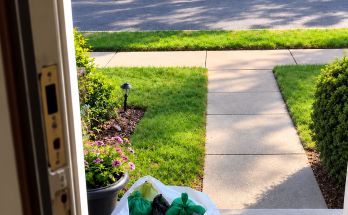
The house looked exactly as it had before.
That offended me.
The lawn needed trimming.
A delivery flyer had been tucked under the mailbox.
Sunlight hit the upstairs windows.
Nothing on the exterior announced that the people inside had nearly converted my home into evidence of my disappearance from my own life.
Claire stopped at the curb.
“You want me to come in?”
“Yes.”
I did not pretend otherwise.
The new key resisted slightly before turning.
I opened the door.
The smell reached me first.
Cleaning solution.
Wood.
The faint stale scent of a house closed for several days.
Not blood.
Not fear.
My mind supplied those.
The living room was untouched.
A blanket I had folded before dinner still rested over the sofa arm.
One of my husband’s magazines lay on the coffee table.
I stared at it.
He had left pieces of ordinary life everywhere.
That was what made betrayal so disorienting.
Terrible people in stories often lived in terrible-looking places.
My husband’s magazine subscription had arrived on time.
He remembered trash day.
He bought my preferred coffee.
He also forged my signature.
Both truths lived in the same rooms.
The kitchen was harder.
The broken glass was gone, but a tiny shard glittered beneath the edge of a cabinet where cleaning had missed it.
I crouched slowly.
Pain pulled beneath my ribs.
Claire reached for me.
“I’m okay.”
I picked up the shard between two fingers.
It came from the water glass knocked from the table during the struggle.
For several seconds, I was back on the floor.
My mother’s voice above me.
My husband’s keys.
The locked door.
I dropped the glass into the trash.
Then I unlocked every exterior door in the house.
Front.
Back.
Side.
I opened each one for a few seconds.
It was not rational.
It was necessary.
The office came last.
Evidence labels marked drawers investigators had searched.
My husband’s desk looked emptier without the tablet and notebooks.
My desk remained untouched except for dust.
The fireproof box was where I kept it.
The spare key had been seized.
I used mine.
Inside, my documents sat in familiar folders.
Birth certificate.
Social Security card.
Property records.
Insurance documents.
Old mortgage papers.
I began removing them.
Claire sat on the floor nearby without speaking.
I checked every folder against the list I remembered.
One file was missing.
At first I assumed investigators had taken it.
I called the officer.
He checked the property inventory.
No.
They had not.
“What file?”
“My original purchase file from when I bought the house.”
“What exactly was in it?”
“The closing statement. Inspection. Old lender correspondence. Appraisal. Copies of everything from the purchase.”
There was silence on the line.
“Are you certain it was stored there?”
“Yes.”
I was.
I had moved that folder exactly twice.
Once after refinancing my original mortgage years before I met my husband.
Once after we married, when I reorganized documents.
The officer asked me not to disturb anything else around the box until someone came by.
An investigator arrived within an hour.
There was no sign of forced entry.
Why would there be?
My husband had the spare key.
We reviewed items already seized from his desk.
Several pages copied from my property file were among them.
But not the entire original folder.
“What would he need it for that he didn’t already have?” I asked.
The investigator considered the question.
“The old appraisal might contain supporting information. Signatures. Historical loan numbers. Contact details.”
“But he already copied plenty of that.”
“Yes.”
He looked toward the fireproof box.
“Maybe he needed something else in it.”
We searched digitally first.
Old email records contained scanned copies of some purchase documents.
Then I remembered something.
The original closing packet included a notarized signature page from the purchase.
A clean, high-quality example of my signature.
Better than a tax return.
Better than a photocopy of a check.
The investigator’s expression changed.
“Did any forged signatures look traced?”
“I don’t know.”
Handwriting analysis had not been discussed with me in detail.
The old business guarantee and refinance documents were sent for examination.
Two days later, preliminary findings arrived.
Several signatures appeared to have been produced through different methods.
One looked copied or digitally inserted.
Another showed characteristics consistent with tracing.
The refinance preliminary authorization looked more naturally written.
That bothered investigators.
If some signatures were crude and one looked practiced, someone may have spent time learning the shape of my name.
My stomach turned.
Practicing me.
That phrase entered my mind and stayed.
The investigation into the missing property file led back to my mother.
She remembered seeing my husband with a brown folder at her house months earlier.
He told her it contained insurance documents.
She could not remember whether he took it away.
Investigators searched the stored materials she had already surrendered.
The folder was not there.
Then my mother mentioned her printer.
My husband had used it several times.
Her printer kept a limited scan history.
A forensic technician recovered metadata showing multiple scans on dates my husband had visited.
One filename contained my surname.
Another contained the word SIGNATURE.
The actual image had been deleted.
The metadata remained.
I sat at my kitchen table while the investigator explained.
The same table.
Different papers.
Claire sat beside me.
I looked at the place where the refinance folder had been.
“How long was he planning this?”
“We can prove certain actions across nearly two years. The refinance plan itself appears more recent.”
“But using me?”
The investigator did not answer immediately.
“Using your identity appears to go back farther.”
My marriage rearranged itself in memory.
Arguments about why I insisted on keeping the house solely titled.
His casual interest in my credit score.
Questions about whether I planned to increase retirement contributions.
The time he offered to “organize” my tax records.
None of those moments proved intent alone.
Together they stopped feeling innocent.
Then came the final discovery from the missing property file.
Not the folder itself.
A photograph.
Cloud backups from my husband’s seized tablet were recovered through legal process before his remote-wipe attempt.
One image showed my purchase file open on his desk.
Beside it sat tracing paper.
Another image showed a practice sheet.
My signature appeared across the page repeatedly.
Some attempts were wrong.
Some clumsy.
By the bottom, the shape was close.
Claire saw my face before I spoke.
“Oh, God.”
The investigator turned the screen away.
I asked him to turn it back.
He did.
My name filled the photograph.
Again.
Again.
Again.
Written by the man who slept beside me.
At least fourteen visible attempts.
My first name became smoother on each line.
My last name improved.
The final one looked like something I might have signed while distracted.
The photograph had been taken accidentally or as part of a larger documentation sequence.
Its date was seven months earlier.
Seven months.
My husband had practiced my signature before the immediate refinance crisis.
The missing file was no longer simply about one loan application.
He had built a tool.
Then the investigator swiped to the next recovered image.
A handwritten list lay beside the practice sheet.
House.
Retirement.
Credit line.
Insurance.
Four possible sources of money.
Three had already appeared in the investigation.
The fourth had not.
“Insurance?” I whispered.
The investigator enlarged the image.
Beside the word was a question mark.
Then a note.
Policy amount?
My skin went cold.
“What insurance?”
I carried life insurance through work.
My husband was the beneficiary.
He had once joked that the policy was the only financial decision I had made entirely in his favor.
I had forgotten the joke.
Now I remembered it word for word.
The investigator saw the change in my face.
“What are you thinking?”
I told him.
He immediately clarified something before fear outran evidence.
“There is nothing here showing a plan to physically harm you for insurance. Don’t make that leap from one note.”
I nodded.
He was right.
The note could mean borrowing against a policy, changing beneficiaries, determining value, or simply reviewing assets.
I refused to let fear invent what facts had not established.
But I changed the beneficiary that afternoon.
My husband would never benefit from my death.
That evening, my attorney called with another update.
My husband had been taken into custody after the warrant was executed.
He had counsel.
A bond hearing would follow.
My attorney asked whether I wanted to provide a statement about contact restrictions.
“Yes.”
I stood in the office while speaking.
The practice sheet was gone with investigators.
The desk remained.
My name still felt contaminated by the sight of it repeated in someone else’s hand.
“Tell the court I want no contact,” I said.
“No calls?”
“No.”
“No messages through family?”
“No.”
“No financial communication except through counsel?”
“Yes.”
She paused.
“What about your mother?”
The question was harder.
My mother had cooperated.
She had handed over the envelope.
The flash drive.
Her printer.
She had given statements that strengthened the case against my husband.
She had also put me in the ICU.
“Same restriction,” I said.
My attorney did not ask whether I was sure.
After the call, I closed the office door.
For years, both of them had acted as though being family guaranteed permanent access.
Now access required my permission.
Neither had it.
Click here to continue reading: PART 11: My Mother Took the Witness Stand Against My Husband, but Her Truth Could Not Undo What Her Own Hands Had Done
The Message on My Cracked Phone Forced Me to Answer One Question I Had Avoided for Six Years
Part 10 of 12