The testing clinic smelled like disinfectant and coffee. We arrived ten minutes before opening because neither of us had slept enough to understand what time it was. Our son rested in his carrier beneath a pale blue blanket, oblivious to the fact that his family had turned DNA into both a weapon and a rescue rope.
The technician explained chain-of-custody procedures twice.
My identification was checked.
My husband’s was checked.
Our son’s documentation was checked.
Samples were collected in front of us, sealed and labeled so there could be no later argument about whose DNA had been tested.
I watched the technician swab the inside of my baby’s cheek.
He made an offended face.
“That’s it?” my husband asked.
“That’s it.”
Months of suspicion from his mother.
Photographs.
Surveillance.
A staged hospital scene.
Black pigment smeared across a newborn.
And the truth required less than a minute and a cotton swab.
My husband submitted a separate ancestry and relationship sample through a service that offered rapid family matching. It was not part of our son’s legal paternity test. He understood that consumer matching could uncover relatives rather than provide a simple yes-or-no answer.
“Are you sure?” I asked before he sealed it.
“No.”
He sealed it anyway.
“That’s why I’m doing it.”
Back home, life demanded ordinary things.
Our son needed feeding every few hours.
My stitches hurt.
Laundry accumulated.
The refrigerator contained several meals dropped off by friends who had been told only that the birth had been difficult.
We did not tell them the rest.
The story was ours before it became anybody else’s entertainment.
Detective Alvarez called that afternoon.
The pigment had been identified. It contained no substance expected to cause lasting injury, which was the best news possible for our child and a fact my mother-in-law was already using to minimize her conduct.
“She’s telling people it was harmless makeup,” Alvarez said.
“She put it around his eyes.”
“I know.”
“She covered his entire body.”
“I know.”
“She planned it.”
“We’re documenting that too.”
The detective told us the prosecutor’s office was reviewing potential charges related to endangering the child, unlawful entry and other conduct connected to the incident. My mother’s assault had also been documented, though her cooperation and immediate admission were part of the record.
“Your mother gave us everything,” Alvarez said.
That surprised me.
“No excuses?”
“Not in her statement.”
I looked at our son sleeping in my arms.
“She’s doing one thing right, then.”
After the call, my husband showed me three messages from his mother.
The first said the family was turning against her.
The second said Rebecca had betrayed her.
The third said:
When that test proves what I already know, don’t come crying to me.
My husband blocked her number.
Then he blocked her email.
Then he called our cell provider and asked how to filter unknown numbers.
“She’s going to lose her mind,” I said.
“She already did.”
His answer contained no satisfaction.
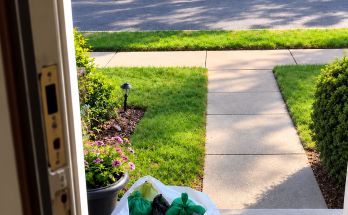
That evening my mother left a package on our porch without knocking.
Inside were groceries, diapers and a handwritten note.
No apology was long enough, so she had written only four sentences.
I chose suspicion over my daughter.
I chose anger over asking one question.
I struck you when you were vulnerable.
I will live with the consequence without asking you to make me feel better about it.
I read the note twice.
Then I placed it in a drawer.
My husband watched me.
“Do you want to call her?”
“No.”
“Okay.”
“But maybe someday.”
He nodded.
“That’s yours to decide.”
Two days later, the legal paternity result arrived.
The email came at 6:14 in the morning while I was feeding our son.
My husband was asleep upright in the chair beside me.
His phone chimed.
He opened one eye.
“What?”
“The result.”
He sat upright so quickly the blanket slipped from his shoulders.
For a moment neither of us touched the phone.
It amazed me that I was nervous.
I knew who the father was.
He knew.
There had never been any uncertainty between us.
But months of accusation had contaminated the simple truth with adrenaline.
“Open it,” I said.
He did.
The report loaded slowly.
Then the conclusion appeared.
Probability of paternity: greater than 99.99 percent.
My husband stared.
He did not cheer.
He did not laugh.
He did not announce victory.
He leaned forward and put both hands over his face.
I shifted our son against my shoulder.
“Hey.”
“I knew.”
“I know.”
“I knew.”
His voice cracked.
I understood then.
The result was not relieving doubt.
It was proving that his mother had been willing to destroy us without any.
He took our son from me and held him against his chest.
“I’m sorry she made your first days about this.”
The baby yawned.
My husband kissed his head.
“You’ll never hear it from us again.”
We printed three certified copies.
One went into our home safe.
One went to our attorney.
One was reserved for any legal proceeding in which his mother repeated her accusation.
We sent nothing to her.
By noon she apparently learned anyway.
A cousin texted my husband.
Your mom says you got results and won’t show her because they’re bad.
He stared at the message.
“Do you want to answer?” I asked.
He typed one sentence.
My child’s parentage is private and not a subject for family discussion.
Then he muted the entire family thread.
The decision drove his mother frantic.
Relatives began calling.
Some wanted to know whether the baby was “really his.”
Others framed the question as concern.
One uncle said displaying the result would end the drama.
My husband answered him calmly.
“No. It would teach her she gets rewarded for abuse.”
That sentence ended most conversations.
Three days later another result arrived.
This one was not about our son.
My husband had submitted his ancestry sample under privacy settings that allowed close-family matching.
His phone displayed a notification.
Close biological relative found.
He opened the report while standing at the kitchen counter.
I knew something was wrong by the way his fingers stopped moving.
“What does it say?”
He handed me the phone.
The service estimated the match as a possible half sibling, aunt, uncle or grandparent-level relationship depending on age.
The name was Leah Mercer.
My eyes moved immediately to the surname.
“Mercer.”
“I know.”
Daniel Mercer.
The man in his father’s photograph.
The person his mother had never named.
My husband clicked the profile.
Leah was thirty-nine.
Six years older than him.
Her family tree listed her father.
Daniel Thomas Mercer.
The same full name appeared beneath an old photograph she had uploaded.
My husband sat down.
He looked exactly like him.
Not in some mystical way.
Not every feature.
But enough.
The same deep-set eyes.
The same crooked half smile.
The same narrow line through the left eyebrow.
My husband touched the photograph on the screen as if texture might somehow come through glass.
“There he is.”
I sat beside him.
“We don’t know yet.”
“Yes, we do.”
“We know there’s a strong connection.”
He nodded.
“You’re right.”
His breathing had changed.
I placed my hand against his back.
“What do you want to do?”
He stared at Leah’s profile for a long time.
Then he clicked the option to send a message.
He typed:
Hello. My name may mean nothing to you. I recently received a close-family DNA match with you. I believe our fathers may be connected. I would like to understand how, if you are comfortable speaking.
He did not mention his mother.
He did not mention Daniel.
He sent it.
The response came twenty-three minutes later.
Hello. Your name does mean something to me.
My husband’s face went white.
A second message appeared.
My father told me years ago that he believed he had another child. A son. The mother was married, and she told him never to contact her again.
Then a third.
My father is still alive.
My husband stood so abruptly the chair scraped backward.
I took the phone before he dropped it.
Leah continued typing.
He has wondered about you for more than thirty years.
My husband walked to the window.
His father—the man who had raised him—had been dead six years.
Now another man, possibly the man who gave him half his DNA, was alive somewhere and knew of his existence.
The phone buzzed again.
Leah had sent a number.
She wrote:
He said if you ever found us, you should decide whether the door opens. He will not push it.
My husband looked at the number.
Then at our son.
“I became a father six days ago,” he whispered.
I waited.
“And now I have to decide whether I want to meet mine.”
Click here to continue reading: PART 8: Before My Husband Called the Man Who Might Be His Biological Father, His Mother Offered the Truth in Exchange for Our Silence
I Woke to My Newborn Crying While Two Families Stood Around His Bassinet as Though I Had Committed a Crime
Part 7 of 12