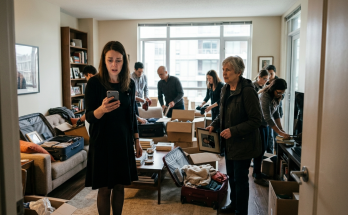
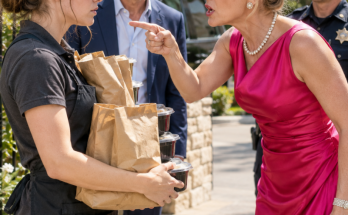
The first thing Linda Mercer did when she stepped onto my family ranch was point at my grandfather’s barn and tell the contractor behind her to tear it down.
The second thing she did was hand me a document claiming my family had been trespassing on our own land for thirty-two years.
The third thing she did was smile and say, “You have until Friday to leave.”
I didn’t yell.
I didn’t threaten her.
I simply looked past Linda at the six men standing beside two excavators near the cottonwood trees, pulled my phone from my pocket, and took a photograph.
Then I asked one question.
“Linda, are you absolutely certain you know who owns this property?”
Her smile widened.
“Oh, sweetheart,” she said. “That’s why I’m here.”
That was the moment I knew she had no idea what she had walked into.
My name is Rachel Bennett. I was forty-two years old, divorced, childless, and the fifth generation of my family to wake up beneath the shadow of the Colorado Front Range on a piece of land called Bennett Ranch.
My great-great-grandfather, Samuel Bennett, had built the original cabin there in 1876.
The cabin was gone.
The ranch wasn’t.
Four hundred and eighty acres of pasture, pine-covered ridge, creek bottom, hayfield, and weathered fencing stretched around the old white farmhouse where my father had been born.
The barn Linda wanted demolished had been raised in 1889.
Its beams were hand-hewn ponderosa pine.
My grandfather had carved his initials into one of them when he was twelve.
My father had taught me to saddle a horse beneath those rafters.
And three months before he died, he had made me promise something.
“Never confuse quiet with weakness, Rachel.”
At the time, I thought he was talking about people.
That Thursday morning, I realized he had been talking about land.
Because land could be quiet for generations.
Then somebody greedy could make the mistake of waking it up.
Linda Mercer was president of the Silver Ridge Estates Homeowners Association, a luxury subdivision built along the eastern edge of our property.
The neighborhood was new by our standards.
Twenty-seven years old.
Bennett Ranch had been there for 150.
That difference apparently meant nothing to Linda.
She was fifty-eight, impeccably dressed, permanently irritated, and possessed the particular confidence of someone who had spent too many years being obeyed.
Silver Ridge had grown expensive during the Denver-area housing boom.
Large homes.
Stone entrances.
Artificial ponds.
Private tennis courts.
Homes that had once sold for $600,000 were pushing $2 million.
Then developers began advertising “unobstructed mountain lifestyle.”
There was one problem.
My ranch obstructed it.
More specifically, my cattle, barns, fencing, equipment, and family cemetery did.
For years, the HOA had sent polite requests.
Could I repaint the barn?
No.
Could I replace my wire fencing with decorative black fencing?
No.
Could I stop moving cattle near the subdivision during weekends?
No.
Could I relocate my hay storage because residents considered it unsightly?
No.
Then the requests became notices.
Then the notices became threats.
I ignored most of them because Bennett Ranch was not part of Silver Ridge Estates.
We had never joined their HOA.
We had never signed their covenants.
We predated their subdivision by more than a century.
That should have ended the discussion.
Instead, Linda escalated it.
She arrived at 8:14 that Thursday morning in a pearl-white luxury SUV, followed by two contractor trucks and a flatbed carrying an excavator.
She brought six workers, an HOA attorney named Preston Hale, and a clipboard.
I walked out of my barn wearing jeans, boots, and my father’s old canvas jacket.
Linda looked me up and down.
“This can be painless,” she said.
“For whom?”
She handed me a packet.
The top page contained a survey.
A thick red line crossed directly through my east pasture.
According to the document, approximately seventy-three acres of Bennett Ranch belonged to Silver Ridge Estates.
The disputed area included the old barn.
Our spring.
A section of creek.
Two cattle pastures.
And the private gravel road leading from the county highway to my farmhouse.
Convenient.
Very convenient.
I flipped to the second page.
There was a legal description.
Third page.
A declaration.
Fourth page.
A demand to vacate.
“You’re claiming my driveway?” I asked.
“Technically, it isn’t yours.”
I looked at her.
She smiled.
Behind her, one of the contractors unloaded orange stakes.
“You brought excavators before giving me the document?”
“We expected resistance.”
That told me everything I needed to know.
Not everything about the scheme.
But enough.
I looked at the attorney.
“Mr. Hale, did you personally verify the chain of title?”
His expression changed.
Barely.
But I saw it.
“I reviewed the materials supplied by my client.”
“That wasn’t my question.”
Linda interrupted.
“We aren’t debating this in a barnyard.”
“You’re standing in my barnyard.”
“Not according to the county records.”
I almost smiled.
Almost.
Because my father had taught me something else.
When somebody wants you angry, become curious.
When somebody wants you loud, become quiet.
When somebody wants you rushed, slow down.
When somebody wants you frightened, start collecting evidence.
When somebody tells you there’s nothing you can do, find out why they desperately need you to believe them.
So I photographed every vehicle.
Every license plate.
Every worker.
Every orange stake.
Every page Linda handed me.
Then I sent the photographs to one person.
Daniel Price.
My attorney.
Daniel had represented my father for twenty-one years.
He called thirty seconds later.
“Rachel?”
“Morning.”
“What am I looking at?”
“Apparently I’ve been trespassing since 1994.”
There was silence.
Then Daniel laughed.
Not because it was funny.
Because it was ridiculous.
“Don’t sign anything.”
“I wasn’t planning to.”
“Don’t let them touch anything.”
“That part may be difficult.”
One of the excavators had started moving.
I watched its bucket rise.
“Daniel?”
“Yes?”
“You might want to hurry.”
I hung up.
Linda gestured toward the barn.
The operator moved forward.
I stepped into the machine’s path.
It stopped.
Linda’s face hardened.
“Rachel, move.”
“No.”
“You’re interfering with authorized remediation.”
“Call it whatever you want. Nobody demolishes anything until a judge tells me your survey is valid.”
Preston Hale approached Linda and whispered something.
She shook her head.
He whispered again.
She snapped, “We have the documents.”
I heard that clearly.
So did three contractors.
Good.
Witnesses mattered.
Then Linda made her first serious mistake.
She ordered the crew to remove my gate.
The gate stood twenty yards from the barn.
Heavy steel.
My father and I had installed it together after my mother died.
The excavator hooked a chain around one post.
The hydraulic arm pulled.
Concrete cracked.
The post bent.
The gate collapsed.
I filmed everything.
Linda stared directly at my phone.
“You’ll regret making this difficult.”
“I don’t think I will.”
“You people always think history protects you.”
You people.
I wondered what she meant by that.
Farmers?
Old families?
People who owned land she wanted?
I didn’t ask.
I didn’t need to.
Her motivation had been obvious for months.
Silver Ridge had one remaining expansion problem.
Me.
Developers had been buying acreage around the subdivision.
A resort company had announced plans for a golf course and private club.
Land values had exploded.
My east pasture, once useful mostly for cattle and hay, had suddenly become worth millions.
I had refused three purchase offers.
The last one had been $8.4 million.
That offer had expired seventeen days before Linda arrived with an excavator.
Coincidences happen.
But intelligent people document them.
By 9:02, two sheriff’s vehicles were coming down my road.
Linda smiled when she saw them.
That surprised me.
Most people trespassing with heavy equipment don’t celebrate law enforcement arriving.
Unless they think law enforcement is coming for someone else.
Deputy Aaron Cole stepped out first.
I knew Aaron.
We had gone to high school together.
He looked at the broken gate.
Then the excavator.
Then me.
“Rachel?”
“Morning.”
“What happened?”
Linda stepped forward before I could answer.
“Officer, thank God. This woman is obstructing lawful HOA property maintenance.”
Aaron stared at her.
“This is Bennett Ranch.”
“No,” Linda said confidently. “That is precisely the misunderstanding.”
She handed him the packet.
He studied it.
Then he looked at me.
“Rachel, do you have your deed?”
“In the house.”
Linda sighed dramatically.
“That deed is obsolete.”
Aaron looked at her.
“Deeds don’t become obsolete because an HOA says so.”
Her smile disappeared.
I walked to the house.
My hands were steady.
That was important.
Panic makes people careless.
Inside my father’s office, I opened the fireproof cabinet.
The deed was exactly where it had always been.
But beside it sat something else.
A leather folder.
Brown.
Cracked along the edges.
I had seen it hundreds of times.
I had never opened it.
Embossed faintly across the front were two words.
BENNETT LAND.
I hesitated.
Then I remembered something my father had said during his final week.
“If anyone ever challenges the east boundary, open the brown folder.”
At the time, morphine had made his thoughts wander.
Or so I had believed.
My fingers suddenly felt cold.
Outside, an excavator engine rumbled.
I opened the folder.
The first document was dated April 3, 1978.
The second was dated September 14, 1993.
The third was a plat map.
I stared at it.
Then stared again.
Silver Ridge Estates appeared on the map.
Except Silver Ridge Estates didn’t exist in 1978.
Something else did.
Bennett East Agricultural Holdings.
My family’s company.
I flipped through the papers faster.
Lease agreement.
Access easement.
Water rights.
Development option.
Roadway easement.
Land transfer.
Then I found a handwritten note from my grandfather.
Tom—
If Silver Ridge ever claims the east ground, remember we never sold the underlying access parcel. Henderson insisted we retain it because of the spring rights.
—Dad
I read it twice.
Then I carried the folder outside.
Daniel’s black sedan was coming through the damaged gate.
Perfect timing.
He parked beside Aaron’s cruiser and stepped out carrying a briefcase.
“Please tell me nobody demolished the barn.”
“Not yet.”
“Wonderful. Let’s keep having a good morning.”
Linda crossed her arms.
“This theatrical nonsense doesn’t change ownership.”
Daniel glanced at her.
“Linda Mercer?”
“Yes.”
“Daniel Price. Counsel for Ms. Bennett.”
“I know who you are.”
“I wish I could say the same.”
She didn’t appreciate that.
I handed him the brown folder.
His expression changed as he read.
Not dramatically.
Daniel never did anything dramatically.
That was why my father trusted him.
He turned one page.
Then another.
Then another.
Finally he looked at me.
“Where did you get this?”
“Dad’s office.”
“Has anyone else seen it?”
“No.”
He closed the folder.
“Good.”
Linda laughed.
“You found an old scrapbook?”
Daniel looked at Aaron.
“Deputy, I strongly recommend that nobody touch another inch of this property.”
Linda stepped forward.
“On what basis?”
Daniel smiled politely.
“On the basis that your morning is about to become substantially more complicated.”
That was the first mini-payoff.
It wasn’t the big one.
Not even close.
Aaron ordered the contractors to shut down the machinery while ownership was disputed.
Linda protested.
Preston Hale pulled her aside.
Their conversation became increasingly animated.
Then Preston walked to his car.
Linda followed.
“What are you doing?”
“I’m not participating in demolition until title is confirmed.”
“We already confirmed it.”
“You provided a survey.”
“Exactly.”
“A survey is not title.”
Even from thirty feet away, I could see Linda’s jaw tighten.
Preston left.
Her own attorney left.
That should have warned her.
It didn’t.
Instead she climbed into her SUV, rolled down the window, and looked at me.
“Enjoy your weekend, Rachel.”
I leaned against the broken gate.
“I think I will.”
“Monday changes everything.”
She drove away.
She was right.
Just not in the way she expected.
Daniel spent Thursday afternoon at the county recorder’s office.
Friday morning, he called me.
“Sit down.”
“I’m feeding horses.”
“Then stop feeding horses.”
I rested the phone against my shoulder.
“What did you find?”
“The HOA survey is based on a 1994 subdivision plat.”
“I know.”
“The plat itself appears legitimate.”
My stomach tightened.
“But?”
“But whoever prepared their current claim ignored the instrument recorded immediately before it.”
“What instrument?”
“A reservation.”
I said nothing.
Daniel continued.
“When your grandfather sold development rights along the eastern boundary, he did not transfer everything.”
“How much did he keep?”
“That’s where this gets interesting.”
I looked across the pasture toward Silver Ridge.
Morning sunlight reflected from enormous windows.
“How interesting?”
“The roads.”
I thought I had misheard him.
“What?”
“Your family retained title to several underlying access strips. The developer received perpetual easements for residential ingress and egress.”
I sat down on a hay bale.
“You’re saying we own their roads?”
“Parts of them.”
I laughed once.
Then stopped.
Daniel wasn’t laughing.
“Which parts?”
“The main entrance road. A service road. Portions beneath two internal streets.”
“That’s impossible.”
“It’s unusual. Not impossible.”
“Why would Grandpa do that?”
“Water.”
Of course.
The spring.
Our spring fed an old irrigation channel crossing the development area.
Grandpa had apparently refused to surrender the underlying corridor because abandoning it might have endangered historic water rights.
The developer didn’t care.
They needed road access.
Grandpa granted easements.
Everybody got what they wanted.
Then decades passed.
Documents were forgotten.
Companies dissolved.
Houses changed hands.
And an HOA president eventually convinced herself that an easement meant ownership.
But Daniel wasn’t finished.
“There’s another issue.”
“Of course there is.”
“The HOA’s seventy-three-acre claim?”
“Yes?”
“They appear to have used the wrong monument when reconstructing the historical boundary.”
“How wrong?”
“About six hundred feet.”
I stood.
“That’s not a rounding error.”
“No.”
“What does the correct boundary show?”
Silence.
“Daniel?”
“Silver Ridge has improvements on Bennett property.”
My throat tightened.
“What kind of improvements?”
“The southern entrance monument.”
I waited.
“The maintenance building.”
I waited.
“And possibly the clubhouse parking lot.”
For the first time since Linda arrived, I felt genuine shock.
Not triumph.
Shock.
Because disputes stop being funny when houses, roads, and millions of dollars become involved.
“What do we do?”
“Nothing reckless.”
“Agreed.”
“We commission an independent survey.”
“Agreed.”
“We notify the title companies.”
“Agreed.”
“And Rachel?”
“Yes?”
“Do not tell Linda.”
That was difficult.
Especially when she returned Saturday.
This time she brought neighbors.
About twenty of them.
Phones raised.
Some clearly expected entertainment.
Linda stood outside my damaged gate and announced that Bennett Ranch was illegally blocking community access.
I walked toward her.
“You destroyed that gate two days ago.”
“The HOA removed an unauthorized obstruction.”
“From land you haven’t proven you own.”
A man behind her shouted, “She’s hiding something!”
Interesting.
Linda had been talking.
I looked at the residents.
“Did Mrs. Mercer tell you why her attorney left Thursday?”
Silence.
Linda’s face tightened.
“This is irrelevant.”
“Did she tell you the sheriff stopped the demolition?”
More silence.
“Did she tell you the survey she gave me hasn’t been verified by the county?”
Someone lowered their phone.
Linda pointed toward me.
“Rachel Bennett has spent years preventing responsible development.”
There it was.
Not ownership.
Development.
Her real motivation was slipping through.
“You offered to buy my pasture last month,” I said.
“That was different.”
“Your HOA did?”
A pause.
Tiny.
But enough.
A woman near Linda turned toward her.
“You said the developer made that offer.”
Linda didn’t answer immediately.
Another mini-payoff.
Small truths weaken big lies.
Then a silver pickup came down the county road.
Three men stepped out wearing work boots and carrying survey equipment.
Linda stared at them.
“Who are they?”
I smiled.
“My guests.”
The lead surveyor was Michael Grant, licensed in Colorado for thirty-four years.
He didn’t care about HOA politics.
He cared about monuments, bearings, distances, recorded instruments, and whether people moved his equipment.
For two days, his crew worked.
They found the original northwest monument.
Then the creek marker.
Then an iron pin buried beneath decades of soil.
Then something nobody expected.
A stone boundary marker.
Stamped 1921.
Michael brushed dirt from it.
He looked toward the subdivision.
Then toward me.
“Rachel?”
“Yes?”
“You may want your attorney here tomorrow.”
Monday morning, Linda arrived before Daniel.
So did Preston Hale.
Apparently he had reconsidered abandoning his client entirely.
Michael spread three maps across the hood of his truck.
The old ranch plat.
The 1994 subdivision plat.
His new survey.
Linda stood opposite me.
“This has gone far enough.”
Michael ignored her.
He placed a ruler across the maps.
“The controlling monument is here.”
Linda leaned forward.
“That isn’t what our survey shows.”
“I know.”
“Our surveyor is licensed.”
“So am I.”
“Then someone is wrong.”
“Yes.”
That silenced everyone.
Michael tapped the stone marker.
“This monument corresponds with the 1921 survey and later recorded descriptions. The HOA survey appears to have relied on a secondary reference point approximately six hundred and twelve feet east.”
Preston closed his eyes briefly.
Linda stared at the map.
“What does that mean?”
Michael looked at her.
“It means Bennett Ranch does not encroach seventy-three acres into Silver Ridge.”
Her shoulders relaxed.
For one second.
Then Michael continued.
“It means Silver Ridge encroaches approximately eleven acres onto Bennett Ranch.”
Nobody spoke.
Linda looked at me.
Then at Michael.
Then at Preston.
“No.”
Michael slid the map toward her.
“The line is here.”
“No.”
“The clubhouse parking area crosses it.”
“No.”
“The maintenance structure crosses it.”
Her face had lost color.
“And this access corridor is retained Bennett property subject to easement.”
Linda stared down.
“You’re saying she owns our entrance?”
Michael shook his head.
“I’m saying Ms. Bennett owns the underlying parcel. Your residents appear to possess recorded access rights.”
That distinction mattered enormously.
I had no intention of blocking anyone from their homes.
Linda apparently didn’t understand that.
“You can’t close our road,” she snapped.
“I never said I would.”
“You’re threatening hundreds of families.”
“I haven’t threatened anyone.”
“You planned this!”
That almost made me laugh.
“My grandfather planned it before I was born.”
Residents had gathered behind us.
Word traveled quickly.
Someone whispered.
Someone else began photographing the map.
Linda looked surrounded.
But cornered people can become dangerous.
She stepped toward the documents.
Daniel moved between us.
“Don’t.”
“I need to see that.”
“You may obtain copies.”
“This is HOA business.”
“This is evidence in a property dispute.”
Her hand stopped.
Then she said something revealing.
“The clubhouse expansion cannot be delayed.”
Daniel looked at me.
I looked at him.
There it was.
Expansion.
Not preservation.
Not community safety.
Expansion.
Later we learned why.
Silver Ridge had negotiated a preliminary agreement with Westmark Development.
The company wanted to build thirty-six luxury townhomes and expand the clubhouse.
The project depended on acquiring part of my eastern pasture.
I had refused to sell.
Without my land, the project became awkward.
Without the access corridor, it became more complicated.
And if Linda could establish that the HOA already owned the disputed acreage?
Problem solved.
At least that seemed to be the theory.
But proving motive is different from suspecting it.
So Daniel told me to stay quiet.
We filed for declaratory judgment.
The HOA counterclaimed.
Then something unexpected happened.
The residents began asking questions.
Not about me.
About Linda.
Why had the board authorized legal expenses without a membership vote?
Why had contractors been hired before title verification?
Why had the HOA president described disputed ranch land as already belonging to the association?
Why had Westmark Development representatives attended two closed board meetings?
Linda called those questions “distractions.”
Residents didn’t agree.
Three board members resigned.
Then the HOA treasurer, Evelyn Shaw, called me.
“I need to show you something.”
We met at a diner twelve miles away.
Evelyn was sixty-four, soft-spoken, and looked exhausted.
She slid a folder across the booth.
Inside were invoices.
Survey expenses.
Legal retainers.
Consulting fees.
Then I saw a company name.
Frontier Land Strategy LLC.
Monthly payments.
$7,500.
$7,500.
$12,000.
$18,500.
“What is this?”
Evelyn shook her head.
“I don’t know.”
“Who approved it?”
“Linda.”
“Purpose?”
“Development consulting.”
I photographed every page.
Then Evelyn pulled out one more document.
A draft map.
My east pasture had been divided into lots.
Thirty-six of them.
A new road curved across the field.
The old barn was gone.
In its place was a landscaped entrance.
I stared at the drawing.
That hurt more than the broken gate.
Not because I feared losing.
Because someone had erased five generations of my family with a drafting program.
My father’s barn.
My grandfather’s spring.
My mother’s favorite cottonwoods.
All reduced to blank development space.
Evelyn touched my wrist.
“I’m sorry.”
I folded the map.
“Don’t be.”
“You’re not angry?”
“Oh, I’m angry.”
“You don’t look angry.”
“That’s because anger is expensive when you spend it badly.”
The court hearing came six weeks later.
By then, Linda’s confidence had become brittle.
Her attorneys argued that decades of maintenance, subdivision use, and recorded development documents supported the HOA’s interpretation.
Daniel argued title.
Not emotion.
Not history.
Title.
He produced the 1978 instruments.
The 1993 reservations.
The original plats.
Michael’s survey.
County records.
Then the judge asked one simple question.
“Does the HOA possess a recorded deed conveying the seventy-three acres it claims?”
The opposing attorney shuffled papers.
“No, Your Honor, but—”
The judge raised his hand.
That was enough.
The court issued a preliminary order recognizing my ownership pending final resolution and prohibiting the HOA from entering, altering, excavating, demolishing, or constructing on disputed Bennett property.
Linda wasn’t arrested.
Nobody was dragged from the courtroom.
Reality is usually quieter than viral fantasies.
But sometimes quiet consequences are worse.
The HOA had to repair my gate.
They had to reimburse survey costs.
The development project froze.
Westmark withdrew.
Residents demanded a special election.
Linda lost the presidency.
By a humiliating margin.
Three months later, Silver Ridge and I reached a settlement.
I confirmed every legitimate residential access easement.
No homeowner would lose access because of a dispute they hadn’t created.
The HOA recognized the historical Bennett boundaries.
They relocated equipment from the encroaching maintenance area.
We negotiated a long-term agreement regarding the clubhouse parking section.
And I placed the eastern pasture into a conservation easement preventing dense residential development.
Linda had tried to turn my ranch into thirty-six luxury lots.
Instead, she helped ensure it would remain open land.
That should have been the ending.
It almost was.
On the first Sunday after the settlement, I repaired the barn door myself.
The afternoon sun came through gaps between the old boards.
Dust floated through golden light.
My father’s initials were still carved into the beam.
T.B.
I ran my fingers over them.
For months, people had talked about what the ranch was worth.
Eight million.
Ten million.
Maybe twelve.
They were asking the wrong question.
Some things have a price.
Some things have value.
The difference matters.
I understood why Linda wanted the land.
Money.
Influence.
A development project that would make her tenure as HOA president look successful.
Maybe she had convinced herself that an aging ranch was wasted space.
Maybe she believed progress meant replacing whatever couldn’t produce the highest return per acre.
But my father had understood something she hadn’t.
Ownership isn’t just having the power to say no.
Sometimes ownership means knowing when to say yes.
Yes to access for neighbors who had done nothing wrong.
Yes to compromise where compromise caused no harm.
Yes to preserving something that would outlive me.
And no when someone mistook restraint for surrender.
I thought the fight was over.
Then, three weeks later, Daniel called.
It was 7:11 in the morning.
I was drinking coffee on the porch.
“Rachel.”
Something in his voice made me put the mug down.
“What happened?”
“Do you still have the brown folder?”
“Yes.”
“Get it.”
I went inside.
The folder remained in the fireproof cabinet.
“Got it.”
“Find the 1978 map.”
I spread it across my father’s desk.
“What am I looking for?”
“Southwest corner.”
There was a shaded parcel beyond our current fence line.
About ninety acres.
“What about it?”
“Read the notation.”
The handwriting was faded.
I leaned closer.
Reserved—Bennett Land Trust.
My heartbeat slowed.
“Daniel?”
“I spent yesterday tracing the trust.”
“And?”
“It was never dissolved.”
I stared at the map.
“Who owns it?”
“That’s the problem.”
“What problem?”
“The trust owns more than that ninety-acre parcel.”
“How much more?”
Silence.
Then Daniel said something that made the entire battle with Linda Mercer suddenly feel very small.
“Rachel, according to the original filings, your grandfather didn’t just retain the road beneath Silver Ridge.”
I stood completely still.
Daniel continued.
“He retained the mineral estate beneath the entire subdivision.”
I looked through the office window toward the distant rooftops.
Hundreds of acres.
Hundreds of homes.
Millions upon millions of dollars in property.
“That doesn’t mean we own their houses.”
“No. Surface and mineral estates can be separate.”
“Then why do you sound worried?”
Another silence.
Longer this time.
“Because somebody filed an application with the state forty-eight hours ago.”
“For what?”
“A mineral exploration permit.”
My fingers tightened around the phone.
“Who?”
“I don’t know yet. The applicant is an LLC formed eleven days ago.”
I looked down at the century-old map.
There was another notation near the northern ridge.
Tiny.
Almost invisible.
I rubbed the paper gently.
Three handwritten words appeared beneath the dust.
OLD SHAFT — SEALED.
“Daniel?”
“Yes?”
“I think my grandfather knew.”
“Knew what?”
I stared through the window at the ridge my family had protected for 150 years.
Then I heard an engine outside.
Not a pickup.
Not a neighbor.
A black SUV stopped beyond my newly repaired gate.
Another pulled in behind it.
Then a third.
Men in business suits stepped out carrying document cases.
One of them looked toward the farmhouse.
My phone buzzed.
A photograph from Daniel appeared on the screen.
It showed a scanned page from an archive.
A geological report.
Across the top was my grandfather’s name.
Below it was a date.
And beneath that, one sentence Daniel had highlighted.
I read it twice.
Then I looked toward the strangers approaching my gate.
The fight had never really been about the barn.
It had never really been about the HOA.
It hadn’t even been about the land.
Whatever my grandfather had sealed beneath Bennett Ranch nearly seventy years earlier, someone had finally discovered it.