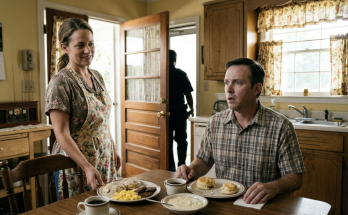
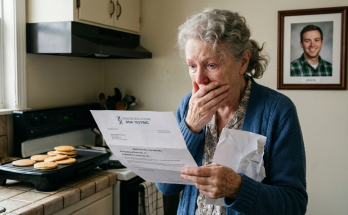
I asked Mom to come to Grandpa’s house alone.
She arrived the next afternoon.
This time I watched her from the front window rather than meeting her somewhere neutral.
Seeing her walk toward the porch felt different.
This was the house where she had grown up.
The house where she had brought me as a newborn when she needed help.
The house she later fought to remove me from.
The house she had avoided for most of my life.
She stopped before reaching the door.
For several seconds she simply looked at the building.
Then she knocked.
I opened the door.
“You can come in.”
Her eyes moved immediately toward the hallway.
“I haven’t been inside in twenty years.”
I stepped aside.
Mom entered slowly.
Nothing dramatic happened.
No music.
No collapse.
She touched the edge of the console table with two fingers as she passed.
“He still had this.”
“Yes.”
“Your grandmother bought it at an estate sale.”
“I know.”
Mom gave a small nod.
Of course I knew.
That was the strange competition neither of us wanted to name.
She remembered Grandpa before I existed.
I knew him after she left.
We each possessed decades of a man the other did not fully know.
I led her to the dining table.
Daniel’s letters were stacked there.
Mom stopped.
“What are those?”
“Dad’s.”
Her face tightened.
“Where did you get them?”
“Grandpa kept them.”
She sat without being asked.
I remained standing.
“Aunt Denise sent Dad pictures for years.”
Mom looked up sharply.
“Denise?”
“Yes.”
“She knew where Daniel was?”
“Yes.”
Anger flashed across Mom’s face.
“She never told me.”
“She was hiding things from everyone equally.”
“That’s not funny.”
“I’m not joking.”
Mom touched one envelope.
“Did you read them all?”
“No.”
“Can I?”
I pulled the stack slightly toward myself.
“Not yet.”
She withdrew her hand immediately.
“Okay.”
That mattered.
No argument.
No claim.
I sat opposite her.
“I know why Grandpa began changing his mind.”
“Daniel.”
“Yes.”
Mom looked down.
“He told me that.”
“When?”
“Eight months ago.”
“What exactly?”
“That Daniel’s death made him realize he had confused caution with control.”
That sounded like Grandpa.
“Did he tell you he knew Dad had been sober before Dad called him?”
“Yes.”
My jaw tightened.
“You knew that too.”
“Only after Dad told me.”
“Why didn’t you tell me?”
She looked directly at me.
“Because I wanted you to be angry at him.”
The answer was brutal.
I almost respected it.
Almost.
“You were shaping the story.”
“Yes.”
“Even after accusing him of doing that.”
“Yes.”
I folded my hands.
“Why?”
“Because I spent twenty years imagining him as the person who took everything from me.”
She paused.
“When he called eight months ago, he didn’t fight me.”
“What did he do?”
“He apologized.”
Her face tightened.
“I hated that.”
“Why?”
“Because I wanted him to defend himself.”
I frowned.
“I wanted to tell him all the ways he had ruined my life and hear him argue so I could keep hating him cleanly.”
That sounded painfully human.
“Instead?”
“He said I was right about some of it.”
Mom looked toward the kitchen.
“He said he had loved you and still done things he had no right to do.”
I thought of the recorder.
Same conclusion.
“He also told me I had abandoned you.”
I watched her.
“What did you say?”
“I screamed at him.”
I could imagine that conversation.
Two people carrying twenty years of accusation finally speaking after the easiest explanations had expired.
“Was he right?”
Mom’s eyes filled.
“Yes.”
She wiped them quickly.
“Not at six weeks. Not when I was sick. Not when I first asked for help.”
Her voice steadied.
“But later, yes.”
That distinction mattered.
“I let his control become my excuse.”
I said nothing.
“He made contact difficult.”
“Yes.”
“He hid letters.”
“Yes.”
“He discouraged visits.”
“Yes.”
“He used my worst period against me.”
“Yes.”
Mom swallowed.
“But I still had choices.”
Finally.
Not Grandpa’s version.
Not hers.
Something fuller.
“I could have shown up more. I could have gone back to court later. I could have contacted you when you were thirteen, sixteen, eighteen.”
She looked at me.
“I didn’t.”
“No.”
“I told myself I was respecting your life.”
“Were you?”
“Sometimes.”
“And other times?”
“I was protecting myself.”
The answer hurt.
It also felt true.
“I was terrified you would say you didn’t need me.”
I looked at the letters.
“So you made sure I never got the chance.”
“Yes.”
Her voice broke.
I did not comfort her.
Not because I wanted her to suffer.
Because some pain belonged to the person experiencing it.
Grandpa had spent years trying to remove mine before I felt it.
I would not repeat that.
After a while Mom said, “What do you want from me?”
“I don’t know.”
“Do you want me to leave?”
“Not yet.”
She nodded.
“I want to know about when I was born.”
Her face changed.
Not fear exactly.
Memory.
So she told me.
Not the custody case.
Not the hospital.
Before that.
She said I had dark hair that stood up no matter how she smoothed it.
Daniel cried when he held me.
Grandpa arrived at the hospital carrying a ridiculous stuffed rabbit nearly as large as I was.
Grandma scolded him for buying something impractical.
Mom laughed while remembering.
That startled me.
Her laughter.
Grandpa alive inside it.
For several minutes, nobody was the villain.
They were simply a family around a newborn.
Young parents.
Grandparents.
Aunt.
People before the choices hardened.
“What changed first?”
I asked.
Mom stopped smiling.
“Me.”
“The depression?”
“Yes.”
“Then Dad?”
“His drinking got worse.”
“Then Grandpa?”
“He became convinced you were safest with him.”
“Was I?”
She took a long time before answering.
“Yes.”
The word hit me harder than denial would have.
“At that point?”
“Yes.”
Mom stared at her hands.
“I hate admitting it.”
“But?”
“You were safest here.”
I looked around.
The room remained what it had always been.
Safe.
The truth had not erased that.
“Then what should Grandpa have done?”
Mom looked at me.
“Kept you safe without erasing us.”
There it was.
The central failure reduced to one sentence.
Protection did not require erasure.
Grandpa had thought it did.
Mom had eventually thought distance was kinder too.
Daniel accepted disappearance as penance.
Everyone had confused absence with peace.
My phone buzzed.
A text from an unknown number.
Hi Kayla. This is Ryan. I’m Margaret’s stepson. I know you asked us not to contact you. I won’t message again after this. I just want to apologize.
I looked at Mom.
“Ryan?”
Her face tightened.
“I told him not to.”
“He says he won’t message again.”
“Block him if you want.”
I opened the rest.
He apologized for demanding money.
He said he had grown up hearing that Grandpa used wealth to take me away and that Mom had sacrificed everything.
He admitted he had never asked whether that story was complete.
Then:
I treated your inheritance like evidence of something owed to our side. That was wrong.
I read the sentence twice.
Our side.
The phrase explained the entire family.
Sides.
Grandpa’s.
Mom’s.
Daniel’s.
Denise moving between them.
And me, the person at the center, treated like territory.
Ryan wrote that he did not want money.
He would not contact me again unless I invited it.
I placed the phone on the table.
Mom watched my face.
“What did he say?”
“He apologized.”
“Do you believe him?”
“I don’t know.”
She nodded.
“That’s fair.”
“Did you tell them they had a claim to Grandpa’s estate?”
“No.”
“Did you imply it?”
Mom looked away.
“There were years when I said your grandfather owed me.”
“That’s not what I asked.”
“I probably said things that made them think the inheritance represented money he should have given our family.”
There.
The foundation.
Maybe she had never explicitly sent them after me.
She had given them a story in which money symbolized justice.
Then Grandpa died and left everything to the granddaughter he had raised.
To them, the outcome probably looked like the final insult.
“Do you still think he owed you?”
Mom considered.
“No.”
“Nothing?”
“He owed me an apology.”
“You got one.”
“Yes.”
“Did it help?”
“A little.”
That answer surprised me.
“I thought you’d say no.”
“It didn’t fix anything.”
She looked around the room.
“But hearing him admit what he did wrong mattered.”
I understood that.
I had wanted the same thing from his recordings.
Not perfection.
Recognition.
“Do you think I owe you anything?”
“No.”
“The house?”
“No.”
“Money?”
“No.”
“Anything from the estate?”
“No.”
She answered each time without hesitation.
I watched her closely.
“What if I gave you something?”
Her eyes widened.
“I don’t want you to.”
“That wasn’t the question.”
“I don’t know.”
“Would you take it?”
Mom hesitated.
“Yes.”
At least she was honest.
“Why?”
“Because money matters.”
I almost smiled.
Finally a practical answer.
“But I would never want you to give me anything because you think twenty-five thousand dollars bought you from me.”
Her voice shook.
“That money did not buy you.”
“No.”
“It bought your surrender in court.”
“Yes.”
“That’s different.”
“Not enough different for me to feel proud.”
We sat quietly.
Then I asked something I had avoided.
“How much is the inheritance worth to you?”
“What?”
“Not emotionally. Financially.”
“I don’t know exactly what Dad had.”
“Suppose it’s enough to change someone’s life.”
Mom looked at me.
“It already changed yours.”
“No. It exposed everyone else’s expectations.”
She winced.
“That too.”
I leaned back.
“I keep thinking about giving some away.”
“To whom?”
“I don’t know.”
“Charity?”
“Maybe.”
“Daniel’s sobriety program?”
The idea stopped me.
“How did you know about that?”
“Dad told me Daniel had gotten sober through a treatment center.”
“What center?”
Mom named it.
Marlene had mentioned the same place.
I wrote it down.
“That might matter.”
Mom nodded.
“Your grandfather might have liked that.”
Immediately something in me resisted.
“I’m not doing it for him.”
“Right.”
“Or for Dad.”
“Right.”
“Or you.”
“I understand.”
I did not yet.
But I was beginning to understand what a decision for myself might feel like.
Not reacting against them.
Not obeying them.
Choosing something because I believed it was right after knowing the whole story.
A knock sounded at the front door.
Mom stiffened.
“Are you expecting someone?”
“No.”
I walked to the window.
A man in his thirties stood on the porch.
I recognized him from online photographs.
Ryan.
Mom stood quickly.
“I told him not to come.”
My anger returned immediately.
“I know.”
I opened the door only halfway.
Ryan held both hands visible.
“I’m sorry.”
“You said you wouldn’t contact me again.”
“I know.”
“Then why are you here?”
He glanced toward Mom behind me.
“I need to give you something.”
“What?”
He removed a manila envelope from under his jacket.
“Something Margaret doesn’t know I have.”
Mom stepped closer.
“What are you talking about?”
Ryan looked at her.
“I found it years ago.”
Her face changed.
“What?”
“In Grandma Elaine’s things.”
I frowned.
Grandma Elaine?
Mom’s mother.
My grandmother.
The woman who helped raise me before she died.
Ryan handed me the envelope.
“It’s addressed to Kayla.”
My heart began pounding.
The handwriting was Grandma’s.
I knew it instantly from old birthday cards.
The envelope had never been mailed.
On the front she had written:
FOR KAYLA WHEN SHE IS OLD ENOUGH TO UNDERSTAND WHY WE KEPT HER.
The room went silent.
Mom stared at it.
“I’ve never seen that.”
Ryan shook his head.
“I found it after Grandma died. I was a kid. I put it with Mom’s old things and forgot about it.”
I looked at him.
“How did you get Grandma’s belongings?”
“Some boxes went to your mom.”
Mom nodded slowly.
“They were in storage for years.”
Ryan continued.
“I found the envelope again after Grandpa died, when everyone started talking about the inheritance.”
“Why didn’t you give it to me then?”
His face reddened.
“Because I thought it would prove Grandpa was wrong.”
“And?”
“I read it.”
Mom closed her eyes.
“You opened it?”
“Yes.”
“What does it say?”
Ryan looked at me.
“You should read it.”
I took the envelope.
Grandma had been the one person in every version of the story who had remained mostly silent.
The gentle mediator.
The woman who loved Mom and Grandpa.
The woman who had held me through the first months.
The one person who might have seen everyone clearly before the family split into sides.
I opened the envelope.
The paper inside was covered in her handwriting.
The first line made Mom sit down.
Kayla, if you are reading this, then Frank has probably told you a simpler story than the one we actually lived.
Click here to continue reading: PART 13: Grandma’s Letter Told the Story Neither Grandpa Nor Mom Could Admit, and Her Final Warning Changed What I Thought Forgiveness Required
The Will Gave Me Everything Grandpa Owned, but the Messages Arriving Before His Funeral Made His Final Gift Feel Like a Warning
Part 12 of 15