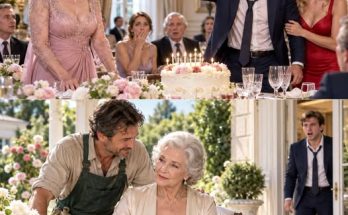
The morning Sole asked whether she could invite friends over for her fourteenth birthday, I knew something important had settled inside her. She stood beside the kitchen counter with a notebook in her hand, listing names and possible activities. She wanted a small gathering, nothing elaborate, with homemade food, a few games, and space for everyone to draw or talk. She had already considered where the guests could sit and which friends might enjoy meeting her cousins. I listened while she explained her ideas, struck by the confidence with which she was planning a celebration around people she wanted there.
A year earlier, birthday planning would have included a painful calculation about my parents. Sole would have wondered whether Grandma remembered the date, whether Grandpa would attend, and whether the gifts given to her cousins would again reveal how differently she was regarded. She might have asked whether we should invite everyone simply because they were family. This time, she didn't mention them. She was thinking about friends, art, cake, and the ordinary pleasures of turning fourteen.
I asked whether she wanted help making invitations. She smiled and said she'd already designed them. Each card showed a small rabbit beneath a tree, its ears turned toward a cluster of stars. The image was simple but beautifully drawn. She'd left space for the date, time, and address, and she'd chosen colors that matched the warm green walls of her bedroom. I told her the design was lovely. She thanked me and began writing names, her handwriting steady and unhurried.
The birthday plans came after months of gradual change. Sole still attended counseling, though the sessions had become less frequent as she developed confidence in expressing her feelings. She had made friends in art class and learned to speak more openly when something bothered her. She still experienced moments of uncertainty, especially when adults seemed disappointed, but she no longer automatically assumed that she was responsible for their emotions. Watching that change had taught me that recovery was not the absence of painful memories. It was the ability to live fully without allowing those memories to govern every choice.
My own life had changed as well. I continued counseling and had become more comfortable setting limits without offering lengthy explanations. I managed my finances according to our household's needs, maintained savings, and made room for experiences Sole and I wanted to share. The recurring payments to my parents and brother remained canceled. Chris had continued handling his own expenses, and my father had made adjustments to manage the vehicle installment and household bills. The financial crisis my parents predicted had not become mine to solve.
We had not resumed contact with my parents. My father occasionally sent brief messages, usually through email, but he had never clearly acknowledged that Sole was equal to her biological cousins or that his silence had been wrong. My mother continued insisting that she'd been misunderstood. She sometimes expressed sadness about the distance, but her messages returned repeatedly to the inconvenience and embarrassment it caused her. I no longer answered those arguments. I had explained the boundary, and repeating the explanation would not make it more valid.
I didn't take pleasure in the distance. There were evenings when I remembered my mother's cooking or my father's stories and felt an unexpected ache. I missed certain parts of my childhood family, even while recognizing how harmful our adult relationships had become. I allowed myself to feel that sadness without treating it as an instruction to reverse my decision. Missing someone did not mean they were safe to invite back into our lives. Love and distance could exist together when the alternative required sacrificing another person's well-being.
Chris's relationship with us had improved slowly. He continued respecting Sole's boundaries and never demanded that she forgive him on a schedule. His boys visited regularly, sometimes joining her for art projects or weekend activities. Sole had begun speaking to Chris more comfortably, though she remained cautious about discussing the past. He accepted that caution. I noticed that he no longer tried to excuse our parents' behavior or persuade me to restore financial support. His change was not dramatic, but it was consistent enough to begin rebuilding trust.
When I told Chris about Sole's birthday plans, he sounded genuinely pleased. He asked whether his boys could help with decorations. I checked with Sole before answering. She said yes and suggested that they make paper stars to match the invitations. Chris agreed, and the children began exchanging ideas. The arrangements were ordinary, uncomplicated, and free from the old expectation that every family event must include my parents.
A week before the party, Sole and I went shopping for supplies. She chose colored paper, markers, simple decorations, and ingredients for the cake she wanted to make. We moved through the store discussing practical details. At one point, she picked up a package of expensive decorations, examined the price, and put it back. I asked whether she liked them. She said she did but thought the simpler ones would work just as well. I smiled at her thoughtfulness and told her the choice was hers within the budget we'd agreed on.
She considered the options, then selected the simpler decorations and suggested using the remaining money for art supplies everyone could share. The decision made me proud, not because she had denied herself something, but because she was thinking confidently about what would make the gathering enjoyable. She wasn't trying to prove that she deserved a celebration by being excessively modest. She was making choices according to her own priorities.
The night before her birthday, we baked the cake together. Flour dusted the counter, and Sole accidentally dropped a spoon into the mixing bowl. She laughed, retrieved it, and continued stirring. I remembered the first time she'd helped me make pancakes, when she spilled flour and called me Mom without thinking. Back then, she had been uncertain whether ordinary mistakes could threaten her place in the house. Now she made a mess in the kitchen and laughed because she knew it was simply a mess.
While the cake baked, she asked whether I remembered the day she first called me Mom. I told her I remembered the large bowl, the flour on the counter, and the way she'd continued stirring as though nothing unusual had happened. She smiled and said she hadn't planned it. The word had simply come out because she needed something and I was standing beside her. I told her that was exactly why the moment meant so much to me. She leaned against my shoulder briefly, then went to check the cake through the oven window.
Later that evening, she brought out the old stuffed rabbit. Its fabric had softened over the years, and the missing eye gave it a slightly lopsided expression. She placed it on the kitchen table beside the birthday decorations. I asked whether she wanted it in her room. She said she was thinking about making it part of the party decorations, perhaps sitting beneath the paper stars. I smiled. The rabbit had accompanied her through every stage of becoming part of our family. It seemed fitting that it would be present at another celebration.
The birthday morning arrived bright and cool. Sole woke early, excited but not anxious. She helped arrange the decorations and placed her drawings on a small table where guests could look at them if they wanted. She had chosen a few pieces from art class, including the rabbit beneath the tree and a newer drawing of a woman reading beside a window. I recognized myself in the second picture and felt a familiar warmth. Sole had captured the curve of my shoulders and the way I held a book with one hand while resting the other against the chair.
The guests arrived in small groups. Her friends brought cards, inexpensive gifts, and stories from school. Chris and his boys came carrying paper stars they'd made together. The living room filled with conversation, laughter, and the ordinary noise of young people enjoying themselves. Sole moved among them with ease, introducing friends who hadn't met and explaining the drawing activities she'd prepared. She wasn't trying to become invisible. She wasn't measuring every word against the possibility of adult disapproval. She was celebrating her birthday in her own home.
I watched from the kitchen while she laughed with her cousins over a drawing that hadn't turned out as intended. One of the boys had attempted to sketch a rabbit and produced something that looked more like a startled dog. Sole laughed so hard she had to put down her pencil. He laughed too, then asked her to show him how to improve the ears. She leaned over the page and demonstrated a few lines. The exchange was playful and unguarded. Nobody treated a mistake as evidence of personal failure.
When it was time for cake, everyone gathered around the table. Sole stood in the center with her friends and cousins beside her. The candles flickered, and the room grew quiet for a moment before everyone began singing. I watched her face in the candlelight. She looked happy, slightly embarrassed by the attention, and entirely comfortable receiving it. When the song ended, she closed her eyes and made a wish. Then she blew out the candles while her friends cheered.
I didn't ask what she'd wished for. I remembered how often she'd once wished for her grandparents' acceptance, though she'd rarely spoken the desire aloud. This time, I wanted the wish to remain hers. She cut the first slice of cake and handed it to one of her friends, then began serving the others. The room filled again with conversation. It was a small party, but it contained everything she'd hoped for: companionship, laughter, shared interests, and the freedom to be herself.
After the guests left, the house looked wonderfully disordered. Paper stars had fallen beneath the table, colored pencils were scattered across the couch, and several plates remained near the sink. Sole stood in the middle of the living room, surveying the mess with a tired smile. She said it had been the best birthday she could remember. I felt my throat tighten. I told her I was glad she'd enjoyed it. She hugged me, then began gathering the decorations without being asked.
Chris stayed briefly to help clean up while his boys collected their belongings. He thanked Sole for inviting them and said they'd had a wonderful time. She smiled and thanked him for bringing the decorations. The exchange was simple, but I noticed how much it differed from their earlier interactions. Chris wasn't asking for forgiveness or making an emotional speech. Sole wasn't trying to earn approval. They were sharing an ordinary family moment built on months of more respectful behavior.
When Chris left, he paused near the door and asked whether I needed anything. I told him we were fine. He smiled and said he'd see us soon. I watched him walk toward his car, remembering the brother who had sat silently at the restaurant while our mother insulted Sole. His failure remained part of our history, but it no longer defined every interaction. He had accepted responsibility and changed his behavior. Trust had begun returning because he had given it reasons to return.
That evening, Sole and I finished cleaning the living room. We saved a few paper stars and placed the rest in a box for future use. She arranged her birthday cards on the bookshelf and set the old stuffed rabbit beside them. Then she sat on the couch with her knees tucked beneath her, looking pleasantly exhausted. I brought her a cup of hot chocolate and sat beside her. For a while, we enjoyed the quiet without speaking.
Eventually, she asked whether Grandma and Grandpa knew it was her birthday. I considered the question. I told her they probably did, though I couldn't say whether they'd remembered on their own. She nodded. There was no bitterness in her expression, only a thoughtful sadness. She said she'd once spent birthdays wondering whether they would call. This year, she'd been so busy preparing for her friends that she hadn't thought about it until now.
I asked how that felt. She considered the question for a long time. Then she said she still wished things had been different, but she didn't feel as though the day was missing something because they weren't there. I understood exactly what she meant. She could grieve the grandparents she'd hoped for without allowing their absence to diminish the people who had celebrated with her. It was a kind of freedom neither of us had possessed before.
She leaned against me and looked toward the birthday cards. Then she asked whether I remembered what she'd said in the car after the restaurant dinner. I told her I did. She'd asked whether adopting her had been a mistake. Sole was quiet for several seconds. Then she said she couldn't believe she'd ever been so frightened of the answer. I wrapped an arm around her shoulders and told her the fear had made sense after the things she'd heard. She hadn't been foolish for asking.
Sole nodded. She said the counselor had helped her understand that Grandma's opinions were not facts about her. She'd also begun recognizing when she was trying too hard to make someone approve of her. Sometimes she still caught herself doing it, especially with teachers or unfamiliar adults, but she was learning to stop and ask whether she'd actually done anything wrong. I listened with pride. She was developing language for experiences that had once left her confused and ashamed.
I told her that I had been learning similar lessons. For years, I'd tried to be the daughter who solved problems, covered expenses, and kept everyone comfortable. I had confused being needed with being valued. When my parents treated Sole cruelly, I tried to repair the situation by offering more patience. I hadn't understood that patience without boundaries could become another way of allowing harm. Sole looked at me thoughtfully. Then she said she was glad I'd taken her out of the restaurant.
I felt tears gathering before I could answer. I told her I wished I'd protected her sooner. She shook her head gently and said she knew I'd been trying to make everyone happy. I told her that didn't excuse the times I'd asked her to return to places where she felt unwelcome. She leaned closer and said she knew I had changed. The words were quiet, but they meant more to me than any declaration my parents could have offered.
We sat together for a long time. The birthday decorations moved slightly in the warm air from the vent, and the house smelled faintly of cake and chocolate. I thought about the night I'd canceled the payments, the messages I'd discovered, and the difficult months that followed. None of those choices had been easy. I'd lost the comfortable illusion that my parents would eventually accept Sole if we simply gave them enough chances. But losing that illusion had allowed us to build something more honest.
The next morning, I checked the filtered email folder for the first time in several weeks. There were a few messages from my parents, none acknowledging the birthday directly. One repeated that families should not remain divided over old disagreements. Another asked whether I was ready to resume normal contact. I read them without the old rush of obligation. Their words had not changed. They still wanted the conflict to end without confronting the beliefs that caused it. I saved the messages and closed the folder.
I didn't feel compelled to respond. My silence was not an attempt to punish them. It was the continuation of a boundary I'd explained repeatedly. They had been given opportunities to acknowledge what happened, and they had chosen not to do so. I couldn't make them value Sole by arguing more persuasively. I couldn't purchase their acceptance through financial help. I couldn't require my daughter to keep offering herself for rejection.
Later that week, Sole received a small certificate from her art instructor recognizing her progress and commitment. She brought it home, smiled, and placed it on the refrigerator beside the drawing she'd displayed months earlier. She didn't ask whether it was impressive enough. She didn't wonder what Grandma would think. She simply wanted it where we could see it. I watched her smooth the paper beneath the magnet and felt a quiet sense of gratitude.
That evening, we made pancakes for dinner. Sole measured the flour, and I warmed the pan. She spilled a little while reaching for the large bowl, then laughed and wiped it up. The old stuffed rabbit sat on the nearby shelf, its one remaining eye turned toward the kitchen. I remembered the frightened child who had arrived at seven, careful with every movement because she wasn't sure how long she would be allowed to stay. I looked at the confident fourteen-year-old beside me and understood how far she'd come.
Sole asked whether we could try adding something new to the pancake batter. I said we could experiment. She grinned and began searching the cupboard. We argued playfully about which ingredients would work, then settled on a compromise. The kitchen filled with familiar sounds: a whisk tapping against the bowl, the stove warming, and my daughter's laughter as she tried to rescue a pancake that folded awkwardly in the pan. Nothing about the evening was extraordinary. That was what made it precious.
Before bed, Sole stood in the doorway of her newly painted room and asked whether I could come see something. I followed her inside. She had rearranged the pictures above her desk. The old drawing of the rabbit with enormous ears hung beside the newer one from her exhibition. Between them, she'd placed the photograph from our adoption day. She said she liked seeing how much had changed. I studied the arrangement and smiled. It told our history without requiring a single explanation.
She pointed to the old drawing and said she remembered being afraid to make mistakes because she thought I might change my mind about keeping her. Then she touched the newer picture and said she didn't feel that way anymore. I told her I was glad. She looked at the adoption photograph for a moment, then turned toward me. She said she'd finally understood that she hadn't become my daughter because she'd managed to be good enough. She was my daughter because we had chosen each other and built a life together.
I hugged her, careful not to knock the pictures from the wall. She held on for a long moment, then stepped back with a smile. I wished her goodnight and walked toward the doorway. Behind me, she picked up the old stuffed rabbit and placed it beside her pillow. The room was warm, familiar, and entirely hers.
Downstairs, I turned off the kitchen lights and looked once more at the certificate on the refrigerator. My parents had called Sole a mistake. They had questioned her belonging, compared her unfavorably with biological grandchildren, and treated my financial help as more important than her dignity. I could not change their beliefs or erase what they'd done. But I had changed what I allowed into our home. I had stopped financing the people who harmed her, stopped asking her to tolerate rejection, and begun listening when she told me what she needed.
The family I'd imagined for Sole had been large, full of grandparents, cousins, holidays, and familiar traditions. The family we actually built was smaller and more carefully chosen. It included people who showed up, respected boundaries, apologized when they were wrong, and allowed her to be herself. It included Chris and his boys in a new, imperfect way. It included friends, teachers, and the counselor who helped her trust her own experiences. Above all, it included the two of us, together in the home where she'd learned she could stay.
I went upstairs and paused outside Sole's bedroom. The light was off, but I could hear her moving beneath the covers. I knocked softly and asked whether she needed anything. She said no, then added, “Goodnight, Mom.” The words came easily, just as they had years earlier over a bowl of pancake batter. I answered goodnight and continued down the hallway.
For the first time in a long while, I didn't wonder whether my parents would approve of the life I was building. I didn't mentally prepare a defense of my choices or imagine another conversation in which I might finally make them understand. Their approval had ceased to be the condition under which our family could be happy.
Sole was my daughter. Not because she shared my blood, not because she had earned a place through perfect behavior, and not because anyone else had agreed to accept her. She was my daughter because I had chosen to love and raise her, and because six years of ordinary devotion had made that choice the foundation of our lives.
The mistake had never been adopting her.
The mistake was believing that people who refused to recognize her worth deserved endless chances to make her doubt it.
I had finally corrected that mistake, and the peace in our home was the proof.
The End
Read more original stories on Feel Every Story.
The Night My Mother Looked at My Daughter Across the Dinner Table and Made Me Question Every Chance I Had Given Her
Part 15 of 15