By the time I reached the center of the city, the afternoon was fading toward evening. Shop windows reflected the first streetlights, and people moved along the pavements with the confidence of those who had destinations and appointments. I stepped off the bus and stood aside to let the other passengers pass. A young couple hurried by, laughing about something on a telephone. Farther down the street, a man carried flowers wrapped in brown paper. The city was full of private occasions, invisible to everyone except the people involved. For once, I wanted an occasion of my own.
I walked without a plan. That was both the pleasure and the difficulty of the outing. At home, every room suggested something useful I might do. There were towels to fold, cupboards to arrange, plants to trim. Here, nobody expected anything from me. I could pause at a shop window or cross the street on impulse. I examined displays of shoes I didn't need and books I already had. Once, I caught my reflection in the window of a clothing store and nearly smiled. The green dress moved lightly around my knees, and my earrings caught the evening light.
I passed several restaurants. Some were crowded, with customers sitting shoulder to shoulder at small tables. Others looked too formal for someone dining alone. I examined the menus outside and moved on. It wasn't that I felt unwelcome. No one had said a word to me. But I could picture myself sitting at a table set for two, watching the waiter remove the second place setting. I had experienced that small humiliation before. Tonight I wanted to be somewhere I could disappear into the surroundings without feeling abandoned.
Eventually, I noticed a modest bar on a side street not far from the busiest part of downtown. Warm light spilled through its windows. The entrance stood beneath a dark awning, and when someone opened the door, a few notes of music drifted out into the evening. The place seemed comfortable rather than fashionable. Through the glass, I could see people talking at small tables, a bartender polishing glasses, and a couple seated near the back wall. I paused outside, wondering whether I had any business going in.
There was a time when I would not have hesitated. In my twenties, I had loved music, conversation, crowded rooms, and the possibility of meeting interesting people. Marriage and motherhood had changed the shape of my evenings, but they hadn't erased that younger woman completely. Standing outside the bar, I could almost hear her telling me to stop being foolish. Nobody was going to inspect my birth certificate at the door. I straightened my shoulders, checked that my handbag was securely fastened, and went inside.
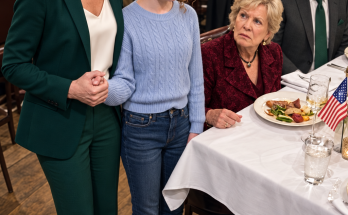
The room smelled faintly of polished wood, citrus, and warm food from the kitchen. The lighting was low enough to soften faces without making the tables difficult to see. A quiet song played beneath the murmur of conversation. The bartender glanced up and welcomed me. I chose a small table in the corner, close to the wall, where I could watch the room without sitting in the middle of it. The chair was comfortable. Someone had placed a tiny vase containing two flowers beside the candle. It felt like a place where I could remain for an hour without explanation.
When the waiter came over, I ordered red wine. I hadn't had a proper glass in a long time. At home, opening a bottle for myself had always seemed extravagant because I rarely finished it before it spoiled. Here, the waiter brought a generous pour in a clear glass and set it carefully on a coaster. I thanked him and lifted it to my lips. The first sip was stronger than I expected, but pleasant. I put the glass down and allowed myself to look around.
Most of the customers appeared absorbed in their own conversations. A group of friends near the entrance were celebrating something; they kept raising their glasses and interrupting one another. At another table, two women leaned close over a telephone, examining photographs and laughing. A man in a dark jacket sat alone at the counter, reading messages between sips of beer. Nobody paid any special attention to me. That was a relief. I realized how much energy I had spent imagining that everyone would find an older woman sitting alone in a bar unusual.
I checked my phone. Still nothing from my children. I had promised myself not to spoil the evening by waiting for them, but old habits were difficult to break. I turned the screen down beside my glass and looked toward the stage where the music came from. There was no performer, only speakers mounted discreetly near the ceiling. The song was familiar, though I couldn't immediately place it. It reminded me of long drives with my husband, when he would sing confidently and incorrectly while I pretended not to notice.
I was smiling at the memory when I became aware of someone looking in my direction. A man sat a short distance away, perhaps around forty, wearing a neat shirt and a jacket that looked expensive without drawing attention to itself. His hair was dark, with a little gray near the temples. He wasn't staring openly. Every so often, he glanced toward my table, then looked away. The first time, I thought nothing of it. The second, I wondered whether he was waiting for somebody seated behind me. The third, I felt an uncomfortable warmth rise into my cheeks.
I lowered my eyes to my wine. Perhaps I had misunderstood. It had been so long since a man had looked at me with anything resembling personal interest that I no longer trusted my interpretation. Men who spoke to me these days generally wanted directions, recommendations about groceries, or help reaching something on a shelf. I wasn't accustomed to being noticed as a woman. I took another sip and tried to concentrate on the music.
A shadow fell across the table. When I looked up, the man was standing beside the empty chair opposite me. He held his drink in one hand and wore a restrained, polite smile. He was handsome in an understated way, with a thoughtful expression and the easy posture of someone used to approaching strangers. He asked whether I would mind some company. For a moment, I was too surprised to answer. My first instinct was to glance behind me to make sure he had chosen the correct table.
I recovered enough to smile. I warned him that he was inviting himself to sit with a woman old enough to be his mother. He laughed, not mockingly, and said that he had asked for conversation, not a family history. Something about the answer amused me. It was neither a crude compliment nor an attempt to pretend the age difference didn't exist. I gestured toward the chair. He thanked me and sat down, placing his glass carefully to one side.
He introduced himself as Daniel. I repeated the name, and he asked mine. There was nothing remarkable about the exchange, yet I felt strangely self-conscious. It had been years since I had introduced myself to an unfamiliar man without some practical purpose. At first we discussed the bar, the music, and the weather. Daniel had a pleasant speaking voice. He didn't interrupt, and he seemed comfortable with moments of silence. Those small manners mattered more to me than any elaborate compliment might have.
He told me he worked as a photographer and had returned from a long journey only the previous day. His work took him to different places, sometimes for weeks at a time. I asked whether constant travel became tiring. He admitted that it could, especially when he returned home and found himself unable to settle. Hotels began to resemble one another after a while, he said. Cities changed, but the feeling of arriving somewhere without belonging could follow a person across the world. I understood that remark more deeply than I wanted to reveal.
I asked what he liked photographing. He spoke about people, streets, and ordinary moments that might otherwise pass unnoticed. A shopkeeper opening his shutters before dawn. An elderly couple sharing a bench without speaking. A woman standing beneath an awning during a sudden rainstorm. He described these subjects with genuine enthusiasm, and I found myself listening closely. He seemed interested in the emotional weight of small details, the things most people hurried past. That interest made it easier to forget that we had met only minutes earlier.
When he asked about me, I offered the safe version first. I was retired. I lived outside the city. I had two grown children and had been widowed for several years. He listened without the exaggerated sympathy I sometimes received when mentioning my husband. He asked what I liked doing with my time. I almost answered that I kept busy, but stopped. Keeping busy wasn't the same as enjoying oneself. I told him I used to love traveling and had gradually stopped going anywhere unless I had a reason.
Daniel wanted to know where I had dreamed of visiting. That question opened a door I hadn't expected. I told him about places I had imagined seeing when I was young, the routes I had traced on maps, the journeys my husband and I discussed but postponed because the children were small or money was tight. There had always been a sensible reason to delay. Later, when we could finally afford more freedom, his health had begun to fail. I had not spoken about these unrealized hopes in years. Hearing myself describe them made them seem unexpectedly close again.
He didn't tell me that I should have traveled more or that it wasn't too late to begin. Instead, he asked what I remembered about the last trip that had made me truly happy. I described a seaside holiday with my husband, years before he became ill. The hotel had been modest, the weather unreliable, and one evening we had eaten dinner beneath a leaking awning because neither of us wanted to surrender our table. My husband laughed so hard when rainwater landed in his soup that he nearly tipped over his chair. Daniel smiled while I told the story. He didn't hurry me toward its conclusion.
Gradually, I became less aware of the people around us. The group near the entrance left, and another couple took their table. A waiter replaced our empty glasses. Daniel ordered something to eat, and we shared a small plate while talking. I noticed that he sometimes studied my face before asking another question. It was an unusual kind of attention. He appeared genuinely curious about me, though I couldn't understand why a man with his experience and appearance would choose to spend his evening listening to a retired widow discuss her children and memories.
At one point, he told me that I looked younger than he had expected when I mentioned my age. I gave him a skeptical look. Compliments about age had always seemed peculiar to me, as though growing older were an offense that required forgiveness. He laughed at my reaction and explained that he meant I seemed lively, alert, and interested in the world. That was a kinder observation. I accepted it without arguing, though I wondered whether he said such things to every woman he met.
Our conversation had continued for nearly two hours when he asked what had brought me into the city alone. I looked toward the window. Outside, people hurried beneath the streetlights, and the dark glass reflected the two of us sitting across from each other. I could have invented an errand or said I simply wanted a change of scenery. Instead, perhaps because I was tired of disguising my disappointment, I told him the truth. It was my birthday. I had turned sixty-two that morning, and I hadn't wanted to spend the whole evening by myself.
Daniel's expression changed. He set his glass down and studied me for a moment. Then he asked why I hadn't mentioned it earlier. I shrugged, feeling foolish. Birthdays were less important when people reached my age, I suggested. He disagreed immediately. He signaled to the waiter before I realized what he intended. I protested, but he only smiled and said a birthday deserved at least one proper celebration. Minutes later, a small dessert appeared with a candle burning in its center.
The waiter wished me a happy birthday. Daniel did the same, quietly enough that the neighboring tables didn't turn toward us. I looked at the candle and felt my throat tighten. I had spent the entire day pretending that a forgotten birthday was a trivial matter. Yet here was a stranger marking it without obligation, making room for my happiness as though it were worth a little trouble. I blew out the candle while Daniel watched, and for the first time since waking that morning, I felt genuinely glad that I had left the house.
When the waiter took away the empty dessert plate, Daniel looked at the clock and asked whether I needed to return home soon. I had already considered staying in the city for the night rather than making the long journey back so late. Saying it aloud suddenly made the idea feel more daring. He suggested that we take a walk before I went to my hotel. Outside, the street was full of evening lights, and the air had cooled. I looked at this man, still almost a stranger, and recognized the choice before me. I could end the evening safely at the door, preserving it as a pleasant memory, or I could allow a little more of the unexpected into my life. I took my handbag from the chair and agreed to walk with him.
Click here to continue reading: PART 3: The Walk Through the City Led to a Hotel Room Where I Mistook a Stranger’s Careful Attention for Something I Could Trust
On the Morning of My Sixty-Second Birthday, an Empty Phone Screen Forced Me to Confront What My Quiet Life Had Become
Part 2 of 12