
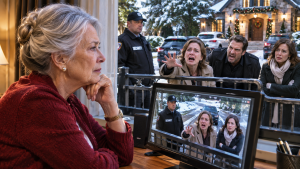
My name is Margaret, though everyone calls me Maggie.
I’m seventy-two, and I raised three children in Denver.
Jennifer. Michael. Lisa.
For most of my life, being their mother was the center of everything.
I packed lunches, drove carpools, made Halloween costumes, sat through baseball games and dance recitals, helped with homework, broken hearts, broken bones, and every crisis that seemed enormous when they were young.
After my husband, Richard, died at fifty-nine, my children surrounded me at his funeral and promised I would never be alone.
For a while, I believed them.
Then the visits became monthly.
Then holidays only.
Eventually, I became the person always making the call.
“Just wanted to hear your voice.”
“Maybe next week, Mom.”
“I’m swamped.”
“Can’t talk right now.”
I kept making excuses for them.
Jennifer had a demanding job in corporate communications.
Michael ran a small contracting company.
Lisa had two children and taught elementary school.
People get busy.
Children grow up.
A mother should not expect to remain the center of adult lives.
I repeated those truths until they became excuses for something else.
I was lonely.
Not because my children had independent lives.
Because I was always the one reaching across the distance.
The morning everything changed, I woke with chest pain.
At seventy-one, with Richard’s fatal heart attack burned into my memory, I genuinely thought I might be dying.
I called 911.
The hospital kept me overnight.
I called Jennifer.
Voicemail.
Two hours later, she texted.
OMG, Mom. So glad you’re okay. Crazy day at work.
She never called.
Michael responded six hours later.
Glad you’re fine. Get some rest.
Lisa waited until the next day.
Not one of them came.
I took an Uber home alone.
The doctors had not found a heart attack. They believed the pain came from severe reflux combined with anxiety, but they wanted follow-up.
I was relieved.
I was also changed.
The hospital scare showed me the difference between believing I had support and actually having it.
In the weeks afterward, I started noticing what happened when my children did contact me.
Jennifer asked about Richard’s life insurance.
Michael wanted to know whether I had organized my estate.
Lisa kept suggesting I sell my house and move into a senior community.
My house was worth nearly nine hundred thousand dollars.
My savings and investments totaled another six hundred thousand.
There was also a two-hundred-fifty-thousand-dollar life insurance policy Richard had left, now invested rather than sitting as cash.
Suddenly, conversations about my “future” sounded suspiciously like conversations about numbers.
Still, I wanted to believe I was wrong.
So I called all three of them and asked one simple question.
“If something serious happens to me, can I count on you?”
Jennifer sighed.
“Mom, please don’t start this again.”
Michael became irritated.
“We have our own lives.”
Then I reminded them about the hospital.
“You didn’t even call me.”
“We texted,” Lisa said.
“I was scared.”
Michael finally snapped.
“Mom, stop calling us every time you feel lonely or scared. We have our own lives. You’re healthy. You have money. Figure it out yourself.”
I sat in my kitchen after that call and cried harder than I had since Richard died.
Then the tears stopped.
Not because I stopped loving my children.
Because something became clear.
I had organized my entire future around assumptions nobody had agreed to.
I assumed one of them would help after surgery.
I assumed they would visit if I became frail.
I assumed someone would manage bills if I became incapacitated.
I assumed family love automatically created a care plan.
It did not.
The following morning, I called Thomas Brennan, the attorney who had handled Richard’s estate.
“I need to make some changes.”
He did not say:
Cut them all out.
He said:
“Tell me what changed.”
I did.
Then he asked questions I should have answered years earlier.
Who held my financial power of attorney?
Jennifer.
Who was my backup?
Michael.
Who could make medical decisions if I could not?
Jennifer first, then Lisa.
Had I discussed those roles with them recently?
No.
Did I believe they would actually serve?
I did not know.
That uncertainty mattered more than anger.
Over the next three weeks, Thomas and I reviewed everything.
My will.
My investments.
My house.
Beneficiary designations.
Medical directives.
Powers of attorney.
Every account my children assumed would someday become theirs.
I changed some beneficiaries.
I changed the estate structure.
I replaced financial decision-makers with a professional fiduciary and a trusted longtime friend as backup after confirming both were willing.
I kept family members in limited medical roles only where I believed the arrangement was workable, with clearer backups.
I added direct provisions for grandchildren and charitable gifts.
I did not give every dollar away in rage.
I built a plan around what I actually wanted.
Then I changed every lock, every entry code, and every password connected to my property.
The locks were not part of the estate plan.
They were part of another boundary.
My children still used old codes from when they were younger.
They entered without calling.
That had once felt like family.
Now it felt like access I had never reconsidered.
I installed cameras and a security gate after a neighborhood burglary pushed me to upgrade the property anyway.
For three months, my children did not call.
Neither did I.
The silence hurt.
It also taught me something.
My phone still worked when I stopped chasing them.
The relationship did not.
Then, two weeks before Christmas, Jennifer suddenly phoned.
“We’re all coming to your place for Christmas. Like old times.”
All three children.
Their spouses.
The grandchildren.
They had not visited in more than a year.
“Why now?” I asked.
Her cheerful voice disappeared.
“We’re worried about you. We think it’s time to discuss your future and maybe transitioning to somewhere more manageable.”
There it was.
The house.
Again.
“I don’t want you here,” I said.
Jennifer laughed as if I were joking.
“We’ll be there on the twenty-third.”
“No.”
I hung up.
On December twenty-third, my phone alerted me at exactly two in the afternoon.
Vehicle at front gate.
I opened the security camera.
Three cars.
Jennifer’s SUV.
Michael’s truck.
Lisa’s sedan.
Michael walked directly to the keypad and entered the old code.
Denied.
He tried again.
Denied.
Then Jennifer pressed the intercom.
“Mom, open the gate.”
I looked at my three children standing outside the home they had already begun discussing as if it were their future property.
“No,” I said.
For several seconds, nobody moved.
Then Michael grabbed the metal gate and started climbing.
That was when a man stepped into view behind him.
“Sir, get down from that gate immediately.”
My children turned.
The security officer I had hired for the holiday week looked toward the camera, then asked me one simple question.
“Ma’am, these people are not on the authorized list. Would you like me to remove them from the property?”
I looked at my three children through the screen.
Three months earlier, I would have worried about embarrassing them.
I would have opened the gate.
I would have apologized.
That woman was gone.
“Yes,” I said. “Please ask them to leave.”
The first meeting with Thomas lasted almost three hours because he kept asking questions I had never separated before.
“What is the purpose of your money?”
I laughed.
“To exist?”
“No. Your money has jobs. What are they?”
I had never thought of it that way.
Housing.
Health care.
Emergency reserves.
Travel.
Support for grandchildren if I chose.
Charitable giving.
Then inheritance, if anything remained.
That order embarrassed me because inheritance had quietly moved too high in my mind. I had spent years treating money I still owned as if I were merely storing it for the next generation.
Thomas also reviewed every beneficiary designation separately because wills do not control everything. Retirement accounts, payable-on-death accounts, insurance, trusts, and jointly titled property can pass under different rules.
“Do not assume changing the will changes all of this,” he said.
That was exactly why I needed a professional instead of a dramatic handwritten note telling my children they would regret ignoring me.
We also discussed incapacity.
I had always feared death more than disability because of Richard’s sudden heart attack. But Thomas asked what would happen if I were alive and temporarily unable to manage bills.
Jennifer had once been the obvious choice.
Now I did not know whether she would even answer a call.
That uncertainty did not make her a bad daughter.
It made her a bad plan.
Plans should not rely on hoping someone becomes available.
So I identified a licensed professional fiduciary, Karen Moss, and met her before naming her.
She explained fees, duties, reporting, and limits.
I almost rejected the idea because paying someone to manage my own affairs if I became incapacitated felt impersonal.
Then she said:
“Professional does not mean family is excluded. It means somebody has a defined job.”
That made sense.
My children could still visit, advocate, ask questions, and love me.
They would not have to become accountants by default.
By the time I left Thomas’s office that first day, I felt tired but strangely calm.
I had not punished anyone.
I had replaced assumptions with named responsibilities.
That was far more powerful than revenge.
One of the documents Thomas asked me to review was my old letter of instruction—the informal note that sat beside the legal documents and told Jennifer where to find things. It had been written years earlier in Richard’s handwriting at the top: Maggie hates paperwork, so make this simple.
I laughed when I saw it.
Richard had always believed I disliked paperwork. In truth, I disliked paperwork when someone else made all the choices and handed me forms at the end.
Now I wanted to understand every page.
Thomas walked me through the difference between a will, a trust, a power of attorney, and an advance medical directive. He explained what each could and could not do.
I asked too many questions.
He answered all of them.
That meeting changed something deeper than my estate.
For years, I had let Richard handle several financial tasks because he was better at them. After he died, I learned enough to keep things running, but I still treated expertise as something other people possessed.
At seventy-two, I decided no one should understand my own plan better than I did.
That did not mean doing everything alone.
It meant knowing what I was delegating and why.
The difference between dependence and delegation became one of the clearest lessons of my later life.
The first time I saw the revised estate summary, I felt guilty.
Not because the plan was wrong.
Because the numbers beside my children’s names were no longer the largest numbers on the page.
Thomas noticed my face.
“You are allowed to revise this again later.”
“I know.”
“Then why do you look like you’re being sentenced?”
I laughed.
“Because mothers are supposed to give.”
He shook his head.
“Parents give during life in many ways. An estate plan is not a final exam in motherhood.”
That sentence became one of the most useful things anyone said to me. I had raised three children, helped with education, weddings, emergencies, and grandchildren. None of that created a legal or moral requirement that every remaining dollar flow directly back to them.
Once I understood that, the plan stopped feeling like punishment and started feeling like allocation.
I also changed one thing that had nothing to do with money. I removed the old emergency contact card from my refrigerator. It listed Jennifer first, Michael second, Lisa third, as if birth order automatically created availability.
I replaced it with actual current contacts: my physician, building security, Karen the fiduciary, Jennifer for medical matters, and backups in the order we had discussed.
That little card captured the larger change. I stopped organizing reality around tradition and started organizing it around who had agreed to do what.
Family could still be part of the plan. It no longer had to be the whole plan.
I changed passwords slowly rather than all at once because I wanted to avoid locking myself out of accounts. Elena helped me build a secure list and confirm recovery methods. That practical step mattered more than the dramatic idea of “cutting everyone off.”
Security should make life safer, not create new chaos. I learned to separate symbolic actions from useful ones. A new password was useful because it reflected current access. A furious mass message announcing that I had changed everything would only have created more conflict.
The most important thing Thomas did was refuse to let me use legal documents as emotional messages. If I wanted my children to know I was hurt, he told me to say it while alive. If I wanted to protect assets and define authority, that belonged in the documents. Separating those purposes kept the plan cleaner and my relationships more honest.
I also asked Thomas to explain every fee. He smiled and did. Transparency mattered to me now. I no longer wanted to sign things because someone competent said they were standard. Understanding was part of ownership. That habit stayed with me through every later move, care contract, and estate update.
By the end of that first month, I had a folder labeled MY PLAN instead of CHILDREN. That title seemed trivial. It was not. The documents were about my life, not a rehearsal for their inheritance. Every later decision became easier once I kept that perspective.
One more thing mattered in this part of the story: progress was never one dramatic decision. It came from small choices repeated until they became normal. That pattern, more than any document or argument, was what changed our family over time.
PART 2 – My Children Expected Me to Open the Gate Out of Guilt, but I Had Finally Learned That a Boundary Is Useless If It Disappears the Moment Someone Gets Angry
Michael climbed down slowly.
Jennifer stared directly into the camera.
“Mom, are you serious?”
“Yes.”
“We drove all this way.”
“I told you not to come.”
Lisa held up her phone.
“Are you recording us?”
“The gate camera records automatically.”
“That is insane.”
No.
Showing up after being told no and then climbing a gate was closer to insane.
The security officer remained calm.
“Folks, the homeowner has asked you to leave.”
Michael threw his hands up.
“She’s our mother.”
The officer answered:
“That does not make this public property.”
That sentence became legendary in my head.
Jennifer moved closer to the intercom.
“Mom, the kids are in the cars.”
That hurt.
My grandchildren had nothing to do with the argument.
I loved them.
I almost opened the gate because of them.
Then I recognized what was happening.
The children had been brought to a visit I explicitly declined.
Their presence could not become leverage.
“I’m sorry the kids were brought into this,” I said. “Take them somewhere warm. This is not happening today.”
Jennifer’s face hardened.
“You’ve changed.”
“Yes.”
For once, I did not hear that as an insult.
They left after several minutes of argument.
Michael kicked gravel near the truck.
Lisa kept filming.
Jennifer cried.
I cried too once the cars disappeared.
The security officer asked whether I was all right.
“No.”
That answer felt freeing.
A boundary can be necessary and still hurt.
I called Thomas the next morning.
Not because rejecting a Christmas visit was a legal event.
Because I wanted to review whether any documents needed updating after the confrontation.
He said:
“Before we talk estate planning, are you safe?”
“Yes.”
“Good. Then tell me what you want the documents to accomplish.”
That question prevented me from doing something foolish.
Part of me wanted to disinherit all three children completely.
Not because that had been my lifelong intention.
Because I was angry.
Thomas said:
“An estate plan should reflect durable values, not the emotional temperature of one week.”
So we reviewed the plan again.
I did reduce what my adult children would receive directly compared with the old will.
I increased direct provisions for the grandchildren through age-appropriate trusts.
I designated charities Richard and I had supported for years.
I created instructions for professional administration so none of my children would control another’s inheritance.
I set aside resources for my own future care first.
That was the most important change.
The previous plan treated my assets almost as a future inheritance waiting to happen.
The new plan treated them as resources for my life.
Housing.
Health care.
Travel.
Support services.
Long-term care if needed.
Whatever remained later could pass according to the plan.
I did not owe my children a fixed number at death.
That realization changed how I viewed money.
I also met with a certified financial planner named Elena Park.
She ran retirement projections.
“Your biggest risk is not spending too much on lunch,” she said. “It’s assuming you won’t need expensive care later.”
We modeled home care, assisted living, market downturns, and longevity.
For the first time, I had a plan that did not require one of my children to become my unpaid caregiver.
That did not mean I rejected family help if offered.
It meant I would not build my safety on an unspoken obligation.
Two days after Christmas, Lisa texted.
The kids don’t understand why Grandma wouldn’t let them in.
My first reaction was guilt.
Then anger.
Then I wrote carefully:
Please tell them Grandma loves them. The adults had a disagreement, and I had already said I was not hosting Christmas. They are not responsible for fixing it.
Lisa did not reply.
A week later, Jennifer sent a long email accusing me of becoming paranoid about money.
She said they had only wanted to discuss downsizing because they cared.
Some of that might have been true.
Concern and financial interest can coexist.
I did not need to decide that every conversation about the house had been greedy.
I responded with one paragraph.
I am capable of managing my affairs. I have professional advice. I will ask for help when I want it. Do not arrive at my home without invitation.
Michael called from a new number.
I answered before recognizing it.
“Mom, this is ridiculous.”
“No.”
“We’re your family.”
“Yes.”
“You’re acting like we’re criminals.”
“I asked you not to come. You came. You climbed my gate.”
“I was trying to get your attention.”
“You had it through the intercom.”
Silence.
Then:
“So this is about money.”
I almost laughed.
“No, Michael. The money is the part I can organize. This is about whether no means no when your mother says it.”
He hung up.
That hurt too.
But the gate remained closed.
And for the first time in years, my life was not organized around preventing my adult children from being upset with me.
The Christmas gate incident also forced me to examine something uncomfortable about my own communication.
I had told Jennifer I did not want them there.
Clear.
But in years before that, I often said no in ways that invited negotiation.
“I don’t think so.”
“Maybe another time.”
“I’m tired.”
Then if a child pushed, I changed my mind.
Family members learn patterns too.
My adult children were responsible for ignoring my explicit refusal that Christmas. I was also responsible for the history in which my boundaries often dissolved under pressure.
That did not excuse Michael climbing the gate.
It helped explain why everyone seemed genuinely shocked when no finally stayed no.
Afterward, I practiced speaking more directly in smaller situations.
Jennifer asked if she could drop off storage boxes at my house.
“No. I don’t want to store them.”
No explanation.
Lisa asked if I could babysit on a weekend I already had plans.
“No. I’m not available.”
No guilty essay.
Michael wanted to borrow Richard’s old ladder and return it “sometime.”
“Yes, if you bring it back Saturday.”
A condition instead of vague resentment.
These small boundaries made the larger ones less dramatic over time.
My children did not always like them.
They learned what I meant.
I learned something too: over-explaining often hides a request for permission.
If I say no and then spend ten minutes proving my no is reasonable, I am still inviting the other person to judge whether my reason is good enough.
At seventy-two, I finally learned that a respectful no does not require a courtroom argument.
The week after the gate incident, I considered sending all three children copies of the camera footage. I wanted them to see how absurd they looked from the outside.
Thomas advised against it.
“What would that accomplish?”
“Maybe they’d understand.”
“Or maybe they’d argue about the angle.”
He was right.
Evidence is useful when a fact is genuinely disputed. It is less useful when the conflict is about values.
Nobody denied Michael climbed the gate.
Nobody denied I had said not to come.
The disagreement was whether family status gave them the right to override me.
A video could not settle that.
So I kept the recording only as normal security footage until the system deleted it on schedule.
That felt healthier than archiving it forever as proof that I had been right.
I was learning not to turn every conflict into a case file.
I also wrote down what I wanted the security officer to do if my children returned. Calm instructions. No threats. No trespass drama unless they refused to leave or damaged property.
That mattered because I did not want a boundary to become escalation.
My children did not return uninvited after the twenty-third.
The security officer’s contract ended after the holidays.
The gate stayed.
For months, every time I heard the motor open for a delivery, my chest tightened slightly. Then it stopped.
Boundaries can make a home feel safer, but the nervous system sometimes needs time to believe the boundary will hold.
That was true even when the danger was not physical violence. Emotional pressure can train the body to expect intrusion too.
For several weeks after Christmas, I worried the grandchildren would blame me. That fear almost made me call their parents and soften everything.
I stopped myself.
Children do not need adults performing reconciliation before the adults are ready. They need reassurance that they are loved and that the conflict is not theirs to solve.
So I sent each grandchild a Christmas gift and a short note. Nothing about the gate. Nothing about their parents.
Love did not require me to pretend the adult problem had vanished.
The gate itself stayed locked most of the time, but I eventually added temporary visitor codes for invited family. That mattered because boundaries should allow healthy access, not only block people.
Lisa received a code for scheduled visits. It expired automatically. Jennifer used the intercom. Michael joked that he had been permanently banned from numbers.
The system became ordinary technology instead of a monument to conflict. That was exactly what I wanted.
I also stopped checking the camera app compulsively after a few weeks. Security should support life, not become another way to watch for trouble. The gate did its job quietly. I did not need to relive Christmas every time a delivery driver arrived.
The grandchildren eventually returned for a scheduled visit, and I made hot chocolate. Nobody mentioned the gate until Sophie joked that Grandma had better security than the school. We laughed. The children learned that adult conflict can end without requiring them to choose loyalty.
I kept one temporary visitor code for family and changed it whenever needed. The system was not about exclusion forever. It was about making access intentional. That difference helped me welcome people later without returning to the old assumption that family automatically meant unrestricted entry.
One more thing mattered in this part of the story: progress was never one dramatic decision. It came from small choices repeated until they became normal. That pattern, more than any document or argument, was what changed our family over time.
PART 3 – My Lawyer Suggested a Capacity Evaluation, Not Because I Was Confused, but Because He Knew My Children Might Eventually Claim I Had Become Incapable of Making My Own Decisions
Thomas raised the subject carefully.
“Have any of your children suggested you are cognitively impaired?”
“Lisa said I’m acting irrationally.”
“That’s not the same thing.”
“Jennifer said I’m paranoid.”
“Still not a diagnosis.”
“Michael told his sister I’m losing it.”
Thomas leaned back.
“That is why I want documentation.”
I hated the idea.
A capacity evaluation sounded like surrendering to their accusation.
Thomas explained the opposite.
Estate plans made late in life can become targets of disputes, especially when beneficiaries receive less than expected.
Independent documentation of my decision-making ability could reduce future ambiguity.
So I met with a geriatric psychiatrist, Dr. Ellen Shaw.
She did not ask whether I loved my children.
She evaluated cognition, memory, understanding, reasoning, and whether I understood the consequences of my legal and financial decisions.
I passed.
Not with a gold star.
Capacity is not a school exam.
Her written assessment documented that I understood my assets, family relationships, estate decisions, and alternatives.
She also noted I was grieving family conflict but showed no evidence that grief prevented informed decisions.
That distinction mattered.
A person can be angry and competent.
Sad and competent.
Old and competent.
I sent the report to Thomas and then forgot about it.
My children did not know I had done it.
I was not collecting weapons for a future fight.
I was building a clean record.
Meanwhile, something unexpected happened.
I became busy.
For years, I had arranged my week around calls that might happen.
Now I joined a walking group.
I resumed watercolor classes.
I volunteered twice a month at the hospital where Richard had died, helping families find waiting rooms and cafeterias because I remembered how lost I felt there.
I made friends with a woman named Denise, seventy-four, widowed and brutally funny.
The first time I told her about my children, she said:
“Are they awful?”
I paused.
“No.”
“Then why do you look like you want me to say they are?”
I laughed.
That question helped me.
My children were not cartoon villains.
Jennifer was generous with coworkers and terrible at emotional discomfort.
Michael had helped neighbors rebuild after a storm and could become entitled when family boundaries frustrated him.
Lisa was a loving teacher who avoided conflict until she suddenly chose a side.
They had failed me in important ways.
That did not mean every part of them was rotten.
Recognizing that prevented me from turning the estate plan into punishment.
It also left room for relationships to change.
They did not change quickly.
Jennifer stopped communicating for two months.
Michael sent occasional angry texts.
Lisa sent photographs of the grandchildren without commentary.
I replied to the photos.
Beautiful. Tell them Grandma loves them.
Nothing about the gate.
Nothing about inheritance.
The grandchildren did not need to become messengers.
One afternoon, my oldest granddaughter, Sophie, called from her own phone.
She was fourteen.
“Grandma, are you mad at me?”
My heart broke.
“No.”
“Mom said you need space.”
“From the grown-up argument, yes. Never from loving you.”
“Can I visit?”
I paused.
“Yes. If your mother agrees and we arrange it first.”
I would not create a secret alliance with my granddaughter against Jennifer.
That boundary mattered too.
Sophie visited the following month.
Jennifer dropped her at the gate.
She did not come inside.
I walked Sophie through after opening it remotely.
She looked at the keypad.
“Uncle Michael was really stupid to climb this.”
I laughed despite myself.
“He made a poor choice.”
“That means stupid.”
“Your word, not mine.”
We baked cookies.
Talked about school.
She never asked about my will.
That afternoon reminded me of what I was protecting.
Not money.
The possibility of family relationships that were not organized around money.
The capacity evaluation became unexpectedly useful beyond legal documentation. Dr. Shaw asked me about my daily life in detail.
How did I pay bills?
Did I understand my medications?
Could I explain the approximate value of major assets?
What did I believe each legal document did?
Could I describe alternatives to my choices?
Those questions forced me to prove something to myself, not just to a future challenger.
I knew my life.
I knew my money.
I knew why I had changed the plan.
Age had not erased that.
At the end, I asked Dr. Shaw:
“Do many families come because adult children think a parent is making a bad decision?”
“Frequently.”
“Does a bad decision mean incapacity?”
“No.”
That answer should be printed on family walls.
Adults are allowed to make choices other people dislike.
They can spend too much on a vacation.
Stay in a house longer than children prefer.
Move earlier than children prefer.
Date someone the family finds annoying.
Leave money to charity.
Capacity is not the same as agreement.
Of course, cognitive decline is real. Exploitation is real. Families should pay attention to genuine signs.
But “Mom won’t do what we recommend” is not a diagnosis.
That distinction later helped Jennifer. She became more careful about saying I was “not thinking clearly” whenever I disagreed with her.
Words matter, especially around older adults.
Language that sounds casual can become a way of stripping authority before any real incapacity exists.
My new friendships helped because they had no stake in the estate. Denise did not care whether Jennifer received twenty percent or ten. She cared whether I wanted to go to lunch.
Another friend, Harold, had no children at all. He listened to me worry about inheritance and finally said:
“You know, some of us are going to die without anyone arguing over a house.”
I laughed.
His perspective reminded me that family wealth can distort attention. Property feels emotionally important because it can be counted.
Care cannot be counted as easily.
A thirty-minute phone call can matter more than a ten-thousand-dollar bequest and leave no legal record.
That idea helped me stop trying to make the estate plan express every feeling I had about each child.
Legal documents are poor substitutes for conversation.
So when there was something relational to say, I tried to say it while alive.
The geriatric psychiatrist also asked whether anyone had pressured me to make the new estate plan.
“No.”
“Are you afraid of any of your children?”
“No.”
“Are you changing documents to punish them?”
I hesitated.
“Partly, I was angry when I started.”
“What about now?”
“Now I’m building something I think makes sense.”
That honest answer mattered. Capacity does not require emotionless decision-making. People make serious decisions while angry, grieving, relieved, or disappointed. The question is whether they understand what they are doing and can reason about alternatives.
I did.
That gave me confidence later when family conflict made me second-guess myself.
The capacity report also gave Rebecca something useful years later when she reviewed my file. She said it created a clear historical baseline.
Not proof that I would remain capable forever. No evaluation can do that.
Proof that at the time of major estate changes, I understood what I was doing.
That distinction is important. Capacity can change. Good planning records decisions at the time they are made rather than relying on family memory afterward.
Dr. Shaw also encouraged me to keep exercising my brain in ordinary ways rather than obsessing over decline. Reading. Classes. Finances. Social contact. Sleep. Medical follow-up.
Aging responsibly did not mean testing myself every morning for signs of dementia.
That would have made fear another form of control.
I learned to watch for meaningful changes while continuing to live.
The evaluation report went into the file and stayed there. I did not wave it at my children. Documentation is strongest when it exists for a real purpose, not when it becomes a threat in ordinary conversation.
After the evaluation, I stopped using the phrase “I’m still sharp” as if every forgotten name threatened my dignity. Everyone forgets. What mattered was whether I could understand, reason, and choose. That calmer view of aging made me less defensive and more willing to seek help when I genuinely needed it.
The capacity evaluation also reassured me that seeking advice did not weaken independence. Competent adults consult doctors, lawyers, planners, and friends. Autonomy is not solitary decision-making. It is remaining the person who understands and chooses among the advice.
One more thing mattered in this part of the story: progress was never one dramatic decision. It came from small choices repeated until they became normal. That pattern, more than any document or argument, was what changed our family over time.
PART 4 – Lisa Was the First of My Children to Apologize, but I Refused to Accept the Kind of Apology That Pretends One Tearful Conversation Repairs Years of Distance
Lisa called in March.
Not texted.
Called.
“Mom, can I come over?”
I asked:
“Why?”
A year earlier, I would have hated myself for asking.
Now I wanted clarity.
“To talk.”
“About my house?”
“No.”
“My estate?”
“No.”
“Then yes.”
She came alone.
She used the intercom.
That mattered.
I opened the gate.
When she entered the kitchen, she began crying almost immediately.
I did not rush to comfort her.
That surprised both of us.
“Mom, I’m sorry.”
“For what?”
She looked startled.
“For everything.”
“That is too big to mean anything.”
She wiped her face.
I heard Thomas in my head: durable values, specific decisions.
So I asked again.
“What are you sorry for?”
Lisa took a long breath.
“For not coming to the hospital.”
I nodded.
“For acting like texting you was enough.”
Another nod.
“For talking about your house like you were supposed to move because it would make things easier for us.”
That one hurt.
“For showing up at Christmas after you said no.”
“Yes.”
“And for bringing the kids because I think part of me knew you’d have trouble saying no if they were there.”
I closed my eyes.
That was the first time one of my children named the leverage honestly.
“Thank you for saying that.”
Lisa cried harder.
“Do you forgive me?”
There it was.
The question that can turn an apology into a demand.
“I accept the apology.”
“Is that different?”
“Yes.”
“How?”
“I don’t know yet.”
She nodded.
That was enough.
We drank coffee.
Then we talked about her children.
Her job.
A school principal she disliked.
Ordinary things.
Before leaving, Lisa asked:
“Did you cut us out of the will?”
My whole body tightened.
She saw it.
“Sorry. I shouldn’t have asked.”
“No. You shouldn’t have.”
“I’m trying to be honest.”
“Then let me be honest too. My estate plan is private. I have arranged it carefully. You should make your financial life as if you will inherit nothing from me.”
Lisa swallowed.
“That sounds harsh.”
“It is practical.”
She nodded.
Then left.
The next day she called just to ask how watercolor class went.
That was the beginning of repair.
Not the apology.
The call after the apology.
And the one after that.
Consistency.
She began visiting every few weeks.
Sometimes with the children.
Sometimes alone.
She did not bring up the will again.
Months later, she drove me to a colonoscopy and waited through the entire appointment.
I had arranged medical transport already.
She offered anyway.
“Do you need me?”
“No.”
“Can I come?”
“Yes.”
That distinction mattered.
She was helping because she chose to, not because I had built my survival around forcing her to.
After the procedure, while I was still groggy, I apparently told her:
“You finally showed up at the hospital.”
She cried in the parking lot.
I did not remember saying it.
She never forgot.
Lisa’s apology also changed because she did not stop at emotional language. A few weeks later, she asked whether there were practical ways to repair trust.
I said:
“Call when you say you will.”
She looked surprised.
“That’s it?”
“For now.”
Reliability had become more important to me than grand gestures.
So Lisa called Sunday evenings for months.
Not every Sunday perfectly.
Once she forgot and texted Monday morning:
I missed our call. Can I call tonight?
That was enough.
She did not invent an excuse.
I did not punish her with silence.
Repair became ordinary.
Later, she invited me to her school’s spring performance. I almost declined because evening driving had become tiring.
Then she said:
“I can pick you up if you want. If not, no pressure.”
That last phrase mattered because it was real, not polite manipulation.
I accepted.
She picked me up, drove me home, and did not use the favor to reopen any other argument.
That is how trust returned.
Not through the question “Do you forgive me?”
Through dozens of interactions where neither of us used care as leverage.
Lisa’s children also became a reason for us to practice better boundaries. Sophie sometimes complained about Jennifer or Michael after family gatherings, expecting me to agree because I had been angry with them too.
I stopped that quickly.
“I’m not recruiting you to my side.”
“I’m not on a side.”
“Good. Stay that way.”
Grandchildren should not become emotional allies in adult sibling conflict any more than children should become messengers in divorce.
That principle sounds obvious until loneliness makes alliance feel comforting.
I could have easily built closeness with Sophie by telling her every way her mother had failed me.
That would have been unfair to both of them.
Instead, I kept my relationship with Sophie centered on her life.
School.
Friends.
Art.
College.
That protected something I valued more than being understood by the youngest person in the room.
Lisa once asked whether I wished she had apologized sooner.
“Yes.”
She looked hurt.
Then I added:
“But sooner would not automatically have meant better.”
“What do you mean?”
“If you had apologized only to get back through the gate, I would not have trusted it.”
Her apology mattered because time had passed and she had thought specifically about her choices. Sometimes delay is avoidance. Sometimes it gives people enough distance to stop defending themselves.
The difference shows up in what happens after the apology.
Lisa’s later behavior gave the words weight.
Lisa’s repaired relationship with me affected how she parented her own children. When Sophie became an adult and moved away, Lisa caught herself calling too often.
She asked me:
“How do I know if I’m becoming you?”
I laughed.
“Do they answer because they want to or because you panic if they don’t?”
She groaned.
We were able to joke because both of us understood the pattern. Love can become pressure from either generation.
Lisa’s apology did not make every later interaction easy. She still canceled once at the last minute for a school emergency. I felt the old hurt immediately.
Then I asked whether the cancellation was part of a pattern or one real conflict.
It was one conflict.
I told her I was disappointed and moved on.
Repair does not mean never triggering old feelings. It means old feelings no longer automatically dictate the interpretation.
Lisa eventually told me the hardest part of apologizing was accepting that I might not restore the relationship on her schedule. She had to keep showing up without knowing what she would get back. That uncertainty was part of accountability.
Lisa’s consistency also taught me to stop testing her. I had a bad habit of withholding small needs to see whether she would notice. That was unfair. If I wanted company, I learned to ask directly without turning the answer into a verdict on love.
Lisa’s children benefited from our repaired relationship because visits stopped carrying hidden adult tension. They could come to Grandma’s house without sensing that every pleasant afternoon was proof their mother had been forgiven enough. Children notice emotional bookkeeping even when adults think they hide it.
One more thing mattered in this part of the story: progress was never one dramatic decision. It came from small choices repeated until they became normal. That pattern, more than any document or argument, was what changed our family over time.
PART 5 – Jennifer Wanted to Repair Our Relationship by Managing My Life Better, and I Had to Teach Her That Help Offered Without Permission Still Feels Like Control
Jennifer’s return looked different.
She did not apologize first.
She sent me a spreadsheet.
Of course she did.
The subject line:
OPTIONS FOR MOM.
It compared independent living communities, assisted-living campuses, home-care agencies, property taxes, and projected maintenance expenses.
The work was impressive.
It was also completely unsolicited.
I called her.
“You spent a lot of time on this.”
“I’m trying to help.”
“I didn’t ask for help choosing housing.”
“Mom, the house is too much.”
“For whom?”
Silence.
“You have stairs.”
“I use them.”
“You could fall.”
“I could fall in a grocery store.”
“Why are you fighting me?”
“I’m not. I’m telling you the decision is mine.”
Jennifer sighed.
“Fine. Then at least meet with someone.”
“I already have.”
“What?”
“A financial planner. My doctor. My attorney. I’m reviewing options.”
The silence on the other end changed.
“You did all that without telling us?”
“Yes.”
“We’re your children.”
“Yes.”
“Don’t you think we should know?”
“Not automatically.”
That was hard for Jennifer.
She had built her career around anticipating problems.
She genuinely believed planning was care.
The problem was that she confused offering expertise with earning authority.
I understood because I had done similar things to my own children when they were young adults.
Unsolicited apartment advice.
Career opinions.
Comments about parenting.
Maybe some of our conflict had roots in habits I helped create.
That did not mean I owed obedience now.
It meant I could recognize the pattern without demonizing her.
A month later, Jennifer asked to visit.
She used the gate correctly.
We sat on the patio.
“I’m sorry about Christmas,” she said.
I waited.
“I thought if we got inside, you’d calm down and realize we were trying to help.”
“That sentence is the problem.”
She nodded slowly.
“I know.”
Then she said something unexpected.
“I was scared after your hospital visit.”
“You didn’t come.”
“I know.”
“Why?”
She looked embarrassed.
“Because Dad died in a hospital and I panicked.”
That possibility had never occurred to me.
Jennifer had been twenty-nine when Richard died.
She had handled funeral logistics beautifully.
I assumed she was the strongest.
She had actually become excellent at avoiding hospitals.
“Why didn’t you tell me?”
“Because it sounded selfish when you were the one sick.”
“It was selfish not to call.”
She nodded.
“Yes.”
Understanding did not erase impact.
It gave it context.
That conversation repaired more than the spreadsheet ever could.
Jennifer did not become my care manager.
She became my daughter again.
Sometimes that meant visiting.
Sometimes calling.
Sometimes hearing about a decision after I had already made it.
She had to learn that being informed was not the same as being consulted.
So did I.
Jennifer’s hospital avoidance opened another door in our family history. Richard’s death had affected all three children differently.
Michael became obsessed with practical tasks. He repaired things, handled paperwork, and rarely talked about grief.
Lisa became anxious about illness and called me constantly for several months, then gradually pulled away.
Jennifer became efficient. Funeral home. Insurance. Thank-you cards. Food schedule. She looked so competent that I never asked what competence was costing her.
Years later, she told me she had nightmares about the hospital corridor where a doctor told us Richard was gone.
“I thought if I came when you had chest pain, I’d be back there.”
“So you texted me instead.”
“Yes.”
“That hurt.”
“I know.”
“I wish you had said, ‘I’m scared of hospitals but I love you.’”
“I know that now.”
Understanding her fear did not transform neglect into acceptable behavior.
It did something better.
It gave us a problem we could actually address.
The next time I needed a medical test, Jennifer asked whether she could join by phone rather than come into the hospital.
I said yes.
Later, through therapy of her own, she became able to visit.
Relationships improve when people name the actual barrier instead of covering it with busyness.
Jennifer eventually showed me the original spreadsheet again years later.
“I was so proud of this,” she said.
“It was well done.”
“That makes it worse.”
“No. It makes it a good tool used at the wrong time.”
She looked at me.
“That sounds like something you practiced saying.”
“I’m old. We repeat ourselves.”
The spreadsheet was not the enemy. In fact, parts of it later helped me compare housing options when I was actually ready.
That became another family lesson: something can be useful without giving the person who created it authority over the decision.
Jennifer learned to ask one sentence before offering plans:
“Do you want ideas, help, or just someone to listen?”
I started using it too.
It improved almost every relationship I had.
Jennifer’s planning instinct eventually became genuinely useful in one area I asked for help with: travel insurance. I wanted to take a river cruise and found the options confusing.
“Do you want ideas, help, or just someone to listen?” she asked.
I smiled.
“Help.”
She built a comparison sheet.
This time I loved it.
Same skill. Different permission.
That tiny difference changed the entire experience.
I chose the policy myself from the options she organized.
Jennifer felt helpful without being in charge.
I felt supported without being managed.
That became our new rhythm.
Jennifer eventually stopped using the phrase “for your own good” with me. She told me those words sounded different after our conflict.
“They make the decision sound finished before the person affected speaks.”
Exactly.
She replaced them with questions.
What matters to you?
What are you worried about?
Do you want me involved?
The shift seemed small. It changed the balance of every conversation.
Jennifer and I eventually disagreed about a medical decision too. She wanted me to pursue a test my doctor said was optional. I declined.
She argued once, then stopped.
“I still think you should do it.”
“I know.”
“And you’re still not doing it.”
“Correct.”
She smiled reluctantly.
That was healthy disagreement. Neither of us needed agreement in order to respect the relationship.
Jennifer’s best change was learning that expertise does not create consent. She could research beautifully, anticipate problems, and still wait for the person affected to decide whether that help was wanted.
Jennifer later admitted she had confused being the oldest child with being assistant manager of the family. We both laughed. Birth order can create habits nobody formally assigns. Naming the habit made it easier for her to step out of it.
Once Jennifer stopped managing me, I became more likely to ask for her help. That irony was not lost on either of us. Freedom made support easier to accept because I knew declining it would not trigger an argument.
One more thing mattered in this part of the story: progress was never one dramatic decision. It came from small choices repeated until they became normal. That pattern, more than any document or argument, was what changed our family over time.
PART 6 – Michael’s Anger Lasted Longest Because He Believed Being My Son Gave Him a Voice in My Property, and Our Relationship Could Not Heal Until He Gave Up That Assumption
Michael stayed angry for nearly a year.
He was the child most attached to the house.
Richard had taught him to ride a bike in the driveway.
They built shelves in the garage together.
Michael’s height marks still climbed the pantry doorframe under layers of paint.
To him, the house was family history.
That feeling was real.
Then he turned it into entitlement.
One day he called and said:
“You know Dad wanted the house to stay in the family.”
I answered:
“Your father left the house to me.”
“He assumed you’d pass it down.”
“He never said that.”
“He didn’t have to.”
“Yes. He did.”
That sentence ended the conversation.
Richard and I had discussed the house only once in estate terms.
He said:
“If you ever want to sell, sell.”
That was all.
Michael had built a promise from nostalgia.
I invited him to meet Thomas with me, not to disclose my estate plan but to hear one legal fact clearly.
The house was mine.
I could live in it, sell it, mortgage it, renovate it, or leave it according to my lawful choices.
Michael refused the meeting.
Then he stopped calling.
I let him.
That was painful.
I had repaired things with Lisa and begun repairing with Jennifer.
Every family instinct told me to chase the remaining child.
I did not.
Six months later, Michael’s contracting business had a cash-flow crisis after a commercial client delayed payment.
He called.
“Mom, I need help.”
My heart reacted before my brain.
“How much?”
“Forty thousand.”
Old Maggie would have transferred it that day.
New Maggie asked:
“For what?”
“Payroll and suppliers.”
“Is this a loan or a gift?”
He became offended.
“Seriously?”
“Yes.”
“I’m your son.”
“Yes. That does not answer the question.”
I met with Elena and Thomas before deciding.
Not because they controlled my money.
Because I wanted objective advice.
I could afford to help.
Forty thousand was more than I wanted to risk.
I offered a twenty-five-thousand-dollar documented loan with a reasonable repayment schedule and no claim against his house.
Michael exploded.
“You have over a million dollars.”
“That is not the same as having unlimited money.”
“You’d rather let my business fail?”
“I offered twenty-five thousand.”
“With paperwork.”
“Yes.”
“You don’t trust me.”
“I trust written agreements.”
He hung up.
Two days later, he accepted.
We signed a promissory note.
He used the money for payroll and supplier balances.
The delayed client paid six weeks later.
Michael began repaying me monthly.
The first payment was exactly on time.
So was the second.
He paid the loan off eighteen months early.
At the final payment, he came to my house with a paper receipt he had made as a joke.
PAID IN FULL, MOM.
I laughed.
Then he said:
“I hated that you made me sign papers.”
“I know.”
“You were right.”
I waited.
“Not because I would have cheated you. Because it made me treat your money like money instead of Mom’s money.”
That was the sentence our relationship needed.
He did not apologize for everything that day.
He apologized specifically for climbing the gate.
“That was ridiculous.”
“Yes.”
“I thought being your son meant I could force my way into a conversation.”
“Yes.”
“I know better.”
That was enough to start again.
The loan to Michael became a small family controversy after Jennifer learned about it.
“You gave him twenty-five thousand dollars?”
“I loaned it.”
“Why didn’t you tell us?”
“Because it was between Michael and me.”
“What if he never pays you back?”
“Then the agreement explains what happens.”
She wanted to review the paperwork.
I said no.
That was another boundary.
Fairness among adult children does not require identical treatment in every moment, especially when one child has a specific need and the parent makes an informed choice.
It does require me to consider whether I am creating hidden promises or future resentment.
Thomas suggested documenting the loan clearly so the estate would know whether any balance remained if I died.
That was practical, not punitive.
Michael appreciated the structure only later.
He told me the paperwork forced him to build repayment into his business cash flow instead of thinking, Mom will understand if I skip a month.
He never skipped.
That experience changed how he later handled loans with his own adult son.
He required paperwork too.
When his son complained, Michael said:
“Your grandmother taught me.”
I consider that one of my quieter victories.
Michael’s repayment schedule became a running joke because he sent payments with increasingly ridiculous memo lines.
LOAN PAYMENT, DEFINITELY NOT INHERITANCE.
MOM’S TERRIFYING PAPERWORK FUND.
GATE REPAIR PENANCE.
I saved screenshots.
Humor did not trivialize the old conflict. It showed we could refer to it without reopening the wound every time.
More importantly, Michael’s business became more disciplined after his cash-flow scare. He created a larger reserve and stopped relying so heavily on one client.
“Your loan saved us,” he once said.
“No. Your client paying and your business recovering saved you. The loan bought time.”
That distinction mattered.
I did not want him turning my help into another story where Mom always rescues him. He had done the work.
I had chosen a limited, structured form of support.
That was healthier for both of us.
Michael’s view of inheritance changed most visibly when one of his friends complained that his elderly mother was “spending everything on assisted living.”
Michael told me later that he almost agreed automatically.
Then he heard himself.
He answered:
“What else is her money for?”
I was proud of him.
Not because he adopted my opinion.
Because he had internalized the principle strongly enough to apply it when I was not in the room.
Real change is what people do when the person who taught the lesson is absent.
Michael’s documented loan also protected his siblings. If I had simply handed him twenty-five thousand dollars and died shortly afterward, Jennifer or Lisa might have interpreted it as favoritism or an advance on inheritance.
Because the transaction was clear, there was nothing to guess.
Good records do not mean a family lacks trust. Sometimes they preserve trust by preventing memory from becoming evidence.
Michael later borrowed a much smaller amount from me for a truck repair and surprised me by bringing the promissory note himself.
“You trained me,” he said.
I laughed.
The loan was repaid in three months.
By then, paperwork no longer meant distrust to him. It meant clarity. That change made financial help less emotionally dangerous for both of us.
Michael’s best change was simpler. He stopped saying, “But I’m your son,” whenever a boundary frustrated him. Family identity remained important. It stopped functioning as a master key.
Michael kept the final loan receipt in his office for years. He said it reminded him that help and responsibility can exist together. I liked that. Support did not have to mean rescue, and paperwork did not have to mean distrust.
Michael later told me the gate was the first time he realized I could say no to him as an adult and mean it. I wished he had learned that lesson more gently. He probably did too. At least he learned it.
One more thing mattered in this part of the story: progress was never one dramatic decision. It came from small choices repeated until they became normal. That pattern, more than any document or argument, was what changed our family over time.
PART 7 – Once My Children Stopped Treating My Money as Their Future, We Could Finally Talk About My Aging Without Every Conversation Sounding Like an Estate Meeting
Two years after the gate incident, I invited all three children to lunch.
At a restaurant.
Neutral ground.
No spouses.
No grandchildren.
I had one topic.
My future care.
They looked terrified.
Jennifer asked:
“Are you sick?”
“No.”
Michael asked:
“Are you selling the house?”
“Not yet.”
Lisa said:
“Then what?”
“I want you to know the plan.”
Not the inheritance plan.
The care plan.
I had long-term-care projections.
Preferred hospitals.
Medical directives.
A professional fiduciary for financial matters if I lost capacity.
A geriatric-care manager I could hire if needed.
My children had roles, but not vague unlimited responsibility.
Jennifer was one medical contact.
Lisa was backup.
Michael handled no finances by design, which he actually found relieving after the loan experience.
I showed them where emergency documents were stored.
Then I said:
“I am not asking any of you to promise to take care of me personally.”
Jennifer frowned.
“That sounds cold.”
“It is the opposite. If you help me later, I want it to come from love and practical ability, not because I built no other option.”
Lisa reached for my hand.
Michael looked uncomfortable.
“What if we want to help?”
“Then we talk about what actually works at the time.”
That conversation changed the family.
For the first time, aging was not a disguised inheritance discussion.
It was logistics.
Preferences.
Medical choices.
Money I planned to spend on myself.
That last part mattered.
I told them directly:
“My assets are for my life first.”
No one argued.
Michael even said:
“They should be.”
I almost looked under the table to see whether someone had replaced him.
Jennifer laughed.
The estate itself remained private.
I did tell them one principle.
The grandchildren had direct provisions.
Charities were included.
The three of them should not plan retirement, debt payoff, or lifestyle around receiving a specific amount.
Jennifer asked:
“Are we still beneficiaries?”
I answered:
“I’m not discussing percentages.”
She took a breath.
Then nodded.
Progress.
After lunch, Michael walked me to my car.
“Dad would be impressed.”
“With what?”
“The binder.”
I laughed.
Richard loved binders.
For once, talking about the future felt connected to life instead of death.
The family lunch about future care also included one rule I wrote in bold at the top of the binder:
NO CHILD IS THE DEFAULT COORDINATOR WITHOUT AGREEMENT.
Jennifer laughed.
“This is aimed at me.”
“Partly.”
In many families, one adult daughter quietly becomes the person who schedules appointments, tracks medication, talks to doctors, updates siblings, and absorbs everyone’s anxiety.
I did not want that to happen automatically.
If I needed family coordination later, we would decide who could realistically do what.
Distance mattered.
Jobs mattered.
Health mattered.
Money mattered.
Love did not make time infinite.
The binder listed professional contacts precisely so one child did not become a twenty-four-hour help desk.
Michael looked through it and said:
“This is more organized than my business.”
“That is not reassuring.”
We laughed.
The humor helped because the subject was heavy.
Aging plans can feel like rehearsing death.
I tried to frame them differently.
We were planning how to preserve choice as circumstances changed.
That included the possibility that I might remain independent much longer than anyone expected.
Which I did.
The care-plan lunch also included funeral preferences, though my children protested immediately.
“Mom.”
“I am not dying today.”
“Then why are we talking about this?” Jennifer asked.
“Because I prefer talking while nobody is panicking.”
I wanted cremation.
No elaborate service.
A gathering with food.
Richard’s favorite jazz somewhere in the room.
No open casket.
Michael said:
“Can we at least have decent catering?”
“Please.”
Discussing death in advance did not make us morbid.
It removed future guesswork.
That was the theme of every good plan I made after seventy-two.
Not control from beyond the grave.
Less uncertainty for people who would already have enough to handle.
I also asked each child to create their own emergency information. That surprised them.
“Why us?” Michael asked.
“Because death and incapacity are not privileges of old age.”
Richard had died at fifty-nine. I knew that painfully.
So Jennifer updated her medical directive. Lisa organized insurance. Michael finally wrote a basic will.
The care-plan conversation became reciprocal rather than something younger people imposed on an older parent.
We all had lives worth organizing.
That reduced the sense that aging was a one-way decline from capable adult to family responsibility.
At that lunch, I also told my children where I kept passwords and how access would work if I became incapacitated. I did not give them all the passwords.
There was a secure system and a process.
That mattered because modern estates are partly digital. Bills, investments, insurance, email, photographs—all of it can become inaccessible if nobody knows how authority is supposed to work.
Planning had become more than a will in a drawer.
My care binder included one page titled THINGS I DO NOT WANT MY CHILDREN TO ARGUE ABOUT.
Funeral music.
Who gets notified first.
Whether professional help is “necessary.”
Whether spending on my care is too high.
Jennifer called the page bossy.
It was.
But we all laughed, and the laughter made difficult planning easier to remember.
Once the care plan existed, I slept better. Not because illness had become less possible. Because uncertainty had been reduced to manageable questions with named people and written preferences.
My children copied parts of my emergency binder for their own homes. That pleased me more than any inheritance discussion. Good planning had become a family skill instead of something associated only with old age or crisis.
The care binder lived in a bright red folder because I wanted nobody hunting through drawers during a crisis. Practical visibility mattered. Good plans fail when nobody knows they exist.
One more thing mattered in this part of the story: progress was never one dramatic decision. It came from small choices repeated until they became normal. That pattern, more than any document or argument, was what changed our family over time.
PART 8 – I Sold the House Everyone Had Been Fighting Over, and the Most Surprising Part Was That None of My Children Tried to Stop Me
I stayed in the house for three more years.
Then one winter I slipped on the back steps.
I did not break anything.
I bruised my hip and my pride.
Two weeks later, the furnace failed.
Then the roof inspection identified work I had been postponing.
I sat at the kitchen table and laughed.
The house had become a part-time job.
This time, when I considered selling, it was my idea.
I called Elena.
We reviewed numbers.
I called a realtor.
I toured condominiums and independent-living communities.
I hated most of them.
Then I found a two-bedroom condominium near a park, library, grocery store, and light-rail stop.
Elevator building.
Balcony.
Guest room.
No yard.
I loved it.
I told the children after I had made the decision but before listing the house.
Jennifer said:
“Want help sorting?”
Not:
Finally.
Not:
I told you so.
Lisa asked whether I wanted the grandchildren to claim keepsakes.
Michael went quiet.
I looked at him.
“You okay?”
“Yeah.”
“You loved this house.”
“I still do.”
“Do you want to say anything?”
He shook his head.
“It’s yours.”
Three words.
Years of work.
The house sold for slightly over nine hundred thousand dollars after repairs and market changes.
After closing costs and taxes where applicable, the net proceeds were invested according to my plan.
I did not divide the money among the children.
I bought the condo.
Paid for accessibility modifications before I needed them.
Widened one doorway.
Installed better bathroom supports.
Changed cabinet hardware.
Planning ahead felt different when I chose it myself.
The move was emotional.
We found Richard’s old tools.
Children’s report cards.
A box of Christmas ornaments.
Michael found the pantry doorframe with the old height marks.
The buyer planned to renovate.
He asked if he could cut out the strip of wood.
The contractor carefully removed it.
Michael kept it.
That was enough.
He did not need the entire property to preserve a memory.
On my last night in the house, all three children came for pizza.
No grandchildren.
No big ceremony.
We sat on the floor because the furniture was gone.
Jennifer said:
“Remember when Michael put a baseball through that window?”
Michael said:
“That was Lisa.”
Lisa screamed:
“It absolutely was not.”
We argued for twenty minutes.
I laughed until I cried.
The house stopped being an inheritance in that moment.
It became what it had always been.
A place where a family once lived.
Then I sold it.
And the family survived.
Sorting the old house revealed how much physical property families confuse with emotional ownership.
Jennifer wanted my dining table because every Thanksgiving happened there.
Lisa wanted it too, for the same reason.
Neither had space.
Michael wanted Richard’s workbench even though it weighed nearly three hundred pounds and his garage was already full.
I finally said:
“You are not rescuing objects from my sale. Choose what you can actually use.”
That changed the process.
Jennifer took six dining chairs, not the table.
Lisa took Richard’s old recipe box.
Michael took selected tools and the height-mark trim.
I donated furniture none of us truly needed.
The dining table went to a young family through a local nonprofit.
For a moment, that hurt.
Then I imagined another child doing homework at it.
Objects can continue without staying in the same bloodline.
That thought made letting go easier.
My children also learned that “family heirloom” should not become another word for obligation. Nobody should have to store a giant cabinet for forty years just because a grandmother once loved it.
The buyer of my old house sent a photograph six months after moving in. The kitchen had been completely renovated.
White cabinets.
Different floor.
The old wall where children’s artwork once hung was gone.
For a second, I felt grief.
Then I noticed a small child in the corner of the photo sitting on the floor with crayons.
A new family was living there.
That helped.
Property changes owners. Houses change. Rooms hold different lives.
I sent the photo to my children.
Michael replied with one sad-face emoji.
Jennifer wrote:
Looks beautiful.
Lisa wrote:
Where is the ceramic rooster?
I had it.
Some things survive renovation because someone carries them forward.
On moving day, I stood in the empty kitchen longer than I expected.
I could hear echoes.
Richard laughing.
Children fighting over cereal.
Teenage doors slamming.
Christmas music.
Silence after he died.
The house had held all of it.
Then the realtor arrived and asked for the keys.
I handed them over.
That was the legal reality. Ownership changed.
Memory did not require continued title.
Understanding that made the closing feel less like losing the family and more like finishing one chapter of property ownership.
The last object I packed from the house was Richard’s coffee mug. It had a chip on the rim and no financial value.
I almost threw it away.
Then I put it in the box marked TAKE.
At the condo, I used it every morning until the handle finally cracked two years later.
I did not save the pieces.
Memory had already done its work.
I kept one photograph of the house on the wall in my condo. Not the exterior. The kitchen table with everyone around it years before Richard died.
That picture reminded me that the value of the house had never been the appraisal number.
The property could be sold while the life that happened there remained mine to remember.
The house sale also freed money that had been trapped in property. That liquidity later helped fund care without emergency borrowing or rushed decisions. Selling was emotional and financially practical at the same time.
At closing, I kept one key from the old house until the title transferred, then handed it over with the others. There was no reason to keep a key to property I no longer owned. That simple act felt cleaner than turning it into a souvenir.
The house sale also removed a future source of sibling conflict. No one had to decide who would buy out whom, who wanted to live there, or whether sentiment justified below-market arrangements. Sometimes selling an emotionally loaded asset simplifies more than finances.
One more thing mattered in this part of the story: progress was never one dramatic decision. It came from small choices repeated until they became normal. That pattern, more than any document or argument, was what changed our family over time.
PART 9 – Life in My New Condo Proved I Had Not Been Clinging to Independence Out of Pride—I Had Been Waiting to Make Changes on My Own Terms
The condo changed my daily life immediately.
No stairs from garage to kitchen.
No lawn.
No snow shovel.
No worrying about whether the upstairs bathroom pipe sounded strange at two in the morning.
I walked to the library.
Met neighbors.
Joined a morning coffee group I initially swore I would never join because it sounded like organized gossip.
It was organized gossip.
I loved it.
Jennifer visited and admitted:
“This place is perfect for you.”
I smiled.
“You were not wrong that the house might eventually be too much.”
She looked surprised.
“Then why did you fight me?”
“Because being correct about a possibility did not make the decision yours.”
She sat with that.
“I think I finally understand.”
The distinction became one of the most important lessons between us.
Advice can be good and still be intrusive if imposed.
A person can reject your pressure and later independently choose the same outcome.
That does not mean the pressure was justified.
I traveled more after moving.
A river cruise with Denise.
A week in Santa Fe.
A trip to Vancouver with Lisa and Sophie.
I spent money.
At first, every larger purchase triggered an old thought:
That comes out of the children’s inheritance.
Then I corrected myself.
It comes out of my assets.
The difference was profound.
My financial plan supported travel without threatening long-term security.
I did not become reckless.
I stopped treating enjoyment as theft from future heirs.
Michael joked once:
“Save something for us.”
He saw my face and immediately raised his hands.
“Joke. Bad joke.”
I laughed.
The fact that he could recognize the old wound without turning defensive showed progress.
Grandchildren visited the condo more than they had visited the house during the final years.
It was closer to transit and less formal.
Sophie came to study at my table.
Lisa’s younger son slept in the guest room during a school tournament.
Family life did not shrink with the property.
It became easier.
That taught me another lesson.
Downsizing chosen freely can be expansion in disguise.
I had fewer rooms.
More life inside them.
At the condo, I created a new emergency-access plan that was almost funny in its precision. The building had staff access for true emergencies. Karen, my fiduciary, had documented authority under specific conditions. Lisa had a spare key after we discussed what it meant.
I told her:
“This key does not mean you can come in because I haven’t answered two texts.”
“What about six?”
“Call the building.”
“What about ten?”
“Call the building and then emergency services if there is a real reason.”
She smiled.
“No climbing balconies?”
“Especially no climbing balconies.”
The joke came from the gate, but the plan was serious. Older adults living alone need a balance between privacy and emergency access.
I did not want fear to become a reason for my children to monitor me constantly.
I also did not want pride to create unnecessary danger.
So we built procedures.
If I traveled, I told someone.
If I missed a scheduled check-in after a medical event, there was a sequence.
Defined plans reduce panic.
They also reduce the temptation to use “I was worried” as permission to cross boundaries.
The condo association also taught me to accept communal limits. I could not paint the exterior door any color I wanted. I could not leave boxes in the hallway. There were rules about balconies.
At first I bristled.
After years of defending autonomy, every rule felt suspicious.
Then I laughed at myself.
Independence does not mean living without any constraints. It means participating knowingly in systems and retaining meaningful choice where it matters.
I had chosen the condo.
I knew the association existed.
That was different from a child deciding my life without consent.
The distinction helped me become less reactive to the word rule.
Some rules protect shared living.
Some boundaries protect individual autonomy.
Context matters.
The condo also taught me how quickly identity can reorganize around a new place. Within six months, the old house stopped being “home” in daily speech.
I would say:
“I’m heading home.”
And mean the condo.
That surprised me.
Home had felt permanent when Richard was alive.
Then permanent after he died.
But permanence was partly habit.
People carry routines with them. Coffee mug. Favorite chair. Evening light. Phone calls.
A smaller space can become home faster than nostalgia predicts.
Travel also made me less afraid of spending. On the Santa Fe trip, I bought a painting from a local artist for far more than I usually spent on decoration.
I called Elena afterward, half joking, to confess.
She said:
“Is it in the plan?”
“Yes.”
“Then enjoy the painting.”
I did. It hung in the condo, then assisted living, and eventually went to Sophie because she loved it.
Money became memory without first needing to become inheritance.
At the condo, I also learned to ask neighbors for small help. Denise carried a package upstairs once. Harold changed a smoke-detector battery.
Independence had once become too closely tied to doing everything alone.
Community taught me another definition: having several places to turn so no single person becomes indispensable.
At the condo, I began hosting smaller Christmas dinners. Eight people fit comfortably. Twelve did not. Nobody complained. Traditions adapted to the space instead of requiring me to maintain a large house for everyone else’s nostalgia.
Living closer to transit meant I could remain independent after driving less. Location became a form of accessibility long before I needed physical assistance. That was one reason I was glad I chose the condo rather than simply accepting the first senior community my children had researched.
My new neighborhood gave me routines that belonged only to this later chapter of life. Tuesday library lecture. Thursday coffee. Saturday walk when weather allowed. I was not recreating the old house in smaller form. I was building a different life.
One more thing mattered in this part of the story: progress was never one dramatic decision. It came from small choices repeated until they became normal. That pattern, more than any document or argument, was what changed our family over time.
PART 10 – When My Health Finally Did Begin to Decline, the Plan I Made Years Earlier Let My Children Help Me Without Turning Any One of Them Into My Entire Safety Net
At seventy-nine, I was diagnosed with atrial fibrillation.
Manageable.
Not trivial.
Medication, monitoring, appointments.
At eighty-one, arthritis made long walks harder.
At eighty-two, I had a minor stroke.
This time, all three children came to the hospital.
Jennifer arrived first.
Lisa brought my medical directive.
Michael handled practical things at the condo after asking permission.
He watered plants.
Collected mail.
Did not search drawers.
That detail made me smile when he told me.
The stroke affected my speech briefly but not long-term cognition.
I spent three weeks in rehabilitation.
My children visited according to schedules that worked with their lives.
No one moved into my condo permanently.
No one quit a job.
My long-term-care policy and savings paid for additional support.
A home-care aide came four mornings a week when I returned.
Jennifer felt guilty.
“We should be doing this.”
“You are doing this.”
“We’re not here every day.”
“That was never the plan.”
She cried.
I understood.
Adult children receive cultural messages too.
Good daughters sacrifice everything.
Good sons take charge.
Good families never hire help.
Nonsense.
Good families build sustainable arrangements when they can.
My children handled what only family could do well.
Company.
Advocacy.
Knowing when I was not acting like myself.
Bringing photographs.
Arguing about television.
Professionals handled bathing, exercises, medication prompts, and tasks they were trained and paid to do.
That division protected our relationships.
Michael once said:
“I thought when you changed everything after Christmas, you were replacing us.”
“No.”
“What were you doing?”
“Removing the jobs I had assigned you without asking.”
He sat quietly.
“That’s fair.”
It took nearly a decade for us to reach that sentence.
Worth it.
After the stroke, I updated documents again.
Not because I was losing capacity.
Because plans should reflect current life.
Addresses had changed.
Grandchildren had become adults.
One charity had closed.
The professional fiduciary I originally named was retiring.
Estate planning was maintenance, not a one-time revenge act.
That was another reason I was grateful Thomas had slowed me down years earlier.
A plan built only to punish my children would have aged badly.
A plan built around my values could be adjusted as relationships changed.
After my stroke, the home-care aide named Rosa became part of the family ecosystem in a way none of us expected. She was not family, and we were careful not to romanticize paid care as if wages erased professional boundaries.
She was excellent at her job.
She noticed when I was too tired to complete exercises.
She documented medication reminders.
She told Lisa when a rash needed medical attention—with my consent and according to the care plan.
Jennifer initially tried to supervise Rosa from another state.
I stopped that quickly.
“Rosa has a supervisor. You are my daughter.”
Jennifer laughed.
“I’m trying to help.”
“I know. Call me and be my daughter.”
That phrase became useful.
Professional care gave my children permission to remain in relational roles instead of turning every visit into a checklist.
Michael could bring lunch and talk football rather than inspecting the shower chair.
Lisa could sit with me and gossip rather than count pills.
Jennifer could call about Sophie’s college applications rather than every blood-pressure reading.
Paid support did not replace family.
It protected room for family to remain family.
My rehabilitation after the stroke included one especially humbling task: practicing how to get up from a chair safely.
I hated it.
“I know how to stand.”
The therapist smiled.
“Your body is relearning.”
That sentence applied to more than muscles.
My family had been relearning too.
How to ask instead of assume.
How to help without taking over.
How to receive help without treating it as failure.
How to say no without turning it into rejection.
Recovery was repetitive because habits live in repetition.
So did healthier habits.
The thousandth respectful interaction mattered more than the first dramatic boundary.
During recovery, I let Lisa see my medication list but not my entire financial file. That separation confused her at first.
“If I’m helping, shouldn’t I know everything?”
“No.”
Care needs information relevant to the care.
Financial authority needs information relevant to finances.
People often collapse roles because one relative is nearby. Then the helper quietly acquires control far beyond the original need.
Our plan resisted that. Lisa could know when my cardiology appointment was without knowing every investment balance.
That was healthier for both of us.
After the stroke, Michael installed a grab bar in my bathroom. Before touching the wall, he asked:
“Where do you want it?”
I nearly laughed.
A contractor asking permission in his mother’s home should not have felt revolutionary.
For us, it did.
He measured, installed it, cleaned the dust, and left.
Help can be deeply respectful when the helper remembers whose life and space it is.
When home care began, I paid attention to whether the schedule worked for Rosa too. Care workers have lives. Respect could not mean treating a professional as endlessly available simply because I paid an agency.
That awareness kept me from recreating the same entitlement I had criticized in my children. Boundaries apply in every direction.
After the stroke, I learned that accepting a walker was easier than accepting help with buttons. Small losses can feel more intimate than large diagnoses. Good care respected that and asked before stepping in.
Rosa once told me the healthiest families she worked with were not the ones who did everything themselves. They were the ones who accepted help without losing respect for the older person’s preferences. I saw the truth of that in our own recovery.
After the stroke, I appreciated that my children knew the line between concern and control better than before. They could say, “I’m worried,” and I could answer, “I hear you,” without either sentence automatically deciding what happened next.
One more thing mattered in this part of the story: progress was never one dramatic decision. It came from small choices repeated until they became normal. That pattern, more than any document or argument, was what changed our family over time.
PART 11 – I Chose Assisted Living Before a Crisis Forced the Decision, and This Time My Children Followed My Lead Instead of Trying to Take Over
At eighty-three, I toured assisted-living communities again.
This time, I liked one.
Small apartments.
Good food.
A garden.
Transportation.
Nursing staff at night.
A library large enough to matter.
I put my name on the waiting list.
Jennifer asked:
“Are you sure?”
I smiled.
Years earlier, she had wanted me to move before I was ready.
Now she was the one hesitating.
“Yes.”
“What about the condo?”
“I’ll sell it after I move.”
Michael asked if I wanted him to manage the sale.
“No. I have a realtor.”
“Okay.”
No offense.
No argument.
Lisa asked what I needed.
“Help me decide which books to take.”
That became a three-week family project because I owned too many books and refused to admit it.
I moved before a fall, hospitalization, or emergency forced anyone’s hand.
That mattered to me.
I chose the apartment.
I chose furniture.
I chose which paintings came.
I chose the day.
The condo sold later.
Again, proceeds went into my investments and care plan.
Again, no distribution to heirs.
By then, nobody expected one.
My children visited more often than they had when I was seventy-two.
Ironically, once I stopped begging for attention, the relationships became more voluntary and more reliable.
That was not because boundaries magically manipulate people into caring.
Some families become more distant after boundaries.
Ours happened to repair.
The repair required all of us.
Lisa’s specific apology.
Jennifer learning to offer rather than direct.
Michael giving up his claim on my property and repaying the loan.
Me learning not to turn every disappointment into evidence that they cared only about money.
That last part mattered.
I had to change too.
Once I became suspicious, I saw inheritance motives everywhere.
Sometimes Jennifer asked about insurance because she wanted to understand emergency information.
Sometimes Lisa suggested a safer shower because the shower was genuinely unsafe.
Not every practical concern was greed.
I learned to ask:
“Are you offering advice or asking what I want?”
That question solved many arguments before they started.
Before moving to assisted living, I spent one night there as a trial stay.
That was Elena’s suggestion.
“Do not buy the brochure,” she said. “Try the life.”
The room was pleasant.
Dinner was better than expected.
The hallway was noisier than I liked.
A woman named Marjorie knocked on my door at eight and asked whether I played bridge.
“I barely know how.”
“Good. We need someone to lose.”
I laughed.
That trial night turned an abstract “facility” into a community with tradeoffs.
When I chose to move later, I knew what I was choosing.
My children toured too, but only after I had narrowed the options.
Jennifer preferred another campus with more medical services.
Michael liked the one with better parking.
Lisa liked mine.
I chose mine.
They accepted it.
That sounds simple.
For our family, it represented a decade of learning.
Assisted living also required me to confront money more honestly. The monthly fee was high. Additional care levels cost more.
For years, I had looked at my investment statements and imagined those balances as security.
Now security meant spending them.
Elena said:
“This is what the plan was for.”
I knew she was right.
Still, watching balances decrease felt uncomfortable.
I had been raised by parents who survived the Depression. Saving felt virtuous. Spending principal felt like failure.
I had to learn that money used for safe housing, care, and quality of life is not wasted.
My children reinforced that lesson instead of resisting it.
Michael once said:
“If the account goes down because you’re living well, that’s the point.”
I nearly asked who had replaced my son again.
I chose the assisted-living apartment with a window facing west because Richard loved sunsets.
That sentimental choice surprised Jennifer.
“I thought you were making this decision based on services.”
“I am. Also sunsets.”
Good planning does not eliminate emotion. It creates enough structure that emotion can have a safe place in the decision.
The building met my practical needs. Then I chose the view I wanted.
That combination felt like a mature version of independence.
Moving to assisted living did not end privacy either. Staff knocked. Family knocked. My apartment remained mine within the rules of the community.
That mattered psychologically. Care settings can easily make older adults feel as though every door belongs to someone else.
I chose a place where staff explained procedures and asked permission whenever possible.
Respect is not a luxury in care. It is part of care.
The move to assisted living also reduced financial uncertainty. Costs were high but more predictable than maintaining a home with increasing support needs.
Elena updated projections annually. Some years markets helped. Some years they did not.
Planning did not mean predicting perfectly. It meant adjusting before panic.
Assisted living gave my children one more gift they rarely acknowledged: relief. They knew someone was nearby at night. That reduced their anxiety without increasing their control over me.
The assisted-living staff learned quickly that I liked to choose my own clothes and breakfast even on difficult mornings. Routine choices mattered because so many larger things—age, illness, weather, staffing—were outside my control.
Moving before crisis meant I could complain about the move like any healthy person. I hated packing. I disliked the elevator smell. I missed my balcony chair for a week. Choice does not require pretending every chosen transition feels wonderful.
One more thing mattered in this part of the story: progress was never one dramatic decision. It came from small choices repeated until they became normal. That pattern, more than any document or argument, was what changed our family over time.
PART 12 – I Finally Shared the General Shape of My Estate Plan, Not So My Children Could Negotiate It, but So No One Would Be Shocked After My Death
At eighty-four, Thomas retired.
His daughter, Rebecca Brennan, took over much of his practice.
Before he left, he gave me one final piece of advice.
“Consider telling your children enough that your death is not the first time they learn the structure.”
I resisted.
“My plan is private.”
“It is. Privacy and surprise are not the same thing.”
He was right.
So I invited Jennifer, Michael, and Lisa to my assisted-living apartment.
I did not show percentages.
I did not hand them copies of the will.
I explained principles.
My remaining assets would first pay final expenses and any obligations.
The grandchildren had direct trusts or outright gifts depending on age.
Several charities would receive specified amounts or percentages.
The three children remained beneficiaries, but not in the same structure they once expected.
A professional executor would administer the estate.
No child would control another’s share.
Personal items would be handled through a memorandum and family-selection process.
Jennifer asked:
“Are the three of us equal?”
I smiled.
“I said I’m not discussing percentages.”
She laughed.
“Had to try.”
Michael asked:
“Is the loan counted against me?”
“You repaid it years ago. No.”
Lisa asked:
“Why the professional executor?”
“Because grief is enough without turning one sibling into everyone’s financial supervisor.”
That answer satisfied all of them.
Then I said something important.
“The total amount will probably be less than you once imagined.”
Nobody flinched.
“My care costs money. I traveled. I bought the condo. I sold it. Markets moved. Life happened.”
Michael said:
“Good.”
I looked at him.
“What?”
“You used it.”
I nearly cried.
The son who once climbed my gate because he felt entitled to enter the house now understood that my assets existed for my life.
That was the real inheritance I wanted him to receive before I died.
Not money.
Perspective.
Sharing the general estate structure also allowed my children to ask one question I had not expected.
“What do you want us to do if we disagree after you die?” Lisa asked.
I smiled.
“Use the process.”
“No, emotionally.”
That was harder.
“Do not use my memory as a weapon.”
They looked at me.
“No saying, ‘Mom would have wanted me to have this,’ unless it is written somewhere. No claiming I loved one of you more because of a dollar amount. No turning old childhood grievances into probate arguments.”
Michael said:
“That is very specific.”
“I know my children.”
We laughed.
Then I added:
“If you are angry, be angry at the document if you need to. Do not invent a message I never gave you.”
Estate plans communicate property choices, not the full measure of relationships.
That was the concept I wanted them to understand before grief made everything louder.
After the estate overview meeting, Jennifer sent one email to all three siblings.
No side conversations about percentages. No speculation. Mom told us the structure she wants us to know.
I found out because Lisa forwarded it to me accidentally.
I laughed and told her not to send me their sibling emails.
Still, I was glad Jennifer had written it.
Families create trouble when people fill information gaps with guesses.
One sibling hears a number.
Another hears a promise.
A third remembers a conversation differently.
Then grief turns fragments into certainty.
By setting one shared baseline while keeping details private, we reduced that risk.
It was not foolproof.
Nothing is.
It was thoughtful.
The grandchildren responded to the estate overview differently than their parents. Most barely cared.
That amused me.
They were building careers, relationships, student-loan payments, and their own lives. The inheritance that had once loomed so large in conversations with my children felt distant to them.
Sophie told me:
“Grandma, please spend your money.”
I laughed.
“Your mother used to ask what I was doing with it.”
“Mom worries professionally.”
True.
Generations see money differently depending on where they stand in life.
When I told the children about charitable gifts, I named the causes but not every amount. They asked why those organizations.
That conversation was better than discussing percentages.
It let me tell them about the hospital volunteers who helped me after Richard died and the nurses who had shaped my life.
Charitable giving became a story about values rather than a subtraction from their shares.
My children never learned the exact percentages until after my death. That was intentional. I wanted present-day behavior separated from future money as much as possible.
If someone visited, I wanted the visit to be a visit.
If someone did not, I did not want to wonder whether changing a number would teach them a lesson.
The estate stayed out of daily family life.
The estate overview meeting ended with dessert. I made sure of that. Difficult planning conversations should sometimes end with something ordinary enough to remind everyone that the people discussing death are still alive.
I left Rebecca one written instruction about the family meeting after my death: explain the process, answer legal questions, and do not become their therapist. She laughed. Professionals work best when everyone understands the role they actually agreed to perform.
The estate overview ended one recurring family fantasy: nobody could claim later that I had promised them the old house, because the old house was already sold. Reality is often the best antidote to imagined inheritance promises.
One more thing mattered in this part of the story: progress was never one dramatic decision. It came from small choices repeated until they became normal. That pattern, more than any document or argument, was what changed our family over time.
PART 13 – My Final Years Became Smaller in Distance but Larger in Peace, Because My Children Were Finally Part of My Life Without Being in Charge of It
Assisted living narrowed my physical world.
Dining room.
Garden.
Library.
Medical clinic.
Family visits.
At first, I worried that narrowing meant decline in every sense.
It did not.
My social world remained active.
Denise moved into the same community a year after I did and immediately began criticizing bingo rules.
We attended lectures.
Watched terrible movies.
Organized a resident petition for better coffee.
I became eighty-five.
Then eighty-six.
Walking required a rollator.
My memory remained mostly good, though names sometimes took longer.
I asked Rebecca Brennan to review my documents one final time.
No dramatic changes.
A grandchild had married.
One charity needed replacement.
The rest stayed.
That consistency reassured me.
The plan had survived family repair because it was not built on anger.
My children visited differently.
Lisa came most often because she lived closest.
Jennifer called more than she visited.
Michael brought practical things and pretended that fixing a loose cabinet hinge was a social visit.
I accepted their styles.
I stopped keeping score.
That may sound generous.
It was partly selfish.
Scorekeeping is exhausting.
Who called first?
Who stayed longer?
Who remembered the appointment?
Love becomes impossible to enjoy when every interaction is an audit.
I had spent years feeling neglected for real reasons.
Healing required boundaries.
Later, peace required not measuring every repaired relationship against the worst year.
One Christmas, all three children came to the community dining room.
No gate.
No argument.
No estate discussion.
Michael brought a small keypad ornament as a joke.
It had the word DENIED printed across it.
I laughed so hard I nearly dropped my tea.
Jennifer said:
“Too soon?”
“Eleven years is not too soon.”
The grandchildren demanded the story.
We told a cleaned-up version.
Uncle Michael climbed Grandma’s gate after being told not to.
Grandma had security remove him.
Michael said:
“I was an idiot.”
The grandchildren loved it.
We did not tell the story as the day I defeated my greedy children.
That was never accurate.
We told it as the day our family learned that adulthood did not erase boundaries.
That version aged better.
The assisted-living community gave me one more form of independence: peers. People my age understood decisions my children sometimes treated as alarming.
When I said I was tired of a medication side effect, Denise did not immediately panic. She told me to ask the doctor about alternatives.
When I said I missed driving, another resident said:
“Of course you do. That doesn’t mean you should still be doing it.”
We laughed.
Peer relationships kept aging from becoming a conversation only between me and younger people evaluating me.
That mattered psychologically.
I was still part of a generation with opinions, jokes, arguments, and agency.
Not merely someone’s mother in decline.
My children saw that when they visited. They stopped asking only:
How are your meds?
Did you fall?
What did the doctor say?
They started asking:
Did Marjorie beat you at bridge again?
What movie did you hate this week?
That shift made me feel alive rather than monitored.
One afternoon at assisted living, a new resident asked whether my children had “put me there.”
I almost corrected her sharply.
Then I realized the question came from fear about her own situation.
“No,” I said. “I chose it.”
“Lucky you.”
She looked away.
That conversation reminded me that not every older adult gets the choices I had. Money, health, family, housing supply, and cognitive capacity can narrow options.
My story was not proof that everyone should simply assert independence and everything will work out.
I had resources.
Professional advice.
Time to plan.
Those advantages mattered.
What I could say more broadly was simpler: where choice exists, respect it. Where capacity is limited, use the least restrictive support that safely works. And do not confuse convenience for relatives with the older person’s best interest.
At eighty-five, I stopped driving completely. I had already reduced nighttime driving, then highway driving. Giving up the car was still emotional.
Jennifer did not say:
Finally.
Michael did not take the keys.
Lisa did not arrange transportation behind my back.
I made the decision after a driving evaluation and conversation with my doctor.
The children helped me sell the car after I asked.
That process showed how much the family had changed. A loss of independence can be handled respectfully when the person affected remains part of the decision for as long as capacity allows.
Denise died before I did. Losing her reminded me that late-life friendships can be as significant as older family ties.
My children attended her memorial because they knew how much she mattered to me.
That meant a great deal.
They had learned to recognize that my life contained relationships beyond motherhood.
I was not simply waiting for family visits between medical appointments.
At eighty-six, I sometimes repeated stories. My children noticed. So did I.
We discussed it with my doctor instead of turning every repetition into a family emergency. Testing showed mild age-related changes but no major new cognitive disorder at that time.
That was another example of using evidence instead of assumptions.
In my final years, I became less interested in whether my children visited equally. Equality is a poor measure of love when lives, distance, health, and temperament differ. Reliability mattered more than symmetry.
Denise and I used to say old age was full of people asking whether we were comfortable. Sometimes we were not. We wanted interesting lives, not only comfortable chairs. My children learned to ask what I was enjoying, not only what I was enduring.
I began writing shorter holiday cards because my hand tired. Nobody interpreted that as emotional distance. Aging changes the form of connection. Healthy families learn not to confuse reduced capacity with reduced love.
One more thing mattered in this part of the story: progress was never one dramatic decision. It came from small choices repeated until they became normal. That pattern, more than any document or argument, was what changed our family over time.
PART 14 – When I Became Seriously Ill, My Children Faced the Moment I Had Once Feared Most—and This Time I Was Not Alone
At eighty-six, I developed pneumonia.
The infection became serious quickly.
I was hospitalized.
Jennifer flew in the next morning.
Michael came that evening.
Lisa was already there.
For a strange moment, lying in the hospital bed, I remembered being seventy-one and coming home alone after chest pain.
The contrast could have become a weapon.
See? You finally learned.
I did not say it.
They knew.
So did I.
My medical directive guided decisions.
I still had capacity and made my own choices at first.
When I became temporarily confused from infection and medication, the designated medical decision-maker stepped in using the preferences I had documented.
No sibling war.
No guessing.
No one had to decide from scratch whether I wanted aggressive measures under every circumstance.
The plan did its job.
I improved enough to return to assisted living with additional nursing support.
But I was weaker.
My physician discussed palliative care—not because I was dying that week, but because symptom-focused support made sense alongside treatment.
My children reacted differently.
Jennifer wanted more interventions.
Michael went quiet.
Lisa cried.
I told them:
“This is exactly why I wrote things down.”
They listened.
Over the next months, my health declined gradually.
I still had good days.
Coffee with Denise.
Visits from grandchildren.
Watercolor, though my hands shook.
Then more tired days.
More oxygen.
Fewer trips to the dining room.
My children began rotating visits without making it a competition.
I noticed that.
Once, Jennifer apologized for not being there on a Tuesday.
“Stop.”
“But—”
“You were here Sunday. You call. You have a life.”
She smiled through tears.
The words had changed meaning.
We have our own lives.
At seventy-one, they had used that sentence to dismiss me.
At eighty-six, I could say something related with love.
You have lives. I do not need you to abandon them to prove you care.
That was repair.
Not constant presence.
Reliable love without coercion.
During the pneumonia hospitalization, one nurse asked who my “primary family caregiver” was.
I answered:
“I have three children and professional support. There is no single primary family caregiver.”
The nurse nodded and wrote it down.
That simple sentence represented years of planning.
Lisa still spent the most time with me because geography made that practical. But frequency did not become authority.
Jennifer’s medical role existed because I had named it, with backups and limits.
Michael handled certain practical tasks only when asked.
No one inherited a permanent title from birth order or gender.
That reduced resentment.
It also made communication clearer for clinicians.
Hospitals work better when families know who has legal decision-making authority and who is simply an involved relative.
Love can be shared widely.
Authority needs definition.
Palliative care gave my family another vocabulary lesson. Jennifer initially heard the word and thought it meant giving up.
The doctor explained that palliative care focuses on symptoms and quality of life and can exist alongside other treatment.
That helped.
I wanted fewer unnecessary hospital trips. Better breathlessness control. Better sleep. Clear plans for when to call emergency services and when to call the care team.
My children had to accept that more intervention is not always more love.
Sometimes love respects a person’s tolerance for treatment.
Those conversations were difficult because fear makes action feel morally safer than restraint.
My written preferences helped them trust that restraint could also be a choice.
My pneumonia recovery never returned me to the level of strength I had before. Accepting that was harder than accepting the original diagnosis.
I had spent years proving I could manage.
Now I had to say:
I need more help.
Independence had once meant refusing assumptions of helplessness. Later, it meant honestly recognizing limits before they became emergencies.
Those are not contradictory ideas.
Autonomy includes the right to choose support.
As I weakened, Michael once asked if I regretted not moving in with one of them.
“No.”
“Even now?”
“Especially now.”
Living together might have worked. It might also have turned one child’s home into a care facility and changed everyone’s relationship.
I preferred professional support and family visits.
That was my choice, not a universal rule.
During pneumonia, I once woke confused and thought Richard was still alive. Jennifer cried afterward.
The doctor explained delirium can happen during serious illness, especially in older adults, and does not automatically equal permanent dementia.
That information kept one frightening night from turning into premature conclusions about my capacity.
When I returned from the hospital, the first thing I asked for was my own nightgown instead of the facility gown. That small choice made me feel like Maggie again instead of a case moving between systems.
The final hospital stay brought back memories of Richard, but this time I had words for my fear. I could tell Jennifer I was scared without making her responsible for making fear disappear. That was growth for both of us.
My children also learned to talk directly with the medical team instead of arguing among themselves about what a doctor “must have meant.” Shared facts reduced sibling conflict at exactly the moment emotions were highest.
One more thing mattered in this part of the story: progress was never one dramatic decision. It came from small choices repeated until they became normal. That pattern, more than any document or argument, was what changed our family over time.
PART 15 – Before I Died, I Told Each of My Children What I Wanted Them to Remember, and None of It Involved the Amount They Would Inherit
I knew the final decline had begun before anyone said it directly.
Food tasted wrong.
Sleep became easier than conversation.
Walking to the bathroom felt like a project.
My doctor was honest.
Weeks to months was possible.
Exact timing was not.
I chose comfort-focused care.
My children respected it.
One afternoon, I asked to speak with each of them alone.
Lisa first.
“You came back first,” I told her.
She started crying.
“I should never have left.”
“No. Don’t turn repair into another punishment.”
She looked at me.
“You apologized specifically. Then you behaved differently. Remember that.”
Jennifer came next.
“You are good at planning,” I told her.
She laughed through tears.
“Sometimes too good.”
“Offer the plan. Don’t confuse offering with deciding.”
“I know.”
“Teach your children that.”
“I will.”
Michael came last.
He sat beside the bed and immediately said:
“I know. Don’t climb gates.”
I laughed until I coughed.
Then I held his hand.
“Your father loved that house too.”
Michael nodded.
“I know.”
“He would have wanted me to use what we built.”
“I know that now.”
“Good.”
He leaned forward.
“I’m sorry it took me so long.”
“Some lessons are expensive.”
“Mine cost twenty-five grand plus interest.”
We laughed again.
Then I told all three together:
“Whatever you receive later is not a score.”
Jennifer said:
“We know.”
“No comparing love by percentages.”
Michael smiled.
“You still won’t tell us?”
“No.”
Lisa threw a pillow at him.
That was one of my last really good evenings.
The grandchildren visited over the next weeks.
I gave away some personal items directly while I was still alive.
Richard’s watch went to Michael.
My mother’s necklace went to Jennifer.
Lisa chose a ridiculous ceramic rooster from my old kitchen instead of jewelry.
“Seriously?” I asked.
“It reminds me of home.”
That was exactly why personal property should not always be assigned by market value.
Sophie wanted my watercolor box.
I gave it to her.
These gifts were not a secret rewriting of the estate.
They were ordinary things distributed with documentation where needed.
I died several weeks later in my apartment at the community, with hospice support.
Lisa was there.
Jennifer had left an hour earlier to shower.
Michael was driving back from getting coffee.
No one should carry guilt about the exact minute.
I had not spent years building a care plan only to make my children believe love was measured by who happened to be in the room when my breathing stopped.
My final days were not perfect.
They were peaceful enough.
That was more than I had feared at seventy-one.
In hospice, time became strangely practical again. Which blanket felt comfortable? Did I want music? Was the room too warm? Who should be called today?
Big philosophical questions mattered less than small choices.
That comforted me.
My life had been full of plans, documents, money, and family conflict. At the end, dignity often meant somebody asking whether I wanted the lamp on.
I still made choices when I could.
Chocolate ice cream instead of vanilla.
No television news.
Richard’s old jazz playlist in the evening.
Visitors one at a time when I was tired.
Those preferences were not trivial.
They were the remaining shape of autonomy.
My children respected them.
That was perhaps the final proof that the lesson of the gate had lasted.
No one entered simply because they were family.
They asked.
Even at the end.
The night before I became mostly unresponsive, Jennifer read to me from one of Richard’s old books. She kept losing her place because she was crying.
I opened my eyes and said:
“You are terrible at this.”
She laughed.
That was one of the final things I remember clearly.
Not a speech about inheritance.
Not the gate.
My daughter reading badly beside my bed.
That memory is why I never wanted money to become the final measure of our family.
At the end, presence had no market value.
It mattered anyway.
Before hospice, Rebecca asked whether I wanted to change anything one final time.
“No.”
“Are you sure?”
“Yes.”
That answer felt peaceful.
No last-minute reward for the child who visited most.
No punishment for the child who missed a week.
No dramatic deathbed redistribution.
The plan reflected years, not final days.
That is how I wanted it.
In my final week, Sophie brought the watercolor box back and painted at my bedside. She was not very good.
I told her so.
She laughed.
“Grandma, you’re supposed to encourage me.”
“I’m dying, not lying.”
Everyone in the room laughed too loudly.
Humor remained part of dignity for me. I was still myself, not only a patient.
Hospice staff also reminded my children to rest. Michael resisted.
“What if she dies while I’m gone?”
The nurse said:
“Then she dies while you are gone. You cannot control the minute.”
Harsh, compassionate, true.
He went for coffee. I was still alive when he returned that day. Later, on the final day, timing worked differently. No one had failed.
I did not spend my last days reviewing the will. I spent them hearing familiar voices. That was exactly why I had done the legal work earlier, when I still had energy for paperwork.
My last clear conversation with Michael ended with him promising not to climb any gates at the funeral. I laughed. Humor carried us across a history that once felt too painful to touch. That was its own kind of peace.
The personal items I gave away while alive created conversations money never could. Every object came with a story. That was inheritance in its most human form: context traveling with the thing itself.
One more thing mattered in this part of the story: progress was never one dramatic decision. It came from small choices repeated until they became normal. That pattern, more than any document or argument, was what changed our family over time.
PART 16 – After My Death, the Estate Was Smaller Than My Children Once Expected, but What Happened Next Proved They Had Finally Stopped Treating My Life Like a Future Distribution
The rest of my story belongs partly to the records I left and partly to what my children later told one another.
Rebecca Brennan served as counsel to the professional executor.
The estate was administered according to the documents I had updated over the years.
There was no surprise video from beyond the grave.
No letter insulting my children.
No dramatic condition requiring them to perform love for money.
I had no interest in controlling adults after death.
The estate paid final expenses and obligations.
Some assets passed by beneficiary designation outside the probate estate, as planned.
The grandchildren received the provisions created for them.
Charities received gifts.
The remaining shares went where the documents directed.
The total was lower than the number my children had casually imagined when I was seventy-one.
Of course it was.
I had lived fifteen more years.
I traveled.
Bought and sold property.
Paid for care.
Used home aides.
Paid assisted-living fees.
Received investment returns.
Experienced market changes.
Life happened to the money because the money funded a life.
At the executor’s first family meeting, Jennifer reportedly said:
“Mom warned us.”
Michael said:
“Good.”
Lisa cried.
Not because of the amount.
Because the estate meeting made my death feel administrative in a way grief never is.
The professional executor helped.
No sibling had authority over another.
Questions went through a neutral process.
When a valuation issue arose with one investment, Michael did not accuse Jennifer of hiding something.
Jennifer did not take over.
Lisa did not avoid the meeting.
They waited for the professional answer.
That was exactly why I chose the structure.
Personal property caused more emotion than money.
The old family photographs.
Richard’s letters.
Christmas ornaments.
The removed strip of pantry wood with height marks that Michael already had.
They used the memorandum and selection process I left.
There were disagreements.
Of course there were.
No estate plan turns siblings into saints.
Jennifer wanted one photograph Lisa also wanted.
They made copies.
Michael wanted Richard’s old fishing box after forgetting I had promised it to a grandson years earlier.
He complained for ten minutes, then let it go.
No lawsuit.
No war.
The biggest charitable gift went to the hospital volunteer program where I had spent years helping families navigate frightening days.
Another went to a scholarship fund for local students entering nursing.
My children had known charities were included.
No one called the gifts money “stolen from the family.”
That mattered.
Years earlier, they might have.
After the estate closed, the three of them met for dinner.
No lawyers.
No executor.
Just siblings.
Michael brought the old keypad ornament.
DENIED.
Jennifer laughed.
Lisa cried again.
Then Jennifer said:
“I still can’t believe she hired security on us.”
Michael answered:
“I climbed the gate.”
“You did.”
“I was very committed to being wrong.”
They laughed.
The story had changed with time.
Not because what happened at the gate became harmless.
Because everyone understood it differently.
At seventy-two, I thought I needed to protect my estate from children who saw me as money.
That was partly true.
I also needed to protect myself from a lifetime habit of measuring motherhood by how much I gave.
Money.
Time.
Access.
Forgiveness before I was ready.
Availability every time someone called.
My children had their own habits to change.
They had treated my future as if it naturally belonged in family planning meetings they controlled.
They had mistaken concern for authority.
They had assumed access because they were my children.
Then we all changed.
Slowly.
Imperfectly.
Lisa learned that apology requires changed behavior.
Jennifer learned that a useful plan is still only an offer unless the person affected chooses it.
Michael learned that family money is still someone else’s money until law and choice make it yours.
I learned that boundaries do not need to be revenge.
I also learned that independence is not refusing help.
It is having meaningful choice about the help you accept.
By the end of my life, my children helped me often.
That did not contradict the gate.
The gate made later help healthier because it forced all of us to confront the difference between love and entitlement.
The house was sold years before my death.
No child inherited it.
The family did not disappear.
That was perhaps the simplest answer to the conflict that once felt enormous.
A home is property.
Memories can survive a closing date.
An inheritance is money and assets transferred under law and planning.
It is not proof that a parent loved you.
Caregiving is work.
It should not be assumed as a child’s automatic duty simply because they may inherit later.
And aging does not turn an adult into a family project before capacity is actually lost.
My children eventually understood those things while I was alive.
That was the real gift.
If they had learned only after reading my will, it would have been too late for us.
The gate incident looked like the dramatic turning point.
It was only the beginning.
The real change happened afterward in much smaller moments.
Lisa showing up for a colonoscopy.
Jennifer asking before sending another housing plan.
Michael repaying a documented loan.
Me selling the house without making it a test of their love.
My children coming to the hospital because they chose to, not because I had no one else.
Me accepting professional care without calling it abandonment.
Them accepting that my money could be spent on my own life.
Those ordinary decisions repaired what one Christmas confrontation exposed.
Years after my death, Sophie reportedly kept my watercolor box in her apartment.
She became a graphic designer, not a painter.
Sometimes she used the old brushes anyway.
Michael kept the pantry height marks mounted in his garage.
Jennifer kept my mother’s necklace.
Lisa displayed the ridiculous ceramic rooster in her kitchen.
None of those things were the most valuable items in the estate.
They were the things that carried memory.
Maybe that is what inheritance is supposed to become once money stops taking up the whole conversation.
Not a reward.
Not a score.
Not a claim on someone who is still alive.
A continuation of memory after a life has been fully lived.
Mine was.
The estate took more than a year to close completely because one investment was illiquid and tax filings required time.
That delay tested the siblings more than the amounts did.
Michael wanted speed.
Jennifer wanted detailed updates.
Lisa wanted everyone to stop talking about money because it made grief feel ugly.
The professional executor handled all three reactions without becoming emotionally entangled.
That was the point.
When Michael called Jennifer complaining about the timeline, she said:
“Ask the executor.”
Years earlier, she would have investigated herself.
When Lisa avoided opening a statement, Jennifer did not scold her.
She reminded her of the deadline and let her handle it.
When Jennifer asked too many questions, Michael did not accuse her of trying to control the estate.
They had language now.
They knew their patterns.
The process ended without destroying the repaired relationships.
For me, if the dead are allowed to have preferences about such things, that was the best possible outcome.
After the estate closed, my children also received final accountings showing what had been spent during administration. Professional fees. Taxes. Property costs. Charitable distributions. Everything documented.
Michael joked:
“Mom would love this spreadsheet.”
Jennifer answered:
“No, Mom would complain about the font.”
They knew me well enough to joke accurately.
That mattered more than whether every distribution matched what they once imagined.
The estate eventually became history too. Tax returns filed. Accounts closed. Documents archived.
What remained was family memory, not a permanent financial relationship with the dead.
That was exactly what I wanted.
The grandchildren eventually heard the fuller gate story as adults. Sophie said the part that struck her was not that I changed beneficiaries.
“It’s that you told them not to come and they came anyway.”
Exactly.
Money made the conflict louder, but the core issue was consent and adult autonomy.
Once the family understood that, the estate details became secondary.
That was why the repair could survive even though the original financial expectations never returned.
Years later, when the siblings remembered me, the gate story became funny because the lesson had already been learned. If they had never repaired the relationships, the same memory would probably have remained bitter.
Time alone does not heal family conflict.
Changed behavior gives time something useful to work with.
That was true for all four of us.
The estate documents eventually went into storage after administration ended. My children did not keep rereading them.
That pleased me in theory. Legal papers should finish their job and become records, not scriptures families consult for emotional meaning.
The relationships we repaired while I was alive mattered more than any page signed in an attorney’s office.
By the time administration ended, the money had done its final job. It paid obligations, supported people and causes I chose, and then stopped being mine. The lessons had already been transferred years earlier.
The family never became perfect. They still interrupted one another, forgot birthdays, disagreed about holidays, and occasionally brought up old grievances. The difference was that nobody treated love as permission to override another adult’s life. That was enough for me.
In the end, the most valuable change was that my children stopped waiting for my death to define our relationship to my assets. They learned to relate to me while I was alive. Everything after that was paperwork.
One more thing mattered in this part of the story: progress was never one dramatic decision. It came from small choices repeated until they became normal. That pattern, more than any document or argument, was what changed our family over time.

