I had always liked that family photograph.
It sat on the bookshelf in my office.
Jessica.
David.
Carter.
My mother.
Four people I had spent years trying to make happy.
I had looked at the picture on ordinary mornings without thinking much about it.
Sometimes it reminded me why I worked so hard.
Sometimes it made me feel proud that I could help.
Now I looked at it and felt something I hadn't expected.
Distance.
Not hatred.
Not even anger, exactly.
I still recognized every face.
I still remembered the good intentions behind my decisions.
But I could no longer look at the picture without thinking about the paperwork on my desk.
The Porsche title.
The emergency card statements.
The financing application.
The disputed signature.
The three financial inquiries.
Those documents didn't erase my family history.
But they changed how I understood the present.
For years, I had measured my role in the family by what I could provide.
If Jessica needed money, I helped.
If Carter needed transportation, I made it possible.
If my mother wanted everyone to stay close, I tried to avoid disagreements.
And if David's household faced a problem, I usually found a way to make things easier.
I had believed that was what a good family member did.
I still believed helping was good.
I just no longer believed that help should require me to surrender my judgment.
That was the difference.
I thought about the birthday dinner.
I hadn't arrived expecting trouble.
I had worn something new.
I had wanted a pleasant evening.
I had wanted to enjoy being celebrated for once.
Then Carter made his comment about my outfit.
He said I looked cheap.
Before I had time to respond, he tipped cherry punch over me.
I remembered the way the liquid spread.
I remembered the cold feeling.
I remembered the laughter.
And I remembered how small I felt sitting there.
The humiliation hadn't lasted long in the room.
Other people had apparently moved on.
For them, it was a joke.
For me, it was the moment I finally recognized how little my feelings mattered in that family dynamic.
I had paid for Carter's Porsche.
I had covered its ongoing expenses.
I had helped his parents financially.
Yet he felt comfortable mocking me on my birthday.
And the adults around him didn't seem bothered.
That had been enough to make me reconsider the arrangement.
I didn't know then about David's loan application.
I didn't know about the document claiming my authorization.
I didn't know there were additional financial inquiries.
All I knew was that I was tired of being treated as though my generosity came with no right to respect.
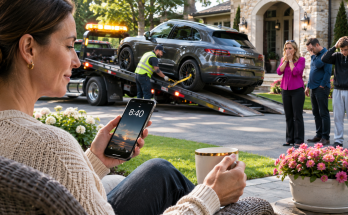
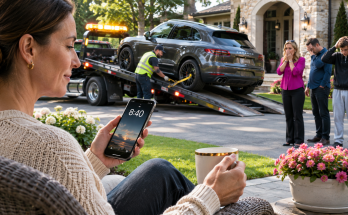
So I recovered the Porsche.
I canceled the emergency card.
And the next morning, the family reacted.
Jessica called at 8:43.
My mother arrived at 9:06.
David called at 10:15.
Luke contacted me at 11:32.
Then came Jessica's messages.
The strange envelope.
The call from Andrew Miller.
The application.
The admission.
The disputed signature.
The additional inquiries.
By evening, Carter had come to my home demanding the Porsche.
And Robert was warning me to protect my financial identity.
So much had happened in one day that I could barely separate the conversations.
But the timeline was important.
Each event had revealed another piece of the problem.
I had started with a family disagreement.
Then I discovered documents suggesting something much more serious.
I thought about how differently I might have handled the situation years earlier.
If Jessica had called crying, I would probably have apologized.
If my mother had called me selfish, I would have tried to prove I wasn't.
If David had threatened to tell the family secrets about me, I might have become frightened.
If Carter demanded the keys, I might have agreed to return them after a short conversation.
That was the old pattern.
I gave in.
Everyone calmed down.
And I convinced myself the problem had been resolved.
But problems don't disappear simply because people stop arguing about them.
Sometimes they remain hidden.
Sometimes they grow.
Sometimes they become so familiar that nobody remembers who originally agreed to what.
That was what had happened with the emergency card.
I had offered limited financial help.
Jessica had continued using it.
The balance reached fifteen thousand dollars.
And David spoke about mortgage payments as though the card had always been intended for them.
The original arrangement had become something else.
I had allowed that change by not paying attention.
I could admit that.
But I didn't have to keep allowing it.
The Porsche had followed a similar pattern.
I bought the vehicle.
I kept legal ownership.
I permitted Carter to drive it.
Over time, the family began describing it as his car.
Then David attempted to use it to support a loan.
And Jessica signed a statement claiming I'd approved.
Again, something I had offered had been treated as though it belonged to someone else.
I could see the similarity now.
It wasn't simply that my family needed help.
It was that they had stopped treating my permission as important.
I thought about my mother's visit.
She hadn't wanted to read the paperwork.
She had said family mattered more than legal details.
But legal details weren't separate from family responsibility.
They protected people from misunderstandings.
They showed what had actually been agreed to.
They established ownership.
And in this case, they might help establish whether somebody had attempted to use my property without consent.
I wished she'd understood that.
But I couldn't force her.
I couldn't make my mother read the title.
I couldn't make Jessica admit everything she knew.
I couldn't make David explain his threats.
And I couldn't make Carter understand why his birthday joke had hurt.
I had spent years trying to control those things indirectly.
By being generous.
By staying quiet.
By avoiding disagreement.
It hadn't worked.
Now I needed to accept that other people would make their own choices.
My responsibility was to make mine carefully.
I looked at the message from Robert.
He wanted the financial records preserved.
He wanted me to secure my accounts.
He wanted any suspected identity misuse formally reported.
Those instructions were practical.
They didn't depend on family loyalty.
They didn't depend on whether somebody apologized.
They didn't require me to persuade anyone that I was a good person.
I appreciated that.
I had spent the day being told that protecting my money was selfish.
Robert treated it as a reasonable precaution.
That difference mattered.
I returned to the three inquiries.
The first involved the Porsche.
The second involved a personal loan.
The third involved a credit application.
Jessica's phone number appeared in all three.
I didn't know whether the other two were approved.
I didn't know whether money had changed hands.
I didn't know who had completed the applications.
And I didn't know whether the same person had submitted all of them.
Those questions remained open.
I wasn't going to pretend otherwise.
But the inquiries were enough to justify further investigation.
That was the point Robert had made.
We didn't need to know the entire story before protecting my accounts.
We needed to respond to the risk while preserving the information required to establish what happened.
I understood.
And for once, I didn't feel I had to ask Jessica's permission before making a financial decision.
I thought about her admission.
She said David's business was struggling.
They had debts.
They needed money.
They thought the Porsche could help them borrow what they needed.
And they believed they could repay the loan before I discovered it.
I kept returning to that final part.
Before I discovered it.
That wasn't the language of someone who intended to ask for permission.
It was the language of someone who knew the truth might cause a problem.
I didn't want to believe Jessica had deliberately taken advantage of my trust.
But I couldn't ignore what she'd said.
She knew about the application.
She signed a statement claiming I'd agreed.
And she hadn't told me.
Those were facts.
Whatever her intentions, the effect was the same.
My name had been used to support an arrangement I hadn't authorized.
I looked at the disputed signature again.
It was close enough to mine that someone unfamiliar with my handwriting might have accepted it.
The first letter.
The curve.
The small line beneath the surname.
Whoever created it had made an effort to reproduce the appearance.
But I knew it wasn't genuine.
I had told Andrew that.
I had told Robert.
And I intended to maintain that position in the formal dispute.
I didn't need to invent a dramatic explanation.
The truth was simple.
I hadn't signed it.
I hadn't authorized the loan.
I hadn't agreed to transfer the Porsche.
I thought about David's business name.
JD Lifestyle Ventures LLC.
I hadn't known it existed until I read the application.
I had no agreement with that business.
No loan arrangement.
No ownership transfer.
No permission for it to use my assets.
That mattered.
David's financial problems were his responsibility.
I could choose to help if I wanted.
But he couldn't make that choice for me.
I looked back at the emergency account.
The balance remained.
Fifteen thousand dollars.
Closing the card hadn't erased the money already spent.
I would still need to deal with the consequences of allowing that access.
That was uncomfortable.
But at least the spending had stopped.
At least I had drawn a line.
I didn't have to continue an arrangement simply because I'd allowed it before.
That was something I wished I'd understood earlier.
I thought about Carter.
He was nineteen.
He had driven the Porsche for two years.
He had grown accustomed to the expensive car.
He had enjoyed the convenience without paying the costs.
Then he behaved cruelly at my birthday dinner.
And when I recovered the vehicle, he came to my house demanding it back.
I couldn't make him grateful.
I couldn't force him to apologize sincerely.
I couldn't make him understand the financial responsibilities involved.
But I could stop providing the car.
I could keep the title.
I could protect the vehicle.
And I could refuse to allow my property to be used in financing I hadn't approved.
Those were choices within my control.
That distinction gave me something I hadn't felt for a long time.
Clarity.
I didn't feel happy about the situation.
I didn't enjoy the conflict.
I didn't want to see Jessica struggling.
I didn't want Carter miserable.
I didn't want David frightened about his business.
And I didn't want my mother disappointed in me.
But I couldn't solve all of those problems by sacrificing my own financial safety.
I had tried to solve family problems with money for years.
The problems kept returning.
The expectations kept growing.
And the respect I hoped to receive never seemed to arrive.
Now there were documents suggesting my identity might have been used without permission.
That wasn't something more generosity could repair.
It required facts.
Records.
Proper review.
And boundaries I was willing to maintain.
I picked up the folder containing the original Porsche documents.
The paper felt ordinary in my hands.
It wasn't a symbol of revenge.
It wasn't a trophy.
It was proof of a purchase I had made.
Proof of responsibilities I'd continued carrying.
And proof that allowing somebody to enjoy something didn't mean surrendering ownership.
I returned it to a safe place.
Then I looked at the family photograph one last time.
I still didn't know what the investigation would reveal.
I didn't know whether the other financial inquiries were connected to unauthorized applications.
I didn't know who had copied my signature.
I didn't know whether Carter understood his father's intentions.
And I didn't know what my relationship with Jessica would look like after the truth was established.
But I knew what I needed to do next.
Follow Robert's advice.
Protect my accounts.
Preserve the evidence.
And stop allowing fear of my family's anger to determine my decisions.
I had spent years thinking generosity would keep everyone close.
Now I understood that closeness without honesty wasn't enough.
The Porsche remained secure.
The credit card remained closed.
The disputed applications still required investigation.
And I was no longer willing to pretend that a family relationship made those concerns disappear.
Click here to continue reading: PART 13: My Family Had Always Expected Me to Fix Their Problems, but the Papers on My Desk Showed Why I Could No Longer Trust Their Promises
The Morning After My Nephew Ruined My Birthday, My Sister Called Demanding a Car She Never Knew I Still Owned
Part 12 of 15