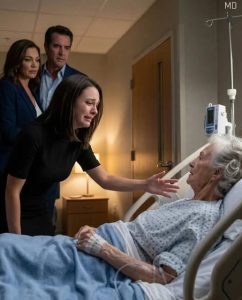
My father’s face changed the moment the pastor unfolded Grandma Ruth’s final note and read, “If John is here, do not let him speak for me.” The church became completely silent. Only a few days earlier, I had called my parents from the hospital at 2:18 in the morning, begging them to come after Grandma needed emergency surgery. My mother sighed, and my father said, “You’re already there. You can handle it.” Then he ended the call. I spent the night alone in the waiting room, sending updates and watching the doors every time they opened. Neither of them arrived before the doctor gently told me Grandma was gone.
Grandma had always been the person who showed up for everyone. She helped my father through business trouble, shared her pension when he needed support, and rarely complained when her kindness was treated like an obligation. Yet when her own health declined, he visited only when it was convenient. At the funeral, he sat in the front row wearing a dark suit and accepted sympathy as though he had been beside her throughout her final hours. He told relatives that Grandma would have wanted the family united. I sat behind him without responding, remembering the unanswered calls, his brief message telling me to keep him updated, and the lonely hours Grandma and I had faced without him.
The pastor continued reading. Grandma wrote that no one should allow my father to make decisions about her estate. He immediately stood and claimed she had been confused before surgery. That was when her attorney, Mr. Bell, rose from the second row carrying a leather folder. He explained that Grandma had updated her plans eight months earlier after noticing troubling activity in her accounts. The records showed repeated payments and transfers connected to my father’s business, along with documents she said she had never approved. My father blamed me, but Mr. Bell calmly reminded him that I had not created the bank records. Then the pastor read another line: “Ask John where he was when I called him from the hospital.”
Mr. Bell revealed that Grandma had left my father a voicemail before surgery, asking him to come simply as her son. His reply told her to call me because I “handled those things.” My mother lowered her head as the message ended. Then came Grandma’s final decision: she had appointed me executor, left me her house, and instructed the estate to recover any money that properly belonged to her. My father received a small personal keepsake and a letter explaining that love was measured by presence, not speeches. Later, while sorting Grandma’s recipe cards, I found one addressed to me: “Clara, love is not proven at funerals. It is proven in waiting rooms.” I framed it in her kitchen. The biggest thing Grandma left me was not her property—it was the courage to stop confusing family titles with genuine care.