“Mine,” I repeated. “I signed a six-month lease. Paid in advance.”
Stephanie blinked.
“You did what?”
“I rented this apartment.”
“But Mama, where did you get the money?”
I looked at her.
“From my bank account.”
Brett gave a little laugh.
“Well, that’s good. But you can’t spend all your money on rent. You need to think long-term.”
I almost smiled.
There he was again, telling me how to spend money that belonged to me.
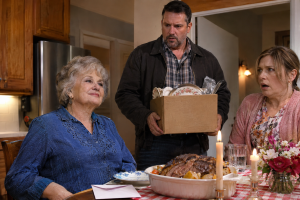
“Sit down,” I said. “Supper’s ready.”
They exchanged a look but sat.
I served the pot roast, mashed potatoes, carrots, and green beans. Calvin had loved green beans cooked with a little bacon grease. I’d made them the same way for forty-two years.
Stephanie took a bite.
“This tastes just like Daddy’s Sunday dinners.”
“I know, honey.”
For a few minutes, nobody said anything.
Then Brett cleared his throat.
“So, Delia, about that lease.”
I put my fork down.
“What about it?”
“The garage apartment. We really need to know whether you’re taking it. The interested renter is waiting.”
“I won’t be taking it.”
Stephanie looked up.
“Mama.”
“No, honey. I won’t.”
Brett leaned back.
“Can we talk about this sensibly?”
“We’re talking now.”
He looked around the apartment.
“This place can’t be cheap. You don’t have a job. You’re seventy-one years old. You need to be careful.”
“I am being careful.”
“Then why would you spend money on an apartment when you could live with family?”
I looked at the envelope beside Stephanie’s plate.
“That’s a good question. Maybe you should open that.”
She looked down.
“What’s this?”
“Something I wanted you to read.”
She opened it.
Inside was a copy of the bank statement, a letter from the bank confirming the balance, and a handwritten note.
Stephanie read the first page.
Then she read it again.
Her mouth opened slightly.
Brett reached across the table.
“What is it?”
She handed him the statement.
His eyes moved down the page.
Then he stopped.
“Where did this come from?”
“Calvin,” I said.
The room went quiet.
For forty-two years, Calvin had saved money.
Some came from ranch bonuses. Some came from calves he raised on the side. Some came from little jobs he did for neighboring ranchers.
He never bought himself expensive boots.
He wore the same winter coat until the elbows went shiny.
And every few months, he deposited another little piece of our future into the bank.
The account had grown to $286,400.
Brett stared at the number.
“That’s impossible.”
“No,” I said. “It’s just something you didn’t know.”
Stephanie was still looking at the papers.
“Daddy never told me.”
“Your father didn’t want our children growing up believing there was a pile of money waiting for them.”
Brett put the statement down.
“Well, that’s a substantial amount.”
I nodded.
“It is.”
“Then you really don’t need to be worrying about rent. You could invest it.”
I took a sip of water.
“I already have a plan.”
“What plan?”
“I plan to live.”
Stephanie looked at me.
“Mama, why didn’t you tell us?”
I held her eyes.
“Because it wasn’t yours to know.”
That hurt her.
I could see it.
But I wasn’t going to take it back.
Then I asked the question I’d been carrying around for two weeks.
“Stephanie, when you brought me that lease, did you know it would take every dollar of my pension?”
She looked down.
“Yes.”
“And did you know Brett expected me to pick up the children and cook supper every night?”
She nodded.
“Yes, but we thought it would work out.”
“Did either of you think to ask what I wanted?”
Neither answered.
I looked at Brett.
“Did you ever consider that I might want to spend my remaining years doing something other than working for my daughter’s household?”
He folded his napkin.
“We were trying to help.”
“Then why did you have a lease ready before you asked me?”
He didn’t answer.
I looked back at Stephanie.
“Do you remember when you were eight and you broke your arm falling off that bicycle?”
She nodded slowly.
“I sat beside your bed for three nights. Your daddy slept in the chair because he didn’t want you waking up alone.”
“I remember.”
“When you had your babies, I came and stayed for two weeks each time. I cooked, cleaned, washed clothes, and held those babies so you could sleep.”
“Mama…”
“I did those things because I loved you. Not because you owed me a paycheck. Not because I expected you to give me a room someday.”
My voice was shaking now.
“And I would have helped you again. Gladly. But you put a price on my home, my pension, and my time. You called it fair.”
Stephanie’s eyes filled.
Brett shifted in his chair.
“We didn’t mean to upset you.”
“Well, you did.”
Nobody touched the pot roast after that.
Then Stephanie looked at the bank statement again.
“How much is there exactly?”
I sat back.
“Enough for me to stop worrying about whether I can afford to grow old.”
And for the first time that evening, I saw something in my daughter’s face that I couldn’t quite name.
It wasn’t happiness.
It wasn’t sadness.
It was surprise.
She had come to supper expecting to discuss my future.
Instead, she had discovered I’d already begun living it.
PART 3 – WHAT CALVIN LEFT BEHIND
Brett was the first to recover.
He cleared his throat and tried a different approach.
“Well, Delia, I think we should all take a step back. Obviously, there have been some misunderstandings.”
I almost laughed.
Misunderstandings.
That was a tidy word for what had happened.
“You can call it whatever you like,” I said. “But I know what was written on that lease.”
Stephanie wiped her eyes.
“Mama, we really thought you would be better off with us.”
“Did you?”
“Yes.”
“Then why was there no bedroom for me in your house?”
She looked confused.
“What?”
“The garage apartment. One room. A hot plate. A little bathroom. That’s where you thought your mother belonged.”
Brett interrupted.
“It was a perfectly nice apartment.”
“Maybe it was. But it wasn’t a home I wanted.”
I got up and brought out the pecan pie.
Wynell had written another note on the box.
Don’t let them steal your dessert, either.
I smiled despite myself.
Stephanie noticed.
“What’s funny?”
“An old friend.”
I cut the pie.
Brett didn’t take any.
Instead, he leaned forward.
“There’s something else we should discuss. With that kind of money, you should have somebody managing it. Someone who understands finances.”
I put down the pie server.
“Are you offering?”
“Well, I sell insurance. I understand financial planning.”
I looked at him for a long moment.
Then I said, “No, Brett. You sell insurance.”
His face tightened.
Stephanie whispered, “Mama.”
I continued.
“I have an appointment with a financial adviser at the bank next week. An independent one. Somebody who doesn’t have a family interest in my money.”
Brett looked offended.
“You’re making this personal.”
“No. I’m making it sensible.”
He pushed his chair back.
“Maybe we should go.”
Stephanie didn’t move.
She was staring at the little photograph on my bookshelf.
It was a picture of Calvin standing beside our old ranch truck. His hat was crooked, and he had one hand resting on the hood.
Stephanie picked it up.
“Daddy looks so happy here.”
“He was.”
She turned it over.
There was a date written on the back.
The summer before he died.
Underneath, Calvin had written:
For my girls. Keep going, even when the road gets hard.
Stephanie read it twice.
Then she began to cry.
“I miss him.”
I walked around the table and put my hand on her shoulder.
“So do I, honey.”
She leaned into me.
For a moment, I was tempted to tell her everything was all right.
But it wasn’t.
Love doesn’t mean pretending someone hasn’t hurt you.
And forgiveness doesn’t mean handing them the keys to your life.
When they finally stood to leave, Brett picked up the box of dishes.
“These are yours,” he said.
“Thank you.”
Stephanie hugged me at the door.
“Can I come by tomorrow?”
“You can.”
She hesitated.
“Will you be home?”
I looked at her.
“Maybe. I have plans.”
She gave a small, uncertain smile.
“Okay.”
After they left, I locked the door.
I stood by the window and watched their car disappear down the highway.
Then I went to my bedroom and sat on the edge of the bed.
For the first time since Calvin died, I cried without trying to stop myself.
Not because I was lonely.
Not because I was frightened.
But because I had finally understood something.
I could love my daughter with my whole heart and still tell her no.
The next morning, I went downstairs to the diner.
Wynell was wiping the counter.
“Well?”
I sat on my usual stool.
“They came.”
“And?”
“They ate my pot roast.”
She raised an eyebrow.
“That’s all?”
“They found out about the money.”
Wynell put down the cloth.
“And how’d that go?”
“About like you’d expect.”
She poured me coffee.
“Delia Mae, there’s something I want you to think about.”
“What?”
“You’ve spent your whole life being somebody’s wife, somebody’s mother, somebody’s helper. Maybe it’s time you figured out who Delia is.”
I looked through the window.
Cars passed on the highway.
A little girl was walking with her grandmother toward the diner.
The grandmother held the child’s hand.
I smiled.
“Maybe you’re right.”
“Of course I’m right. I’ve been right since 1978.”
I laughed.
Then Wynell pulled out a newspaper.
“There’s a senior center looking for volunteers. They need somebody to help with their community supper on Thursday.”
I looked at her.
“Cooking?”
“Unless they’ve suddenly started serving cement.”
I laughed again.
“Well, I might consider it.”
“Good. And there’s something else.”
“What?”
“There’s a little used blue car for sale at the dealership. Clean, reliable, and not a ranch truck.”
“Wynell, I don’t need another thing.”
“Delia, you need a car.”
I took another sip of coffee.
And for the first time in a very long time, I began thinking about what I wanted next.
Not what somebody needed from me.
Not what somebody expected.
What I wanted.
PART 4 – THE CALL THAT CHANGED EVERYTHING
Three days later, Stephanie called.
“Mama, can I come over?”
“Of course.”
“Just me.”
I noticed those two words.
Just me.
When she arrived, she was carrying a grocery bag.
“I brought groceries.”
I looked inside.
Milk, bread, eggs, potatoes, and a package of coffee.
“You didn’t have to do that.”
“I know.”
She stood in the middle of my kitchen.
For a moment, neither of us knew what to say.
Then she sat down.
“Mama, I owe you an apology.”
I pulled out a chair.
“I’m listening.”
She took a breath.
“Brett and I talked. A lot.”
“About the apartment?”
“About everything.”
She looked down at her hands.
“We thought you would be lonely. We thought you wouldn’t know how to manage on your own.”
“I managed before I married your father.”
“I know.”
“And I managed forty-two years on that ranch.”
“I know, Mama.”
She began to cry.
“But I think we also saw your pension and your situation as something that could help us.”
I said nothing.
“Our mortgage went up. The kids’ school expenses have been difficult. Brett’s business hasn’t been doing as well as he says.”
There it was.
The truth.
I waited.
Stephanie continued.
“We thought if you moved in, it would help us financially. And with the children.”
“Did you ever consider asking me for help?”
She nodded.
“We should have.”
“Instead, you wrote a lease.”
“I know.”
I looked at my daughter.
“Why?”
She wiped her cheeks.
“Because Brett said it was practical. And I didn’t want to argue with him.”
That answer hurt more than the lease.
“Stephanie, honey, you are forty-five years old. You don’t have to agree with your husband about everything.”
She looked up.
“I know.”
“Your father and I disagreed plenty. But he never asked me to sign away my pension because it was convenient.”
She nodded.
“I know.”
We sat quietly.
Then she reached into her purse and pulled out a folded sheet of paper.
“I brought this.”
It was the lease.
The same one they’d given me.
She had crossed out the amount and written something across the top.
Withdrawn.
“I don’t want you to keep this,” she said.
I looked at it.
Then I folded it and placed it in the drawer.
“Thank you.”
She looked around the apartment.
“It’s nice here.”
“It is.”
“Your curtains are pretty.”
“Wynell helped me pick them.”
“And the kitchen?”
“Mine.”
She smiled faintly.
“You’re proud of it.”
“I am.”
Then she asked something I hadn’t expected.
“Would you ever let the kids come stay with you?”
I considered that.
“Of course. But not every day. And not because somebody needs free childcare.”
She laughed through her tears.
“That’s fair.”
I smiled.
“Now you’re learning.”
Before she left, she hugged me.
This time, the hug felt different.
It wasn’t a goodbye.
It wasn’t a demand.
It was simply a hug.
After she walked downstairs, I stood by the window.
I didn’t know whether Brett would change.
I didn’t know whether Stephanie would truly understand.
But I knew something important.
I didn’t have to solve their marriage.
I didn’t have to rescue their finances.
I didn’t have to spend my remaining years proving that I was a good mother.
I’d already done that.
PART 5 – THE SECRET CALVIN NEVER TOLD ME
The following week, I went to the bank for my appointment.
The financial adviser was a woman named Mrs. Harper.
She was perhaps sixty, wore sensible shoes, and spoke to me like I was a person instead of a problem.
We reviewed the accounts.
The savings.
The pension.
The small amount from the sale of my old truck.
Then she asked whether Calvin had left a will.
“He did.”
“Have you reviewed it?”
I nodded.
“I thought I had.”
She opened a folder.
“There’s something here you may not have noticed.”
She turned a page toward me.
It was a letter.
Calvin’s handwriting.
My hands began to tremble.
“Where did that come from?”
“It was included with the estate paperwork.”
I picked it up.
The letter was dated eight months before he died.
It read:
Delia Mae,
If you’re reading this, I’ve probably gone ahead without you. I know you hate talking about money, and I know you’ll say we have enough.
But I want you to know something.
Every dollar I saved was never meant to keep you comfortable for a few years. It was meant to give you choices.
I spent most of my life working for other people. I know what it’s like to have a home that belongs to somebody else’s job.
You gave up a lot to follow me from ranch to ranch. You raised our girl. You made every place feel like home.
I don’t want you spending your old age asking anybody for permission to live.
Buy the curtains you like. Eat pie on a Tuesday. Take a trip if you want.
And if anybody tells you that your money belongs to them because they’re family, remember this: family should be the people who help you keep your feet under you, not the people who pull the ground out from underneath you.
I love you, Delia Mae.
Always, Calvin.
I couldn’t read the last line.
I pressed the paper to my chest.
Mrs. Harper quietly handed me a tissue.
“Your husband seems to have understood something important.”
I nodded.
“He always did.”
I stayed in the bank for another hour.
We discussed how to protect the money, how much I could safely spend, and how to keep my pension separate from my savings.
I arranged for the accounts to remain in my name.
I also updated my will.
Not because I was angry with Stephanie.
But because I had learned that love and financial boundaries could exist together.
When I left the bank, I went straight to the dealership.
The little blue car was still there.
I took it for a test drive.
It wasn’t fancy.
It had a few scratches near the back bumper, and the radio took a moment to turn on.
But it started easily.
The seats were comfortable.
And when I drove it down the highway, I felt something I hadn’t felt in months.
Freedom.
I bought it.
That evening, I parked it outside the diner.
Wynell came running out.
“Well, look at you!”
I got out and tossed her the keys.
“Want to see?”
She walked around it.
“Blue. I knew you’d choose blue.”
“How?”
“Because you’ve always liked blue.”
I looked at the little car.
Maybe she was right.
Maybe I had always liked blue.
I’d just spent so many years choosing what everybody else needed.
PART 6 – THE LAST TEST
About a month later, Brett called.
His voice was unusually gentle.
“Delia, how are you doing?”
“I’m doing fine.”
“Good. Good.”
There was a pause.
“Listen, Stephanie told me you’ve been doing well.”
“I have.”
“That’s great.”
Another pause.
Then he said, “We have a situation.”
I closed my eyes.
There it was.
“What kind of situation?”
“Business has been slow. We got behind on a couple of payments.”
“I’m sorry to hear that.”
“Well, I was wondering if you might be able to help us with a small loan.”
I looked at the window.
The highway was busy.
A truck rolled past.
“How much?”
“Twenty thousand.”
I sat down.
“Twenty thousand dollars?”
“Just temporarily. We’d pay it back.”
“When?”
“Probably within a year.”
I was quiet.
Brett hurried on.
“We wouldn’t ask if we didn’t really need it. And obviously, with Calvin’s savings, it wouldn’t be a problem.”
I looked at the letter on my table.
The one Calvin had written.
Your money is meant to give you choices.
“Brett,” I said, “I’m not lending you twenty thousand dollars.”
He went silent.
“Why not?”
“Because I don’t want to.”
“Delia, come on.”
“I am sorry you’re having trouble. But I won’t be lending you that money.”
He sighed.
“I thought we were past all this.”
“Past what?”
“The apartment thing. The misunderstanding.”
I felt my shoulders straighten.
“Brett, we were never discussing a misunderstanding. We were discussing a decision you made about my life without asking me.”
He said nothing.
“And I am not going to buy my way back into your good graces.”
“That’s not what this is.”
“Then you won’t mind if I say no.”
He hung up.
I sat there for a long time.
Then I picked up the phone and called Wynell.
“Coffee?”
She answered immediately.
“Already pouring.”
I drove down to the diner.
Wynell looked at my face.
“Money?”
I nodded.
“How much this time?”
“Twenty thousand.”
She whistled.
“Good heavens.”
“I said no.”
She poured my coffee.
“Good.”
Then she leaned over the counter.
“Delia Mae, do you know what I think?”
“What?”
“I think you’ve finally learned that saying no doesn’t make you a bad person.”
I looked at her.
Then I smiled.
“Maybe I have.”
PART 7 – THE NIGHT MY GRANDCHILDREN CAME
Two weeks later, Stephanie called again.
This time, she sounded different.
“Mama, the children want to see you.”
“I’d love to see them.”
“Could they come Saturday?”
“Of course.”
She hesitated.
“Would it be all right if I dropped them off for a couple of hours?”
“Yes. But I’ll be taking them home by six.”
“That’s fine.”
On Saturday morning, my grandchildren arrived with backpacks and a bag of toys.
Eight-year-old Lily ran up the stairs first.
“Grandma!”
She threw her arms around me.
Six-year-old Noah followed.
“Grandma, is this your house?”
“It is.”
“Can we see everything?”
“Well, there’s not much to see, but you can certainly look.”
They inspected the apartment as if it were a castle.
Lily loved the yellow curtains.
Noah loved the refrigerator.
“Grandma, you have your own fridge!”
I laughed.
“Sure do.”
We made cookies.
They helped me stir the batter, though Noah managed to get flour on his nose.
Then we walked down to the diner.
Wynell gave them each a little chocolate milk.
She also gave them two cookies.
“Your grandmother is a fine woman,” she told them.
Lily nodded seriously.
“I know.”
Noah looked at me.
“Grandma, are you going to come live with us?”
I knelt beside him.
“No, sweetheart. Grandma has her own home.”
“Why?”
“Because I like having my own place.”
He considered that.
Then he asked, “Can I come here sometimes?”
“Anytime your mama says it’s okay.”
He smiled.
That afternoon, we played cards and watched an old western movie.
When Stephanie arrived at six, the children were sitting on the floor, laughing.
She stood in the doorway.
For a moment, she just watched.
Then she said, “Looks like you’ve had a good day.”
“We have.”
Lily ran over.
“Mom! Grandma has her own car, and her own fridge, and she lets us make cookies!”
Stephanie smiled.
“That sounds wonderful.”
She looked at me.
“Thank you for having them.”
“You’re welcome.”
As the children gathered their things, Stephanie stayed behind.
“Mama, can I ask you something?”
“Of course.”
“Do you think you’ll ever forgive me?”
I looked at her.
It was a question I’d been expecting.
But I didn’t want to answer too quickly.
“I forgave you for being scared,” I said. “I understand that life gets hard. I understand that people make mistakes.”
She nodded.
“But I haven’t forgotten what happened. And I don’t want us to go back to pretending it didn’t.”
“I don’t want that either.”
“Then we’ll start there.”
She reached for my hand.
“I love you, Mama.”
“I love you too, honey.”
And I meant it.
For the first time, I believed we might find a better way to be mother and daughter.
PART 8 – A LIFE THAT WAS MINE
Winter came early that year.
The highway outside my window turned silver with frost.
I bought a warm blanket, a little artificial Christmas tree, and a red wreath for the door.
I also began volunteering at the senior center.
Every Thursday, I helped cook supper for people who didn’t have much company.
Some were widowed.
Some had never married.
Some had children who lived too far away.
I recognized the loneliness in their faces.
But I also recognized something else.
They were still people with plans.
With memories.
With things they wanted to do.
One Thursday, a woman named Ruth sat beside me while I peeled potatoes.
“How long have you lived alone?” she asked.
“Since spring.”
“Doesn’t it bother you?”
I thought about it.
“Sometimes.”
She nodded.
“Me too.”
Then she smiled.
“But I bought myself a red bicycle last month.”
I laughed.
“At your age?”
“At seventy-six.”
I shook my head.
“Well, that’s something.”
She winked.
“You’re never too old to do something foolish.”
That evening, I drove home under a sky full of stars.
I thought about Calvin.
I thought about the ranch.
I thought about the woman I’d been for forty-two years.
I didn’t regret being Calvin’s wife.
I didn’t regret raising Stephanie.
I didn’t regret the years spent cooking meals, washing clothes, mending shirts, and making a home out of whatever little house the ranch provided.
Those years mattered.
They were my life.
But they weren’t all of it.
And I had finally stopped treating the end of my marriage as the end of my own story.
A week before Christmas, Stephanie came over with the children.
They brought a small tree ornament.
It was a little silver heart.
On it were the words:
Grandma’s First Christmas in Her Own Home.
I held it in my hand.
For a moment, I couldn’t speak.
Stephanie stood beside me.
“I thought you might like it.”
I nodded.
“I do.”
She helped the children hang it on the tree.
Then she turned toward me.
“Brett wanted to come, but I thought maybe it would be better if I came alone with the kids.”
I appreciated that.
“That’s fine.”
She hesitated.
“He has been thinking about things.”
I didn’t ask what things.
I didn’t need to.
Some lessons take longer than others.
That night, after they left, I sat in my recliner with a cup of tea.
The little silver heart caught the Christmas lights.
I looked at it for a long time.
Then I opened Calvin’s letter again.
I had read it so many times that I knew most of it by heart.
But one sentence still made me cry.
I don’t want you spending your old age asking anybody for permission to live.
I put the letter back in its envelope.
Then I turned off the television.
Outside, snow was falling softly.
I thought about the first night I came to this apartment.
The empty rooms.
The unfamiliar stairs.
The fear of starting over at seventy-one.
And I thought about the woman who had sat in that diner booth with a lease in her purse, believing her life was about to become smaller.
She had been wrong.
It had become bigger.
PART 9 – THE APOLOGY I NEVER EXPECTED
The following spring, almost a year after Calvin died, Brett came to see me.
Alone.
He knocked twice.
When I opened the door, he was holding a small paper bag.
“Delia.”
“Brett.”
He looked uncomfortable.
“Can I come in?”
I stepped aside.
He sat at the kitchen table.
For once, he didn’t begin by talking about money.
He looked at the yellow curtains.
Then at the little silver heart hanging near the window.
“Nice place,” he said.
“Thank you.”
He cleared his throat.
“I wanted to apologize.”
I sat opposite him.
“For what?”
He looked at me.
“For the lease. For the way I spoke to you. For acting like your pension was something we could arrange around our needs.”
I didn’t say anything.
He continued.
“Stephanie and I have had some hard conversations. She told me things I didn’t want to hear.”
I waited.
“I think I saw your situation as a solution to our problems. And I didn’t stop to think about what it meant for you.”
I looked at him.
“That’s true.”
He nodded.
“I was wrong.”
Those words surprised me.
Not because they were complicated.
Because they were simple.
And I’d waited a long time to hear them.
He pushed the paper bag toward me.
“I brought something.”
Inside was a framed photograph of Calvin.
It was one I hadn’t seen before.
Calvin was standing beside Stephanie when she was about ten years old. He had his arm around her, and she was laughing.
“Where did you find this?”
“Stephanie had it in a box.”
I ran my finger along the frame.
“Thank you.”
Brett looked down.
“I can’t promise I’ll never make another mistake. But I won’t ask you for your money again.”
I nodded.
“That’s a good place to start.”
He stood.
Then he paused.
“Would you ever consider having supper with us? Not because of childcare or anything. Just supper.”
I thought about it.
“Perhaps.”
He nodded.
“Okay.”
After he left, I put the photograph beside Calvin’s other pictures.
I wasn’t suddenly best friends with Brett.
An apology doesn’t erase a person’s behavior.
But I appreciated that he’d finally spoken to me like a person.
And I appreciated that I no longer needed him to approve of my choices.
That evening, I called Stephanie.
“He came by.”
“I know. He told me.”
“He apologized.”
She was quiet.
“Did you forgive him?”
“I heard him.”
She laughed softly.
“That’s very Mama.”
I smiled.
“Good night, honey.”
“Good night.”
PART 10 – THE WOMAN IN THE BLUE CAR
By the time summer arrived, I’d been in my apartment for almost a year.
I had planted flowers outside the stairs.
Yellow ones.
Wynell said they were too bright.
I told her that was exactly why I liked them.
I drove my little blue car to the senior center twice a week.
I went to the diner every Sunday morning.
Sometimes I took Stephanie and the children to the park.
Sometimes I went alone.
And one morning, I decided to do something I hadn’t done in forty years.
I booked a little trip.
Nothing grand.
Just three days at a small lakeside inn two hours away.
I’d always wanted to see the lake in autumn.
Calvin had promised we’d go one year.
Then there was another ranch job.
Another winter.
Another responsibility.
And somehow, the years went by.
This time, I wasn’t waiting for somebody else.
I packed my suitcase.
I put Calvin’s letter in the front pocket.
And I drove.
When I reached the lake, the water was shining beneath the afternoon sun.
I stood on the little wooden dock.
The wind lifted my hair.
And I said aloud, “Well, Calvin. I made it.”
I could almost hear him laughing.
That evening, I ate dinner alone at a little restaurant.
The waitress asked whether I was waiting for someone.
“No,” I said. “Just me.”
She smiled.
“Enjoy your evening.”
And I did.
I ordered a piece of apple pie.
I ate every bite.
The next morning, I walked beside the lake.
There were other older women there.
One was taking photographs.
Another was reading a book.
I sat on a bench and watched the water.
For the first time, being alone didn’t feel like being left behind.
It felt like being free.
PART 11 – WHAT I TOLD MY DAUGHTER
On my birthday, Stephanie hosted a small dinner.
She invited me, the children, and Wynell.
Brett cooked the meal himself.
It was a little overcooked, and the potatoes were too salty, but I ate every bite.
After supper, Stephanie brought out a cake.
Seventy-two candles would have been a fire hazard, so she used seven large ones and two small ones.
The children sang loudly.
Wynell sang louder.
I laughed until my cheeks hurt.
Then Stephanie stood.
“Mama, I want to say something.”
The room became quiet.
She held her glass.
“I know this year has been hard. Losing Daddy was hard for all of us. But I think I made things harder for you when you needed kindness.”
She looked at me.
“I thought being your daughter meant I knew what was best for you. I was wrong.”
I reached for her hand.
She continued.
“I don’t want you to think you have to earn your place in this family by doing things for us. You’re my mother. You’re not our babysitter, our cook, or our bank account.”
Brett looked down.
Then he raised his glass.
“To Delia.”
Wynell raised hers.
“To Delia Mae.”
The children raised their glasses of lemonade.
“To Grandma!”
I looked around the table.
And I realized that something had changed.
Not because the money had changed.
Not because I had a new apartment.
But because I had finally made it clear that love was not a contract.
I stood and raised my glass.
“Thank you, everybody.”
Then I looked at Stephanie.
“Honey, I want you to remember something.”
She nodded.
“What’s that?”
“Your mother can love you without living under your roof. She can help you without giving you everything she owns. And she can be seventy-two years old and still have dreams of her own.”
Stephanie smiled through her tears.
“I know, Mama.”
I looked around the table.
“And if any of you ever need me, you can call. But don’t bring me a lease.”
Everybody laughed.
Even Brett.
Especially Wynell.
PART 12 – THE REAL MEANING OF FAMILY
A few months later, I received a letter from the ranch.
It was from the manager.
He wrote that they were preparing to renovate the old foreman’s house.
He also included a photograph.
There it was.
The house where Calvin and I had lived for so many years.
The porch where we drank coffee.
The kitchen where I cooked for ranch hands.
The bedroom where Calvin had passed away.
I stared at the picture for a long time.
Then I placed it beside his photograph.
I didn’t feel angry.
I didn’t even feel sad in the way I once had.
I felt grateful.
That house had been our home for a long time.
But it had never been the only place I could belong.
The following Sunday, I went to the diner.
Wynell was setting out the breakfast menus.
“Morning, Delia Mae.”
“Morning.”
She looked at me.
“What’s that smile for?”
I slid into my booth.
“Nothing.”
“Nobody smiles like that for nothing.”
I took off my coat.
“I was thinking about Calvin.”
“Good thoughts?”
“Very good ones.”
She poured my coffee.
Then she asked, “Do you ever wish things had turned out differently?”
I thought about the question.
I thought about the lease.
The pot roast.
The envelope.
The bank statement.
The little blue car.
The lake.
My grandchildren.
And my daughter.
“No,” I said finally. “I wish some things hadn’t happened. But I don’t wish I had made different choices.”
Wynell smiled.
“That’s a pretty good answer.”
I looked out the window.
A young mother was helping her little boy into a car seat.
An old man was walking his dog.
A truck driver was stopping for coffee.
Life was moving along.
And so was I.
I had spent forty-two years being a ranch foreman’s wife.
I had spent another forty-five years being somebody’s mother.
And now, at seventy-two, I was learning to be Delia.
Just Delia.
A woman with her own keys.
Her own curtains.
Her own money.
Her own little blue car.
And a home where nobody could tell her that her presence was worth exactly $1,380 a month.
I finished my coffee.
Paid the bill.
And walked out into the sunshine.
Because here’s something I learned the hard way:
A mother should never have to pay for the privilege of being loved by her children.
And growing older doesn’t mean giving up your right to choose.
Sometimes the bravest thing a woman can do isn’t to fight.
It isn’t to shout.
It isn’t even to walk away.
Sometimes it’s simply to fold a piece of paper, put it in her purse, and say:
“Let me think about it.”
And then, two weeks later, open the door to a home of her own.
Because the rest of her life still belongs to her.