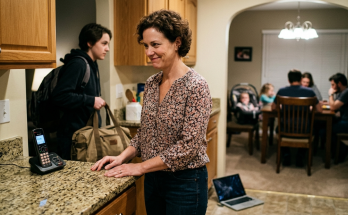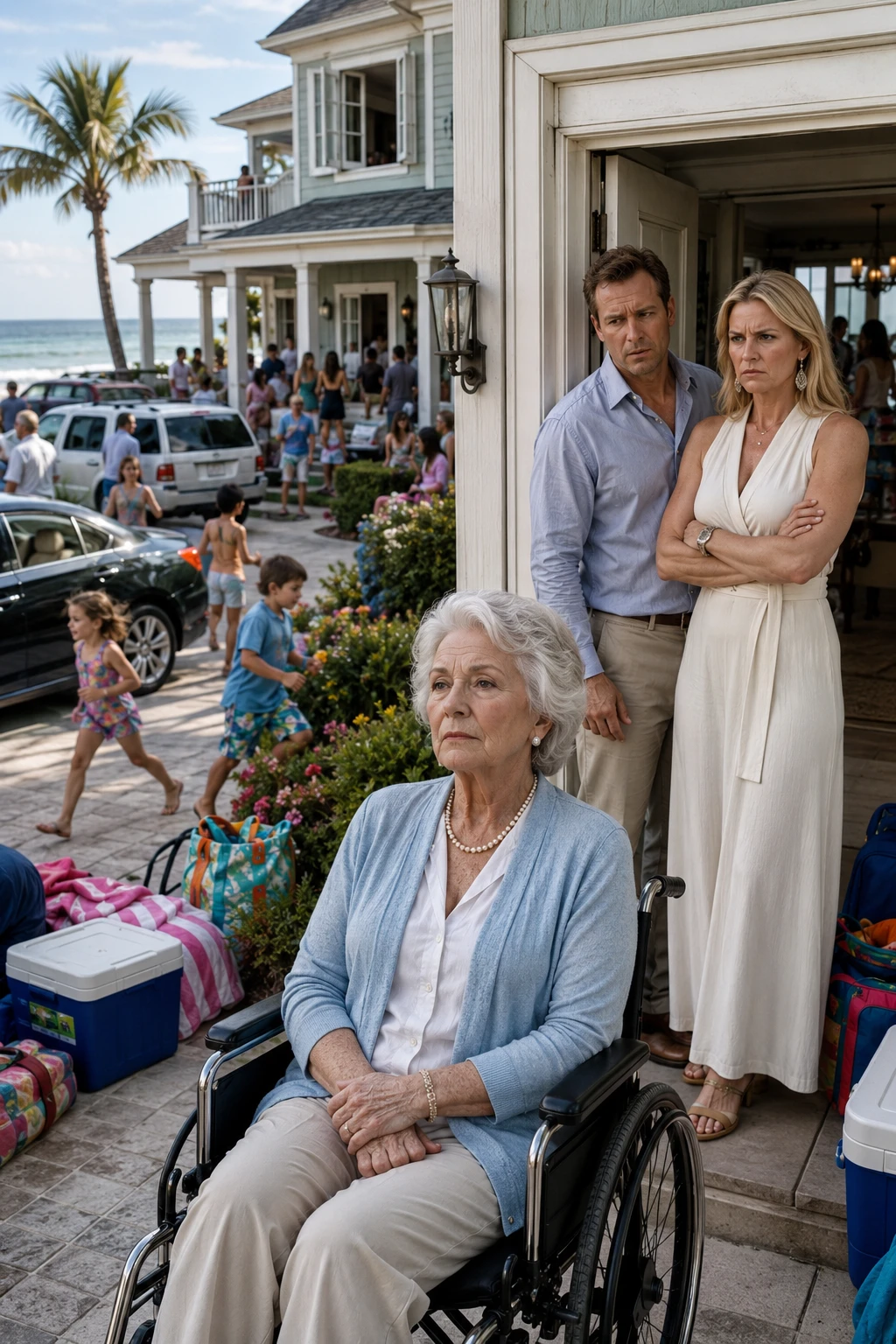
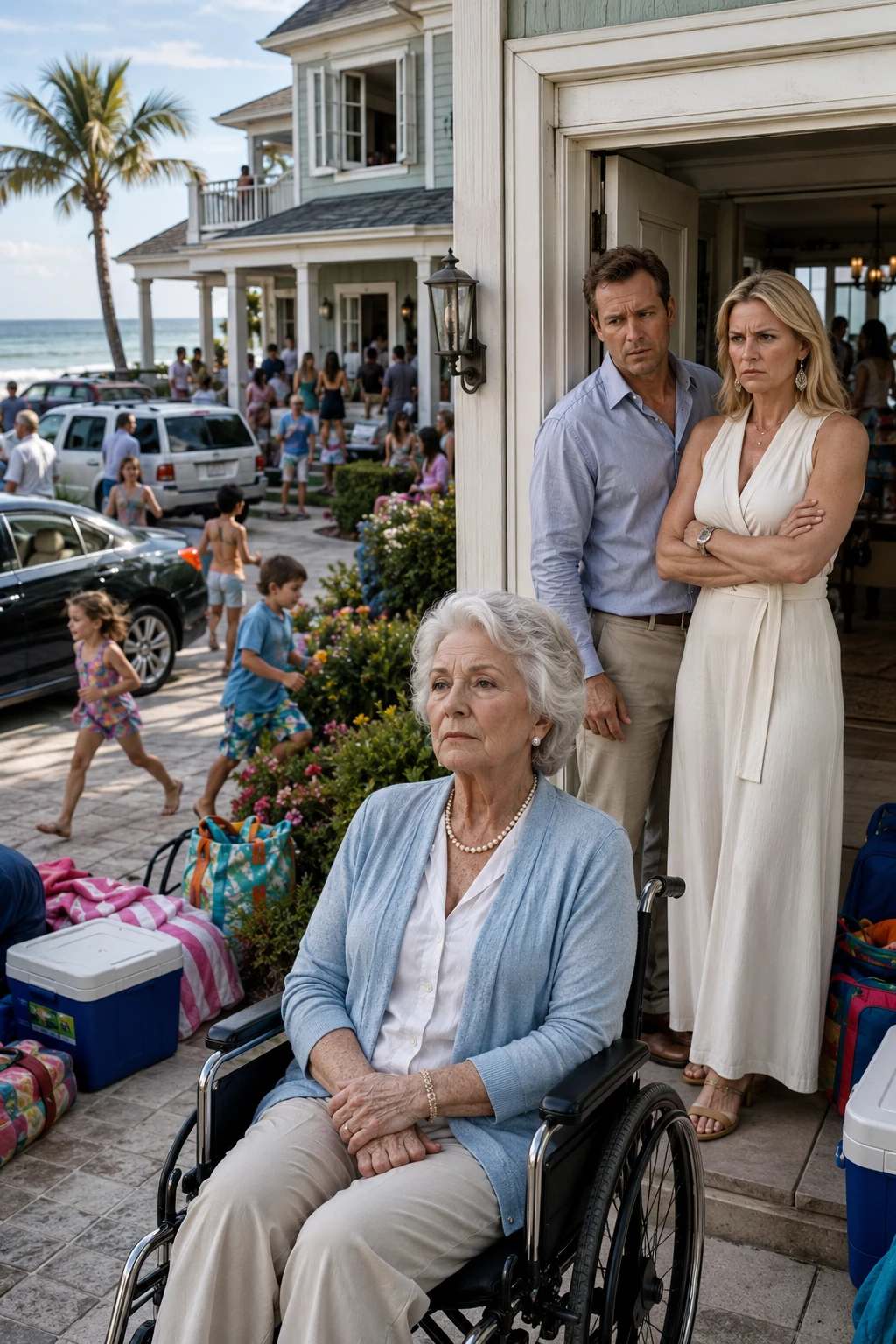
The first thing my daughter-in-law said when she saw me sitting in my wheelchair at the entrance of my own beach house was not hello.
She folded her arms, glanced at the crowd behind her, and snapped, “Why is she here?”
For a moment, even the music seemed to fade.
I looked past Megan at strangers drinking from plastic cups in my living room, children trampling through the hydrangeas I had planted with my husband, Henry, and coolers stacked against the porch railing I had painted myself.
Then I looked at my son.
Robert would not meet my eyes.
That was when I understood.
They had stopped thinking of me as the owner.
They had started thinking of me as the obstacle.
I was seventy years old, newly dependent on a wheelchair after a fall damaged my hip, and, as far as Robert knew, living modestly on a small pension.
He had seen the $237 in cash I kept folded inside my wallet.
What he had never bothered to ask was what else I owned.
Or what his father had left behind.
I rested both hands in my lap.
“Megan,” I said quietly, “this is my house.”
She sighed.
“Technically, yes, but Robert and I have been talking about what happens next.”
“What happens next?”
She exchanged a look with him.
Robert rubbed the back of his neck.
“Mom, don’t make this harder than it has to be.”
The words landed harder than any slap.
This was the boy who used to fall asleep against my shoulder on the drive home from school.
The boy who had once told me, “Mom, this house smells like peace.”
Now he stood in the doorway of that same house and looked at me like I was a problem to solve.
For forty-two years, I had worked behind a sewing machine.
I stitched uniforms, curtains, wedding dresses, couch cushions, anything people would pay me to sew. Henry worked long days maintaining electrical systems for hotels up and down the coast.
We were never rich.
At least, that was what everyone thought.
We bought the beach house after fourteen years of saving.
No inheritance.
No wealthy parents.
No miracle.
Just overtime, discipline, and sacrifice.
We skipped vacations.
We kept old cars running long after our neighbors upgraded theirs.
I sewed every curtain in that house myself.
Henry built the porch swing.
Together, we planted the sea grass that still bent in the wind beside the walkway.
When he died three years earlier, the house became the only place where I could still hear his voice.
And now my son’s wife had filled it with strangers.
I looked through the open doorway.
On my dining table lay flooring samples, cabinet catalogs, and architectural sketches.
I stared at them.
Megan noticed.
Her expression hardened.
“We’ve been looking at renovations.”
“For my home?”
“For the future.”
The future.
I knew exactly what she meant.
Months earlier, I had overheard her speaking to her mother on the patio.
“We’ll replace that ugly deck first,” Megan had whispered.
Her mother laughed.
“And the downstairs room?”
“Guest suite.”
“Robert will love it.”
They had never said after she dies.
They didn’t need to.
The next morning, I changed my will.
What Robert did not know was that Henry had insisted on something unusual when we reorganized our estate.
The beach house was placed inside a family trust.
Not Robert’s trust.
Mine.
I had control for life.
Robert had only a conditional future interest.
There were restrictions.
Serious ones.
I never thought I would need them.
That night on the porch, however, I suddenly remembered every word my husband had said when we signed those documents.
“If Robert ever forgets the difference between inheritance and entitlement, the trust will remind him.”
At the time, I had laughed.
Henry had not.
Now Megan stepped closer.
“You really can’t manage this place anymore.”
I stared at her.
“I have managed it for thirty-one years.”
“You know what I mean.”
“No,” I said. “Tell me.”
Her mouth tightened.
Robert finally spoke.
“Mom, maybe it would be easier if you stayed somewhere smaller.”
“Smaller.”
“A condo. Assisted community. Something practical.”
There it was.
They had already discussed where to put me.
The party behind them had gone nearly silent.
Some guests pretended not to listen.
Others stared openly.
I turned to Robert.
“Are you asking me to leave my own house tonight?”
His face reddened.
“It’s just for the weekend.”
Megan cut in.
“We planned this months ago.”
“You planned a party in my house without asking me.”
Robert exhaled sharply.
“Mom.”
There was annoyance in his voice.
Not guilt.
Not embarrassment.
Annoyance.
I nodded slowly.
“All right.”
He blinked.
“That’s it?”
“Yes.”
Megan looked almost relieved.
I turned my wheelchair.
Robert followed me down the ramp.
“Where are you going?”
“I’ll figure it out.”
His eyes dropped toward my purse.
He knew I carried little cash.
“Do you need money?”
I looked at him.
The question would have been kind if kindness had come before eviction.
“No.”
“Mom, don’t be dramatic.”
I stopped.
“I’m not being dramatic, Robert.”
Then I looked into the face of my only son.
“I’m remembering.”
He frowned.
“Remembering what?”
“Everything.”
I wheeled myself toward the car service waiting by the curb.
Behind me, the door closed.
My son had just shut me out of the home his father and I built.
He believed I had nowhere to go.
He was wrong.
I spent the night at a quiet oceanfront hotel twenty minutes away.
Not the cheapest room.
The presidential suite.
I paid with a black private-banking card Robert had never seen.
The next morning, at 8:10, I entered the downtown office of Halston Private Bank.
The manager, Mr. Ellis, recognized my name immediately.
“Mrs. Carter.”
He stood.
“I’m sorry about Mr. Carter.”
“Thank you.”
Henry had handled most of our serious financial planning.
I had trusted him completely.
Maybe too completely.
Mr. Ellis led me into a private office.
I placed the card on his desk.
“I need to review the Carter Family Trust.”
He pulled up the file.
The color drained from his face.
“Is something wrong?”
He hesitated.
“Your son contacted another branch this morning.”
I froze.
“Robert?”
“Yes.”
“What did he want?”
Mr. Ellis turned the monitor.
“He attempted to use the Florida beach property as collateral for a loan.”
My stomach tightened.
“A loan for what?”
“Approximately $1.4 million.”
I stared at him.
Robert earned well, but not that well.
“Why?”
“We weren’t told. But the application identified the house as his primary unencumbered asset.”
I almost laughed.
His asset.
“What happened?”
“The ownership review triggered a trust restriction.”
Mr. Ellis opened a document.
I recognized Henry’s signature.
“Your husband included a protective clause. If any remainder beneficiary attempts to sell, pledge, transfer, or borrow against a trust property without authorization, their future rights can be permanently revoked by the surviving trustee.”
I whispered, “Me.”
“You.”
He placed a pen beside the document.
“If you sign this, Robert loses all future claim to the beach house.”
My phone began vibrating.
Robert.
Then Megan.
Then Robert again.
I placed it face down.
“Is that all?”
Mr. Ellis frowned.
“No.”
He clicked another file.
“There are several other assets connected to the same trust.”
I stared at the screen.
Numbers appeared.
Large numbers.
Very large numbers.
I stopped breathing.
“Henry never told me this.”
Mr. Ellis looked surprised.
“The portfolio was his?”
“My husband was an electrician.”
Mr. Ellis slowly leaned back.
“Mrs. Carter, your husband was much more than an electrician.”
My hands went cold.
He opened decades-old account statements.
Henry had started investing before Robert was born.
Utilities.
Land.
Municipal bonds.
Early technology funds.
Then something called Seabright Coastal Holdings.
I stared at the name.
“What is that?”
Mr. Ellis hesitated.
“A private real estate company.”
“How much?”
“At current valuation?”
He swallowed.
“Approximately $46 million.”
I could not speak.
Henry had lived in faded work shirts.
He repaired his own lawn mower.
He bought shoes only when the soles wore through.
“Why didn’t I know?”
Mr. Ellis looked uncomfortable.
“That may be something you need to ask the attorney.”
“Henry is dead.”
“No.”
He paused.
“I mean another attorney.”
Before I could ask what he meant, his phone rang.
He answered.
Listened.
Then his face changed.
“Mrs. Carter…”
“What?”
He covered the receiver.
“There’s a man downstairs asking to see you.”
“Who?”
He looked at me strangely.
“Daniel Mercer.”
The name meant nothing to me.
Mr. Ellis added, “He says he was your husband’s attorney.”
Ten minutes later, a tall man in his late seventies entered carrying a brown leather case.
He looked at me like he had been waiting years for this moment.
“Evelyn.”
I stiffened.
“Do I know you?”
“No.”
He sat.
“But I knew Henry.”
Then he placed a sealed envelope on the table.
My name was written across the front in Henry’s unmistakable handwriting.
My throat closed.
“I was instructed to give this to you only if Robert violated the trust.”
I looked at him.
“Why?”
“Because Henry was afraid that someday your son would become exactly what he had spent his life trying to prevent.”
I opened the envelope.
Inside was a letter.
Evelyn,
If you are reading this, Robert has tried to take something that was never freely his.
I’m sorry.
I wanted you to live without worrying about money or about what money could do to our son.
That is why I kept the full size of the estate from both of you.
I trusted you.
But I feared what Robert might become if he knew.
My hands trembled.
Then I reached the final paragraph.
There is one more thing you must know.
Robert is not my biological son.
I stopped.
The room blurred.
“What?”
Mr. Mercer said nothing.
I read again.
Robert is not my biological son.
You were pregnant when we met, Evelyn.
You told me the baby’s father disappeared before you knew you were expecting.
You believed that story for forty-six years.
It was not true.
I looked up.
“I never told Henry who Robert’s father was.”
Mr. Mercer’s face tightened.
“He found out.”
My heart pounded.
“How?”
“Because Robert’s biological father contacted him.”
I felt sick.
“Who?”
Mr. Mercer looked toward the bank window.
Then back at me.
“Victor Hale.”
The name struck like lightning.
Victor Hale was the founder of Seabright Coastal Holdings.
The same company listed in Henry’s trust.
I whispered, “That’s impossible.”
Mr. Mercer shook his head.
“No.”
Victor had been the son of the factory owner where I worked at nineteen.
Handsome.
Charming.
Temporary.
He left Florida suddenly and never contacted me again.
I spent my whole life believing he had simply abandoned me.
“He knew?” I whispered.
“Yes.”
“About Robert?”
“Yes.”
“Why didn’t he come back?”
Mr. Mercer opened his case.
“Because his father paid Henry.”
I stared at him.
“What?”
“Not to leave you.”
I could barely understand.
He explained.
Victor’s wealthy family wanted no scandal.
When they learned I was pregnant, they contacted Henry, who was already dating me.
They offered him money to marry me, raise Robert as his own, and never reveal the truth.
I felt fury rise through grief.
“So my marriage was purchased?”
“No.”
Mr. Mercer leaned forward.
“Henry returned the money.”
I stopped.
“He what?”
“He refused it.”
“Then how—?”
“He married you because he loved you.”
The room went silent.
Mr. Mercer continued.
“Years later, Victor came back. He was dying. He had no other children.”
My chest tightened.
“He left his company to Robert?”
“No.”
Mr. Mercer looked directly at me.
“He left it to Henry.”
I stared.
“Why?”
“Because Henry was the father Victor never had the courage to be.”
I covered my mouth.
Mr. Mercer slid another letter forward.
“Victor told Henry that Robert should inherit only if he grew into a decent man.”
That was the purpose of the trust.
Not to protect wealth from taxes.
Not merely to organize assets.
It was a test.
A test Robert had just failed.
My phone vibrated again.
This time I answered.
“Mom!” Robert shouted. “What did you do?”
“Good morning.”
“The bank froze everything!”
“Everything?”
“The house credit line! My investment account! Megan’s renovation account!”
I looked at Mr. Mercer.
“Renovation account?”
He nodded grimly.
Robert continued.
“You have to fix this.”
“Why?”
“Because you’re my mother!”
The irony was breathtaking.
“Last night, I was ‘she.’”
Silence.
Then Megan grabbed the phone.
“You don’t understand what you’re doing!”
“I understand perfectly.”
“That house is Robert’s future!”
“No.”
I looked at Henry’s letter.
“It was Robert’s test.”
Megan went quiet.
I continued.
“And he failed.”
Robert came back on.
“What are you talking about?”
I closed my eyes.
For one second, I heard the little boy who used to say the house smelled like peace.
Then I opened them.
“I’m revoking your interest in the trust.”
His voice broke.
“You can’t.”
“I can.”
“That’s my inheritance!”
“No, Robert.”
I signed the document.
“It was never yours.”
He began shouting.
I ended the call.
Three days later, Robert arrived at the bank with Megan and an attorney.
He looked exhausted.
Megan looked furious.
“You destroyed us,” she said.
“No,” I replied. “You spent money you didn’t own.”
Robert stared at the floor.
Then he whispered, “Mom, please.”
That word nearly broke me.
Nearly.
“I need to know one thing,” I said.
He looked up.
“If I had truly had only $237, where did you think I would sleep that night?”
His face collapsed.
He had no answer.
Megan did.
“That’s not fair.”
I turned to her.
“No. It isn’t.”
Then Mr. Mercer entered.
He placed Victor Hale’s documents on the table.
Robert read them.
His hands shook.
“Who is Victor?”
I told him.
Everything.
His biological father.
Henry’s choice.
The trust.
The test.
Robert sat in stunned silence.
Then tears filled his eyes.
“Dad knew?”
“Yes.”
“And he still raised me?”
I nodded.
“Every day.”
Robert covered his face.
For the first time since this nightmare began, I saw something real in him.
Shame.
Not fear of losing money.
Shame.
Then Mr. Mercer cleared his throat.
“There is one final provision.”
We all looked at him.
I frowned.
“What provision?”
He opened Henry’s letter.
“The revoked beneficiary interest does not automatically return to Evelyn.”
Megan’s head snapped up.
“Then who gets it?”
Mr. Mercer looked toward Robert.
“No one.”
“What?”
“The trust assets are transferred to a charitable foundation unless the surviving trustee activates the alternate heir clause.”
Robert stared.
“What alternate heir?”
Mr. Mercer looked at me.
I didn’t know.
He handed me one final sealed paper.
I opened it.
Inside was a birth certificate.
My breath vanished.
The child’s name was Lillian Rose Carter.
Date of birth: twenty-nine years earlier.
Mother: blank.
Father:
Robert Henry Carter.
I stared at my son.
His face went white.
Megan whispered, “Robert?”
He stood so suddenly his chair fell backward.
“Mom…”
I could barely breathe.
“You have a daughter?”
He shook his head frantically.
“It was before Megan.”
Megan stared at him.
“What?”
Robert’s voice cracked.
“I was seventeen.”
I remembered.
The summer he spent working in North Carolina.
The summer he barely spoke when he came home.
Mr. Mercer continued.
“Henry knew.”
I whispered, “Of course he did.”
“Robert signed away parental rights. The baby was adopted.”
Robert looked shattered.
“I thought I was doing the right thing.”
Mr. Mercer nodded.
“Henry did too.”
Then he looked at me.
“He quietly found the child years later.”
My eyes filled.
“Where is she?”
Mr. Mercer smiled faintly.
“She’s downstairs.”
No one moved.
Then the office door opened.
A young woman stepped inside.
Dark hair.
Hazel eyes.
Henry’s smile.
No.
Not Henry’s.
Mine.
She looked at Robert first.
Then at me.
Her eyes filled with tears.
“My grandfather told me about you before he died.”
My hands shook.
“What’s your name?”
“Lily.”
Robert made a broken sound.
She looked at him, but did not go to him.
Instead, she walked toward me.
“I’ve been trying to decide whether to meet you for three years.”
I whispered, “Why today?”
Her gaze shifted to the signed trust papers.
“Because Grandpa Henry told me something.”
“What?”
She knelt beside my wheelchair.
“He said if Robert ever chose money over you, I should come.”
Tears rolled down my face.
Then she placed her hand over mine.
“And he said to tell you one more thing.”
I could barely speak.
“What?”
She smiled through tears.
“He never built the trust to protect the money.”
I stared at her.
“He built it to protect you from being alone.”
The room disappeared behind my tears.
Robert began sobbing.
Megan said nothing.
And suddenly I understood Henry’s final gift.
It was never the beach house.
Never the $46 million.
Never the company.
Never the trust.
Henry knew greed could reveal a person.
But he also knew loss could reveal family.
Robert had thrown me away because he thought I had become worthless.
And in doing so, he had unknowingly opened the door to someone I never knew existed.
My granddaughter.
Lily squeezed my hand.
“What happens now?”
I looked at Robert.
Then Megan.
Then the papers.
Finally, I looked at Lily.
“Now?”
For the first time since Henry died, I smiled without forcing it.
“Now we go home.”
Not Robert’s home.
Not Megan’s future property.
Not an inheritance waiting for someone impatient enough to claim it.
My home.
The one Henry and I had built.
The one filled with handmade curtains, old quilts, porch swings, and memories.
Lily pushed my wheelchair toward the door.
Behind us, Robert whispered, “Mom…”
I stopped.
He looked broken.
“I’m sorry.”
I believed him.
But forgiveness and access are not the same thing.
“I hope someday,” I said, “you understand what your father was trying to teach you.”
Then Lily pushed me out into the morning sunlight.
A week later, every renovation catalog disappeared from my dining table.
The strangers were gone.
The coolers were gone.
The flowerbeds were replanted.
And on a warm Saturday morning, Lily sat beside me on the porch drinking tea.
She inhaled the ocean air and smiled.
“Grandma?”
“Yes?”
She looked around the old beach house.
Then she said the words that made my heart stop.
“This place smells like peace.”
I closed my eyes.
For one beautiful second, Henry was sitting beside me again.
And I finally understood.
He had planned for everything.
Even this.