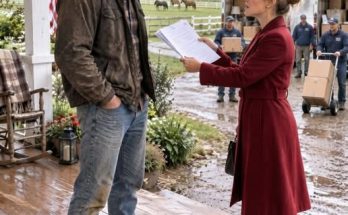
“We had a contractor.”
“That wasn’t my question.”
Vanessa’s mouth tightened.
The contractor, a thickset man in a gray company shirt, had been standing near a skid steer.
Suddenly he looked very interested in the ground.
I zoomed my camera toward him.
The logo on his shirt read:
MERRICK SITE SOLUTIONS.
I had heard the name.
So had half the county.
They did demolition, grading, drainage, and roadwork.
The owner, Carl Merrick, was a Cedar Ridge resident.
He was also Vanessa’s brother-in-law.
That was the first piece I had expected.
The second piece I had not.
A city engineer stepped out of the white SUV.
Her name was Alicia Grant.
I knew her casually from county planning meetings.
She saw me.
Then she saw the bridge.
Then she saw the water.
Her entire face changed.
“Daniel?”
“Afternoon, Alicia.”
“What happened?”
I pointed toward Vanessa.
“Cedar Ridge demolished my bridge.”
Alicia stared.
Vanessa stepped between us.
“There is a property dispute.”
Alicia ignored her.
“Daniel, was there a utility locate?”
“Not requested by me.”
Alicia looked at the contractor.
“Did you call 811?”
Carl Merrick finally spoke.
“Our office handled that.”
“Where’s your ticket number?”
He hesitated.
That hesitation would become important later.
“I don’t personally keep the paperwork.”
Alicia walked closer.
“Then call your office.”
Carl pulled out his phone.
No one spoke for almost twenty seconds.
The water continued spraying.
Somewhere down the hill, a siren started.
Alicia looked toward the fractured ground.
“How deep did you dig?”
Carl pointed toward the bridge footing.
“We were removing the eastern abutment.”
“How deep?”
“Maybe eight feet.”
Alicia’s jaw tightened.
“The transmission main is seven and a half.”
Vanessa looked irritated.
“Well, if it was that important, perhaps the city should have marked it more clearly.”
Alicia slowly turned toward her.
“It’s underground.”
“I understand that.”
“Then what exactly were you expecting us to do? Paint a forty-five-year-old water line on Mr. Mercer’s lawn permanently?”
Vanessa flushed.
I almost smiled.
But I didn’t.
Because the situation was already much bigger than personal satisfaction.
My house sat on the opposite side of the Elk River.
No bridge meant no road access.
No road access meant emergency vehicles couldn’t reach my property.
My elderly aunt lived in a small cottage behind my house.
She was seventy-eight and used supplemental oxygen at night.
Fortunately, she was visiting my sister in Asheville that week.
If she had been home, this would have crossed from outrageous to dangerous.
I had livestock.
Fuel tanks.
Equipment.
A propane system.
And the nearest alternative crossing point was eleven miles upriver, accessible only through private timber roads that weren’t suitable for normal vehicles.
Vanessa knew all of that.
I had put it in writing.
Twice.
She demolished the bridge anyway.
I walked closer to her.
“Where’s the court order?”
“There isn’t one.”
“Where’s the county demolition permit?”
“The HOA has jurisdiction.”
“No. It doesn’t.”
“Our counsel disagrees.”
“Then where’s the permit?”
Vanessa stopped smiling.
“You received notice.”
“A notice from you is not a demolition permit.”
Her eyes flicked toward my phone.
“Are you recording me?”
“Yes.”
“I don’t consent.”
“This is North Carolina.”
She said nothing.
I continued.
“Did you authorize Merrick Site Solutions to destroy the bridge?”
“I authorized removal of an unauthorized structure encroaching on HOA-controlled common property.”
“Did you receive my attorney’s letter dated July fifteenth?”
“I receive many letters.”
“That wasn’t my question.”
Her mouth tightened again.
“Yes.”
“That letter included the recorded deed and easement.”
“Your interpretation.”
“The county register’s interpretation too.”
Vanessa folded her arms.
“This conversation is over.”
“Perfect.”
I lowered the phone slightly.
“Then we’ll let the city, county, and sheriff take it from here.”
For the first time, I saw uncertainty.
Only a flicker.
Then she covered it.
“You’re being dramatic.”
Behind her, a second section of saturated soil collapsed into the trench.
The water plume shifted sideways.
Alicia shouted for everyone to move back.
The ground shook beneath my boots.
Nobody was being dramatic.
By 5:20 p.m., County Road 16 was closed.
By 5:40, Marlow Utilities had issued a boil-water advisory.
By six, neighborhoods across the north and east sides of the city were reporting low pressure.
By six-thirty, the hospital had switched to emergency water conservation protocols.
By seven, three fire stations were positioning tanker trucks.
And by seven-fifteen, Sheriff Lucas Bennett arrived.
Lucas was fifty-eight, broad-shouldered, gray-haired, and had the calm expression of a man who had spent thirty years listening to people lie badly.
He stepped out of his Tahoe, surveyed the collapsed bridge, the ruptured main, the machinery, Vanessa, me, and the contractors.
Then he said something remarkably simple.
“Nobody leaves yet.”
Vanessa immediately approached him.
“Sheriff, thank goodness. This man is interfering with HOA business.”
Lucas looked at me.
“Daniel?”
“My bridge.”
He looked at Vanessa.
“Your HOA?”
“Yes.”
Lucas looked at the river.
“Seems like those two statements might be mutually exclusive.”
“It’s complicated.”
“Land usually is.”
Vanessa lowered her voice.
“Could we speak privately?”
“No.”
That answer landed harder than I expected.
Lucas gestured toward one of his deputies.
“Start collecting names.”
Vanessa stared at him.
“Are we being detained?”
“No.”
“Then we’re free to leave.”
Lucas nodded.
“Technically.”
She took one step toward her SUV.
“But if you leave before my deputies photograph your identification and equipment, I’ll have them come find you later.”
She stopped.
Lucas smiled politely.
“Usually easier to stay.”
I had known Lucas most of my life.
He wasn’t a friend.
Not exactly.
But his father had bought hay from mine.
And Lucas understood something Vanessa had apparently forgotten.
Around here, land records could outlive grudges.
He walked toward the broken approach.
“Daniel, how old is this bridge?”
“Original bridge was built in 1952. Major reinforcement in 1989. I replaced decking in 2017.”
“Private?”
“Yes.”
“Always?”
“As far as the deeds show.”
“HOA ever maintain it?”
“No.”
“Collect tolls?”
“No.”
“Insure it?”
“No.”
“Pay tax on it?”
“No.”
He turned toward Vanessa.
“What part of it belongs to you?”
“The eastern approach is within Cedar Ridge boundaries.”
“No, it isn’t,” I said.
Vanessa snapped toward me.
Lucas raised one hand.
“Let her answer.”
She inhaled slowly.
“Our 2025 community survey shows Parcel C extending west to the riverbank.”
“Who performed that survey?”
“Blackwater Land Services.”
I knew that name too.
Lucas apparently did not.
He wrote it down.
“County-approved?”
Vanessa hesitated.
“It was prepared by a licensed surveyor.”
“That wasn’t what I asked.”
I watched Carl Merrick glance toward Vanessa.
Again.
Small things.
People imagine that lies reveal themselves through dramatic confessions.
Usually they don’t.
Usually the truth slips out through eye movements.
Pauses.
Hands that suddenly become restless.
Questions people answer too carefully.
I had spent twenty-two years running a regional civil engineering company.
Mercer Infrastructure Consultants.
We handled roads, culverts, retaining walls, utility corridors, and bridge inspections.
I wasn’t a lawyer.
I wasn’t a politician.
But I knew land.
I knew construction.
And I knew exactly what a contractor was supposed to do before putting an excavator bucket into soil above a major water transmission line.
Carl Merrick knew too.
That was why his face had gone pale.
I walked toward Alicia.
“How bad?”
She shook her head.
“Bad.”
“Full rupture?”
“Partial circumferential fracture. Maybe worse under the footing.”
“Can you isolate?”
“We’re trying. The nearest valves are old.”
“How old?”
“Seventies.”
I nodded.
That meant trouble.
Large transmission mains weren’t shut off like residential plumbing.
Closing valves too quickly could cause pressure surges elsewhere.
Closing the wrong sequence could damage additional lines.
Repair crews would probably need to excavate a much larger section.
“Do you need anything from me?”
Alicia looked toward the western bank.
“We may need access through your property.”
“You have it.”
“Written?”
“I’ll email authorization tonight.”
She nodded.
Then she lowered her voice.
“Daniel, there’s something strange.”
“What?”
She glanced toward Vanessa.
“The alignment.”
“What about it?”
“The main isn’t supposed to be exactly there.”
I frowned.
“According to the 1979 easement, it runs fourteen feet south of the bridge approach.”
“Exactly.”
“But the rupture is under the north footing.”
“Exactly.”
We both looked toward the muddy trench.
A cold thought moved through me.
“You’re saying the pipe doesn’t match the recorded easement.”
Alicia nodded.
“Not by several yards.”
“How several?”
“At least twelve feet. Maybe more.”
That was the moment everything changed.
Up until then, I believed this was about an HOA president overreaching.
A property dispute.
An illegal demolition.
A destroyed bridge.
An enormous utility mistake.
Serious, yes.
Expensive, absolutely.
But understandable.
Then Alicia told me the city’s main water line was not where the official maps said it was.
And suddenly I remembered something my father told me when I was thirteen.
We had been standing beside the river during a drought.
The Elk was low enough to reveal stones normally hidden beneath three feet of water.
Dad pointed toward the eastern bank and said, “That subdivision side never sat right.”
There was no subdivision then.
Only woods.
“What do you mean?” I had asked.
“Too many people came out here measuring things after the city laid that pipe.”
I hadn’t thought about the comment in thirty years.
Now I did.
I looked at the broken bridge.
Then at the trench.
Then at Cedar Ridge rising beyond the trees.
Rows of large houses.
Clubhouse.
Pool.
Walking trails.
Decorative pond.
And somewhere beneath all of it, apparently, a forty-two-inch water main that might not be where anyone thought it was.
I called my attorney.
Her name was Rachel Donovan.
She answered on the second ring.
“What happened?”
“How did you know something happened?”
“You only call instead of text when something happened.”
“Vanessa demolished the bridge.”
Silence.
“She did what?”
“Bridge is in the river.”
“Daniel.”
“And Merrick hit the city transmission main.”
Longer silence.
“Are you joking?”
“I’m standing in mud watching sixty thousand people lose water pressure.”
“Do not say anything to Vanessa.”
“Already recorded her admitting she authorized demolition.”
Rachel exhaled.
“Of course you did.”
“There’s more.”
“There’s always more when you say that.”
“The water main appears to be twelve feet outside its recorded easement.”
This time she said nothing for almost ten seconds.
“Who told you?”
“City engineer.”
“Do they have confirmed coordinates?”
“Not yet.”
“Get them.”
“I will.”
“And Daniel?”
“Yeah.”
“Do not let anybody move dirt off that site.”
I looked at the piles of wet soil around the excavator.
“Why?”
“Because if the pipe is outside the recorded easement, somebody moved something.”
“Could be an old mapping error.”
“Yes.”
“Or?”
“Or somebody changed property lines around infrastructure that was already there.”
The words settled heavily.
Cedar Ridge had been developed nearly thirty years after the pipeline installation.
If later property maps deliberately shifted boundaries while leaving the physical pipe untouched, that could mean dozens of legal descriptions were wrong.
Roads.
Lots.
HOA common areas.
Maybe houses.
Rachel continued.
“You said Merrick is Vanessa’s brother-in-law?”
“Yes.”
“And they used Blackwater Land Services?”
“Yes.”
She went quiet again.
“You know who owns Blackwater?”
“No.”
“Give me ten minutes.”
She hung up.
The sheriff was still interviewing people when my phone rang again.
Rachel.
“You sitting down?”
“No.”
“Blackwater Land Services is registered to Graham Whitmore.”
I looked across the road.
Vanessa’s husband was standing beside her white SUV.
He had arrived less than five minutes earlier.
Tall.
Silver hair.
Navy polo.
Graham Whitmore was a commercial real estate broker.
At least that was how he introduced himself.
Rachel continued.
“Graham has thirty percent ownership.”
“Who owns the rest?”
“Company called Easton Holdings LLC.”
“Who owns Easton?”
“That’s what I’m working on.”
I watched Graham place a hand on Vanessa’s shoulder.
She leaned toward him.
They spoke quietly.
Then Graham looked directly at me.
Not angry.
Not embarrassed.
Concerned.
There’s a difference.
Angry people look at your face.
Concerned people look at what you’re holding.
Graham looked at my phone.
I lowered it casually.
Rachel said, “Daniel?”
“I’m here.”
“Don’t confront them.”
“I won’t.”
“You promise?”
“Yes.”
“You’re very bad at sounding convincing.”
“I said I won’t.”
“Good.”
She paused.
“Because right now, your destroyed bridge may be the least interesting thing on that property.”
Night fell slowly.
Portable light towers arrived.
Marlow Utilities brought in vacuum trucks.
A regional emergency contractor mobilized from Charlotte.
Workers began locating valves.
Fire crews staged tankers near hydrants serving critical areas.
The city opened bottled water distribution points.
Local news vans appeared near the Cedar Ridge entrance.
Vanessa hated that.
I could tell because she spent twenty minutes making phone calls while staring at the cameras.
At 8:46 p.m., a reporter tried to approach me.
I declined.
“Not tonight.”
Vanessa did not.
She stood near the stone Cedar Ridge sign and gave a statement.
I couldn’t hear everything.
But I heard enough.
“An unfortunate utility incident…”
“Routine removal…”
“Disputed structure…”
“Safety concerns…”
“No intention of interrupting service…”
It was beautifully polished.
And almost entirely meaningless.
Lucas came over while she was speaking.
“You planning to sue?”
“Yes.”
“Good.”
I looked at him.
He shrugged.
“Means you’ll have lawyers doing half my paperwork for me.”
Despite everything, I laughed.
Then he became serious.
“Can you get home?”
“Not by vehicle.”
“Boat?”
“I keep one on the west side.”
“How do you get to it?”
“Walk the old maintenance path about three-quarters of a mile upstream. There’s a pedestrian cable crossing.”
He frowned.
“That safe?”
“For me.”
“Your aunt home?”
“No.”
He nodded.
“I remembered she stays with you.”
“Appreciate that.”
“I can have a deputy drive you to the trailhead.”
“I’ll take it.”
Before leaving, I stopped beside the broken bridge one last time.
Under floodlights, the damage looked worse.
The steel girders were twisted.
Concrete chunks filled the shallows.
One railing hung from the western span.
I placed my hand on an old oak post at the edge of the road.
Dad had installed it.
The grain beneath my palm was rough and cool.
That bridge had been part of every season of my life.
I crossed it on the morning of my first day of school.
I crossed it after my mother’s funeral.
I crossed it carrying groceries for my father when cancer made him too weak to drive.
I crossed it the night he died.
I crossed it the morning I decided not to sell the farm, even though developers had offered more money than I had ever imagined as a kid.
Vanessa thought she had demolished access.
She had actually demolished restraint.
Not rage.
Restraint.
There is a difference.
Rage makes you careless.
Restraint makes you precise.
I had spent months trying to solve the dispute quietly.
I answered letters.
Provided surveys.
Attended HOA meetings even though I wasn’t a member.
Offered to repaint bridge railings.
Offered to plant screening trees.
Offered to restrict commercial deliveries to daytime hours.
Every compromise had produced another demand.
First they wanted appearance changes.
Then access hours.
Then a gate code.
Then annual “maintenance contributions.”
Then inspection authority.
Then Vanessa sent me a proposed agreement requiring me to acknowledge Cedar Ridge ownership of the eastern approach.
I refused.
Then came the violation notices.
$500.
$1,000.
$2,500.
$5,000.
I ignored the amounts because legally they meant nothing.
I wasn’t a member.
Vanessa knew I wasn’t a member.
That wasn’t the point.
The point was pressure.
And now I understood something else.
Maybe the bridge had never been the real target.
Maybe my refusal to acknowledge their boundary was.
The deputy dropped me near the upstream trail.
I walked through darkness with a flashlight.
Cicadas screamed in the trees.
The river below reflected the lights from the emergency crews.
I crossed the narrow maintenance cable walkway one careful step at a time.
When I reached my property, I stopped.
From the west bank, I could see almost the entire eastern construction area.
Something moved near the broken bridge.
Headlights.
Not utility trucks.
A black pickup rolled slowly down the closed road.
It stopped near Merrick’s skid steer.
Two men stepped out.
I recognized one.
Carl Merrick.
I checked the time.
10:17 p.m.
The sheriff had released contractors around nine, but equipment remained under instruction not to be moved.
Carl walked toward the dirt pile.
The second man followed carrying something long.
A shovel.
I took out my phone and zoomed in.
Carl looked around.
Then both men began digging through wet soil near the original bridge footing.
Not repairing anything.
Not retrieving tools.
Digging.
I called Lucas.
He answered immediately.
“Bennett.”
“You told Merrick not to move anything, right?”
“Yes.”
“He’s back.”
Pause.
“Where are you?”
“West bank.”
“What is he doing?”
“Digging.”
Another pause.
“By hand.”
“What area?”
“North side of the eastern abutment.”
“Can he see you?”
“No.”
“Stay where you are.”
Two sheriff vehicles arrived without sirens four minutes later.
Carl saw the headlights.
He dropped the shovel.
The second man ran toward the pickup.
Deputies blocked them in.
I watched through the darkness.
Lucas called me again.
“We’ve got them.”
“What were they digging for?”
“Don’t know yet.”
Then I saw a deputy bend near the hole.
He lifted something small.
Rectangular.
Maybe metal.
Lucas ended the call.
I didn’t sleep much.
At 6:30 the next morning, I crossed back to the east side with a sheriff deputy.
The water line had been isolated overnight.
Pressure was slowly returning to the city through alternate mains.
Repair crews had exposed nearly forty feet of damaged pipe.
The bridge site was taped off.
Carl’s pickup was gone.
Lucas had impounded it.
Vanessa wasn’t there.
Neither was Graham.
Alicia met me beside a utility trailer.
She looked exhausted.
“Coffee?”
She handed me a paper cup.
“Thanks.”
“How bad?”
“Two fractures. One probably existed before yesterday.”
I stopped.
“What?”
She pointed toward the exposed pipe.
“See the darker corrosion ring?”
I leaned closer.
A section near the excavation damage had an irregular rusty seam.
“That’s old?”
“Not ancient. But definitely not from yesterday.”
“How long?”
“Could be months. Could be years. We’ll need metallurgy.”
I looked at her.
“So the line was already compromised.”
“Looks that way.”
“Any records?”
“None.”
She lowered her voice.
“And we confirmed coordinates.”
“How far outside easement?”
“Fourteen feet, eight inches at this point.”
“Consistent alignment?”
“We traced another two hundred yards east.”
“And?”
“Still off.”
My stomach tightened.
“Direction?”
“North.”
Toward Cedar Ridge.
I looked at the houses beyond the tree line.
“How far does the easement run before turning?”
“About one and a half miles.”
“Under how many lots?”
“Recorded alignment?”
“Yes.”
“Common area and greenbelt mostly.”
“Actual alignment?”
She didn’t answer immediately.
“How many?”
“At least nine residential parcels.”
That was bad.
Not inconvenient.
Not embarrassing.
Legally catastrophic.
If the main physically ran under private residential parcels without recorded easements, every one of those homeowners potentially had title issues.
Banks could care.
Insurers could care.
Future buyers would care.
And the city definitely cared.
“Any houses directly above it?”
“Not from what we’ve traced yet.”
“Yet.”
“Exactly.”
I sipped coffee.
“Who has historical installation plans?”
“City archives.”
“Have you checked?”
Alicia gave me a tired smile.
“Daniel, we’ve been repairing a transmission main all night.”
“Fair.”
“But I sent someone.”
I looked at her.
“And?”
“Original as-built plans are missing.”
There it was.
Not digital scans.
Not misplaced copies.
Missing.
I didn’t say anything.
Alicia did.
“Your face says what mine did.”
“Which was?”
“That’s inconvenient.”
She pulled out a folded map.
“One more thing.”
She placed it on the hood of her SUV.
“This is the easement from 1979.”
I recognized it.
She overlaid a newer Cedar Ridge plat.
“Here is your bridge.”
“Okay.”
“Here’s the pipeline easement.”
“Okay.”
“Here’s the actual line.”
A red hand-drawn mark ran north of the recorded corridor.
Then she pointed at a small rectangle near the river.
“What’s that?”
“That is strange.”
The rectangle appeared on the 1979 map but not the later subdivision plat.
Marked:
VAULT 3A.
“What kind of vault?”
“Could be valve chamber.”
“Could be.”
“Do you have one there?”
“Not in current system records.”
“Then what is it?”
Alicia folded the map.
“That’s what I want to know.”
Lucas arrived around eight.
He took me aside.
“Carl Merrick lawyered up.”
“Expected.”
“The guy with him was an employee.”
“What were they digging for?”
Lucas studied me.
“You know what a survey monument looks like?”
“Of course.”
He held out an evidence photo.
It showed a brass disk set into a short concrete cylinder.
The markings were muddy.
But visible.
CITY OF MARLOW.
“Found under the bridge footing,” Lucas said.
I stared at it.
“Utility monument?”
“Maybe.”
“Why was Merrick digging for it?”
“Claims he remembered seeing something shiny during demolition.”
“At ten at night?”
“Yep.”
“With a shovel?”
“Yep.”
“After being told not to return?”
“Yep.”
I gave the photo back.
“Strong story.”
“Pulitzer material.”
“Did he say what he planned to do with it?”
“No.”
“You think he was removing evidence?”
Lucas looked toward Cedar Ridge.
“I think people usually return to disaster scenes after midnight for one of three reasons.”
“Which are?”
“To steal something, hide something, or recover something they should’ve taken before.”
“And which was Carl?”
“Still deciding.”
By nine, Rachel arrived.
Black pantsuit.
Work boots.
No makeup.
Hair tied back.
She walked straight toward me carrying two folders.
“You look terrible,” she said.
“Good morning to you too.”
“Did you sleep?”
“Some.”
“You’re lying.”
“Probably.”
She handed me the first folder.
“Temporary restraining order.”
“For?”
“HOA, Whitmore, Merrick, Blackwater, and anyone acting on their behalf. No entry onto your property. No additional demolition. No alteration of bridge materials. No removal of survey markers. No interference with utility investigations.”
“That was fast.”
“Judges dislike people demolishing access bridges without permits.”
“Who knew?”
“Second folder.”
I opened it.
A chain-of-title report.
“Easton Holdings?”
“Yes.”
“Owner?”
“Not straightforward.”
Rachel pointed.
“Easton is managed by Hawthorne Municipal Development Partners.”
I looked up.
“That sounds familiar.”
“It should.”
“Why?”
“They developed Cedar Ridge with Preston Development.”
I frowned.
“I thought Preston was sole developer.”
“Publicly.”
“And Hawthorne?”
“Silent land partner.”
“Who owned Hawthorne?”
Rachel turned the page.
Three names.
All dead.
The first was Walter Preston.
The second was James Langley.
The third made my chest tighten.
Thomas Mercer.
My grandfather.
I read the name twice.
“That’s impossible.”
“I thought you’d say that.”
“My grandfather never owned Cedar Ridge.”
“According to these filings, he owned twenty percent of the company that controlled part of the original development land.”
“No.”
“Daniel.”
“He hated developers.”
“People contain contradictions.”
“He never mentioned this.”
“Maybe he had reasons.”
I stared at the page.
Thomas Mercer.
Same middle initial.
Same county.
Same approximate age.
Rachel pointed toward another line.
“Your grandfather’s interest transferred in 1982.”
“To who?”
“That’s the problem.”
“Why?”
“The transfer document references a trust.”
“What trust?”
“Mercer Watershed Preservation Trust.”
I shook my head.
“Never heard of it.”
“Neither has the county clerk.”
That was twist number one.
And it changed everything.
My grandfather hadn’t just owned land west of the river.
At some point, he had apparently held an ownership stake in a company tied to the land east of it.
Including land that later became Cedar Ridge.
Why?
How?
And why had nobody in my family ever mentioned it?
Rachel turned another page.
“This is where it gets interesting.”
“More interesting than secret family ownership?”
“Unfortunately.”
The trust had never been formally dissolved.
“Meaning?”
“Meaning if the trust still exists and your grandfather transferred assets into it…”
“They might still belong to the trust.”
“Potentially.”
“What assets?”
“That’s what we don’t know.”
I looked toward the broken bridge.
Rachel followed my gaze.
“You still think this is only about the bridge?”
“No.”
“Good.”
For the next three days, Cedar Ridge became the most uncomfortable neighborhood in Hawthorne County.
The water outage lasted sixteen hours in some areas.
Repairs continued for two days.
The city estimated emergency costs above $1.8 million before permanent reconstruction.
Hospitals postponed nonessential procedures.
Restaurants closed.
Schools opened late.
Fire departments deployed tankers.
Local news ran footage of the ruptured line every hour.
Vanessa’s polished statement aged badly.
Especially when reporters discovered no demolition permit existed.
Then the county confirmed Cedar Ridge had no authority to destroy my bridge.
Then the state utility commission announced an investigation.
Then Merrick Site Solutions admitted publicly that no valid 811 clearance ticket covered the exact excavation location.
Carl blamed an administrative mistake.
His insurer called it something else.
A coverage question.
By Friday morning, Cedar Ridge residents were furious.
Not with me.
With Vanessa.
The clubhouse emergency meeting drew more than two hundred people.
I attended because Rachel advised me to.
Not as an HOA member.
As an affected property owner.
The room was packed.
Residents lined the walls.
Vanessa sat at a long table with six board members.
Graham sat behind her.
Carl was absent.
A board attorney named Edwin Phelps opened the meeting.
“This gathering is intended to address recent misinformation.”
That phrase earned immediate boos.
Vanessa raised a hand.
“Please.”
The room quieted slowly.
She leaned toward the microphone.
“The board acted based on professional legal and surveying guidance indicating that the eastern bridge structure encroached on Cedar Ridge common property.”
A man in the front row stood up.
“Did you have a demolition permit?”
Vanessa paused.
“Our counsel advised—”
“Yes or no?”
Phelps leaned toward his microphone.
“Please allow the president to finish.”
The man sat.
Vanessa continued.
“We relied on qualified contractors.”
A woman near the wall shouted, “Your brother-in-law!”
Applause broke out.
Vanessa flushed.
Then someone else said, “My water was off fourteen hours!”
Another voice: “My insurance company called me about the pipeline!”
That got my attention.
Vanessa’s head snapped up too.
The speaker was a middle-aged man wearing glasses.
“My lender wants to know if a forty-two-inch city main crosses my lot.”
Murmuring spread across the room.
Vanessa looked at Graham.
He leaned forward and whispered something.
I watched Rachel write a note.
Vanessa spoke carefully.
“There is no evidence at this time that homeowners have title concerns.”
I stood.
Not angrily.
I simply stood.
The room quieted because people recognized me.
Vanessa looked at me.
“Mr. Mercer is not a member and technically has no standing to speak during this meeting.”
A woman near the front shouted, “You demolished his bridge!”
More applause.
I waited.
Then said, “I’ll be brief.”
Phelps looked toward Vanessa.
She hesitated.
Then nodded.
I walked to the microphone.
“I’m not here to argue about the bridge tonight.”
That surprised people.
“I have surveys. Cedar Ridge has surveys. Courts can compare them.”
Vanessa relaxed slightly.
I continued.
“What concerns me more is the water line.”
No one moved.
“The city has confirmed that the transmission main at the bridge is approximately fourteen feet outside the easement shown on recorded plats.”
Whispers spread.
Vanessa interrupted.
“That investigation is ongoing.”
“Yes.”
I nodded.
“It is.”
Then I looked at the homeowners.
“So I’m not telling anyone their property has a defect.”
Rachel had coached that line.
“I’m saying everyone should independently review their title documents before relying on statements from me, the HOA, or anyone else.”
A man asked, “Do you know where the pipe actually goes?”
“The city is tracing it.”
Another woman called out, “Does it cross houses?”
“I don’t know.”
That was the truth.
Then a voice from the back said, “Why was your bridge built over a city pipe?”
I looked toward the speaker.
“Bridge was built in 1952.”
The room quieted.
“The water main was installed in 1979.”
Several people turned toward Vanessa.
I continued.
“My family bridge came first.”
A pause.
“The question is not why my bridge was built over city infrastructure.”
I looked directly at Vanessa.
“The question is why city infrastructure was installed beneath private property, then later shown somewhere else on subdivision maps.”
The room erupted.
Vanessa grabbed her microphone.
“That is a reckless accusation.”
“No.”
I kept my voice level.
“It’s a question.”
“You are implying fraud.”
“I haven’t used that word.”
“You are intentionally creating panic.”
“I told people to verify their own documents.”
“You’re weaponizing an unfortunate accident because you’re angry over a bridge.”
That almost got me.
Almost.
But I had promised myself something before entering the clubhouse.
Never let the loudest person choose the temperature of the room.
So I lowered mine.
“Vanessa, you sent me twenty-seven violation notices for property outside your association.”
She opened her mouth.
“You demanded access fees for a road you did not own.”
She shifted.
“You demanded that I sign an agreement acknowledging your boundary.”
Graham leaned forward.
“You had my bridge demolished without a court order.”
Silence.
“You hired your brother-in-law’s company.”
Longer silence.
“You relied on a survey firm partly owned by your husband.”
That landed.
Hard.
People turned toward Graham.
Vanessa froze.
Rachel had told me not to mention that unless they raised the surveys first.
They had.
A homeowner shouted, “What?”
Another: “Graham owns Blackwater?”
Graham stood.
“Minority interest.”
“How much?” someone shouted.
He hesitated.
That was enough.
The room became chaos.
I stepped away from the microphone.
Mini-payoff.
Not victory.
But pressure.
Rachel touched my arm.
“Time to leave.”
We walked out while board members argued behind us.
Outside, under the parking lot lights, she smiled.
“You enjoyed that.”
“A little.”
“You were supposed to be boring.”
“I was boring.”
“You detonated a land-title grenade in a room with two hundred homeowners.”
“Calmly.”
She laughed.
Then her expression changed.
“What?”
I asked.
She held up her phone.
“I got a message from the county archives.”
“About?”
“Your grandfather.”
We sat inside her car.
Rachel opened an email.
A county archivist had found an index entry referencing the Mercer Watershed Preservation Trust.
Not a deed.
Not a filing.
A sealed document collection.
Stored off-site.
Donated in 1994 by retired attorney Samuel Keene.
Restriction:
NOT TO BE OPENED UNTIL 30 YEARS AFTER DEATH OF THOMAS E. MERCER OR UPON LEGAL DISPUTE INVOLVING ELK RIVER ACCESS.
I read the line twice.
“When did Grandpa die?”
“1999?”
“Yes.”
“So thirty years would be 2029.”
Rachel nodded.
“But we have a legal dispute involving Elk River access.”
“Yes.”
“Meaning?”
“The archivist believes the triggering condition has been met.”
My pulse quickened.
“What’s inside?”
“They don’t know.”
“Where is it?”
“County historical repository.”
“When can we see it?”
“Monday.”
I leaned back.
For the first time since the bridge fell, I felt something close to fear.
Not because of Vanessa.
Because my grandfather had anticipated this.
Decades ago.
A dispute involving Elk River access.
My bridge.
The pipeline.
Maybe Cedar Ridge.
He had known something.
Something important enough to seal documents for thirty years.
Something specific enough to create an early-opening condition tied to the river.
That weekend I stayed with my sister because repair crews had not yet built temporary vehicle access.
On Saturday, I received twelve calls from Cedar Ridge residents.
I answered three.
One homeowner had found an unexplained utility notation in his closing documents.
Another had an old plat showing a twenty-foot “municipal reserve” through her backyard that disappeared on a later survey.
The third was a retired engineer named Frank Dalton.
He asked to meet.
We sat Sunday morning at Maggie’s Diner outside Marlow.
Frank was seventy-one, thin, white-haired, and carried a worn leather folder.
“I worked for Preston Development,” he said.
“When?”
“1988 to 2001.”
“Cedar Ridge started later.”
“Planning started earlier.”
He slid a photograph across the table.
Aerial image.
Mostly forest.
River.
Road.
My bridge.
Then a hand-drawn line through the trees.
“Pipeline?”
“Yes.”
“Where’d you get this?”
“Company files.”
“Why do you still have it?”
Frank stared into his coffee.
“Because I stole it.”
I said nothing.
He looked up.
“You judging me?”
“No.”
“Good.”
He opened the folder.
Inside were photocopies.
Survey notes.
Memos.
Old meeting minutes.
I recognized names.
Walter Preston.
James Langley.
And one I didn’t expect.
Thomas Mercer.
My grandfather.
Frank tapped a memo dated March 1981.
“Your grandfather fought them.”
“Who?”
“Preston. Langley. City development people.”
“For what?”
“Moving the river boundary.”
I stared at him.
“You can’t move a river boundary.”
“You can on paper.”
That sentence stayed with me.
Frank continued.
“The city installed the transmission line in seventy-nine. Original plan crossed a narrow strip of Mercer land near the bridge.”
“That’s what the easement says.”
“Yes. Your grandfather negotiated access.”
“So why is the pipe north?”
“Because construction changed.”
“Why?”
“Rock.”
That made sense.
Civil engineering sense.
“If crews hit bedrock, they shifted alignment.”
“Exactly.”
“Then why wasn’t the easement amended?”
Frank smiled sadly.
“That’s the million-dollar question.”
“Literally?”
“More.”
He pulled out another sheet.
The real alignment.
Hand marked.
Signed by construction superintendent.
Shifted north.
Crossing land later acquired by Preston.
“So originally, the incorrect legal easement benefited whom?”
“Your grandfather.”
“How?”
“The recorded easement stayed on Mercer land even though the pipe wasn’t there.”
“Meaning the city’s legal right stayed through our property while physical infrastructure shifted onto Preston land.”
Frank nodded.
“At first.”
“At first?”
“Then Preston wanted to develop.”
“And a forty-two-inch water main crossing residential land is a problem.”
“A very expensive problem.”
“So they changed the plat.”
“No.”
Frank looked at me carefully.
“They changed more than the plat.”
He pulled out an overlay.
Old parcel boundary.
New parcel boundary.
The boundary near the river had shifted south.
Enough to place the physical pipeline back inside the supposed municipal corridor.
I stared.
“That steals land.”
“Yes.”
“How much?”
“Originally?”
He pointed.
“About eleven acres.”
My hand stopped.
“From my family?”
“Your grandfather objected.”
“What happened?”
“Legal fight.”
“I never heard about it.”
“You wouldn’t.”
“Why?”
“Because it never reached court.”
“What stopped it?”
Frank turned over another memo.
One sentence was underlined.
MERCER AGREEMENT REACHED. DEVELOPMENT RIGHTS EXCHANGED FOR WATERSHED TRUST INTEREST.
My mind went back to Rachel’s discovery.
Grandpa owning twenty percent of Hawthorne Municipal Development Partners.
“Grandpa didn’t sell.”
“No.”
“He took an interest in the development company.”
“That’s what I understood.”
“Why?”
Frank shrugged.
“Maybe leverage.”
“Then what happened?”
“That’s where things get ugly.”
He handed me a final document.
Transfer authorization.
Thomas Mercer’s signature at the bottom.
I stared.
“That’s not his signature.”
Frank nodded slowly.
“I always wondered.”
I knew my grandfather’s handwriting.
He signed birthday cards.
Farm receipts.
My first truck loan.
His capital T leaned forward sharply.
This one curved backward.
His M had a long first stroke.
This one did not.
“You think it was forged?”
“I think somebody wanted it to look like he surrendered the trust interest.”
“Who?”
Frank closed the folder.
“I don’t know.”
“Vanessa?”
“She was in college.”
“Graham?”
“Too young.”
“Preston?”
“Maybe.”
“Langley?”
“Maybe.”
“Why are you telling me now?”
Frank looked toward the diner window.
“Because somebody demolished your bridge.”
“That doesn’t answer the question.”
He was quiet.
Then he said, “When developers get aggressive about twenty feet of dirt, they’re usually protecting something worth more than twenty feet of dirt.”
That was good advice.
On Monday morning, Rachel and I went to the county historical repository.
The building was an old courthouse annex.
Brick walls.
Tall windows.
Dusty fluorescent lights.
Archivist Melissa Crane led us into a secure reading room.
She placed a gray archival box on the table.
MERCER, THOMAS E.
SEALED ACCESS COLLECTION.
My hands felt strangely cold.
Melissa reviewed the release form.
“The condition is unusual.”
Rachel nodded.
“Have you opened it?”
“No.”
“Anyone?”
“Not since deposit.”
Melissa cut the archival seal.
Inside were six folders.
A cassette tape.
A brass key.
Three maps.
A small notebook.
And a letter addressed in my grandfather’s handwriting.
TO THE MERCER WHO HAS TO FIGHT THEM AGAIN.
I couldn’t speak for a moment.
Rachel looked at me.
“Daniel?”
“I’m fine.”
I opened the envelope.
The paper smelled old.
The handwriting was unmistakably Grandpa’s.
Daniel, Rebecca, or whoever in our family opens this—
If you are reading this because of Elk River, then someone has repeated an old mistake.
Do not assume the fight is about the bridge.
Do not assume the fight is about the road.
Do not assume the fight is about property value.
Follow the water.
Follow the old valve house.
Follow the money from Preston to Hawthorne Development.
Most of all, do not sign anything that moves the eastern boundary.
They tried to make me surrender the land once.
I refused.
If they are trying again, it means what is beneath that ground is still worth hiding.
I stopped reading.
Rachel leaned closer.
“What old valve house?”
I shook my head.
“I don’t know.”
Then I remembered the map.
Vault 3A.
We opened the folders.
The first contained pipeline plans.
Original alignment.
Field changes.
Survey discrepancies.
The second contained correspondence between Grandpa and city officials.
He had discovered the pipeline shift in 1980.
He threatened legal action.
The city offered compensation.
Preston offered development shares.
Grandpa apparently negotiated something entirely different.
A watershed trust.
The trust would own a strip of land along both sides of the Elk River, protecting access and restricting dense development.
That explained his company interest.
He didn’t want profits.
He wanted leverage to preserve the river corridor.
The third folder was where things changed again.
Bank statements.
Large payments.
Preston Development to Hawthorne Municipal Development Partners.
Hawthorne to two law firms.
Hawthorne to Blackwater Surveying.
Blackwater.
Not Blackwater Land Services.
But same family name.
Rachel pointed.
“Look at the date.”
“Graham’s father?” I asked.
“Could be.”
The fourth folder contained photos.
Men standing beside a concrete underground vault.
Pipeline workers.
My grandfather.
A city engineer.
Then another man I recognized from old newspaper photographs.
Walter Preston.
On the back:
VAULT 3A — EMERGENCY CROSS-CONNECTION / SOUTH FEED CONTROL.
I looked at Rachel.
“Cross-connection?”
She nodded.
“Could tie different mains together.”
“Why no current records?”
“Maybe abandoned.”
“Maybe.”
The fifth folder contained legal drafts.
Easements.
Trust documents.
Transfer agreements.
And then we found the signature page Frank had shown me.
Except this was different.
This copy had handwritten notes.
NOT EXECUTED.
FORGERY IF FILED.
T.M.
Rachel inhaled sharply.
“There.”
Grandpa knew.
The sixth folder contained only one item.
A certified property map.
Unlike every later map, this one showed the trust owning a narrow corridor from my western acreage, across the bridge, and nearly half a mile into what was now Cedar Ridge common property.
Including the clubhouse.
I stared.
“That can’t still be valid.”
Rachel didn’t answer.
“Rachel.”
“I need title research.”
“Could the trust own the clubhouse land?”
“Possibly.”
“That’s absurd.”
“Property law frequently is.”
“The HOA has paid taxes.”
“Doesn’t automatically cure title.”
“They’ve occupied it for years.”
“Maybe adverse possession. Maybe not. Trust property complicates things.”
I rubbed my forehead.
“Please tell me one simple thing.”
“Not my professional specialty.”
Then Melissa said from across the room, “There’s something beneath the map.”
We lifted it.
A smaller envelope.
Inside was a key tag.
3A.
And a note.
If this key still works, the city never properly decommissioned the chamber.
If the chamber still exists, look behind the west service wall.
Do not go alone.
That was it.
We left the archive with certified copies and one question.
Where was Vault 3A?
Alicia answered within an hour.
“Based on the 1979 plans, twenty-six feet northeast of your old bridge abutment.”
I looked across the taped construction area.
“That’s Cedar Ridge landscaping.”
“Yes.”
“Can we excavate?”
“City can.”
“When?”
“Today.”
Vanessa tried to stop it.
Of course she did.
By two o’clock, utility crews had fenced a thirty-foot square near the Cedar Ridge walking trail.
Vanessa arrived with Phelps, the HOA attorney.
“This is common property,” she said.
Alicia handed him a municipal emergency access order.
“The city has infrastructure rights.”
Phelps read it.
Vanessa looked at me.
“You are doing this to harass residents.”
“I didn’t issue the order.”
“You gave them the map.”
“Yes.”
“That map is nearly fifty years old.”
“So is the pipe.”
She stepped closer.
“You’re enjoying this.”
“No.”
She looked almost disappointed.
That was the truth.
I wasn’t enjoying it.
I wanted my bridge back.
I wanted my aunt to have safe access.
I wanted my land left alone.
I wanted to stop spending mornings with lawyers and evenings reviewing plats.
But once people started tearing into property based on documents I knew were wrong, enjoyment stopped mattering.
Accuracy mattered.
The excavator removed soil carefully.
Three feet.
Five.
Seven.
At nine feet, the bucket exposed concrete.
Alicia climbed down.
“Vault.”
The top measured approximately twelve by eighteen feet.
Heavy reinforced concrete.
An access hatch had been buried beneath decades of soil.
No one currently working for the city knew it existed.
The old brass key didn’t open the hatch.
The lock had corroded.
Workers cut it.
When the lid finally lifted, stale air drifted upward.
Gas monitors went down first.
Then a camera.
Inside was a chamber containing two massive valves, rusted piping, gauges, and a narrow service corridor.
Alicia stared at the monitor.
“Oh my God.”
“What?”
“That connection is live.”
“What do you mean live?”
“She’s still tied into the main.”
I looked at the buried chamber.
“Can it control city flow?”
“Partly. Depends on valve condition.”
“What does the west service wall look like?”
She moved the camera.
Concrete.
Metal conduit.
Then one section with newer plywood paneling.
“Someone modified it.”
“When?”
“No idea.”
Vanessa said from behind the fence, “This is ridiculous.”
Alicia looked up.
“No, ma’am. This is undocumented live municipal infrastructure.”
That shut her up.
The city called confined-space specialists.
It took another two hours before anyone entered.
The first worker emerged carrying a waterlogged plastic crate.
Not behind the west wall.
Just loose on the floor.
Inside were old maintenance manuals.
Nothing dramatic.
Then they removed the plywood.
Behind it was a steel cabinet.
Locked.
Lucas arrived before they opened it.
He had heard enough from Alicia to treat the chamber as potentially relevant to the investigation.
The cabinet lock was cut.
Inside were binders sealed in plastic.
Dozens.
Pipeline inspection records.
Valve logs.
Pressure reports.
And property maps.
Alicia pulled one binder free.
The first page had a city logo from 1996.
“Why are city records in here?” I asked.
She didn’t answer.
Another binder was newer.
Another.
Someone had been using Vault 3A long after it supposedly disappeared from municipal records.
Lucas photographed everything.
Then Rachel pulled one of the property maps beneath a light.
It showed Cedar Ridge.
Lot numbers.
Roads.
The actual pipeline alignment.
Not the public alignment.
Actual.
I leaned over.
The pipe crossed eleven residential parcels.
Under one backyard pool.
Beside two foundations.
Under part of the clubhouse parking lot.
Then continued east.
Vanessa’s face had gone white.
I noticed.
So did Lucas.
He walked toward her.
“You seen this map before?”
“No.”
Her answer came too quickly.
Lucas nodded.
“Okay.”
Graham arrived twenty minutes later.
He saw the open vault.
Stopped walking.
Actually stopped.
Not surprise.
Recognition.
That was what I saw.
Recognition.
Lucas saw it too.
“Mr. Whitmore.”
Graham recovered.
“Sheriff.”
“You know what this is?”
“An old utility chamber, apparently.”
“Apparently.”
Lucas waited.
Graham said nothing else.
Rachel whispered to me.
“He knew.”
“Looks like it.”
Then something happened that made Vanessa finally lose composure.
One of the city workers brought up a red ledger.
Old.
Waterproof cover.
Handwritten label.
CR3 COMPENSATION / ACCESS.
Graham immediately said, “That is private material.”
Everyone looked at him.
He realized the mistake.
Lucas raised one eyebrow.
“Private to whom?”
Graham’s mouth opened.
Closed.
Vanessa grabbed his arm.
Phelps stepped forward.
“My clients will not answer further questions.”
Lucas smiled faintly.
“I didn’t ask your client anything.”
But the damage was done.
Mini-payoff number two.
Not a confession.
Something better.
A reflex.
The city took possession of infrastructure records.
The sheriff temporarily held the ledger pending review.
By Wednesday, the story had reached state media.
“Hidden Utility Vault Discovered Beneath HOA Land.”
“Pipeline Maps Raise Title Questions.”
“Demolished Bridge Leads to Infrastructure Investigation.”
Vanessa issued no further statements.
The HOA board suspended her authority pending internal review.
Three board members resigned.
Merrick Site Solutions lost two municipal contracts.
Blackwater Land Services shut its office “temporarily.”
And I still couldn’t drive home.
That mattered to me more than headlines.
The county installed a temporary modular bridge eleven days after demolition.
I was the first civilian vehicle across.
I drove slowly.
When my tires touched the western gravel, I stopped the truck.
Not for drama.
Just memory.
The old bridge had been ugly.
Rusty in places.
Narrow.
Nothing an HOA brochure would ever feature.
But it belonged there.
And people who don’t understand belonging often mistake beauty for legitimacy.
I spent that evening walking the property.
Checking fences.
Water troughs.
Equipment sheds.
At sunset, I stood near the river.
The new temporary bridge looked strange against the old trees.
My phone rang.
Rachel.
“Vanessa resigned.”
“When?”
“Twenty minutes ago.”
“Board presidency?”
“Entire board.”
“That was fast.”
“She cited harassment and health.”
“Any charges?”
“Not yet.”
“Graham?”
“Still quiet.”
“And the ledger?”
Pause.
“Daniel.”
“What?”
“We need to meet.”
“About?”
“The ledger.”
“Tell me.”
“Not over the phone.”
I closed my eyes.
“Rachel.”
She exhaled.
“Fine.”
Pages in the ledger recorded payments tied to pipeline access and land adjustments.
Most were decades old.
But entries continued.
Payments from development entities to shell companies.
Survey firms.
Legal consultants.
HOA accounts.
One name appeared repeatedly.
Whitmore.
“What kind of payments?”
“Access maintenance. Boundary protection. Easement management.”
“That sounds like bribery with nicer vocabulary.”
“I’m not calling it that yet.”
“Who paid whom?”
“That’s the weird part.”
“Rachel.”
“Cedar Ridge HOA paid some of them.”
I stared across my pasture.
“The HOA paid to maintain fake boundary records?”
“Possibly.”
“Why?”
“Because if the actual trust boundary is enforced…”
“The clubhouse.”
“Yes.”
“And?”
“More than the clubhouse.”
“How much more?”
“The trust corridor may include approximately thirty-seven acres.”
I turned toward the river.
Thirty-seven acres.
Inside Cedar Ridge.
Trails.
Pond frontage.
Clubhouse.
Pool.
A section of entrance road.
Maybe more.
I remembered Vanessa demanding that I sign the boundary agreement.
Not asking.
Demanding.
Every fine.
Every notice.
Every threat.
All pushing toward one thing.
My written acknowledgment of their boundary.
Because my signature as Thomas Mercer’s heir might have helped legitimize it.
The bridge was leverage.
They weren’t trying to control the bridge.
They were trying to make me validate the map.
That was twist number two.
And suddenly the entire eight-month harassment campaign made sense.
Not perfectly.
But enough.
I said, “Vanessa wasn’t obsessed with appearances.”
“No.”
“She needed my signature.”
“That is my working theory.”
“And when I refused…”
“They escalated.”
“Then demolished the structure sitting on the disputed corridor.”
“Yes.”
I felt anger then.
Real anger.
But cold.
Controlled.
“They destroyed a sixty-year-old bridge because I wouldn’t sign away land.”
“Maybe.”
“Don’t lawyer me.”
“I’m literally your lawyer.”
Despite myself, I smiled.
Then Rachel said, “There’s one more thing.”
“What?”
“The recent payment entries don’t come from Preston-related companies.”
“Who do they come from?”
“A company called Blue Heron Infrastructure.”
“Never heard of it.”
“Neither had I.”
“What do they do?”
“I’m checking.”
I thought of the water line.
The hidden vault.
The corrupted boundary.
“Do they own something near the river?”
“I don’t know yet.”
“Find out.”
“I already am.”
Two days later, the state attorney general’s office joined the investigation.
Then the FBI requested copies of certain financial records.
That did not mean anyone was guilty.
Rachel reminded me of that repeatedly.
But it changed the atmosphere.
Cedar Ridge residents stopped yelling at each other online and started hiring title attorneys.
The city launched a full survey of the transmission main.
The pipeline continued farther off record than anyone expected.
Almost two miles.
Sections crossed private lots.
One portion ran beneath land owned by Blue Heron Infrastructure.
That caught my attention.
I called Rachel.
“Tell me.”
“Blue Heron bought forty-two acres east of Cedar Ridge in 2022.”
“For what?”
“Officially? Future data center.”
“That area doesn’t have enough power capacity.”
“I know.”
“Water?”
“Plenty.”
Silence.
“Rachel.”
“Yes.”
“How close is Blue Heron to the transmission main?”
“Very.”
“How close?”
“It owns land surrounding Junction Chamber Seven.”
“What is Junction Seven?”
“According to the city?”
“Yes.”
“A major distribution split.”
I understood immediately.
The forty-two-inch line from Hawthorne Reservoir divided there.
One branch fed Marlow.
Another supplied industrial users southeast of town.
Control that junction and you didn’t own water.
But you controlled access to enormous water capacity.
Data centers needed water.
Factories needed water.
Large industrial developments needed water.
Land beside major water infrastructure could be worth vastly more than ordinary rural acreage.
I said, “Who owns Blue Heron?”
“Layered LLCs.”
“Of course.”
“I’m tracing.”
“Any Whitmore connection?”
“Not yet.”
“Preston?”
“No.”
“Hawthorne Development?”
“No.”
“Then who?”
“That’s what bothers me.”
The next morning, someone broke into my equipment barn.
Nothing expensive was taken.
Not tools.
Not fuel.
Not chainsaws.
They ignored a welding machine worth six thousand dollars.
They ignored two generators.
They ignored a locked cabinet containing firearms.
They went through old file boxes.
Property records.
Tax statements.
Dad’s farm paperwork.
And one shelf in my office.
The shelf where I had kept copies of Grandpa’s documents before moving originals to Rachel’s firm.
The intruder took only one thing.
An old aerial photograph.
The 1981 image showing the pipeline.
They knew exactly what they wanted.
I called Lucas.
His deputies found tire tracks near the north fence.
No useful prints.
No camera footage.
I had cameras around the house.
Not the upper equipment lane.
That changed the next day.
I installed eight.
Lucas stood inside the barn while a deputy photographed the disturbed boxes.
“You think Vanessa did this?” I asked.
“No.”
“Why not?”
“She’s under enough scrutiny to know better.”
“Graham?”
“Maybe.”
“But?”
Lucas looked at the empty shelf.
“This feels different.”
“How?”
“Vanessa wanted to win a property dispute.”
“Graham wanted to protect the maps.”
“Probably.”
“And whoever came here?”
“They wanted old infrastructure evidence.”
I thought of Blue Heron.
“Bigger player.”
“Maybe.”
Lucas closed his notebook.
“You getting nervous yet?”
“Yes.”
“Good.”
“That’s not comforting.”
“Nervous people lock doors.”
“I already lock doors.”
“Lock more.”
The following week brought a mini-payoff I had been waiting for.
Judge Karen Holcomb ruled on the bridge.
The court found Cedar Ridge had presented no credible evidence that it owned the eastern bridge approach.
No county authorization existed for demolition.
No emergency condition justified unilateral removal.
The HOA and Merrick were ordered to preserve funds pending damages litigation.
More importantly, the judge authorized reconstruction.
My bridge would be rebuilt.
Permanent.
At their cost, subject to final damages allocation.
Rachel called me from the courthouse steps.
“You won the bridge issue.”
“Temporary ruling?”
“Strong preliminary finding.”
“How angry is Phelps?”
“His face looks medically expensive.”
I laughed.
That evening I stood beside the temporary bridge and allowed myself ten seconds of satisfaction.
Only ten.
Because the bridge was no longer the real danger.
Three days later, Alicia called.
“We found another vault.”
“Where?”
“Blue Heron property.”
“Junction Seven?”
“No.”
Pause.
“Between Cedar Ridge and Junction Seven.”
“Recorded?”
“No.”
“Live?”
“Yes.”
“What is it?”
“I think you should see.”
I drove over.
The site was in a wooded strip east of the subdivision.
City crews had exposed a rectangular concrete structure similar to Vault 3A.
Smaller.
Inside were pressure controls.
And a newer bypass line.
Very new.
Alicia pointed toward stainless steel fittings.
“That’s not 1979.”
“No.”
“How new?”
“Five years. Maybe less.”
“City installation?”
“No record.”
“Private?”
“Shouldn’t be connected without city authorization.”
“What does it do?”
She showed me the schematic her team had drawn.
“It can divert flow.”
“To where?”
“Toward Blue Heron.”
I stared.
“Existing customer?”
“No active service account matching this capacity.”
“So someone built an unauthorized bypass from the city transmission system.”
“That is what it looks like.”
“How much water could it move?”
Alicia hesitated.
“At full capacity?”
“Yes.”
“Several million gallons a day.”
I whistled softly.
Now we weren’t talking about HOA corruption.
We were talking about infrastructure theft.
Or preparation for it.
And suddenly the bridge demolition had triggered something no one involved expected.
They hit the main.
That forced the city to inspect.
Inspection revealed alignment discrepancies.
The discrepancies revealed Vault 3A.
Vault 3A revealed records.
Records revealed the corridor.
The corridor led toward Blue Heron.
And Blue Heron sat beside an unauthorized high-capacity bypass.
One mistake had ripped open forty years of buried history.
But whoever built that bypass hadn’t finished using it.
A large capped outlet continued east toward Blue Heron’s property.
Waiting.
The state investigators arrived that afternoon.
Federal agents arrived the next morning.
I was instructed not to enter the site.
Fine with me.
I had enough problems.
The HOA insurer was fighting coverage.
Merrick’s company was near bankruptcy.
Cedar Ridge homeowners had called for a complete forensic audit.
Rachel filed my damages claim.
Temporary bridge.
Permanent replacement.
Loss of access.
Engineering fees.
Legal fees.
Land restoration.
Potential environmental impact.
The number climbed past $4 million.
Vanessa sent one message through her attorney.
She wanted to negotiate privately.
Rachel asked if I was interested.
“No.”
“Not even to hear the offer?”
“No.”
“Why?”
“Because she had eight months to negotiate.”
“And?”
“She brought an excavator.”
Rachel nodded.
“I’ll decline.”
Then she smiled.
“Politely?”
“Very.”
Two weeks after the demolition, Graham Whitmore disappeared.
Not movie-style.
Not missing-person posters.
He simply failed to appear for a scheduled interview with investigators.
His attorney said he had traveled for personal reasons.
His phone was off.
His SUV remained at home.
Vanessa claimed she didn’t know where he was.
Lucas did not believe her.
Neither did I.
Then the FBI searched Blackwater Land Services.
Boxes came out.
Computers.
Survey archives.
Old plats.
And a locked fireproof cabinet.
A week later, Rachel received a discovery copy related to our civil case.
One page stood out.
A 2006 email from Graham Whitmore to Walter Preston’s son.
Subject:
MERCER CORRIDOR.
The message read:
Current heir has not yet challenged eastern boundary.
Need acknowledgment before future infrastructure transaction.
Bridge agreement may provide clean mechanism.
My hands went cold.
I inherited in 2018.
So “current heir” might have meant Dad.
Or someone else.
“What future infrastructure transaction?” I asked.
Rachel shook her head.
“No attachment.”
“Bridge agreement.”
“Yes.”
“They planned this twenty years ago.”
“Some version of it.”
“Vanessa wasn’t improvising.”
“No.”
That mattered.
It meant the campaign against me might have begun long before Vanessa’s first violation letter.
They had been waiting for a clean mechanism.
A signature.
An easement agreement.
Something that would make the disputed boundary appear settled.
Why?
Blue Heron didn’t exist then.
So whatever the future infrastructure transaction was, it predated Blue Heron.
Maybe Blue Heron was only the newest vehicle.
That night I opened Grandpa’s notebook again.
Most entries were mundane.
Fence repairs.
Rainfall.
Cattle.
Meeting dates.
Then in the back, several pages contained initials.
WP.
JL.
SK.
Numbers.
Parcel references.
One line caught my eye.
3A IS NOT THE IMPORTANT ONE.
I read it again.
Below:
IF THEY FIND 3A, THEY WILL THINK THEY FOUND THE SECRET.
THE REAL CONTROL IS BELOW MERCER ROCK.
I stared at the words.
Mercer Rock.
I knew that name.
A granite outcrop three-quarters of a mile north of my house.
Grandpa called it Mercer Rock because our family carved initials there.
When I was eight, he showed me his initials from 1951.
T.E.M.
Dad’s from 1973.
Mine from 1992.
It sat deep inside my property.
Far from Cedar Ridge.
Far from the recorded water easement.
Or so I thought.
I called Alicia.
“Do you have pipeline maps near Mercer Rock?”
“Which maps?”
“Actual traced alignment.”
Pause.
“We haven’t traced west of the bridge.”
“Why?”
“The line comes from the east.”
“No.”
I stood.
“What?”
“The city line comes from Hawthorne Reservoir northwest of us.”
“Yes, technically west-northwest.”
“So before it reaches my bridge, it crosses my land.”
“Recorded easement does.”
“Actual?”
Silence.
“I don’t know.”
“Come tomorrow.”
“With what?”
“Ground radar.”
The next morning, city surveyors arrived.
We started at the bridge and moved west.
Recorded pipeline easement ran along the river.
Actual signal did not.
It curved inland.
Through my lower pasture.
Up the hillside.
Straight toward Mercer Rock.
Alicia looked at me.
“You knew?”
“No.”
We followed the signal.
The pipe passed thirty yards south of my barn.
Then disappeared beneath granite.
“Could a forty-two-inch main tunnel through here?” I asked.
“Absolutely.”
“Any records?”
“No.”
Grandpa’s words echoed.
THE REAL CONTROL IS BELOW MERCER ROCK.
We found a steel hatch hidden beneath brush fifty feet behind the outcrop.
No markings.
No modern lock.
Just an old iron wheel mechanism.
Alicia immediately stopped us.
“Do not open it.”
City.
Sheriff.
Confined-space crew.
Investigators.
The whole process started again.
By afternoon, the area looked like a crime scene.
I stood behind temporary fencing with Rachel and Lucas.
Vanessa wasn’t there.
No reporters yet.
The hatch opened at 3:18 p.m.
A ladder descended into darkness.
Twenty-six feet.
At the bottom was a tunnel.
Concrete lined.
Wide enough for two people.
Running beneath the rock.
The forty-two-inch water main crossed through the center.
But beside it was something else.
A second pipe.
Smaller.
Twenty-four inches.
Alicia stared at the camera feed.
“That isn’t ours.”
“Where does it go?”
She moved the crawler camera.
One direction followed the city main east.
The other disappeared northwest.
“Could it connect to the reservoir?”
“Maybe.”
“Could it move water?”
“Yes.”
“How much?”
“A lot.”
Then the camera reached a steel door.
Old.
Paint peeling.
Stamped with faded letters.
HMDP.
Hawthorne Municipal Development Partners.
The company my grandfather once partly owned.
Rachel whispered, “Oh boy.”
The door was locked.
Grandpa’s 3A key didn’t fit.
But inside his archival box had been a brass key.
I still had it.
Not the 3A tag.
The other key.
The archivist had assumed it went to a document cabinet.
It didn’t.
The sheriff allowed investigators to test it after photographing everything.
It turned.
Behind the steel door was a control room.
Old analog equipment.
Large valve wheels.
Pressure gauges.
Electrical panels.
Most dead.
Some not.
There were shelves.
Boxes.
Blueprint drawers.
A desk.
And on the far wall, a newer digital control panel installed perhaps within the last decade.
Someone had modernized part of the chamber.
Someone had access.
Someone had power.
And someone had been there recently.
A coffee cup sat on the desk.
Plastic lid.
Modern convenience-store logo.
Dust around it was disturbed.
Lucas looked at me.
“You said you never knew this existed?”
“No.”
“Anyone else have access to your property?”
“Family. Farm workers occasionally.”
“Blue Heron?”
“No.”
“HOA?”
“Absolutely not.”
Then a technician called from inside.
“Sheriff.”
Lucas moved closer to the hatch.
“What?”
“We found documents.”
“What kind?”
“Land records.”
My skin prickled.
The boxes came up one by one.
Most were sealed plastic archive containers.
Dry.
Protected.
Inside were original plats.
Not copies.
Originals.
Cedar Ridge.
Preston land.
Municipal easements.
Trust boundaries.
Signed contracts.
And a document Rachel read three times before speaking.
“What?”
I asked.
She looked at me.
“This is the original Mercer Watershed Preservation Trust agreement.”
“Okay.”
“Not a draft.”
“Okay.”
“Recorded?”
“Apparently not.”
“What does it say?”
Rachel looked toward Cedar Ridge in the distance.
Then back at me.
“It says your grandfather’s trust retained ownership of every pipeline access corridor from Hawthorne Reservoir through Cedar Ridge to Junction Seven.”
I stared.
“How much land?”
“Maybe hundreds of acres in narrow strips.”
“Ownership?”
“Fee title in some sections. Permanent control rights in others.”
“That’s insane.”
“And there’s more.”
Of course there was.
“What?”
She turned a page.
“The trust granted the city water access for public service.”
“Fine.”
“But prohibited transfer of capacity to private industrial users without trustee approval.”
I thought of Blue Heron.
The unauthorized bypass.
Millions of gallons a day.
“Who is trustee?”
“Originally your grandfather.”
“He’s dead.”
“Successor language says eldest surviving descendant unless formally replaced.”
My mouth went dry.
“That would’ve been Dad.”
“Yes.”
“And now?”
Rachel looked directly at me.
“You.”
That was when the entire shape of the conflict became visible.
They did not need my land because of an ugly bridge.
They needed my signature because an old trust controlled something far more valuable than land.
Water capacity.
Industrial water capacity.
Potentially millions of gallons per day.
And some future infrastructure transaction had been waiting for “clean acknowledgment” of the boundary since at least 2006.
I looked at the hidden control room.
Grandpa had built a legal lock around the water corridor.
Someone had spent decades trying to erase it.
Now I apparently held the key.
Literally and legally.
Then Lucas’s phone rang.
He listened.
His expression changed.
“Where?”
Pause.
“When?”
Another pause.
“Secure it. Nobody touches anything.”
He hung up.
“What happened?” I asked.
“Graham Whitmore’s car was found.”
“Where?”
“Hawthorne Reservoir.”
“Is he in it?”
“No.”
“Signs of foul play?”
“Don’t know.”
Rachel folded her arms.
Lucas looked at the chamber.
Then at me.
“Daniel, I want you somewhere secure tonight.”
“I’m not leaving my land.”
“That wasn’t a suggestion.”
“You can’t order me.”
“No.”
His voice stayed calm.
“But I can tell you someone broke into your barn looking for pipeline records, a major witness just disappeared, and we found an active hidden control facility under your property.”
I looked toward the dark mouth of the hatch.
He had a point.
“I’ll stay with my sister.”
“Good.”
Before leaving, I asked Alicia one final question.
“Can this chamber shut off Marlow’s water?”
She looked toward the valves.
“Potentially.”
“How much?”
“Depends on configuration.”
“All of it?”
She didn’t answer.
That was answer enough.
That night, at 11:43 p.m., my phone rang from an unknown number.
I almost ignored it.
Then answered.
“Daniel Mercer?”
Male voice.
Low.
Older.
“Yes.”
“You found Thomas’s room.”
I sat upright.
“Who is this?”
“You should not have opened it.”
“Who are you?”
“He built that trust because he thought law could protect water.”
My pulse increased.
“What do you want?”
“Nothing from you.”
“Then why call?”
A pause.
“To tell you Vanessa Whitmore was never the person you should have been afraid of.”
The line went dead.
I called Lucas immediately.
He took the number.
Likely spoofed.
No trace yet.
The next morning, federal investigators sealed Mercer Rock.
Blue Heron’s executives stopped answering media requests.
Their attorney issued a statement saying the company had no knowledge of unauthorized infrastructure.
The company claimed it purchased land in good faith.
Maybe true.
Maybe not.
Then Rachel found something in the trust records.
A schedule of reserved water capacity.
Thirty million gallons per day.
I thought she had misread it.
“Thirty million?”
“Yes.”
“That’s enormous.”
“Yes.”
“Who reserved it?”
“The trust.”
“For what?”
“No purpose listed.”
“Value?”
“At current industrial demand?”
She shook her head.
“Potentially hundreds of millions over time.”
Maybe more.
That explained desperation.
If someone wanted to build major industrial infrastructure east of Marlow—data centers, manufacturing, chemical processing—secure water capacity could determine whether billions of dollars in development happened or died.
My grandfather had locked that capacity behind trustee approval.
If the trust still survived, then every forged map, every boundary shift, every buried vault, every attempt to make heirs acknowledge alternate boundaries suddenly had motive.
Not HOA motive.
Corporate motive.
The HOA was simply one tool.
Vanessa may have believed she was protecting property values and helping Graham.
Graham likely knew more.
But whoever sat above him had been operating for decades.
The bridge was merely the latest pressure point.
I asked Rachel, “Can we freeze any transfer?”
“Already filing.”
“You move fast.”
“I bill accordingly.”
By noon, she had filed notice disputing any private transfer of trust-controlled water capacity.
By three, the city attorney requested emergency review.
By five, Blue Heron filed opposition.
Fast.
Too fast.
“They were prepared,” Rachel said.
“For us?”
“For this argument.”
That chilled me.
Blue Heron’s filing included a document supposedly signed by my father in 2009.
Consent to terminate the Mercer Watershed Preservation Trust.
I stared at his signature.
It looked real.
Unlike Grandpa’s forged transfer.
Very real.
“Dad never mentioned this.”
“Could he have signed?”
“I don’t know.”
“Was he sick in 2009?”
“No.”
“Financial trouble?”
“The farm struggled.”
“Could someone have paid him?”
“He would’ve told me.”
“Families hide things.”
I hated that answer because it was true.
If Dad legally terminated the trust, everything changed.
My claim to water control could disappear.
The old corridor might still create title issues, but Blue Heron could win the capacity question.
Then Rachel noticed the notary.
Melissa Vaughn.
Commission number.
We searched.
Melissa Vaughn had been a North Carolina notary.
She died in 2007.
Two years before my father supposedly signed the 2009 termination.
The document was impossible.
Another forgery.
This one recent enough to prove someone was still actively manufacturing paper.
Rachel smiled without humor.
“They just handed us evidence.”
“Can we prove Blue Heron created it?”
“No.”
“But someone did.”
“Yes.”
I called Lucas.
He forwarded it to investigators.
That evening, police arrested Carl Merrick.
Not for the bridge.
Evidence tampering.
Investigators had recovered text messages showing Graham Whitmore ordered him to retrieve the 1979 brass monument after the rupture.
Carl had taken a deal.
He was talking.
And according to Lucas, he had one important piece of information.
Vanessa did not order the demolition alone.
Graham pushed for it.
Hard.
Why that week?
Because Blue Heron had scheduled a major financing close.
A deal dependent on “confirmed infrastructure access.”
My refusal to sign Cedar Ridge’s boundary agreement had created a title exception.
A problem.
The bridge sat on the disputed corridor.
Graham believed removing it would help establish physical control before closing.
Vanessa authorized the demolition.
Carl did the work.
None of them expected to hit the water main.
That one mistake exposed everything.
Mini-payoff number three.
The accident had a motive.
The motive had a deadline.
And the deadline had a company behind it.
But we still didn’t know who was behind Blue Heron.
For two more weeks, the case widened.
Search warrants.
Subpoenas.
Title audits.
Utility inspections.
The Cedar Ridge board voted to cooperate fully.
Residents elected an interim board.
They sent me a formal apology.
I accepted it.
Not because an apology fixed the bridge.
Because most homeowners hadn’t done anything wrong.
They had trusted a board.
Trust is not stupidity.
It is simply dangerous when people stop checking the people who demand it.
Vanessa sold her house.
Or tried to.
A title company delayed closing.
Irony has excellent timing.
Graham remained missing.
Then, on a rainy Thursday morning, divers found his body near an old reservoir intake.
Lucas called me himself.
“Accident?” I asked.
“Too early.”
“Suicide?”
“Too early.”
“Homicide?”
“Daniel.”
“Too early.”
“Understood.”
I stood in my kitchen after hanging up.
For the first time, the story felt ugly in a new way.
Land disputes are paperwork.
Money disputes are leverage.
But death changes the room.
Someone was dead.
Whatever Graham had done, whoever he had helped, whatever he knew, there would be no easy interview now.
Then Rachel called.
“I found Blue Heron.”
“What does that mean?”
“I traced the ownership.”
“Who?”
“You won’t like it.”
“Stop saying that and tell me.”
“Ultimate controlling entity is Northstar Meridian Capital.”
I had heard of them.
Everybody had.
Private infrastructure investment firm.
Ports.
Data centers.
Utilities.
Energy.
Tens of billions under management.
“Why would Northstar care about thirty million gallons of water in Hawthorne County?”
“They announced a project last year.”
“What project?”
“Project Atlas.”
I searched memory.
Then remembered.
A proposed artificial intelligence computing campus.
Huge.
One of the largest planned data center developments in the Southeast.
Northstar had never announced exact location.
Only “central North Carolina.”
I sat down.
“Water cooling.”
“Yes.”
“Power plus water.”
“Yes.”
“How much is Project Atlas worth?”
“Initial phase?”
“How much?”
“About $6.4 billion.”
Now the scale made sense.
Thirty million gallons per day wasn’t a side benefit.
It could unlock a multibillion-dollar development.
My grandfather’s obscure trust might stand between Northstar and billions.
The bridge demolition hadn’t just been stupid.
It might have been the final desperate move in a twenty-year campaign to clear legal obstacles before a massive corporate project.
I whispered, “Vanessa had no idea.”
“Maybe not the full scale.”
“Graham?”
“More.”
“Carl?”
“Probably little.”
“Who knew everything?”
Rachel was quiet.
“That’s the question.”
Then she added, “Northstar has requested a meeting.”
“No.”
“You haven’t heard the terms.”
“No.”
“Daniel.”
“They fabricated a termination document with my father’s signature.”
“We cannot prove Northstar fabricated it.”
“It appeared in their filing.”
“Blue Heron’s filing.”
“Same ownership.”
“Corporate lawyers will disagree.”
“I don’t care.”
“You may want to hear them.”
“Why?”
“Because people reveal things when they think they’re buying you.”
That convinced me.
The meeting took place at Rachel’s office.
Northstar sent three people.
Two attorneys.
One executive.
His name was Adrian Cole.
Late forties.
Gray suit.
No flashy watch.
No arrogance.
Which made him more dangerous than Vanessa ever was.
He shook my hand.
“Mr. Mercer.”
“Mr. Cole.”
We sat.
Rachel beside me.
Northstar’s lawyers across.
Adrian opened calmly.
“First, Northstar had no role in the demolition of your bridge.”
I said nothing.
“We did not direct Cedar Ridge.”
Silence.
“We did not direct Mr. Whitmore.”
Still nothing.
Adrian finally said, “You don’t believe me.”
“I’m listening.”
He nodded.
“Good.”
They offered to fund permanent bridge reconstruction.
Pay legal fees related to the land dispute.
Purchase certain trust rights.
Restore disputed land.
Create a conservation fund.
The offer total approached $28 million.
A lot of money.
Enough to change almost anyone’s life.
Adrian slid the document toward me.
I didn’t touch it.
“What exactly are you buying?”
“Specific water capacity rights and corridor certainty.”
“There it is.”
Adrian leaned back.
“Project Atlas would bring jobs, tax revenue, infrastructure investment.”
“How much water do you need?”
He looked at his attorney.
I said, “That wasn’t a legal question.”
“Up to twenty-four million gallons per day at peak future buildout.”
“Grandpa reserved thirty.”
“Yes.”
“So you need almost all of it.”
“Potentially.”
“How long have you known about the trust?”
Pause.
“Northstar became aware during acquisition diligence.”
“When?”
“2021.”
“Blue Heron bought land in 2022.”
“Yes.”
“So you bought land knowing my family trust might control required water.”
“We believed the trust had been terminated.”
“Using a document notarized by a dead woman?”
His expression changed slightly.
Not much.
But enough.
“Our diligence relied on outside counsel.”
“Who provided the document?”
“I don’t know.”
“Find out.”
One lawyer intervened.
“We’re not here to conduct discovery.”
“Then we’re done.”
I stood.
Adrian remained seated.
“Mr. Mercer.”
I stopped.
“Thomas Mercer created the trust to protect the watershed.”
I turned.
Adrian continued.
“Our proposal includes permanent conservation commitments.”
“You know a lot about my grandfather.”
“We studied the documents.”
“Which documents?”
“Our records.”
“Do your records include the hidden control chamber?”
Silence.
First real silence from their side.
Adrian looked at the attorney.
That told me enough.
I sat again.
“You knew.”
“I didn’t say that.”
“You didn’t need to.”
Rachel didn’t move beside me.
Adrian folded his hands.
“There are historical infrastructure files across multiple acquisitions.”
“Did Northstar personnel access Mercer Rock?”
“No.”
“Contractors?”
“I can’t answer that.”
“Can’t or won’t?”
“I don’t have verified information.”
“Someone modernized that chamber.”
“Yes.”
“You knew that?”
Another mistake.
Tiny.
But there.
Rachel leaned forward.
“How did you know the chamber had been modernized?”
The lawyers moved instantly.
“We’re ending the meeting.”
Adrian’s jaw tightened.
No one spoke.
Rachel repeated.
“How did you know?”
One attorney began collecting documents.
“Any further communication will be in writing.”
They left.
Rachel waited until the elevator doors closed.
Then said, “That was useful.”
“Understatement.”
We immediately notified investigators.
Northstar denied knowledge of unauthorized access.
Their public statement blamed historical contractors inherited through acquisitions.
Maybe.
But Adrian knew the chamber had been modernized before I mentioned it.
That became the next thread.
Investigators pulled electrical permits.
None.
Utility bills.
None.
Then Alicia found a buried fiber line running from Mercer Rock east toward Blue Heron land.
Recent.
Undocumented.
Someone had remotely connected the chamber.
The old analog valves were partly replaced with powered actuators.
Meaning the “real control beneath Mercer Rock” could potentially be operated remotely.
From where?
The fiber led east.
Under Cedar Ridge.
Toward Blue Heron.
Federal agents seized equipment from a Blue Heron utility building.
Then everything went quiet.
Not solved.
Quiet.
The dangerous kind.
Lawyers stopped talking.
Northstar postponed Project Atlas.
Blue Heron halted site work.
Vanessa disappeared from public view.
Carl awaited charges.
Graham was buried.
The city began replacing maps.
My permanent bridge reconstruction started.
Life almost looked normal.
Almost.
Then one morning, six weeks after the demolition, a construction worker rebuilding my bridge called me over.
“We found something.”
“What?”
He pointed toward the western footing.
A steel conduit.
Small.
Maybe four inches.
Running beneath the original bridge structure.
“Utility?” he asked.
“Not one I know.”
We stopped work.
Alicia came out.
She traced it.
The conduit didn’t carry power.
Or water.
It contained old communication cable.
Copper.
Dozens of pairs.
It ran west toward my property.
East toward Cedar Ridge.
“What was this for?” I asked.
Alicia shook her head.
“Old telemetry maybe.”
“City?”
“No markings.”
We followed the western end.
It terminated in a concrete box buried beneath an abandoned shed my father used for tools.
I had walked over that spot thousands of times.
The box contained nothing but cable terminals.
And one sealed metal envelope.
My name was written on it.
Daniel.
Not Grandpa’s handwriting.
Dad’s.
I stopped breathing for a second.
Rachel arrived before I opened it.
Lucas too.
No one wanted surprises anymore.
Inside was a letter dated April 17, 2010.
Eight years before Dad died.
Son,
If you are reading this, then somebody finally found the bridge cable.
I hoped they never would.
Your grandfather did not tell you everything.
Neither did I.
The trust was real.
The pressure was real.
But Thomas was not only trying to protect the river from developers.
He was trying to protect something the city found while tunneling the water main beneath Mercer Rock.
Something older.
Something that made Preston willing to move boundaries, buy companies, forge papers, and wait decades.
The water rights were valuable.
But they were never the most valuable thing.
I stopped.
Rachel whispered, “Keep reading.”
My hands had begun to shake.
Dad’s letter continued.
In 1979, tunneling crews broke into a natural chamber beneath our property.
Inside were survey markers and sealed metal cases placed there long before the city pipeline.
Thomas believed they came from a federal project.
He never told me which agency.
After he died, two men came to the farm.
They knew about the chamber.
They knew about the trust.
They offered me money to surrender everything.
I refused.
Three months later, someone forged my signature on the first termination document.
If another version ever appears, assume the same people are still active.
Do not trust the public map.
Do not trust the city archive.
Do not trust anyone who says Vault 3A is the end.
The actual chamber is not the control room you found under Mercer Rock.
There is a second level.
My heart thudded.
I looked at Lucas.
He looked at me.
I kept reading.
The entrance is beneath the north valve pedestal.
Thomas welded it shut in 1984.
Before you open it, contact federal authorities.
Not local.
Not state.
Federal.
And Daniel—
If the bridge has been destroyed, then they are no longer trying to hide the past.
They are trying to reach what is still down there.
The room was silent.
Then Alicia’s phone rang.
She answered.
Listened.
Her face went white.
“What?”
I asked.
She looked at Lucas.
Then at me.
“The Mercer Rock chamber just came online.”
“What do you mean?”
“The remote system.”
“I thought federal investigators disconnected it.”
“They did.”
“Then how?”
“I don’t know.”
Her phone buzzed again.
She looked at the screen.
Pressure alarms.
Valve status.
A flow meter.
Someone had reactivated the hidden controls.
From somewhere outside the sealed investigation site.
Lucas grabbed his radio.
Alicia turned toward me.
“Daniel…”
“What?”
“The north valve is opening.”
“How much?”
She stared at the numbers.
“Full.”
“Where does it send water?”
She pulled up the traced schematic.
Then froze.
“It doesn’t send water toward Cedar Ridge.”
“Where?”
Her finger moved west.
Under my property.
Under Mercer Rock.
Toward a line nobody had mapped.
A line descending deeper than the city tunnel.
The ground beneath us vibrated.
Very faintly.
But enough.
Then, from somewhere upriver, came a low metallic boom.
Not thunder.
Not construction.
Something underground.
Lucas shouted into his radio.
Rachel grabbed my arm.
Alicia stared at the live pressure display.
The number dropped.
Then another alarm appeared.
SECONDARY CHAMBER PRESSURE ACTIVE.
I looked at Dad’s letter again.
There is a second level.
Alicia whispered, “That system hasn’t reported pressure in forty-seven years.”
Another boom rolled beneath the hillside.
Closer.
Then my phone lit up.
Unknown number.
One text message.
NO MORE DIGGING.
A second message arrived before I could show Lucas.
YOU WERE SUPPOSED TO TAKE THE MONEY.
Then a photograph appeared.
Taken less than a minute earlier.
It showed us standing beside the bridge construction site.
Rachel.
Lucas.
Alicia.
Me.
Photographed from the tree line on my own property.
Lucas reached for his radio.
I looked toward the woods.
Nothing moved.
Then the final message arrived.
And when I read it, every argument about the HOA, every forged survey, every buried water line, every hidden payment suddenly felt like the smallest piece of what my grandfather had tried to bury.
The message said:
YOUR GRANDFATHER DIDN’T BUILD THE TRUST TO KEEP PEOPLE OUT.
HE BUILT IT TO KEEP WHAT’S UNDER MERCER ROCK FROM GETTING OUT.
Please share this story so Facebook can show it to more people, and follow me so Part 3 can be released as soon as possible!