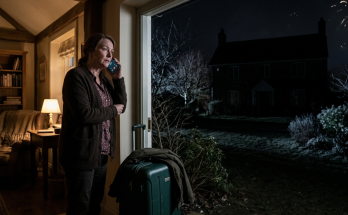
Noah and Lily, my beautiful, fragile one-year-old twins, were safe. The paramedics had extracted them from their reinforced car seats without a single scratch. They were currently sleeping in emergency hospital cribs down the hall in the pediatric observation wing, monitored by a temporary, on-call hospital social worker. But the social worker’s shift ended at dawn, and I was facing a severe, complex fracture of my pelvis. The orthopedic surgeon had already informed me that I would be entirely incapable of bearing weight, let alone caring for two toddlers, for at least two agonizing months.
Desperate, my hands shaking so violently I could barely unlock my cracked cell phone, I called the only blood relatives I had left on this earth. My parents lived thirty minutes away in an affluent, gated suburb on Elm Street—a lifestyle I entirely bankrolled.
The phone rang four times. Finally, my mother, Eleanor, answered.
I didn’t hear the quiet ambiance of a relaxing evening. Instead, a wall of sound hit my ear: a string quartet playing Vivaldi, the clinking of crystal champagne flutes, and the booming, polite laughter of a hundred wealthy socialites. She was hosting the annual spring charity gala right in the foyer of her mansion. My mansion. I had written the eighty-thousand-dollar check to cater this event so she could play the role of the benevolent matriarch.
“Mom,” I choked out, the word scraping against my bruised vocal cords. I fought the heavy, narcotic haze pulling at the corners of my vision. “Mom, there was an accident. A crash. I’m in the trauma ward.”
There was a brief pause on the line. I waited for the sharp intake of breath, the frantic maternal panic, the immediate demand to know if I was bleeding.
Instead, she let out a long, heavy sigh. It was a dramatic, aggrieved sound of pure, unadulterated inconvenience.
“Oh, Mara, really?” Eleanor hissed, her voice dropping to an urgent, furious whisper, trying to hide her annoyance from her wealthy guests. “The governor is literally standing by the ice sculpture. Are you okay? The police didn’t call us, so I assume you aren’t dying.”
“I have a fractured pelvis,” I whispered, tears of sheer disbelief finally spilling hot and fast down my cheeks. Over the phone, from the hallway outside my room, the faint, terrified wails of my children echoed. “I can’t walk, Mom. I’m going into surgery in the morning. Noah and Lily are down the hall, but the emergency sitter leaves at dawn. I need you and Dad to come get the twins. I need you to take them until I can stand. Just a few weeks. Please.”
The silence that followed was not born of shock; it was the silence of a woman calculating how an injured daughter would disrupt her aesthetic.
“Mara, keep those children quiet, my guests can hear them through the phone,” my mother snapped, her tone dropping into a patronizing, scolding register. “We simply cannot take in two screaming toddlers right now. I am hosting the biggest philanthropic event of the season. Plus, I have my country club pickleball semi-finals this week. Your father has his golf trip to Pebble Beach on Thursday. Your sister Claire never bothers us the way you do. We are not your built-in babysitters, Mara. Hire a nanny. Figure it out.”
The line went dead. The sharp, rhythmic dial tone echoed in my ear, a digital flatline to a relationship that had secretly been dead for decades.
I stared at the acoustic tiles of the hospital ceiling. Figure it out.
For eight grueling, exhausting years, I had figured it out. After Thomas died, I had poured every ounce of my grief and intellect into expanding our corporate logistics firm, Vanguard Holdings, transforming it into a multi-million-dollar empire to secure my children’s future. But I hadn’t just secured my children. I had become the Atlas holding up my entire family’s delusions of grandeur.
I paid the exorbitant mortgage on that sprawling estate where Eleanor was currently clinking glasses with the governor. I paid the lease on the luxury vehicles sitting in their driveway. I paid their country club initiation fees. I even paid a staggering, five-thousand-dollar monthly “consulting fee” from my corporate accounts to fund my golden-child sister Claire’s perpetually failing, vanity-project clothing boutique. I had bought their comfort, desperately hoping it would eventually purchase their love.
In the cold, humming silence of the trauma ward, the desperation evaporated.
The frantic, weeping child inside me who just wanted a mother finally, permanently died. In her place, a terrifying, zero-degree clarity washed over my mind, freezing the tears on my cheeks. I realized that my family didn’t love me. They loved my bank account. They viewed me as an automated teller machine, an ugly piece of corporate machinery that dispensed the funds required to maintain their aristocratic facade.
And the bank had just permanently closed.
I didn’t cry. The tears simply stopped. My heart rate on the monitor slowed, settling into a cold, predatory rhythm. I reached for my phone. I didn’t call for a nurse. I dialed Daniel Cho.
Daniel was my ruthless, brilliant, Ivy-League educated corporate litigator—a man who handled Vanguard Holdings with the precision of a contract killer. He answered on the second ring.
“Daniel. I need an irrevocable freeze on every single family asset tied to my name. Personal, corporate, all of it. Now.”
“They will panic, Mara,” Daniel warned, his voice smooth, sensing the absolute, zero-degree coldness in my voice from the hospital bed. “When a tap runs dry that fast, the pipes burst.”
“Let them drown,” I whispered, staring at the ceiling. “Burn it all down.”
“Consider it done,” he replied softly.
As the call disconnected, I felt a strange, intoxicating dark peace settle over my broken bones. I closed my eyes, entirely unaware that the financial guillotine I had just dropped would expose a web of family secrets so grotesque it would burn their entire suburban facade to ash. And they had no idea the executioner was already at the door.
Revenge, when executed by professionals, is not a loud, chaotic affair. It does not require screaming matches in driveways or dramatic, tear-filled ultimatums. True destruction is a silent, bureaucratic process. It is a series of keystrokes, a flurry of digitally signed documents, and the merciless, unyielding application of contract law.
At exactly 12:00 AM, while I lay in the dark listening to the rhythmic inflation and deflation of the compression cuffs on my legs, the financial guillotine fell with silent, digital precision.
Daniel Cho was a man who did not sleep when there was blood in the water. From his penthouse office overlooking the city, he executed my orders perfectly. The black, limitless platinum cards residing in my mother’s designer wallet were instantly deactivated by the issuing banks. The automated, recurring wire transfer that covered the lease for my father’s prized Range Rover was canceled, instantly flagging the vehicle in the dealership’s system for immediate, aggressive repossession. The monthly “consulting fee” that funded Claire’s delusional lifestyle was scrubbed from Vanguard Holdings’ payroll system, replaced by a glaring red error code.
I underwent surgery at dawn. The orthopedic team inserted three titanium screws into my pelvis, knitting my shattered bones back together. When I woke up in the recovery room, groggy but anchored to the world by a new, agonizing pain, the sun was high in the sky. My twins had been safely transferred to the care of an elite, heavily vetted emergency nanny agency Daniel had contracted using corporate funds. My children were safe. My mind was clear.
By 9:00 AM, my phone, resting on the adjustable hospital tray table, began to vibrate. It was a subtle, buzzing sound that quickly escalated into a violent, relentless mechanical seizure.
It wasn’t a flurry of concerned check-ins. It was pure, unadulterated panic.
I picked up the device, watching the notifications cascade across the shattered glass screen.
‘Mara, my card just declined at the country club caterer! The event planner looked at me like I was a criminal! Fix this bank error immediately, it’s humiliating,’ my mother texted at 9:14 AM.
Ten minutes later, a furious, breathless voicemail from my sister, Claire, illuminated the screen. I hit play.
“Mara, what the hell is wrong with the payroll department?! Did you mess up the routing numbers? My landlord for the boutique is threatening me with eviction, and my debit card just bounced at the salon! Call me back right now!”
I lay back against the stiff hospital pillows, wincing as a sharp, breathless spike of pain shot through my newly screwed pelvis. I looked at the barrage of messages.
Not a single text asked how the surgery went. Not one voicemail inquired if I was in pain. Not a single email asked if Noah and Lily had been fed, bathed, or comforted after surviving a catastrophic car crash.
I didn’t reply. I didn’t type out a furious explanation or demand an apology. I simply turned my phone facedown, closed my eyes, and let the glorious, heavy, suffocating silence of my new boundaries wash over me.
Over the next three days, they realized very quickly that this was not a bank error. They realized they were being intentionally starved. But because they were clinically incapable of self-reflection, they convinced themselves that I was simply throwing a temper tantrum.
On the afternoon of the fourth day, I was sitting upright in my bed, exhausted after a brutal session with a physical therapist. The heavy wooden door to my private hospital room didn’t just open; it slammed inward with a violent, aggressive force that startled the attending nurse.
My mother and sister stormed into the room. They were not carrying flowers. Their faces were twisted in furious, indignant rage. But as they approached my bed, I noticed Eleanor was clutching a thick manila folder. The sheer audacity of what they were about to attempt would cement their absolute destruction.
They hadn’t come to apologize. They had come to take the keys to the kingdom by force.
“What is wrong with you?!” Eleanor screeched, her voice shrill and echoing down the quiet hospital corridor.
She marched past the IV pole, her designer heels clicking aggressively against the linoleum, completely ignoring the quiet, horrified gasp of my attending nurse. Eleanor was dressed in a pristine, white tennis skirt and a cashmere cardigan, an outfit that screamed of leisure, contrasting sickeningly with the bleak, bruised reality of my hospital gown.
Claire trailed closely behind her, her arms crossed defensively over her chest. They didn’t look at the heart monitor tracking my pulse. They didn’t look at the pale, exhausted pallor of my face. They looked at me with the furious, demanding gaze of a customer berating a broken ATM.
“Do you have any idea how embarrassing it was to have my card cut up in front of the club manager?” Eleanor demanded, pointing a manicured, shaking finger directly at my face. “Your father had to hide his car in the garage because a tow truck showed up! This pathetic little tantrum is over. You are disrespecting this family!”
“I can’t even buy inventory for my boutique!” Claire whined, stepping up beside our mother. “You’re sitting in a hospital bed doing nothing while my business is falling apart!”
I didn’t flinch. I reached out with a trembling hand and pressed the button on my bed rail, adjusting the mattress so I was sitting perfectly upright.
“There is no tantrum, Mom,” I said, my throat dry, my voice echoing with a raspy authority. “There is only a permanent restructuring of my corporate and personal assets.”
Eleanor’s eyes narrowed into slits. She slammed the manila folder down onto my rolling tray table. She flipped it open, revealing a legally binding document covered in dense text. I immediately recognized the header: General Power of Attorney.
“We knew you were mentally compromised by the accident,” Eleanor said, her voice dripping with fake, cloying maternal concern that made my stomach turn. “You’re heavily medicated, Mara. You aren’t thinking straight. The doctors said you’ll be incapacitated for months. I brought a notary from the club. They are waiting in the hall. You are going to sign this document giving Claire and me administrative control over Vanguard Holdings and your personal accounts until you recover. It’s for your own good. We’ll handle the finances.”
They thought I was high on opioids. They thought they could bully a crippled, traumatized widow into signing away her entire empire.
I looked at the pen she shoved into my bruised hand. Then, I looked up, past her shoulder.
“I wouldn’t sign that, Mara,” a voice said smoothly.
From the uncomfortable vinyl guest chair in the dark corner of the room, Daniel Cho stood up.
He had been sitting so quietly they hadn’t even noticed him. Daniel smoothed the front of his impeccably tailored, charcoal-gray Tom Ford suit. He adjusted his glasses, his face a mask of absolute, merciless legal professionalism.
My mother physically recoiled, taking a step back, suddenly realizing there was a highly dangerous, objective observer in the room.
Daniel calmly walked to the foot of my bed, reached over, and plucked the Power of Attorney document from the tray. He tore it precisely in half, then in quarters, and dropped the confetti into the biohazard bin.
“Mr. Cho! What do you think you are doing?!” Eleanor shrieked.
“Protecting my client from fraud, Mrs. Evans,” Daniel said smoothly. He opened his leather briefcase and pulled out a single, red-stamped document. He dropped it onto the tray table with a heavy thud.
“As the managing legal representative and fiduciary executor for Vanguard Holdings, I am formally serving you and your husband with a thirty-day notice to vacate the property located on Elm Street.”
Eleanor stared at him, her brain struggling to process the legal terminology. “Vacate? What are you talking about?”
“The occupancy agreement has been permanently terminated,” Daniel continued, his tone clinical. “The legal ownership of the Elm Street estate resides entirely with Vanguard Holdings. You are merely tenants. The agreement has been voided due to a breach of the morality and support clause my client quietly instituted in the trust three days ago. You have exactly thirty days to remove your personal belongings, or they will be surrendered to the state.”
My mother’s face turned the color of wet, gray ash. She clutched her chest, leaning heavily against the wall.
“You… you’re evicting us?” she gasped, looking at me with pure horror. “But that’s our home! We raised you! You owe us!”
“You didn’t raise me,” I whispered, the words carrying the weight of thirty years of emotional starvation. “You harvested me. And the harvest is officially over.”
“You can’t do this!” Eleanor shrieked, the tears finally flowing. “I will take you to court! I will drag your company through the mud! You ungrateful little bitch!”
Daniel Cho didn’t blink. He simply reached back into his leather briefcase.
“You may want to reconsider filing any lawsuits, ma’am,” Daniel said softly, the quiet menace in his voice silencing her screams. He pulled one final, massive document from his case.
“Because we just finished the forensic audit on your husband. And I assure you, Eleanor, you are going to want to sit down for this.”
“I will sue you for everything you have!” my mother spat, though her voice wavered as Daniel held up the thick, spiral-bound audit report.
Daniel operated in boardrooms where billions of dollars changed hands; a screaming suburban housewife was entirely beneath his threshold of intimidation. He stepped forward, opening the ledger so she was forced to look at the highlighted numbers.
“When my client authorized the total asset freeze, standard Vanguard protocol triggered a mandatory forensic audit of all corporate disbursements over the last five years,” Daniel explained, his voice dropping to a conversational, chillingly calm volume. “During the audit, we uncovered a fascinating pattern of expenditure regarding your husband, Richard.”
Daniel pointed a manicured finger to a dense column of dates and dollar amounts.
“Over the past forty-eight months, Richard requested, and my client approved, over $400,000 in supplementary funds. Earmarked for ’emergency roof repairs,’ ‘uninsured medical premiums,’ and ‘secure retirement investments.’”
Eleanor’s face contorted in confusion. “Yes, the roof was leaking! What does that have to do with you evicting us?!”
“The roof was never repaired, Mrs. Evans,” Daniel stated, delivering the kill shot with surgical precision. “We discovered that the moment the $400,000 hit Richard’s personal accounts, it was systematically wired to two very specific destinations.”
Daniel flipped the page. “$250,000 was funneled directly into an offshore sports betting syndicate based in the Cayman Islands to cover massive, recurring gambling debts. The remaining $150,000,” Daniel paused, letting the silence stretch, “was used to sign a five-year, prepaid luxury apartment lease downtown, and to purchase a 2025 Mercedes-Benz convertible.”
“A convertible?” Claire whispered, her eyes wide. “Dad hates driving.”
“He didn’t buy it for himself,” Daniel clarified. “The apartment lease and the vehicle title are registered to a twenty-four-year-old woman named Taylor Vance.”
My mother froze. The color entirely drained from her lips. “Taylor? Taylor from the country club? My… my pickleball instructor?”
“The very same,” Daniel confirmed gently. “But here is the truly fascinating part, Eleanor. Richard didn’t have the credit score to secure that lease or that car loan for Taylor. So, he forged a guarantor signature. Yours.”
The silence in the hospital room was absolute. It was deafening.
Daniel handed her the final page. “Since the Vanguard funds have stopped flowing, the rent and car payments for your husband’s mistress have bounced. Because your name is on the guarantor line, Eleanor, you are legally and entirely responsible for the remaining $120,000 debt. The creditors are coming for you. Not him. You.”
The arrogant, demanding matriarch who had just minutes ago tried to steal my company suddenly realized her entire life was a grotesque, pathetic illusion. Her husband hadn’t just been cheating on her with a girl young enough to be her daughter; he had weaponized her own identity to fund the affair, trapping her in a financial prison she couldn’t escape.
The realization hit her like a physical blow.
Eleanor dropped the paperwork. It scattered across the hospital floor. She let out a guttural, agonizing scream—a visceral howl of pure, unadulterated betrayal.
She entirely forgot I was in the room. She spun around, her eyes wild, her hands curled into claws, looking at Claire.
“He ruined me!” Eleanor shrieked, spit flying from her lips. “That lying, cheating bastard! I’ll kill him! We have nothing!”
“We don’t have anything because you couldn’t keep your mouth shut on the phone!” Claire screamed back, the toxic, enabling alliance dissolving instantly. “If you had just watched Mara’s stupid kids, I wouldn’t be losing my boutique!”
They cannibalized each other like starving wolves, tearing apart their own family dynamic with vicious, venomous insults right at the foot of my bed. I sat back against my pillows, watching the empire of lies burn to the ground.
I reached out and pressed the red nurse call button.
Security arrived within thirty seconds. Two large guards grabbed my weeping, broken mother and my hysterical sister by the arms, physically dragging them out of the trauma ward, their screams echoing down the hallway until they faded into nothing.
As the heavy door clicked shut, sealing them out of my life, the room descended into a beautiful, profound quiet. I looked at Daniel. He offered a single, respectful nod.
I finally let myself cry. They were not tears of grief. They were the heavy, hot, magnificent, cleansing tears of a survivor who had just watched her captors willingly lock themselves inside their own burning prison.
But a cornered animal is the most dangerous kind. I thought the war was over. I didn’t know that my mother, facing absolute ruin, was already plotting to take the only thing I valued more than my life.
The fallout over the next six months was not merely a drama; it was a masterpiece of karmic, absolute destruction, playing out publicly across the social landscape of our city.
Without the bottomless reservoir of my money to patch the holes, the rotting hull of my parents’ marriage instantly disintegrated. The divorce was vicious and spectacularly ugly. With Vanguard Holdings formally foreclosing on the Elm Street estate, Eleanor and Richard were abruptly evicted from the gilded cage they had paraded around in.
Eleanor, stripped of her home and slapped with the crippling $120,000 debt from her husband’s mistress, was forced to declare bankruptcy. She moved into a cramped, aging, one-bedroom apartment complex on the industrial side of town. She was entirely, permanently alienated from the elite country club friends she had worshipped; those same friends now reveled in the delicious scandal of Taylor the pickleball instructor.
Claire’s boutique, incapable of surviving a single month without the artificial inflation of my funds, was seized by creditors. The designer clothes were liquidated.
Fate, however, has a sublime sense of poetry. To make ends meet, Claire was forced to take a minimum-wage job. She ended up working as a barista at the high-end chain coffee shop located in the grand, marble-floored lobby of the Vanguard Holdings corporate headquarters.
Every single morning, my sister, the former golden child, had to wear a green apron and steam milk for the very junior executives she used to look down upon. And twice a week, when I came down for a macchiato, she had to stand there, jaw clenched, and hand me my cup, forced to say, “Have a great day, ma’am,” while my security detail flanked me. I never gloated. I never smirked. The pure, crushing weight of my utter indifference was a thousand times more devastating than any insult I could have hurled at her.
Instead of draining my soul to fix their problems, I channeled every ounce of my energy into breathing, healing, and surviving.
My recovery was a grueling, agonizing journey. I spent hours every day in intense physical therapy, learning to walk again. The physical pain of forcing weight onto my surgically repaired pelvis was sharp, blinding, and relentless. There were days I collapsed on the parallel bars, drenched in sweat, sobbing from the sheer physical exertion.
But healing shattered bones is infinitely easier when you aren’t simultaneously carrying the paralyzing, emotional deadweight of a parasitic family.
Three months after the crash, on a bright, crisp autumn morning, I was finally cleared by my orthopedic surgeon to walk unassisted, without the heavy pelvic brace.
I walked through the front doors of my own quiet, secure home. I navigated the hallway, my steps slow but steady, until I reached the sunlit playroom at the back of the house.
I dropped my cane onto the carpet. I sank to my knees on the soft floor, opening my arms. Noah and Lily, recognizing me instantly, shrieked with joy and toddled across the room on unsteady legs. They collided into my chest, a tangle of soft limbs and warm, baby giggles.
I pulled them into a fierce, unbreakable embrace. I buried my face in their soft hair, inhaling the intoxicating, pure scent of baby lotion, warm milk, and unconditional love. Tears of profound, unshakeable gratitude streamed down my face. My life had become a beautiful, fiercely protected sanctuary.
I had returned to the helm of Vanguard Holdings, my body scarred but my mind sharper and more ruthless than ever before.
However, peace is always tested to prove its strength.
Exactly one year after the car crash, I was sitting in my living room, reading a book while the twins napped upstairs, when a sharp, aggressive knock echoed from the front door.
I opened it to find a stern-looking woman holding a clipboard, flanked by a uniformed police officer. She flashed a silver badge.
“Mara Evans? I am Agent Miller with Child Protective Services,” the woman said, her eyes sweeping over me critically, looking past me into the house. “We received an anonymous, high-priority tip this morning. The caller alleged that you are suffering from severe PTSD, actively abusing prescription opioids, and severely neglecting your two infant children. I have a warrant to inspect the premises and evaluate the safety of the minors.”
My blood ran ice cold.
Eleanor. Bankrupt, humiliated, and desperate, she wasn’t just trying to hurt me anymore. She was trying to legally kidnap my children to force herself back into my life as a court-appointed guardian, purely to access the child support and estate funds.
I gripped the edge of the doorframe, my knuckles turning white. The war wasn’t over. My mother had just brought a gun to a knife fight.
“Come in, Agent Miller,” I said smoothly, stepping aside, a terrifying, lethal calm settling over my heart. “And let me call my lawyer.”
The preliminary custody hearing took place two weeks later in a heavy, oak-paneled courtroom downtown.
I sat at the plaintiff’s table, my posture immaculate, wearing a tailored charcoal suit that matched Daniel Cho’s. Across the aisle sat my mother. Eleanor looked ten years older, her hair unkempt, wearing a cheap, ill-fitting blazer. She had found a bottom-feeding lawyer willing to work on contingency, banking on the lie that I was a drug-addicted, unstable widow.
Eleanor took the stand. For twenty minutes, she performed a masterclass in manipulative weeping. She painted a picture of a loving, devoted grandmother tragically alienated from her precious grandchildren by a bitter, wealthy, mentally unstable daughter who was quietly spiraling into addiction following a tragic car crash. She demanded emergency mandated custody, claiming it was in the “best interest of the children.”
Daniel Cho didn’t object once. He let her dig the grave as deep as she possibly could.
When it was his turn to cross-examine, Daniel didn’t even walk to the podium. He stood up, adjusted his cuffs, and looked directly at the judge.
“Your Honor, we do not wish to cross-examine the witness,” Daniel said, his voice echoing in the silent room. “We simply wish to submit two pieces of evidence into the permanent court record.”
He handed a thick, sealed envelope to the bailiff, who passed it to the judge.
“Exhibit A is my client’s comprehensive, voluntary medical records and blood toxicology reports from the past twelve months,” Daniel stated clinically. “You will note, Your Honor, that despite suffering a shattered pelvis, Mara Evans explicitly refused all opioid-based painkillers a mere four days after her surgery, opting to endure agonizing physical therapy on over-the-counter medication specifically to ensure she was lucid and present for her children. The claim of addiction is a malicious fabrication.”
Eleanor’s lawyer shifted uncomfortably in his seat. The judge flipped through the medical file, her brow furrowing in deep annoyance as she realized she was having her time wasted.
“And Exhibit B,” Daniel continued, pulling a small audio drive from his pocket. “A subpoenaed, time-stamped recording of the emergency hospital phone logs from the night of the accident. The night the defendant claims she was ‘tragically alienated’ from her grandchildren.”
Daniel pressed a button on a small speaker on our table.
The sound of my desperate, pain-laced voice begging for someone to take my orphaned children echoed through the sterile courtroom. “I need you and Dad to come get the twins. Just a few weeks. Please.”
And then, the undeniable, chilling sound of my mother’s voice filled the room, stripped of all its fake grandmotherly warmth.
“Keep those children quiet, my guests can hear them… We simply cannot take in two screaming toddlers right now… I am hosting the biggest philanthropic event of the season. Plus, I have my country club pickleball semi-finals this week… We are not your built-in babysitters, Mara. Figure it out.”
The recording clicked off. The silence in the courtroom was so heavy it felt suffocating.
Eleanor shrank into her chair, her face pale, her eyes darting frantically around the room, realizing her facade had just been publicly, legally obliterated.
The judge, a stern woman with zero tolerance for perjury, was visibly disgusted. She slammed her hands down on her desk.
“Mrs. Evans,” the judge said, her voice dripping with venom. “In my twenty years on the bench, I have rarely seen a more egregious, bad-faith, retaliatory attempt at extortion by a demonstrably negligent and unfit individual. You weaponized Child Protective Services to harass a grieving widow and her children for financial gain.”
The judge didn’t just dismiss the case with extreme prejudice. She issued a permanent, ironclad restraining order against Eleanor. But the true, devastating blow was financial.
To penalize the frivolous and malicious nature of the suit, the judge ordered my mother to pay the entirety of Vanguard Holdings’ elite corporate legal fees. It was a staggering, high-six-figure judgment that attached directly to my mother’s already bankrupt name. It was a financial death sentence that guaranteed her wages would be garnished, cementing her in poverty for the rest of her natural life.
She was finally, completely, legally a ghost.
That evening, I stood on the back deck of my home, the air cool and crisp. The sun was setting, casting long, golden shadows across the expansive, secure backyard.
I watched Noah and Lily, robust, happy two-year-olds, chasing the first fireflies of the summer across the lawn, their laughter carrying on the breeze.
I reached down and traced the faint, white surgical scar line that ran along my hip, hidden beneath my clothes. It was a permanent, physical reminder of the day my body broke, the day I almost lost everything, and the exact day my soul was permanently set free.
I thought about the canceled charity gala, the evicted mansion, and the barista apron my sister wore. My family had eagerly, unapologetically traded their daughter’s life for the hollow aesthetic of a wealthy suburb. They had built an altar to their own vanity, entirely unaware that it was constructed over a sinkhole.
I smiled, raising my cup of green tea in a silent, solitary toast to the quiet evening.
They told me they weren’t built-in babysitters. They told me to figure it out.
And I had.
I realized then that society lies to us. We are told that family is an unbreakable bond, a mandatory obligation that must be endured regardless of the pain it inflicts. But the truth is much simpler, and far more beautiful. Cutting out the cancer in your life, even if it shares your DNA, is the only true emergency there is.
And once the tumor is gone, once the rotting tissue has been excised and the wound has finally closed, you realize the most profound secret of all: you never, ever have to look back again.
If you want more stories like this, or if you’d like to share your thoughts about what you would have done in my situation, I’d love to hear from you. Your perspective helps these stories reach more people, so don’t be shy about commenting or sharing.