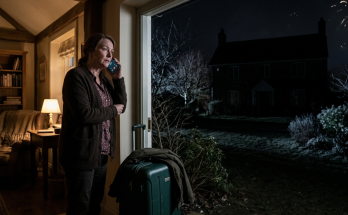
For the next sixteen minutes, Sarah called me nine times.
I answered none of them.
David called twice.
An unknown number called once.
Then Sarah sent a message containing only three words.
Come back NOW.
I was driving north toward a small hotel nearly two hours from the property, and something about those capital letters made me feel older than I had when I left.
Not physically older.
Finished with a particular kind of obedience.
Patricia had warned me that the first hours would be the hardest.
“You’ve trained everyone around you to expect an eventual yes,” she told me several days earlier. “When people are accustomed to your surrender, a boundary can look like aggression.”
At the time, I thought the sentence sounded overly neat.
Now I understood it.
Sarah did not believe I had made a decision.
She believed I was having an episode that could be corrected if she applied enough pressure.
At 12:17, the calls stopped.
That frightened me more than the shouting.
My daughter was persistent by nature. As a child, she could ask for the same thing twelve different ways and treat every refusal as a misunderstanding.
Silence meant she was planning.
I forced myself not to imagine what.
The legal steps were documented.
Patricia had copies of everything.
The security company knew the property owner was me.
Nobody had been physically removed without due process.
Nobody had lost access to emergency necessities.
What Sarah and David had lost at midnight were permissions they had mistaken for rights.
Still, guilt was an old language, and I remained fluent.
At 1:46 in the morning, I reached the hotel.
The lobby smelled faintly of coffee and industrial cleaner. A tired receptionist wearing a paper New Year crown checked my identification.
“Rough night?” she asked.
I looked down at the suitcase.
“Important night.”
She smiled.
“I hope that’s good.”
“So do I.”
My room was on the seventh floor.
I placed the suitcase beside the bed and opened the curtains.
The city below was quieting after midnight. Small clusters of fireworks still appeared between buildings, their reflections trembling in dark windows.
I sat on the edge of the bed.
No one needed me.
The silence felt so unfamiliar that my body did not seem to know what to do with it.
I expected tears.
Instead a laugh escaped.
Only one.
Soft and startled.
For nearly two years I had woken every morning wondering whether Sarah needed something.
Did she need the card?
Could I meet a repairman?
Had I remembered to order the household supplies?
Would I move my car?
Could I keep the cottage quieter because David had a conference call?
Could I watch for a delivery?
Could I loan them money until Friday?
Could I avoid the main house because they had friends staying?
Now there was simply a hotel bed, a locked door, and seven hours before Patricia expected to hear from me.
I slept for three of them.
At 6:08, my phone began vibrating on the bedside table.
Sarah.
I watched the screen darken.
David called next.
Then Sarah again.
Then another unknown number.
I made coffee using the little machine beside the television.
At 6:30, David left a voicemail.
I listened.
“Ellen, this has gone far enough. Whatever point you’re trying to make, you’ve made it. You can’t interfere with our home and lock people out of systems we’ve been using for two years. Call me.”
Our home.
Even after the previous night, he still said it.
Not your house.
Not Ellen’s property.
Our home.
A second voicemail arrived from Sarah.
Her voice was different.
Less angry.
“Mom, please answer. Some people had to stay because they’d been drinking and couldn’t drive. David’s parents are furious. The heating controls were acting up. Everybody was asking questions. Please stop doing this.”
I nearly called her.
My thumb hovered above the screen.
Then I heard David’s garage conversation again in my memory.
Why buy one when we can get this one?
I set the phone down.
At 7:12, Patricia called.
I answered immediately.
“Happy New Year,” she said.
Despite everything, I smiled.
“You too.”
“How are you?”
“I don’t know yet.”
“That’s acceptable.”
“What happened there?”
“Enough that they finally started asking who has authority over the property.”
I sat straighter.
“What did they do?”
“David contacted a locksmith shortly after midnight.”
My stomach turned.
“Did he get in?”
“Not by force. The company called the security provider when the authorization information didn’t match. Your ownership records prevented anyone from treating David as the owner.”
I pressed two fingers against my forehead.
“He really tried.”
“Yes.”
“What happens now?”
“Nothing outside the process we already prepared.”
“Patricia.”
“I’m listening.”
“Sarah thinks I’ve lost my mind.”
“She’s allowed to think that.”
“She’ll tell everyone.”
“She’s allowed to do that too.”
I looked through the hotel window.
“You make this sound easy.”
“No. I make it sound legal.”
That pulled a tired laugh from me.
Patricia continued. “I’ll meet you at the property at ten.”
My hand tightened around the coffee cup.
“Do I need to go?”
“No.”
“Then why should I?”
“Because this began as a family arrangement, and you told me you wanted the next conversation to happen face-to-face.”
That had been before I actually left.
Now the thought of returning made my chest ache.
Patricia must have heard the hesitation.
“You can stay away if you want.”
I pictured Sarah on the lawn after the party.
Angry.
Humiliated.
Probably frightened.
Then I pictured myself avoiding yet another difficult conversation while other people handled the consequences for me.
“No,” I said. “I’ll come.”
At 9:43, I turned onto my street.
Two police vehicles were parked near the driveway.
A tow truck waited farther down.
Several people I recognized from the party stood near the porch.
Confetti had blown across the frozen lawn.
Champagne glasses remained on outdoor tables.
The morning made everything look cheap.
Last night’s elegance had become discarded napkins, crushed plastic cups, and metallic streamers caught in shrubs.
Sarah saw my car.
She ran toward me.
I barely recognized her.
Her cream outfit was wrinkled.
Her hair had fallen loose.
Dark makeup smudged beneath her eyes.
I lowered the window but kept the doors locked.
“Mom.”
“Good morning.”
“Please open the house.”
“What happened?”
“Don’t do that.”
“Do what?”
“Act calm.”
Her hand gripped the top of my door.
“Everyone thinks we’re being thrown out.”
“You aren’t being thrown onto the street this morning.”
“The security company says you changed everything.”
“I changed permissions attached to my accounts.”
Her face tightened.
“Why?”
“Because they’re mine.”
“Mom, obviously the house is technically yours.”
The word stopped me.
Technically.
I turned off the engine.
“Technically?”
“You know what I mean.”
“I would like to hear you explain it.”
“We live here.”
“Yes.”
“We’ve lived here for two years.”
“Yes.”
“You gave us the place.”
“No.”
She stared at me.
“You said we could live here.”
“Temporarily.”
“We’re family.”
“Yes.”
“Then what difference does it make?”
There it was.
The question at the center of everything.
What difference did ownership make if I loved her?
What difference did money make if I had enough?
What difference did permission make if I usually said yes?
For Sarah, love had slowly become the argument that erased every boundary.
“The difference,” I said, “is that using something with permission does not make it yours.”
Her eyes filled instantly.
I hated seeing that.
Some instinct in me still wanted to open the door, pull her into the passenger seat, apologize, and make the morning disappear.
Instead I asked, “How much have you and David saved?”
Her expression shifted.
“What?”
“You moved here because you wanted to save for a home. How much have you saved?”
“Why are you asking me that now?”
“Because two years have passed.”
“We’ve had expenses.”
“So have I.”
She glanced toward the house.
“David handles most of the finances.”
“I know.”
Her head turned back quickly.
Something in my tone reached her.
Before she could ask what I meant, David came down the driveway.
Robert followed several steps behind him.
David was still wearing his clothes from the party, though his shirt was open at the collar and his face looked gray with exhaustion.
“Ellen.”
“David.”
“This needs to stop.”
“No.”
He halted.
Perhaps he had expected argument.
The simple answer unsettled him.
“You can’t just decide we don’t live here.”
“I can decide the arrangement is ending.”
“We have rights.”
“Yes, and they will be respected.”
That answer seemed to surprise him more.
“I’ve spoken to an attorney.”
“So have I.”
He looked at Sarah.
She looked at me.
Then Patricia’s sedan turned onto the street.
I had never been so relieved to see anyone.
She parked behind my car and stepped out carrying a leather document case.
David watched her approach.
“Who is this?”
“My attorney.”
Sarah’s face drained of color.
“Your attorney?”
“Yes.”
“For what?”
Patricia reached us.
“Good morning.”
Nobody returned the greeting.
She opened her case.
“I’m here because Ellen wants the status of the property and your occupancy explained clearly and without unnecessary confrontation.”
David crossed his arms.
“We don’t need a lecture.”
“No,” Patricia said. “You need information.”
She removed several copies.
“The property remains solely owned by Ellen. Neither Sarah nor David holds an ownership interest. There is no lease conveying permanent occupancy, and no transfer of title has occurred.”
Sarah looked at me.
“We know that.”
Patricia continued.
“The family arrangement allowing you to occupy the property is being terminated according to the applicable process. Formal notice has been prepared.”
David stared at her.
“How long?”
“Thirty days under the notice being served.”
Sarah actually laughed.
It was not amusement.
It was shock.
“Thirty days?”
I stepped out of the car.
The cold morning wind moved through my coat.
“You need to begin finding another place.”
She looked at me as though I had struck her.
“You’re serious.”
“Yes.”
“Where are we supposed to go?”
“I don’t know.”
“You don’t know?”
“No.”
“I’m your daughter.”
“I know exactly who you are.”
“Then how can you do this?”
My throat tightened.
“Because being your mother cannot mean preventing every consequence from reaching you.”
Her eyes filled.
David stepped between us.
“This is because of last night.”
“No.”
“You were embarrassed because Sarah asked you not to attend.”
“It hurt.”
“So this is revenge.”
“No.”
“What else would you call it?”
I looked at him.
“Late.”
He frowned.
“What?”
“This should have happened a long time ago.”
Patricia touched my arm lightly, reminding me not to be pulled too far into the argument.
Then she said, “There is another financial matter.”
David’s attention snapped toward her.
“What matter?”
“Ellen has terminated authorized use of her credit accounts and asked the bank to review recent charges.”
For the first time that morning, real fear appeared on his face.
Sarah noticed it.
So did I.
“What charges?” she asked.
David answered too quickly.
“Probably household stuff.”
Patricia removed another set of papers.
“The preliminary review includes significant personal expenditures that do not appear related to maintaining Ellen’s property.”
Sarah looked from Patricia to David.
“What personal expenditures?”
No one spoke.
She took the pages from Patricia.
Her eyes moved down the first sheet.
Restaurants.
Electronics.
Furniture.
Clothing.
Transportation.
Hotels.
Jewelry.
Her forehead creased.
Then she turned a page.
“David.”
He kept his arms crossed.
“What?”
She touched one line with her finger.
“What is this hotel?”
He leaned closer.
“I don’t know.”
“It’s forty-eight hundred dollars.”
Robert moved behind him.
I saw David notice.
“Probably a work thing.”
Sarah looked up.
“On Mom’s card?”
He said nothing.
Her voice dropped.
“Were you using her card?”
“You used it too.”
“Not for this.”
“Sarah—”
“What is this?”
He reached for the paper.
She pulled it away.
Something passed across her face then that I had not expected to see that morning.
Not anger at me.
Doubt about him.
Patricia caught my eye.
We both remained silent.
Sarah flipped through the accounting faster.
“How long has this been happening?”
David’s jaw tightened.
“Can we not do this in the driveway?”
“You were perfectly happy doing everything else in Mom’s house.”
“Sarah.”
“What did you buy?”
“I said we’ll talk inside.”
She gave a short, disbelieving laugh.
“You mean inside the house you spent two years telling me would eventually be ours?”
David looked at me.
That was his mistake.
Sarah saw it.
Her hand holding the statement went still.
“Why did you look at her?”
He did not answer.
“David.”
Robert stepped forward.
“This is becoming ridiculous. Everybody is exhausted.”
Sarah turned on him.
“Did you know?”
Robert’s composure slipped.
“Know what?”
She pointed toward the accounting.
“About the money.”
“Your finances are between you and your husband.”
“Did you know he was using my mother’s accounts?”
“I said that’s between—”
“And the house?”
Silence.
The wind lifted several pieces of silver confetti and carried them across the driveway.
Sarah looked from Robert to David.
“What about the house?”
David stared at her.
She stepped closer.
“What were you planning?”
“Nothing.”
“Don’t lie to me right now.”
“Sarah—”
“Did you tell me we didn’t need to rush buying because Mom would eventually give us this place?”
My chest tightened.
David said nothing.
Sarah’s face changed.
It was the first crack in the version of her life she had been defending all morning.
I had wanted her to understand what she had done to me.
I had never wanted understanding to arrive this way.
Patricia closed the folder.
“There will be time to address the financial review separately.”
Sarah seemed barely to hear her.
She looked at me.
“Mom.”
I waited.
Her voice was suddenly smaller.
“How long have you known?”
“Known what?”
“That something was wrong.”
I thought of the garage.
The documents.
The bills.
The study.
The cottage.
“Six months.”
She recoiled.
“Six months?”
“Yes.”
“And you never said anything?”
“I stopped saying things when I realized nobody listened unless my answer was yes.”
Her mouth trembled.
David walked toward the house without speaking.
Sarah did not follow him.
For several seconds she stood beside me in the driveway while the ruins of her expensive party moved in the wind around our feet.
Then she looked at the main house.
“I didn’t think you would really leave.”
The confession was so quiet I almost missed it.
I looked at my daughter.
“That,” I said, “was what made it possible for you to keep treating me as though I never could.”
She lowered her eyes.
Patricia waited until Sarah went inside.
Then she turned to me.
“There’s one more thing.”
I knew before she opened the document case which thing she meant.
Still, hearing the words was different.
She handed me a sealed envelope.
“The buyer completed the final confirmation yesterday.”
My fingers tightened around it.
I looked at the house.
For twenty-nine years, it had been the most permanent thing in my life.
“The sale is going forward?”
“Yes.”
“Sarah doesn’t know.”
“No.”
“And David?”
“No.”
I stared at the front door through which they had just disappeared.
Thirty days.
They believed that was the worst news they had received that morning.
They still thought the argument was about whether I would eventually calm down and let them stay.
They had not yet understood that there would soon be nothing left for me to give them back.
I opened the envelope.
The buyer’s signed confirmation was inside.
Patricia stood quietly beside me.
For several seconds I could hear nothing except the paper trembling faintly between my fingers.
Then I asked the question that would end the last possibility of returning to the life I had known.
“When do we close?”