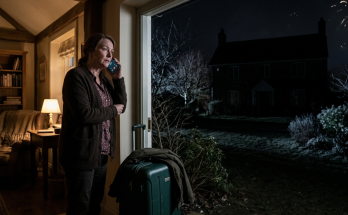
Patricia stayed on the phone for eighteen minutes.
I watched the clock.
Watched her pace.
Watched her write three names on a yellow legal pad and draw lines between them.
Once she asked the person on the other end to repeat something.
Another time she said, “No, do not contact him yet.”
My stomach tightened with every minute.
When she finally ended the call, she remained standing beside the window.
“Well?”
“The buyer is legitimate.”
I let out a breath I had not realized I was holding.
“That sounded like there was a but.”
“There is.”
Of course.
I sat.
Patricia returned to the table.
“The broker who brought the buyer to you is Daniel Reeves.”
“Yes.”
“You met him twice.”
“Yes.”
“He came recommended by one of my professional contacts.”
“I remember.”
“What I did not know is that Daniel previously handled several commercial transactions involving Robert Hayes.”
I stared at her.
“David’s father.”
“Yes.”
The room seemed to tilt slightly.
“Did Robert know the house was for sale before Sarah?”
“We don’t know yet.”
“Did he send the buyer?”
“We don’t know that either.”
“What do we know?”
Patricia turned the yellow pad toward me.
“Daniel says Robert casually mentioned several months ago that a property in your neighborhood might become available.”
My mouth went dry.
“Several months ago?”
“Yes.”
“When?”
“Roughly the same period we began preparing the private listing.”
“That can’t be coincidence.”
“It may not be.”
I stood and walked toward the window.
Below, traffic moved through the intersection.
Normal people carrying groceries.
Going to work.
Living lives where a house was just a house.
“What exactly did Robert say?”
“According to Daniel, Robert did not give your name. He described the property generally and said there was an older widow who might eventually downsize.”
I turned.
“He was marketing my house before he knew I was selling it.”
Patricia held up one hand.
“Slow down.”
“What else would you call it?”
“We do not know whether he was actively marketing it.”
“He told someone in real estate that I might sell.”
“Yes.”
“Without asking me.”
“Yes.”
I laughed once.
It sounded ugly.
“Everyone had plans for my house except me.”
Patricia did not contradict me.
I returned to the table.
“Does the buyer know Robert?”
“Not directly, as far as Daniel knows.”
“As far as he knows.”
“Yes.”
“Can we verify that?”
“We can ask.”
I looked at the unsigned papers.
“Should I stop the sale?”
Patricia considered the question.
“Do you want to stop because the deal is bad?”
“I don’t know.”
“Or because finding Robert’s fingerprints anywhere near it makes you want to burn the entire thing down?”
I looked at her.
“The second one.”
“That’s understandable.”
“But not necessarily wise.”
“No.”
I sat again.
“What is the property actually worth?”
Patricia reached for the appraisal.
“The independent valuation supports the current purchase range. The buyer’s offer is not suspiciously low.”
“David said it was worth more.”
“Every property may be worth more to the right buyer.”
“That sounds like broker language.”
“It is also true.”
“What would you do?”
She shook her head.
“I’m not going to choose for you.”
I rubbed my eyes.
“That is becoming a very popular answer in my life.”
“It’s still the right one.”
She was correct, which annoyed me.
We reviewed the sale documents from the beginning.
Purchase price.
Contingencies.
Inspection.
Deposit.
Closing schedule.
There was no clause giving Robert any interest.
No unusual commission.
No hidden financing.
No assignment.
Nothing that suggested the buyer was acting for him.
Still, the timing bothered me.
At five, Patricia called Daniel again and placed him on speaker.
His voice sounded uneasy.
“Mrs. Carter, I’m sorry this has become complicated.”
“Did Robert Hayes tell you my house would be available?”
“He suggested it might.”
“Why?”
“I assumed he knew through family.”
“Did he ask you to find a buyer?”
“No.”
“Did he ask you what it might sell for?”
A pause.
“Yes.”
Patricia looked at me.
“When?” I asked.
“Late summer.”
That was before I formally decided to sell.
My stomach turned.
“What did you tell him?”
“A range based on neighborhood comparables.”
“Did you ever tell him my offer amount?”
“No.”
“Are you certain?”
“Yes.”
“How did David know it?”
“I have no idea.”
Patricia leaned toward the phone.
“Who had access to the offer?”
“My office staff. You. Mrs. Carter. Buyer’s agent. Buyer’s counsel.”
“Any overlap with Robert Hayes?”
“I’m checking.”
I said, “Did Robert know the buyer’s identity?”
Another pause.
“I don’t think so.”
“Daniel.”
“I never told him.”
“That isn’t what I asked.”
He sighed.
“He asked whether the buyer was local.”
“What did you say?”
“I said yes.”
“Anything else?”
“No.”
I stood and walked away from the table.
Patricia continued the call.
I barely listened.
Late summer.
That meant Robert had been thinking about the value of my property before I had made my own decision.
Maybe he expected to buy it.
Maybe he wanted David and Sarah to leverage it.
Maybe he was simply curious.
Every explanation left me with the same ugly feeling.
I had been a living woman surrounded by people discussing the future use of her assets as though she were already an estate.
When the call ended, I said, “I want to talk to Robert.”
Patricia shook her head.
“Not alone.”
“Fine.”
“Not tonight.”
“Why?”
“Because you’re angry.”
“Yes.”
“And because I want more facts first.”
I nearly argued.
Then stopped.
Six months earlier, I would have avoided confrontation because I was afraid of anger.
Now I was in danger of using anger as proof that immediate confrontation was necessary.
Neither extreme was wise.
“All right.”
Patricia gathered the documents.
“We’ll pause signatures until tomorrow.”
“Will that affect closing?”
“Not yet.”
I put on my coat.
Outside, dusk had turned the sidewalks blue.
I drove back to the hotel.
Sarah called while I was parking.
I answered.
“Hi.”
Her voice sounded small.
“Are you busy?”
“Not anymore.”
“Can I come see you?”
I hesitated.
“Alone?”
“Yes.”
I gave her the hotel address.
Forty minutes later, she knocked on my door carrying a grocery bag.
“What is that?”
“Dinner.”
I stepped aside.
She took out two sandwiches, soup, and slices of pie from the Riverside Diner.
“You went back?”
“They still make Dad’s favorite pie.”
“Coconut cream.”
She nodded.
We ate at the small desk.
For ten minutes, neither of us discussed David.
It was the first normal conversation we had managed in days.
Sarah told me the diner owner’s son had taken over the kitchen.
I told her the receptionist downstairs wore a paper crown until January second because she believed throwing it away earlier was bad luck.
Then Sarah put down her spoon.
“I met the attorney.”
I waited.
“She said I need copies of everything.”
“That sounds reasonable.”
“She also said not to move money around until I understand what’s happening.”
“Also reasonable.”
“I hate reasonable.”
I smiled despite myself.
“So did your father.”
That brought a fragile smile to her face.
Then it disappeared.
“David won’t tell me what the account was for.”
I said nothing.
“He says he was building something for our future.”
“Do you believe him?”
“I believe he believes that.”
That was a careful answer.
Possibly an important one.
She picked at the edge of her napkin.
“He’s staying with Robert tonight.”
“All right.”
“I’m staying at the house.”
I nodded.
“Are you safe there?”
Her eyes lifted.
“Yes.”
“If that changes, call someone.”
“You mean you?”
“I mean someone who can actually help quickly.”
She absorbed that.
“You really are different.”
“No.”
“Yes.”
I looked at my soup.
“Maybe I’m practicing.”
“Practicing what?”
“Not confusing love with rescue.”
Sarah leaned back.
“That sounds like Patricia.”
“It probably is.”
For a few minutes we ate quietly.
Then Sarah said, “David told me he came to see you.”
“He did.”
“He said you refused to sell us the house.”
“He proposed that I finance part of the purchase.”
She stared.
“He told me he had outside financing.”
“He did not show me that.”
Her jaw tightened.
“He said the down payment was handled.”
“He offered twenty-five thousand.”
Sarah became very still.
“What?”
“That’s what he said.”
She looked away.
“Where would he get it?”
“I assumed from the separate account.”
She shook her head.
“No.”
“What do you mean?”
“The account is almost empty.”
I put down my spoon.
“You said nearly fifty thousand went into it.”
“It did.”
“How much is there now?”
“About six.”
Six thousand.
I stared at her.
“Do you know where the rest went?”
“No.”
She swallowed.
“My attorney wants a forensic accountant.”
The phrase sounded almost absurd in a hotel room with diner soup cooling between us.
“What does David say?”
“That I’m humiliating him.”
I closed my eyes briefly.
Sarah laughed without humor.
“He keeps saying everyone is humiliating him.”
“People who are afraid of questions often dislike the person asking them.”
She looked at me.
“Is that about him or me?”
“Both.”
She nodded.
Fair.
Then I told her about Robert.
Not every legal detail.
Enough.
The broker.
The valuation question.
The timing.
Sarah stared at me.
“Dad knew you might sell?”
“Robert is not your dad.”
She blinked.
“I meant David’s dad.”
I had understood.
Still, hearing the title jarred me because Michael was always Dad in my mind.
“Possibly.”
“But you hadn’t told anyone.”
“No.”
“Then how?”
“I don’t know.”
Sarah stood and walked to the window.
“David talked to him.”
“Maybe.”
“He had to.”
“We don’t know.”
She turned.
“Mom, stop protecting him.”
“I’m not.”
“You keep saying maybe.”
“Because maybe is honest when I don’t know.”
She stared at me.
Then sat again.
“Sorry.”
“It’s all right.”
“No. It isn’t.”
She rubbed her forehead.
“I feel like I’m trying to build a puzzle while someone keeps stealing pieces.”
“I know.”
She looked at me.
“Did you feel like this for six months?”
“Yes.”
That answer quieted her.
A moment later, she said, “I should have noticed.”
“What?”
“You.”
I waited.
“You stopped coming inside.”
“I came inside.”
“Not really.”
She shook her head.
“You stopped sitting in the living room. You stopped cooking there. You started asking before using the laundry room.”
I remembered.
She had noticed after all.
She just had not asked why.
Sarah whispered, “I saw it.”
I said nothing.
“I told myself you liked the cottage.”
“Yes.”
“I think I knew that wasn’t completely true.”
That was harder to hear than ignorance would have been.
She looked down.
“I don’t know how to fix that.”
“You can’t.”
Her eyes filled.
I softened my voice.
“You can’t fix the past.”
“Then what do I do?”
“Decide what you do next.”
She laughed shakily.
“That sounds like something Dad would say.”
“It is.”
Michael had believed apologies mattered most when they altered behavior.
Words without change made him suspicious.
Sarah wiped her cheek.
“I’m going to move my personal things out this week.”
“Where?”
“Claire said I can stay with her.”
Claire had been Sarah’s closest friend since college.
“Good.”
“Not because of the house notice.”
“I understand.”
“Because I need space from David.”
I nodded.
She took a breath.
“And I’m giving Patricia—I mean my attorney—the statements.”
“Good.”
“Her name is Naomi.”
“All right.”
Sarah stood to leave.
At the door, she turned.
“Are you still selling?”
I thought of Robert.
The broker.
David’s warning.
The unanswered questions.
“I don’t know.”
She seemed surprised.
“I thought you were certain.”
“So did I.”
“Do you want the house back?”
“No.”
That answer came instantly.
Sarah nodded slowly.
“So this isn’t about changing your mind.”
“No.”
“What is it about?”
I looked around the hotel room.
“Making sure the next decision belongs to me.”
She understood.
Perhaps because she had used almost the same words the day before.
Sarah hugged me.
This time I hugged her back.
Not because everything was repaired.
Because for a few seconds, neither of us was asking the other to become smaller.
After she left, I called Patricia.
“I want the buyer’s identity.”
“You’re entitled to it.”
“Full background.”
“We can do that.”
“And Robert’s connection.”
“Yes.”
“I’m not signing anything else until I know.”
“That’s wise.”
I sat beside Michael’s photograph.
Outside, darkness covered the city.
For months I had believed selling the house was the final act of taking back my life.
Now I understood that leaving one form of control was not enough.
If Robert had influenced the sale for reasons I did not understand, then escape itself might have become another decision shaped by someone else.
I had spent too many years letting people tell me what was best for me.
This time, before I handed over the keys to my past, I intended to know exactly whose hand was waiting on the other side.