The next New Year’s Eve arrived without rented cocktail tables.
No caterers.
No photographers.
No silver balloons against the winter sky.
At six in the evening, I stood in my apartment kitchen stirring soup.
The same kind I had eaten alone in the cottage exactly one year earlier.
That was intentional.
Not sentimental exactly.
A marker.
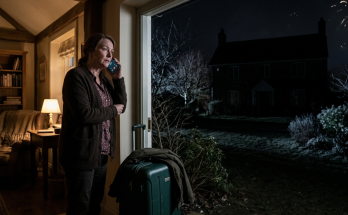
I wanted to remember the woman who sat beneath a darkened window while strangers celebrated in her home.
Not to pity her.
To respect how close she came to staying.
My apartment looked different now.
Books filled the second-bedroom shelves.
A reading chair stood beside the window.
The blue box remained in Michael’s desk.
The balcony held three planters.
Rosemary.
Lavender.
Mint trapped in its own pot like a criminal under supervision.
On the living-room wall hung six photographs.
Not dozens.
Enough.
Michael.
Sarah as a child.
My parents.
One of me standing beside the sea on a trip I took alone that autumn.
That photograph had been Sarah’s favorite.
“You look happy,” she said when I showed it to her.
I was.
At six twenty, my doorbell rang.
I did not rush.
That was another change.
When I opened the door, Sarah stood outside carrying pie.
Coconut cream.
Of course.
She smiled.
“Am I early?”
“Ten minutes.”
“I can wait downstairs.”
A year earlier, she would have entered while asking.
This time she remained in the hallway.
Waiting.
I smiled.
“Come in.”
She kissed my cheek.
“Happy New Year.”
“Happy New Year.”
She hung up her coat.
No suitcase.
No emergency.
No papers needing signatures.
Just pie.
I liked pie.
David was not with her.
That was also intentional.
They were still married.
Technically and emotionally.
But differently.
After seven months of counseling, Sarah had agreed to try rebuilding the marriage.
Slowly.
They still lived separately.
David had moved from the furnished apartment into a permanent one closer to work.
They spent weekends together sometimes.
Other weekends apart.
They shared financial information completely.
No joint investments without both signatures.
No secrets disguised as protection.
No promises about whether they would remain married forever.
I found that healthier than their old certainty.
When Sarah told me they were trying again, I did not cheer.
I did not object.
I said, “I hope whatever you choose stays yours.”
She smiled.
“It does.”
David and I had met four times during the year.
The first was accidental at Sarah’s birthday dinner.
The second he requested.
The third I invited.
The fourth happened because he brought me a repayment check after a banking error delayed the automatic transfer.
He never asked for forgiveness outright.
That helped.
He repaid every dollar he owed me two months ahead of schedule.
Not because Hearthstone recovered spectacularly.
It did not.
The development survived by selling part of the land and reducing the project.
Robert lost money.
David lost most of his company interest.
Sarah recovered the majority of her marital contribution through the repayment agreement, with the remainder scheduled over the coming months.
No miracle.
No hidden fortune.
Just losses distributed according to agreements people should have made before risking anything.
Robert never apologized to me.
For months, I expected him to.
Then I realized expectation itself was another form of attachment.
He sent one letter in September.
Three paragraphs.
No request for money.
No demand.
He wrote that he had believed family resources should serve family opportunity and that he now understood he had confused what was available with what belonged to him.
Not a perfect apology.
But specific.
I did not respond.
Not out of punishment.
I simply had nothing to add.
Sarah placed the pie in the refrigerator.
“Smells good.”
“Soup.”
She looked at me.
“The New Year’s soup.”
“You remember.”
“Of course.”
She leaned against the counter.
“Last year you ate it alone.”
“Yes.”
“Because of me.”
“Partly.”
She nodded.
No collapse.
No repeated apology.
We had spoken enough.
The fact remained.
The shame no longer needed constant feeding.
That was another thing Michael’s letters had taught me.
Say what happened.
Say what hurt.
Say what changes now.
Then stop using the wound as proof.
At seven, we ate.
Sarah told me about work.
Her company had promoted her to lead a small team.
She complained about a younger colleague who sent meeting invitations without agendas.
I listened.
Did not solve.
She complained for six minutes.
Then said, “Thank you.”
“For what?”
“Not telling me what to do.”
“I had three suggestions.”
“I know.”
“How?”
“Your face.”
Apparently boundaries did not cure expressions.
After dinner, we cleared dishes together.
At eight fifteen, David called her.
She looked at the screen.
“Do you mind?”
“No.”
She answered.
“Hi.”
I heard only her side.
“Yes.”
“No, I’m at Mom’s.”
Pause.
“No, tonight is ours.”
Another pause.
“Tomorrow.”
She smiled.
“Happy New Year.”
Then hung up.
I wiped the counter.
“You have plans tomorrow?”
She nodded.
“Breakfast.”
“With David?”
“Yes.”
“How is it going?”
She considered.
“Real.”
That was a better answer than good.
I waited.
She continued voluntarily.
“He still gets defensive.”
“I believe that.”
“I still avoid hard conversations.”
“I believe that too.”
“He sometimes tries to fix things before admitting he caused them.”
“That sounds familiar.”
She smiled.
“I sometimes punish him by making him guess what I’m angry about.”
“That also sounds familiar.”
“Mom.”
“What?”
“Supportive.”
“I’m practicing.”
She laughed.
Then became serious.
“We’re better.”
“I’m glad.”
“I don’t know if better means forever.”
“You don’t need to.”
“I know.”
That phrase used to frighten her.
Now it sounded almost peaceful.
At nine, she brought the pie to the table.
I cut slices.
She looked around.
“Do you remember asking me what I still got?”
“Yes.”
“I was terrified.”
“I know.”
“I thought once the money and house disappeared, maybe I would find out I wasn’t enough.”
My knife stopped.
“Enough for what?”
“For you to keep wanting me.”
I set it down.
“Sarah.”
“I know that sounds terrible.”
“It sounds scared.”
She looked at me.
“I had built so much of our relationship around needing help that I didn’t know what was underneath.”
I understood.
Perhaps I had wondered the same thing.
We had spent the year discovering it.
Coffee.
Phone calls.
A museum visit.
One terrible movie.
Lunch after my dental appointment.
A weekend trip in autumn where we argued about hotel pillows and nothing important.
Ordinary things.
No crisis required.
No money transferred.
No house involved.
“I like what’s underneath,” I said.
Her eyes filled.
“Me too.”
We ate pie.
At ten, the doorbell rang again.
Sarah looked confused.
“Are you expecting someone?”
“Yes.”
“Who?”
I opened the door.
Patricia stood there holding champagne.
Sarah laughed.
“No way.”
Behind Patricia was Naomi.
She carried sparkling water.
“I’m driving.”
Sarah stared at me.
“You invited the lawyers?”
“They stopped being only lawyers.”
Patricia entered.
“That is not reflected in our billing policy.”
Naomi rolled her eyes.
We had become friends accidentally.
Patricia and I started meeting for coffee after the sale.
Naomi occasionally joined when Sarah was not present.
Then Sarah discovered the arrangement and accused us of having a legal conspiracy.
Now we met perhaps once every month.
Not because crisis required it.
Because life had created something unexpected.
At ten thirty, Claire arrived.
Then Anita.
Then Maya and Lucia appeared carrying a tray of pastries.
Sarah stared.
“You invited the people who bought our house?”
“My old house.”
“Sorry.”
Maya hugged her.
Lucia walked directly to the balcony.
“You actually contained the mint.”
“I learned from war.”
Lucia nodded approvingly.
Daniel stayed home with the children because one had a fever.
Maya brought photographs.
The main house now had green walls in the dining room.
I hated them.
I told her.
She laughed.
“You said make it ours.”
“I did not authorize that shade.”
Sarah leaned over my shoulder.
“Oh, those are terrible.”
Maya looked offended.
Lucia said, “I voted against them.”
The cottage looked beautiful.
Bright.
Messy.
Paint splattered on the old floor.
Shelves full of canvases.
The kitchenette covered in brushes.
Exactly what it needed.
Then Maya showed me the maple.
Alive.
Unflattened.
Beneath it stood the blue birdhouse.
Now occupied by something small enough that the photograph showed only straw poking from the opening.
Michael would have liked that.
At eleven thirty, music played quietly.
No professional system.
Just a speaker on the bookshelf.
People talked.
Laughed.
No one cared about photographs.
No one asked me to turn off a light.
I moved through my apartment with a glass in my hand.
Not hosting to impress.
Not proving anything.
I had invited exactly who I wanted.
That was all.
At eleven forty-five, Sarah joined me on the balcony.
The night was cold.
We wrapped ourselves in coats.
Below, traffic moved along the street.
Somewhere several blocks away, someone tested fireworks too early.
Sarah leaned against the railing.
“Are you thinking about last year?”
“Yes.”
“Me too.”
We were quiet.
Then she said, “I almost texted you before the party.”
“What would you have said?”
“I don’t know.”
She smiled sadly.
“Probably something about keeping the cottage lights off.”
I laughed.
She covered her face.
“God.”
“It happened.”
“I know.”
“What stopped you?”
“David said he already talked to you.”
I looked at her.
“He hadn’t.”
“I know that now.”
She shook her head.
“But that’s not the important part.”
“What is?”
“I was relieved.”
She looked at me.
“I didn’t want to be the one to ask.”
The honesty did not hurt like it once would have.
It clarified.
“I understand.”
“I let him do the cruel part so I could keep thinking I was kind.”
That was the most precise thing she had ever said about that night.
I touched her sleeve.
“Thank you for saying it.”
“I wish I hadn’t done it.”
“I know.”
“I’m not asking you to say it was okay.”
“It wasn’t.”
She nodded.
“Good.”
Then she smiled.
“You’re very consistent now.”
“I’m exhausting.”
“A little.”
At eleven fifty-five, everyone gathered inside.
Champagne.
Sparkling water.
Pie crumbs.
Lucia complained the television countdown host looked too young.
Patricia told her everyone looked too young after sixty.
Naomi said she was not participating in that conversation.
Sarah stood beside me.
No husband.
No performance.
No need to prove the shape of her life.
At eleven fifty-eight, my phone buzzed.
A message from David.
Happy New Year, Ellen. Thank you for giving Sarah space without asking her to hate me.
I read it twice.
Then showed Sarah.
She looked at me.
“What are you going to say?”
I thought.
Then typed:
Take care of her by respecting her choices. Take care of yourself the same way. Happy New Year.
Sarah read it.
“Very mom.”
“Too much?”
“No.”
I sent it.
At eleven fifty-nine, the room grew louder.
Everyone counted.
Ten.
Nine.
Eight.
I looked around.
Maya.
Lucia.
Claire.
Anita.
Naomi.
Patricia.
Sarah.
People who had entered my life through conflict and stayed through choice.
Seven.
Six.
Five.
Michael was not there.
That absence would always exist.
But it no longer made every room incomplete.
Four.
Three.
Sarah took my hand.
Not because she needed balance.
Because she wanted to.
Two.
One.
Midnight.
People cheered.
Glasses touched.
Someone outside launched fireworks.
Light flashed across the windows.
Sarah hugged me.
“Happy New Year, Mom.”
“Happy New Year.”
She held me for several seconds.
Then stepped away on her own.
That mattered too.
At twelve fifteen, Lucia demanded coffee.
At twelve thirty, Maya called Daniel to check on the children.
At one, Patricia left.
By one thirty, the apartment was quiet again.
Sarah helped me load the dishwasher.
Then put on her coat.
At the door, she turned.
“Mom?”
“Yes?”
“Can I come for breakfast tomorrow?”
I smiled.
“No.”
She blinked.
Then laughed.
“What?”
“I’m sleeping late.”
“Right.”
“How about lunch?”
She considered.
“Yes.”
“Here?”
“No.”
“Why?”
“I want to try the café near my apartment.”
I nodded.
“All right.”
She opened the door.
Then stopped.
“One more thing.”
“Yes?”
“You know I have a key.”
I did.
I had given Sarah one six months earlier.
For emergencies.
A deliberate choice.
“Yes.”
She held it up.
“I almost used it tonight because my hands were full.”
I looked at her.
“But I knocked.”
“Yes.”
“I wanted you to know.”
My throat tightened.
“Thank you.”
She slipped the key back into her purse.
Not offended.
Not triumphant.
Just understood.
Then she stepped into the hallway.
“Good night.”
“Good night.”
The door closed.
I locked it.
Not because I feared anyone.
Because it was my door.
I turned off the kitchen lights.
Carried the remaining glass of champagne into the second bedroom.
Michael’s blue box waited in the desk.
I opened it one final time that year.
The letters remained exactly where I left them.
I did not need to reread any.
I knew the parts that mattered.
Comfort does not cancel consequence.
Consequence does not cancel love.
If you only disappointed someone, survive it.
Take what matters.
Leave the roof.
I closed the box.
Outside the window, fireworks opened over the city.
A year earlier, I had watched them in a rearview mirror while driving away from the life everyone assumed I would never leave.
I had thought freedom would arrive in one decisive act.
Selling.
Leaving.
Saying no.
It had not.
Freedom arrived repeatedly.
Every time I let someone be disappointed.
Every time I refused to make another adult’s problem my emergency.
Every time I asked what I wanted before asking what everyone else needed.
Every time Sarah knocked and waited.
Every time I opened the door because I chose to.
I walked to the living room.
My apartment was small.
Quiet.
Mine.
On the table sat the empty pie plate.
Sarah had forgotten her scarf over the chair.
I picked it up.
For one second, instinct told me to call immediately.
She might be cold.
She might need it.
She might—
I stopped.
Then laughed.
I folded the scarf neatly.
Placed it by the door.
Tomorrow, if she wanted it, she could come back.
She knew how to knock.
And I knew I was allowed to decide whether to open.
The End
Read more original stories on Feel Every Story.
Twenty-Two Years After I Won the Man I Wanted, One Ordinary Tuesday Made Our Marriage Feel Suddenly Unfamiliar
Part 18 of 18