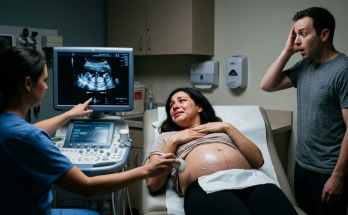
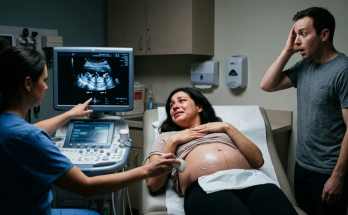
At 5:17 the next morning, I sat on the edge of my bed with the ultrasound photographs spread across my knees. The house was quiet, and the sky beyond the curtains hadn't begun to lighten. I had slept perhaps two hours. Each time I closed my eyes, I saw the small flickering movements on Dr. Bennett's monitor, followed by Mark's expression when she explained the pregnancy dates. I touched the outline of one fetus, then the other, careful not to crease the paper. I felt an unreasonable need to apologize to them for the fear and noise surrounding their earliest weeks. They were unaware of it, of course. But I wasn't, and the responsibility of protecting them had become more immediate than anything else in my life.
My phone vibrated beside me. Mark wanted to talk. A second message followed, more insistent, and then another promising to explain himself. I read them without answering. His words had changed since the ultrasound, but the change seemed rooted in what he had learned rather than in any concern for what I had endured. He was frightened now. I knew him well enough to recognize the urgency that appeared whenever he felt he was losing control of an important situation. In the past, I would have called immediately to reassure him. This time, I put the phone face down and reached for the attorney's number.
Rachel Morgan answered after I had left a message with her office. Her voice was composed, direct, and practical. I told her about Mark's vasectomy, the pregnancy, and the accusations that followed. Then I explained how he had left our home and begun staying with Ashley. When I mentioned the ultrasound and the twins, Rachel asked several questions about dates and available medical records. She didn't rush toward a conclusion about paternity, nor did she suggest that one scan resolved every legal issue. She wanted to understand what Mark had said, what he had done, and whether any documents had been placed before me for signature.
I told her about the divorce papers Mark had recently presented. They contained terms I hadn't fully understood at first, including language addressing financial responsibility if he was determined not to be the father of my pregnancy. The implication had enraged me. He wanted me to accept financial penalties based upon an allegation he had never proved. Rachel asked whether I had signed anything. I said no. She told me to keep it that way until she had reviewed the documents. She also instructed me to preserve messages, statements, photographs, and records of the accusations Mark had made publicly. I found a notebook and began writing while we spoke.
By lunchtime, Mark had called repeatedly. He left a long voicemail in which he acknowledged being mistaken and apologized for the way he had treated me. His voice sounded strained, almost unfamiliar. He said he had panicked when he saw the pregnancy test and believed the surgery made fatherhood impossible. He asked me to remember the years we had spent together rather than the terrible things he had said recently. I listened to the recording once and sat very still afterward. Part of me wanted to reach through the phone toward the husband I remembered. Another part wondered why that husband had disappeared so completely when I needed him.
Rachel had advised me to preserve communications, so I saved the message with the others. Then I began collecting every written accusation Mark had sent. The folder grew quickly. There were messages questioning my fidelity, demands for an explanation, threats concerning the house, and references to the pregnancy as though it were proof of misconduct. I included the photograph of him with Ashley and notes about the conversations in which he had refused to discuss her involvement. Gathering everything was painful, but it changed how I experienced the situation. Instead of replaying arguments without resolution, I could see a sequence of decisions documented in black and white.
Three days later, Rachel called with information obtained during her review of the records and documents available to us. Mark's vasectomy had been performed when he said it had. The operative report described an uncomplicated procedure, but the consent materials were explicit about the need for a later semen analysis. Mark had been instructed not to assume sterility before testing confirmed the result. No completed follow-up analysis appeared among the records he had provided. I wasn't surprised. I had been present when the doctor explained the instructions. Still, seeing them documented gave the discussion a different weight. Mark had not lacked access to the information. He had simply treated his own assumption as more reliable.
Rachel said there was another detail she wanted me to consider. The divorce paperwork had been prepared earlier than I realized. Some of the drafting activity preceded the confrontation over my pregnancy, and the timeline suggested Mark had been thinking about leaving before he accused me of infidelity. I sat at the dining table with my notebook open, trying to understand what that meant. For days, I had believed the pregnancy had triggered his departure. If he had already been preparing to end our marriage, then the positive test might have done something different. It could have supplied an accusation convenient enough to justify a decision he was unwilling to explain honestly.
I asked Rachel whether she believed Mark had planned the entire confrontation. She refused to speculate beyond the documents. What mattered, she said, was that the dates warranted investigation and that I should consider the possibility of undisclosed financial activity. She recommended gathering records of our joint accounts and identifying any unusual transactions. I knew where we kept our statements, tax returns, and mortgage information. Mark had always handled more of the everyday financial administration, but both our names appeared on the major accounts. I thanked Rachel, ended the call, and went into the small study at the back of the house.
The room contained filing cabinets, an aging printer, and a desk Mark had bought when he began working remotely. I opened the lower drawer where we stored statements and insurance documents. The folders were arranged with the familiar neatness I had always appreciated. Nothing looked disturbed. I began with the joint savings account, comparing balances across several months. At first, the numbers appeared ordinary. Our mortgage payments and household expenses were consistent, and the account still held a substantial balance. Then I noticed several transfers I couldn't identify. They were small enough that I might have overlooked them during a casual review.
The earliest transfers were a few hundred dollars. Later ones were considerably larger. I found payments for three hundred dollars, five hundred, and eight hundred, followed by transfers of two thousand and forty-five hundred. They went to accounts whose descriptions meant nothing to me. I searched our household records for explanations, wondering whether Mark had moved money into an investment account or paid an expense I had forgotten. Nothing matched. I wrote down the dates and reference numbers. With every page, the pattern became harder to dismiss as ordinary financial housekeeping. Money had been leaving our shared savings while Mark assured me our financial position was secure.
I moved on to the credit-card statements and found a hotel charge from six months earlier. It was associated with a resort outside Austin, covering three nights. I remembered that week because Mark had told me he would be attending a business conference. He had left with a small suitcase and called me once from his room, complaining that the sessions were tedious. I had wished him luck with a presentation he said he was giving the next morning. Now I searched the charge carefully. The hotel wasn't where I remembered him saying he would stay. There were also restaurant bills, expensive enough to suggest something more elaborate than an ordinary work trip.
I searched his old travel confirmations, hoping to find an explanation before making another accusation. Several receipts appeared under his name. One listed two guests and a reservation for dinner. Another confirmed an accommodation arrangement that made no reference to any business event. I felt sick as I read the second guest's details. Ashley Carter. I checked the date twice, then looked again at the hotel statement. The stay had occurred months before my positive pregnancy test, long before Mark claimed his relationship with Ashley had become relevant because I had supposedly betrayed him.
The discovery did not produce a dramatic outburst. I remained seated at the desk, staring at the screen while the ceiling fan rotated above me. I remembered the night Mark returned from that supposed conference. He had kissed my cheek, left his suitcase beside the washing machine, and told me the presentation had gone well. I had made him dinner and listened to his complaints about traffic. The intimacy of those ordinary details made the deception difficult to bear. He had not been a stranger suddenly doing something cruel. He had been my husband, sharing a home with me while concealing a relationship that threatened everything we had built.
I sent copies of the hotel records to Rachel and continued examining the statements. She called almost immediately and asked me not to confront Mark before we understood the financial picture. She also told me to preserve the original documents and avoid altering any records. I agreed. My impulse was to call him and demand answers, but I remembered how effectively he had turned our last confrontation into an accusation against me. This time, I wanted facts that couldn't be dismissed through anger or evasive explanations. I created a separate folder for the transactions and began arranging them by date.
An hour later, I found correspondence concerning a mortgage preapproval. The application identified Ashley as the prospective buyer of a house in another neighborhood. At first, I couldn't understand why documents relating to her purchase appeared among records connected to our accounts. Then I followed the financial references and saw the connection. Money that had originated in our joint savings had been moved through another account and used toward the proposed down payment. I reread the figures, trying to establish whether some other explanation existed. The evidence pointed toward something deliberate: while Mark was still living with me, money we had saved together was being directed toward a home for Ashley.
I leaned back in the chair and pressed my palms against my eyes. For years, we had discussed using some of our savings to renovate the kitchen and improve the backyard. We had also talked about preserving enough money for future children, even when those conversations became difficult. I had taken extra shifts and delayed purchases because I believed we were working toward shared goals. Now I understood why Mark had recently discouraged me from checking the balance too closely. He had reassured me that everything was under control. I had accepted those reassurances because the alternative would have meant admitting that I no longer trusted him.
Rachel instructed me to keep copies of the mortgage records and said we would need a more complete review of the accounts. She explained that financial questions in a divorce could become complicated, particularly when money had been transferred without both spouses understanding its purpose. She would examine which funds were involved, what authorizations existed, and whether the transfers should affect the eventual settlement. I listened carefully. My anger had not disappeared, but it was no longer directing my decisions. I needed to understand the legal consequences before making any move that could compromise my position.
During that conversation, I told Rachel something I had been reluctant to admit. I was frightened of raising twins without the stability I had expected from my marriage. The pregnancy itself remained astonishing, but I couldn't ignore the practical questions pressing against me. Could I afford the house? Would Mark attempt to force a sale? What would happen to the savings that remained? How would I manage medical appointments, maternity leave, and the expenses of two newborn babies? Rachel didn't pretend those questions were easy. She said we would address them systematically and that protecting my financial position was a reasonable priority.
I spent the rest of the afternoon photographing records and organizing them on my laptop. By evening, the dining table had disappeared beneath neat stacks of statements, printed emails, and handwritten notes. I had learned more about my husband's financial activities in one day than I had known during several months of marriage. The discovery changed my understanding of Ashley's place in our lives. She was no longer simply the woman Mark had turned to during a crisis. The records suggested she had been involved in plans requiring substantial financial commitments long before my pregnancy became public.
At six thirty, someone knocked on the front door. I saw Mark through the narrow glass panel. He stood on the porch without Ashley, wearing a dark jacket and carrying nothing. His shoulders sagged in a way I would once have found heartbreaking. I considered refusing to answer, but I wanted him to know that I understood more than he realized. I opened the door only partway and remained in the entrance. He asked if he could come inside. I said no. For a moment, he looked wounded by the boundary, as though he had forgotten how casually he had crossed my boundaries only days earlier.
Mark said he wanted to return home. He told me he had been confused, frightened, and overwhelmed by the pregnancy. He repeated that the ultrasound had changed his understanding of the situation. I asked whether he believed an apology could undo the accusations he had made. He said he would tell everyone he had been mistaken. I asked whether Ashley knew he was standing on my porch. He didn't answer. I told him that returning home was not a matter of deciding he preferred his old life after discovering that his assumptions were wrong. He had made choices that I had not yet finished understanding.
He began to cry. I had seen Mark cry only a handful of times during our marriage, usually when something truly painful had happened. Seeing him that way stirred an old instinct to comfort him. But I looked at the photographs and statements on the table behind me and resisted. I asked why he had begun preparing divorce papers before the pregnancy. He looked startled. Then I asked how long he had been involved with Ashley. He rubbed his hands together and said things had been complicated. I told him complexity was not an answer. He looked away toward the driveway.
I reached behind the door and picked up the hotel confirmation I had placed there before answering his knock. When I held it out, Mark stopped speaking. His eyes moved across the page, and the color drained from his face. I asked whether his business conference had included three nights at a resort with Ashley. He said he could explain. I asked him to do so. He opened his mouth, paused, and then admitted they had been together. I waited for him to continue. Instead, he told me it had been a mistake and that he had wanted to protect me from unnecessary pain.
I showed him the mortgage preapproval next. He stared at Ashley's name, then at the financial references. I asked whether money from our savings had helped fund her house. He said he hadn't intended things to happen the way they had. I repeated the question, refusing to let him hide behind an explanation of his feelings. Finally, he acknowledged that some of the money had come from our joint accounts. His voice was barely audible. I looked at him and realized there was no version of the previous months in which he had simply become confused by my pregnancy. He had been planning another life while preserving the appearance of our marriage.
I told him to leave. Mark asked for another chance to explain and said he still loved me. I answered that love had not prevented him from lying, publicly humiliating me, or using our savings for another woman's future. When he stepped closer, I told him firmly that the conversation was over. He retreated toward his car, then stopped beside the driveway. For a moment, he seemed to be struggling with a decision. He turned back, looking more frightened than he had when I showed him the bank records, and said there was another secret involving Ashley. I asked what he meant. He shook his head, promised to tell me later, and drove away before I could press him further.
Click here to continue reading: PART 4: After My Husband Admitted the Affair, a Midnight Message About Ashley’s Pregnancy Exposed the Secret Behind His Sudden Departure
The Morning I Discovered I Was Pregnant, My Husband Turned a Medical Surprise Into an Accusation That Threatened Our Marriage
Part 3 of 10