The first thing Daniel asked me was whether I recognized the name of the consulting firm listed beside the unexplained payment. I was standing in the nursery, holding a measuring tape against the wall where I hoped to place two cribs. Laura had been helping me work out whether there would be enough space for a changing table, but I set the tape down when Daniel explained why he was calling. The payment had been made shortly before the disputed credit application was submitted. It wasn't proof of wrongdoing, he cautioned, but it might identify the person who assembled the paperwork bearing my name.
The consulting firm was called Red Oak Document Services. I had never heard of it. Daniel explained that it provided administrative assistance for property transactions, including preparing document packages for lenders and organizing financial records. Such work was ordinary when clients authorized it. What made this payment important was its timing and its connection to Westbridge Property Services. The invoice described an application package involving a residential property, but the service recipient wasn't clearly identified. Daniel had requested supporting records through the appropriate channels.
I asked whether Red Oak might have created the signature that resembled mine. Daniel refused to speculate. He said document preparation companies sometimes inserted signature images supplied by clients, but they were not necessarily responsible for verifying every representation made by the person ordering the work. The important questions were who commissioned the package, what instructions were provided, and whether anyone represented that I had consented. I wrote those questions beneath the reference number in my notebook. They were simple questions. I wondered why so many people had worked so hard to prevent them from being answered.
Laura came into the doorway after I ended the call. She had heard enough to understand that another piece of the investigation was moving. She asked whether I wanted to continue measuring the room. I looked at the empty wall. For several weeks, every practical decision about the babies had been interrupted by discoveries concerning Mark. I wanted one afternoon in which choosing a crib mattered more than tracing a transfer. I told her we should finish. She smiled, retrieved the measuring tape, and stood beside the window while I marked a proposed layout on graph paper.
We measured carefully, accounting for the closet doors and the space needed to move between the furniture. Laura suggested placing the cribs along the longest wall so neither would stand directly beneath the window. I agreed. The discussion was ordinary, almost pleasantly boring. We argued gently about whether the old dresser would fit and laughed when Laura discovered that I had written one measurement in inches and another in centimeters. I had missed that kind of laughter. It didn't solve the financial problems, but it reminded me that my life still contained things worth anticipating.
The following morning, Rachel called with an update concerning the records sought after the temporary hearing. Mark had begun providing additional account statements and communications. Some documents were incomplete, but the disclosures helped Daniel compare transfers from our savings with payments recorded by Westbridge. Rachel said the judge's temporary orders had created a clearer obligation to preserve and produce information. She wanted me to understand that recovery of the money was still uncertain. Even when funds could be traced, legal remedies depended on facts that had not yet been established.
I asked how Mark was responding. Rachel said his attorney had indicated that he wished to cooperate, although several explanations required clarification. I didn't ask whether he seemed remorseful. That question had lost much of its importance. Mark's feelings might change from one day to the next, but documents would remain. If he truly intended to take responsibility, his cooperation would eventually be visible in the records and in his willingness to comply with the court.
Two days later, Red Oak's records arrived. Rachel arranged a meeting with Daniel so we could review the relevant findings. Laura drove me to the office because I had been feeling lightheaded that morning, and I didn't want to risk driving while distracted. We arrived just before noon. The conference room was familiar now, with its long table, pale walls, and narrow window overlooking the parking lot. I had begun associating the place with revelations that changed my understanding of my marriage.
Daniel opened a folder containing the invoice, an order form, and several emails. The order had been placed by Nathan on behalf of Westbridge. The initial request concerned preparation of a property-financing package using information about our marital home. Red Oak had received financial statements, identification documents, and a scanned signature image attributed to me. The firm had incorporated those materials into a draft application. Daniel explained that the correspondence did not show Red Oak independently verifying whether I had approved the transaction.
Rachel asked me to examine the signature image separately from the completed application. It was a small digital file, apparently cropped from another document. I recognized the general form of my handwriting, but the image looked incomplete around the edges. I remembered signing an insurance acknowledgment several years earlier with a particularly long final stroke. I asked whether the original could have come from that document. Daniel said we would need to compare examples before reaching any conclusion, but the possibility was reasonable.
He showed me the email through which Red Oak had received the file. The sender was Ashley.
I looked at her name and felt a sharp tightening in my chest. Until then, the available records had shown that she coordinated financial arrangements and supplied documents to Westbridge. Now we had a specific communication linking her to the signature image used in the application. It still did not establish who had copied or altered the image, but it placed the file in her possession before the disputed paperwork was prepared.
Rachel reminded me of that distinction before I could speak. She said the evidence supported further questions about Ashley's role, not an immediate conclusion about every action taken. I nodded. Months of deception had taught me how dangerous certainty could become when someone used it to replace investigation. I wanted the truth even if it took longer than anger would prefer.
The next email concerned a request for confirmation that both property owners were aware of the proposed financing. Red Oak's employee had asked Nathan whether the application should remain in draft status until both applicants could verify their participation. Nathan responded that the matter had already been discussed within the family and that Mark would handle any additional questions. Ashley followed with a brief message asking the company to prepare the package for submission.
Daniel pointed out that Red Oak's correspondence contained no direct communication from me. There was no email, recorded call, or signed authorization in which I agreed to participate. The firm had apparently relied on assurances from people who did not have authority to speak for me. Rachel said that absence would be relevant to the dispute, although the full application history still needed examination.
I asked whether Mark had been copied on those messages. He had been included on one exchange, though not on the email attaching my signature image. In the message he received, the proposed financing was described as a way to meet short-term expenses connected with Ashley's property. Mark had replied that he wanted to avoid involving me until the separation agreement was settled. The words were less ambiguous than his testimony about expecting to discuss everything later.
Rachel read the message twice. She said it would be important to obtain the original electronic record and compare it with Mark's account of what he understood. His statement that he knew I would object was already part of the hearing record. This new correspondence suggested he had been aware that the application concerned our home and that he wanted to delay telling me. Whether he understood that a signature image was being used without authorization remained a separate question.
I leaned back in my chair and looked toward the window. The parking lot was crowded with cars, and a delivery driver was unloading boxes near the entrance. Ordinary work continued outside while I sat learning how my husband's private decisions had threatened the roof over my head. I thought about the morning he accused me of infidelity and how confidently he had described himself as the injured person in our marriage. Even then, he had been participating in arrangements he knew I would reject.
Daniel continued through the records. Red Oak had prepared several drafts, each containing increasingly complete financial information. One version listed projected proceeds from the sale of our home. Another identified a proposed credit line as a temporary source of funding. The application eventually submitted to the lender used information from the later draft, including the disputed signature. A lender verification request appeared to have stopped the process before any loan was funded.
I asked whether the house had ever been in immediate danger of being transferred. Rachel explained that an application alone did not transfer ownership or establish a valid lien. The title search had found no completed conveyance or recorded lien arising from the disputed arrangement. Still, the attempt to obtain credit against the property without my consent required a formal response. The absence of a funded loan was fortunate; it did not make the underlying conduct harmless.
The meeting ended with Rachel identifying several next steps. She would seek additional communications from Ashley and Nathan, preserve the Red Oak materials, and determine whether a qualified document examiner should analyze the signature image. Daniel would continue tracing the money. I would provide original examples of my signature from documents in our household records. It felt almost absurd that the evidence of my own handwriting had become something I needed to assemble.
At home, Laura helped me search the filing cabinet for older documents. We found signed insurance forms, mortgage acknowledgments, and tax records. I selected several examples from different years and placed them in a folder. The signatures varied slightly depending on how hurried I had been, but they shared details absent from the application image. Laura asked whether examining my handwriting so closely made me feel strange. I told her it made me feel as though someone had borrowed a small part of my identity and expected nobody to notice.
That evening, Mark sent a message asking whether he could attend my next prenatal appointment. He said he understood my decision to divorce and did not intend to pressure me about reconciliation. He wanted an opportunity to be present for the babies without making the appointment about our marriage. I read the message twice. It was more respectful than his earlier demands, but I still hesitated. Medical appointments had become connected in my mind with the humiliation of seeing Ashley enter the examination room beside him.
I wrote back that I would discuss appropriate attendance after consulting my physician and considering what would make me comfortable. I asked him not to bring anyone else or contact the clinic directly to arrange access. He replied that he understood. I saved the exchange. The next day, I spoke with the medical office and confirmed that I could decide who attended. I appreciated the simple clarity of that rule. My body and medical care were not another subject for Mark to control.
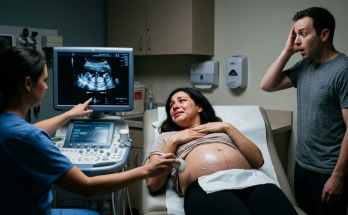
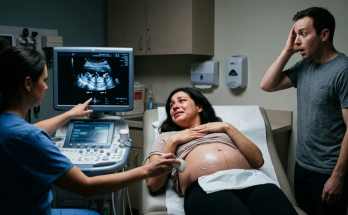
At my next appointment, the doctor reviewed the twins' development and explained what additional monitoring would be necessary as the pregnancy progressed. I brought Laura. We watched the images together, and she squeezed my hand when the doctor pointed out each heartbeat. The babies were still small, but their forms were becoming clearer. I felt a quiet astonishment that something so consequential was happening inside me while my days were consumed by documents and legal appointments.
On the drive home, Laura said she had never seen me look the way I did when I watched the monitor. I asked what she meant. She said I seemed frightened and peaceful at the same time. I considered that. The pregnancy was not uncomplicated, emotionally or practically, but the babies themselves had become a source of clarity. I could not control the circumstances in which they would be born. I could decide how carefully I prepared for them.
That afternoon, Rachel forwarded a message from Mark's attorney. Mark had reviewed the Red Oak correspondence and acknowledged that his reply about delaying my involvement was authentic. He said he had intended to obtain my agreement later, after the divorce terms were settled. He continued to deny personally creating or authorizing the disputed signature. Rachel said the distinction remained important, but his acknowledgment helped establish the deliberate concealment of the proposed financing.
I sat with that information for a long time. Mark seemed to believe that intending to obtain permission later could excuse proceeding without it now. It was the same logic he had used when he hid Ashley. He would tell me after the divorce papers were prepared, after the house arrangements were underway, after the consequences became difficult to reverse. His plans always reserved honesty for a future moment when it would no longer interfere with what he wanted.
Several days later, Daniel completed another stage of his analysis. He identified additional payments that had moved from Westbridge to expenses associated with Ashley's proposed property, including deposits and administrative costs. Other transfers remained unexplained. Some money appeared to have gone toward personal expenses unrelated to the house. Daniel emphasized that we needed complete records before deciding which amounts could be recovered directly and which might instead affect the divorce settlement.
I asked whether Ashley could be required to return money she had received. Rachel said several legal possibilities existed, depending on the ownership of the funds, the nature of the transfers, and the evidence concerning her knowledge. She would evaluate them carefully. In the meantime, we would pursue disclosure and preservation rather than making demands unsupported by a complete accounting. Her approach was methodical, and I found myself increasingly grateful for it.
One evening, Laura and I were assembling a small bookshelf for the nursery when my phone rang. It was Rachel. She said the requested account information had revealed a transaction Daniel wanted to discuss immediately. A substantial portion of the funds routed through Westbridge had not remained with Ashley or Nathan. Instead, it had been transferred to another account shortly after the disputed credit application was submitted.
I asked whose account it was.
Rachel paused, then explained that the available records identified Mark as one of the people associated with it.
I sat down on the floor beside the unfinished bookshelf. For weeks, Mark had described himself as a man deceived by Ashley and Nathan. He admitted carelessness, concealment, and the affair, but insisted he hadn't understood where the money went. Now an account connected to him appeared near the end of the transaction trail.
Rachel warned me not to assume the transfer meant he had personally retained the money. The account structure and transaction purpose still required verification. Nevertheless, the discovery created a serious inconsistency with parts of his explanation. She intended to request a full account history and question him through counsel.
After the call, Laura sat beside me. Neither of us touched the bookshelf. I looked at the scattered screws and wooden panels, then at the ultrasound photograph resting on a nearby box. The financial investigation had begun with the belief that Mark had been manipulated by another woman. Every new record showed that the truth was more complicated.
I picked up my notebook and wrote down the account reference Rachel had provided. Underneath it, I added one question.
If Mark had been deceived, why had money returned to an account connected with him?
Click here to continue reading: PART 10: An Account My Husband Failed to Disclose Changed the Financial Investigation and Exposed a Decision He Had Made Before Leaving Me
The Morning I Discovered I Was Pregnant, My Husband Turned a Medical Surprise Into an Accusation That Threatened Our Marriage
Part 9 of 10