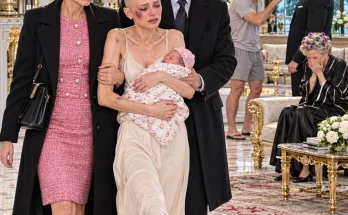
The first time I noticed my hair growing back, I stood in front of the bathroom mirror for a long time.
It wasn't much.
Just enough for me to recognize that something was changing.
I leaned closer.
I touched my head gently.
Then I smiled.
I hadn't expected such a small thing to make me emotional.
For months, my body had reminded me of everything cancer had taken from me.
The exhaustion.
The fear.
The medical appointments.
The days when I needed help doing things I had once managed without thinking.
Now there was a small sign that my body was beginning to recover.
I wanted to tell someone.
For nine years, Daniel had been the person I told when something important happened.
A good day at work.
A problem with the house.
Something funny I noticed.
Even ordinary things that probably wouldn't have interested anyone else.
I would reach for my phone without thinking.
That morning, I almost did.
Then I stopped.
Daniel wasn't the person I wanted to call anymore.
I looked at my reflection.
The realization made me sad.
Not because I wanted him back.
I didn't.
But because the habit of sharing my life with him had been part of who I was for nearly a decade.
Now that part was gone.
I stood there for another moment.
Then I went downstairs.
Mom was in the kitchen.
Charlotte was nearby, happily occupied with the ordinary things that interested her.
I walked toward Mom.
"Look."
She turned.
I pointed toward my head.
For a second, she seemed confused.
Then she understood.
Her face softened.
"Oh, Rebecca."
I laughed.
"It's growing."
She came closer and looked.
Then she smiled.
We stood there appreciating something that would have seemed too small to mention a year earlier.
A little hair.
A little progress.
A reason to hope.
I hadn't understood how much I would value ordinary things until I became afraid of losing them.
Before cancer, I had complained about being tired after work.
I worried about deadlines.
I worried about whether we were saving enough for Charlotte.
I sometimes became irritated when the house needed repairs.
Those concerns had felt important.
Some of them were important.
But after spending months wondering whether I would survive, my priorities had changed.
I cared about getting through another day.
I cared about being able to hold my daughter.
I cared about sitting in the backyard and feeling the warmth of the sun.
I cared about hearing my parents laugh.
And I cared about the small improvements that told me treatment had accomplished something.
The doctors had confirmed that the cancer was in remission.
I still repeated those words to myself sometimes.
Not because I didn't believe them.
Because I had spent so long preparing for bad news that good news felt unfamiliar.
Remission.
It didn't mean I could forget the illness.
There would still be follow-up care.
I would still need to pay attention to my health.
I understood that.
But I was finally able to imagine a future without every thought ending in fear.
Charlotte was growing quickly.
I noticed it whenever I looked at her clothes.
The smallest outfits had already been put away.
Her expressions changed.
Her movements became more confident.
She was becoming a little person with preferences I could recognize.
I had waited nearly ten years to become her mother.
Now I found myself watching her with a kind of gratitude I couldn't explain.
Sometimes she made a face that reminded me of Daniel.
That was difficult.
I would see something familiar in her expression and remember the man I had married.
Then I would remind myself that Charlotte was her own person.
She wasn't responsible for what her father had done.
She didn't carry his decisions.
She was my daughter.
And she deserved to grow up knowing she was loved without conditions.
Daniel continued spending scheduled time with her.
The parenting arrangements were established.
Charlotte remained primarily in my care.
His mother had restrictions on independent involvement.
That gave me some peace.
I still didn't trust Evelyn.
How could I?
She had called my parents and demanded they take me away.
She had tried to keep Charlotte from me.
She had signed a false statement about my care of our daughter.
She had told people I abandoned my family.
Then she had used a photograph from Charlotte's baptism to collect sympathy and donations.
Those things had happened.
I wasn't going to pretend otherwise.
But the legal arrangements meant I no longer had to argue with Evelyn about every part of my daughter's life.
That mattered.
I had spent too much of my treatment frightened of what she might do next.
Now I could focus on the routines in front of me.
Daniel was also changing in small ways.
Not as a husband.
That part of our relationship was over.
But as Charlotte's father.
He was learning the things he had once expected me or his mother to handle.
He still made mistakes.
He sometimes forgot supplies.
He sometimes worried about ordinary baby problems.
But he was paying more attention.
I could see that.
At first, I didn't know how to feel about it.
Part of me was angry that he hadn't made the same effort when we were married.
Another part was relieved that Charlotte might have a father who understood her needs.
I tried to concentrate on the second feeling.
Our daughter would benefit if Daniel continued becoming more involved.
That was more important than proving how much he had failed me.
Still, I hadn't forgiven him.
I needed to be honest about that.
There were times when people seemed to expect me to feel better simply because the divorce was final.
As though completed paperwork could erase what happened.
It couldn't.
I remembered his face in Dr. Aris's office.
I remembered how quickly he asked about treatment expenses.
I remembered the folder on the coffee table.
I remembered him saying Charlotte would stay in the house while I left.
Those memories had become part of my understanding of our marriage.
They didn't disappear because he was learning to care for our daughter.
I could acknowledge his progress without pretending he hadn't hurt me.
That distinction helped.
One afternoon, after Charlotte returned from scheduled time with Daniel, I settled her into the nursery.
She was tired.
I picked up her yellow blanket.
The fabric had become familiar to me in a way few other things were.
I remembered folding it into the diaper bag while Evelyn followed me around the nursery.
I remembered how frightened I felt walking out of the house.
I remembered holding Charlotte close because I couldn't bear the thought of leaving her behind.
Now we were in the same room again.
The white crib stood against the wall.
The rocking chair was where it belonged.
The house was quiet.
But everything felt different.
There had been a time when I thought those walls represented the life Daniel and I had built.
Now I understood that my home had a history before him.
I had purchased it eleven years earlier.
My grandmother's inheritance helped make that possible.
My parents had contributed too.
The house belonged to me before Daniel entered my life.
Somehow, during nine years of marriage, I had almost forgotten how much that meant.
I remembered the first time I walked through it after buying it.
I had imagined a family living there someday.
I had hoped I would have children.
I didn't know whether that dream would come true.
Then Daniel and I married.
Years passed.
We waited for a baby.
Finally, Charlotte arrived.
I had thought the house was complete because my husband and daughter were both there.
Then Daniel tried to remove me from it.
Now I knew something I hadn't understood before.
A home wasn't made safe simply because the people inside it were related.
It was made safe by the way they treated one another.
For months, I had been living with my parents while dealing with treatment and the legal process.
Their home had felt safe because I wasn't required to prove my value.
Dad never asked whether my medical treatment was worth the expense.
Mom never suggested that Charlotte would be better off without me.
They simply helped.
And when Charlotte and I returned to my house, they continued supporting us.
I wanted my daughter to grow up understanding that kind of love.
Not love that depended on a salary.
Not love that disappeared when someone became ill.
Not love that kept a list of every favor.
I wanted her to know that needing help didn't make her less worthy of care.
I had learned that lesson the hard way.
I hoped she wouldn't have to.
As my strength gradually returned, I began spending more time outside.
Sometimes I sat in the backyard with Charlotte.
I watched her look around.
She seemed fascinated by ordinary sounds and movement.
I found myself smiling at things I would once have overlooked.
The sunshine.
The quiet.
The simple fact that I was there.
Before my diagnosis, I had never seriously questioned whether I would be present for Charlotte's first birthday.
I knew life was unpredictable.
But I hadn't imagined cancer entering our lives six weeks after her birth.
When Dr. Aris explained the treatment, my mind immediately went to the future.
Would I be there when Charlotte learned to walk?
Would I hear her first words?
Would I get to celebrate her birthdays?
Those questions had frightened me during chemotherapy.
Sometimes I lay awake listening to her breathe because I was afraid of how little time we might have.
Now her first birthday was approaching.
I could think about it without immediately becoming overwhelmed.
Mom began talking about a celebration.
Nothing complicated.
Family.
Friends.
People who had been there during the difficult months.
I liked the idea.
I wanted Charlotte's birthday to feel happy.
Not like an event organized around my illness.
I wanted people to come because they loved her.
I wanted to sit in the backyard and watch her enjoy the attention.
Dad thought we should use the barbecue grill.
That made me laugh.
He had always been confident about cooking outdoors.
Sometimes more confident than the results justified.
Mom had her own ideas about food.
I listened to them discussing the celebration.
For once, their small disagreements made me happy.
Nobody was arguing about custody.
Nobody was presenting financial documents.
Nobody was accusing me of abandoning my family.
We were discussing a birthday party.
An ordinary family celebration.
I hadn't realized how much I missed ordinary life.
Susan Miller was going to be there too.
I was grateful for that.
She had been a good friend during a period when staying quiet would have been easier.
She told me when Evelyn was spreading lies.
She showed me the church announcement.
She accompanied Mom and me when I went to correct the story.
I still remembered standing in that church.
About fifty people were watching.
I had been weak from treatment.
My hands were shaking.
But I told them Charlotte had never been abandoned.
Susan stood beside me afterward.
That mattered.
I wanted her to be part of the happier memories too.
There were colleagues from work who had supported me during treatment.
I had spent fifteen years building my career in logistics.
For so long, I measured myself by how much I could accomplish.
Then cancer forced me to accept that I couldn't work the way I once had.
The people who offered support reminded me that I mattered beyond my job.
I was grateful for them.
I looked forward to seeing everyone gathered for Charlotte.
Still, there were moments when the thought of the birthday frightened me.
It was a milestone.
And milestones reminded me of everything I almost lost.
Sometimes I wondered whether I would cry through the entire celebration.
Mom noticed that I became quiet whenever we talked about it.
One afternoon, she asked what I was thinking.
I told her the truth.
"I wasn't sure I'd be here for this."
She looked at me.
I tried to smile.
"But I am."
Mom reached across the table and held my hand.
Neither of us said anything for a moment.
We didn't need to.
She had been there when I cried about my diagnosis.
She had listened when I feared I wouldn't live long enough to raise Charlotte.
Now she was helping me plan my daughter's first birthday.
That was something worth appreciating.
The closer the celebration came, the more I found myself thinking about my grandmother.
Her inheritance had helped me purchase the house.
Her money had also been part of the loan Evelyn refused to repay until the legal documents forced the issue.
I wondered what my grandmother would have thought about everything.
I knew she would have cared about Charlotte.
I liked imagining her seeing the nursery.
The white crib.
The yellow blanket.
The rocking chair where I spent so many evenings holding my daughter.
I couldn't bring her back.
But the home she had helped make possible was still protecting us.
That thought comforted me.
One evening, after Charlotte had settled, I stood in the nursery doorway.
My hair was growing back.
My treatment had brought encouraging results.
The divorce was final.
The financial matters had been resolved.
Daniel was learning to care for Charlotte within our parenting arrangements.
And my daughter was getting closer to her first birthday.
I thought about the woman who sat in Dr. Aris's office holding a six-week-old baby.
She had been frightened of dying.
She had expected her husband to help.
She had no idea what would happen next.
I wished I could tell her that the months ahead would be painful.
But I also wished I could tell her something else.
She would not face them alone.
Her parents would come.
Her father would bring attorneys.
Her mother would help care for Charlotte.
The truth about the money would emerge.
The court would listen to the evidence.
And one day, she would stand in her own home looking forward to her daughter's birthday.
I touched the nursery doorframe.
Then I went to check on Charlotte.
She was sleeping peacefully.
I watched her for a moment.
I had been so frightened of losing my future that I almost forgot I was living inside it.
Now I wanted to enjoy what I could.
One ordinary day at a time.
Click here to continue reading: PART 14: At My Daughter’s First Birthday, a Crooked Chocolate Cake and My Father’s Quiet Words Reminded Me What I Had Nearly Lost
I Thought My Husband Would Help Me Fight Cancer, Until His First Question Revealed What He Was Really Afraid Of
Part 13 of 15