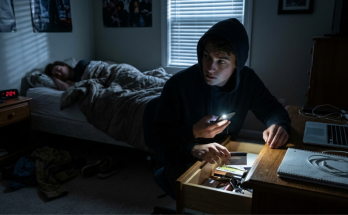
The first morning in my apartment, I woke up expecting to hear somebody moving around downstairs.
For several seconds, I listened.
Nothing.
No television.
No voices arguing in the kitchen.
No footsteps outside my bedroom.
Then I remembered where I was.
I was alone.
I looked at the small desk beside my bed.
My laptop was there.
Dad's framed letter stood near the monitor.
The sticky note was still attached beside it.
MY LIFE. MY RULES.
I smiled.
Then I got out of bed.
I had work to do.
Moving out hadn't magically repaired my business finances.
The money Caleb spent had created problems I was still recovering from.
The bank's work with the merchants had helped return funds.
Some purchases had been canceled.
Others had been physically returned.
The iPhone was gone.
The unopened PlayStation had been collected.
The sneakers had required extra processing.
The investigations and documentation had taken time.
By the time I moved, I understood more about disputed transactions than I ever wanted to know.
But the business account was still recovering.
I needed to rebuild the reserve I'd intended to use for my studio.
And now I had rent to pay.
I didn't regret moving.
Not once.
But I knew I had to be careful.
I made coffee in the tiny kitchen.
There wasn't much room to prepare anything.
I moved my mug from one side of the counter to the other while making breakfast.
I laughed at myself.
The apartment wasn't convenient.
But I could solve its problems without anyone accusing me of being ungrateful.
I carried my coffee to the desk.
Then I opened my notebook.
I had written down the names of three former clients.
All three had worked with me before.
They knew the kind of projects I could handle.
They knew I finished my work.
And I hoped at least one of them might have something available.
I stared at the first name.
I had always been uncomfortable asking people for opportunities.
Not because I thought I was better than anyone.
Because I hated the feeling of needing something.
I had spent years trying to avoid it.
My mother called me independent.
Arthur said I should figure things out myself.
Eventually, I began believing that asking for help was a weakness.
But contacting former clients wasn't begging.
I had done good work for them.
I was offering a service.
I had to remind myself of that.
I wrote the first message.
Then I read it.
Then I deleted half of it.
I had made it too complicated.
I didn't need to explain my family problems.
I didn't need to tell anyone about Caleb or the trust.
I only needed to say I was expanding my independent design work and wanted to know whether they had upcoming projects.
I sent it.
Then I contacted the second client.
And the third.
Afterward, I sat back and looked at the screen.
Three messages.
Nothing dramatic.
But they represented something important.
For months, I'd been reacting to what other people did with my money.
Now I was doing something to build it again.
I returned to the project already open on my laptop.
There was a website layout that needed attention.
A client had asked for revisions.
I checked the design.
Adjusted the spacing.
Reviewed the mobile version.
Then I sent the updated work.
It felt good to concentrate on a problem I actually knew how to solve.
A design problem didn't accuse me of being selfish.
It didn't change the subject when I asked a question.
It didn't cry because I wanted an explanation.
The work was straightforward.
Something needed to be done.
I did it.
That was one reason I loved design.
A few hours later, one of the former clients answered.
He remembered my work.
He asked about the services I was planning to offer.
I explained that I wanted to handle independent website and design projects under my own business name.
He said he had been waiting for me to make that move.
I read the message twice.
Waiting.
That word surprised me.
For years, I'd thought I needed to be more prepared before starting something of my own.
More savings.
More equipment.
More experience.
A better office.
But here was somebody who already believed I could do the work.
I called him.
We discussed what he needed.
He explained that he wanted dependable design support rather than hiring someone for a single small project.
I listened carefully.
It sounded like the kind of arrangement I had hoped to find.
Regular work.
Clear responsibilities.
A chance to build something stable.
I told him what I could provide.
We discussed expectations.
Then he agreed to become my first long-term studio client.
I sat very still after the call.
I almost couldn't believe it.
I hadn't opened a large office.
I hadn't hired anyone.
I was sitting in a small bedroom with a desk squeezed beside my bed.
But I had just secured the kind of client relationship I needed to start operating independently.
I looked at Dad's letter.
Then I laughed.
Quietly.
I wished he could have heard the conversation.
I wished I could call him and say somebody wanted to trust me with real work.
But he was gone.
So I sat there for a while and let myself feel proud.
It wasn't a feeling I had practiced much.
Usually, whenever something good happened, I immediately started thinking about the next problem.
A client paid an invoice.
I worried about expenses.
I finished a project.
I worried about the next one.
I saved money.
I worried somebody would need it.
Now, sitting alone in my apartment, I allowed myself a few minutes to appreciate what had happened.
Then I got back to work.
The following days were busy.
I reviewed the new client's requirements.
I organized my existing projects.
I checked my available working hours.
I didn't want to promise more than I could deliver.
My business needed a good foundation.
Not a collection of rushed decisions.
I had learned that money could disappear quickly when somebody treated it carelessly.
I wasn't going to run my studio that way.
I started keeping clearer records.
Project deadlines.
Client requirements.
Invoices.
Expenses.
I already had experience managing these things, but now I wanted everything organized for independent work.
Every payment mattered.
Every expense needed a purpose.
I kept my personal savings separate from the money intended for business operations.
That separation had mattered before Caleb's theft.
Now it mattered even more.
I wanted to know exactly how much money the studio had.
And I wanted to be certain nobody else could gain authority over the account without my knowledge.
I remembered finding the old bank confirmation with my mother's name.
Margaret Miller.
I still felt uneasy thinking about it.
She had been added as an authorized person without my permission.
That discovery had led me back toward the money Dad left me.
I wasn't going to ignore account security again.
I continued working with the bank to make sure my financial arrangements were properly protected.
I kept my documents organized.
And I stopped storing important cards where someone else could casually take them.
It was a painful lesson.
But I intended to learn from it.
A week after contacting my former clients, I received another message about possible work.
I reviewed the opportunity.
It wasn't a huge project.
Still, I considered it carefully.
I didn't want to chase every dollar without thinking about whether the project fit my schedule.
That was another change.
For years, I had accepted extra work because I was afraid of not having enough money.
I had worked nights.
Weekends.
Whenever someone needed something completed.
Now I wanted to build a business that could support me without consuming every hour of my life.
I knew that wouldn't happen immediately.
But I wanted to start making decisions with that goal in mind.
I worked late that evening.
The apartment was quiet.
Outside, a car pulled into the parking lot.
Headlights moved across the living room window.
Then everything settled.
I looked around.
My desk lamp was on.
The kitchen light was off.
The bedroom was crowded with work materials.
And I was happy.
Not because everything was perfect.
Because nobody was standing in the doorway telling me I should spend my money on someone else.
I could work.
I could save.
I could plan.
And my decisions belonged to me.
Two weeks after moving, my mother called.
I answered.
She asked whether I was eating properly.
I told her I was.
She asked whether the apartment was comfortable.
I said it was small but fine.
Then she asked whether I was managing the rent.
I felt myself become guarded.
"Yes, Mom."
She hesitated.
"You know you could come back if things are difficult."
I looked at the framed letter.
"I know."
She waited.
I didn't offer to move back.
After a moment, she asked about my work.
I told her I had secured a long-term client.
She sounded surprised.
"That's good."
I thanked her.
Then she mentioned Caleb.
He was still dealing with the consequences of taking my card.
The legal process hadn't simply disappeared.
She said he was under pressure.
I listened.
Then I told her I hoped he would take it seriously.
She became quiet.
I could tell she wanted me to say more.
Maybe she wanted me to offer to help.
Maybe she wanted me to apologize for filing the report.
I didn't know.
I didn't ask.
After a few moments, we ended the call.
I sat there feeling strange.
It had been a normal conversation for several minutes.
Then Caleb's name changed everything.
I still loved my mother.
But I wasn't ready to return to the way things had been.
I needed time.
And I needed her to understand that my money, my apartment, and my business were no longer open for family decisions.
I went back to work.
Within two months of moving out, my independent projects had become steady enough for me to begin operating under my own business name.
I had thought about names for a while.
Some sounded too complicated.
Others felt like I was trying to become a much bigger company than I actually was.
I wanted something simple.
Something I could grow with.
Eventually, I chose Miller Creative Studio.
My name.
My work.
My business.
I wrote it down in my notebook.
Then I looked at it for a long time.
There had been a period when I wondered whether I would ever get this far.
After Caleb took the debit card, I thought my studio plans might have to be abandoned.
Nearly nine thousand dollars was too much money for me to lose casually.
It represented equipment.
Savings.
The ability to cover expenses while building a client base.
But the bank's recovery process and my continued work had made rebuilding possible.
Now I had something real.
I didn't have employees.
I didn't have a beautiful office.
I didn't have an impressive conference room where clients could come for meetings.
I had a desk.
A laptop.
My skills.
And people willing to pay me for work I could do.
That was enough to begin.
The first time I prepared an invoice under the studio name, I checked it repeatedly.
I wanted the details to be correct.
I wanted the client to see something professional.
When I finished, I sat back.
Miller Creative Studio.
I smiled.
It was a small moment.
But I remembered it more clearly than many larger things.
For years, I'd been told I was the one who could manage without help.
That I could always earn more.
That I didn't need the kind of support Caleb received.
Now I was building something of my own.
But I didn't want my success to become another excuse for anyone to take advantage of me.
I wanted it to mean I had choices.
I could decide which projects to accept.
I could decide how to save.
I could decide what expenses were worth taking on.
And I could decide when somebody had crossed a boundary.
One evening, after finishing a client project, I opened my banking application.
I checked the business account.
The balance was moving in the right direction.
It wasn't where I wanted it yet.
But it was improving.
I had enough work to keep going.
Enough confidence to make plans.
And enough experience to understand that growth needed patience.
I closed the application.
Then I looked at the sticky note beside my monitor.
MY LIFE. MY RULES.
I had written those words the day I moved in.
At first, they felt like a defense against what my family had done.
Now they meant something different.
I wasn't only protecting myself from other people's choices.
I was creating choices of my own.
That was the part I hadn't expected.
The freedom wasn't just in saying no.
It was in being able to say yes to things I actually wanted.
I wanted to build the studio.
I wanted to work with good clients.
I wanted to become financially secure without depending on promises from my family.
And I wanted to enjoy the life I was working so hard to create.
I picked up Dad's watch.
I held it for a moment.
Then I put it back beside the letter.
I wished I could show him the invoice.
I wished I could tell him I had finally begun.
Instead, I opened another project.
There was work to finish.
And for the first time, that work felt less like something I was doing to survive and more like something I was doing because I believed in my own future.
Click here to continue reading: PART 11: Six Months After I Moved Out, Caleb Called About the Things He Lost, but What He Finally Admitted Was Harder to Hear Than Any Apology
My Brother Took My Business Debit Card in the Middle of the Night, but My Parents Were More Worried About His Future Than Mine
Part 10 of 18