By the time the trust dispute moved toward a resolution, I was tired of looking at financial records.
I knew the numbers almost by heart.
Thirty-two thousand dollars originally left by my father.
Twenty-seven thousand five hundred transferred before I turned eighteen.
Money used for private school expenses.
A vehicle.
A transfer into my mother and Arthur's joint account.
No documented repayment.
Every time Patricia called, I hoped the next conversation would bring some kind of closure.
But the process moved slowly.
There were letters.
Requests for records.
Additional reviews.
Questions about the trust's terms.
And more conversations with my mother than I wanted to have.
I kept working through all of it.
Some days, I handled client projects until late at night.
Other days, I struggled to concentrate because I knew another legal letter might be waiting.
I hated how much space the dispute occupied in my life.
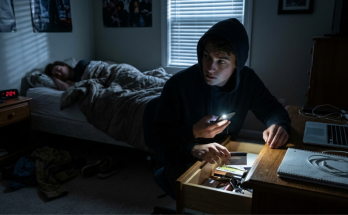
It had started with Caleb taking a debit card from my desk.
Now I was trying to recover money my father had arranged for me nine years earlier.
The two problems weren't identical.
But they had exposed something I'd spent most of my life trying not to see.
My family had become comfortable treating my money as something other people could decide how to use.
That was the hardest part to accept.
Not just the theft.
Not just the trust withdrawals.
The expectation.
They expected me to absorb the loss.
To understand.
To move on.
And to feel guilty if I asked for anything in return.
Patricia kept reminding me that the legal process wasn't about punishing my mother.
It was about determining what had happened and addressing any misuse of the trust.
I needed to hear that.
Because there were still mornings when I woke up feeling as though I had done something cruel.
I would remember Mom crying in the kitchen.
Arthur telling me I was dividing the family.
Caleb asking why I couldn't just let things go.
Then I would look at the records.
And I would remember why I had started asking questions.
One afternoon, Patricia called to discuss the progress of the accounting.
She explained that the review had established amounts my mother could not properly justify under the trust's requirements.
There was now a basis for negotiating repayment.
I sat at my desk and listened.
For months, I'd been waiting for someone to say those words.
Repayment.
Not another promise.
Not another conversation about how difficult life had been.
A formal process to address what had happened.
I asked whether that meant my mother would have to return the entire amount immediately.
Patricia explained that the final arrangement would depend on the accounting and negotiations.
She didn't want me expecting a simple check or an instant resolution.
I understood.
My mother had already told me she'd intended to repay the money years earlier.
I wasn't interested in another arrangement based only on her word.
I wanted documentation.
A clear amount.
A schedule.
Something that protected my interests.
Patricia agreed.
She said any settlement would need to be properly recorded.
I thanked her.
Then I sat quietly after the call.
I looked at Dad's letter beside my laptop.
He had wanted me to build a future of my own.
I wondered how he would feel knowing that getting his money back had required legal action against the person he trusted to manage it.
I couldn't answer that.
I didn't want to invent what he would think.
But I knew he had created the trust for a reason.
And I was finally trying to honor that reason.
The next few weeks were difficult.
My mother became quieter.
She stopped arguing with me about every phone call.
But the silence wasn't comfortable.
Sometimes she looked at me as though I had betrayed her.
Sometimes she tried to begin a normal conversation.
Then she'd remember the legal dispute and become distant.
I didn't know how to behave.
Part of me wanted to repair things.
Another part was afraid that any attempt at kindness would be treated as proof that I was willing to abandon the accounting.
So I kept our conversations limited.
I answered practical questions.
I remained polite.
But I didn't discuss the settlement outside the proper process.
Arthur didn't like that.
One evening, he stopped me in the hallway.
"Your mother is miserable."
I looked at him.
"I'm sorry she's having a hard time."
He frowned.
"That's all?"
I waited.
He continued.
"She's been worrying about this every day."
I thought about the months I'd spent worrying about my business account.
The years I'd spent believing my college money was gone.
The loans.
The work.
The opportunities I couldn't afford to take.
I looked at Arthur.
"I've been worrying about money for years."
He shook his head.
"You always bring it back to yourself."
I almost laughed.
The trust had been created for me.
The account Caleb used belonged to me.
Yet somehow, talking about what happened to my own money was selfish.
I didn't argue.
I went upstairs.
Later, I opened the apartment listings again.
I had been checking them for weeks.
I wasn't looking for anything impressive.
One bedroom would be enough.
A small kitchen.
A place for my desk.
A door I could lock.
I wanted to know that when I left something in a drawer, it would still be there when I came back.
I wanted to work without worrying that someone might enter my room.
I wanted to make decisions without hearing that my brother needed something more.
My savings had taken a serious hit.
I wasn't careless about that.
I needed enough money to move and still protect the business I was trying to build.
The bank's fraud recovery process helped.
As eligible charges were reversed and purchases were returned, money began coming back into the account.
Not everything happened at once.
The sneakers had been especially complicated because of the different sellers and return requirements.
But the recovery process was moving.
I kept working and saving.
Every client payment mattered.
Every expense received more attention than before.
I wasn't going to let the theft become the end of my plans.
The police investigation involving Caleb continued separately.
The written admission remained part of the record.
The matter had been referred for further legal proceedings.
I didn't know exactly how every stage would unfold.
I stopped pretending I could control it.
I had provided the evidence.
The authorities had their responsibilities.
Caleb had his own.
I couldn't carry those responsibilities for him.
My mother still asked me to help him.
Sometimes she approached the subject carefully.
Sometimes she became emotional.
But I didn't change my account of what happened.
I couldn't.
The recording showed him entering my bedroom at 2:07 a.m.
He had taken the card.
He had made the purchases.
He had admitted both.
Those facts didn't become less true because he was frightened.
One evening, Caleb stood near my bedroom door.
He didn't come inside.
That was new.
Before the theft, he often entered rooms without much thought.
Now he stayed in the hallway.
"Can I ask you something?"
I looked up from my laptop.
"Sure."
He shifted his weight.
"Are you moving out?"
I paused.
I hadn't told anyone I was looking.
"Why?"
"Mom thinks you are."
I looked toward the door.
I wondered how much she knew.
Maybe she'd noticed me spending more time reviewing expenses.
Maybe she'd simply realized I wasn't planning to stay in the house forever.
"I'm considering it," I said.
Caleb looked down.
"Because of me?"
I thought about that.
The theft had changed things.
But my decision wasn't only about him.
It was about years of feeling that my choices belonged to everyone else.
"It's about needing my own space," I said.
He nodded slowly.
Then he asked, "Are you ever going to trust me again?"
I looked at him.
I wanted to give him an easy answer.
I wanted to say we'd both forget what happened.
But that wouldn't have been fair to either of us.
"I don't know," I told him.
He looked hurt.
I continued.
"Trust takes time. And it depends on what you do next."
He didn't argue.
For once, he simply nodded.
Then he went downstairs.
I sat there thinking about that conversation.
I didn't want to spend the rest of my life angry with Caleb.
He was still my brother.
I remembered him as a little boy.
I remembered helping him with things when he was younger.
There had been good moments.
The theft hadn't erased them.
But those memories couldn't erase the theft either.
I needed to learn how to hold both truths at once.
The trust negotiations continued.
Patricia kept me informed.
She explained the amounts being reviewed and the terms being considered.
I asked questions whenever I didn't understand something.
I had stopped feeling embarrassed about that.
Every time I asked, I remembered Dad's note.
He had wanted me to understand my future.
I was finally taking that seriously.
Eventually, Patricia called with the news I'd been waiting for.
My mother had agreed to a settlement.
I sat down.
For a moment, I couldn't speak.
Patricia explained that the accounting had established the amount of trust money that could not be properly justified.
The settlement required repayment of those misused funds, together with the applicable adjustments determined through the final accounting.
The repayment would be structured over time.
The agreement would be formally documented.
My interests would be protected by its terms.
I listened closely.
I asked her to repeat several details.
Not because I doubted her.
Because I wanted to understand exactly what I was agreeing to.
She explained that it wasn't an immediate recovery of every dollar.
The payments would take time.
But it was an enforceable arrangement rather than another informal promise.
I looked at the papers on my desk.
For years, my mother had said she'd intended to replace the money.
Now there was finally a formal obligation to do so.
I thanked Patricia.
Then I asked what happened next.
She explained the remaining documentation and the steps needed to finalize the arrangement.
I wrote everything down.
When the call ended, I stayed seated.
I had imagined that moment many times.
I thought I might feel victorious.
I thought I'd want to celebrate.
Instead, I felt quiet.
My mother hadn't arrived with an apology and a check.
There hadn't been some dramatic scene where she finally admitted everything.
There had been months of records, legal discussions, and difficult conversations.
And now there was an agreement.
It wasn't the ending I'd imagined when I first found the trust documents.
But it was real.
I placed the phone beside Dad's letter.
Then I looked around my room.
My laptop was open.
The security camera was still near the desk.
The drawer Caleb had opened was closed.
I thought about everything that had happened there.
The nights I spent working.
The money I saved.
The card that disappeared.
The documents I found.
The calls that changed what I understood about my family.
I knew I couldn't keep building my future in that room forever.
The settlement was progress.
But it didn't restore the trust I'd lost.
And it didn't make the house feel like somewhere I could relax.
I opened my apartment search again.
This time, I wasn't just looking.
I was making a plan.
I checked what I could afford.
I reviewed my savings.
I considered how much space I actually needed.
Nothing luxurious.
Nothing that would put me under unnecessary financial pressure.
I wanted somewhere small enough to manage and private enough to feel safe.
I continued working while the final settlement documentation was handled.
The bank's recovery process and the money I saved helped rebuild my business fund.
I kept looking for an apartment that made sense.
I didn't tell the family every detail.
I wasn't trying to surprise anyone.
I simply wanted to make the decision without another argument.
One afternoon, I found a listing that fit what I needed.
A small one-bedroom apartment on the other side of town.
The kitchen was tiny.
The bedroom had just enough space for a bed and desk.
The living room looked out toward a parking lot.
It wasn't much.
But I kept returning to the photographs.
I imagined putting my laptop near the window.
I imagined working late without hearing anyone arguing downstairs.
I imagined leaving my wallet on a table without worrying.
That was when I realized how badly I wanted to leave.
Not because I hated my family.
Because I wanted a home where I didn't have to defend my right to own my belongings.
I saved the listing.
Then I checked the numbers again.
I was getting closer.
Three months after Caleb took my card, I would finally move out.
At that moment, I didn't know how much my life would change once I had a place of my own.
I only knew I was ready to stop living as though everyone else had a claim on my future.
That evening, I took Dad's letter from the folder.
I read it one more time.
Then I placed it carefully beside my laptop.
I wanted it somewhere I could see it.
Not because I needed to keep reliving what happened.
Because I wanted to remember what he had been trying to give me.
A chance.
A choice.
A future that belonged to me.
I turned back to my work.
There were clients waiting.
Projects to finish.
Money to save.
And for the first time in years, I was beginning to believe that the life I wanted might finally be something I could build without asking my family to approve it.
Click here to continue reading: PART 9: Three Months After My Brother Stole My Savings, I Finally Left the Family House and Found Out What Having a Door of My Own Really Meant
My Brother Took My Business Debit Card in the Middle of the Night, but My Parents Were More Worried About His Future Than Mine
Part 8 of 18