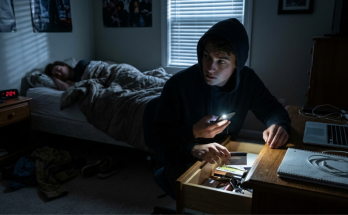
Two years after Caleb took my debit card, I sat at a desk that wasn't squeezed beside my bed.
That still felt strange sometimes.
I was in my own studio.
Not the small apartment where I had started Miller Creative Studio.
A real workspace.
There were desks.
Equipment.
Projects in progress.
And people who depended on the business I'd built.
I looked around the room and remembered the day I moved out.
The tiny kitchen.
The parking lot outside the living room window.
My laptop sitting beside Dad's framed letter.
The sticky note that said:
MY LIFE. MY RULES.
Back then, I had been trying to recover from the worst financial shock of my adult life.
Now my business was larger than I'd imagined it could become in those first months.
It hadn't happened suddenly.
There wasn't a single project that changed everything.
There wasn't a magical client who handed me enough money to solve every problem.
I had worked.
I had saved.
I had taken on projects I knew I could complete.
And little by little, the business had grown.
The first long-term client had made a difference.
He had believed in my work before I had a proper studio.
He had trusted me to provide reliable design support.
That relationship gave me something I desperately needed.
Consistency.
I no longer had to wonder whether every project would be the last one for a while.
I could begin planning.
Not recklessly.
Carefully.
I had learned too much about losing money to treat growth as an excuse for careless spending.
I kept records.
I reviewed expenses.
I made sure invoices were clear.
And I paid attention to how much money the business needed to operate.
That habit became part of the way I worked.
I remembered the original nine thousand dollars I'd set aside for the studio.
At the time, it had felt like a huge achievement.
Every dollar represented evenings and weekends spent working.
I had saved it because I wanted enough money to give myself a chance.
Then Caleb took my card.
He spent nearly the same amount in a few hours.
For a while, I thought my plans were finished.
I remembered staring at the banking application.
The unauthorized purchases.
The phone.
The PlayStation.
The sneakers.
I remembered trying to understand how my brother could spend money I had worked so hard to earn.
Now I looked at the business account.
It held more than the amount Caleb had taken.
Much more.
Enough to cover several months of operating expenses.
That was the part that mattered most.
I wasn't simply looking at a balance.
I was looking at security.
A reserve that meant I could pay business expenses even if a client was late.
Money that allowed me to make decisions without panicking.
A foundation I could protect.
I had once believed having savings made me responsible for everyone else's emergencies.
Now I knew savings could also mean having the freedom to say no.
I looked around the studio.
I had hired two designers.
That had been another decision I didn't make lightly.
For a long time, I did everything myself.
Client meetings.
Design work.
Revisions.
Invoices.
Planning.
I enjoyed the independence.
But as the projects grew, I realized I couldn't handle everything alone forever.
I needed help.
That realization frightened me more than I expected.
I was used to doing things myself.
I had spent years believing that needing assistance meant I hadn't worked hard enough.
But running a business had taught me something different.
Asking someone to contribute their skills wasn't weakness.
It was part of building something that could last.
I thought carefully before hiring.
I wanted people who took their work seriously.
People who understood deadlines.
People who cared about doing things properly.
I also wanted to treat them fairly.
That mattered to me.
I knew what it felt like to work hard and have someone dismiss the effort behind it.
I didn't want anyone working for my studio to feel that their time didn't matter.
The first time I discussed a project with the designers, I felt nervous.
I wasn't used to being responsible for other people's work.
I had always been the one taking instructions.
Now I had to explain what clients needed.
I had to review progress.
I had to make decisions that affected more than my own schedule.
I learned as I went.
I made adjustments.
I asked questions.
And I tried to remember that being in charge didn't mean I had to pretend I knew everything.
My father had written that I shouldn't be afraid to ask questions about my future.
I had started applying that advice to the business too.
If something wasn't clear, I asked.
If a financial decision seemed risky, I reviewed it.
If a project needed more time, I said so.
I had stopped treating confidence as pretending there were no problems.
Confidence meant being willing to face them.
That morning, one of the designers asked me to review a layout.
I walked over.
The project was for a regular client.
We had been working on it for several days.
I looked at the screen.
The design was good.
A few details needed attention.
I pointed them out.
We discussed the changes.
Then I returned to my desk.
It was an ordinary moment.
But I remembered when every design decision happened alone in my bedroom.
Back then, I couldn't imagine having people working beside me.
Now I had a small team.
And the business was growing.
I didn't have a large company.
I wasn't pretending otherwise.
The studio was still modest.
The furniture was practical.
The equipment was what we needed to do the work.
There was nothing luxurious about it.
But every desk represented a decision I'd made.
Every client represented trust I'd earned.
And every invoice meant somebody believed the work had value.
I was proud of that.
I didn't often say it aloud.
For years, pride had felt dangerous.
If I told my family I had saved money, somebody might ask to borrow it.
If I said work was going well, my mother might remind me that Caleb needed help.
If I mentioned an achievement, Arthur might explain why it wasn't as impressive as I thought.
Eventually, I learned to keep good news to myself.
But I didn't want to spend my entire life doing that.
I wanted to appreciate what I'd built.
Not to prove anything to anyone.
Just because it mattered.
I picked up my coffee.
Then I opened the financial records.
I checked the studio's operating expenses.
I reviewed the payments that had come in.
I looked at what was due over the following weeks.
The numbers were healthy.
I had enough money to keep operating.
Enough to plan.
Enough to feel secure.
I sat back.
Two years earlier, I would have given almost anything to see those figures.
Back then, my biggest fear was that the theft had destroyed my chance to start a business.
Now I was responsible for a studio with regular clients.
I felt grateful.
But I also remembered what it cost to get here.
Not only the money.
The arguments.
The police report.
The months of legal paperwork.
The discovery that my mother had transferred money out of Dad's trust.
The decision to leave home.
The loneliness I felt during the first months in my apartment.
There had been times when I wondered whether protecting myself meant losing my family.
I didn't have a simple answer to that.
My relationship with Mom was still different from what it had been.
After her letter, we had begun speaking more openly.
She had acknowledged that she'd treated Caleb differently.
She had admitted that she expected me to survive because I always had.
I had written back.
I told her I appreciated the apology.
But I also made it clear that our relationship would have to respect my financial independence and privacy.
She hadn't changed overnight.
Sometimes she still asked questions that made me uncomfortable.
Sometimes she slipped into old habits.
But she was trying.
And I was learning how to respond without becoming angry every time.
That was progress.
I didn't need her to become a completely different person.
I needed her to respect the boundaries I'd set.
The formal trust repayment arrangement continued according to its terms.
I didn't use those payments as an excuse to give her access to my business.
I kept the financial issues separate.
That helped.
It meant our conversations didn't always have to return to money.
Sometimes we talked about ordinary things.
How work was going.
Whether I was eating properly.
What she had been doing.
I still kept certain details private.
And I no longer felt guilty about it.
My mother didn't need to know every dollar I earned.
She didn't need access to my accounts.
She didn't need to approve my business decisions.
I could love her without surrendering those things.
I thought about Caleb too.
He had called six months after I moved out.
I remembered his voice.
The way he admitted he'd expected Mom to force me to forgive him.
The way he told me he'd been working at a warehouse for four months.
He had asked whether I would help him learn design.
I told him I'd answer questions.
But I wouldn't give him money.
I wouldn't complete his work.
And I wouldn't allow him to touch my accounts or belongings again.
He had accepted those conditions.
That surprised me.
But I knew accepting them once wasn't enough.
Trust needed time.
I had made the mistake of giving people too much access before they had earned it.
I wasn't going to repeat that.
Still, I hoped Caleb would keep working.
I hoped he'd learn something useful.
I hoped he would understand that independence wasn't something someone could hand him.
It came from effort.
From mistakes.
From taking responsibility.
I had learned those lessons the hard way.
Maybe he was finally learning them too.
I returned to the project on my screen.
One of our clients had requested revisions.
I reviewed the instructions.
Then I made a note for the team.
My workday continued.
There wasn't a dramatic celebration.
No speech.
No announcement.
Just another day running a small business.
But that was what I'd wanted.
I wanted normal days.
Days when the biggest problem was a design that needed improvement.
Days when clients paid for completed work.
Days when I could check my bank account without feeling sick.
Days when my future didn't depend on whether somebody in my family decided they needed my money.
In the afternoon, I looked at the studio's calendar.
There were projects scheduled for the coming weeks.
Enough work to keep everyone busy.
I smiled.
I remembered the first invoice I sent under the Miller Creative Studio name.
I had checked it repeatedly because I was afraid of making a mistake.
Now I prepared invoices regularly.
It had become routine.
But I never wanted to forget what those first steps felt like.
They reminded me why I started.
I hadn't built the studio because I wanted to become rich overnight.
I wanted control over my work.
I wanted a chance to create something.
I wanted enough financial stability to stop living in fear of the next emergency.
And I wanted to prove to myself that the theft hadn't ended my future.
I looked around the room again.
Two designers were working.
The computers were on.
There were project notes on the desks.
The studio was quiet except for ordinary work sounds.
I thought about my father.
He had never seen any of this.
He died before I finished growing up.
He hadn't seen me graduate.
He hadn't seen the warehouse shifts.
He hadn't watched me build websites for clients during weekends.
He hadn't known about the theft.
Or the trust dispute.
Or the apartment.
Or the studio.
I felt a familiar sadness.
For years, I had measured my progress against what I imagined he would want.
Sometimes that helped.
Sometimes it made me feel as though nothing I achieved would ever be enough.
But I didn't feel that way now.
I thought he would have been glad to see me building something I cared about.
Not because the studio was large.
Because it was mine.
I looked at the calendar.
The anniversary of his death was approaching.
I had been thinking about visiting his grave.
I wanted to bring flowers.
I wanted to sit there for a while.
And I wanted to tell him what had happened.
Not only the painful things.
The good things too.
I wanted him to know I had finally started the business.
That I had moved into my own place.
That I had clients.
And that people now depended on the work I created.
I knew he couldn't answer.
But I wanted to say it anyway.
That evening, after the studio quieted down, I stayed at my desk.
I reviewed one last project.
Then I checked the operating account.
I looked at the balance.
The number was larger than the amount Caleb had stolen.
There was enough to cover several months of expenses.
I sat still for a moment.
For years, I had thought money was proof of whether I was succeeding.
Now I understood it differently.
The balance represented security.
But it also represented choices.
Every time I had refused to spend money I couldn't spare.
Every project I had completed.
Every client relationship I'd built.
Every decision I'd made to protect the studio.
It wasn't just money.
It was evidence that I had continued.
I closed the account.
Then I looked at Dad's letter.
I had kept it near my desk through every stage.
First in the house.
Then in the apartment.
Now in the studio.
The frame was simple.
The blue ink was still visible.
I read the line about independence again.
I didn't cry.
I smiled.
I had finally begun to understand what he'd wanted for me.
Not a life without problems.
A life where I had the freedom to face them on my own terms.
I turned off my computer.
Then I picked up my keys.
Before leaving, I looked around the studio once more.
It wasn't enormous.
But it was real.
And for the first time, I didn't feel as though I needed anyone else's approval to be proud of it.
Click here to continue reading: PART 16: On the Anniversary of My Father’s Death, I Brought His Letter to the Cemetery and Finally Told Him What I Had Built Without His Money
My Brother Took My Business Debit Card in the Middle of the Night, but My Parents Were More Worried About His Future Than Mine
Part 15 of 18