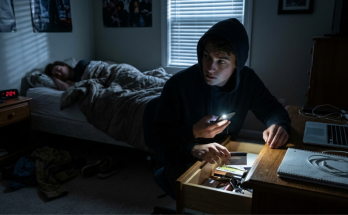
After Caleb left the studio, I sat at my desk and thought about everything that had happened.
The room was quiet.
My designers were working.
There were projects waiting for my attention.
Nothing dramatic had occurred.
My brother had visited.
He had shown me a website.
He had apologized.
Then he'd gone home.
But I knew something had changed.
For the first time, I believed Caleb understood what he'd done without needing somebody else to explain it for him.
That mattered more than the words themselves.
I had heard apologies before.
I had heard promises.
I had heard my mother say she'd replace the money from Dad's trust when things improved.
I had heard Arthur say the family could work everything out privately.
And I had heard Caleb insist that returning the purchases should be enough.
Those words hadn't been supported by action.
This time, Caleb had done something different.
He had worked steadily for almost two years.
He had saved money instead of taking it.
He had bought his own laptop.
He had completed online design courses.
And he had built a small portfolio.
His website for the clothing store wasn't perfect.
The spacing needed work.
The typography was inconsistent.
The mobile layout had problems.
But he had made it himself.
I kept thinking about that.
He had done the work.
He hadn't asked me to do it for him.
He hadn't expected me to pay for equipment.
He hadn't treated my studio as somewhere he could come and collect an opportunity without earning it.
That was progress.
I didn't need to pretend it was more than that.
But I didn't want to dismiss it either.
I thought about the conversation near the entrance.
He had said he was sorry.
Not because Mom told him to apologize.
Not because he wanted something.
Because he understood that taking my card had been wrong.
I believed him.
Carefully.
There were still boundaries.
I wasn't giving him access to my bank accounts.
I wasn't lending him money.
I wasn't going to ignore another theft because he was family.
But I could see the difference between the person who stood in my bedroom doorway two years earlier and the person who visited my studio.
I was willing to let that difference matter.
I returned to the project on my screen.
For a while, I worked.
I made adjustments.
Checked the layout.
Reviewed the client's instructions.
Then I saved my progress.
It felt good to return to something ordinary.
For months after the theft, I had struggled to concentrate.
Every time my phone rang, I wondered whether it was the bank.
Or the police.
Or Patricia.
Or my mother calling to tell me I was destroying the family.
Now I could work without expecting another argument.
That wasn't something I'd taken for granted.
I had learned how much peace mattered.
When I finished the project review, I checked the studio's finances.
The business account held enough money to cover several months of operating expenses.
More than the amount Caleb had stolen.
For a moment, I remembered the original nine thousand dollars I'd saved.
I had been so proud of that money.
It represented years of discipline.
Extra projects.
Late nights.
Weekends spent working.
I had kept it separate because I wanted to start a business.
Then my brother spent almost the entire amount on things he wanted.
I remembered opening the banking application.
Seeing the transactions.
Feeling sick.
I had thought the money might be gone forever.
I had thought my business plans were finished.
But the bank's investigation helped recover funds.
Some purchases were canceled.
Others were returned.
I continued working.
I saved what I could.
And eventually, I began rebuilding.
The money didn't return all at once.
Neither did my confidence.
But both had grown.
Now the studio had regular clients.
Three designers worked with me, including one remotely.
There were projects scheduled.
Invoices being paid.
Expenses I could manage.
I had built something that could keep operating even when a month wasn't perfect.
I looked at the account balance.
For years, I had thought seeing enough money would finally make me feel safe.
But the number wasn't the whole reason I felt secure.
I felt safe because I understood where the money was.
I knew what the business owed.
I knew what it needed.
And I knew nobody else had permission to decide how it was used.
That was the difference.
I closed the account.
Then I looked at Dad's framed letter.
It had traveled with me through every part of the story.
First, it sat in the old storage box.
Then I found it while looking for documents about the college fund.
I read it on the bedroom floor.
I carried it to Patricia's office.
I kept it beside my desk when I moved into the apartment.
And now it stood inside Miller Creative Studio.
The frame was simple.
The blue handwriting was still clear.
I knew the words almost by heart.
Dad had wanted me to understand that money wasn't everything.
He had wanted me to have independence.
He didn't want me feeling that my future belonged to someone else.
And he wanted me to ask questions when something affected my life.
I had spent years misunderstanding that.
I thought independence meant never asking for help.
I thought being responsible meant accepting whatever happened and finding a way to recover.
I thought if I worked hard enough, my mother would eventually treat my needs as seriously as Caleb's.
But the truth had been different.
I had been seventeen when she told me the college money was gone.
I believed her.
I didn't ask for statements.
I didn't contact Patricia.
I didn't demand an accounting.
I apologized for bringing up money when the family was struggling.
Then I spent years working to pay for things the trust had been created to help with.
I remembered the warehouse shifts.
The student loans.
The late nights building websites.
The meals I skipped because I wanted to save.
I wasn't ashamed of that work.
It had taught me skills.
It had made me disciplined.
It had helped me build the studio.
But I no longer believed I should have been forced to manage everything alone.
My father had left thirty-two thousand dollars for my education and early adult life.
That money had a purpose.
It was supposed to help me.
And when Patricia showed me the records, I learned that most of it had been transferred away before I turned eighteen.
Twenty-seven thousand five hundred dollars.
Three withdrawals.
Eight thousand five hundred.
Eleven thousand.
Eight thousand.
All connected to my mother's personal account.
The additional accounting showed how portions of the money had been used.
Caleb's private school.
A vehicle.
Approximately six thousand dollars transferred into a joint account belonging to Mom and Arthur.
There was no record of repayment.
I remembered staring at those documents in Patricia's office.
I had felt as though the room was moving.
Not because I couldn't understand the numbers.
Because I understood them too well.
I knew how much work it took to save money.
And I knew how different my college years might have been if I'd received the support Dad intended.
I couldn't calculate every lost opportunity.
I couldn't put a number on every night I spent exhausted.
But I could acknowledge that something important had been taken from me.
The trust settlement addressed the financial misuse.
It didn't erase the past.
Patricia helped obtain the records.
The accounting established the amount my mother could not properly justify.
And Mom eventually agreed to repay the misused trust funds under a formal arrangement.
There were applicable adjustments determined through the accounting.
The repayment was structured over time.
I didn't receive a sudden check that solved everything.
There wasn't a dramatic apology during the negotiations.
There were documents.
Meetings.
Legal responsibilities.
A formal agreement.
It took months.
But the money was finally being treated as something that had belonged to me all along.
That mattered.
I had recovered some of what was taken.
And the rest was being addressed through the agreement.
I wasn't pretending the process had made everything fair.
It hadn't given me back the years I spent believing there was nothing left.
But it had established accountability.
And that was important.
I thought about Mom.
Our relationship had changed.
For almost a year, we spoke mostly when the trust settlement required it.
There had been distance.
Anger.
Silence.
Sometimes I wondered whether we'd ever have a normal conversation again.
Then her letter arrived.
Three handwritten pages.
I almost threw it away.
I expected another explanation about how difficult things had been after Dad died.
Instead, she finally acknowledged what I'd been trying to tell her.
She had treated Caleb differently.
She had protected him because she worried he wouldn't manage without her.
And she had expected me to survive because I always had.
She admitted that she had mistaken my independence for not needing her.
I remembered crying after reading that.
I had spent years wanting her to understand.
Not only the money.
The feeling of being less important.
The way she praised my strength while ignoring how hard I was struggling.
The way she assumed I could take another loss because I had always managed before.
Her apology didn't fix everything.
But it was the first time I felt she had acknowledged the real damage.
I wrote back.
I thanked her.
I told her I was willing to rebuild our relationship slowly.
But I also explained that forgiveness didn't mean giving her access to my accounts.
Or my home.
Or every private detail of my life.
I had spent too many years confusing loyalty with unlimited permission.
I wasn't doing that anymore.
My mother was still my mother.
I loved her.
I wanted a relationship with her.
But I no longer needed to prove that love by allowing her to control my decisions.
She was beginning to respect that.
Not perfectly.
Not every time.
But she was trying.
Sometimes our conversations were awkward.
Sometimes she asked questions I didn't want to answer.
I had to remind myself that setting a boundary didn't require an argument.
I could simply say I preferred to keep something private.
Then continue the conversation.
I was learning that relationships could survive hearing no.
That had been one of the hardest lessons.
For years, I believed refusing someone meant I was hurting them.
Now I understood that people could be disappointed without having the right to take what belonged to me.
I thought about Arthur too.
He had stood in the living room while I confronted Mom about the trust.
He had told me not to bring attorneys into the house.
He had reminded me that I lived under his roof.
At the time, I felt trapped by those words.
I had been twenty-six.
Working.
Saving.
Trying to build a business.
Yet I still felt as though I needed permission to protect my own money.
Moving out had changed that.
Three months after the theft, I took the small apartment across town.
The kitchen was tiny.
The bedroom barely held my bed and desk.
The living room window overlooked a parking lot.
I remembered standing inside with the keys.
I didn't have much furniture.
I didn't have a large amount of extra money.
But I had a door I could lock.
That was enough to make me cry.
Not because the apartment was beautiful.
Because I felt safe.
Nobody could come into my room and take my card.
Nobody could search through my belongings.
Nobody could tell me that my future mattered less than someone else's immediate wants.
I could decide how to live.
I could decide how to spend.
I could decide what work to accept.
And I could decide what kind of relationship I wanted with my family.
I remembered the sticky note.
MY LIFE. MY RULES.
I had written it beside my monitor when I moved in.
At the time, those words felt like a promise I desperately needed to make.
Now they described the life I'd built.
I smiled.
I had never needed a large apartment to feel independent.
I needed to understand that I was allowed to make my own decisions.
That had been enough.
After moving, I contacted three former clients.
I told them I was expanding my independent design work.
One of them had been waiting for me to offer the services.
He became my first long-term studio client.
That opportunity gave me the stability to begin operating under my own business name.
Miller Creative Studio.
I remembered writing those words on the first invoice.
I checked the details repeatedly.
I wanted everything to be right.
I had no employees.
No office.
No impressive equipment.
Just my skills and a few people willing to trust my work.
But I kept going.
I completed projects.
Built relationships.
Saved money.
And made careful decisions.
Within two years, the studio had grown beyond what I expected.
I had hired designers.
I had regular clients.
The business account held more than the amount Caleb stole.
And I had enough reserve to keep operating without constantly worrying about the next payment.
That was the future I'd been trying to protect.
Not a life without difficulties.
A life where the difficulties were mine to manage.
Where somebody else's irresponsibility didn't automatically become my financial obligation.
I thought about visiting Dad's grave.
The flowers.
The quiet morning.
The smaller copy of his letter.
I had sat beside the headstone and told him about the studio.
About the apartment.
About the clients.
About the people working with me.
I had also told him what happened to the trust.
And I had admitted something I used to be ashamed of.
I had needed help.
I was seventeen when Dad died.
I had needed my mother.
I had needed guidance.
I had needed the support he arranged.
There was nothing shameful about that.
I could be grateful for the skills I developed while struggling and still recognize that the struggle had been unfair.
Both things were true.
I looked at the framed letter again.
I no longer felt as though I needed to prove Dad had been right to believe in me.
I wanted to do good work.
I wanted to continue growing.
But my worth wasn't measured by the size of the studio or the balance in the account.
I had spent too many years thinking I needed to earn respect by being useful.
Now I understood that respect should not have required me to surrender everything I worked for.
I thought about Caleb's visit.
He had stood in the doorway holding coffee.
He had looked around the studio.
He had asked about the designers.
Then he'd shown me the website he built.
I remembered how carefully he handled his laptop.
He had paid for it himself.
That detail mattered.
Two years earlier, he had taken my card because he wanted things he couldn't afford.
Now he had worked and saved for something he wanted.
He was learning.
I hoped he'd continue.
I wasn't going to guarantee his future.
I wasn't going to finance it.
I wasn't going to make excuses if he crossed another boundary.
But I could encourage him.
I could answer questions.
And I could recognize when he made progress.
He was still my brother.
I wanted him to succeed.
I just no longer believed his success had to come at the expense of mine.
The studio became quiet as the workday ended.
My designers finished their projects.
Computers were shut down.
The ordinary sounds of the office faded.
I stayed at my desk for a while.
I looked around.
There were three designers working with me now.
Two based in the studio.
One working remotely.
There were clients depending on our work.
Projects scheduled for the coming weeks.
Enough money in reserve to cover operating expenses.
It wasn't a huge company.
But it was real.
I had built it.
I felt proud.
Not the kind of pride that needed someone else to admire me.
The quiet kind.
The kind that came from knowing what it had taken to get there.
I thought about the first night after the theft.
I had been sitting in my bedroom, looking at the missing card and the account transactions.
I believed Caleb had taken my chance to build a future.
I thought losing nearly nine thousand dollars meant losing years of progress.
Then the bank called.
That first investigation uncovered questions about account activity.
I found my mother's name.
Then Dad's trust documents.
Then Patricia's records.
And finally, the truth about the twenty-seven thousand five hundred dollars.
At the time, it felt as though my family was falling apart.
The police had come to the house.
Arthur was angry.
Mom cried.
Caleb was frightened.
Everyone wanted me to stop.
I had almost believed them.
I had almost accepted another explanation and moved on.
But something had changed.
I couldn't keep apologizing for wanting to know what happened to my own money.
So I kept asking.
I let the investigations continue.
I worked with Patricia.
I moved out.
And I started rebuilding.
The process had been painful.
It cost time.
Money.
Trust.
And the version of my family I'd believed in for years.
But it also gave me something.
I learned that my needs mattered.
That I didn't have to earn the right to be treated fairly.
That being responsible didn't mean accepting every consequence of someone else's choices.
And that protecting myself wasn't the same as abandoning the people I loved.
I looked toward the studio entrance.
Caleb had walked through that door earlier.
He had shown me what he'd built.
Then he'd apologized without asking for anything.
I smiled.
I hadn't forgiven him immediately when he called six months after I moved out.
I hadn't trusted him simply because he said he was sorry.
I waited.
I watched what he did.
And now I was beginning to believe he meant it.
That was enough for the moment.
I didn't need to pretend everything was as it had been before.
In fact, I didn't want it to be.
Before, Caleb believed Mom could make me forgive anything.
Before, Mom believed I didn't need help because I always managed.
Before, Arthur believed living under his roof meant he could decide whether I involved attorneys.
Before, I believed that keeping the family together meant never saying no.
I didn't want that family arrangement back.
I wanted something healthier.
Relationships where people could admit mistakes.
Where apologies were supported by actions.
Where love didn't give anyone permission to take.
And where responsibility belonged to the person who made the choice.
I turned back toward my desk.
Dad's letter was still there.
The blue handwriting leaned slightly to the right.
I read the line about asking questions.
For years, I had avoided asking them.
I was afraid the answers might upset someone.
Now I knew that avoiding questions hadn't protected my family.
It had allowed problems to remain hidden.
The first call after Caleb's theft hadn't destroyed us.
It exposed things that had been wrong for years.
The trust money.
The unequal expectations.
The belief that I would keep giving because I was capable of earning more.
Those things were already there.
I had simply stopped looking away.
I closed my laptop.
Then I put the financial papers back where they belonged.
The repayment arrangement was documented.
The account was secure.
The business had its own reserve.
I didn't need to spend every evening staring at old statements anymore.
I had a life to live.
I stood up.
I looked around the studio one last time.
Then I turned off the lights.
As I walked toward the door, I thought about how much everything had changed.
Mom was still my mother.
Caleb was still my brother.
Arthur was still part of the family.
I hadn't erased them.
I hadn't stopped caring.
But they no longer had unlimited access to my time, money, or decisions.
I had recovered some of the money.
I had protected the rest through proper arrangements.
I had built my business.
And I had found a way to live without constantly wondering whether someone would accuse me of selfishness for wanting something of my own.
I locked the studio door.
Then I stood outside for a moment.
It was an ordinary evening.
Nothing dramatic.
I had finished another day of work.
I had clients to serve tomorrow.
Employees depending on me.
And a home to return to.
That was enough.
Sometimes people ask why I'm so careful about where I keep my debit card now.
I usually smile.
I tell them I learned to take account security seriously.
That's true.
But it isn't the whole story.
The card was only the beginning.
What Caleb took that night was money.
What I nearly lost afterward was my belief that I had the right to protect my own future.
For years, I'd tried to keep everyone happy.
I gave more than I could afford.
I accepted explanations that didn't make sense.
And I stayed quiet because I didn't want anyone to think I was ungrateful.
I thought that made me a good son.
A good brother.
A responsible person.
But I finally understood that being good to other people didn't require being unfair to myself.
I could love my family.
I could forgive slowly.
I could recognize real change.
And I could still say no.
I got into my car.
Before starting the engine, I looked back at the studio.
The windows were dark.
The sign carried the business name I'd chosen.
Miller Creative Studio.
I smiled.
Two years earlier, I had been afraid that nearly nine thousand dollars of stolen purchases would destroy my chance to build that business.
Now I had built it anyway.
The theft had changed my life.
So had the discovery about Dad's trust.
But neither had taken my future.
They had forced me to stop handing control of it to other people.
I started the car.
Then I drove home.
There was no argument waiting for me.
No one asking me to cancel a police report.
No one telling me my brother needed my savings more than I did.
Just the life I'd built.
And the quiet knowledge that I didn't need to apologize for keeping it.
I hadn't recovered every lost opportunity.
I hadn't erased every painful memory.
But I had recovered something I hadn't realized was missing.
My confidence.
My boundaries.
My right to make decisions about my own life.
And the part of me that had spent years believing everybody else's happiness mattered more than mine.
That part was finally mine again.
The End
Read more original stories on readdramaus.
My Brother Took My Business Debit Card in the Middle of the Night, but My Parents Were More Worried About His Future Than Mine
Part 18 of 18