The moment my daughter told me I was forbidden from attending her wedding, I did not cry.
I did not argue.
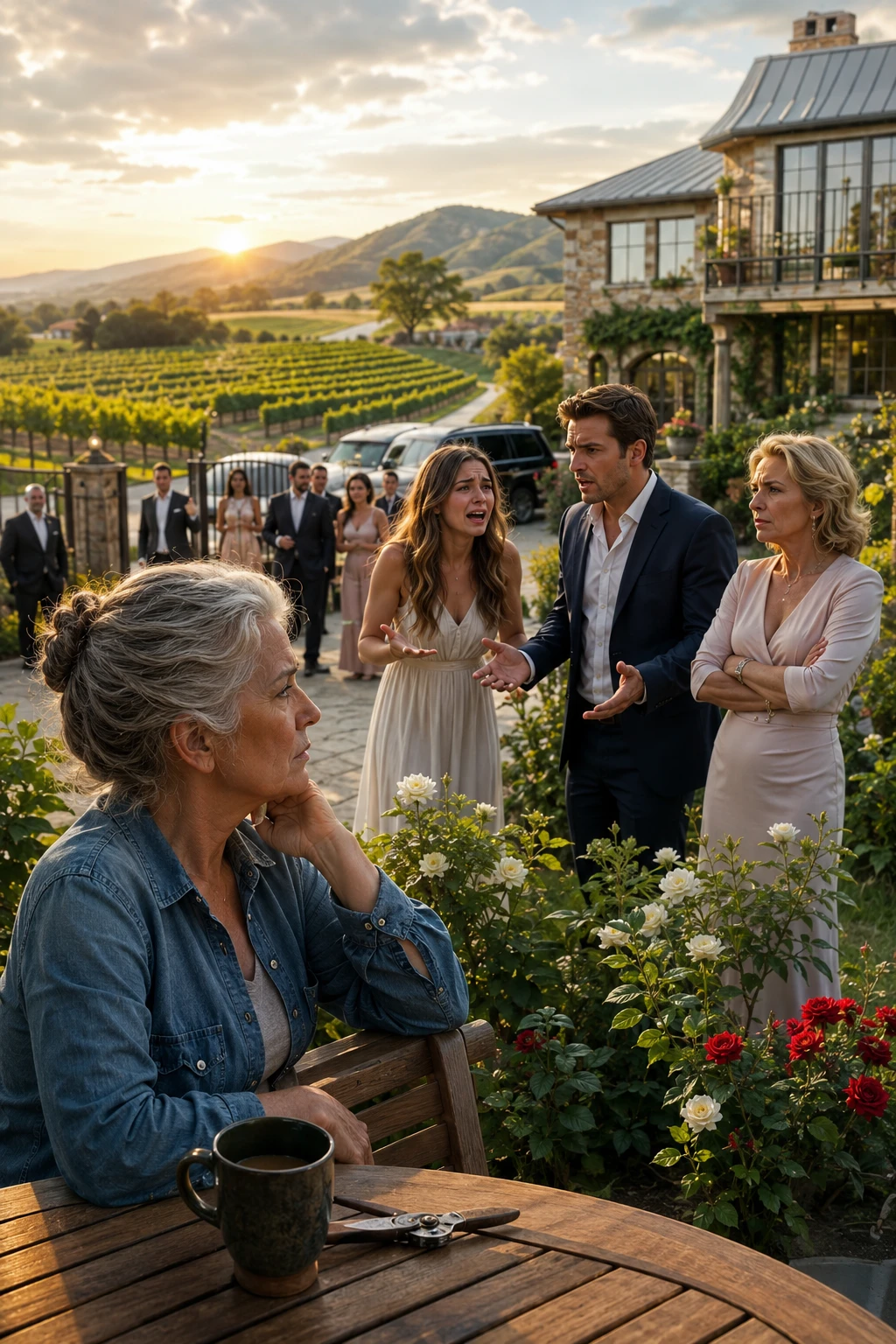
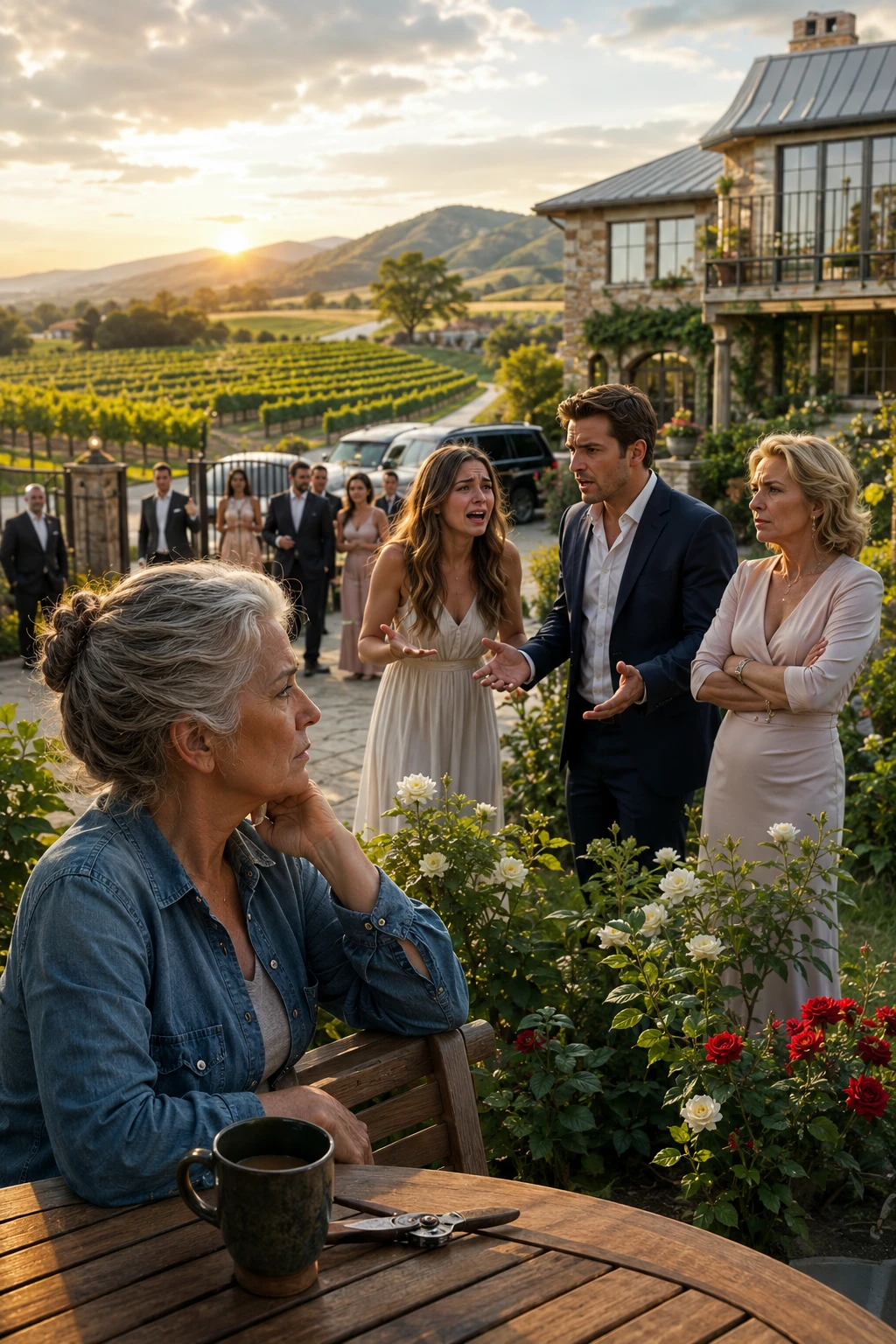
I did not remind her that the ceremony was being held beside my rose garden, on my eighty-acre vineyard, under a reception tent I had paid for.
I simply sat at my kitchen table, looked through the window at the rows of vines my late husband and I had planted with our own hands, and listened as Samantha said the words that finally broke something inside me.
“Greg doesn’t want you there.”
For a few seconds, I thought I had misunderstood.
“Excuse me?”
Samantha sighed.
Not nervously.
Impatiently.
“Mom, please don’t make this harder than it needs to be.”
I stared at the coffee cooling between my hands.
“Your wedding is Saturday.”
“I know.”
“At my home.”
“Yes.”
“And you’re telling me I can’t attend?”
Another pause.
Then came the sentence I would remember for the rest of my life.
“You don’t really fit with Greg’s family.”
I glanced down at my faded denim shirt.
There was dirt under my fingernails from pruning roses that morning. My boots were scuffed. My silver hair was twisted into the same loose bun I had worn for years.
I suppose I did not look like Greg’s mother, Cynthia, who wore cream-colored suits to brunch and once spent twenty minutes explaining why handmade Italian shoes were “an investment.”
But the vineyard outside my window had survived drought, wildfire smoke, recession, frost, and my husband’s four-year battle with cancer.
I had survived all of it too.
“What exactly about me makes them uncomfortable?” I asked.
Samantha lowered her voice.
“Greg says you can be… rustic.”
Rustic.
I nearly laughed.
Instead, I waited.
“He thinks some of his father’s business partners might not understand your lifestyle.”
“My lifestyle?”
“You know what I mean.”
“No, Samantha. I don’t.”
She exhaled sharply.
Then she stopped pretending.
“Greg doesn’t want you there.”
That was it.
No apology.
No shame.
Just a decision.
I looked through the glass doors toward the stone residence near the creek.
One week earlier, I had handed Samantha and Greg the key to that house.
An eight-million-dollar vineyard residence.
Polished oak floors.
Massive kitchen.
Five bedrooms.
Floor-to-ceiling windows.
A wide stone terrace facing the water.
Samantha had cried when she opened the velvet box.
“Oh my God, Mom.”
She had hugged me so tightly I could barely breathe.
Greg had merely turned the key between his fingers.
Then he looked around the property and said, “We’ll definitely need professional landscapers.”
I had blinked.
“For what?”
He pointed toward the native grasses near the creek.
“We can’t have the place looking like an actual farm when people visit.”
Samantha laughed.
That should have been the moment I understood.
But mothers are talented at explaining away the cruelty of their children.
I told myself Samantha was stressed.
I told myself Greg was insecure.
I told myself marriage would soften him.
Then he criticized my truck.
My work shirts.
My farmhouse cabinets.
My old leather gardening gloves.
Once, during dinner, he asked Samantha why I still lived “like hired help” when I owned valuable land.
She laughed then too.
And I swallowed it.
Because she was my only child.
Because her father had died eight years earlier.
Because when you have already buried one person you love, you become dangerously willing to tolerate almost anything from the ones who remain.
But that morning, something changed.
The excuses were gone.
I finally saw the truth clearly.
They wanted everything I had built.
The vineyard.
The stone house.
The wedding.
The wine.
The photographs.
The prestige.
They simply did not want me in the frame.
So I raised my coffee cup.
“I understand.”
Samantha sounded relieved.
“Thank you, Mom. I knew you’d—”
I ended the call.
Then I walked into my study.
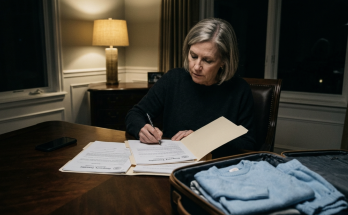
The wedding contracts were stacked neatly beside my computer.
Caterer.
Florist.
Band.
Tent rental.
Lighting.
Tables.
Chairs.
Decorations.
Security.
Valet service.
The final payments were scheduled to leave my account at noon.
I stared at the total.
$286,400.
My husband, Daniel, would have stared at that number for ten minutes before saying, “Andrea, that’s more than our first winery building cost.”
The thought made my throat tighten.
Then I picked up the phone.
Ben, my vineyard manager, answered immediately.
“Morning, Andrea.”
“Change the private gate code.”
Silence.
“Today?”
“Now.”
“All right.”
“And have every lock on the stone house replaced.”
This pause lasted longer.
“Did something happen?”
“Yes.”
“Want to tell me?”
“No.”
“Then I won’t ask.”
I smiled faintly.
Ben had worked beside Daniel and me for seventeen years.
He understood loyalty without requiring explanation.
“One more thing,” I said. “No wedding vendors enter the property.”
His voice hardened.
“Understood.”
Then I called every vendor myself.
I did not punish them.
They had done nothing wrong.
I paid cancellation fees.
I paid for completed work.
I apologized for the inconvenience.
But I made one thing clear.
The wedding would no longer take place on my estate.
After the final call, I went outside and trimmed roses.
My hands trembled for the first twenty minutes.
Then they stopped.
Two hours later, I returned to the kitchen.
My phone screen glowed.
59 MISSED CALLS.
Samantha.
Greg.
Cynthia.
Greg’s father, Richard.
Two cousins who had not called me in three years.
An aunt who once forgot my birthday four years in a row.
Then the messages began appearing.
MOM WHAT DID YOU DO???
THE FLORIST SAYS THEY’RE NOT COMING.
THE GATE CODE DOESN’T WORK.
CALL ME NOW.
GREG IS FURIOUS.
Then Greg’s message arrived.
FIX THIS.
No please.
No apology.
Just an order.
My phone rang again.
Cynthia.
I answered.
“Andrea!” she snapped. “You need to undo this childish stunt immediately.”
I walked toward the kitchen window.
Several cars had begun gathering outside the main gate.
“No.”
There was a stunned silence.
“What did you say?”
“I said no.”
“You are sabotaging your daughter’s wedding.”
“I am no longer financing an event I am forbidden from attending.”
“This isn’t about you.”
I almost smiled.
“It’s taking place at my home.”
“That property was intended for Samantha and Greg.”
“The residence was.”
“Exactly. And Greg says you changed the locks.”
“Yes.”
“You gave them that house.”
“No.”
Her voice sharpened.
“Excuse me?”
“I gave them a key.”
Silence.
“Not the deed.”
The line went dead quiet.
Then I heard pounding at the farmhouse door.
“Mom!”
Samantha.
Another blow.
“Open this door!”
Greg shouted behind her.
“You can’t lock us out of our own property!”
I walked slowly through the hallway and opened the door.
Samantha stood on the porch in white linen pants and a silk blouse, her face flushed with fury.
Greg was beside her.
Cynthia stood several feet back.
Richard remained near a black Mercedes, looking embarrassed.
Greg stepped forward.
“Give me the new key.”
“No.”
His mouth fell open.
Samantha pushed past him.
“Mom, stop this.”
“I’m standing in my own doorway, Samantha. I haven’t moved.”
“You canceled everything!”
“Yes.”
“You humiliated us!”
That hurt more than I expected.
Not because she was angry.
Because humiliation was what she feared.
Not losing me.
Not hurting me.
Embarrassment.
I looked at her carefully.
“Do you remember what you said this morning?”
Her jaw tightened.
“Mom—”
“You said I wouldn’t belong among Greg’s family.”
“That isn’t what I meant.”
“It is exactly what you meant.”
Cynthia stepped forward.
“Andrea, emotions are high. Let’s be practical.”
“Good idea.”
She blinked.
“You should restore access to the residence and reinstate the vendors.”
“No.”
Greg laughed bitterly.
“This is insane. Samantha is your daughter.”
“Yes.”
“Then act like her mother.”
That sentence landed strangely.
I turned toward him.
“A mother gives. A mother forgives. A mother sacrifices. Is that what you mean?”
He didn’t answer.
“And what exactly is a daughter supposed to do?”
Samantha looked away.
Before anyone could speak, the sound of tires came from the service road.
A black sedan approached the farmhouse.
Greg frowned.
“Who is that?”
The car stopped.
A man in his late sixties stepped out carrying a leather briefcase.
Samantha went pale.
I noticed immediately.
Greg didn’t.
“Mrs. Bennett,” the man said.
“Mr. Harris.”
Greg looked between us.
“Who is he?”
“My attorney.”
That finally changed the atmosphere.
Cynthia’s posture stiffened.
Samantha whispered, “Mom, why is your lawyer here?”
Mr. Harris opened his briefcase.
“Because there are documents requiring clarification.”
Greg crossed his arms.
“What documents?”
Mr. Harris looked at me.
I nodded.
He removed a folder.
“The stone residence remains legally owned by Andrea Bennett.”
“We know that already,” Samantha muttered.
“No,” Mr. Harris said. “I don’t believe you do.”
He opened the folder.
“The residence was intended to be transferred into a marital trust after the wedding.”
Greg’s expression shifted.
“A trust?”
“Yes.”
“Then transfer it.”
“No.”
Mr. Harris’s voice remained perfectly calm.
“Mrs. Bennett revoked the proposed transfer this afternoon.”
Samantha looked at me as though I had slapped her.
“You’re taking away my house?”
“I never gave you the house.”
“You told me it was ours!”
“I said I wanted you to have a home.”
“That’s the same thing!”
“No, Samantha.”
My voice broke slightly.
“That used to be the same thing.”
Greg stepped toward Mr. Harris.
“Fine. So she keeps the house. We’ll buy another one.”
Cynthia immediately glanced at him.
That was the first crack.
Tiny.
But I saw it.
Richard spoke for the first time.
“With what money?”
Greg froze.
“Dad.”
“No. I think it’s time.”
Cynthia hissed, “Richard.”
I turned toward them.
“What is he talking about?”
Greg’s face lost color.
Mr. Harris looked at me.
“Andrea, this is actually the second reason I came.”
Now I was confused.
He handed me another folder.
Inside were bank statements.
Corporate filings.
Loan documents.
I scanned the first page.
Then the second.
My stomach tightened.
“What is this?”
Mr. Harris took a breath.
“Greg has been representing himself as a partner in his father’s investment company.”
“I am a partner,” Greg snapped.
Richard shook his head.
“No, you’re not.”
Samantha stared at him.
“What?”
“You never were.”
Greg turned furious.
“Dad, shut up.”
Richard ignored him.
“Greg has no equity in my company. No board seat. No ownership.”
Samantha’s face drained.
“But he said—”
“I know what he said.”
Cynthia closed her eyes.
Richard continued.
“He has been living on loans for years.”
The vineyard seemed suddenly too quiet.
I looked at Samantha.
She looked at Greg.
“What loans?”
He said nothing.
Mr. Harris pointed to the documents.
“Personal loans. Credit lines. Short-term financing. Some secured against anticipated assets.”
I stopped breathing for a second.
“Anticipated assets?”
Mr. Harris met my eyes.
“Your daughter’s future property.”
Samantha whispered, “What?”
Greg exploded.
“This is private!”
Richard shouted back.
“No, Greg. It stopped being private when you started promising lenders an estate you didn’t own.”
Everything clicked.
The landscaping.
The wedding.
The obsession with the house.
The insistence that I stay invisible.
Not embarrassment.
Strategy.
Mr. Harris pulled out another document.
“This is a draft loan guarantee sent to a private lender three weeks ago.”
He handed it to Samantha.
She read it.
Then staggered backward.
At the bottom of the page was her name.
Samantha Bennett-Hale.
Beside it was a signature.
Her signature.
Except I knew my daughter’s handwriting.
“That isn’t yours,” I said.
She stared at the page.
“No.”
Greg stepped forward.
“Samantha, I can explain.”
She looked up slowly.
“You forged my signature?”
“It wasn’t finalized.”
“You forged my signature?”
“It was temporary!”
She struck him across the face.
Cynthia gasped.
Greg stared at Samantha.
Then something ugly appeared in his eyes.
“You think any of this would have worked without me?”
Samantha stepped back.
“What does that mean?”
He laughed.
“You think your mother was going to hand over this place forever because you cried over a key?”
I felt cold.
“What did you do?”
Greg realized too late that he had said too much.
Mr. Harris’s expression changed.
“Greg?”
He said nothing.
Then Ben walked up from the vineyard road.
And he was carrying something.
A small black device.
My heart began pounding.
“What is that?”
Ben looked at Samantha.
Then at Greg.
“Security recorder from the stone house.”
Greg turned white.
Ben continued.
“Installed two months ago after equipment went missing.”
I stared at him.
“You never told me.”
“You had enough going on.”
He handed the device to Mr. Harris.
“There are audio files.”
Greg moved toward him.
“Give me that.”
Ben didn’t budge.
Mr. Harris raised a hand.
“Do not touch him.”
Samantha whispered, “What audio?”
Ben looked at me with regret.
“I heard some of it this afternoon.”
“What?”
He swallowed.
“Greg and Samantha.”
My daughter stopped breathing.
I looked at her.
“Samantha?”
She began shaking her head.
“No.”
Greg suddenly turned toward her.
“Don’t.”
That one word told me everything.
My knees weakened.
Mr. Harris connected the device to his tablet.
The recording began.
At first, only muffled voices.
Then Samantha’s.
Clear.
Familiar.
“Once the house is transferred, Mom won’t matter.”
My vision blurred.
Greg replied.
“What about the vineyard?”
Samantha laughed softly.
“She’ll leave it to me eventually.”
“And if she doesn’t?”
A pause.
Then Samantha said something that hollowed out my chest.
“She will. She doesn’t have anyone else.”
Nobody moved.
The recording continued.
Greg’s voice:
“You need her out of the wedding photos. Cynthia’s right. Investors need to think the estate is basically ours already.”
Then Samantha:
“After the wedding, I’ll convince her the farmhouse is too much for her. Maybe we move her into assisted living.”
Greg laughed.
“At sixty-five?”
“She’s lonely. We can make it sound responsible.”
The recording ended.
Silence.
I could hear the wind moving through the vines.
Somewhere near the creek, a bird called once.
Samantha was crying now.
“Mom…”
I stepped back.
She reached for me.
I raised my hand.
“No.”
“I didn’t mean—”
“You meant every word.”
“I was angry.”
“You were planning my disappearance.”
“No!”
“You were planning to take my home.”
Her face collapsed.
“Mom, please.”
And suddenly I remembered her at six years old, asleep against Daniel’s chest.
At twelve, racing barefoot between grape rows.
At seventeen, sobbing when her first boyfriend broke her heart.
At twenty-nine, sitting beside her father’s hospital bed, promising him she would always look after me.
That memory hurt the most.
Because Daniel had believed her.
I almost hated him for not being there to see what she had become.
Then Mr. Harris touched my shoulder.
“Andrea.”
I turned.
“There’s something else.”
I almost laughed.
“How could there possibly be something else?”
His expression softened.
“This part isn’t about Greg.”
He opened the final section of the folder.
“Daniel asked me to keep something private until a specific condition occurred.”
I stared at him.
“My husband?”
“Yes.”
“What condition?”
“If Samantha ever attempted to gain control of the vineyard before your death.”
Samantha stopped crying.
“What?”
Mr. Harris handed me an envelope.
Daniel’s handwriting was on the front.
For Andrea, if Samantha forgets who she is.
My hands began to shake.
I opened it.
Inside was a letter.
Andrea,
If you are reading this, then I was right to worry and wrong to hope.
Samantha loves us, but she has always loved being admired more than she loves being understood.
I never told you because I hoped she would grow out of it.
There is one thing you must know.
The vineyard is not entirely yours.
I looked up sharply.
Mr. Harris nodded.
“Keep reading.”
I did.
Years ago, when the winery nearly failed, Ben quietly invested his entire inheritance to keep us alive.
He refused ownership because he said we were family.
I refused to accept that.
So I placed forty-nine percent of the vineyard into an irrevocable trust in Ben’s name, effective upon my death or upon any attempted fraudulent transfer involving Samantha.
My mouth fell open.
I turned toward Ben.
He looked almost embarrassed.
“Daniel made me promise not to tell you.”
Tears filled my eyes.
“You saved us?”
He shook his head.
“We saved each other.”
Samantha stared between us.
“So… I don’t inherit the vineyard?”
Mr. Harris closed the folder.
“No.”
Her voice cracked.
“What do I inherit?”
I looked at her.
Until that moment, I had not known what I would do.
Then suddenly I did.
“You inherit what your father intended you to inherit.”
Hope flickered in her face.
I continued.
“His watch.”
She stared at me.
“And the family photo albums.”
Greg cursed under his breath.
Cynthia grabbed his arm.
Richard turned away in disgust.
But Samantha remained frozen.
“Mom…”
I walked past her.
At the edge of the porch, I stopped.
“There’s one more thing.”
She looked up.
I turned toward Ben.
“Would you still like to build that agricultural scholarship center Daniel used to talk about?”
Ben’s eyes widened.
“Andrea…”
“We have eighty acres.”
He smiled through tears.
“Yes.”
I looked at Mr. Harris.
“Tomorrow, we begin the paperwork.”
Samantha whispered, “For what?”
I faced my daughter one last time.
“To place my remaining fifty-one percent into a charitable trust.”
Her face went utterly blank.
“The vineyard will fund scholarships for children of farmworkers, vineyard crews, and rural families.”
Greg stared at me as though I had become insane.
“You’re giving away millions?”
“No.”
I looked across the vines glowing gold beneath the late-afternoon sun.
“I’m giving it to people who understand what work is worth.”
Samantha sank onto the porch steps.
For the first time that day, I felt no anger.
Only grief.
Not because I had lost a daughter.
Because I finally understood that I had spent years loving the memory of the girl she used to be.
Ben came to stand beside me.
The vineyard stretched beyond us, alive and green.
Daniel’s roses moved gently in the wind.
And then Mr. Harris cleared his throat.
“There is one final technical matter.”
Greg groaned.
“What now?”
Mr. Harris looked directly at him.
“The forged guarantee was already submitted electronically.”
Greg’s face drained.
Richard closed his eyes.
Cynthia whispered, “Oh God.”
Mr. Harris continued.
“The lender flagged the signature discrepancy yesterday.”
A dark SUV appeared at the gate.
Then another.
Greg backed away.
“Who did you call?”
“I didn’t call anyone,” I said.
Two investigators stepped out.
Mr. Harris closed his briefcase.
“The bank did.”
Greg ran.
He made it twelve feet.
Ben caught him before he reached the rose garden.
By sunset, the man who had tried to ban me from my own property was being led away across it in handcuffs.
Samantha sat on the porch, crying silently.
Cynthia and Richard left without speaking.
The wedding never happened.
Six months later, Greg pleaded guilty to fraud and forgery related to multiple loans.
Richard quietly paid several victims back, then removed his son from the family business permanently.
Samantha moved into a small apartment in Sacramento.
For almost a year, we did not speak.
Then, one cold February morning, I found an envelope beneath my front door.
No demands.
No excuses.
Only a handwritten letter.
Mom,
I don’t deserve forgiveness.
I don’t deserve the house.
I don’t deserve the vineyard.
I don’t even deserve an answer.
But for the first time in my life, I think I understand what Dad meant when he said wealth is what remains after everything money can buy is gone.
I lost everything I was trying to impress people with.
And I lost the only person who loved me before I had anything worth taking.
I’m sorry.
Samantha.
I read it three times.
Then I folded it carefully.
I did not call her that day.
Or the next.
Forgiveness is not the same as forgetting.
And love is not the same as surrender.
But three months later, when the Daniel Bennett Agricultural Scholarship Center opened, I saw someone standing quietly near the back of the crowd.
Samantha.
No designer dress.
No expensive jewelry.
No Greg.
Just jeans, work boots, and tears.
She did not approach me.
She simply stayed until the ceremony ended.
Then she walked toward the parking area.
I watched her go.
Ben stood beside me.
“You going to stop her?”
I thought about it.
Then I called out.
“Samantha.”
She froze.
Slowly, she turned.
I held out a pair of pruning shears.
Her face crumpled.
“The roses need work,” I said.
She walked back toward me, crying openly now.
We did not hug.
Not yet.
Instead, we knelt together beside her father’s roses.
And for the first time in years, my daughter got dirt beneath her fingernails.
That was when I understood Daniel’s real gift.
It had never been the house.
It had never been the vineyard.
It had never been the money.
It was the chance to discover who we became when all of those things were taken away.
And sometimes, the only way to save a family is to stop paying for the illusion that it is already whole.