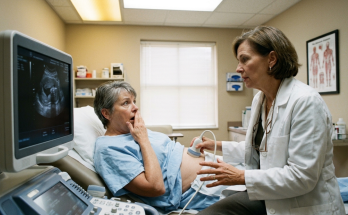
Dr. Evans must have noticed something change in my face because she stopped speaking and reached for the box of tissues beside the monitor. I did not take one. My hands had locked around the edge of the examination table, fingers pressing into the thin paper beneath me. The ultrasound screen showed shapes I could not interpret, shades of gray that meant nothing to me. Yet the doctor’s expression did. She had moved beyond routine concern.
“What exactly are you seeing?” I asked.
She turned the monitor slightly. “Changes in the uterine lining. Areas of scarring. Nothing here tells me the full story by itself, but it suggests prior instrumentation.”
“Instrumentation.”
“A procedure involving the uterus.”
“I’ve never had one.”
Dr. Evans nodded, not as though she believed or disbelieved me but as though she was placing my statement beside the evidence and noticing that the pieces refused to fit.
“Let’s go through your history carefully.”
We did.
Pregnancy with Jake. Normal delivery.
No miscarriages.
No abortions.
No gynecological surgery.
No known uterine infection severe enough to explain what she saw.
I answered every question until we reached 2008.
“Any hospitalization that year?”
The room seemed to contract.
“Yes.”
“For what?”
“An overdose.”
She waited.
“It wasn’t…” I struggled to explain something I had spent eighteen years refusing to examine. “I wasn’t trying to die. Not exactly. I had sleeping medication. I was distraught. I took too much.”
“Were you unconscious?”
“Yes.”
“How long were you admitted?”
“Two nights, I think.”
“You think?”
“I was heavily medicated.”
“Was surgery discussed?”
“No.”
“Did you have abdominal pain afterward?”
The question entered me like a needle.
“Yes.”
“How significant?”
I saw Michael again beside the bed. Younger. Pale. Holding my hand.
“Enough that walking hurt.”
“And what explanation were you given?”
“My husband said it was because they pumped my stomach.”
Dr. Evans stopped writing.
The silence that followed was small but unmistakable.
“What?” I asked.
“Who told you that?”
“Michael.”
“Was that explanation also documented by the hospital?”
“I don’t know.”
“Did you receive discharge papers?”
“Probably.”
“Do you still have them?”
“I wouldn’t know where.”
She set her pen down.
“Susan, I want you to request the entire record from that admission.”
My heart began to pound. “Why?”
“Because your recollection and what I’m seeing today do not line up neatly.”
“What are you suggesting?”
“I’m not suggesting anything yet.”
“You think someone operated on me.”
“I think there are findings that deserve a documented explanation.”
“Without telling me?”
Her expression softened.
“I don’t know what happened.”
I slid off the examination table too quickly and felt dizzy. Dr. Evans steadied my elbow.
For eighteen years I had thought of that hospitalization as the lowest point of my life. Shame had blurred it. Perhaps that was why I had never questioned the missing hours, the soreness, or the strange nurse.
Now memory began returning in fragments.
A consent clipboard.
No—perhaps not.
Someone speaking near the curtain.
Michael arguing quietly.
A phrase I could not quite catch.
Patient’s husband.
Something about blood.
Something about pregnancy.
My breath stopped.
“Pregnancy,” I said.
Dr. Evans looked at me. “What about it?”
“I don’t know.”
“Did someone tell you that you were pregnant?”
“No.”
“Did you think you might have been?”
I stared at the floor.
My period had been late that month.
I had blamed stress.
There had been nausea too, but my entire life had been chaos. I remembered standing in the staff restroom one morning, splashing water over my face after suddenly becoming sick. The man I had been seeing had joked that perhaps I was pregnant.
I had snapped at him.
Neither of us had laughed afterward.
Dr. Evans watched my expression change.
“Susan?”
“I was late.”
“How late?”
“I don’t remember.”
“Try.”
“Several weeks.”
“Were you sexually active with your husband then?”
Heat rose into my face despite my age.
“No.”
“With someone else?”
I nodded once.
Dr. Evans did not react.
Doctors, I thought. They must develop a talent for receiving other people’s disasters without letting judgment show.
“Was contraception used?”
“Not every time.”
She sat back.
That simple admission rearranged eighteen years.
“What if I was pregnant?”
“We need records before reaching conclusions.”
“But the scarring—”
“Could have several causes.”
“Could it come from ending a pregnancy?”
“Yes.”
The word settled between us.
I felt suddenly sick.
“Would I know?”
“Ordinarily, yes.”
“Ordinarily?”
“If a patient was unconscious, heavily sedated, medically unstable, or unable to provide consent, circumstances can become complicated. But I do not want you building a theory before we have documentation.”
My voice became thin.
“My husband was there.”
“I understand.”
“He handled everything.”
Dr. Evans looked directly at me.
“Then the records matter even more.”
I dressed with shaking hands. The zipper on my trousers caught twice. When I finally left the examination room, the waiting area seemed offensively normal. A pregnant woman sat near the window scrolling through her phone. A toddler pushed a wooden bead around a wire maze. Somewhere behind the reception desk, someone laughed.
I stood near the exit unable to move.
Pregnant.
The possibility should have felt absurd after so many years.
Instead it felt horribly familiar.
On the drive home I remembered Michael’s face the morning after I woke in the hospital.
I had asked him why he looked as though he had been crying.
He said he was tired.
I asked whether Jake knew about the overdose.
He said no.
Then I asked something else.
“Did anything happen while I was unconscious?”
He had squeezed my hand.
“No.”
At the time that answer had comforted me.
Now I heard it differently.
When I reached our street, Michael’s truck was already in the driveway. He had been retired for two years and spent most afternoons repairing things that were not broken. That day he sat on the back porch, a small screwdriver beside a dismantled radio.
He looked up before I reached the steps.
“You’re late.”
“I told you it might take a while.”
“What did she say?”
I studied him.
His hair had gone white. Deep lines cut around his mouth. He looked nothing like the forty-something man from the hospital except for his eyes.
“She found scarring.”
His face changed.
It lasted perhaps one second.
Anyone else might have missed it.
I had spent eighteen silent years learning every tiny movement of his face.
“What kind?” he asked.
“In my uterus.”
He looked down at the radio.
“The doctor thinks I had a procedure.”
Michael picked up the screwdriver.
“Doctors can be wrong.”
“She asked whether I’d ever had a D&C.”
The screwdriver slipped from his fingers and struck the porch boards.
Neither of us moved.
I heard a lawn mower start two houses away.
“Michael.”
He bent to retrieve the screwdriver.
“Michael, look at me.”
He did.
I saw fear.
Not guilt yet.
Not anger.
Fear.
“Did something happen to me in 2008?”
His mouth tightened.
“You were very sick.”
“That isn’t what I asked.”
“I know.”
“Did I have surgery?”
He stood abruptly and carried the radio inside.
I followed.
“Answer me.”
“I don’t know what your doctor saw.”
“She saw evidence.”
“Susan, it was eighteen years ago.”
“Yes. I know exactly how long ago it was.”
He opened the refrigerator although I knew he was not hungry.
“There’s leftover soup.”
I stared at him.
“Are you actually trying to change the subject to soup?”
He closed the door.
“What do you want me to say?”
“The truth.”
The word made him recoil more than shouting would have.
I stepped closer.
“Was I pregnant?”
Michael’s face emptied.
There it was.
Not an answer.
Something worse.
Recognition.
My heart began pounding so hard I felt it against my ribs.
“You knew.”
He looked toward the kitchen window.
“Oh my God.”
“Susan—”
“I was pregnant.”
“I didn’t say that.”
“You didn’t have to.”
He rubbed his wedding ring.
“Please don’t do this tonight.”
“Do what? Ask what happened to my own body?”
“You don’t understand.”
“Then explain it.”
His jaw tightened.
“I can’t.”
I almost laughed.
Eighteen years of obedience cracked inside me.
“You can’t?”
“There are things you don’t remember.”
“Then tell me.”
“It won’t help.”
“You don’t get to decide that.”
Michael looked suddenly exhausted. “Some things were buried for a reason.”
“Buried by whom?”
He said nothing.
“By you?”
Nothing.
“By the doctors?”
Still nothing.
I moved closer until the kitchen island was the only thing between us.
“Did you authorize something while I was unconscious?”
His eyes lifted sharply.
That reaction told me I had asked the right question.
I heard myself whisper, “What did you sign?”
Michael went pale.
For a long moment he simply stared.
Then, very quietly, he said, “Why now?”
The words chilled me.
Not What are you talking about?
Not You’re imagining things.
Why now?
I gripped the edge of the counter.
“So there is something.”
He closed his eyes.
“Michael.”
“I thought this was over.”
“What was over?”
No response.
“Tell me.”
“I can’t.”
I stared at the man I had spent thirty years calling my husband and understood with terrifying clarity that the silence between us had never been empty.
He had filled it with something.
Something he had protected for eighteen years.
That night we went to our separate rooms, but I did not sleep. At 2:13 a.m., I rose and walked downstairs.
Michael’s study stood at the end of the hallway.
He had begun locking it sometime after my hospitalization.
Before 2008 we had used the room together. Tax returns, insurance papers, Jake’s school records—everything important lived in a gray metal cabinet beside the desk.
Afterward Michael took control of the paperwork.
I had mistaken that for another consequence of our broken marriage.
Standing before the door in the darkness, I wondered how many ordinary changes I had accepted because guilt had taught me not to ask questions.
I wrapped my hand around the brass knob.
To my surprise, it turned.
The study was unlocked.
Inside, moonlight cut through the blinds. Dust silvered the edge of the desk.
I switched on the lamp.
The filing cabinet stood exactly where I remembered.
For a few seconds I remained near the doorway, listening.
The house was silent.
Then I crossed the room, knelt beside the lowest drawer, and pulled it open.
Tax records.
Insurance.
Old property documents.
A folder for Jake.
Then, behind a stack of bank statements, I found a worn cardboard file.
Across the tab, in Michael’s handwriting, were three words that made my stomach drop.
2008 — MEDICAL — SUSAN.
Click here to continue reading: PART 3: The File Michael Hid in His Study Contained Five Missing Days, a Stranger’s Signature, and Evidence I Had Never Seen
For Eighteen Years We Shared a House, a Son, and a Marriage Neither of Us Was Willing to Name
Part 2 of 18