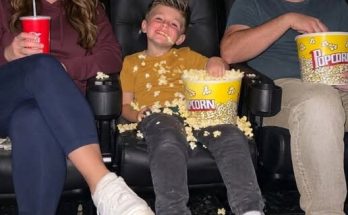
The courthouse waiting area smelled like old coffee and floor cleaner.
We had not planned to be there.
Rachel had not asked us to come.
Claire had.
The night before the hearing, she called Owen.
“Ethan keeps asking whether you'll be there.”
Owen looked at me.
I shook my head slightly.
Not no.
Think.
Claire continued.
“You don't have to testify. Nobody expects that.”
“Then why would we come?”
“He's scared.”
Owen closed his eyes.
“Claire.”
“I know.”
“You know what?”
“That you're not his father.”
The sentence mattered.
Owen sat at the kitchen table.
“What does Rachel want?”
“She said it's okay if you come.”
“That's not the same as wanting us there.”
“No.”
“Ask her.”
Claire sighed.
“Owen.”
“Ask her.”
Ten minutes later, Rachel called herself.
“I'd like you there.”
“Why?”
“Because you saw us before I stopped pretending.”
Owen looked toward me.
Rachel continued.
“You saw what Mark was like when he still thought people were watching.”
That was enough.
We went.
Ethan stayed with Claire's neighbor during the hearing.
That was a relief.
Children should not have to sit outside rooms where adults argue about whether they are frightened enough to deserve protection.
Rachel wore a dark sweater and no makeup.
Her hands shook constantly.
Mark arrived with an attorney.
He looked completely different from the man at the theater.
Calm.
Clean-shaven.
Gray suit.
He greeted courthouse staff politely.
Held doors for strangers.
Spoke softly to his lawyer.
Owen watched him.
“I hate this.”
“What?”
“He looks reasonable.”
“That doesn't mean he isn't.”
“I know.”
Rachel saw us and came over.
“Thank you.”
Her eyes went briefly to Mark.
He noticed.
His gaze moved toward Owen.
Recognition.
Then a small smile.
Not friendly.
Owen felt it.
His posture changed.
Mark approached before his attorney stopped him.
“Spider-Man.”
Owen did not answer.
Mark smiled.
“You've really inserted yourself into this, huh?”
Rachel stepped backward.
I felt Owen's hand move near mine.
Not reaching to restrain himself.
Reaching for me.
His lawyer touched Mark's elbow.
“Don't.”
Mark ignored him.
“This guy doesn't even know us.”
Owen met his eyes.
“No.”
“Yet somehow he's here.”
Rachel's breathing became shallow.
Owen noticed.
He looked away from Mark and toward her.
“You okay?”
Mark laughed softly.
“There. That's what he does.”
Owen said nothing.
“Acts like some hero.”
The lawyer repeated, “Mark.”
Owen finally looked at him.
“You should listen to your attorney.”
Mark's smile disappeared.
For half a second, the theater version returned.
Then the mask settled again.
He walked away.
Owen exhaled.
“You okay?” I asked.
“No.”
“Good answer.”
He almost smiled.
When the hearing began, we sat in the back.
Rachel testified first.
No dramatic speech.
No sweeping accusation.
Just details.
Mark controlled access to bank accounts.
He demanded passwords.
He criticized the people she spoke with.
He checked her location.
He punched walls during arguments.
He stood in doorways when she tried to leave rooms.
He called Ethan impossible.
He told Rachel she could not manage their son without him.
He apologized afterward.
Often sincerely.
Then it happened again.
The judge asked whether Mark had ever struck her.
“No.”
Ethan?
“No.”
Mark's attorney emphasized that.
No physical assault.
No direct threat to kill or injure.
No weapon.
Rachel listened.
Then the attorney asked, “So your primary complaint is that your husband gets angry?”
Rachel's face changed.
She looked toward Owen.
He did nothing.
No nod.
No signal.
Her choice.
She turned back.
“My complaint is that we built our entire lives around preventing his anger.”
The room became quiet.
She continued.
“If Ethan spilled something, I checked Mark's face before I checked whether Ethan was okay.”
Owen lowered his eyes.
“If I got home late, I rehearsed an explanation before opening the door.”
Mark stared straight ahead.
“If somebody called me, I decided whether answering would be worth the questions later.”
Rachel's voice trembled.
“I stopped asking what I wanted. I started asking what wouldn't upset him.”
The judge listened.
No dramatic reaction.
Just notes.
Rachel looked toward Mark.
“And I taught my son to do the same.”
Owen's jaw tightened.
She continued.
“The night at the theater, Ethan acted horribly.”
A small smile crossed her face despite everything.
“He really did.”
Even the judge's expression softened.
Rachel looked down.
“But instead of parenting him, I was watching my husband.”
Her voice broke.
“I was deciding whether correcting Ethan would annoy Mark.”
She wiped her face.
“That isn't safety.”
Mark testified next.
He denied controlling Rachel.
He admitted punching the bedroom door.
He called it an isolated loss of temper.
He described himself as stressed.
Overworked.
Misunderstood.
He said Rachel's sister had poisoned her against him.
He said the strangers from the theater had exaggerated.
Owen listened without moving.
Then Mark said something that made him sit straighter.
“My son knows I love him.”
The attorney asked, “Do you believe Ethan is afraid of you?”
“No.”
“Why not?”
“Because I'm his father.”
Owen closed his eyes.
As though the title itself guaranteed safety.
The same logic Frank once lived by.
Parents love.
Therefore children are safe.
Even when they are afraid.
The hearing lasted less than two hours.
It felt longer.
The judge extended the protective order.
Not indefinitely.
For six months.
Contact regarding Ethan would have to follow specified channels.
School pickup restrictions remained.
Mark was ordered not to contact Rachel except through approved communication related to their child.
Rachel cried.
Claire held her.
Mark stared at the floor.
No explosion.
No shouted threat.
He left with his lawyer.
That calm departure unsettled Owen more than rage might have.
Outside, Rachel stood on the courthouse steps breathing cold air.
“I thought I'd feel better.”
Claire touched her shoulder.
“You will.”
Rachel shook her head.
“No. I mean I thought I'd feel certain.”
Owen looked at her.
“You can do something necessary and still hate it.”
She nodded.
“Do you?”
He knew what she meant.
Frank.
The neurologist.
Memory care.
“Yeah.”
Rachel wiped her eyes.
“How's your dad?”
Owen touched his cheek unconsciously, though the bruise had mostly faded.
“We're having him evaluated.”
“That bad?”
“He hit me.”
Rachel stared.
“Oh.”
“He was confused.”
“That doesn't make it not hurt.”
Owen smiled faintly.
“You've been listening.”
“So have you.”
That afternoon, Frank's neurologist met us at a memory clinic.
Tests took most of the day.
Simple questions became impossible.
Name.
Date.
Place.
Frank knew his name.
Missed the year by fourteen years.
Could not identify the clinic.
Remembered Mary was his wife.
Forgot she was dead.
Remembered Owen was his son once.
Called him his brother twice.
During one cognitive test, Frank became angry and swept pencils off a table.
Owen flinched.
The doctor noticed.
Afterward, she asked to speak with us privately.
Frank sat with a nurse down the hall.
The doctor folded her hands.
“His dementia has progressed.”
Owen stared at the desk.
“How much?”
“Enough that I think your current setup is becoming unsafe.”
“For him?”
“For everyone.”
Owen's jaw tightened.
“We can add help.”
“Yes.”
“More hours.”
“Yes.”
“Door monitoring.”
“Yes.”
“Medication.”
“Possibly.”
The doctor waited.
Owen knew what was coming.
She said, “But eventually, increased home support may still not be enough.”
He looked toward the hallway.
“I promised him.”
“What?”
“That I wouldn't put him somewhere.”
The doctor nodded.
“When did you promise?”
“After Mom died.”
“Before the diagnosis?”
“Yes.”
“Before he needed twenty-four-hour supervision?”
“Yes.”
“Then you made a promise without knowing what the future would require.”
Owen's face tightened.
“It still counts.”
“It counts as evidence that you care.”
She leaned forward slightly.
“It is not a contract requiring you to endanger yourself.”
He looked away.
“What happens if we keep him home?”
“That depends.”
“Worst case.”
The doctor did not soften it.
“He wanders. Falls. Injures himself. Injures you. Leaves the house at night. Starts a fire. Becomes frightened enough to react physically.”
Owen said nothing.
“Or none of those happen soon.”
“That sounds better.”
“It sounds uncertain.”
The doctor glanced toward the hallway.
“In memory care, he would have staff trained for this stage of disease.”
“He'd hate it.”
“Possibly.”
“He'd think we abandoned him.”
“Possibly.”
“He'd be scared.”
“Yes.”
Owen looked at her.
“You're not trying very hard to sell this.”
“I'm not selling anything.”
That answer made him listen.
“I'm telling you there may come a point when loving him means choosing the place best equipped to care for him, not the place that makes you feel least guilty.”
Owen flinched.
There it was.
Guilt.
The same force that had kept him quiet in grocery lines and workplaces and family rooms.
Different situation.
Same weakness.
That evening, we drove home in silence.
Frank fell asleep in the back seat.
At a red light, Owen looked into the rearview mirror.
“I don't know if I can do it.”
“You don't have to decide tonight.”
“What if waiting is just avoidance again?”
I thought carefully.
“Then set a date.”
He looked at me.
“For what?”
“A decision.”
“That's very corporate.”
“It works.”
“When?”
“After we tour the facility she recommended.”
His face tightened.
“You already decided we're touring?”
“No.”
“You just said—”
“I said we should get information before making a life-changing decision.”
He stared ahead.
The light turned green.
After several blocks, he said, “Fine.”
“Fine?”
“One tour.”
“Okay.”
“No commitment.”
“Okay.”
“No moving him without telling me.”
“Owen.”
“I know.”
He rubbed his face.
“Sorry.”
We reached home.
Frank woke as we parked.
He looked toward the house.
“Nice place.”
Owen turned.
“You live here.”
Frank smiled.
“Lucky me.”
Then he looked at Owen.
“You live here too?”
“Yes.”
“With me?”
“Yes.”
Frank nodded.
“Good.”
Owen looked away quickly.
That one word nearly undid every practical argument we had heard all day.
Good.
As though being together were enough.
As though love could solve staffing and wandering and fear.
Owen helped him inside.
That night, after Frank fell asleep, Owen opened Ethan's note.
Dad says nobody believes kids.
He stared at the erased sentence.
Then he said, “I believed Ethan when he said he was scared.”
“Yes.”
“I need to believe myself too.”
I took his hand.
The next morning, he called the memory-care facility.
Click here to continue reading: PART 16: The Memory-Care Tour Looked Nothing Like the Place Owen Feared, but Frank’s Reaction Forced a Decision Neither of Us Could Postpone
The Night We Finally Escaped the House, a Piece of Popcorn Landed Where Seven Months of Patience Had Already Worn Thin
Part 15 of 18