The amount on my credit card statement was $2,342. I stared at it for nearly a minute, certain I had overlooked something. The transaction had been made at a furniture retailer three days before Thanksgiving, and the delivery address belonged to my parents. I hadn't bought furniture for anyone. I hadn't agreed to cover another family expense. Yet there it was, recorded under my name, as casually as if I had walked into the store myself.
I clicked through the purchase details. A sectional sofa, a large television, curtains, a bunk bed, and delivery charges. The list explained something that had bothered me throughout Thanksgiving dinner. When I arrived at my parents' house, their living room had looked completely different. The old brown sofa, with its sunken cushions and familiar cigarette-sized burn near one armrest, was gone. In its place stood an enormous gray sectional. A television nearly filled the wall opposite it. Rachel had proudly announced that the children finally had proper beds when they stayed over. My father had watched me inspect the room with a peculiar smile. Now I understood why.
My name is Mark. I was thirty-two, lived alone in Denver, and worked in information technology. I earned a comfortable salary, although not the kind that allowed me to spend thousands without noticing. I drove a practical car, cooked most evenings, and maintained a savings account because I remembered how frightening it was to grow up in a household where every unexpected expense became a crisis. I had no wife or children. To my family, that last fact had gradually become more important than everything else about me.
My younger sister, Rachel, had three children and an exhausting talent for turning temporary difficulties into permanent obligations for other people. She loved her children, and I loved them too. They were funny, noisy, affectionate kids who climbed all over me whenever I visited. But Rachel changed jobs frequently, made expensive decisions when money was already tight, and regularly called my parents when the consequences arrived. My younger brother, Eric, was different. He believed financial security lay just beyond his next business proposal. Whether he wanted to sell customized phone cases or launch an online service, he always needed a modest investment to get started. Modest, somehow, meant several thousand dollars.
For years, I had been the person everyone contacted when an ordinary problem became inconvenient. My father's car needed repairs; I contributed. Rachel couldn't cover a school expense; I paid it. Eric needed equipment for another project; I loaned him money I rarely saw again. My mother sometimes called apologetically about groceries or electricity. At first, I helped because I wanted to. I remembered being nineteen and watching my parents count cash at the kitchen table, trying to decide which bill could wait. I never wanted them to feel that helpless again.
But assistance had become expectation so gradually that I couldn't identify the exact moment when things changed. My father stopped asking whether I could afford to help. He would simply tell me how much was needed. Rachel no longer explained why her expenses were short. She sent screenshots of balances with question marks beneath them. Eric treated repayment dates as suggestions. If I hesitated, somebody reminded me that I had fewer responsibilities than the others. Eventually, being responsible became less a compliment than a job I had never applied for.
On Thanksgiving, my father had mentioned my recent promotion before the turkey was even carved. He asked what the raise looked like, then laughed when I told him I preferred not to discuss exact figures. Rachel said I was becoming secretive. Eric wanted to know whether my employer would consider investing in his latest business. Mom changed the subject to the children, but not before she told me how fortunate I was to have so much freedom. The implication was familiar. Because nobody depended on me at home, everyone should be allowed to depend on me elsewhere.
I remembered studying the new television while Dad refilled his glass. Its screen displayed a football game in astonishing detail. Rachel's youngest was sprawled across the sectional, eating crackers between the cushions. The house smelled of turkey, furniture polish, and the cinnamon candle my mother lit every November. I had almost asked where the money had come from. But my father had been smiling, and Mom had seemed pleased for the first time in weeks. I decided that their purchases were their business. That was before I discovered they had made them mine.
The furniture store answered my call the following morning. I kept my voice neutral as I explained that a transaction had appeared on my account and I needed to confirm its circumstances. The employee checked the delivery record. The order had been placed using a card associated with my account, and my father had accepted delivery at the house. She couldn't discuss everything with me immediately, but she confirmed enough. When I thanked her and ended the call, the apartment seemed unusually quiet. Someone had used my credit without telling me, then invited me over to admire what I had paid for.
I knew exactly how my father had gained access. Two years earlier, he had undergone surgery and faced a difficult recovery. My parents had been struggling with medication costs and groceries. During one uncomfortable conversation, Dad asked whether I could add him to a card temporarily so that necessary purchases wouldn't be delayed. I agreed. I trusted him, and the arrangement seemed safer than repeatedly transferring money. After his recovery, I meant to remove him. Other things intervened, and I forgot. Apparently, he had kept the card available.
The following afternoon, I drove to my parents' house. The streets were damp from melting snow, and dark patches of ice remained along the gutters. I parked beside my father's vehicle and sat for a moment with the statement open on my phone. I wanted to believe there was some explanation. Perhaps Dad had confused cards. Perhaps he planned to reimburse me. Perhaps my mother had misunderstood an arrangement I had made months before. I walked to the door with those possibilities still alive.
My mother let me inside while wiping her hands on a dish towel. She seemed surprised but not concerned. Rachel was on the sectional, speaking into her phone with one leg tucked beneath her. My father stood near the television, holding a beer. When he noticed me looking around, he spread his arms as though presenting a showroom. He asked whether I liked the improvements. I looked at the room, then at him, and asked directly whether he had purchased everything with my card.
He didn't hesitate. He smiled and explained that since I had no children, it made sense for me to contribute to people who had actual family responsibilities. He said it as if he were announcing an obvious household principle. Rachel barely lowered her phone. Mom continued folding the dish towel. I waited for someone to recognize the problem, but nobody did. Dad added that I made plenty of money and that the children needed comfortable furniture more than I needed additional savings. The room grew painfully still around me.
I asked why he hadn't requested permission. He responded that he hadn't expected me to object to helping my own family. I pointed out that buying a television wasn't an emergency. Rachel immediately protested that the children spent a great deal of time there and deserved somewhere comfortable. When I mentioned the amount, she rolled her eyes. To her, two thousand dollars was apparently small enough to dismiss when it belonged to somebody else. My mother murmured that we shouldn't argue during the holiday season, as though the timing were the only troubling part of the situation.
Dad took another sip of beer and told me I was being overly sensitive. He said that when I eventually had a wife and children, I would understand what real obligations looked like. I asked whether he intended to reimburse me. His smile disappeared. He wanted to know why I was suddenly keeping accounts between relatives. That was when something shifted. I had entered the house expecting an explanation for a charge. Instead, I was hearing a defense of the belief that my money was theirs to spend.
For the first time in years, I didn't try to make the conversation comfortable. I told Dad that I understood his position. He seemed relieved, as though I had finally accepted a lesson that should never have required discussion. Rachel returned to her phone. Mom began talking about leftover turkey. I said that they would soon understand my position as well. Dad looked puzzled for a second. Then he waved me toward the kitchen, apparently assuming the disagreement was over. I left without accepting anything to eat.
Back at my apartment, I placed my keys beside the laptop and opened the credit card account. The furniture charge was still pending final settlement, but the history contained other entries I hadn't recognized. Some were small enough to blend into ordinary monthly spending. A subscription service. Several online orders. Automotive expenses. Household purchases at retailers near my parents' neighborhood. I compared dates against my calendar. On several occasions, I had been out of town when the transactions occurred.
I downloaded statements going back as far as the account allowed and began sorting them. It was an uncomfortable process. Certain charges were legitimate. I had agreed to help with groceries after Dad's surgery. I had covered repairs to Rachel's car because she needed transportation for the children. I had paid one of Eric's overdue bills after he promised to reimburse me. But many transactions had no accompanying request, explanation, or repayment plan. The pattern was irregular enough to escape casual attention and steady enough to cost thousands.
Then I noticed an unfamiliar credit inquiry. A lender had checked my information months earlier, although I had applied for no financing. I searched through my archived email, finding a notification about a small loan for $600. The account appeared connected to my identity. I could not remember submitting an application or receiving those funds. A second set of documents referred to refinancing my parents' vehicle. Some pages carried signatures resembling mine. My stomach tightened as I remembered Dad sliding papers across the kitchen table during visits, assuring me that they were ordinary formalities.
I had trusted him enough to sign documents without examining every line. That realization embarrassed me, but it didn't explain every account. I couldn't recall authorizing the $600 loan, and I certainly hadn't permitted somebody to submit new applications using my personal information. I started a folder containing every statement and suspicious notice. Where I knew I had consented, I marked the transaction accordingly. Where I didn't, I recorded the question. I refused to make accusations before establishing the facts.
After midnight, I found an old utility statement in an email account I rarely checked. It referred to my parents' electricity service, with automatic payment information connected to one of my accounts. That payment had begun during an especially difficult winter several years earlier. I had agreed to cover one bill while Dad recovered from medical expenses. Somehow, the arrangement had continued. When I checked the other utilities, I found similar connections. Water, gas, and internet charges were still drawing from my money.
I sat with my hands resting on the keyboard, remembering every conversation in which Dad assured me that things were improving. Every time Mom thanked me for being dependable. Every occasion when Rachel complained that I had no idea how difficult it was to raise children. I had continued helping because I believed each problem was temporary. My family had apparently adjusted its spending around the assumption that my assistance never would be.
I called the credit card issuer and requested immediate removal of my father's authorized-user access. I explained that I wanted to dispute specific transactions and asked for the proper process. I then contacted the institution associated with the unfamiliar loan and requested documentation. The representative explained that an investigation would be necessary. I made notes, recorded reference numbers, and added additional security to my accounts. I was careful not to confuse ending my voluntary support with erasing any obligations I had legitimately accepted.
Next came the utilities. I contacted each provider, ended payment authorizations that belonged to me, and requested written confirmation. Those calls took longer than expected. One representative wanted to know whether I intended to replace the payment method. I explained that the household owners would need to arrange payment themselves. I wasn't requesting that service be disconnected. I simply wasn't consenting to have money taken from my account indefinitely.
By two in the morning, the first stage of my review was complete. The apartment was cold because I had forgotten to turn up the heat. Papers covered the dining table, and my coffee had developed a thin film across the surface. I expected to feel triumphant. Instead, I felt unsettled. The furniture charge had been insulting, but the connected accounts suggested a larger problem. I had no idea how much of my family's financial stability depended on arrangements I barely understood.
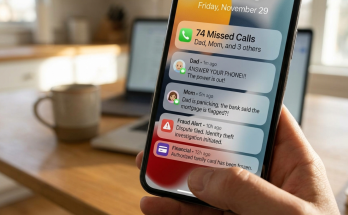
I went to bed without calling anyone. At seven the following morning, Rachel rang. Then Mom. Then the house phone appeared on my screen. Messages followed, asking why payments were failing and whether something had happened to the accounts. By noon, there were seventy-four missed calls. Dad eventually sent a message accusing me of behaving irresponsibly and demanding that I restore everything immediately. I read it while standing beside the kitchen window, watching a delivery truck struggle to reverse along the narrow street.
Then a message arrived from an unfamiliar number. It contained a photograph of my parents' front door. An official-looking notice had been attached beside the handle. The heading warned of an impending foreclosure action. I enlarged the picture until the letters became sharp. My parents had bought expensive furniture while their mortgage was apparently in serious trouble. And something about the speed of their reaction told me that my withdrawal had exposed a financial arrangement far more dangerous than anyone had admitted.
Click here to continue reading: PART 2: Seventy-Four Missed Calls Led Me Toward a Hidden Loan and the Terrifying Truth About My Parents’ House and My Name
The Unexpected Charge on My Credit Card Exposed a Family Arrangement I Had Never Agreed to and a Debt Nobody Intended to Repay
Part 1 of 15