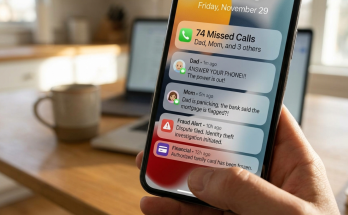
The lawyer's warning followed me through the morning. I kept my phone facedown beside the keyboard at work, but every notification made me glance toward it. He had advised me to preserve all records and report suspicious accounts through the proper institutions. His concern was no longer limited to the furniture charge. The documents suggested that somebody had used my personal information to obtain financial arrangements I hadn't knowingly approved. I needed to establish the full extent of that activity before I could make sense of my family's reaction.
I left the office early and returned to the apartment, where the dining table had become a temporary records department. Statements lay beside envelopes, handwritten notes, and a growing stack of printed emails. I had always been methodical about my professional work. In IT, an unexplained event could be investigated by following the evidence rather than guessing at motives. I began applying the same discipline to my finances. Every account received a separate folder. Every transaction received a date and a description.
By that afternoon, I had started formal disputes with the relevant institutions, placed additional protections on my credit reports, and provided the attorney with copies of the suspicious loan records. Some accounts were restricted while the investigations proceeded. Others required further information before changes could be made. I didn't expect everything to be resolved immediately. The important change was that my objections now existed in writing. If somebody continued to use my identity, there would be a documented record showing that I hadn't consented.
I created a spreadsheet with columns for the account, transaction date, amount, known authorization, available evidence, and current status. The work was tedious. Sometimes I spent twenty minutes locating a single invoice, only to discover it explained an ordinary payment I had forgotten making. Other times, a charge that seemed harmless revealed another connection to my parents' household. The furniture purchase gradually lost its importance as an individual transaction. It had simply been conspicuous enough to reveal what smaller amounts had concealed.
The list included insurance payments, subscriptions, online purchases, vehicle expenses, household repairs, and electronics. Some charges could be traced to arrangements I had originally approved. Others appeared long after any reasonable temporary agreement should have ended. Several showed no evidence of my consent at all. I marked them carefully rather than assigning blame. But I could no longer describe the situation as a father occasionally forgetting which card belonged to him.
Then I found the transfer for $18,500. It appeared in records associated with an account linked to my financial information. The description identified it as assistance to family, but the amount was far beyond anything I had knowingly offered. I checked the date, then the transaction identifier. My pulse quickened when I examined the recipient details. The money had gone to Rachel. I searched my messages from that period, wondering whether I had forgotten an enormous conversation. There was no request for that amount and no acknowledgment that I had agreed to provide it.
I called my lawyer. He listened while I read the transaction details and asked me to send the documents immediately. I wanted to know whether the transfer had originated through the suspicious loan arrangement or another account connected to my identity. He said we needed the institution's records before making that determination. When I asked whether I should confront Rachel, he told me to wait. A confrontation might produce accusations and denials, but it wouldn't replace a proper investigation.
After hanging up, I remained at the table for a long time. Rachel had once called me in tears because she couldn't afford winter coats for the children. I had transferred money before she finished explaining. When her car failed, I contributed toward repairs without demanding receipts. I knew what genuine need sounded like in her voice. But eighteen thousand five hundred dollars hadn't come through a desperate request. It had been moved through financial arrangements I didn't recognize, without a single conversation.
That evening, my building's security system notified me that someone was outside my apartment. Rachel stood in the hallway, arms folded tightly against her chest. She knocked twice, then looked directly at the camera. I watched from inside without answering. She called my name, waited, and knocked again. When I still didn't respond, she called my phone. I let it ring. The idea of opening the door and asking her about the transfer was almost unbearable. I wanted an answer from my sister rather than another financial institution.
A message appeared saying we needed to discuss the situation privately, without attorneys. I replied that correspondence concerning the accounts should go through my lawyer. Rachel answered with disbelief, then accused me of making our parents miserable. She said Mom was frightened, Dad believed I was becoming unstable, and the children were suffering because of the family conflict. I looked at the messages. She hadn't asked what I had discovered. She hadn't challenged the records. She was still trying to make the consequences of my investigation more important than its cause.
Before leaving, Rachel turned toward the hallway camera. A strange little smile crossed her face. It unsettled me more than her anger had. She seemed almost certain that the dispute would eventually end in her favor. I wondered what she believed Dad could do to restore the old arrangement. Did they expect me to become exhausted and withdraw my complaints? Did they think the existence of earlier voluntary payments would make every later transaction acceptable? Or did they have documents that would allow them to claim I had authorized more than I remembered?
The next morning, my attorney received correspondence from a lawyer representing my father. Dad claimed that I had knowingly agreed to support the household and was now trying to punish my parents financially. He also maintained that I had verbally consented to family expenses over an extended period. I could hardly believe the explanation. Of course I had helped my family. The records proved that. But the existence of previous assistance didn't mean I had granted permanent permission to open accounts, transfer money, or use my personal information.
The attorney explained that Dad appeared to be framing the matter as a disagreement over an informal family arrangement. That was important because some expenditures genuinely had begun with my consent. I needed to distinguish those from transactions that exceeded it. I thought about the countless times my father had praised me for being dependable. Whenever I resisted a request, he suggested I was becoming selfish. Whenever I helped, he described it as evidence that I understood my obligations. The same stories had been repeated so often that I had begun believing them.
Three days later, Mom called. I watched her name appear on the screen and almost ignored it. Then I answered. She sounded as though she had been crying. After several hesitant questions about whether I was eating properly and going to work, she told me there was something she needed to explain. I sat down, suddenly alert. She said she hadn't known about the suspicious loan. I asked what she did know. Her answers arrived slowly, separated by long silences.
Mom admitted that Dad had used my card for household purchases. She also knew that Rachel had been receiving assistance through him. She insisted that she hadn't understood how much money was involved or that my financial information had been connected to other accounts. When I mentioned the $18,500 transfer, she fell silent. I asked whether she knew Rachel had received such a large sum. She said Rachel had been struggling, but she hadn't known exactly where the money came from.
I asked what Mom had believed about my involvement. She said Dad had always described the arrangements as something I wanted to do. According to him, I knew the family needed help and had chosen to provide it quietly. The explanation was devastating because it was close enough to my previous behavior to sound plausible. I had often helped without announcing it. My father had apparently used that history to make increasingly questionable transactions seem normal.
I asked whether Dad knew details about my salary and accounts. Mom hesitated. She said he had always been interested in how well I was doing and frequently mentioned that I earned more than my siblings. Then she admitted something unexpected. My father kept a notebook containing financial information. She had seen my name written inside it, alongside figures and dates. I asked what kind of notebook. She couldn't explain precisely, but she remembered him referring to it when discussing family expenses.
The image of my father keeping written records of my finances made me deeply uncomfortable. He had never been especially organized about ordinary paperwork. Bills collected beneath magnets on the refrigerator. Receipts remained in coat pockets for months. Yet Mom was describing a notebook that he apparently maintained with unusual care. I asked where he kept it. She believed it was somewhere in the basement, although she had occasionally seen him bring it upstairs. When I asked whether Rachel had ever looked at it, Mom said she didn't know.
I considered driving to the house immediately. I knew the basement well. Old holiday decorations were stored beside the shelves, and Dad kept important documents in a metal cabinet near his workbench. But I stopped myself. Entering the house to search for private records would risk creating another dispute and could complicate the investigation. I told Mom not to put herself in danger or confront Dad about the notebook. Then I called my attorney and repeated everything she had said.
He warned me not to visit the house in an attempt to retrieve it. If the notebook existed and was relevant, there were appropriate ways to preserve the evidence. He also asked me to document Mom's statement while the details were fresh. I typed everything I remembered, separating her exact words from my interpretation. The process forced me to confront how little I knew. I couldn't tell whether Mom was frightened of Dad, ashamed of her silence, or trying to reduce her own responsibility. Perhaps all three were true.
At six thirty the following morning, the attorney called with information from one of the lenders. The original loan application had been submitted using a device associated with my parents' address. That fact alone didn't establish who completed it, but it narrowed the possibilities. I asked when the application had been made. He gave me the date. I recognized it immediately. It was my father's birthday. I remembered calling him that evening, wishing him a happy birthday, and listening while he told me how proud he was of the life I had built.
The application had included supporting documents. My attorney described tax information and proof of income that appeared to originate from my personal records. I felt a sickening familiarity. Years earlier, our family had maintained a shared cloud storage account to exchange photographs, documents, and other files. I had used it occasionally while helping my parents with administrative tasks. Some old financial documents might still be there. Dad had retained access even after I stopped using the service regularly.
I opened the account and examined its folders. Among the familiar photographs and archived paperwork was a directory labeled with my name and financial records. I hadn't created it. Inside were copies of tax returns, income statements, insurance details, old bank documents, and a scan of my driver's license. I stared at the screen as the implication became clear. Someone had gathered the exact materials needed to apply for financial products while presenting themselves as me.
I examined the account activity history. The documents had been accessed repeatedly, including within the previous two weeks. A familiar email address appeared beside several entries. It belonged to Rachel. I checked again, afraid I had misunderstood the interface. But the records consistently showed activity associated with her account. I couldn't know from that alone which applications she had submitted, yet it established that she had reached into information she had no reason to access.
I preserved the activity records and forwarded them to the attorney. My thoughts returned to Rachel standing outside my door, smiling at the camera. She hadn't merely benefited from money obtained through questionable arrangements. She had access to the private documents that could facilitate them. My father might have initiated the scheme, or Rachel might have handled parts of it herself. Either possibility was worse than the story they had told me about a well-meaning family that had simply misunderstood my generosity.
A new message arrived from Rachel that afternoon. Dad wanted me to visit that evening. According to her, he had something that would prove my accusations were mistaken. I didn't reply. A second message insisted that the matter should remain between relatives. Then came a third asking me to come without anyone accompanying me. I read the request twice. After discovering the loan application, the transfer, and the access to my documents, I no longer trusted an invitation designed to separate me from legal advice.
I forwarded the exchange to my attorney and sat staring at the screen. For years, I had been willing to walk into that house whenever my parents called. I had arrived with groceries, money, tools, and whatever else they needed. Now I understood that every such visit had taken place inside a relationship governed by expectations I hadn't fully recognized. Whatever Dad intended to show me, I would not go alone or allow him to rewrite the evidence as another lesson about family loyalty.
Click here to continue reading: PART 4: My Father’s Secret Records Exposed a Plan Built Around My Future Earnings and Forced Me to Question Everything He Called Family Loyalty
The Unexpected Charge on My Credit Card Exposed a Family Arrangement I Had Never Agreed to and a Debt Nobody Intended to Repay
Part 3 of 15