I stared at the blank paper for a long time.
There were things I could say easily to clients.
I could explain a design problem.
I could describe a project timeline.
I could tell someone what work needed to be completed and how much it would cost.
But writing to my own mother was harder.
I knew what I wanted her to understand.
I just didn't know how to say it without sounding angry.
I looked at the three pages she'd sent me.
Her apology was still there.
She had admitted treating Caleb differently.
She had acknowledged that she expected me to survive because I always had.
And she had finally understood that I still needed a mother.
I wanted to believe her.
I also wanted to protect the life I'd built since moving out.
Those feelings weren't easy to hold together.
I picked up my pen.
Then I put it down again.
For years, I had answered my mother almost immediately whenever she called or sent a message.
I was afraid that making her wait would upset her.
That habit was still there.
Even now, part of me felt guilty because I hadn't responded to her letter on the day it arrived.
I looked at the clock.
There was no emergency.
She hadn't asked me to solve a problem.
She had written an apology.
I was allowed to think before answering it.
That simple realization helped.
I took a breath.
Then I began.
I thanked her for writing.
I told her I had read every page.
I said I appreciated her willingness to acknowledge how differently she'd treated Caleb and me.
Then I stopped.
The next part was harder.
I wanted to explain why the apology mattered without making it sound as though everything was forgiven.
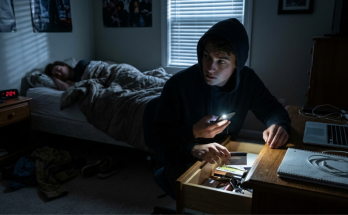
I thought about the morning she defended Caleb in front of the police officers.
He had admitted taking my card.
The security footage showed him entering my bedroom at 2:07 a.m.
The purchases amounted to almost nine thousand dollars.
And my mother had told everyone I could earn the money again.
That sentence had stayed with me.
Not because she was wrong that I could work.
I could.
I had worked for years.
But she had spoken as though my ability to earn money made it acceptable for somebody else to take it.
I wrote about that.
I told her the theft hadn't only frightened me because of the amount involved.
It had hurt because she immediately focused on protecting Caleb.
I remembered the way she cried.
The way Arthur insisted it was a misunderstanding.
The way Caleb stood behind her, expecting the situation to disappear.
I didn't need to describe every detail.
She had been there.
I wrote that I needed her to understand why I couldn't return to the old arrangement.
Then I paused again.
I wanted to be careful.
The trust settlement was already in place.
Patricia had helped establish the repayment terms.
My mother had agreed to address the funds that couldn't be properly justified.
I wasn't writing to reopen the financial dispute.
That part was being handled through the legal process.
I was writing about what came afterward.
Trust.
Respect.
The right to make my own decisions.
I looked around my apartment.
The bedroom was still cramped.
My desk sat close to the bed.
The kitchen barely had enough space for the things I used every day.
But the apartment was mine.
I had never felt so comfortable in such a small place.
I knew why.
Nobody entered without my permission.
Nobody told me what I could afford to keep.
Nobody treated my savings as family money available for someone else's needs.
I wanted that security to remain.
I returned to the page.
I wrote that I was willing to rebuild our relationship slowly.
Not all at once.
Not because she had apologized once.
But because I still loved her and wanted to see whether we could have a healthier relationship.
Then I wrote the part I had been avoiding.
I told her that forgiveness would not mean giving her access to my finances.
My business account would remain private.
My savings would remain under my control.
I would make my own decisions about work and spending.
And I would not return to a situation where she believed being my mother entitled her to manage those things.
I read the paragraph.
It sounded firm.
Maybe too firm.
I considered softening it.
Then I remembered the bank confirmation.
Eight months before Caleb's theft, my mother had been added as an authorized person on my business account.
I hadn't known.
I hadn't approved it.
I had discovered it only because the fraud investigation raised questions about earlier account activity.
That was not a small misunderstanding.
I left the paragraph as it was.
I continued.
I wrote that my apartment was my home.
I wasn't going to move back because someone felt guilty or lonely.
I wasn't going to make my living arrangements a family decision.
And I wasn't going to explain every part of my private life to prove I still loved her.
I stopped writing.
My hands felt unsteady.
I had never expressed those boundaries to my mother in one place before.
Usually, I set them during arguments.
A rushed sentence.
A refusal.
A decision made while someone was upset.
Now I was writing them calmly.
I wasn't accusing her of being a terrible person.
I wasn't asking her to suffer.
I was explaining what I needed.
That was different.
I looked at Dad's letter beside my monitor.
He had written about independence.
For years, I'd believed it meant making enough money to support myself.
Now I understood that independence also meant being able to say no without losing my sense of worth.
I returned to my own letter.
I wrote that I didn't expect us to forget what happened.
I didn't want us to pretend the trust dispute had never existed.
I didn't want to behave as though Caleb had simply borrowed a few dollars and returned them.
The facts mattered.
The consequences mattered.
But I didn't want those events to be the only things we ever discussed.
I wanted a different relationship.
One where she could ask about my work without treating my income as something I owed the household.
One where she could care about Caleb without expecting me to rescue him.
One where I could tell her about my life without worrying that she'd try to take control.
I stopped again.
Then I added something I hadn't planned.
I told her I had needed her when I was seventeen.
I wrote that I knew she had been overwhelmed after Dad died.
I knew raising two sons while managing household responsibilities had been difficult.
But I had been frightened too.
I hadn't understood how I was supposed to pay for college.
I hadn't known how to manage the financial pressure.
And when she told me Dad's money was gone, I had believed her.
I wrote that I didn't blame myself anymore for trusting her.
That sentence surprised me.
I hadn't realized how much blame I'd been carrying.
For months, I kept asking myself why I hadn't requested statements earlier.
Why I hadn't contacted Patricia.
Why I hadn't questioned the explanation.
But I had been seventeen.
My mother was the trustee.
She had told me there was nothing left.
I had trusted the person responsible for protecting me.
That wasn't something I needed to feel ashamed of.
I wrote that I had learned from what happened.
And I hoped she had too.
Then I signed my name.
Julian.
I sat back.
The letter was longer than I'd expected.
I read it carefully.
I checked every sentence.
There were places where I sounded emotional.
I left them.
I wasn't writing a legal document.
I was writing to my mother.
But I removed anything that sounded like an accusation made only to hurt her.
I didn't want revenge.
Patricia had said that repeatedly during the trust dispute.
And she had been right.
The purpose had been accountability.
Now I wanted something that could exist alongside accountability.
A relationship that didn't require me to surrender my independence.
I folded the letter.
Then I placed it in an envelope.
For a moment, I held it beside the one my mother had sent.
Her handwriting.
Mine.
Two people who had spent almost a year speaking mostly about financial obligations.
Now trying to say something about the relationship beneath them.
I sent the letter.
Then I returned to work.
I didn't expect an immediate reply.
In fact, I wasn't sure I wanted one.
I needed time.
And I wanted my mother to have time to think too.
The following days were ordinary.
I completed projects.
Answered clients.
Reviewed invoices.
Checked my savings.
I continued operating Miller Creative Studio from my apartment.
There were no employees yet.
No large office.
But the work was becoming more consistent.
I had enough regular business to plan beyond the next invoice.
That felt good.
I remembered how I had once saved nine thousand dollars for the business.
I had been so proud of that amount.
Then Caleb took the card.
For a while, I believed the theft might force me to abandon the studio.
Now I was moving forward again.
I didn't want to lose sight of that.
One afternoon, my mother called.
I saw her name on the screen.
My stomach tightened.
I didn't know whether she'd received my letter.
I answered.
"Hello?"
She sounded quieter than usual.
"Julian."
"Hi, Mom."
There was a pause.
Then she said she'd read what I wrote.
I sat down.
"Okay."
She didn't immediately argue.
That surprised me.
She said she understood why I needed boundaries.
I waited.
Part of me expected a complaint to follow.
Something about how I was being unfair.
Or how she deserved more respect because she'd raised me.
But she didn't say that.
She told me she was still trying to understand how badly her decisions had affected me.
I looked at the framed letter from Dad.
For once, I didn't know what to say.
I had spent years trying to make her see something that seemed obvious to me.
Now she was saying she wanted to understand.
I thanked her for reading my letter.
She asked whether we could continue talking.
Slowly.
I said yes.
But I reminded her that I wasn't changing the boundaries I'd described.
She was quiet for a moment.
Then she said she understood.
I wanted to believe her.
I didn't know whether I did yet.
But the conversation ended without an argument.
That felt unfamiliar.
Afterward, I sat at my desk.
I thought about how often I'd expected a fight whenever my mother called.
For months, I prepared myself before answering.
I imagined what she'd accuse me of.
I planned what I would say.
Then I'd spend the rest of the evening feeling exhausted.
This call had been different.
There had been no demand for money.
No request to interfere with Caleb's case.
No argument about the trust settlement.
Only an acknowledgment that we needed to rebuild slowly.
I didn't call it a breakthrough.
I had learned not to place too much weight on a single conversation.
But it was a start.
Over the following weeks, we spoke occasionally.
Not often.
Sometimes she asked about the apartment.
Sometimes she asked how the studio was doing.
I answered honestly, but I kept certain things private.
I didn't discuss every client payment.
I didn't share my account balances.
I didn't ask her opinion about expenses I'd already decided were necessary.
At first, I felt awkward.
I had spent years telling her more than I needed to.
But the privacy became comfortable.
I began to understand that a relationship didn't have to include access to every part of my life.
My mother could care about me without managing my decisions.
I could care about her without becoming responsible for her finances.
And neither of us needed to pretend the past had been harmless.
There were still difficult moments.
Sometimes she asked a question that felt too personal.
Sometimes she sounded disappointed when I didn't provide details.
But I didn't panic.
I answered what I was comfortable answering.
Then I changed the subject.
I didn't apologize for protecting my privacy.
That was new.
One evening, we spoke about my work.
She asked whether I was still designing websites.
I told her I was.
She asked whether I enjoyed it.
I almost laughed.
For years, my family had treated the business as a way I earned money.
They rarely asked whether I liked the work itself.
"Yeah," I told her. "I really do."
She was quiet.
Then she said she was glad.
It was a small conversation.
But I remembered it.
I hadn't needed to explain what I earned.
I hadn't been asked to help Caleb.
I hadn't been reminded that I could always work more.
We simply talked about something I cared about.
After we hung up, I looked around the apartment.
The quiet didn't feel lonely.
It felt familiar.
I had built a life here.
A life with work I enjoyed.
A place where I felt safe.
A routine I chose for myself.
I wasn't willing to risk those things just to make my relationship with Mom look normal again.
But I was willing to see whether we could build something better.
I kept the letter she sent me.
I didn't frame it.
I didn't place it beside Dad's.
I folded it carefully and put it in the old folder containing the trust records.
That seemed appropriate.
The apology belonged to the history of what happened.
It mattered.
But it didn't replace the evidence.
I wanted to remember both.
The harm.
And the acknowledgment.
I looked at Dad's letter one evening before bed.
The blue ink was still clear.
His handwriting leaned slightly to the right.
I remembered the first time I read it after finding the trust folder.
I had felt as though I was finally hearing from him after years of silence.
Now I understood something else.
He hadn't wanted money to become the center of my life.
He had wanted it to give me freedom.
The trust had been mishandled.
But I was beginning to recover something more important than the original balance.
I was learning how to protect my choices without feeling guilty.
I was learning how to accept an apology without handing someone permission to hurt me again.
And I was learning that reconciliation didn't require me to return to the person I had been before.
I turned off my desk lamp.
Then I checked the front door.
Locked.
I smiled.
My mother was still my mother.
I still loved her.
But I no longer needed to give her control over my money, my home, or my decisions to prove it.
That was the kind of relationship I was willing to rebuild.
Click here to continue reading: PART 15: Two Years After the Theft Nearly Destroyed My Business Plans, I Looked Around My Own Studio and Realized How Much Had Changed
My Brother Took My Business Debit Card in the Middle of the Night, but My Parents Were More Worried About His Future Than Mine
Part 14 of 18