Two years after the gift letter landed on my kitchen table, Evan and Brooke bought a house.
Not Willow Creek.
Not anything like it.
Their house stood on a quiet street lined with sycamores and old mailboxes. The siding needed paint on the south wall. The kitchen floor had a faint slope near the pantry. One upstairs window stuck during humid weather.
It was theirs.
They had saved the down payment themselves.
No uncle.
No investment company.
No bridge structure.
No family money routed through something nobody understood.
The closing attorney was a woman Leona recommended who had never met Glenn, Daniel, Martin, or anyone connected to Fairground.
Evan read every document.
So did Brooke.
They annoyed the loan officer with questions.
I was extremely proud of that.
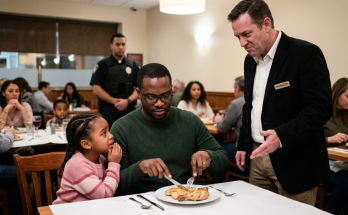
On closing day, Brooke sent me a photograph of Evan sitting at the attorney’s conference table with a stack of papers in front of him.
His finger was pointing at one paragraph.
Her caption said:
He’s becoming you.
I answered:
My condolences.
She sent back a laughing face.
That small exchange would have been impossible two years earlier.
Trust returned in pieces.
Not because everyone forgot what happened.
Because nobody required forgetting.
Brooke never asked me to pretend her choices had been harmless.
Evan never used her victimization by Glenn to erase the secrecy between them.
They worked on both truths at once.
She had been manipulated.
She had also concealed decisions.
He had been wronged.
He had also avoided conversations that might have exposed problems earlier.
Their marriage survived because they stopped demanding a simpler story.
So did the rest of us.
Sheila and I became closer in a way I did not expect.
We disagreed often.
About Glenn.
About how much contact with him was healthy.
About whether Dad should have reported everything sooner.
About whether protecting Glenn initially had made Dad partly responsible for the damage that followed.
That last question was hard.
I loved Dad.
But love did not require turning him into a flawless man after death.
He had waited too long.
He knew it.
His letter admitted it.
He kept trying to solve Glenn privately because public consequences frightened him.
That delay allowed the scheme to grow.
Dad eventually did the right thing.
He also spent too much time hoping private mercy could replace accountability.
Both were true.
Perhaps that was why his final records were so methodical.
Once he understood that love had become an excuse for silence, he overcorrected toward proof.
Certified letters.
Recordings.
Copies.
Ledgers.
Multiple storage locations.
Francis Reed.
He built a trail nobody could erase entirely.
Martin remained in prison.
Daniel too.
Pauline served her sentence and later moved away.
Martin Keller never returned to mortgage work.
Northline Acquisitions dissolved.
Fairground Holdings was wound down through litigation.
The brick building on Fairground Road eventually changed hands legally.
A commercial buyer renovated part of it.
The detached garage where Dad’s toolbox had been found was demolished.
I drove past once.
Only once.
There was nothing dramatic about it.
No thunder.
No sense of ghosts leaving.
Just machinery.
Dust.
A yellow excavator crushing rotten timber.
I kept driving.
Fairground had consumed enough of my attention.
The access parcel sale provided restitution and estate recovery.
Legal fees ate more than anyone would have guessed.
Fraud is expensive twice.
Once when it happens.
Again when people try to unwind it.
The recovered money did not make us rich.
It made some losses whole.
That was enough.
Lainey’s education account became healthier than before.
I placed Dad’s share into a trust arrangement designed by professionals who had no connection to the family.
Evan teased me about the thickness of the paperwork.
I told him thick paperwork was beautiful when everyone understood it.
He said I needed hobbies.
He was probably right.
Glenn was eventually transferred to a lower-security facility.
His letters became less frequent.
The early ones were full of apology.
Later they became more ordinary.
Books he had read.
A story about another inmate who reminded him of Dad.
Questions about Sheila.
Once, a birthday card for Lainey.
Brooke let Lainey decide whether to keep it.
She did.
Children sometimes understand boundaries more naturally than adults.
She put the card in a drawer and went outside to play.
No dramatic reconciliation.
No dramatic rejection.
Just a card in a drawer.
I eventually visited Glenn once.
Only once.
The decision surprised even me.
Sheila asked whether I wanted company.
I said no.
The visitation room had bolted-down tables and vending machines that hummed too loudly.
Glenn walked in wearing institutional clothing.
He looked older than when Sheila described him months earlier.
Not broken.
Just stripped of the presentation he had maintained for years.
No expensive truck.
No business calls.
No stories about deals.
We sat across from each other.
For several seconds neither of us spoke.
Then Glenn said, “Thank you for coming.”
“I haven’t decided if I’m glad I did.”
He nodded.
“That sounds like you.”
I almost smiled.
Almost.
He asked about Evan.
I gave him basic information.
House.
Work.
Lainey.
Brooke.
Nothing private.
Then he asked, “Do they hate me?”
“I can’t answer for them.”
He looked down.
“I hate what I did.”
“That isn’t the same question.”
“I know.”
Silence.
Then he asked about Dad’s letter.
“Did he really write that he loved me?”
“Yes.”
Glenn swallowed.
“And the part about love not being permission?”
“Yes.”
He laughed once, bitterly.
“That sounds like him.”
“It does.”
He rubbed his hands together.
“I spent years thinking he was punishing me.”
“He was trying to stop you.”
“I know that now.”
“No. You knew it then.”
He looked at me.
That distinction hurt him.
I did not withdraw it.
“You knew,” I repeated. “You just wanted another outcome more.”
His eyes filled.
He nodded.
“Yes.”
That was why I came.
Not for apology.
I had enough apologies.
I wanted to know whether Glenn could finally describe the past without rewriting himself as someone who had not understood his choices.
He could.
That did not restore our relationship.
But it allowed me to leave without carrying the argument anymore.
Before I stood, he said, “Stacey.”
I waited.
“I really did think I could put everything back.”
“I know.”
“If Fairground sold—”
“I know.”
“I would have replaced Dad’s money. Lainey’s. Everything.”
“I know.”
He looked almost relieved that I understood.
Then I said, “That’s what made it so dangerous.”
His expression changed.
“You thought repayment would turn taking into borrowing. You thought success would make consent unnecessary.”
He said nothing.
“You were wrong.”
“I know.”
That was enough.
I never promised another visit.
Outside, the air felt unusually bright.
I sat in my car for several minutes before driving home.
Not because I was crying.
Because I felt lighter and did not entirely trust it.
Closure is not a door slamming.
Sometimes it is simply realizing you no longer need the other person to produce a better answer.
The best answer may be the one they should have given years earlier.
I knew.
Months after that visit, Evan and Brooke invited the family to their new house for Lainey’s ninth birthday.
The backyard was full of folding chairs.
Children ran through a sprinkler even though the afternoon was barely warm enough.
Sheila brought too much food.
Brooke’s mother brought a cake large enough for thirty people.
Someone handed me lemonade.
At one point, I stood alone in the kitchen.
The countertops were laminate.
The refrigerator was slightly too large for its space.
A magnet held one of Lainey’s drawings to the door.
It showed the house in purple crayon.
All three family members stood outside holding hands.
Above them she had written HOME.
Evan came in.
He followed my eyes.
“She likes it here.”
“I can see that.”
“We do too.”
He opened the refrigerator.
“Want water?”
“No.”
He leaned against the counter.
Then he said, “I need to ask you something.”
My body reacted before my mind did.
Two years earlier, that sentence might have meant money.
A signature.
A favor.
Now I waited.
He reached into a drawer.
My stomach tightened.
He pulled out a small envelope.
“Relax.”
“I am relaxed.”
“You’re staring at that envelope like it contains a confession.”
“That depends what’s in it.”
He handed it to me.
Inside was a check.
Forty-five thousand dollars.
I looked at him.
“What is this?”
He smiled.
“Nothing.”
“Evan.”
“It’s not real.”
I checked again.
Across the signature line, in tiny handwriting, he had written VOID — NEVER OWED.
I stared at him.
He laughed.
“I’ve wanted to do that for months.”
“This is your idea of humor?”
“Yes.”
“It needs work.”
He took the check back.
Then his smile faded.
“I wanted to ask you the actual question.”
“Go ahead.”
He looked through the kitchen doorway at Brooke and Lainey in the yard.
“If you had signed it that day—if you had sent the money—do you think we ever would have found out?”
I had asked myself that question many times.
Maybe the Fairground sale would have closed.
Maybe Northline would have paid off the bad debt.
Maybe Evan’s false guarantee would have disappeared.
Maybe Lainey’s money would have been replaced.
Maybe my $45,000 would have been buried inside settlement figures.
Maybe Glenn would have told us the house purchase failed because of lender complications.
Maybe Brooke would have believed she had simply made a bad investment.
Maybe Daniel and Martin would have moved on to the next property.
Maybe Dad’s evidence would have remained in boxes and drives until nobody cared enough to open them.
“Yes,” I said.
Evan looked at me.
“Yes, what?”
“I think we might never have known.”
His face changed.
Not dramatically.
Just enough.
“That’s terrifying.”
“Yes.”
He looked at the fake check.
“So the whole thing fell apart because the address was wrong?”
I shook my head.
“No.”
“But that’s what started it.”
“The address was correct.”
He frowned.
I smiled slightly.
“That was the problem.”
The gift letter told the truth.
4411 Fairground Road.
The money was going exactly where they intended.
What they counted on was that nobody would read carefully enough to understand what the truth meant.
Evan nodded slowly.
“So what actually stopped it?”
I thought about that.
Dad’s recordings.
Francis Reed.
Brooke remembering passwords.
Lainey’s drained account.
Hollis and Ruiz.
The bank clerk who preserved notes.
The gas station camera.
The storage key.
The wrong people betraying one another when consequences arrived.
All of it mattered.
But none of it would have started if I had signed because everyone told me I should.
“I asked a question,” I said.
“That’s it?”
“That’s usually where trouble starts for people hiding things.”
He smiled.
Outside, Lainey screamed with laughter as someone turned the sprinkler toward the adults.
Brooke shouted Evan’s name.
He glanced toward the door.
“I should go rescue her.”
“From a sprinkler?”
“From your sister. Aunt Sheila is weaponizing the hose.”
“Fair.”
He started to leave.
Then stopped.
“Mom.”
“What?”
“Thank you.”
I knew what he meant.
But I did not want gratitude for refusing to be deceived.
So I said, “Buy me dinner sometime.”
He laughed and went outside.
I stayed in the kitchen another moment.
There had been a time when the whole family treated forty-five thousand dollars like a test of love.
Give it, and I was generous.
Question it, and I was selfish.
Refuse, and I was failing my son.
That framing had nearly worked.
Because when people you love accuse you of withholding something they need, the quickest way to end the discomfort is often to surrender.
Money.
Time.
Privacy.
Judgment.
Whatever boundary they are pushing against.
But boundaries are not cruelty merely because someone dislikes them.
A question is not betrayal.
Verification is not distrust.
And love is not permission.
Dad understood that too late to save himself from every consequence.
But not too late to leave the truth behind.
I understood it just soon enough.
That evening, after everyone left, I found the fake check on my kitchen table.
Evan had written something on the back.
Mom —
I spent years thinking the house was what you refused to give me.
Now I know what you actually gave me was the chance not to build my life on somebody else’s lie.
I read it twice.
Then I put it beside Dad’s letter.
Two pieces of paper.
One from a father who had learned too late.
One from a son who still had time.
For years, people laughed because I would not simply hand over the money.
In the end, the forty-five thousand dollars was never the most valuable thing I kept.
It was my right to ask where it was going.
And the moment I refused to surrender that right, the truth finally had somewhere to begin.
The End
Read more original stories on Feel Every Story.
Everyone Thought I Was the Stingy Mother Until One Address on a Gift Letter Made Me Stop Smiling
Part 18 of 18