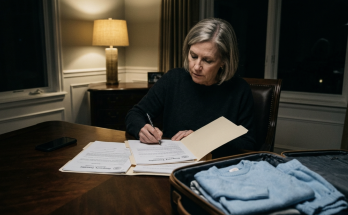
At 2:07 in the morning, my phone lit up on the nightstand, and before I even reached for it, I knew the message would not contain good news. David never texted that late unless something had gone wrong. I expected a problem with work, a sick child, maybe an argument with Danielle. What I did not expect was to be told I was no longer welcome at my grandson’s fifth birthday party.
The message was careful in the way cowardly messages often are. David wrote that he loved me, that he hoped I would understand, and that Grace felt my presence would make the morning uncomfortable. He reminded me that Danielle had been under stress. He said they wanted the day to remain peaceful for their little boy. Then he ended with an apology so weak that it somehow hurt worse than open hostility.
I read the message twice. On the third reading, I stopped looking at the excuses and concentrated on what was missing. David had not said he disagreed with Grace. He had not told his mother-in-law that excluding me was unacceptable. He had not reminded anyone who had bought the Princeton house where the party would be held. He was asking me to disappear so everyone else could feel comfortable.
For several minutes, I sat in the dark bedroom with the phone resting in my palm. Twenty-two years earlier, after Samuel died, I had learned what grief did to a house at night. Every appliance seemed louder. Pipes clicked inside the walls. Rain sounded like fingers against the windows. That night, the silence carried a different ache. My son was alive, only thirty minutes away, and yet I had somehow become a stranger in the family I had spent my life protecting.
The house was worth close to ten million dollars now, though that figure had never mattered to me when I purchased it. David and Danielle had been drowning at the time. His business had suffered a disastrous year, their savings had evaporated, and a bank had turned them down for the kind of mortgage required for a property in that part of Princeton. I had stepped in because my grandson deserved stability and my son needed room to recover.
I had never handed David the deed.
That distinction had become increasingly important.
The property remained legally mine. David paid utilities, maintenance, and most ordinary household expenses. I covered the taxes during difficult years and several larger repairs without mentioning them afterward. There had never been rent. There had never been a repayment schedule. I wanted my son to live there with dignity, not feel like a tenant whose mother could knock on the door demanding gratitude.
Grace Bennett had treated that generosity as evidence of weakness.
At first, she disguised her resentment with jokes. She called the house “David and Danielle’s place” in front of guests, which was harmless enough. Then she began referring to it as “our family home,” and I noticed that I was no longer included in her definition of family. Invitations came later. Holiday plans were announced rather than discussed. When I offered an opinion about my grandson, Grace would smile and say they were trying to avoid “too many competing grandparents.”
Danielle rarely challenged her.
David almost never did.
I had tolerated it because every confrontation ended the same way. David would take me aside afterward and ask me to be patient. Grace was difficult. Danielle hated conflict. My grandson needed peace. Could I please be the mature one?
Apparently maturity meant absorbing every insult until the people delivering them forgot they were insults.
The birthday had been different. I had spent weeks helping prepare for it. My grandson wanted a cowboy theme after seeing an old picture of Samuel wearing boots on a construction site. I found a tiny western shirt, a brown felt hat, and boots soft enough for a five-year-old to run in. I ordered a dinosaur piñata because he had recently decided cowboys and dinosaurs obviously belonged together.
Three days before the party, Grace called and asked whether I could pay the caterer because Danielle was overwhelmed.
I paid the caterer.
That afternoon, Danielle texted asking if I could cover the entertainer too.
I did.
The night before the party, I was informed I should not attend.
I got out of bed.
There was no dramatic decision, no rush of rage. I slipped on my robe, went downstairs, and made coffee even though I knew I would not drink it. In my study, I opened the fireproof cabinet where I kept property records and pulled out the Princeton file.
The deed was exactly where it should have been.
Behind it sat a letter I had received three months earlier from the county recorder’s office regarding an attempted change involving the property. At the time, my attorney had assured me the filing had been rejected because it lacked proper authorization. I had assumed someone handling estate planning had made a clerical mistake. The explanation had irritated me but had not frightened me.
At 2:31 that morning, it frightened me.
The request had attempted to add another party to the ownership structure.
I had never asked who.
I called Attorney Miguel Robles.
He answered on the fifth ring, voice thick with sleep. “Ophelia?”
“I need you to look at the Princeton property.”
There was a pause.
“What happened?”
“My son just told me I’m not welcome there tomorrow.”
Another pause, longer this time.
“That alone isn’t a legal problem.”
“I know. I want you to look at the ownership-transfer notice from three months ago.”
His voice changed immediately. “Why?”
“Because I ignored it.”
“That filing was rejected.”
“I remember.”
“Then what are you worried about?”
I looked down at David’s message.
“I’m worried I may have been generous enough to become stupid.”
Robles said nothing for several seconds.
Then the attorney replaced the sleepy friend I had awakened.
“I’m getting my laptop.”
While he connected to the county system, I went through everything I had saved. Tax statements. Insurance policies. Repair invoices. An appraisal from the previous year. There were two notices from lenders I had assumed were junk mail because I had never applied for refinancing. One referred to verification of ownership. Another mentioned an incomplete authorization connected to an equity inquiry.
My pulse began beating hard enough to feel in my throat.
“Miguel?”
“I’m here.”
“I have lender correspondence.”
“What lender?”
I read him the names.
His keyboard stopped clicking.
“Ophelia, don’t throw anything away.”
“I wasn’t planning to.”
“Photograph every page and send them to me now.”
By 3:15, Robles had found the attempted deed change. The name attached to it had been redacted from the automated notice I received, but he could access enough information to recognize that the request was not random.
“This was prepared by somebody who knew the property history,” he said.
“Can you tell who tried to file it?”
“Not yet.”
“Can you find out?”
“Yes.”
“How long?”
“I’ll start now.”
His answer bothered me. “You sound as though you were already expecting this.”
“I’m not.”
“Miguel.”
“I’m being careful.”
I knew that tone. Lawyers used it when the answer to a simple question had become complicated.
“Is David in trouble?”
“I don’t know.”
“Is Danielle?”
“I don’t know that either.”
“What do you know?”
He exhaled slowly. “I know there were two recent credit inquiries referencing this property. I also know neither was authorized by you.”
The room seemed to contract around me.
I sat at Samuel’s old desk.
“Someone tried to borrow against my house?”
“It appears someone explored the possibility.”
“Who?”
“I need records.”
“Get them.”
“Ophelia, if this becomes what I think it could become, you need to understand something. Walking into that party tomorrow and confronting people without evidence would be a mistake.”
“I’m not interested in making a scene.”
“What are you interested in?”
I looked at the framed photograph on my desk. Samuel stood with one arm around me and the other around a much younger David. It had been taken less than a year before Samuel died.
“The truth.”
By sunrise, Robles had arranged for another attorney from his office to join him. I showered, dressed, and packed the cowboy outfit in a gift bag. The dinosaur piñata was already in my car. I considered leaving both behind.
I could not.
Whatever the adults had done, my grandson was five.
At 8:20, David called.
I let the phone ring three times before answering.
“Mom?”
“Yes.”
“I’m sorry about last night.”
“You said that already.”
“I barely slept.”
“Neither did I.”
He lowered his voice. “Grace is here.”
“I assumed she would be.”
“She’s upset.”
“That sounds exhausting.”
“Mom, please.”
I closed my eyes.
There it was again.
Please make this easier for everyone else.
“David, did you personally decide I should stay away?”
He did not answer.
I waited.
Finally he said, “I agreed it would be simpler.”
“Those are not the same thing.”
“I don’t want fighting today.”
“Neither do I.”
“So you understand?”
“Yes.”
Relief flooded his voice. “Thank you.”
I looked through my front window as Robles’s car turned into the driveway.
“I understand perfectly.”
I ended the call.
Forty minutes later, I followed two dark sedans toward Princeton. Robles sat beside me with three folders on his lap. He had slept even less than I had. His tie was slightly crooked, and there were faint shadows beneath his eyes.
“What did you find?” I asked.
“Enough that I don’t want to discuss it while you’re driving.”
“That bad?”
“That complicated.”
“Miguel.”
He touched the top folder.
“Somebody has been trying to create legal authority around this property without your permission.”
My hands tightened around the steering wheel.
“Who?”
“I have a strong suspicion.”
“Say the name.”
“I want you to see the documents first.”
We turned onto the tree-lined road leading to the house.
Cars already filled both sides of the street. Blue balloons were tied to the front railing. A cardboard cowboy stood beside the walkway with a number five printed across his vest.
At the front door, Grace was waiting.
She wore cream trousers, a fitted navy jacket, and the same composed expression she used whenever she wanted people to believe she controlled the room before she entered it.
Her gaze moved from me to Robles.
Then to the second attorney stepping from the car behind us.
For the first time since I had known Grace Bennett, her smile failed before she could put it on.
She came down the front steps.
“You shouldn’t be here.”
I held the birthday gift in one hand and my property folder in the other.
“My grandson is inside.”
“You were asked not to come.”
“Yes.”
“So why are you here?”
I looked at the house I had paid for, the balloons I had helped finance, and the woman standing between me and the front door as if she owned all three.
“Because last night I realized I have been asking permission to enter my own life.”
Grace’s eyes dropped to the folder.
“What is that?”
Robles answered before I could.
“Something you’re going to want to read very carefully.”
Grace’s face changed.
Not anger.
Recognition.
And at that moment I knew the midnight message had uncovered something far larger than an unwanted grandmother at a birthday party.
Click here to continue reading: PART 2: Grace Thought the House Had Already Become Hers, Until My Attorney Opened a File She Clearly Recognized
My Son’s Midnight Message Was Meant to Keep the Peace, but It Finally Made Me Question Everything I Had Given
Part 1 of 17